CAA News Today
Black History Month and caa.reviews
posted by CAA — February 03, 2022
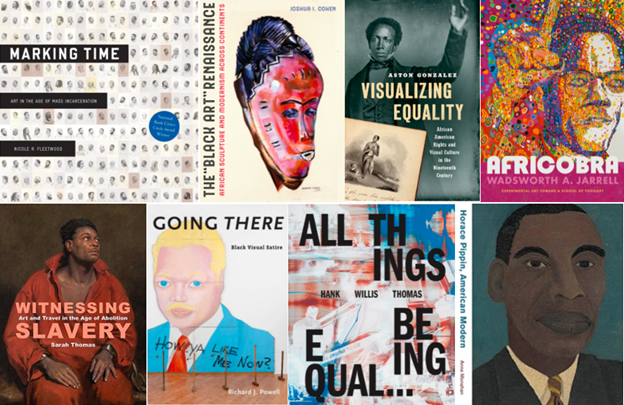
Each week this Black History Month, we highlight the rich scholarship and programs produced at CAA that celebrate, recognize, and interrogate Black art, history, and experience. This week, we are sharing a bibliography of publications and exhibitions reviewed on our online, open-access journal caa.reviews from this past year that addresses these topics.
caa.reviews also houses rosters of dissertation titles in progress and completed since 2002 and many long-form essays that intersect with these themes as well, such as current Editor-in-Chief of Art Journal, Eddie Chambers, essay Reflections on African and African Diaspora Art from 2016.
 Childs, Adienne L. Riffs and Relations: African American Artists and the European Modernist Tradition. Washington, DC and New York: Phillips Collection in association with Rizzoli Electa, 2020.
Sanford Biggers, Negerplastik, 2016, repurposed antique quilt, cotton fabric fragments, tar, and glitter, 81 × 76 3/4 in. (205.7 x 195 cm) (photograph by Todd-White Art Photography, provided by Massimo De Carlo, Milan/London/Hong Kong)
 Choi, Connie H., Thelma Golden, and Kellie Jones. Black Refractions: Highlights from the Studio Museum in Harlem. New York: Rizzoli Electa, 2019.
Jordan Casteel, Kevin the Kiteman, 2016, oil on canvas, 78 x 78 in. (198.1 x 198.1 cm). The Studio Museum in Harlem, New York, Museum purchase with funds provided by the Acquisition Committee 2016.37 (artwork © Jordan Casteel; photograph by Adam Reich, provided by American Federation of Arts)
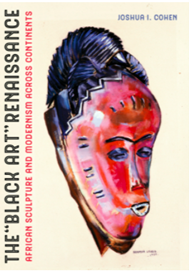
Cohen, Joshua I. The “Black Art” Renaissance: African Sculpture and Modernism across Continents. Oakland: University of California Press, 2020.
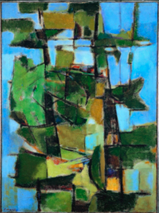
David Driskell: Icons of Nature and History. Atlanta and New York: High Museum of Art and Rizzoli Electa, 2021.
David Driskell, Young Pines Growing, 1959, oil on canvas. Clark Atlanta University Art Museum, John Hope Franklin Purchase Award (artwork © Estate of David C. Driskell; photograph provided by High Museum of Art)
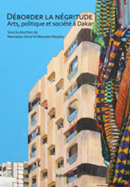 Diouf, Mamadou and Maureen Murphy, editors. Déborder la négritude: Arts, politique et société à Dakar. Dijon. France: Les presses du réel, 2020.
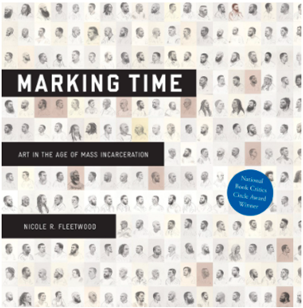 Fleetwood, Nicole R. Marking Time: Art in the Age of Mass Incarceration. Cambridge, MA: Harvard University Press, 2020.
 Gonzalez, Aston. Visualizing Equality: African American Rights and Visual Culture in the Nineteenth Century. John Hope Franklin Series in African American History and Culture. Chapel Hill: University of North Carolina Press, 2020.
 Hank Willis Thomas: All Things Being Equal . . . New York and Portland, OR: Aperture Foundation in association with Portland Art Museum, 2018.
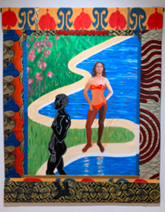 Harris, Shawnya L.,editor. Emma Amos: Color Odyssey. Athens: Georgia Museum of Art, University of Georgia, 2021.
Emma Amos, All I Know of Wonder, 2008, oil on linen, African fabric, 70 1/2 x 55 1/2 in. (179.1 x 141 cm), installation view, Emma Amos: Color Odyssey, Georgia Museum of Art, University of Georgia, Athens, 2021 (photograph by the author)
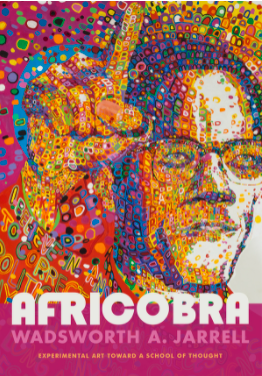 Jarrell, Wadsworth A. AFRICOBRA: Experimental Art toward a School of Thought. Durham, NC: Duke University Press, 2020.
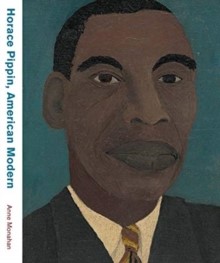 Monahan, Anne. Horace Pippin, American Modern. New Haven, CT: Yale University Press, 2020.
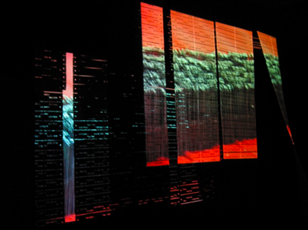
Mühling, Matthias and Stephanie Weber, editors. Senga Nengudi: Topologies. Munich: Hirmer, 2021.
Senga Nengudi, Warp Trance, 2007, multi-channel audio/video installation in collaboration with the Fabric Workshop and Museum, Philadelphia, with a sound composition by Butch Morris, installation view, Senga Nengudi: Topologies, Philadelphia Museum of Art, 2021 (photograph © Aaron Igler, provided by the artist and The Fabric Workshop and Museum)
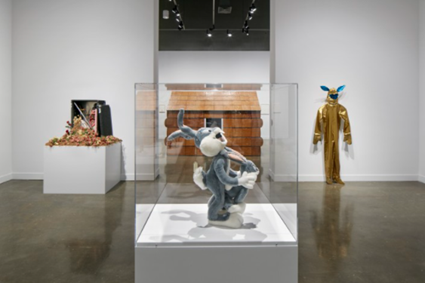 No Wrong Holes: Thirty Years of Nayland Blake. Los Angeles and Cambridge, MA: Institute of Contemporary Art and MIT List Visual Arts Center (online), 2020.
No Wrong Holes: Thirty Years of Nayland Blake, installation view, MIT List Visual Arts Center, Cambridge, MA, 2020–21 (photograph © Charles Mayer, provided by MIT List Visual Arts Center)
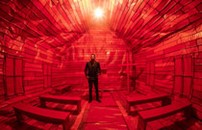 Oliver, Valerie Cassel. The Dirty South: Contemporary Art, Material Culture, and the Sonic Impulse. Richmond, VA and Durham, NC: Virginia Museum of Fine Arts in association with Duke University Press, 2021.
Rodney McMillian, Asterisks in Dockery (Blues for Smoke), 2021, vinyl, thread, wood, paint, lightbulb, installation view, The Dirty South: Contemporary Art, Material Culture, and the Sonic Impulse, Virginia Museum of Fine Arts, 2021 (photograph © Sandra Sellars, provided by Virginia Museum of Fine Arts)
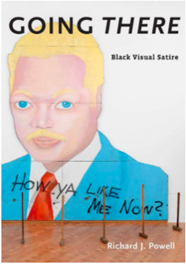 Powell, Richard J. Going There: Black Visual Satire. Cambridge, MA and New Haven, CT: Hutchins Center for African & African American Research in association with Yale University Press, 2020.
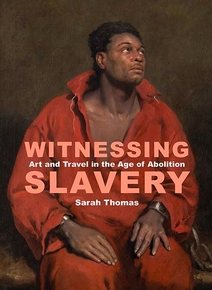 Thomas, Sarah. Witnessing Slavery: Art and Travel in the Age of Abolition. London and New Haven: Paul Mellon Centre for Studies in British Art in association with Yale University Press, 2019.
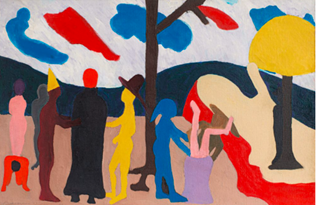 Tuite, Diana, editor. Bob Thompson: This House Is Mine. Waterville, ME and New Haven, CT: Colby College Museum of Art in association with Yale University Press, 2021.
Bob Thompson, The Snook (The Sack), 1961, oil on canvas, 23 1/2 x 36 in. (59.7 x 91.4 cm). Collection of Andrew Nelson (© Michael Rosenfeld Gallery LLC, New York)
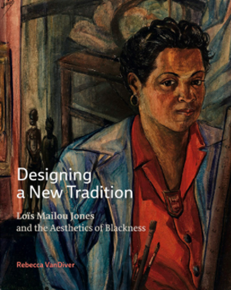
VanDiver, Rebecca. Designing a New Tradition: Loïs Mailou Jones and the Aesthetics of Blackness. University Park, PA: Penn State University Press, 2020.
Black History Month and the 110th Annual Conference
posted by CAA — January 31, 2022
Each week this Black History Month, we highlight the rich scholarship and programs produced at CAA that celebrate, recognize, and interrogate Black art, history, and experience. This week, we look forward to the research and scholarship that will be presented virtually at the upcoming Annual Conference. Many sessions feature talks that look at or investigate Blackness, racism, colonialism, neo-colonialism, and slavery, Black identity, theory of race, Afrofuturism, queerness, the African diaspora, and intersections between these topics.
In chronological order:
February 17-19:
Reimagining the Past alongside Black Women Artists, Thursday, February 17, 2022, 9:00 – 10:30 a.m. CST (10:00 – 11:30 a.m. EST)
Latinx Bodies: Presence/absence and representation (Part 1) , Thursday, February 17, 2022, 9:00 – 10:30 a.m. CST (10:00 – 11:30 a.m. EST)
To See, to Keep, to Know: Photography and Intergenerational Knowledge Production, Thursday, February 17, 2022, 11:00 – 12:30 p.m. CST (12:00 – 1:30 p.m. EST)
Archive, Object, Image: Reading Against the Grain in the Dutch and Spanish “Golden Ages,” , Thursday, February 17, 2022, 11:00 – 12:30 p.m. CST (12:00 – 1:30 p.m. EST)
U.S. Latinx Art, Pre-1950 ,Thursday, February 17, 2022, 11:00 – 12:30 p.m. CST (12:00 – 1:30 p.m. EST)
Latinx Bodies: Presence/Absence and Representation (Part 2) , Thursday, February 17, 2022, 2:30 – 4:00 p.m. CST (3:30 – 5:00 p.m. EST)
Haunting and Memory in Arts of Africa and the African Diaspora , Friday, February 18, 2022, 9:00 – 10:30 a.m. CST (10:00 – 11:30 a.m. EST)
The air we breathe: aesthetics and politics of the breath in transpacific and transatlantic visual cultures ,Friday, February 18, 2022, 9:00 – 10:30 a.m. CST (10:00 – 11:30 a.m. EST)
Flipping the Script , Friday, February 18, 2022, 2:30 – 4:00 p.m. CST (3:30 – 5:00 p.m. EST)
(re)activation of Exhibitions as sites of contestation, Friday, February 18, 2022, 4:30 – 6:00 p.m. CST (5:30 – 7:00 p.m. EST)
Decolonial Teaching Methodologies in Digital Arts & Design, Saturday, February 19, 2022, 9:00 – 10:30 a.m. CST (10:00 – 11:30 a.m. EST)
What’s the “matter” with American Sculpture?, Saturday, February 19, 2022, 9:00 – 10:30 a.m. CST (10:00 – 11:30 a.m. EST)
Signs o’ the Times: Music and Politics in Contemporary Art ,Saturday, February 19, 2022, 9:00 – 10:30 a.m. CST (10:00 – 11:30 a.m. EST)
The Price of Blackness: African American art and visual culture in the first two decades of the Twenty-First Century, Saturday, February 19, 2022, 11:00 – 12:30 p.m. CST (11:00 – 12:30 p.m. EST)
Knowing People: Black Practices in Queer Collaborations, Saturday, February 19, 2022, 2:30 – 4:00 p.m. CST (3:30 – 5:00 p.m. EST)
‘Heresies’ and Other Mythologies, Saturday, February 19, 2022, 2:30 – 4:00 p.m. CST (3:30 – 5:00 p.m. EST)
Signs o’ the Times: Music and Politics in Contemporary Art, Part II ,Saturday, February 19, 2022, 2:30 – 4:00 p.m. CST (3:30 – 5:00 p.m. EST)
Toward an Inclusive Methodology: Experiments in Art Writing,Saturday, February 19, 2022, 4:30 – 6:00 p.m. CST (5:30 – 7:00 p.m. EST)
March 3-5
Women in Architecture: The African Exchange,Thursday, March 3, 2022, 9:00 – 10:30 a.m. CST (10:00 – 11:30 a.m. EST)
The Promise of Modern Art and Design: Cold War-Era Art and Diplomacy,Thursday, March 3, 2022, 9:00 – 10:30 a.m. CST (10:00 – 11:30 a.m. EST)
DESIGN INCUBATION COLLOQUIUM 8.2: RECENT RESEARCH IN COMMUNICATION DESIGN , Thursday, March 3, 2022,9:00 – 10:30 a.m. CST (10:00 – 11:30 a.m. EST)
Blackness and the Ashcan School, Thursday, March 3, 2022, 2:30 – 4:00 p.m. CST (3:30 – 5:00 p.m. EST)
Carnival in Africa, Friday, March 4, 2022, 9:00 – 10:30 a.m. CST (10:00 – 11:30 a.m. EST)
Curatorial Care: Feminist and Queer Practices ,Friday, March 4, 2022,9:00 – 10:30 a.m. CST (10:00 – 11:30 a.m. EST
Reading Kerry James Marshall’s ‘Rythm Mastr’, Friday, March 4, 2022, 11:00 – 12:30 p.m. CST (12:00 – 1:30 p.m. EST)
Transnational, Transcultural, Transversal: On the Decolonial Discourse of Art,Friday, March 4, 2022, 11:00 – 12:30 p.m. CST (12:00 – 1:30 p.m. EST)
Black Collage, Friday, March 4, 2022, 2:30 – 4:00 p.m. CST (3:30 – 5:00 p.m. EST)
Abolitionist Aesthetics, Friday, March 4, 2022, 4:30 – 6:00 p.m. CST (5:30 – 7:00 p.m. EST)
Art History and Social Justice in Practice ,Friday, March 4, 2022,4:30 – 6:00 p.m. CST (5:30 – 7:00 p.m. EST)
Activist Exhibitions, Friday, March 4, 2022, 4:30 – 6:00 p.m. CST (5:30 – 7:00 p.m. EST)
On Afro-pessimism and Its Alternatives ,Saturday, March 5, 2022, 9:00 – 10:30 a.m. CST (10:00 – 11:30 a.m. EST)
Reconsidering Art History Through Access ,Saturday, March 5, 2022, 9:00 – 10:30 a.m. CST (10:00 – 11:30 a.m. EST)
New Perspectives in Art, Design, and Art History: Supporting and Showcasing Emerging Voices from Marginalized Communities ,Saturday, March 5, 2022, 2:30 – 4:00 p.m. CST (3:30 – 5:00 p.m. EST)
New Ways of Seeing ,Saturday, March 5, 2022, 2:30 – 4:00 p.m. CST (3:30 – 5:00 p.m. EST)
Botanical Intimacies: Colonialism, Decolonial Practice, and Queered Ecologies , Saturday, March 5, 2022,4:30 – 6:00 p.m. CST (5:30 – 7:00 p.m. EST)
CAA’s Committee on Women in the Arts: Call for Archival Materials
posted by CAA — January 14, 2022
Button design celebrating 50% representation of women at the 2020 Conference, designed by the Committee on Women in the Arts (CWA).
Help CAA celebrate its 50th anniversary of feminism at the organization! CAA wants to better understand and document the history of its Committee of Women in the Arts, including the committee’s many collaborations with other affiliate committees and groups, such as the Women’s Caucus for Art, The Feminist Art Project, the Queer Caucus, and many more. To this end, CAA is issuing a call to expand its CWA archives through a crowd sourcing campaign.
If you ever served on the CWA or collaborated with its members, please consider contributing images of photographs or ephemera, memories that are pertinent to its history, or any digital files or recordings. Any contributions will become eligible to become part of CAA institutional archive and will be featured in a series of CAA social media posts reflecting on our history and shared throughout 2022. It is imperative that CAA digitizes these important resources to ensure that the history of women’s contributions to the arts and arts education are not forgotten
To submit:
- Send materials and questions to info@collegeart.org, with “CAA Feminism” in the subject line
- Provide:
- Name and email
- Social media handles or accounts (if you would like us to tag you in the post)
- Date of material / date of acquisition
- Description of material/ contents
- Preferred credit line (I.e.: image/material provided to CAA courtesy of XXX / anonymous)
- Permissions: Copy and paste this sentence into your email if you would allow us to feature the image on social media: “I give permission to share this material on social media.”
- Donations: If you would like to donate the original materials to CAA, please copy and paste this sentence into your email: “I would like to donate these materials to CAA.”
- Attachment of the material, following these specs:
- Image/document: please send jpegs that are at least 1200 px on the longest side, 72 ppi
- Audio: MP3 format
- Video: MP4 or mov
Fifty Years of Feminism at CAA
posted by CAA — January 14, 2022
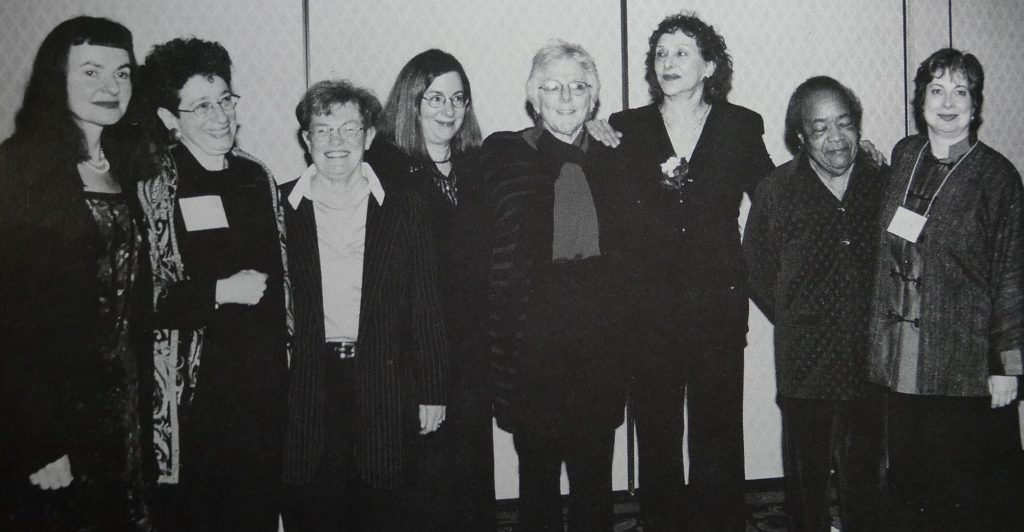
Recipients of the Committee on Women Awards, 2000 (left to right: Joanna Frueh, Flavia Rando, Mary D. Garrard, Norma Broude, Linda Nochlin, Carolee Schneemann, Samella Lewis, Ferris Olin). Photograph by Maria Politarhos.
Please join us in celebrating fifty years of feminism at CAA. We will share resources and perspectives on these histories throughout the year.
Fifty years ago in 1972, CAA founded its first committees devoted to women in the arts. A meeting of more than 250 women at the 60th Annual Conference titled “Meeting for Women Members of the College Art Association,” marked the starting point for the association’s focus on supporting and promoting the advancement of feminism in art. CAA’s board formalized its advocacy for women the same month by establishing the Committee on the Status of Women (COSW), the first committee to focus on women in CAA’s history. Linda Nochlin, who was on the CAA Board at the time, became its first chair followed by Ann Sutherland Harris in 1973.
The Women’s Caucus for Art (WCA) was also formed at CAA in 1972 in response to the Annual Conference, but in 1974, the WCA broke off from CAA to become its own independent nonprofit organization and rapidly increased its membership. Today, the WCA is a close affiliate of CAA, whose history is often intertwined with our own. The COSW was renamed the Committee on Women in the Arts (CWA) in 1996, and it continues to promote the recognition of women’s valuable contribution to the visual arts and to critical art-historical study; advocate for feminist scholarship and activism in art; develop partnerships with organizations with compatible missions; monitor the status of women in the visual-arts professions; provide historical and current resources on feminist issues; and support emerging artists and scholars in their careers. Notable individuals involved with this effort over the years have included award recipients, such as art historians Linda Nochlin, Norma Broude, and Mary Garrard, as well as artists Carolee Schneemann, Faith Ringgold, and Carrie Mae Weems.
The CWA’s session, “50th Anniversary of Committee on Women in the Arts: Looking Back, Moving Forward,” at CAA’s upcoming virtual Annual Conference will dive into this history. Taking place on February 18, 2022 from 11:00 a.m. – 12:30 p.m. CST, is chaired by Joanna P. Gardner-Huggett and includes a panel discussion with Judith K. Brodsky, Ferris Olin, Midori Yoshimoto, Carron P. Little, Kalliopi Minioudaki, and Zoë Charlton.
Women-centered content is also one of the main three content threads at the 110th Annual Conference. Check out these sessions here and register today to attend!
Judith Brodsky, Mary Garrard, and Ferris Olin, Co-authors of Chapter 11, “Governance and Diversity”
posted by CAA — December 17, 2021
As part of CAA’s 10-year anniversary celebration of its publication, The Eye, the Hand, the Mind: 100 Years of the College Art Association, chapter authors reflect on their contributions and how their impressions of the field have changed. Our final video in the series features Judith Brodsky, Mary Garrard, and Ferris Olin, who co-authored chapter 11, “Governance and Diversity.”
Involved not just in CAA, its Annual Conference, and its Committee on Women in the Arts (CWA), but also with CAA’s affiliate society the Women’s Caucus for Art, these three women represent pillars in the field of feminist art history.
In this video, they discuss the first 100 years of CAA’s history representing women and underrepresented groups, and point to the future: 2022 marks fifty years of the first committee to represent women at CAA. CAA is excited to honor this milestone at the 2022 Annual Conference and beyond.
Brodsky and Olin are each presenting at the upcoming 110th Annual Conference. See links underneath their bios below for more information on their sessions, panels, and talks.
SPEAKERS BIOGRAPHIES
Judith K. Brodsky is currently distinguished professor emerita at Rutgers University. She founded the Rutgers Center for Innovative Print and Paper, now renamed the Brodsky Center in her honor and located at the Pennsylvania Academy of Fine Arts. The Center has been instrumental in promoting the recognition of women artists and artists of color. She is also co-founder of the Rutgers Center for Women in the Arts and Humanities and The Feminist Art Project, a national and international program to promote women artists in the cultural milieu. With her colleague, Dr. Ferris Olin, she established the Miriam Schapiro Archives on Women Artists at Rutgers and was curator of the Mary H. Dana Women Artists Series at Rutgers from 2006-2013. Brodsky was the co-founder of the Women Artists Archive National Directory (WAAND), funded initially by the Getty Foundation, a digital directory of archives where the papers of women artists active in the US since 1945 are located. A printmaker and book artist, Judith’s work is in over 100 permanent collections. She has also organized and curated many exhibitions and has published extensively, including contributions to The Power of Feminist Art and SIGNS, A Journal of Women in Culture and Society; Junctures in Women’s Leadership: The Arts. Most recently she published the first book on the impact of feminist theory on digital technology in the arts titled Dismantling the Patriarchy, Bit by Bit: Feminism, Art, and Technology, Bloomsbury, 2021. She served as CAA’s President and received the Annual Recognition Award from CAA’s Committee on Women in the Arts, as well as past national president for ArtTable and Women’s Caucus for Art.
Details for Judith Brodsky’s participation in the 2022 Annual Conference: link.
Mary D. Garrard, professor emerita of art history at American University, Washington, D. C., is a scholar whose work has combined Italian Renaissance art with feminist studies. Her book, Artemisia Gentileschi: The Image of the Female Hero in Italian Baroque Art (Princeton, 1989), was a groundbreaking contribution to the field, that launched modern studies of the now-famous artist. In Artemisia Gentileschi Circa 1622: The Shaping and Reshaping of an Artistic Identity (University of California, 2001), Garrard addressed new critical issues in Gentileschi studies. Her third book, Artemisia Gentileschi and Early Modern Feminism, positions the artist among the feminist treatises and debates of her time (Reaktion Books, London, 2020). Beyond Artemisia, Garrard has written and spoken extensively on Italian Renaissance, Early Modern art, and feminist art history. With her colleague Norma Broude, Garrard created and edited three books that have become basic texts in art history and women’s studies courses, including Feminism and Art History: Questioning the Litany (1982); The Expanding Discourse: Feminism and Art History (1992); and Reclaiming Female Agency: Feminist Art History After Postmodernism (2005). Broude and Garrard also created and contributed to The Power of Feminist Art: The American Movement of the 1970s (1994).
Ferris Olin is distinguished professor emerita at Rutgers University, where she was the co-founder and co-director (with Judith K. Brodsky) of Rutgers Center for Women in the Arts and Humanities, and The Feminist Art Project, an international collaboration to make visible the impact of women on the cultural landscape. She also established the Miriam Schapiro Archives on Women Artists at Rutgers as well as the Margery Somers Foster Center, a research center focused on documenting women’s leadership in the public arena, and served as Associate Director of the Institute for Research on Women and earlier, Director of the Art Library. She was curator of the Mary H. Dana Women Artists Series at Rutgers from 1995-2006 and later (with Judith K. Brodsky) from 2006-2013. With Brodsky, Olin also created the Women Artists Archive National Directory (WAAND). Olin has also published broadly. Her most recent book, co-authored with Judith K. Brodsky, is called Junctures in Women’s Leadership: The Arts (Rutgers University Press, fall 2018). Olin has served on the boards of numerous non-profit organizations and was Vice-President of the College Art Association. She is the recipient of numerous awards, among them the Women’s Caucus for Art Lifetime Achievement Award and the College Art Association Committee on Women’s Annual Recognition Award (now known as Distinguished Feminist Award).
Details for Ferris Olin’s participation in the 2022 Annual Conference: link.
CAA signs AHA statement on Censorship and Prosecution by Chinese Authorities
posted by CAA — November 29, 2021
CAA has signed onto a statement released by the AHA that expresses alarm in response to the escalation of censorship and prosecution by Chinese authorities on Chinese citizens who deviate from the Communist Party line of hero worship. It asserts, “Such efforts strike at the very heart of historical scholarship, which depends on open-ended inquiry and a free exchange of ideas, wherever that inquiry leads, and whether or not those ideas cast aspersions on historical actors…. The AHA stands firmly against national laws and policies that in effect criminalize the historical enterprise.” Read the entire statement here.
CAA Interviews Mariam Ghani for this week’s member spotlight and signs on to Open Letter from Arts for Afghanistan
posted by Allison Walters — October 05, 2021
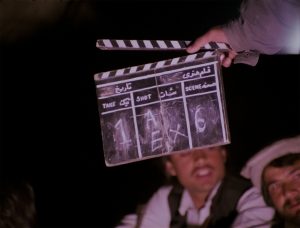
Mariam Ghani, What We Left Unfinished, 2019 (artwork © Mariam Ghani; film still provided by the artist)
Mariam Ghani’s film, What We Left Unfinished (2019), began as a project that pulled from Ghani’s experience digitizing the Afghan Film Archive, featuring five films that were shot but never edited during the communist period of 1978–1991. Now its title takes on new meaning with the Taliban’s recent takeover of the government and the evacuation of over a hundred-thousand individuals from Afghanistan. Many Afghani cultural workers, whether relocated, remaining, or watching from abroad, will need to reimagine or shift their practice to accommodate this new reality.
Addressing these issues, CAA had the privilege to talk with Mariam Ghani, this week’s member spotlight, and explore her practice as an artist, filmmaker, activist, and teacher. The daughter of former Afghani President, Ashraf Ghani, Mariam is based in Brooklyn and has spent her life in the US. Her work has often drawn from her connection to Afghanistan, in her relationship to the country as both an insider and an outsider. Dominant themes in her practice also speak to the current moment and to Middle Eastern histories, including border zones, transitions, intersecting cultures, national identities, trauma, memory, loss, and migration.
Interviewed by Laura Anderson Barbata, current CAA Vice President for Annual Conference and Programs and trans-disciplinary artist also based in Brooklyn, this conversation begins with a look at Ghani’s work and then dives into the multiple ways you can support those affected by the current crises. To show its support and solidarity, CAA has signed on to An Open Letter from Arts for Afghanistan.
Image provided by Mariam Ghani
Mariam recommends supporting the following organizations:
artsforafghanistan.org
artisticfreedominitiative.org
the Asian Contemporary Art Forum (givebutter.com/ACAF)
afghanwomensnetwork.org
womenforafghanwomen.org
Every week we will feature a CAA member in our member spotlight series who is currently demonstrating exceptional talent. Please feel free to nominate a fellow member or send along any personal upcoming events or achievements for consideration to caanews@collegeart.org. In your email, put “Member Spotlight” in the subject line.
CAA Signs on: AHA Releases Statement on Threats to Academic Conferences
posted by CAA — September 15, 2021
Read the PDF: Dismantling conference statement
The AHA has released a statement condemning the harassment and intimidation of participants, organizers, and university sponsors of the virtual conference “Dismantling Global Hindutva: Multidisciplinary Perspectives.” “Conferences, both in person and across digital platforms, are critical to the exchange of ideas among historians and our colleagues in other disciplines,” the AHA wrote. “Disruptions to a conference represent an assault on the principle of academic freedom, and the AHA stands unequivocally with participants in this conference and its sponsors in their right to exchange ideas without fear of threats and intimidation.”
To date, 15 organizations have signed onto this statement.
CAA’s Resources to Combat Departmental Closures in Art and Art History Departments
posted by CAA — July 09, 2021
For our members and the larger visual arts community, CAA is disheartened by recent and continued actions on departmental closures in Art and Art History departments. The following links offer resources to use as we continue to determine the actions going forward:
In 2020, CAA signed on to advocacy with the ACLS: http://www.collegeart.org/news/2021/02/01/caa-signs-on-to-acls-statement-on-recent-kansas-board-of-regents-actions/
Earlier Advocacy posts and response:
https://www.collegeart.org/news/2018/09/17/caa-to-issue-best-practices-for-addressing-proposed-changes/
https://www.collegeart.org/news/2018/11/12/caa-guidelines-arts-and-humanities/
The 2018 survey of universities with departmental closures:
https://www.collegeart.org/news/2018/11/08/colleges-facing-cuts-to-arts-and-humanities/
Since 2018, several other institutions have closed and continue to close. Today our constituency has been affected by this ongoing situation over the past 13 years. CAA cannot stop any institution of art, design or art-history from the decision, necessitated by financial situation or otherwise, to close. To best support our community, as a part of our ongoing repositioning and digital transformation, CAA has identified the importance and continued growth of an e-learning model and publications to recognize and support those currently and who continue to be affected.
CAA has a robust and active group of committees, Board of Directors, and other members who all continue to work together and move forward upcoming guidelines and best practices, to survey and respond to the ongoing needs of our constituencies. The advocates within our organization help strengthen the organization as a part of the community of large.
Support CAA using Amazon Smile
posted by CAA — June 22, 2021

Did you know that you can make a gift to CAA using Amazon Smile? Amazon donates 0.5% of the price of eligible smile.amazon.com purchases to the organization selected by customers — at no cost to you. Our charity link will automatically direct you to Amazon, where you will be asked to confirm that you would like your Amazon purchases to support CAA.
As a 110-year-old organization, we are proud to serve a global community of artists, designers, students, and scholars through advocacy, intellectual engagement, and a commitment to the diversity of practices and practitioners. During this pivotal moment it is more important than ever that we support our visual arts community. We hope that you will join us in our mission and help us bring our programs and publications to life by using Amazon Smile today.