CAA News Today
2024 Art History Travel Fund Grantees Announced!
posted by CAA — April 29, 2024
The Art History Fund for Travel to Special Exhibitions is designed to grant instructors of qualifying art history classes the resources to attend special museum exhibitions both in the US and abroad. These grants cover travel, accommodation, and admission fees for selected classes up to $10,000. Congratulations to the 2024 grantees!
University of Mississippi
Instructor: Kris K. Belden-Adams
Course: Art Now (Art of the 21st Century)
Exhibition: Whitney Biennial 2024
Location: The Whitney Museum, New York City
Penn State University
Instructor: Lindsay S. Cook
Course: Theories and Practices of Conservation
Exhibition: Rediscovering the Sculptures from Notre-Dame and The Medieval Library of Notre Dame of Paris
Location: Musée de Cluny, Paris
Applications for the next round of grants will be accepted by CAA beginning in fall 2024. Questions about the program can be sent to Cali Buckley, Manager of Grants and Awards and Director of the CAA-Getty International Program.
Jonathan Fineberg and Art Since 1940
posted by CAA — June 22, 2022
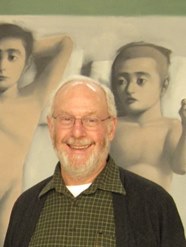
A prolific art historian and critic in the fields of 20th and 21st century art and the psychology of art, Jonathan Fineberg has shaped generations of students with his many publications and textbooks. As a long-time member of CAA, Fineberg describes his experience with the organization:
“Seymour Slive, one of my favorite art history professors in college told me I should join the College Art Association if I wanted to be an art historian. CAA was (is), he pointed out, my professional association! I signed up right away (in 1966) and have remained an active member ever since. I’ve served on the board, I started the “artist interviews” many years ago, I’ve chaired and participated in many sessions and committees over more than fifty years, and until COVID hit I think I only missed one annual conference – my personal protest against the racism and anti LGBTQ+ stance of the state of Louisiana (that was the year we went to New Orleans). I love CAA for the many things it does for artists and art historians.
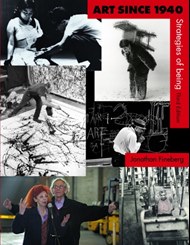
In order to give back this year I decided that I have made my fair share of royalties on my survey book Art Since 1940: Strategies of Being, so I took back the rights from the publisher and have given a high-resolution copy of the last edition to CAA for free download by any students and teachers who want it. You will find it here. I hope it inspires students to love contemporary art as I do and to bring them to join their fellow travelers in the CAA.”
CAA is immensely grateful for Fineberg’s generous donation to CAA, a digital version of his seminal work, Art Since 1940: Strategies of Being, 3rd Edition. Fineberg is offering this publication at no-cost access to both members and non-members for three years. A valuable pedagogical resource at many universities, this text is out of print, which presents a problem for many art history professors and students who cannot obtain copies. We are grateful for Fineberg’s donation, and for his fifty-plus-year membership in CAA.
CAA ANNOUNCES 2022 RECIPIENTS OF THE ART HISTORY FUND FOR TRAVEL TO SPECIAL EXHIBITIONS
posted by CAA — April 14, 2022
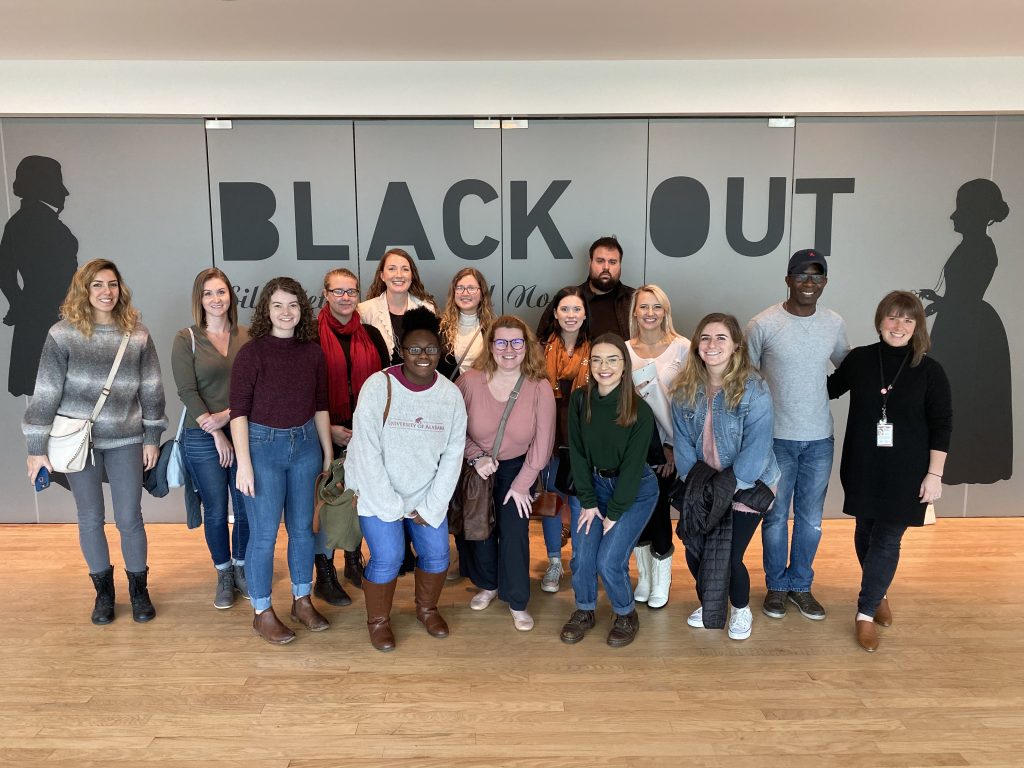
Grantee Rachel Stephens with her students from the University of Alabama at the Birmingham Museum of Art for the exhibition “Black Out: Silhouettes Then and Now” on on June 12, 2019.
CAA’s Art History Fund for Travel to Special Exhibitions is designed to award instructors of qualifying undergraduate and graduate art history classes funds to cover the costs (travel, accommodations, and admission fees) associated with students and instructors attending museum special exhibitions throughout the United States and worldwide.
The awardees for 2022 are:
Terri Geis, New York University, Abu Dhabi, United Arab Emirates
Course: “International Surrealisms”
Exhibition: Surrealism Beyond Borders, Tate London
Christopher Heuer, University of Rochester, NY
Course: “Pilgrimage/Exhibition/Biennale”
Exhibition: 59th Annual Venice Biennale, 2022, Theme: “The Milk of Dreams”
Allison Stagg, Technische Universität Darmstadt, Darmstadt, Germany
Course: “19th Century American and German Landscape Painting: Gendered Connections”
Exhibition: Women, Art, and Land: Reframing the Hudson River School at the Thomas Cole Historic Site, Catskill, NY
Applications for the next round of grants will be accepted by CAA beginning in fall 2022.
Announcing the 2020 Recipients of the Art History Fund for Travel to Special Exhibitions
posted by CAA — May 12, 2020
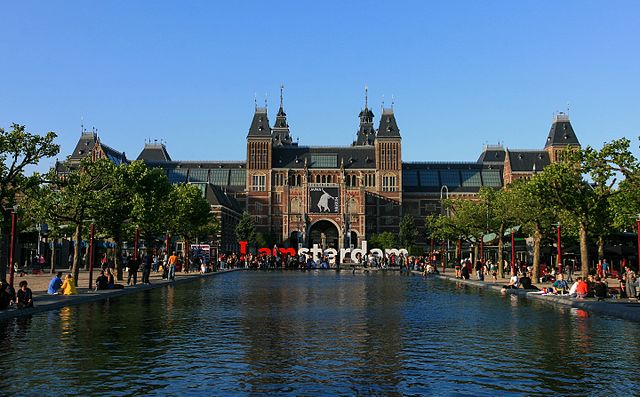
Rijksmuseum, Amsterdam
In fall 2018, we announced CAA had received an anonymous gift of $1 million to fund travel for art history faculty and their students to special exhibitions related to their classwork. The generous gift established the Art History Fund for Travel to Special Exhibitions.
The jury for the Art History Fund for Travel to Special Exhibitions has now selected the second group of recipients as part of the gift. This year’s awardees are:
Holly Flora, Tulane University, New Orleans, LA
Course: Art, Cosmopolitanism, and Intellectual Culture in the Middle Ages
Exhibition: Medieval Bologna: Art for a University City at the Frist Center for the Visual Arts, Nashville, TN
Caroline Fowler, Clark Art Institute, Williamstown, MA
Course: Slavery and the Dutch Golden Age
Exhibition: Slavery at the Rijksmuseum, Amsterdam
Maile Hutterer, University of Oregon, Eugene, OR
Course: Time in Medieval Art and Architecture
Exhibition: Transcending Time: The Medieval Book of Hours at The Getty Center, Los Angeles, CA
Erin McCutcheon, Lycoming College, Williamsport, PA
Course: Art & Politics in Latin America
Exhibition: Rafael Lozano-Hemmer: Unstable Presence at SFMOMA, San Francisco, CA
Shalon Parker, Gonzaga University, Spokane, WA
Course: Women Artists
Exhibition: New Time: Art and Feminisms in the 21st Century at the Berkeley Art Museum and Pacific Film Archive, Berkeley, CA
Rebecca Pelchar, SUNY Adirondack, Queensbury, NY
Course: Introduction to Museum Studies
Exhibition: Marcel Duchamp: The Barbara and Aaron Levine Collection at the Hirshhorn Museum, Washington, DC
As museums and schools have moved online in light of the coronavirus pandemic, we are being as flexible as necessary with the dates of travel to accommodate all award winners and classes.
The Art History Fund for Travel to Special Exhibitions supports travel, lodging, and research efforts by art history students and faculty in conjunction with special museum exhibitions in the United States and throughout the world. Awards are made exclusively to support travel to exhibitions that directly correspond to the class content, and exhibitions on all artists, periods, and areas of art history are eligible.
Applications for the third round of grants will be accepted by CAA beginning in fall 2020. Deadlines and details can be found on the Travel Grants page.
Explore Our List of Resources for Teaching Remotely, Emergency Grants, and More
posted by CAA — March 09, 2020
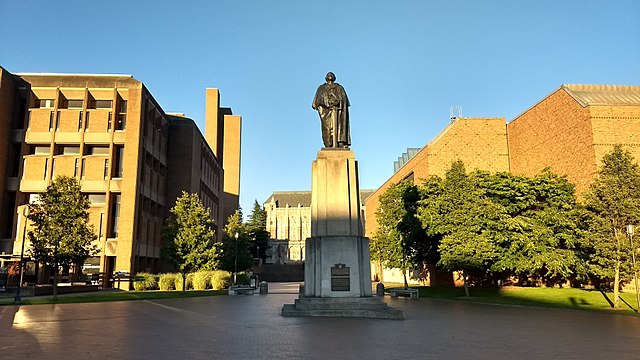
The University of Washington announced last week that it would cancel in-person classes and have students take courses and finals remotely. Image: The UW campus in 2017, photo by Priyaranjan Pattnayak.
To help stop the spread of COVID-19 throughout the United States, several universities, including the University of Washington, Stanford, Columbia and Princeton, have chosen to temporarily forgo in-person classes in favor of remote learning. The decision to transition classes is part of an attempt at “social distancing,” the practice of limiting large gatherings and in-person contact to slow the transmission of the virus.
In most of these cases, it has been left up to faculty to make decisions about how to move their classes online. In an effort to crowdsource resources, we’ve gathered tweets and links that instructors are sharing to help, and will continue to update this list as we receive new ones.
For the most up-to-the-moment updates, please visit our Twitter feed. You can also explore resources others are sharing here.
Is your institution canceling in-person classes? Log it here:
If you hear of colleges and universities cancelling F2F classes (including moving them online), please add them to this Googledoc. Thanks to @BryanAlexander and all who are helping gather & share info on the situation. #covidcampus https://t.co/XlwjeG4Nnd
— Laura R. Prieto (@Laura_R_Prieto) March 9, 2020
Resources for getting started:
So many of us in #higherEd #academicTwitter are looking at teaching online. We’ve collected some resources to help support you and your students. https://t.co/trA7WFCvrm #covidCampus
— Jacqueline Wernimont (@profwernimont) March 10, 2020
Faculty/teaching colleagues at colleges and universities. I am going to start a bare bones thread with some resources about moving to teach online. I am going to work this weekend on contingency plans myself and here are some links I need to read:
— Barbara Smith (@nanaslugdiva) March 6, 2020
ART & DESIGN EDUCATORS: considering schools seem to be going online only, let’s start a thread of best practices for teaching art & design classes online. What platforms? How do you structure you class? How do you give lectures? Run critiques? Let students show work?
— Mitch Goldstein (@mgoldst) March 10, 2020
Stanford is taking its classes fully remote. @beth_seltzer and I created (and are actively updating) a resource for our instructors to provide short-term support solutions. If you’re needing something similar, feel free to check out what we’ve done: https://t.co/ylyPOBQsC6
— Jenae Cohn (@Jenae_Cohn) March 7, 2020
Princeton will switch to digital classes after Spring Break to mitigate possibility of #COVID2019. I was part of the task force that built Harvard’s digital infrastructure during our week-long Boston Bombing lockdowns in 2013. Dynamic & interactive learning can thrive online!
— RL Barnes (@DigitalHistory_) March 9, 2020
On including your students in an online learning plan:
As mentioned earlier- critical question here. Talk to your students and set up a backup plan. Don’t rely on your institution. As a thought- ask your students what they can do if stuck at home for X number of weeks. Involve them in the process when possible. #CovidCampus https://t.co/SPC0OWPeHd
— Dennis E. Showalter (@DShowalterPhd) March 9, 2020
Explore more resources using #CovidCampus:
*USEFUL RESOURCES ALERT* follow the hashtag: #CovidCampus https://t.co/Kvm9lzP5s6
— Eric Mistry, MA, MBA (@ericmistry) March 9, 2020
A great resource for art historians ⬇️ #CovidCampus https://t.co/Zv1K88zJCB
— CAA Advancing Art & Design (@caavisual) March 12, 2020
HELPFUL LINKS
As Art Schools Cancel Student Shows, One Instagram Account Pledges to Give Them Life (ARTnews)
The Ultimate Guide to Virtual Museum Resources, E-Learning, and Online Collections (MCN)
Online Art & Design Studio Instruction in the Age of “Social Distancing” (Facebook group)
COVID-19 Freelance Artist Resources (link)
A New Medical Emergency Grant for Artists (Hyperallergic)
15 Tips for Working Remotely (American Alliance of Museums)
Online Teaching – In the context of COVID19 (Simon D. Halliday)
Art History Resources via Smarthistory (link)
Internet Assistance for Low-Income Families (link)
RELATED READING
Opinion: Please Do a Bad Job of Putting Your Courses Online (Rebecca Barrett-Fox)
The Coronavirus and the Ruptured Narrative of Campus Life (The New Yorker)
How to Close Colleges Without Hurting Vulnerable Students (The Washington Post)
Have a resource to contribute? Email Joelle Te Paske, CAA media and content manager, at jtepaske@collegeart.org
Now Accepting Applications for the Art History Fund for Travel to Special Exhibitions
posted by CAA — October 22, 2019
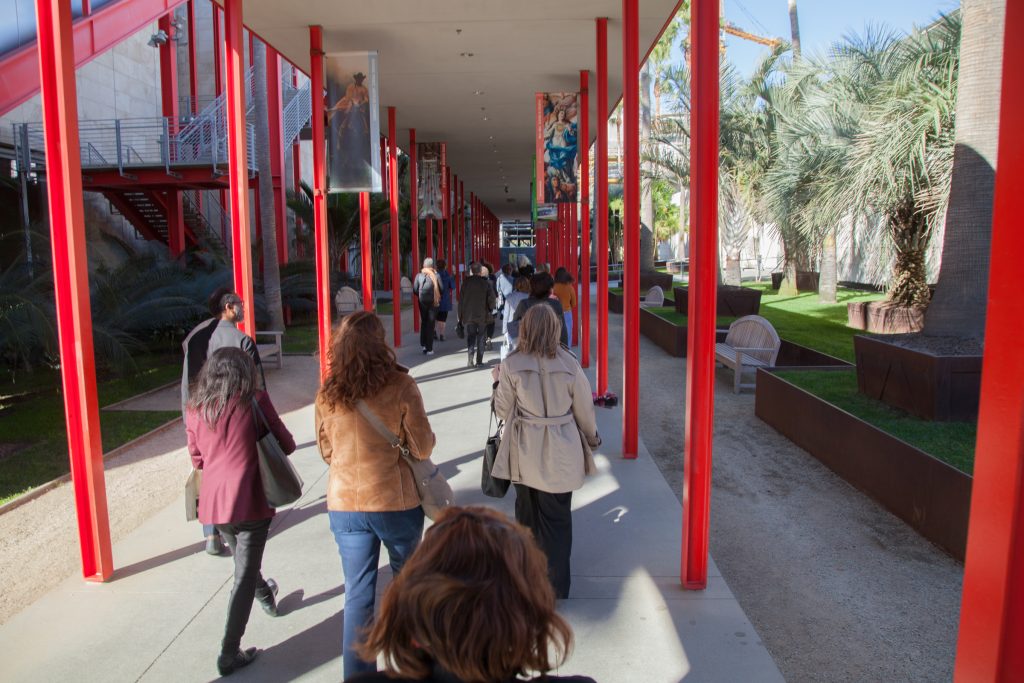
A visit to LACMA at the 2018 Annual Conference in Los Angeles. Photo: Rafael Cardenas
In August 2018, we announced that CAA had received a major anonymous gift to fund travel for art history faculty and their students to special exhibitions related to their classwork. After a successful inaugural year, we’re pleased to now be accepting applications for the second grant cycle of the Art History Fund for Travel to Special Exhibitions.
The fund is designed to award up to $10,000 to qualifying undergraduate and graduate art history classes to cover students’ and instructors’ costs (travel, accommodations, and admissions fees) associated with attending museum special exhibitions throughout the United States and worldwide. The purpose of the grants is to enhance students’ first-hand knowledge of original works of art.
Applications are due by January 15, 2020.
GUIDELINES
- These awards support student and instructor travel costs incurred while visiting museum special exhibitions in the United States and worldwide.
- Graduate and undergraduate art history classes are eligible to apply for funds to attend temporary museum exhibitions in the United States and other countries. Travel to see permanent collections is not eligible, nor would be performances and related ephemeral events. Exhibitions on any artist, period, or area of art history are eligible for funding.
- Awards are made directly to institutions whose institutional membership in CAA is in good standing.
- Applicant instructors must have individual membership in CAA and be in good standing.
- Funds may only be used to travel to exhibitions that correspond directly to the content of the class.
- The size of the class for which a grant may be awarded shall not be larger than fifteen (15) students.
- Awards may only be used for admission fees, travel and lodging expenses for the instructor and class members. Every attempt to attain group rates must be made.
Completed applications must include the following:
- Instructor’s curriculum vitae
- A course description and syllabus that identifies and explains the exhibition as part of the pedagogical aim of the course – Be sure to detail how the visit is integrated into the course (up to 500 words)
- An explanation of the instructor’s expertise in the subject matter of the exhibition (up to 250 words)
- A tentative itinerary of travel and lodging (up to 250 words)
- A budget detailing transportation and lodging expenses associated with traveling to and from the exhibition and lodging and admission costs, including an explanation of how any travel and accommodation funds in excess of the award will be raised
- A letter of support from the instructor’s department chair or dean
CRITERIA
- How well the exhibition fits within the pedagogical aim of the course.
- The scholarly merit of the exhibition.
- Financial need. Would the class not be able to visit the exhibition, otherwise?
AWARDS
Awards will not exceed $10,000 per class, per exhibition.
All travel must be completed between June 2020 – May 2021.
REPORTING
Awardees must submit a report of up to 1,000 words which explains in detail the benefits received and problems encountered in the course of travel to the exhibition for which support was received.
*Reports must be submitted to CAA no later than two months after the completion of travel.
ANNUAL CONFERENCE
Recipients of the award will be guaranteed a session at the subsequent CAA Annual Conference after their travel has ended. CAA will make the session available, but costs associated with attending the conference, including registration, membership, travel, and accommodation, will be the participants’ responsibility.
TIMELINE
The deadline for application materials is January 15.
Member Spotlight: Arnold J. Kemp
posted by CAA — September 18, 2019
We are delighted to welcome Arnold J. Kemp, in conversation with Huey Copeland, as one of our Distinguished Artist Interviews at the 2020 CAA Annual Conference. Learn more.
Up next in our Member Spotlight series, we are highlighting the work of Arnold J. Kemp, professor of Painting and Drawing and Dean of Graduate Studies at the School of the Art Institute of Chicago (SAIC). Joelle Te Paske, CAA’s media and content manager, corresponded recently with Professor Kemp to learn more about his work. Read the interview below:
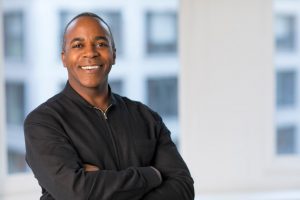
Arnold J. Kemp. Photo: Todd Rosenberg for the School of the Art Institute of Chicago
Where are you from originally?
I am from the 6 square miles of a Boston neighborhood called Dorchester. The back of my high school, which was located in the Fenway, faced the Isabella Stewart Gardener Museum and was just a few blocks away from the Museum of Fine Arts. I took classes at the MFA through an after school program supported by the Boston Public School system, and I was lucky to be asked to take classes at the School of the Museum of Fine Arts, Boston during the summers of my sophomore and junior years of high school.
During my senior year in high school I went to New York City to visit my older sister, and while she was at work I spent the day at the Metropolitan Museum of Art. I was entranced with the African and Oceanic collections there and I learned all that could. This was a transformative experience that has much to do with the way I have surrounded myself in an immersive life in the arts, culture, and literature.
What pathways led you to the work you do now?
After graduating high school I took part an internship working for the Smithsonian’s National Air and Space Museum. I learned a lot there about how museums functioned. Then, in college at Tufts University, I worked for the Boston Center for the Arts while my roommates and I ran a small organization that showed our peers—other young artists and writers—and invited guests such as Tim Rollins, Emett Gowin, and Marie Howe. I was aware that not far away, the Dark Room Collective—which included Ellen Gallagher, Kevin Young, Tisa Bryant, Thomas Sayers Ellis, and Sharan Strange—was doing similar things. In fact, Ellen Gallagher and I worked together on the night shift at the Museum School’s library.
In 1991, when the art world was still struggling to distill the pain and loss of the AIDS epidemic, I moved to San Francisco and marched with ACT UP. Around that time I also started working at the not-for-profit experimental space called New Langton Arts, and I participated in the later days of conferences organized by the National Association of Artist’s Organizations (NAAO).
At Langton I met role models such as Renny Pritikin, Judy Moran, Jon Winet, Holly Block, Ann Philbin, and James Elaine who believed in spaces started by artists to support artists. I also met many great artists and writers who were central to the literary movement called New Narrative and places such as Small Press Traffic, The Lab and The Luggage Store gallery. Kevin Killian, Dodie Bellamy, Kathy Acker, Bob Glück, Barret Watten, Leslie Scalpino, Quincy Troupe, Harryette Mullen had a big influence on me. These people are important to me because they encouraged me to be an artist, a poet, and a curator. They showed me how to curate and showed me values of good organizations that supported communities struggling for relevance.
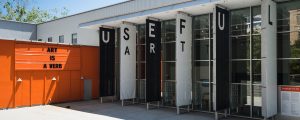
Courtesy Yerba Buena Center for the Arts.
At that time I had no idea that I would end up teaching. I was supporting myself by working for arts non-profits. I kept doing more and more in this arena and eventually became an assistant curator and then associate curator at Yerba Buena Center for the Arts (YBCA). I worked there for ten years and curated solo and group exhibitions and worked with artists such as David Hammons, Patty Chang, Carrie Mae Weems, Fred Wilson, Ellen Gallagher, Laylah Ali, Bruce Conner, John Baldessari, Michael Joo, and so many others. I even met Bill T. Jones, Meredith Monk, Philip Glass, and Conlon Nancarrow while working at YBCA. I worked there from its start in 1993 until 2003 when I left to attend graduate school at Stanford.
Teaching came somewhat naturally while I was pursuing an MFA at Stanford. After grad school and after struggling for a few years as a New York artist, an opportunity arose for me to direct the MFA in Visual Studies Department and to teach at the Pacific Northwest College of Art in Portland, Oregon. Prior to teaching in Portland I had an exhibition there and curated and organized a public program around my exhibition as part of Portland Institute for Contemporary Art’s TBA Festival. So much seemed possible in Portland, and I developed a true art family there.
The desire to experience working with larger schools and more diverse populations led me to positions as Chair of the Department of Painting and Printmaking at Virginia Commonwealth University (VCU) and also to my current position as Dean of Graduate Studies at the School of the Art Institute of Chicago (SAIC).
What are you working on currently?
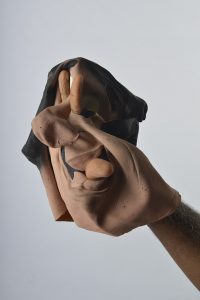
Arnold J. Kemp, Untitled, 2018, archival pigment print, 61 x 41 inches. Courtesy the artist.
I am always busy in the studio. I just completed delivering 23 works to the set of a remake of a Hollywood film that is currently being shot in Chicago. It turns out the producer of Jordan Peele’s films has been looking at my work for a long time, and I am glad that this opportunity has come my way.
I am also preparing for a solo show opening at the Los Angeles-based nonprofit JOAN in September 2020, followed by a solo show at Fourteen30 Contemporary, my gallery in Portland. For both these shows I will exhibit paintings and sculptures. Perhaps there will be a performance of one of my plays that have been staged in art galleries and artists’ spaces such as Biquini Wax EPS in Mexico City.
I also just joined the board of Threewalls, a Chicago-based nonprofit with an itinerant exhibition program that supports and encourages art practices that respond to lived experience, encouraging connections beyond art. As part of Threewalls’ board I will be involved again in expanding the discourse around the presentation and exhibition of contemporary art—from Threewalls, to the fourth wall, to breaking down walls. This is where itinerancy comes into play as the presentation model for Threewalls.
Having lived and practiced as an artist, writer, curator and educator in Boston, San Francisco, New York, Portland, Chicago and Richmond, I have had a life that is productively itinerant!
How would you say poetry weaves itself through your work?
For many years theses were separate activities, but in 2012 I began writing theatrical works with spoken lines that are meant to be performed in galleries by non-actors chosen from the community in which the piece is performed. Often the pieces concern that community so I might sometimes have a local artist or curator play themselves. This happened most recently at the venue in Mexico I mentioned, Biquini Wax EPS, in a farce that I wrote based on my experiences in the art and academic worlds. The piece was translated into Spanish and performed by local artists, writers, curators, and activists. I think of the pieces as time based-sculpture. The performance was just one part of a big show titled “When the Sick Rule the World” after Dodie Bellamy’s essay of the same name.
What is a favorite exhibition you’ve worked on over the years?
When I was at Pacific Northwest College of Art I curated a two-person show of B. Wurtz and Xylor Jane. There was a catalog and public program, and it was great to bring my San Francisco, New York, and Portland communities together. Xylor Jane is painter I have known from way back in my San Francisco days. Her work is formally beautiful and inspired by numbers, the Fibonacci sequence and the color sequences of ROYGBIV. She accomplishes a lot in visually intense abstractions that are based on logical forms. B. Wurtz is older than Xylor and is more of a conceptualist, having gone to school at CalArts in its heyday. Some of his classmates were Mike Kelly and Tony Oursler. He took classes with [Michael] Asher. The show was rigorous and unexpected—it did a lot to get students to think out of the box.
Do you have a favorite artist or exhibition in general?
I am not sure, at this point, if I have favorite artists anymore, but I recall The Museum as Muse which was curated by Kynaston McShine for MoMA as being a terrifically aesthetic, intellectual, and poetic exhibition that sought to give voice to the complicated relationship between museums and artists in light of history and institutional critique. I am fortunate enough to have seen it and to also have the terrific catalog. I feel that McShine as an art world personage needs to be studied and written about. He was important not just for being the curator of Primary Structures and Information but also for being of black Caribbean descent (he was born in Trinidad) and for being a one-time the lover of Frank O’Hara. Paradoxically, his work at MoMA also caused the Guerrilla Girls to organize and fight for greater inclusion of women and people of color in New York museums. No one has dealt with McShine’s legacy or his biography in the way they should. McShine was complicated and private, and so brilliant and influential.
When did you first become a CAA member?
I joined CAA in 2013 because as a department chair at VCU’s School of the Arts I wanted to stay in touch with artists, historians, and theorists from around the country. There are certain people who I aim to see at every conference just so that we can catch up and talk about the field and find ways to organize and help each other. In some ways the CAA reminds me of NAAO conferences that I used to attend in the 1990s.
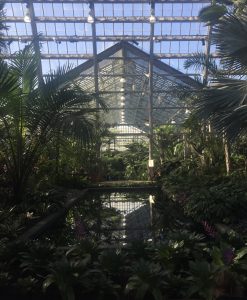
Garfield Park Conservatory. Photo: Joelle Te Paske
What should people make sure not to miss while they’re in Chicago for the 2020 conference?
In Chicago there is no such thing as bad weather, only bad clothing, so I suggest bringing a warm coat! Also, go to Garfield Park Conservatory—one of the largest and most stunning botanical conservatories in the nation with thousands of plant species from around the world throughout eight indoor display gardens.
What is your must-read book at the moment?
I would have to say Housing Shaped by Labour: The Architecture of Scarcity in Informal Settlements by Ana Rosa Chagas Cavalcanti.
How do you balance your artistic and professional roles?
Surround yourself with the things and people that you love. That is the only way I have been able to find balance. I find balance because it is a necessity and loving what I do makes it worth the time and effort.
ARNOLD J. KEMP BIOGRAPHY
Arnold J. Kemp is an interdisciplinary artist living in Chicago. The recurrent theme in his drawings, photographs, sculptures and writing is the permeability of the border between self and the materials of one’s reality. Kemp’s works are in the collections of the Metropolitan Museum of Art, The Studio Museum in Harlem, The Berkeley Art Museum and Pacific Film Archive, The Portland Art Museum, The Schneider Museum of Art, and the Tacoma Art Museum. He has received awards from the John Simon Guggenheim Memorial Foundation, the Joan Mitchell Foundation, The Pollock-Krasner Foundation, and Portland Institute for Contemporary Art. His work has been exhibited recently in Chicago, Mexico City, New York, San Francisco and Portland. His work was also shown in Tag: Proposals On Queer Play and the Ways Forward at the ICA Philadelphia. Kemp was a founding curator at Yerba Buena Center for the Arts from 1993-2003 and is currently the Dean of Graduate Studies at the School of the Art Institute of Chicago.
Submit a Proposal for Idea Exchange at CAA 2020
posted by CAA — September 16, 2019
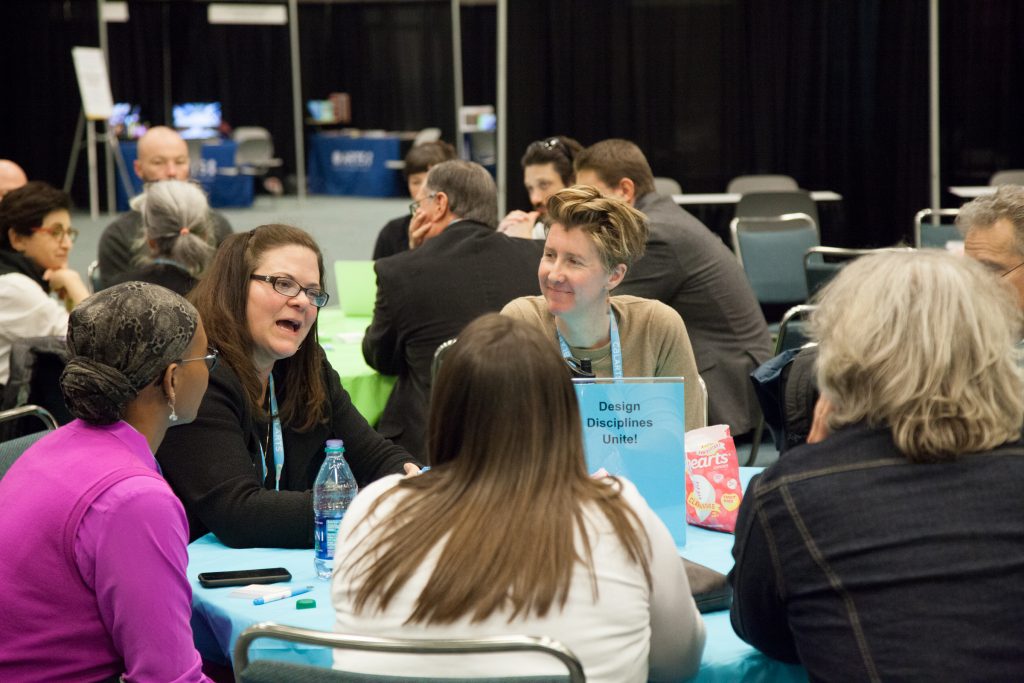
Idea Exchange at the 2018 CAA Annual Conference. Photo: Rafael Cardenas
We launched Idea Exchange at the 2018 Annual Conference in Los Angeles in response to members who expressed an interest in holding informal roundtable discussions on topics ranging from fellowship applications and gallery representation to student engagement in the classroom and preserving women artists’ legacies. See a list of previous discussion topics here.
We’re offering Idea Exchange again in 2020 and we’re looking for CAA members to serve as discussion leaders.
Propose a topic that you would like to discuss with your colleagues for a sixty-minute roundtable at the conference. It can relate to professional development, teaching, or current events, such as the debate surrounding Confederate monuments or the #MeToo movement in the arts. Be creative. The conversations are meant to be lively and engaging. Please submit your Idea Exchange proposals by November 1, 2019.
In order to submit an Idea Exchange topic, you will need to have your member ID and password ready. If you do not have an individual ID number and password or you do not know it, please contact member services by email at membership@collegeart.org or by phone at 212-691-1051, ext. 1.
Idea Exchange will be held in the Hilton Chicago, Lower Level, Salon B, during the following times:
Wednesday, February 12: 10:30 AM; 12:30 PM; 2:00 PM; 4:00 PM
Thursday, February 13: 10:30 AM; 12:30 PM; 2:00 PM; 4:00 PM
Friday, February 14: 10:30 AM; 12:30 PM; 2:00 PM; 4:00 PM
Saturday, February 15: 10:30 AM; 12:30 PM
For more information on Idea Exchange, contact Mira Friedlaender, manager of the Annual Conference, at mfriedlaender@collegeart.org or by phone at (212) 392-4405.
CAA Announces Inaugural Recipients of the Art History Fund for Travel to Special Exhibitions
posted by CAA — June 19, 2019
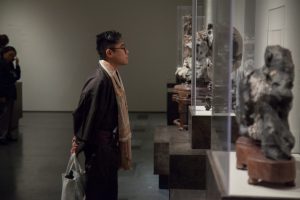
2018 CAA Annual Conference. Photo: Rafael Cardenas
In fall 2018, we announced CAA had received an anonymous gift of $1 million to fund travel for art history faculty and their students to special exhibitions related to their classwork. The generous gift established the Art History Fund for Travel to Special Exhibitions.
The jury for the Art History Fund for Travel to Special Exhibitions met in May 2019 to select the first group of recipients as part of the gift.
The awardees are:
Catherine Girard, Eastern Washington University
Class: Topics in Art History: Manet Inside Out
Exhibition: Manet and Modern Beauty at The J. Paul Getty Museum, Los Angeles
Luis Gordo Peláez, California State University Fresno
Class: Arts of the Colonial Andes
Exhibition: Art & Empire: The Golden Age of Spain at The San Diego Museum of Art
Alison Miller, University of the South
Class: Japanese Print Culture
Exhibition: Yoshitoshi: Spirit and Spectacle at the Minneapolis Institute of Art
Rachel Stephens, University of Alabama
Class: American Portraiture
Exhibition: Black Out: Silhouettes Then and Now at the Birmingham Museum of Art
“We’re delighted to announce the inaugural recipients of the Art History Fund for Travel to Special Exhibitions, a groundbreaking CAA program designed specifically to enhance students’ first-hand knowledge of works of art,” said Hunter O’Hanian, CAA’s executive director. “The new Fund places a spotlight on the critical work art history scholars are doing to grow the field, with CAA as the go-to organization supporting and advancing their work.”
The Art History Fund for Travel to Special Exhibitions supports travel, lodging, and research efforts by art history students and faculty in conjunction with special museum exhibitions in the United States and throughout the world. Awards are made exclusively to support travel to exhibitions that directly correspond to the class content, and exhibitions on all artists, periods, and areas of art history are eligible.
Applications for the second round of grants will be accepted by CAA beginning in fall 2019. Deadlines and details can be found on the Travel Grants page.
Now Accepting Applications for the Art History Special Exhibition Travel Fund
posted by CAA — October 16, 2018
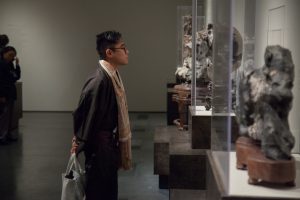
Attendee at 2018 CAA Annual Conference in Los Angeles. Photo: Rafael Cardenas
In August, we announced that CAA received a major anonymous gift of $1 million to fund travel for art history faculty and their students to special exhibitions related to their classwork. We’re pleased to now be accepting applications for the newly created Art History Special Exhibition Travel Fund.
The fund is designed to award up to $10,000 to qualifying undergraduate and graduate art history classes to cover students’ and instructors’ costs (travel, accommodations, and admissions fees) associated with attending museum special exhibitions throughout the United States and worldwide. The purpose of the grants is to enhance students’ first-hand knowledge of original works of art.
Applications are due by January 15, 2019.
GUIDELINES
- These awards support student and instructor travel costs incurred while visiting museum special exhibitions in the United States and worldwide.
- Graduate and undergraduate art history classes are eligible to apply for funds to attend temporary museum exhibitions (not exhibitions on permanent display) in the United States and other countries. Exhibitions on any artist, period, or area of art history are eligible for funding.
- Awards are made directly to institutions whose membership in CAA is in good standing. Applicant instructors must be individual members of CAA in good standing. Funds may only be used to travel to exhibitions that correspond directly to the content of the class. Ideally, classes will be no larger than fifteen students and planned to benefit from the special exhibition (for instance, a seminar on the subject of the exhibition).
- Awards may only be used for admission fees, travel and lodging expenses for the instructor and class members. Every attempt to attain group rates must be made.
Completed applications must include the following:
- An application form
- Instructor’s curriculum vitae
- A course description and syllabus that identifies and explains the exhibition as part of the pedagogical aim of the course
- An explanation of the instructor’s expertise in the subject matter of the exhibition
- A tentative itinerary of travel and lodging
- A budget detailing transportation and lodging expenses associated with traveling to and from the exhibition and lodging and admission costs, including an explanation of how any travel and accommodation funds in excess of the award will be raised
- A letter of support from the instructor’s department chair or dean
AWARDS
Awards will not exceed $10,000 per class, per exhibition.
ANNUAL CONFERENCE
Recipients of the award will be guaranteed a session at the subsequent CAA Annual Conference after their travel has ended. CAA will make the session available, but costs associated with attending the conference, including registration, membership, travel, and accommodation, will be the participants’ responsibility.
TIMELINE
The deadline for application materials is January 15, 2019.