CAA News Today
Valerie Steele, Director and Chief Curator of the Museum at FIT, to Deliver CAA115 Convocation Keynote Address
posted by CAA — October 26, 2026
.
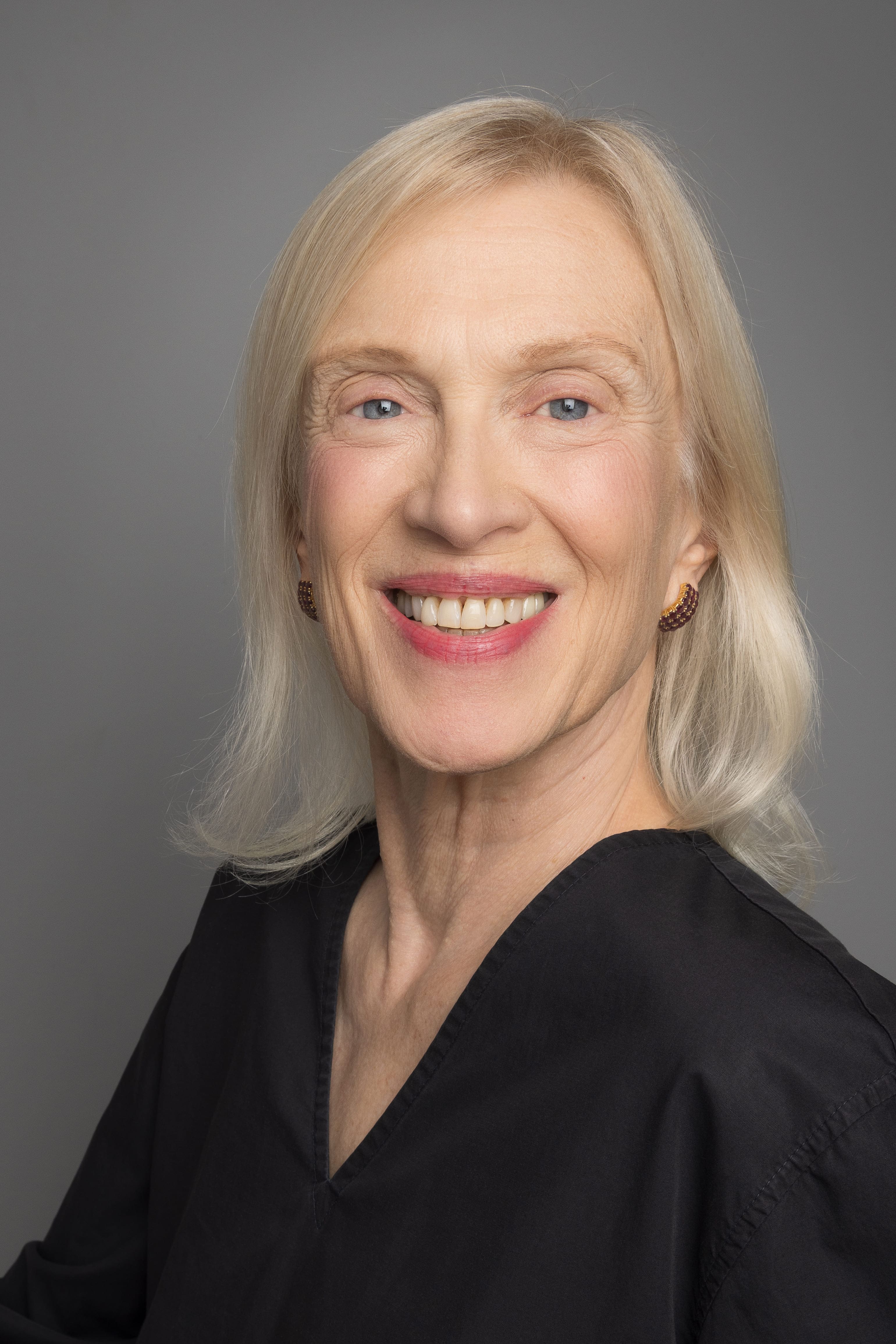
We are delighted to announce that Valerie Steele will deliver the Convocation keynote address at the CAA 115th Annual Conference!
Steele is Director and Chief Curator of The Museum at FIT, where she has organized more than twenty-five exhibitions since 1997, including The Corset: Fashioning the Body, London Fashion, Gothic: Dark Glamour; A Queer History of Fashion: From the Closet to the Catwalk, Pink: The History of a Punk, Pretty, Powerful Color, Paris, Capital of Fashion, and Dress, Dreams, and Desire: Fashion and Psychoanalysis.
She is also the author or editor of more than thirty books, including Paris Fashion: A Cultural History, Women of Fashion, Fetish: Fashion, Sex and Power, The Corset, Gothic: Dark Glamour, Dress, Dreams, and Desire: A History of Fashion and Psychoanalysis, and Fashion Designers A-Z: The Collection of The Museum at FIT. Her books have been translated into Chinese, French, German, Italian, Portuguese, Russian, and Spanish. In addition, she is founder and Editor-in-Chief of Fashion Theory: The Journal of Dress, Body & Culture, the first scholarly journal in fashion studies.
Steele possesses a gift for communicating serious scholarship to a general audience. She has appeared on The Oprah Winfrey Show and Undressed: The Story of Fashion. Instrumental in the creation of the modern field of fashion studies, she has raised awareness of the cultural significance of fashion. Described in The Washington Post as one of “fashion’s brainiest women” and by fashion critic Suzy Menkes as “the Freud of fashion,” she was listed as one of the “People Shaping the Global Fashion Industry” in the Business of Fashion 500. Steele holds a PhD in Modern European Cultural and Intellectual History from Yale.
CAA115 Convocation will be held on Wednesday, February 3, 6:00–7:30 p.m. ET at the New York Hilton Midtown. The event will also be livestreamed via YouTube.
Register now for the CAA 115th Annual Conference, February 3–6, 2027!
Member Spotlight: Meet the new Editor-in-Chief of caa.reviews
posted by CAA — October 01, 2026
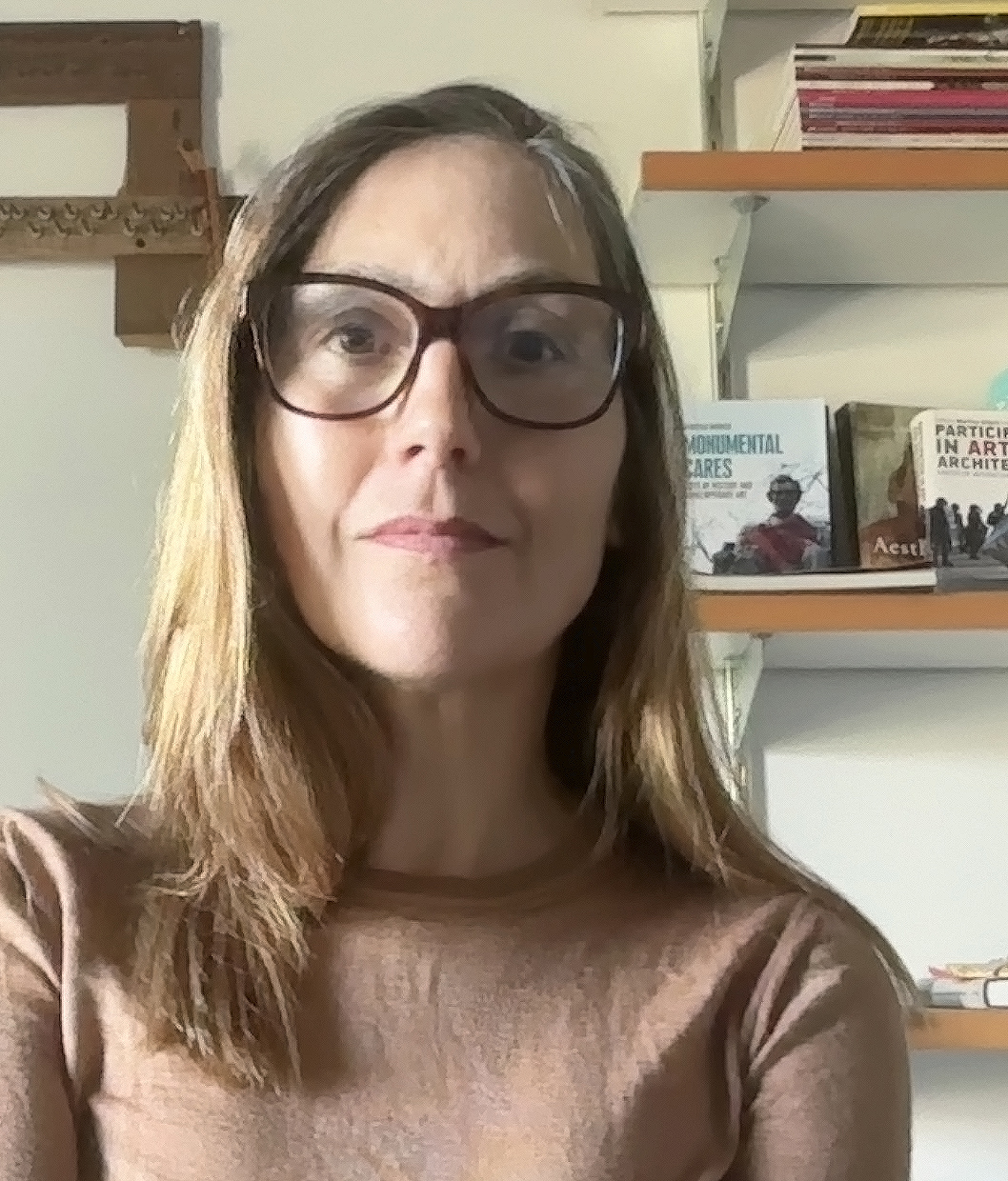
caa.reviews welcomes new EIC Mechtild Widrich!
caa.reviews is pleased to announce its new editor, Mechtild Widrich. Read our recent interview with Mechtild below!
Can you tell our members about your current academic post and research focus?
I am currently department chair of Art History, Theory, and Criticism at the School of the Art Institute of Chicago. My research is broadly concerned with art in public space, from performance to monuments, as well as aesthetic theory. An article I co-wrote with Erika Doss, “Gift Horses,” just came out in Oxford Art Journal. It looks critically at two equestrian statues from the 1920s that happen to stand right in front of my office in downtown Chicago. So, in a sense, my research is literally right outside my window.
You have also served as Art Journal’s reviews editor. What is it about publishing reviews that you find relevant? Where do reviews fit into the larger milieu of scholarly publishing?
In the best cases, reviews are a conversation. They are a way of engaging with current discourse, foregrounding marginalized art histories, amplifying publishers beyond the dominant US presses, and—ideally—maintaining a spirit of discovery and a shared pursuit of knowledge.
Reviews are vital tools in our field because they give new publications a place in the larger conversation and help shape the direction of art historical inquiry. This is especially important because some of these books are expensive, and individual scholars are much less likely to encounter them than libraries are.
Realistically, reviews also matter enormously to authors. They can be important for tenure and promotion, and they can affect a book’s visibility and sales. So they are part of the ecosystem of how academia works. And a review doesn’t have to be an uncritical rave to have that positive effect. A thoughtful, engaged review—even a critical one—can give a book a much longer life.
What motivated you to join caa.reviews, and what do you want to accomplish during your term as Editor-in-Chief?
I have been a fan of caa.reviews for years. The fact that the reviews are accessible everywhere, for free, makes it an immensely important resource. The quality is also very high, and the field editors are real experts who do this labor as a service to the field.
One of my aims is to nurture a diverse and globally representative team of field editors. I also want to think expansively about what belongs within the publication: architecture, design, craft, theory, exhibitions, and other areas alongside art history, and perspectives informed by feminist, queer, postcolonial, and racially diverse approaches.
I am deeply committed to scholarly integrity, ensuring that our rules of conduct are followed. But I am also genuinely curious about what happens when all of this research reaches us through books and reviewers. What can we learn about the state of global research on art by paying close attention to what gets reviewed, who is doing the reviewing, and how those conversations unfold? It would be hard to find a broader vantage point on the field.
How does your research and public scholarship dovetail with your vision for the journal?
I came to academia from curating and the nonprofit art world, so I have always appreciated both the insularity of art communities and subcultures and the value of art reaching a larger audience. A museum- or gallery-goer, a tourist encountering a biennial for the first time, or a student taking a required humanities class can be just as valuable an interlocutor as the senior expert in your field. Their perspectives are different, and their questions are often much more direct.
My work on monuments, on remembering and making history visible, and on performance art that exposes the social structures quietly shaping our existence almost always deals with making things public. Journals do this too. But open access online journals—and reviews that engage with authors and exhibitions in ways that open them up to new audiences—can make that public dimension especially powerful.
And finally, what are you reading and/or viewing these days—both within and outside your research demands?
In terms of exhibitions, the 2026 Venice Biennale, Minor Keys, was, despite the mixed reviews, very interesting. Curator Koyo Kouoh tragically passed away before the show opened, but I think her collaborators worked thoughtfully to fulfill her plan. That seems rare in today’s ego-driven attention economy.
Closer to home, the Museum of Contemporary Art Chicago has a show in their stairwell galleries called From the Center, exploring the many ways the critic, historian, and activist Lucy Lippard has challenged the mainstream art world for more than sixty years. I really love how the curators deal with the themes Lippard brought into the discipline and translate them into an engaging exhibition.
As for recent reading, I have immersed myself in Hannah Arendt’s The Origins of Totalitarianism—a classic, and a very long one. Some passages are extremely problematic, possibly not only from today’s point of view, but it is nevertheless gripping and relevant. A new critical edition is just due out, too.
CWA Picks: Fall 2026
posted by CAA — September 28, 2026
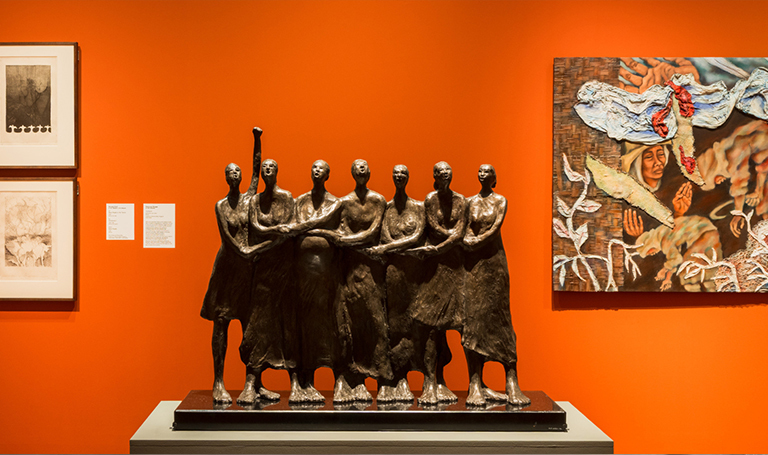
Nirmala Dutt, Dolorosa Sinaga, and Imelda Cajipe Endaya, installation view, Fear No Power: Women Imagining Otherwise, January 9–November 15, 2026, National Gallery, Singapore
How do we understand the relationship of past to present? For Lebanese artist Lamia Joreige, maps provide a site to explore the impact and aftereffects of the early twentieth-century political upheavals in the Levant (Marfa’ Gallery, Beirut). For Rohini Devasher, historical and contemporary images of the sun on four video channels engage with the past of solar science as well as with cosmic time (Bruce Museum, Greenwich, CT). And in intergenerational group exhibitions like Fear No Power: Women Imagining Otherwise (National Gallery, Singapore) and Entretejidas: Arquitectas mexicanas: Presente, pasado y futuro (Interwoven: Mexican Women Architects: Past, Present, and Future; Colegio de San Ildefonso, Mexico City), viewers themselves can ruminate on the aesthetic, thematic, and material dialogues of contemporary woman artists with their foremothers.
AFRICA
The File Cannot Be Restored
Through October 6
THK Gallery, Cape Town, South Africa
This exhibition borrows the language of digital failure to pose a question: What if the past cannot be undone, not because it is fixed, but because it continues to live within the present? The File Cannot Be Restored brings together photographs by Namibian German artist Nicola Brandt, mixed-media assemblages with beadwork by Cape Town–based Sahlah Davids, and collages and film stills by Johannesburg-based Tshepiso Moropa to examine how memory persists across landscapes, archives, inherited traditions, and everyday acts of making.
ASIA
Fear No Power: Women Imagining Otherwise
Through October 25
National Gallery Singapore
This exhibition explores how women artists across Southeast Asia have confronted, critiqued, and subverted structures of authority and state control. Paintings, sculptures, installations, prints, and works in other media by pioneering figures Imelda Cajipe Endaya, Nirmala Dutt, Dolorosa Sinaga, Phaptawan Suwannakudt, and Amanda Heng as well as by contemporary voices reveal how these artists navigate censorship, assert creative autonomy, and challenge dominant sociopolitical narratives.
Janet Cardiff: The Forty Part Motet
Ongoing
M+, Hong Kong
This groundbreaking 2001 sound installation by Canadian artist Janet Cardiff reimagines English composer Thomas Tallis’s sixteenth-century, forty-part choral composition Spem in alium (Hope in Any Other). Forty speakers arranged in an oval each play a single vocal track, inviting visitors to experience Tallis’s motet both as a collective soundscape and through the isolated human voice of each individual singer. Exploring themes of spatial intimacy and physical presence in music, The Forty Part Motet elevates audio engineering into an immersive sculptural installation.
Mariko Mori: All That Shines
October 31, 2026–March 28, 2027
Mori Art Museum, Tokyo
Over her more than thirty-year practice, Japanese artist Mariko Mori has expanded her focus from critique of social phenomena like anime culture and post-humanism to larger metaphysical concerns informed by Buddhist concepts of life, death, and the cosmos. All That Shines presents some forty works in all of Mori’s signature media—performance-based and computer-imaging photography and video, drawing, sculpture, and large-scale interactive installation—and positions the artist’s oeuvre within new contexts, including technological futurism, popular visual culture, and philosophies of consciousness.
Tada Minami: Still, Shimmering Light
Through December 6
Museum of Contemporary Art, Tokyo
Tada Minami (1924–2014) produced hundreds of abstract sculptural installations for parks, railway stations, hotels, and other urban spaces in postwar Japan. The smooth, hard surfaces of Tada’s works, like the acrylic ring Space Eye No. 4 (1975) and the monumental stainless-steel pinnacle Chiaroscuro (1979), conceal traces of manual labor, instead drawing attention to the transmission, reflection, refraction, and fluctuation of light. The approximately seventy works here span the artist’s nearly seven-decade career.
CANADA
Landon Mackenzie: Weather Patterns
Through November 22
Evergreen Arts, Coquitlam, British Columbia
Extending her decades-long investigation of abstraction and place, Canadian contemporary painter Landon Mackenzie presents a new body of innovative large-scale paintings shaped by the forces of weather. Mackenzie first set the canvases outdoors on Prince Edward Island to absorb saltwater, rain, wind, and sunshine; she then responded to their transformed surfaces in her Vancouver studio. Evoking sandstone, riverbeds, celestial bodies, and nervous systems, the works explore the intimate relationship between landscape, material process, and perception.
Marion Wagschal
Through January 17, 2027
National Gallery of Canada, Ontario
This major retrospective celebrates more than six decades of work by Marion Wagschal, whose emotionally charged large-scale figurative paintings examine memory, migration, family, sexuality, aging, and the female body. Born in Trinidad and Tobago to Holocaust survivors, and a resident of Montreal since she was nine years old, Wagschal blurs the boundaries between autobiography and fiction as she explores vulnerability, resilience, and self-determination.
CENTRAL AMERICA & THE CARIBBEAN
The Gaulin Woman: Uncovering Our Bahamian Selves
Through May 2027
National Art Gallery of The Bahamas, Nassau
Its title referring to the heron-woman of Bahamian folklore, this exhibition looks at art historian and keeper of storytelling traditions Patricia Glinton-Meicholas (1950–2025), author of the seminal book Bahamian Art 1492–1992. Tracing her close association with pioneering Bahamian modern art movement Generation ’80, The Gaulin Woman features works by artists whom Glinton-Meicholas taught, engaged with, and promoted over many years.
EUROPE & UK
Bharti Kher at the V&A
Through January 27, 2027
V&A Museum, London
Statues of women by British Indian artist Bharti Kher in the V&A’s European Sculpture Hall draw on the same classicizing naturalism and iconography as the sculptures around them, but a resin sari-veil, animal headdresses, and other non-Western attributes encourage viewers to ask questions about the figures’ cultural identity and about their agency as women, as does the house or temple enclosing the head of Kher’s new bronze colossus, Gaia (Earth), outside the museum.
Chitra Ganesh: Journey to the Great Below
Through January 17, 2027
Baltic Centre for Contemporary Art, Gateshead, UK
Chitra Ganesh reorients epic myths and historical narratives around queer and femme protagonists. Ganesh’s world-building explores such themes as psychic transformation, sexuality, power, and loss; her shape-shifting characters occupy liminal spaces, inviting us to consider utopian possibilities amid precarity and turbulence. The centerpiece of these new and recent sculptures, paintings, works on paper, and mixed-media works is a large-scale animation inspired by The Descent of Inanna into the Underworld, an ancient Mesopotamian narrative widely considered the world’s oldest recorded myth.
Grada Kilomba: O Fundo do Mundo (The Bottom of the Earth)
Through September 27
Albuquerque Foundation, Lisbon
Recognized for her subversive storytelling, Berlin-based Portuguese artist Grada Kilomba gives body, voice, and movement to silenced voices. The Bottom of the Earth envisions a futuristic ocean floor as a record of both geological and human activity, the latter often barbaric and violent, approaching the concepts of memory, trauma, violence, and repetition in an urgent yet poetic way.
Mariuccia Secol: Unraveling
Through November 1
Muzeum Susch, Switzerland
While teaching painting at a psychiatric hospital from 1965 to 1988, Italian artist Mariuccia Secol began deconstructing domestic textiles and women’s clothing, including her wedding dress. The resulting gaps and tears symbolize wounds and stretch marks on the female body but also openings for light and knowledge emerging from inner exploration. Unraveling surveys this nonagenarian artist’s practice from the 1950s onward, including recent works addressing intersectional feminist concerns, such as marginalization and ecological crisis.
Sungi Mlengeya: Earth and Sky
Through October 24
Les filles du calvaire, Paris
Tanzanian artist Sungi Mlengeya is known for her minimalist paintings of dark female figures emerging from vast white spaces. Conceived following the death of her mother, Mlengeya’s first solo exhibition in France marks an intimate turning point. Rather than questioning the finality of death, Earth and Sky focuses on what remains: inherited gestures, thought processes, and creative impulses that quietly shape subsequent generations.
MEXICO
Entretejidas: Arquitectas mexicanas: Presente, pasado y futuro (Interwoven: Mexican Women Architects: Present, Past, and Future)
Through December
Colegio de San Ildefonso, Mexico City
Part of the Mextrópoli 2026 festival, this exhibition brings together generations of Mexican women architects, more than one hundred fifty in total, who have transformed the discipline through professional practice, academia, research, and public administration. Entretejidas highlights the networks, influences, and continuities that have shaped the increasingly diverse architectural landscape of Mexico.
Marysole Wörner Baz: Redenciones marginales (Marginal Redemptions)
Through October 25
Museo de Arte Moderno, Mexico City
Marking the ninetieth anniversary of her birth, this exhibition celebrates the work of Mexican artist Marysole Wörner Baz (1936–2014). Working over the course of six decades in performance art, kinetic art, palette-knife painting, wood carving, and a wide range of other media, Wörner Baz sought to rescue and transform people, objects, and materials that which had been disregarded and to imbue them with new aesthetic and social importance.
Minia Biabiany: Nuestras escuchas (Our Listening)
Through February 14, 2027
Museo Universitario de Arte Contemporáneo, Mexico City
Guadaloupan interdisciplinary artist Minia Biabiany brings local knowledge into dialogue with the poetic imagination, exploring connections among species that share the same habitats. Here, Biabiany focuses on the ocean: as a locus of exchange and movement among humans and non-humans, and as a living archive of historical, ecological, and affective memories, not least the legacy of colonialism in the Caribbean.
Regina José Galindo: Los peores tiempos posibles (The Worst Possible Times)
Ongoing
Museo Universitario del Chopo, Mexico City
The work of Guatemalan performance artist Regina José Galindo has developed in response to the war and genocide that took place in Guatemala from the 1960s to the 1990s as well as its enduring legacy today. This exhibition surveys Galindo’s work from 1999 to the present, grouping her projects and actions into thirty-three interwoven tiempos (times) expressed through the artist’s body: times of war, genocide, migration, racism, misogyny, and more. Repetitions across works emphasize how memories and ramifications of past events continue to shape the present.
Teresa Serrano: Hedonismo y cosmetología (Teresa Serrano: Hedonism and Cosmetology)
Through March 1, 2027
Galería Ana Tejeda, Mexico City
Mexican artist Teresa Serrano addresses gender-based violence, female subjectivity, and social issues like migration and ecology through painting, drawing, sculpture, video, performance, and installation, defying the categories and movements into which contemporary Mexican art history is usually divided. The new series presented here explores pleasure, rituals of the body, and the social construction of beauty.
Valentina Guerrero Marín: Aquí, otros cielos (Here, Other Skies)
Through October 11
Museo de Arte Carrillo Gil, Mexico City
A sculptural and sensory intervention on the museum’s terrace by Mexico City–based Chilean artist Valentina Guerrero Marín invites viewers to observe the clouds from artistic, political, and environmental perspectives. Stemming from years of research on the ways human activity has altered aerial landscapes, Aquí, otros cielos (Here, Other Skies) reclaims the deeply human act of looking up at the sky to reflect on environmental transformations affecting the atmosphere and our relationship to it.
MIDDLE EAST & NORTH AFRICA
Lamia Joreige: As I Weep
Through September 23
Marfa’ Contemporary Art Gallery, Beirut
The exhibition forms part of Lebanese artist Lamia Joreige’s project Uncertain Times, which focuses on the events in Lebanon, Syria, and Palestine between the collapse of Ottoman rule in 1913–18 and the establishment of the French and British Mandates in the early 1920s. Through interventions into maps and other archival materials, and through paintings, drawings, and works in other media, As I Weep reflects on both individual and collective histories of the period, examining how narratives of the past are constructed, circulated, and reinterpreted as well as how they remain embedded in present-day realities.
OCEANIA
Cherine Fahd, The Captains, 2026
Through October 7
Museum of Contemporary Art (MCA) Australia, Sydney
Australian photographer Cherine Fahd presents a commissioned series of portraits of the twelve 2026 team captains of the Australasian National Women’s Rugby League. Fahd’s monumental black-and-white photographs—some static and contemplative, others captured at a moment of action—invite us to reflect on ideas of visibility, leadership, and legacy. The Captains shines a light on these athletes and leaders at a time when women’s involvement and recognition in sport continues to be a work in progress.
Kate Mitchell: In the Eye of the Giant
Through December
Art Gallery of New South Wales, Sydney
This enormous ascending digital scroll in the museum’s atrium visualizes seven emotional states that shape the practice of Australian artist Kate Mitchell. A succession of hundreds of colored ink drawings forms an “emotional devotional” resonating, for example, with the manuscript self-portrait of the medieval German nun Guda. Running on a continuous loop, In the Eye of the Giant acknowledges the transience of feeling and invites visitors to tune into the quiet intelligence of their own emotions.
Ruth Ige: The Evocation of Worlds
Through November 15
Te Uru Contemporary Gallery, Auckland, New Zealand
These new paintings by Nigeria-born, New Zealand-based Ruth Ige extend the artist’s ongoing exploration of identity, belonging, and representations of Blackness. In Ige’s blue-and-black semifigural canvases, acrylic paint mingles with West African indigo, Nigerian earth clays, shea butter, and other organic materials to evoke associations with nourishment, healing, adornment, ceremony, spiritual practice, ancestral tradition, and much more. Ige creates worlds where history, poetry, mythology, speculative fiction, ancestral practices, and future imaginings converge.
Shona Rapira Davies: Ko te Kihikihi Taku Ingoa (The Cicada Is My Name)
Through June 27, 2027
Christchurch Art Gallery/Te Puna o Waiwhetū, New Zealand
This commissioned installation by Shona Rapira Davies of the Ngāti Wai ki Aotea tribe memorializes the Māori children killed and displaced by the Colony of New Zealand in the Taranaki Wars (1860–1866). Created in graphite and native wood entwined within steel wire, this gigantic hanging whale’s tail calls to mind a Māori folktale of sacrifice by the tohorā (whale) for its brother the Kauri tree. It also serves to acknowledge a blight in the local history of Christchurch: the imprisonment in 1880 of 160 peaceful Parihaka protesters.
SOUTH AMERICA
Astrid González: La boca donde el agua engendra el agua (The Mouth Where Water Gives Birth to Water)
Ongoing
Museo de Arte Moderno de Medellín, Colombia
African Colombian artist Astrid González, whose practice spans video, photography, and sculpture, presents the ocean as at once a cemetery and a stage for liberation. In González’s radical imagining, sea-dwelling spiritual beings—mermaids, serpents, Haitian Vodou entities—and sensory experiences of the ocean mediate access to the vibrations of drowned ancestors. The artist’s strategies of codification rely on Afro-descendant epistemes beyond the colonial gaze.
Belkis Ayón: Mito y desobediencia (Myth and Disobedience)
Through October 12
Museo de Arte Latinoamericano de Buenos Aires (MALBA), Argentina
Belkis Ayón (1967–1999) was a leading Cuban printmaker whose explorations and reworkings of Afro-Cuban mythology transformed the field of contemporary graphic art. These seven works from the MALBA-Costantini Collection demonstrate how Ayón’s use of collagraphy, a technique in which diverse materials are collaged onto a hard substrate that is then inked and used for printing, enabled the artist to develop a visual language of remarkable tonal and textural richness.
Carolina Caycedo: Confluencias (Confluences)
Through October 4
Museu de Arte de São Paolo (MASP), Brazil
The practice of Los Angeles–based Colombian British artist Carolina Caycedo, which spans photography, installation, video, performance, and drawing, is informed by her migratory experiences. Often working collaboratively, Caycedo seeks to reconstruct a communal memory of shared resources, including urban public spaces, rivers, and mountains. Confluencias offers a comprehensive overview of Caycedo’s quarter-century-long career to date and looks closely at her recent works with connections to Brazil. The exhibition’s title refers to both the convergence of waterways and the meeting of people, ideas, and cultures.
Codesido
Through November 1
Museo de Arte de Lima, Peru
Widely recognized as Peru’s first professional woman painter, Julia Codesido (1883–1979) produced a vast and diverse body of work over the course of more than five decades. From her large-scale landscapes busy with figures to her near-abstractions, Codesido developed a distinctive style characterized by playfulness and an expressionist palette. This exhibition explores the artist’s deeply knowledgeable dialogues with successive avant-garde movements as well as with Peruvian folk art traditions.
Gala Porras-Kim: El movimiento de un registro fluvial (The Motion of an Alluvial Record)
Ongoing
Museo de Arte Moderno de Medellín, Colombia
Gala Porras-Kim, a Colombian Korean American artist based in Los Angeles, explores the ways in which museums, archives, and other institutions construct narratives around cultural objects. The recent projects in this multisensorial exhibition—including a plastic-framed hothouse that keeps mud from Yucatán Peninsula in its native moist state within a long wooden trough—examine and critique the mechanisms through which cultural meaning is produced, legitimized, and sustained.
UNITED STATES
ana segovia: the office of inter-american affairs presents
Through October 17
Kurimanzutto Gallery, New York
New paintings by Mexican artist Ana Segovia, together with extensive archival film footage and sound, address the gaucho archetype of South America’s Southern Cone. Segovia’s strongly cropped details associated with gauchos, executed in a vividly unnaturalistic palette, contribute to an intentionally fragmentary and disorienting multisensory experience for the gallery visitor, bringing attention to the artifice and performativity that underpin gender identities and national imaginaries.
Burnished: Pueblo Pottery at NMWA
Through September 27
National Museum of Women in the Arts, Washington, DC
For more than two millennia, Pueblo potters in the North American Southwest have created clay vessels for storage and ceremonial purposes. Women have been central to this tradition, imparting their knowledge and practices to daughters, granddaughters, nieces, and other women across generations. In 1998, the NMWA organized the first museum survey dedicated to women Pueblo potters. Burnished now presents the NMWA’s own pottery collection, including new acquisitions, in its first focused exhibition.
Coumba Samba: Stars and Stripes
Through January 18, 2027
Whitney Museum of American Art, New York
A Senegalese American artist based in New York, Coumba Samba is known for taking forms from the global built environment—forms that prevailing narratives of modernist abstraction and minimalism might declare neutral—and revealing the social, political, and economic structures embedded therein. For her first solo museum presentation, Samba offers an immersive site-specific installation that critically examines the development of nuclear power and the African resource extraction that has sustained it.
Edra Soto: the place of dwelling
Through March 6, 2027
Kemper Museum, Kansas City, Missouri
Edra Soto celebrates working-class communities in her native Puerto Rico by altering and recontextualizing plastic lawn furniture, electric fans, and other functional warm-weather objects. Soto’s installation for the Kemper’s annual Atrium Project assimilates the gleaming space to a chapel by investing it with mementos of her Catholic upbringing. The artist thus questions the methods of colonial indoctrination and casts vernacular design as a sacred source of guidance and direction.
Exploring Feminism
Through January 31, 2027
Dayton Arts Institute, OH
This rotating set of feminist artworks from the newly acquired Sara M. and Michelle Vance Waddell Collection, including the 2012 Deborah Kass neon sculpture Enough Already and the 2018 mixed-media Mohammad Yunus (16) by Pakistani artist Ambreen Butt, will help to better acquaint guests with the feminist movement: its origins; its cycles of protest, self-expression, and community-building; and its expanding definition of the constituents and purposes it serves.
Graciela Iturbide: Between Two Worlds
Through November 29
San Francisco Museum of Modern Art
Graciela Iturbide’s lyrical black-and-white photographs pay honor to a vast spectrum of life, both in her home country of Mexico and on her wide-ranging travels: markets and festivals, symbols, and experiences of birth and death, botanical gardens, self-portraits, and much more. This retrospective spans more than five decades of Iturbide’s work, exploring the artist’s poetic commitment to finding the extraordinary in the everyday.
Hopi Kachina Dolls: Blessings for a Balanced World
October 2, 2026–April 18, 2027
Brooklyn Museum, New York
At key points in their lives, girls and women of the Hopi tribe of northeastern Arizona receive painted cottonwood kachina dolls (tithu) representing Katsinam, the spirits who bring much-needed rain and keep society and nature in balance. In this first exhibition to examine the kachina tradition from the perspective of their recipients, fifty-three dolls from the Brooklyn Museum’s collection appear alongside baskets, jewelry, and ceramics by Hopi women artists.
Karyn Olivier: Bend, Break, Mend
Through October 11
Museum of Contemporary Art Detroit (MOCAD)
Trinidad-born, Brooklyn-raised artist Karyn Olivier works across sculpture, installation, and public intervention to examine how landscapes and built environments carry the weight of historical memory. She approaches her salvaged, industrial, and transformed materials as active records of time. Bend, Break, Mend brings together recent and newly commissioned works grounded in Detroit’s material conditions and histories, including stepwells, sundials, and playground structures that measure duration through the movement of shadows, erosion and weathering, and more.
Nengi Omuku: The Gathering
Through May 14, 2028
de Young Museum, San Francisco
In her first US solo museum exhibition, painter Nengi Omuku shares dreamlike scenes that imagine a better world for Nigerians. Here, nature becomes an important symbol of healing and possibility: figures inhabit lush forests, gardens, and waterfronts, settings often inaccessible to those living in her home country. Omuku paints on hand-woven sanyan, a historic Yoruba textile once worn for important ceremonies, connecting her visions of care and belonging to cultural continuity and the transmission of knowledge.
The Rainbow My Mother Shows Me: Echo Morgan
Through October 11
Crow Museum of Asian Art, Dallas
Echoing the tempered sentiments of the 1997 song Mortal World by Hong Kong singer Faye Wong, multidisciplinary artist Xie Rong (Echo Morgan) presents a multisensory exhibition expanding on You Don’t Always See a Rainbow After Rain, a site-specific performance created in April 2025 at the Crow. Resting on the premise that not every sorrow can be surmounted, this exhibition continues the artist’s exploration of themes of memory, identity, and heritage.
Rohini Devasher: Solar Poetics
Through November 29
Bruce Museum, Greenwich, Connecticut
This exhibition celebrates the museum’s acquisition of the immersive One Hundred Thousand Suns (2023) by New Delhi–born Rohini Devasher, a longtime amateur astronomer. This four-channel video work combines historical images from India’s Kodaikanal Solar Observatory with contemporary footage, meditating on how humanity acquires knowledge of cosmic space. Devasher’s Shadow Portraits and Sol Drawings, executed with smoke on copper and calling to mind solar flares and sunspots, offer intimate counterpoints to the monumental installation.
ONLINE/VIRTUAL
Perfil (Profile)
Ongoing
Museo de Suelos del Caribe, US Virgin Islands
Twelve expressive digital portraits by artist and civil engineer Sofía Boscio represent each of the soils classified within the American Soil Taxonomy, ten of which are found in Boscio’s native Puerto Rico. Just as the soils differ in color, texture, mineral content, and other properties that together determine their suitability to different ecosystems, the figures in Perfil are highly individualized, their physiognomies calling to mind topographical maps.
Call for Proposals: CAA115 Highlights in Undergraduate Research
posted by CAA — September 08, 2026
The College Art Association’s Student and Emerging Professionals Committee (SEPC) invites undergraduate students to submit proposals for a special two-session program at the CAA 115th Annual Conference in New York City. As part of our open-access conference programming, these sessions will be available to the public through CAA115 no-cost registration and are designed to showcase the outstanding scholarship, creativity, and intellectual curiosity of emerging voices in the visual arts.
SEPC welcomes proposals in art history, art practice, museum studies, design, and interdisciplinary arts research. Students are encouraged to explore topics that advance understanding of the arts in all forms, spanning diverse media, historical periods, methodologies, themes, and cultural perspectives.
Selected participants will each deliver a ten-minute presentation followed by a roundtable discussion. In addition to presenting their work, session participants will have mentorship, networking, and professional development opportunities by engaging with SEPC members before, during, and after the conference.
Share your research, connect with peers and professionals, and take part in the conversation shaping the future of the visual arts! Students from all backgrounds and areas of study are encouraged to apply.
To apply, please send the following items to Emma Wingfield:
- Proposal title
- Abstract (250-word maximum)
- Current CV or résumé
-
Short bio including research interests, university affiliation (if applicable),
and Academic/professional goals
Deadline: September 18
CAA Signs On to ACLS Statement Responding to the US Secretary of Education’s National Call to Action
posted by CAA — August 13, 2026
CAA has signed on to a statement issued by the American Council of Learned Societies (ACLS) in response to US Secretary of Education Linda McMahon’s August 3 National Call to Action. In the statement, ACLS affirms the value of the humanities and humanistic social sciences and calls for continued public investment in higher education.
While acknowledging the importance of any efforts to strengthen accountability, affordability, and open inquiry, the ACLS statement expresses concern that recent federal actions have undermined research, teaching, and academic freedom, underscoring “…this administration’s open contempt for America’s world-renowned system of higher education.” The statement argues that public trust in higher education is best strengthened through support for the institutions that generate, preserve, and share knowledge, and defends the essential role of the humanities and humanistic social sciences in American education and democracy.
“Our world is one of rapid change and wicked problems, from climate change and public health to the challenge of new technologies, notably artificial intelligence. Secretary McMahon calls for academic programs that meet ‘urgent workforce needs’ and advance American security and economic interests. Many business leaders point out that a liberal arts education, which has the humanities and humanistic social sciences at its core, is the best preparation for grasping complex situations, handling change, understanding many different types of people, and communicating clearly… surely she [Secretary McMahon] knows that calling for ‘high-return’ degrees, as she does later in her memo, frequently serves as an excuse to close academic programs in the arts and humanities – despite studies showing their role in improving resilience and mental health.”
CAA stands in solidarity with ACLS and remains committed—in service to our mission—to championing higher education, scholarly inquiry, and the arts and humanities as vital foundations of an informed, engaged, and thriving society.
Read the full statement here.
CAA Submits Comment Opposing Proposed Rescission of International Education Programs + Fulbright-Hays Program Regulations
posted by CAA — July 30, 2026
The College Art Association has submitted a comment to the Federal Register objecting to a Department of Education proposal to rescind the regulations governing the federal Title VI International Education and Fulbright-Hays Programs. The comment emphasizes the importance of the regulations and urges the Department of Education to abandon this proposal.
CAA encourages constituents to post individual comments on the proposal here before the Friday, July 31, 11:59 p.m. EDT deadline.
July 29, 2026
To: U.S. Department of Education
Re: International Education Programs and Fulbright-Hays Program; Rescission of Regulations [Docket ID ED-2026-OPE-0991]
The College Art Association (CAA), the preeminent international organization serving professionals across the visual arts—including art historians, artists, designers, curators, administrators, and educators—fervently opposes the Department of Education’s proposal to rescind all regulations governing the Title VI and Fulbright-Hays programs. By dismantling the framework that has sustained language instruction and area studies for decades, the Department would erode a critical national asset and jeopardize longstanding investments in expertise on regions of profound geopolitical importance to the United States.
The existing regulations do not hinder effective governance as the Department of Education asserts—they enable it. These rules establish the consistency necessary for higher education institutions to plan multi-year language and area studies programming and compete for funding under a transparent and equitable framework. This is rendered impossible without a defined set of rules governing these programs. Further, the proposal to shift support toward contracts or subgrants outside the established grant and peer-review process would weaken academic rigor, undermine trust, and diminish the overall quality and effectiveness of these programs.
The Department of Education argues that eliminating these regulations would create greater flexibility in responding to evolving geopolitical priorities. In reality, Title VI already provides that flexibility by maintaining a nationwide network of language experts and regional specialists prepared to respond when urgent needs emerge. The Department’s proposal would replace this proven infrastructure with a reactive model that attempts to develop expertise only after a crisis or policy challenge arises. Such an approach would leave the United States less prepared, less agile, and more vulnerable. Building expertise on demand is neither efficient nor effective; it is far more costly than maintaining the deep reservoir of knowledge and talent that Title VI has cultivated for generations.
The wisdom of Title VI lies in its long-term vision. The federal government created these programs to ensure that the nation possesses enduring capacity in critical languages and regions, regardless of shifting political priorities. Dismantling the current infrastructure in favor of temporary, piecemeal solutions would significantly weaken the United States’ ability to anticipate, understand, and respond to future global challenges.
CAA therefore urges the Department of Education to abandon this proposed rescission and preserve the regulations that have made the Title VI and Fulbright-Hays programs indispensable pillars of the nation’s educational, cultural, and strategic strength.
Respectfully,

Meme Omogbai
Executive Director & CEO
CAA | Advancing Art and Design
CWA Picks: Summer 2026
posted by CAA — June 26, 2026
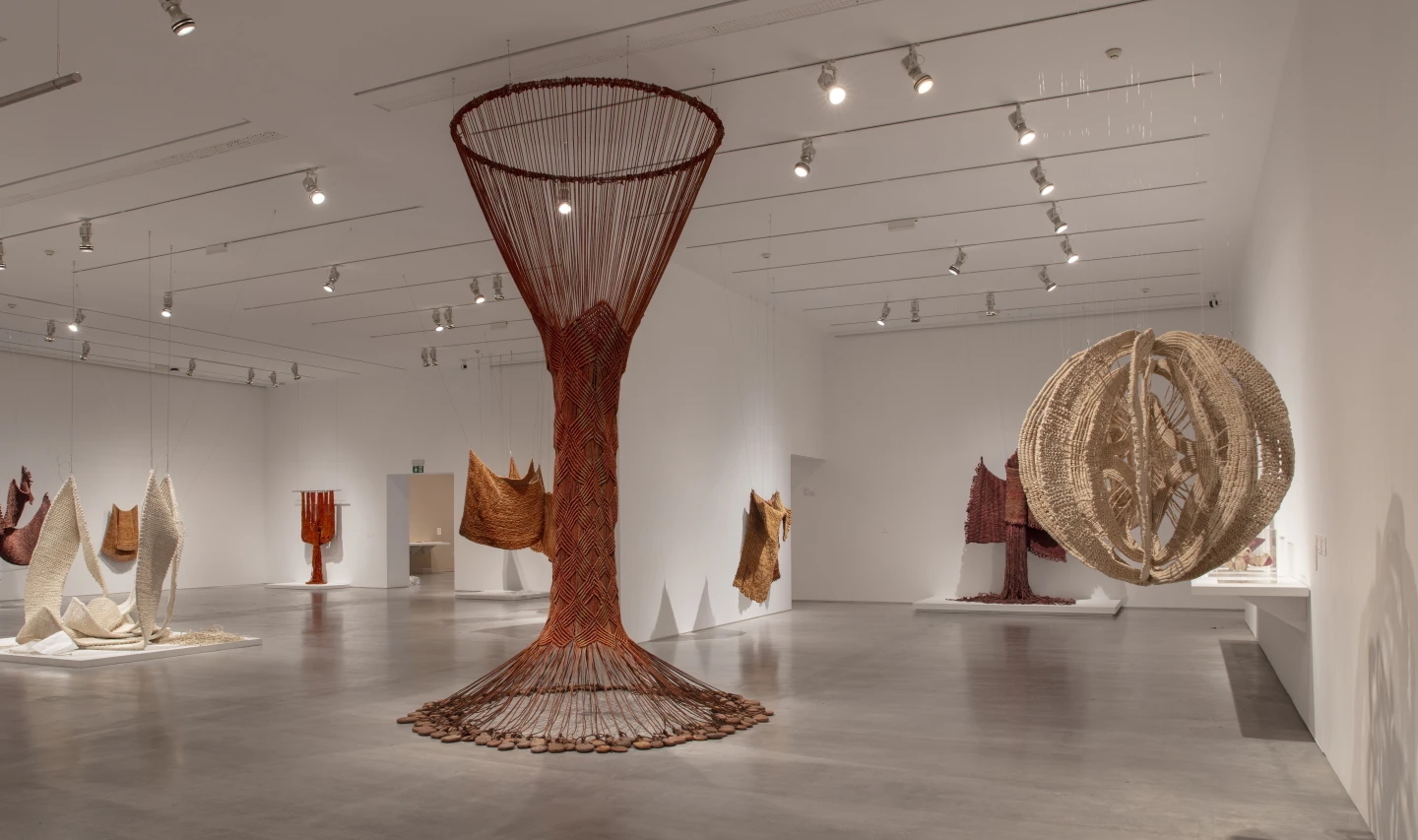
Installation view, Aurelia Muñoz: Entes (Entities), Museo Reina Sofía, Madrid
Questions of materiality, care, and cultural communication surface repeatedly in this summer’s Committee on Women in the Arts Picks. In Spain, Aurèlia Muñoz draws on ancestral fiber traditions to reflect on environmental precarity and the interconnectedness of ecosystems. In Guatemala, Rosa Elena Curruchich and Angélica Serech underscore how material practices sustain memory and care across time. In London, Laakkuluk Williamson reflects on Inuit identity and sovereignty, foregrounding relationships between bodies and land, past and present, memory and material.
UNITED STATES
Calida Rawles: Away with the Tides
Through September 5
Spelman College Museum of Fine Art, Atlanta
Merging hyperrealism with poetic abstraction, Spelman alumna Calida Rawles situates monumental Black figures in strongly undulating aqueous settings that represent racial exclusion as well as, through the reclamation of these spaces, individual healing. Away with the Tides features recent acrylic and pastel paintings alongside a large-scale video installation reflecting the natural environment and cultural milieu of the historically Black neighborhood of Overtown, Miami.
Gisela Colón: Radiant Earth
Through July 5
Bruce Museum, Greenwich, CT
Los Angeles-based artist Gisela Colón creates abstract luminescent sculptures inspired by the energies and patterns found in nature and the skies, including the mountainous terrain and sunshine of Puerto Rico, her childhood home. In collaboration with scientists, Colón has developed a unique method of layering and laminating reused plastics and other engineered materials to produce works—here, biomorphic and obelisk-like forms—whose ever-changing colors are activated by light.
Julie Buffalohead: Stories of Becoming
Through July 26
Nerman Museum of Contemporary Art, Overland Park, KS
A citizen of the Ponca Tribe of Oklahoma, Julie Buffalohead presents a new series of paintings that incorporate animals from Indigenous stories into narrative contexts from European folklore, highlighting the contrasts between a nurturing ethos and a colonizing one. Demonstrating a shift in Buffalohead’s practice since becoming a mother, the eight new works, which also include a hand-sewn wool dress, speak to how older generations pass along the knowledge of land, animals, and other living beings to the young, especially from mothers to daughters.
Modernity and Opulence: Women of the Wiener Wërkstatte
July 17–November 15
The Jewish Museum, New York
This exhibition sheds new light on how Jewish women artists, designers, patrons, and tastemakers shaped modernist aesthetics in the early twentieth-century Vienna-based modernist movement known as the Wiener Werkstätte. It places special emphasis on ceramicist Vally Wieselthier and textile artist Felice Rix-Ueno, whose extensive bodies of work have made a lasting impact on these disciplines, and it meaningfully reintroduces artists working in a wide range of media whose relationship to the history of art and design has long been overlooked.
Marietta Bernstorff: PatchWork—Women from Oaxaca, Mexico
Through September 4
Visual Arts Gallery, PCC West Campus, Tucson, AZ
Seventy blankets and twenty-five books here represent the larger ongoing international textile art project Patchwork Healing Blanket/La Manta de Curación. Initiated by Marietta Bernstorff, founder of the Oaxaca-based collective Mujeres Artistas y el Maiz (MAMAZ) and involving more than one thousand women across disparate cultures, Patchwork Healing Blanket transforms stitching into a collective response to gender-based violence and ecological harm.
Sharmistha Ray: Emergent Realities
Through July 5
Wood Street Galleries, Pittsburgh, PA
This newly commissioned three-channel animation by Sharmistha Ray brings together painting, original and found footage, and cosmic imagery in a layered visual odyssey. The channels juxtapose images of the universe—satellites drifting, comets arcing across space—with painted abstractions, drawing the viewer into a vortex where deep time and human perception loop, splinter, and converge.
Sophie Rivera: Double Exposures
Through August 2
El Museo del Barrio, New York
This is the first museum survey dedicated to groundbreaking photographer, writer, and organizer Sophie Rivera. Born and raised in New York, Rivera was active from the 1970s through the 2000s, producing photography that spans documentary images, urban landscapes, abstractions, conceptual self-portraits, and the artist’s iconic Latino Portraits series. The exhibition’s title draws on the photographic technique of layering multiple images within a single frame—here, a metaphor for Rivera’s self-described “complex amalgam of vision,” shaped by her identity as an artist, Latina, and feminist.
Subvert, Repair, Reclaim: Contemporary Artists Take Back the Nude
Through August 2
MFA (Museum of Fine Arts), Boston
Of the twelve artists who engage with the nude in this exhibition, ten are women or nonbinary: Mary Enoch Elizabeth Baxter, Nona Faustine, Xandra Ibarra, Maya Jeffereis, Gisela Charfauros McDaniel, Joiri Minaya, Cato Ouyang, Rachelle Anayansi Mozman Solano, Katherine Sherwood, and Betty Tompkins. Their performative gestures, archival interventions, and acts of redaction and repair symbolically reach into the frames—and framing—of the nude as it has traditionally appeared within museums. Addressing timely issues of bodily autonomy, agency, and accountability, they expose and challenge the power structures and inherited narratives governing visibility, authorship, and desire.
MEXICO
Con todo mi tristeza (With All My Sadness): Fátima Rodrigo
Through September 27
Museo Rufino Tamayo, Mexico City
Based on extensive research in public and private television archives, Peruvian artist Fátima Rodrigo reconstructs Latin American musical and game-show sets using everyday materials. Part of a program of site-specific installations in the central courtyard of the Museo Tamayo, With All My Sadness invites viewers to consider the interactions among modernist aesthetics, cultural exchange, and politics within popular entertainment.
Gerda Gruber: Entre verde y agua (Between Green and Water)
Through September 30
Museo de Arte Moderno, Mexico City
This first retrospective honoring the career of the Bratislava-born, Yucatan-based sculptor Gerda Gruber from the 1970s to the present highlights the breadth of her formal and material experimentation. Gruber’s works in clay, stone, textiles, wood, and more call to mind fossils, spiderwebs, eggs, bodies, and other organic forms, asking viewers to consider issues of sustainability and the role of art in confronting ecological crisis.
Ingrid Hernández: 20 años de arte _Under Construction_ (Twenty Years of Art “Under Construction”)
Through August 9
Centro de la Imagen, Mexico City
These thirteen projects created since 2003 explore the ever-changing nature of Tijuana, home of photographer, printmaker, sculptor, and installation artist Ingrid Hernández. Incorporating garage doors, fences, walls, and other everyday elements, and accompanied by previously unseen archival materials, the works in _Under Construction_ offer an intimate look at housing and life within a border city where people and objects are always in motion.
María Ezcurra: Líneas de fuga (Lines of Flight)
Through July 31
Museo de Arte Carillo Gil, Mexico City
This retrospective brings together more than two decades of work by Argentine-born Mexican Canadian artist María Ezcurra. In installations, sculptures, drawings, and performances, such as her hanging cluster of colorful ruffled dresses, Ezcurra looks at the ways displacement, sexual violence, and patriarchal gender roles affect women’s bodies and identities. At the same time, as the exhibition’s title Lines of Flight implies, Ezcurra proffers means of defying geopolitical and social boundaries—through art, memory, and care.
Remedios Varo: Habitantes de lo insólito (Inhabitants of the Unusual)
Through July 5
Museo de Arte Moderno, Mexico City
In the visual universe of Spanish surrealist painter and author Remedios Varo, who fled Europe during World War II and spent the rest of her life in Mexico, archetypal figures perform actions with the precision of scientific inquiry, the solemnity of mystical ritual, or both. In Inhabitants of the Unusual, the Museo de Arte Moderno displays its collection of Varo’s paintings alongside materials that enrich our understanding of these works: numerous preparatory sketches; notebooks filled with Varo’s hallucinatory memories and psychohumorous experiments; and books from the artist’s personal library.
CENTRAL AMERICA & THE CARIBBEAN
Otras montañas, las que andan sueltas bajo el agua (Other Mountains, Adrift beneath the Waves)
Through August 16
Museo de Arte Contemporáneo, Panama City
Transdisciplinary Caribbean artists Nadia Huggins and Tessa Mars reflect upon the ocean in this exhibition emerging from The Current IV, a three-year curatorial fellowship and research program organized by the Thyssen-Bornemisza Art Contemporary Foundation, Madrid. A multichannel video installation by Huggins and large-scale paintings and sculptures by Mars embrace a freestyle, improvisational ethos in challenging land-based power structures and reimagining natural systems.
Trixie Briceño: Sistemas de lo maravilloso (Magnificent Systems)
Through August 23
Museo de Arte Contemporáneo, Panama City
This exhibition revisits the practice of pioneering twentieth-century Panamanian artist Beatrix Briceño, whose meticulously ordered paintings transform experiences of migration, displacement, and instability into dreamlike visual worlds populated by everyday objects, abstract forms, and fragmented bodies. Archival materials and more than fifty paintings by Briceño appear alongside a new immersive light and sound installation by Panamanian digital artist Ix Shells that algorithmically reimagines Briceño’s universe.
Xa Jun Ruk’oxomal Qanima/Un solo latido/A Shared Heartbeat
Through September 6
La Nueva Fábrica, Antigua, Guatemala
This exhibition brings into dialogue two Indigenous Maya Kaqchikel artists of different generations in the town of San Juan Comalapa, Guatemala: painter Rosa Elena Curruchich (1958–2005) and fiber artist Angélica Serech (b. 1982). Curruchich emphasized women’s roles in Maya social organization through small-scale scenes documenting family life, celebrations, and relationships; Serech addresses migration, territory, and bodily memory in sculptural textiles created by applying traditional weaving techniques to contemporary materials.
CANADA
dlúne æîk’ãzñ: mouse spirit power
Through September 5
Esplanade Arts & Heritage Centre, Medicine Hat, Alberta
This solo exhibition by Heather Shillinglaw, a Denesuline and Métis artist, honors over thirty years of collaboration with her mother, Elder Shirley Norris Shillinglaw of Cold Lake First Nation, a forest medicine expert. Working in textile-based relief installations and art quilts made from reused and upcycled materials, the younger Shillinglaw invites viewers into the perspective of dlúne æîk’ãzñ, her mouse spirit guide: close to the ground, attentive to subtle shifts. She braids together Denesuline knowledge systems, plant-based practice, and texts by Métis poet Marilyn Dumont to reframe land not as a resource but as a living relation.
Dyani White Hawk: Love Language
Through October 4
Remai Modern, Saskatoon
By foregrounding Lakota forms and motifs, Sičáŋǧu Lakota artist Dyani White Hawk challenges prevailing histories and practices surrounding abstract art. This major survey gathers fifteen years of multimedia paintings, sculptures, videos, and other works that draw on intergenerational knowledge, address urgent issues of colonialist oppression, and center connection: among people, between past and present, and between earth and sky.
Ningiukulu Teevee: Stories from the Arctic
Ongoing
Winnipeg Art Gallery—Qaumajuq
Inuk graphic artist Ningiukulu Teevee, based in Kinngait on Dorset Island in Nunavut, is widely recognized as one of Canada’s leading printmakers, with her work appearing in every Cape Dorset Annual Print Collection since her 2004 debut. This presentation features stonecut prints, drawings, and mixed media works that translate Inuit creation stories, animal fables, and traditional narratives, such as those of powerful female sea spirit Sedna/Nuliajuk, into dynamic, often whimsical compositions.
Thenjiwe Niki Nkosi: Suspension (Sierra Brooks, Daisha Cannon, Luci Collins, Olivia Courtney, Naveen Daries…)
Through August 16
Museum of Contemporary Art, Toronto
This 2020 audiovisual work by Johannesburg-based artist Thenjiwe Niki Nkosi (b.1980) moves through intimate close-ups of recognizable women gymnasts of color at the height of their discipline. Accompanied by haunting music, the sequence of portraits shows the athletes immersed in intense concentration, highlighting the depth of their training and sacrifice while drawing attention to the stress of overwhelming expectations they have likewise trained to resist and overcome.
SOUTH AMERICA
El caos sensible (Sensitive Chaos)
Through July 26
Museo de Arte Moderno, Bogotá, Colombia
The works of Colombian multidisciplinary artist Ana María Rueda reflect on environmental fragility, rupture, loss, and forgetting but also uphold the possibility of healing and renewal. This first major survey of Rueda’s multidisciplinary practice across more than forty years takes its title from the 1962 book Sensitive Chaos: The Creation of Flowing Forms in Air and Water, connecting Rueda’s paintings, sculptures, and other works to the book’s argument that the rhythmic patterns of water and air underpin the systems that support life.
La Chola Poblete: Pop andino (Andean Pop)
Through August 2
Museu de Arte de São Paulo, Brazil
Argentine artist La Chola Poblete explores the complexities of Chola identity, a term used to describe mixed-race women of Indigenous descent in Latin America, and confronts the violence suffered by queer and racially marginalized groups within the legacy of colonialism. In these previously unseen large-scale watercolors, staged photographs, and sculptures, the artist blends Pop iconography with pre-Columbian imagery to question the categories that frame her body and work, affirming hybrid identities and the possibility of continuous transformation and fluidity.
Continente oscuro: Feminidad, disidencia y surrealismo en Argentina (Dark Continent: Femininity, Dissidence, and Surrealism in Argentina)
Through August 2
Museo de Arte Contemporáneo Buenos Aires, Argentina
This group exhibition brings together more than eighty-five works by Argentine dissident women artists who have appropriated and transformed the strategies of Surrealism to interrogate authority, desire, and collectivity. Departing from the hegemonic discourse that privileges the male artists of Argentine Surrealism, Continente oscuro explores the unconscious, the materiality of the body, domesticity, violence, and myth.
Un mundo raro: el legado de Beatriz González en el Museo Nacional de Colombia (A Rare World: The Legacy of Beatriz González in the National Museum of Colombia)
Through July 12
Museo Nacional de Colombia, Bogotá, Colombia
This exhibition revisits the transformative role of Beatriz González, one of Colombia’s most influential artists, as the Chief Curator of Art and History Collections at the Museo Nacional de Colombia from 1989 to 2004. Foregrounding her belief in museums as dynamic spaces for public reflection, historical inquiry, and artistic creativity, the show highlights González’s efforts to rethink museum collections, nineteenth-century Colombian art, and national historical iconography.
EUROPE & UK
Acaye Kerunen: Apoi
Through September 6
Kunstmuseen Krefeld, Germany
Ugandan artist Acaye Kerunen creates sculptural works and installations in natural fibers sourced near her home city Kampala. Incorporating baskets and other objects woven by local women’s communities, Kerunen uses such traditional techniques as knotting, braiding, sewing, to give form to the ecology, social dynamics, and colonial context of Uganda. This first solo museum exhibition devoted to Kernune occurs alongside her curation of the Ugandan Pavilion at this year’s Venice Biennale.
Archival Chain Reactions: Between and Beyond Archivo Pinto mi Raya, Re.Act.Feminism, City of Women
Through September 13
Museum of Contemporary Art Metelkova, Ljubljana, Slovenia
The exhibition brings together artworks and documents from three important yet financially precarious archives of feminist art: Pinto mi Raya (I Paint My Line, Mexico City), re.act.feminism (Berlin), and City of Women (Ljubljana). Underscoring that these bodies of material require continuous maintenance, the project aims to raise awareness about the need for funding to preserve these crucial resources. It also demonstrates how collaboration and exchange among the stewards of feminist archives can foster mutual support as well as build knowledge.
Aurèlia Muñoz: Entes (Entities)
Through September 7
Museo Reina Sofía, Madrid
Initially linked to movements such as the Nouvelle Tapisserie movement and the Catalan School of Tapestry, Barcelonitan textile artist Aurèlia Muñoz (1926–2011) transcended the realms of weaving, fiber, and craft. This comprehensive overview illustrates how Muñoz combined ancestral and contemporary techniques to address the impact of post-industrial crises on terrestrial, aquatic, and aerial ecosystems.
Candace Hill-Montgomery: A Bare Woman Mutters Nothing…
Through July 18
Hollybush Gardens, London
This first solo exhibition in the United Kingdom of African American artist Candace Hill-Montgomery highlights the experimental nature of her approach to a wide range of media, including textile assemblages, painting, photography, and writing. In a practice that continues to this day, Hill-Montgomery’s works reflect her experience of postwar segregation in New York and the revolutionary activism of the 1970s.
Carmen Laffón: Variaciones (Variations)
Through September 27
Museo Nacional Thyssen-Bornemisza, Madrid
Over her more than sixty-year career, Sevillian artist Carmen Laffón (1934-2021) returned many times to personally meaningful motifs: domestic furnishings, city buildings, a coastal salt marsh. The seventy-seven oil paintings, pastels, charcoals, and sculptures in Variations attest to the wide range of Laffón’s formal approaches to these subjects, from realism to an impressionistic near-abstraction.
Ewa Juszkiewicz
Through September 6
Museo Nacional Thyssen-Bornemisza, Madrid
In her first solo museum presentation, Gdańsk-born painter Ewa Juszkiewicz engages critically with canonical representations of feminine beauty. Juszkiewicz adopts the realism and characterizing motifs of eighteenth- and nineteenth-century women’s portraits but obscures her sitters’ faces with elaborate arrangements of fabric, hair, fruit, or vegetation. She thus draws upon a Surrealist sensibility to liberate her subjects from traditional ideals of beauty and decorum, instead opening her images to multiple readings.
Francesca Woodman: Lately I Find a Sliver of Mirror Is Simply to Slice an Eyelid
Through July 31
Gagosian Gallery, Rome
The self-portraits and images of other nude or clothed women by American photographer Francesca Woodman (1958–1981) exhibit dynamic blurring, dramatic cropping, and other unorthodox technical and formal qualities. This exhibition focuses on the artist’s affinities with Surrealism and features nearly fifty prints made during Woodman’s lifetime, many of which have never previously been exhibited.
Frida Kahlo: The Making of an Icon
Through January 3
Tate Modern, London
This exhibition considers the transformation of Frida Kahlo from a painter known locally in her hometown of Mexico City into a cultural phenomenon and a touchstone for artists around the globe. In addition to more than thirty paintings by Kahlo as well as materials from Kahlo’s archives, The Making of an Icon presents 120 works created by other artists in dialogue with Kahlo’s life and oeuvre, such as a selection from contemporary Brazilian artist Camile Fontanele de Miranda’s photographic project Todos Podem Ser Frida (Everyone Can Be Frida).
Julie Mehretu: Kairos/Hauntological Variations
Through August 30
Museum of Modern Art, Warsaw
The work of Ethiopian American artist Julie Mehretu, who is partly of Polish descent, makes its first-ever museum appearance in Poland in Kairos/Hauntological Variations. The exhibition’s title pairs the ancient Greek notion of a critical turning point with Derrida’s hauntology, a state in which the ghosts of an unresolved past haunt the present. Works include Mehretu’s analytical diagrams of the late 1990s; drawings, watercolors, and prints on paper and mylar of the 2000s; and recent large-scale, heavily layered abstractions in ink and acrylic that function as seismographs of today’s global tensions.
Kimathi Mafafo: Passion Flower
Through July 4
Kristin Hjellegjerde Gallery, Berlin
South African artist Kimathi Mafafo, whose practice spans embroidery, painting, and installation, explores the embodied experience of nature as shaped by sensation, connection, and care. The plant of the exhibition’s title is a recurring motif that pays homage to Mafafo’s late grandmother, who taught the artist about the flower’s calming and restorative properties; the petals also call to mind satellite dishes, transmitters and receivers of messages. Mafafo’s long-term collaboration with two women artists with their own embroidery styles produces richly layered surfaces that celebrate solidarity within feminine spaces.
Laure Prouvost, We Felt a Star Dying
Through July 26
Grand Palais, Paris
French artist Laure Prouvost presents a sensorially complex environment stemming from her two-year research into quantum physics. Combining video, sculpture, sound, scent, and light, the exhibition asks, “What would it feel like to perceive reality from a quantum point of view?” Tunnels, kinetic sculptures, videos, and objects suspended from the glass roof of the Grand Palais evoke the quantum phenomenon of entanglement, an interconnected world in which, as Prouvost suggests, “we are one … we are we.”
Marina Abramović: Transforming Energy
Through October 19
Gallerie dell’Accademia, Venice
Performance artist Marina Abramović is the first living woman artist to be honored with a major exhibition at the Gallerie dell’Accademia in Venice. Spanning the museum’s permanent and temporary galleries, this exhibition places the artist’s practice in dialogue with Renaissance masterpieces that have shaped the cultural identity of Venice. By situating the visitor’s body at the center of the work, the exhibition invites a durational form of looking, one that is less about passive observation and more about participation and the possibility of inner change.
Nuliaminik Neqilik (The Flesh of Wives): Laakkuluk Williamson
Through June 27
Mimosa House, London
Greenlandic-Canadian Inuk artist Laakkuluk Williamson speaks to the current international discourse on Inuit identity and agency over belongings, bodies, and territories, issues made all the more urgent within heightened attention to Greenland and the circumpolar region. The new and recent works here include the titular multimedia installation giving larger-than-life form and avenging power to the wronged wife Masaannaaq of Inuk legend. The mounting of the exhibition in Britain—near the British Museum, no less—constitutes a small revolutionary act, challenging enduring legacies of colonial power and expansion.
Ranti Bam: Sacred Groves
Through August 23
South London Gallery, London
British Nigerian artist Ranti Bam works with clay as a means of connecting spiritually with the earth and the divine. In her first solo institutional exhibition, Bam unveils large new sculptures from two series: Ifas, whose thick wrinkles come from Bam embracing the material before it dries, and Abstract Vessels, whose patterned, colorfully glazed surfaces render the works almost impishly lively presences. A new film by Ram traces humanity’s imprint on the landscape along the river through Ọṣun-Ọṣogbo, Nigeria, a forest sacred to the Yoruba fertility goddess Ọṣun.
ASIA
Nomera Yuka: Golden River
Through August 23
Aperto 21 Museum of Contemporary Art, Kanazawa, Japan
Japanese sculptor and installation artist Yuka Nomura produces slight shifts within familiar landscapes to unsettle and disrupt viewers’ perception. For this exhibition, she drew on the museum’s location in Kanazawa, where she attended school, and conducted firsthand research into the city’s history of gold panning in the Saigawa River. This new multimedia work translates the gestures of scooping and shaking into a meditation on the slow, often imperceptible forces that shape human experience and the natural world.
Sayanee Sarkar: Alchemy of Absolute Intimacy
Through July 10
Emami Art, Kolkata, India
Sayanee Sarkar’s paintings reimagine intimacy through soft chromatic fields and elusive figuration, with gradients of unsaturated color destabilizing the boundaries between form and ground. In her debut solo exhibition, the Indian artist treats the body as a fluid, sensorial space where presence and absence, self and other, remain in constant negotiation.
MIDDLE EAST & NORTH AFRICA
In Circulation: Samar Hejazi
Through July 15
Aisha Alabbar Gallery, Dubai
The textile works, prints, and spatial interventions of Palestinian American artist Samar Hejazi probe the tensions between structure and instability. Hejazi adapts materials from the Palestinian Museum Digital Archive, including house deeds and architectural plans, to reimagine ideas of home, memory, and endurance. Resisting singular interpretations, Henjazi’s works reveal that meaning is continuously reshaped through material and time, with recognizable symbols unraveling into fragmented forms at the boundary of familiarity and strangeness.
OCEANIA
MOTHER: Stories from the NGV Collection
Through July 12
National Gallery of Victoria (NGV), Melbourne
Featuring two hundred works from the museum’s collection by contemporary and historical Australian and First Nations artists as well as international artists, and drawing upon a highly diverse range of media, storytelling modes, and mythological and religious iconographic motifs, MOTHER explores both universal and culturally specific experiences of motherhood: private transformation, societal expectation, intergenerational trauma and loss, and the deep connection between motherhood, nature, and one’s country.
Slow Burn: Women and Photography/Ahi Tāmau: Māreikura Whakaahua
Through January 2027
Museum of New Zealand/Te Papa Tongarewa, Wellington
Emphasizing themes of slowness and care, this survey presents photographs from the museum’s collection by women and nonbinary artists in New Zealand/Aotearoa from the 1960s to today. Slow Burn considers the impact of first- and second-wave feminism on photography and explores the role of this medium in shaping identity, whānau (family), connections with the larger community, and one’s sense of place.
Call For Nominations: CAA Grants + Awards Jurors
posted by CAA — May 14, 2026
CAA invites nominations and self-nominations for individuals with relevant expertise to serve on juries for Awards, Fellowships, Publication Grants, and Travel Grants. Serving on a jury is one of the most meaningful volunteer opportunities at CAA, one that fulfills an essential role to contribute to and support the scholarly arts and your professional organization.
TERM + ELIGIBILITY
- Three-year terms begin July 2026 and conclude June 2029.
- A completed form is required for all nominations.
- All jury members must be current CAA members.
- Current CAA Committee and Editorial Board members are not eligible to apply.
Questions? Please contact Cali Buckley with the subject line “CAA Juror Nominations.”
Deadline: June 25, 2026
Apply for CAA Committee Service!
posted by CAA — May 13, 2026
Join one of CAA’s twelve Professional Committees, the Publications Committee, the Annual Conference Committee, or the Council of Readers as an at-large member! Each committee works from a charge established by the Board of Directors. For many CAA members, committee service fosters professional relationships, community, and facilitates impactful contributions to pressing issues in the visual arts and higher education.
Important Committee Service Information:
- Committee members serve a three-year term. Service for this cycle begins in February 2027 at the CAA 115th Annual Conference and concludes in February 2030 at the 118th Annual Conference.
- All applications are reviewed by current committee members as well as CAA leadership.
- Appointments will be announced by November 1, 2026. New members will be introduced to their committees during their respective business meetings at the CAA 115th Annual Conference in New York City (February 3–6, 2027).
- If appointed, applicants are expected to attend committee meetings, participate actively in the work of the committee, and contribute expertise to defining the current and future work of the committee.
- Appointees must be current CAA members before the start of their service but do not need to be CAA members to apply.
- All committee members volunteer their service without compensation.
Use the links below to learn more about each committee before filling out the application form:
CAA ANNUAL CONFERENCE COMMITTEE + COUNCIL OF READERS
The Annual Conference Committee and the Council of Readers play different but equally important roles in shaping the Annual Conference each year, ensuring the program reflects CAA’s goals: To make the conference an effective place for intellectual, aesthetic, and professional learning and exchange, to reflect the diverse interests of the membership, and to provide opportunities for participation that are fair, equal, and balanced.
Please Note: Unlike many committee service roles, the Council of Readers does not convene monthly; the bulk of their review work takes place each May/June. This is the perfect role for those who want to serve a three-year term but do not have the capacity to take on work year-round.
CAA PROFESSIONAL COMMITTEES
CAA’s twelve Professional Committees represent the constituent interests of the organization by addressing standards, practices, and guidelines in the professions of our individual and institutional members.
- Committee on Design
- Committee on Diversity Practices
- Committee on Intellectual Property
- Committee on Research and Scholarship
- Committee on Women in the Arts
- Education Committee
- International Committee
- Museum Committee
- Professional Practices Committee
- Services to Artists Committee
- Services to Historians of Visual Arts Committee
- Student and Emerging Professionals Committee
CAA PUBLICATIONS COMMITTEE
The Publications Committee oversees CAA’s publishing activities and supervises the Editorial Boards of The Art Bulletin, Art Journal/Art Journal Open, and caa.reviews
Please Note: At-large members of the Publications Committee represent the voice of our membership, and perform the role of committee secretary, taking minutes at three Publications Committee meetings per year in February, spring (April or May), and fall (September or October).
If you are interested in serving on a CAA committee, please click the APPLY TO SERVE button below to fill out the application form and upload your CV and personal statement as a single PDF, describing your interest in the specific committee you have selected and any relevant experience (250 words maximum). If you are applying to more than one committee, please submit a separate personal statement tailored to each of the committees to which you are applying, noting why you’d like to serve on that specific committee.
Please contact info@collegeart.org with any questions, using the subject line “CAA Committee Service 2027–30”.
Deadline: July 25, 2026
Congratulations to CAA114 Travel Grantees!
posted by CAA — May 06, 2026
Each year, CAA awards travel and support grants for scholars to attend the Annual Conference, funded by foundations and individual donors. We were thrilled to have so many grantees join us in Chicago for the CAA 114th Annual Conference!
CAA Edwards Memorial Support Grantees
The CAA Edwards Memorial Support Grants, in memory of Archibald Cason Edwards Sr. and Sarah Stanley Gordon Edwards and made possible by Mary D. Edwards, supports emerging scholars and have received their PhD within the past two years or who are nearing the end of a doctoral program.
|
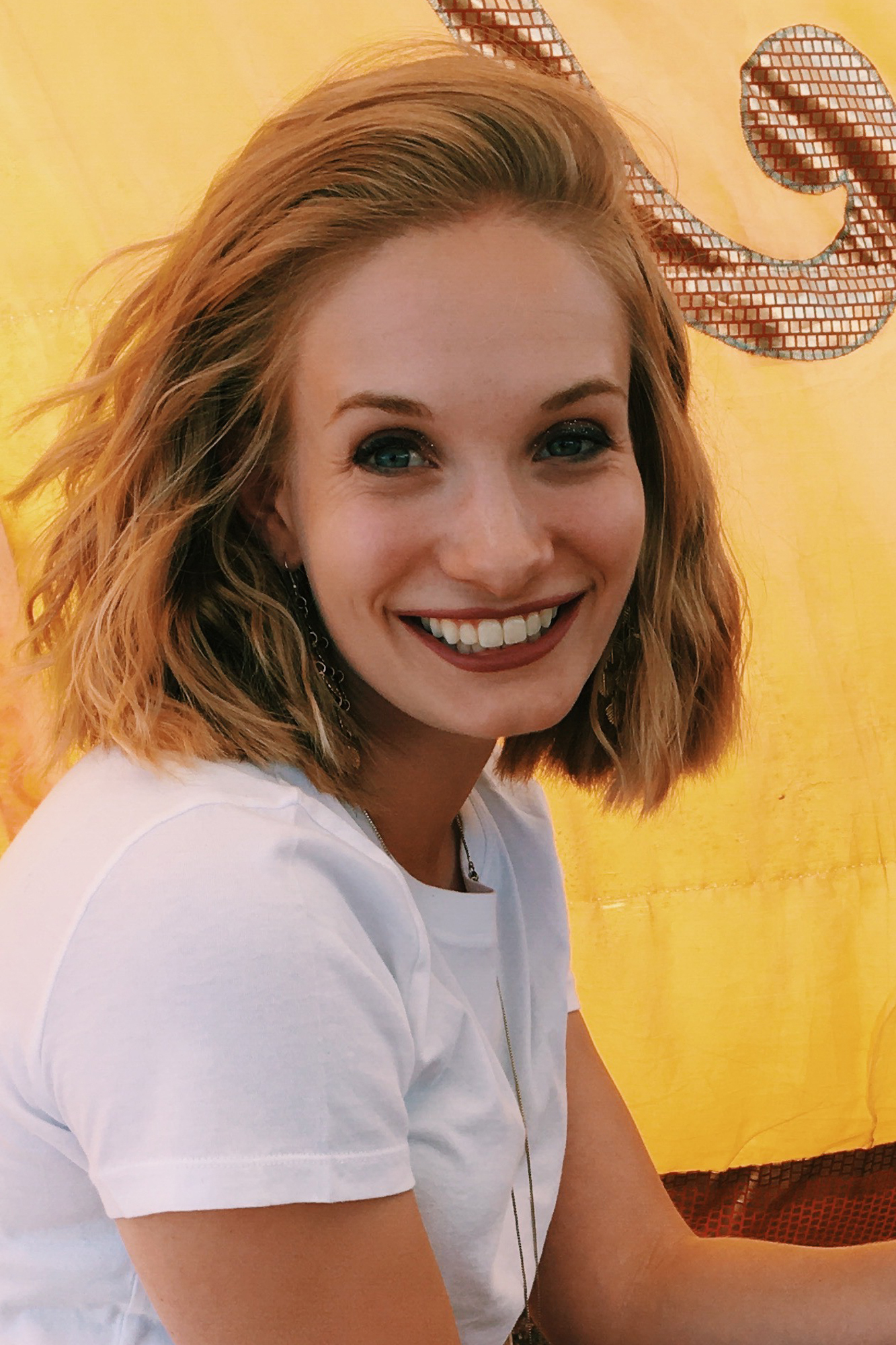
Brittany Ellis, Massachusetts Institute of Technology Presentation: “The Sedimented Image: Transforming the ‘Lac Asphaltite’ into Historical Record and Photomechanical Print” Session: Elemental Infrastructures in Nineteenth-Century Visual Culture |
|
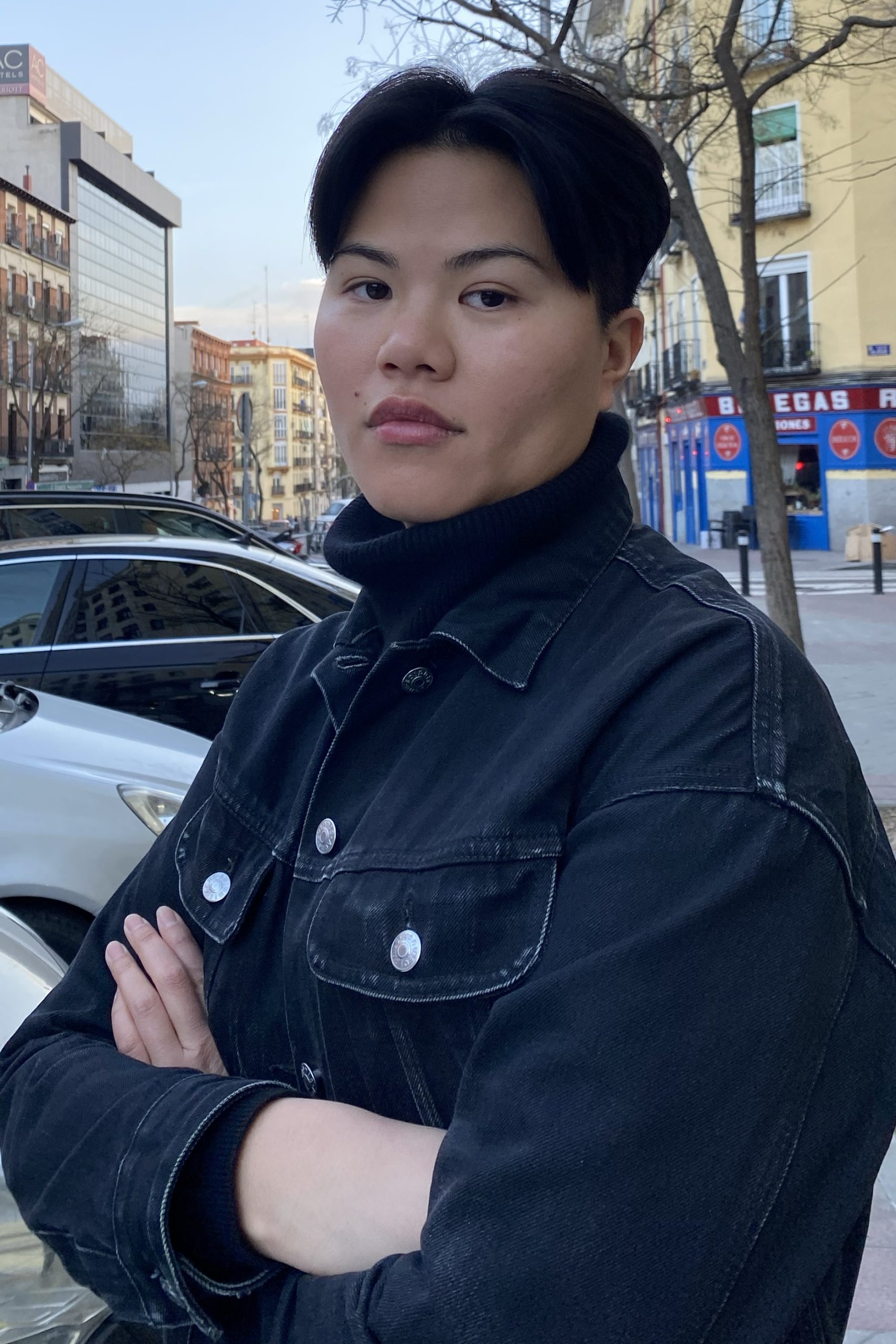
Kristie La, Harvard University Presentation: “Sculpture between Respectability and Transgression: Augusta Savage’s Bookends for Countee Cullen” Session: Queer Wanting |
Samuel H. Kress Foundation CAA Annual Conference Travel Fellows
Recognizing the value of the exchange of ideas and experience among art historians, the Kress Foundation offers travel grants for scholars presenting on European art before 1830.