
CAA News Today
Call for Applications: CAA-Getty International Program 2025
posted by CAA — Jul 10, 2024
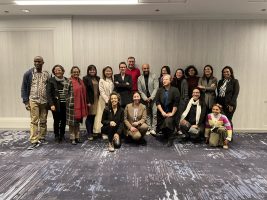
CAA is currently accepting applications for the CAA-Getty International Program! Thanks to generous support from Getty, the program—now in its thirteenth year—will enable scholars from all over the world to travel to New York to participate in the CAA 113th Annual Conference, February 12–15, 2025. The program features a preconference colloquium on international issues in art history, followed by a week of sessions, workshops, events, museum visits, and professional development opportunities.
The CAA-Getty International Program was established to diversify CAA membership, increase international presence at CAA conferences, and foster greater cross-cultural understanding of different contexts and methodologies of art scholarship and practice. Rigorous dialogue between international scholars and their North American peers has yielded collaboration, community, and lasting connections: CAA-Getty alumni have worked together on publications, exhibitions, convenings, and many other projects. To date, the program has gathered over 150 scholars from sixty countries and continues to have significant global impact on the field. Many participants become CAA ambassadors in their respective countries by sharing knowledge acquired during the program with their colleagues at home.
The individuals selected for the 2025 program will receive a one-year CAA membership, conference registration, travel expenses, hotel accommodations, and per diems for meals and incidentals. International art historians, curators, and other visual arts professionals are encouraged to apply.
Visit our website for detailed guidelines and to apply.
Deadline: August 15
This program is made possible with support from Getty.

Member Spotlight: Hilary Robinson
posted by CAA — Jul 08, 2024
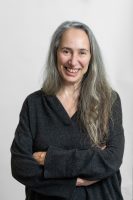
For over forty years, Dr. Hilary Robinson, CAA’s recipient of the 2024 Distinguished Feminist Award, has been devoted to advancing feminist art history, feminist art education, feminist art theory, and feminist art criticism. Trained as a painter, she received a BA in Fine Art from the Newcastle University. She went on to earn an MA in Cultural Theory from the Royal College of Art in London, where her research resulted in a thesis entitled “The Subtle Abyss: Body-Image and Sexuality in Contemporary Feminist Art.” Robinson’s groundbreaking doctoral dissertation, “Becoming Beauty: The Implications of the Writings of Luce Irigaray for Feminist Art Practices,” teased out the aesthetic theory embedded in the work of the Belgian feminist philosopher. “Becoming Beauty” offers highly original readings of selected artworks by Louise Bourgeois as well as contemporary British artists. Her doctoral thesis was subsequently published as the well-regarded monograph, Reading Art, Reading Irigaray: The Politics of Art by Women (2006).
As an exemplary scholar and feminist thinker who is also a committed activist, Robinson realized early the critical importance of documenting to not only revolutionize feminist art history but also to institutionalize it, which contributes to the establishment of its value within academia. Through meticulous archival research, she has played an instrumental role in the collation and editing of a range of groundbreaking and accessible anthologies that have become required reading in university courses while also reaching a wider readership, thus contributing to feminist art history’s public and global impact. Visibly Female: Feminist Art Today (1987) focused primarily on documents from the 1980s. It was followed in 2001 by the first edition of Feminism-Art-Theory: An Anthology 1968–2000, which gathered a much more comprehensive range of ninety-nine previously published texts. Robinson radically revised the second edition in 2015 and demonstrated her commitment to representing feminist art’s diversity.
In 2019, with her co-editor Dr. Maria Elena Buszek, Robinson published the invaluable Companion to Feminist Art, which collected scholarly essays by thirty contributors whom Robinson and Buszek warmly referred to as companionistas. The volume also included Robinson’s own essay on feminism, art, and activism. The collection offered an overview of contemporary feminist art’s multiple ways of making and thinking across the globe. Companion to Feminist Art demonstrates feminist scholarship and international collaboration at their finest.
A highly prolific scholar, curator, and editor, Robinson’s multifaceted work advocating for an expansive view of feminist art practices and feminist art education was internationally and formally recognized when in 2005 she was appointed Dean of the College of Fine Arts and Professor of Art Theory and Criticism at Carnegie Mellon University in Pittsburgh. She returned to England in 2012 to become the Dean of the School of Art and Design and Professor of Visual Culture at Middlesex University. In 2017, Professor Robinson joined Loughborough University’s School of Arts, English, and Drama as Professor of Feminism, Art, and Theory. In 2018, Professor Robinson established the Centre for Doctoral Training (CDT): Feminism, Sexual Politics, and Visual Culture at Loughborough.
Currently, Robinson is the UK Principal Investigator for Feminist Art Making Histories (FAMH, 2021–24). This three-year-long oral history and digital humanities project, funded by the Irish Research Council and the UK Arts and Humanities Research Council (AHRC), aims to unearth hidden stories of feminist art since the 1970s. As a collaboration between Loughborough and the Institute of Art, Design and Technology, Dún Laoghaire, the project involves recording, curating, and archiving fifty years’ worth of oral histories and digitized records of feminist artists in the UK and Ireland.
Dr. Robinson’s service to the field has been nothing short of extraordinary. An active participant in College Art Association conferences, she was a member of CAA’s Committee for Women in the Arts from 2000 to 2005 and a member of the CAA’s jury of the Distinguished Feminist Award from 2015 to 2017. She served on the editorial boards of Art Journal (2012–16) and, critically, throughout its history, of n.paradoxa: international feminist art journal—a biannual academic journal published in the UK from 1996–2017.
With her groundbreaking research, outstanding record of publication, unwavering dedication to inclusive feminist art activism, education, administration, and professional service, Robinson has not only enriched our understanding of art’s relationship with gender and power but has also championed the voices of marginalized artists and expanded conventional narratives of art history.
This special member spotlight was written by CAA Committee on Women in the Arts members Kimberly Lamm and Tanya Augsburg.
Register for CAA Summer Publishing Webinars!
posted by CAA — Jun 24, 2024
This summer, CAA will hold webinars in response to an influx of requests for guidance on and advice about academic publishing. Organized and moderated by Christy Anderson, Editor-in-Chief of The Art Bulletin and professor of the History of Architecture at University of Toronto, a panel of publishing experts will discuss and answer audience questions on the topics of turning longer research into an article and responding to readers reports and revisions. Our aim is to help demystify the academic publishing process, expand access to publishing education and professional development, and ultimately increase diversity in publishing.
July 31, 2–4 p.m. ET
In Print: From the Archive to the Essay
Getting Your Research Into Print
Shaping a large amount of research into a powerful essay can be more difficult than writing a book. A successful article needs a strong argument, clear organization, and effective use of images. In this workshop we will discuss some guidelines on developing an essay for The Art Bulletin or other journals. Join Christy Anderson, the Editor-in-Chief of The Art Bulletin and other scholars for a roundtable discussion with time for your questions.
August 7, 2–4 p.m. ET
Contending with Critique: How to Effectively Respond to Readers’ Reports
Each essay in The Art Bulletin has been through multiple revisions in response to comments from readers and the editor. If you are asked to ‘revise and resubmit’ how do you respond to readers’ reports? This workshop will demystify the peer review process and help you to incorporate the best of the advice into your writing.
Publishing webinars are free for CAA members and students.
Non-member registration is $15 per webinar or $20 to register for both.
Not currently a member of CAA? Join for $8 per month to attend both summer publishing webinars for free and receive discounted CAA Annual Conference registration!
Publishing webinars sponsored in part by:
Apply for CAA Committee Service!
posted by CAA — Jun 23, 2024
Join one of CAA’s twelve Professional Committees, the Annual Conference Committee, or the Publications Committee as an at-large member! Each committee works from a charge established by the Board of Directors. For many CAA members, committee service fosters professional relationships, community, and facilitates impactful contributions to pressing issues in the visual arts and higher education.
Important Committee Service Information:
- Committee members serve a three-year term. Service for this committee cycle begins in February 2025 at the CAA 113th Annual Conference and concludes in February 2028 at the 116th Annual Conference.
- All applications are reviewed by current committee members as well as CAA leadership.
- Appointments will be announced by November 1, 2024. New members will be introduced to their committees during their respective business meetings at the 113th Annual Conference in New York City (February 12–15, 2025).
- If appointed, applicants are expected to attend committee meetings, participate actively in the work of the committee, and contribute expertise to defining the current and future work of the committee.
- Appointees must be current CAA members before the start of their committee service, but do not need to be CAA members to apply.
- All committee members volunteer their service without compensation.
Visit our website using the links below to review the mission of each committee as well as the current roster of committee leadership and members.
CAA ANNUAL CONFERENCE COMMITTEE
The Annual Conference Committee is responsible for shaping the program of the Annual Conference, ensuring that the program reflects CAA’s goals: to make the conference an effective place for intellectual, aesthetic, and professional learning and exchange, to reflect the diverse interests of the membership, and to provide opportunities for participation that are fair, equal, and balanced.
CAA PROFESSIONAL COMMITTEES
CAA’s twelve Professional Committees represent the constituent interests of the organization by addressing standards, practices, and guidelines in the professions of our individual and institutional members.
- Committee on Design
- Committee on Diversity Practices
- Committee on Intellectual Property
- Committee on Research and Scholarship
- Committee on Women in the Arts
- Education Committee
- International Committee
- Museum Committee
- Professional Practices Committee
- Services to Artists Committee
- Services to Historians of the Visual Arts Committee
- Student and Emerging Professionals Committee
CAA PUBLICATIONS COMMITTEE
The Publications Committee oversees CAA’s publishing activities and supervises the editorial boards of The Art Bulletin, Art Journal/AJO, and caa.reviews.
Please Note: At-large members of the Publications Committee represent the voice of our membership, and perform the role of committee secretary, taking minutes at three Publications Committee meetings per year in February, May, and October.
If you are interested in applying to serve on a CAA committee, please click the APPLY TO SERVE button below to fill out the application form and upload your CV as well as a brief personal statement describing your interest and experience. If you are applying to more than one committee, please submit a separate personal statement tailored to each of the committees to which you are applying, noting why you’d like to serve on that specific committee.
Contact Maeghan Donohue, CAA Chief of Staff and Director of Strategic Planning, Diversity & Governance with any questions.
Deadline: August 8, 2024
CWA Picks: Summer 2024
posted by CAA — Jun 07, 2024
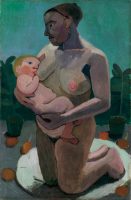
Paula Modersohn-Becker, Kneeling Mother with Child at Her Breast, 1906
(image ©Paula-Modersohn-Becker-Stiftung; provided by Bremen/Nationalgalerie, Berlin)
The CAA Committee on Women in the Arts (CWA) curates a seasonal list of must-see exhibitions, screenings, projects, and talks. The CWA Summer 2024 picks highlight individual artists’ observant and expressive art practices that reveal personal and collective stories about the earth, the environment, communities, and members of lesser known, historically marginalized groups.
UNITED STATES
ACCESS: An Ordinary Notion
June 15–July 13
Arc Gallery, San Francisco
ACCESS: An Ordinary Notion, a national juried exhibition, is proud to present artworks that tell individual stories and advocate for social justice and human rights. Inspired by Alice Paul, who introduced the Equal Rights Amendment in 1923, this collection showcases art in all media that illuminate the ongoing conversation around race, women’s and LGBTQIA+ rights, reproductive rights, disparities in global wealth, power, access to food, water, shelter, education, health services, disability access, child and elder care, along with immigration issues, climate change, and criminal (in)justice.
Beate Kuhn: Turn
June 29–December 1
Carnegie Museum of Art, Pittsburgh
Beate Kuhn (1927–2015) was a German sculptor known for her rhythmic ensembles of deconstructed, ceramic forms such as discs, cylinders, cones, and spheres. She also channeled beautiful and sublime aspects of nature with formal allusions to succulents, seeds, mushrooms, and invertebrate animals. Like the atonal music she favored, Kuhn’s sculptures were both alluring and disquieting.
Calida Rawles: Away with the Tides
June 27–February 23, 2025
Perez Art Museum Miami
Calida Rawles envisions water as a space for Black healing. Merging hyperrealism, poetic abstraction, and the symbolism of water, Rawles creates unique portraits of Black bodies submerged in and interacting with bodies of water. Water functions as an element that signifies both physical and spiritual healing, as well as historical trauma and racial exclusion. Rawles delves into the particular experience of Black people in Overtown, a Miami neighborhood that went from a cultural and commercial hub for Black people to a subject of gentrification, systemic racism, and mass displacement. Rawles photographs some of her subjects in natural waters at Virginia Key Beach, which was once racially segregated. Rawles probes the Atlantic’s history as the site of the transatlantic slave trade. The work critically engages with Miami’s water-entwined climate and mines Overton’s history of beauty, oppression, and resilience.
Jen Liu: GHOST__WORLD
Through August 24
/ (Slash), San Francisco
Jen Liu: GHOST__WORLD features new videos, augmented reality, paintings, and glass sculptures. GHOST__WORLD originates in Liu’s long-term engagement with labor activism and women electronics workers in South China. This project takes up last year’s social media phenomenon of “frog mothers,” unlicensed street vendors in China wearing inflatable frog costumes and selling frog-shaped balloons.
Jennifer Rochlin: Paintings on Clay
Through July 12
Hauser & Wirth, New York City
Rochlin’s three-dimensional compositions coalesce largely without planning. Sketched in advance, the shapes of her vessels ultimately depart from classical form and symmetry through a laborious hand-building process that encourages distortion. The vessels’ physicality prompts viewers to trace their curves and walk around them to follow the sequence of vignettes that travel their circumferences.
LaToya Ruby Frazier: Monuments of Solidarity
Through September 7
MoMA, New York
LaToya Ruby Frazier: Monuments of Solidarity highlights the artist’s role as a social advocate and connector of the cultural and working classes in the twenty-first century. For this exhibition, Frazier has reimagined her diverse bodies of work as a sequence of original installations that she calls “monuments for workers’ thoughts,” which address the harmful effects of industrialization and deindustrialization, the healthcare inequities facing Black working-class communities in the Rust Belt, the ongoing water crisis in Flint, Michigan, and the impact of the closure of a General Motors plant in Lordstown, Ohio. Monuments of Solidarity celebrates the expressions of creativity, mutual support, and intergenerational collaboration that persist in light of these denials of labor, human, and civil rights. As a form of Black feminist world-building, these nontraditional “monuments” demand recognition of how women and people of color have contributed and continue to contribute to histories of labor and the working class.
Leilah Babirye: We Have a History
June 22–June 22, 2025
de Young Museum, San Francisco
Leilah Babirye is known for her ambiguously gendered sculptures in ceramic, wood, and discarded objects. Reclaiming ceramic and wood-carving traditions from western and central Africa, she creates her ceramics by hand, firing them with glazes, while she whittles, scorches, and burnishes her wood sculptures. She then adorns them with wire, bicycle chains, inner tubes, and other found materials. The sculptures, which range in scale from towering totemic forms to busts, talismans, and masks, are portraits of her LGBTQ+ community. Babirye’s work speaks to the power of reclaiming personal and cultural identity through artistic practices, historical narratives, and cultural traditions.
Nampeyo and the Sikyátki Revival
Through September 15
de Young Museum, San Francisco
During her lifetime, Nampeyo (ca. 1860–1942) was, and remains today, perhaps the most renowned potter from the American Southwest. The single-gallery exhibition highlights Nampeyo’s work, juxtaposed with examples of Hopi pottery from her time. Exquisite ceramics made by ancestral Hopi artists demonstrate Nampeyo’s sources of inspiration, and artworks by four generations of her descendants attest to the master potter’s enduring legacy.
Nina Chanel Abney: LIE DOGGO
Through October 5
The School | Jack Shainman Gallery, Kinderhook, NY
LIE DOGGO spans Nina Chanel Abney’s creative practice, uniting a new series of paintings with collages, site-specific murals, an immersive digital art installation, and the debut of a new body of sculpture. Paying homage to the sophisticated color theories of Matisse, continuing the legacy of cubists, and connecting with the sensibilities of Harlem Renaissance greats Douglas and Lawrence, Abney brings these historical movements into contemporary pertinence. The exhibition’s title, LIE DOGGO, a phrase meaning to remain inconspicuously in wait, suggests a strategic invisibility and biding one’s time, reflecting on when to observe and when best to act. Abney challenges the viewer to explore the vast expanse that lies between what is said and what remains silent.
Paula Modersohn-Becker: Ich Bin Ich / I Am Me
June 6–September 9
Neue Galerie, New York City
+
October 12–January 12, 2025
The Art Institute of Chicago
Paula Modersohn-Becker (1876–1907) is a major figure in the history of German Expressionism. In the course of her brief career – which was cut short at the young age of 31 because of a postpartum embolism – Modersohn-Becker produced more than 700 paintings and over 1,000 drawings. She created many self-portraits, including the first nude self-portraits known to have been made by a woman. Many of these works focused on her pregnancy, another first among Western women artists. The artist first became known in part through her letters and diaries, including correspondence with her close friend, the German poet Rainer Maria Rilke. The exhibition is the first collaboration between Neue Galerie New York and the Art Institute of Chicago, to which the exhibition will travel following its debut at the Neue Galerie.
Simone Leigh
Through January 20, 2025
LACMA and the California African American Museum, Los Angeles
This exhibition is the first comprehensive survey of Leigh’s work. Twenty years of the artist’s production across ceramics, bronze, video, and installation are displayed in a show organized by the ICA Boston and co-presented by LACMA and the California African American Museum. Leigh’s practice, which regularly explores the interiority of Black femme life, can be seen in all its iterations at this latest exhibition, including pieces from the artist’s 2022 Venice Biennale presentation.
Samia Halaby: Eye Witness
June 29–December 15
Eli and Edythe Broad Art Museum, Michigan State University, East Lansing
Samia Halaby: Eye Witness follows Samia Halaby’s creative journey to experiment with how painting conveys her experiences and reflects how she sees the world around her. Halaby’s paintings, which range from miniature to monumental, 2D to 3D, and monochrome to multicolor, are notably shaped by her experiences and shift accordingly throughout her itinerant career across the Midwest, the East coast, and the Arab world. Halaby also explores how technology can enhance and transform painting. Halaby’s paintings reflect the life of a witness, one we are invited to take part in by looking slowly and closely at the artist’s work.
Sonya Clark: We Are Each Other
Through September 22
Museum of Arts and Design (MAD), New York City
Highlighting thirty years of artmaking dedicated to the Black experience in America, Sonya Clark: We Are Each Other is the first comprehensive survey of the communal art projects that form the heart of the artist’s pioneering creative practice. Accompanied by a selection of Clark’s photographs, prints, and sculptures, the exhibition features five of Clark’s large-scale, collaborative projects, including her barrier-breaking The Hair Craft Project (2014) and the ongoing performance, Unraveling.
Tanya Lukin Linklater: Inner blades of grass (soft) inner blades of grass (cured) inner blades of grass (bruised by the weather)
Through August 21
Wexner Center for the Arts, Ohio State University, Columbus
Lukin Linklater’s perception of time and place comes across in her sculpture, installation, rehearsals, video, works on paper, and writing. Her practice is inspired by her upbringing in the Kodiak archipelago of Alaska. The exhibition’s title is informed by an interview with the late Sugpiaq cultural worker Eunice von Scheele Neseth and a poem by Oglala Lakota poet Layli Long Solider. Describing grass in different states references the procedures that women of Kodiak Island follow when harvesting and processing plant material used to weave baskets. The imagery evoked by the words also asks viewers to consider observation and touch in the acts of restoration and repair.
Tolia Astakhishvili: between father and mother
Through August 12
Sculpture Center, Long Island City, New York
For more than two decades, Tolia Astakhishvili has worked across sculpture, drawing, painting, sound, and video. At scales that both augment and seemingly disappear into gallery spaces, Tolia’s environments posit architecture as an unfixed and transforming entity shaped by those who live through it. At the same time, her sculpture attends to disavowed space and the overlapping markers of use, authorship, and social position that produce different settings of decay.
Lynn Hershman Leeson: Moving-Image Innovator
Film series
Through June 20
MoMA, New York
Over five decades, Lynn Hershman Leeson has produced work that probes and plays with the complex relationship between humans, technology, and social structures. Her videos navigate the fluid space between perception and truth, exposing our collective and individual biases. The immediacy and urgency of video allowed her to assume an artist-as-activist stance, portraying the lives of women who were barely visible in the moving-image art scene of the time. This retrospective features Hershman Leeson’s complete, four-part “Cyborg Series,” including Cyborgian Rhapsody – Immortality (2023), which was written, performed, and designed by an artificial intelligence chatbot. A special conversation on June 8 brings together Lynn Hershman Leeson, Eugenia Kuyda, founder of the Replika AI app, and the chatbot named Echo.
- June 7, 7:00 p.m.: !Women Art Revolution (2010)
- June 8, 4:30 p.m.: Cyborgian Rhapsody – Followed by a discussion
- June 8, 7:00 p.m.: Conceiving Ada (1997) – Introduced by Lynn Hershman Leeson
- June 11, 7:00 p.m.: Teknolust (2002)
- June 12, 7:00 p.m.: Strange Culture (2007)
- June 13, 7:00 p.m.: Tania Libre (2017)
- June 14, 7:30 p.m.: The Complete Electronic Diaries (1984–2019)
- June 15, 7:00 p.m.: Vertighost (2017); Longshot (1999)
- June 17, 6:30 p.m.: No Words (2023); Seeing is Believing
MEXICO
Ursula Biemann, Becoming Earth
Through October 13
Museo de Arte Contemporáneo (MUAC), Mexico City
Swiss artist Ursula Biemann proposes to rethink the epistemic roots of our relationship with the Earth. In her field research, she explores the ecologies of forests and oil as well as the consequences of extractivist projects on global ecosystems and the climate. The artist interweaves vast cinematographic landscapes in her multilayered videos with documentary images, sci-fi poetry, and academic findings.
CANADA
Rooted Knots/Blended Threads
Through July 6
Sur Gallery, Toronto
Mestiza hybrid identities, as Gloria Anzaldúa argues, are multilayered. They stretch in all directions, from past to present, vertically and horizontally, chronologically, and spatially. The artists in this exhibition use textiles and threads symbolically and metaphorically referencing ties to ancestral traditions while highlighting transformation as diasporic subjects. This exhibition aims to explore parallel frameworks between the art produced by these women textile artists and the mestiza female body that endures the complexity of racial and patriarchal oppression, forms of invisibility and exclusion, and an imposed coloniality, which shapes their position and condition in Canada. The common thread that ties the artists Claudia Gutiérrez, Ruth Mora Izturriaga, Ixchel Suarez, and Sarabeth Triviño together is their ability to transmit meaning behind the slow-paced methodology of working with textiles as a space for personal meditation, sharing of traditional knowledge, and the experience of collective healing.
SOUTH AMERICA
Ebecho Muslimova: Rumors
Through August 10
Mendes Wood, São Paulo
+
Ebecho Muslimova: Whispers
June 7–July 26
Bernheim, Zurich
Rumors and Whispers is a two-part presentation of Ebecho Muslimova’s recent series of paintings across Mendes Wood DM’s São Paulo gallery and Bernheim Gallery in Zürich. A transatlantic game of telephone, the exhibition first opens in Brazil with Muslimova’s Rumors suite, followed two weeks later by Whispers in Switzerland, each painting a response to one at the previous opening. Like the children’s game telephone, this body of work tracks the shifting persona of Muslimova’s signature character Fatebe. An unabashedly liberated personality, Fatebe appears across the paintings in different forms, mischievously bursting into some frames and, in some instances, physically embodying a portal between them, translating or responding to a previous painting.
Tania Candiani. Ofrenda
Through September 1
Museo de Arte Moderno de Medellin, Colombia
This is Mexican artist Tania Candiani’s first large-scale exhibition in Colombia and brings together a series of works based on sound, artisanal processes, and rivers, which speak of different latitudes but also, above all, of Medellin. Some of her works lead through paths that merge the Earth with its human and non-human inhabitants, bringing them closer and questioning the meaning each one gives to their brief passage through this planet. Vaguely structured around Preludio cuántico, a two-channel octophonic video that connects mystical, scientific, and aesthetic visions of the universe, Ofrenda poses -from sound and matter- a series of reflections on that which is primordial, both audible and palpable.
ASIA
Rei Naito: come and live – go and live
June 25–September 23
Tokyo National Museum
Rei Naito has been creating works based on the question, “Is our existence on the Earth a blessing in itself?” Her newest exhibition “come and live – go and live” was created through her encounters with the Tokyo National Museum’s collection and architecture. In her work, life and death are explored as something inseparable. The exhibition spaces are illuminated by natural light and transformed by weather and time.
EUROPE & UK
Anne Imhof: Wish You Were Gay
June 8–September 22
Kunsthaus Bregenz, Bregenz, Austria
Wish You Were Gay is simultaneously a personal survey and an all-new body of work that reflects on and further develops some core elements constituting Imhof’s repertoire of artistic expression. Wish You Were Gay includes bas-reliefs, large-scale oil paintings, sculptures, stage elements, stadium lighting, and new video works made of archival footage from her origins as an artist coming of age in underground subcultures. Imhof explores notions of finitude, reality and artifice, chance and fate, as well as absence and presence set against a backdrop of post-apocalyptic isolation.
The Deep West Assembly Cauleen Smith
June 14–September 15
Astrup Fearnley Museet, Oslo, Norway
Astrup Fearnley Museet presents a solo exhibition of work by multidisciplinary American artist and filmmaker Cauleen Smith. In producing her films, videos, live-feed projections, and slide projections, Smith deploys original research and techniques of improvisation, arrangement, and live performance and narration, creating works that share affinities with theater and visual art. Smith merges film with music and poetry, longstanding forms of Black expression. Smith’s most recent film The Deep West Assembly delves into the concepts of geological time and Blackness as camouflaged in images, songs, and words by Black and Brown creators (after thinkers such as Suzanne Césaire). Incorporating images of geological formations such as lava caves, calderas, and salt domes, as well as human-made landforms such as ancient Choctaw burial mounds, The Deep West Assembly paints a view of the American South as a horizontal “Deep West” (a term borrowed from poet Wanda Coleman).
Giantesses (Bożenna Biskupska, Urszula Broll, Ewa Ciepielewska, Katarzyna Rotkiewicz-Szumska, Ewa Zarzycka)
Through September 8
BWA Wrocław Główny Gallery, Wrocław, Poland
Giantesses is an exhibition featuring five artists connected in various ways to Lower Silesia. Although they use different media – from painting, large-scale sculpture, photography, and video to performance art and more ephemeral works – the artists have many things in common. Their biographies share a life-creating ethos: dedication to collective work, creation of art spaces, and development of artistic communities. The title of the exhibition refers to a rock formation called the Giantesses in the Ślęża massif, which is a crucial mountain in Lower Silesia due to its location, the beauty of its landscape, and its history, which dates to pre-Slavic times when it was a place of spiritual practices and sun worship.
Mari Chordà: Mari Chordà . . . And Many Other Things
July 5–January 12, 2025
Museu d’Art Contemporani de Barcelona
Mari Chordà uses image, language, and social action as materials in her work. An active feminist observer, her multidisciplinary art practices emerged as a response to the oppressive context of the Franco regime but have remained throughout time in a society that still has to restore the visibility and recognition of women’s work. As a pioneer of her generation to express free feminine sexuality, Chordà addressed pleasure, maternity, and lesbian relationships in her painting and her poetry. As a student in 1964, she painted her first vaginal painting. She paints the body fluids, secretions, sexual organs, or coitus with forms and colors akin to the sensibility of pop art.
Martha Jungwirth
June 7–September 22
Guggenheim Bilbao, Spain
This exhibition presents seventy works, starting with Jungwirth’s earliest drawings that explore the boundary between representation and abstraction, and concludes with her recent series inspired by Francisco de Goya and Édouard Manet. Organized thematically, it features drawings, watercolors, oil paintings, and artist books on various substrates, including handmade paper, accounting books, cardboard, and more. These unconventional materials introduce unpredictability into Jungwirth’s creative process, enhancing the spontaneity and dynamism of her work. This artistic spectrum ranges from paintings filled with dense strokes to those marked by spare brushwork, exploring the tension between abstraction and the physical world.
Maya Minder: Mountains O’Things
June 21–July 20
Gallerie Glaab, Bern, Switzerland
“This is how cooking transforms us” is a framework that Maya Minder weaves like a thread through her work. Cooking serves as a metaphor for human transformation from raw nature to cooked culture, and she connects it with the evolutionary ideas of a symbiotic coexistence between plants, animals, and humans. She creates interrelations between human objects of use and the animism of nature. A table of diversity that still needs to be digested. Following the biohacker, maker, and thirdspace movements, she uses grassroots ideas, safe zones, and citizen science in her field to enable collective storytelling through food and cooking.
Paula Rego: Manifesto
Through October 6
Luís I Foundation, Cascais Cultural Center, Cascais, Portugal
Between the 1960s and 1970s, Paula Rego’s experimental figurative approach served the need to express her emotions, reflecting feelings of anxiety, fear, and anguish shared by all Portuguese who aspired to political change. The plurimaterial technique that she then developed, using heterogeneous materials—paints, paper cut and glued onto the canvas—and the themes addressed, which suggest a critical and challenging position concerning authority, manifest an attitude of political resistance through creative practice. Her 1965 first solo exhibition created a space for dissension, confrontation, and freedom. Paula Rego: Manifesto continues the critical revisitation, through the artist’s particular perspective, of striking themes from the recent history of Portugal.
Selma Selman: Flowers of Life
June 20–September 15
Shirn Kunstshalle, Frankfurt
Selma Selman describes herself as “the world’s most dangerous artist.” Together with her family, she cannibalizes former status symbols, such as Mercedes-Benz cars, to acquire the few precious metals that are still usable. The spoken performances by this artist with a Romani background are usually loud, giving angry expressions to her urge to reverse power relationships. Selman’s art describes through a variety of media autobiographical experiences of discrimination, violence, patriarchy, and sexism. With the poetic title Flowers of Life, an installation consisting of orange peel, Selman refers to her family’s means of livelihood since they collect and sell scrap metal. The video Crossing the Blue Bridge (2024) is based on memories of Selman’s mother, who had to cross a bridge in Bosnia with her daughter in 1994 during the Bosnian War. Selman takes these experiences as a starting point to situate herself as a feminist activist artist who campaigns internationally for her community.
SPLASH: eco + hydrosexuals unite! | Annie Sprinkle, Beth Stephens, Justyna Górowska, Ewelina Jarosz
June 15–September 14
lokal_30, Warsaw
The exhibition explores one of humanity’s most significant and challenging relationships: the bond between us and the environment. It proposes a dialogue between the ecosexual and hydrosexual movements, creating transcultural connections crucial for caring about diverse, multispecies futures. The exhibition is the first comprehensive presentation of Annie Sprinkle and Beth Stephens’s achievements in Poland in collaboration with the artistic-research duo cyber_nymphs, also known as Justyna Górowska and Ewelina Jarosz.
Tapta: Flexible Forms
July 20–November 3
Muzeum Susch, Susch, Switzerland
Tapta (pseudonym of Maria Wierusz-Kowalska) was born in Poland in 1926 and came to Belgium as a political refugee with her husband after participating in the 1944 Warsaw Uprising. They moved to the Belgian Congo (now the Democratic Republic of Congo), where they lived from 1950 to 1960. After returning to Belgium, Tapta swiftly established herself as an important member of a new generation of artists who sought to redefine sculpture by using textiles and other flexible materials as sculptural elements. In the 1980s, she changed her materials from woven textiles and cords to neoprene. With this industrially produced rubber, she created large black installations that still represent her idea of “flexible sculpture.” Tapta: Flexible Forms is the first large-scale retrospective dedicated to the artist outside of Belgium. The title of the exhibition, Flexible Forms, refers to the central concept of her oeuvre: the creation of sculptures that interact with the exhibition space and the viewer through their flexible forms.
Toyin Ojih Odutola: Ilé Oriaku
June 7–September 1
Kunsthalle Basel, Switzerland
For her first institutional solo exhibition in Switzerland, Nigerian-born artist Toyin Ojih Odutola presents a captivating body of newly drawn work. These impressive artworks explore the effects and various forms of language. In those moments when words seem insufficient, other forms of expression emerge.
FEMIGRAPHIC: Irena Keckes, Martyna Rzepecka, Ana Vivoda, Katarzyna Zimna
June 6–September 1
Galeria Willa, Lodz, Poland
Femigraphic is an exhibition of an international collective of artists working in printmaking, which oscillates between direct experience and its “reproduction,” touch and distance, repetition and change. The exhibition shows printmaking as a thoroughly contemporary medium of play with tradition, free from the compulsion to reproduce – free from the “tyranny of edition.” The theme of the female body and the presence of the body in the graphic process also appear directly. The show attempts to break out of the pattern of close-circle, academic hermetic relationships on which Polish graphics are based. Graphics are still masculinized, hence the idea of spotlighting activities carried out by women and representatives of various artistic centers (Poland, Croatia, and Guam/USA).
MIDDLE EAST
Ahaad ALamoudi: Moving Mountains
Through October 26
Hayy Jameel, Jeddah, Saudi Arabia
Ahaad Alamoudi is a Saudi artist whose work addresses history, ethnography, and representation. The show brings together works from the last eight years, with a new commission, Moving Mountains, as its centerpiece. This ambitious new work continues Alamoudi’s expansive exploration of rapidly changing social and cultural environments, situating Saudi’s natural and urban landscapes as sites of possibility where both individual and collective attempts to do the seemingly impossible are imbued with humor, absurdity and, at times, hopefulness. Through video, performance, and installation, Alamoudi negotiates her ambitions and forces beyond her control to explore how effort is inspired, transmitted, embodied, enacted, and ultimately navigated.
OCEANIA
mudunama kundana wandaraba jarribirri: Judy Watson
Through August 11
Queensland Art Gallery, South Brisbane, Australia
For more than four decades, Judy Watson has created powerful, ethereal works of art channeling the stories of her family’s Waanyi Country in northwest Queensland. mudunama kundana wandaraba jarribirri: Judy Watson is a comprehensive survey of the renowned Queensland artist’s incisive meditations on colonial, social, and ecological concerns. The exhibition includes 130 works, across painting, prints, sculpture, installation, and video, from an artistic practice centered on truth-telling around the environment, historical government policy affecting Indigenous Australians, and institutions that collect First Nations’ cultural material and remains.
Millard Meiss Publication Fund: Apply Now + Congrats to Spring 2024 Grantees!
posted by CAA — Jun 07, 2024
CAA is now accepting applications for the Millard Meiss Publication Fund. Twice yearly, grants are awarded through this fund to support book-length scholarly manuscripts in art history, visual studies, and related subjects which have been accepted by a publisher on their merits but cannot be published to their greatest potential without a subsidy. Thanks to the generous bequest of the late Professor Millard Meiss, CAA has been awarding these grants since 1975.
Learn more about the application process and apply here.
Deadline: September 15
Congratulations to the Meiss Spring 2024 Grantees!
Shira Brisman: The Goldsmith’s Debt: Conceptions of Property in Early Modern Art, University of Chicago Press
Atreyee Gupta: Non-Aligned: Art, Decolonization, and the Third World Project in India, Yale University Press
Peyvand Firouzeh: Intimacies of Global Sufism: The Making of Ne‘matullahi Material Culture between Early Modern Iran and India, Indiana University Press
Sherry Fowler: Buddhist Bells and Dragons, Under and Over Water, In and Out of Japan, University of Hawaii Press
Brendan McMahon: Iridescence and the Image: Material Thinking in the Early Modern Spanish World, Penn State University Press
Winnie Wong: The Many Names of Anonymity: Portraitists of the Canton Trade, University of Chicago Press
Deadline Extended: CAA Conversations Call for Season 9 Podcast Participants
posted by CAA — Jun 05, 2024
Do you have an idea for a podcast or want to turn your conference panel into a podcast discussion? CAA Conversations is currently accepting applications to participate in its 9th season!
CAA Conversations is a podcast initiative run by the Education Committee and provides a platform to explore hot topics in the field. While not limited to these topics and open to new ideas, the podcast team is interested in exploring the following themes in season 9:
- Inclusive pedagogy/community building
- Interdisciplinary teaching
- New technologies
- Equity in art history and studio art classrooms
Contact CAA Education Committee podcast administrators with any questions here.
If you are interested in participating in our upcoming season, please submit an interest form here.
Deadline: June 30
CAA Signs on to the American Council of Learned Societies Statement on 2024 Campus Protest
posted by CAA — May 13, 2024
CAA has signed on to the American Council of Learned Societies (ACLS) Statement on 2024 Campus Protests, which, like the American Historical Association (AHA) statement last week, was issued in response to recent decisions by colleges and universities to encourage police intervention and suppress protests.
Both AHA and ACLS statements resonate with CAA’s mission to advocate for the visual arts through “intellectual engagement and a commitment to the diversity of practices and practitioners,” as more broadly this speaks to a commitment to advocating for diversity of ideas. Opposing ideas, whether expressed via visual art or through protest, can disturb and trigger discomfort. However, per the ACLS statement, “while administrators have every right and duty to secure the safety of their campus communities, they cannot and should not shield students or others from the experience of hearing strongly worded statements which might make them deeply uncomfortable. It is the nature of protest to be loud, sometimes discourteous, and contentious. But, as scholars, we believe that suppressing the expression of unpopular or uncomfortable ideas by students or faculty engaged in peaceful protest does not do justice to the values at the heart of the university.”
Visit the ACLS website to view the full list of individuals, societies, and institutions who have signed on to this statement.
Join the CAA Board of Directors
posted by CAA — May 06, 2024
Now accepting Board of Directors nominations for the 2025–29 term! CAA seeks individuals passionate about shaping the future of the organization and the field. The Board is responsible for all financial and policy matters related to CAA, as well as promoting excellence in scholarship, curation, design, and art practice. CAA’s Board is also charged with representing and advocating for the membership regarding current issues affecting the visual arts and humanities.
Nominations and/or self-nominations must include the following:
- Nominee name, affiliation, and e-mail address
- Nominator name, affiliation, and e-mail address (if different from nominee)
- Nominee résumé/CV
- Nominee statement of interest (250 words maximum)
Please send all information and/or any questions via e-mail to Maeghan Donohue, CAA Chief of Staff & Director of Strategic Planning, Diversity, and Governance, with the subject line: Board of Directors Nomination.
Deadline: July 12, 2024
CAA Signs on to the American Historical Association’s Statement on 2024 Campus Protests
posted by CAA — May 06, 2024
CAA has signed on to the American Historical Association (AHA) Statement on 2024 Campus Protests, in response to recent decisions by colleges and universities to encourage police intervention and suppress protests. We stand with AHA in recognizing the historical dangers of suppression, “the fundamental value of peaceful protest on college and university campuses,” and the need for administrators at these institutions to reevaluate their forceful handling of such peaceful demonstrations:
“It is appropriate for universities to establish and enforce, through fair and transparent procedures, reasonable and content-neutral restrictions on the time, place, and manner of protests and other assemblies. These procedures should not, however, deprive students, faculty, and staff of their right to gather, speak, debate, and protest.”
AHA’s statement resonates with CAA’s mission to advocate for the visual arts through “intellectual engagement and a commitment to the diversity of practices and practitioners,” as more broadly this speaks to a commitment to advocating for diversity of ideas. Opposing ideas, whether expressed via visual art or through protest, can disturb and trigger discomfort. However, as AHA’s statement underscores, “encountering ideas that might make us uncomfortable is central to the educational process.”
OTHER LEARNED SOCIETIES AND INSTITUTIONS WHO HAVE SIGNED THE AHA STATEMENT
American Association for Italian Studies
American Association of Geographers
American Society for Environmental History
American Society for Theatre Research
American Sociological Association
Association for Asian Studies
Berkshire Conference of Women Historians
California Scholars for Academic Freedom
Dance Studies Association
Disability History Association
Executive Committee of Czechoslovak Studies Association
Historians for Peace and Democracy
International Labor and Working-Class History
Labor and Working-Class History Association
Linguistic Society of America
Medieval Academy of America
North American Conference on British Studies
Network of Concerned Historians
Oral History Association
PEN America
Shakespeare Association of America
Sixteenth Century Society
Society for French Historical Studies
Society for Historians of the Gilded Age and Progressive Era
Society for the History of Children and Youth
Society for US Intellectual History
Southern Association for Women Historians
Southern Historical Association
Western Society for French History
World History Association