CAA News Today
Announcing the CAA-Getty International Program 2026 Participants!
posted Nov 20, 2025
The CAA-Getty International Program will welcome ten new scholars and four program alumni to the CAA 114th Annual Conference! CAA114 will mark the fifteenth year of this invaluable program, which brings a cohort of art historians, museum curators, visual arts professionals, and select program alumni from around the globe to the CAA Annual Conference each year. Grantees participate in a preconference colloquium and alumni session, examining pressing topics in the field, ranging from historiography, interdisciplinary/transnational methodology, and the decolonization of our arts institutions. Read “A Global Vision: The CAA-Getty International Program” to learn more, and register now for CAA114!
2026 CAA-GETTY PARTICIPANTS
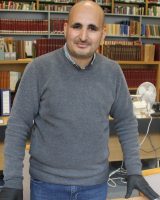 |
Hesham A. Abdel Kader is an Egyptian archaeologist and Roman archaeology specialist at the Egypt’s Ministry of Tourism and Antiquities. He recently earned his PhD from Ain Shams University with a dissertation titled “Public Baths and Water Management in Hermopolis Magna during the Roman Period.” His fieldwork experience spans over a decade and includes key roles in excavations at Hermopolis, Amarna, Tuna el-Gebel, and Deir el-Barsha, in collaboration with national and international missions. He is also a co-founder of the Egyptian Heritage Network and is actively engaged in public outreach and training initiatives in Middle Egypt. His work has been recognized with awards such as the Prof. Dr. Zahi Hawass Prize for Best Archaeologist (2023), and he has published extensively on Roman-era urbanism and infrastructure. He is passionate about integrating the field of archaeology with community heritage awareness and international collaboration. |
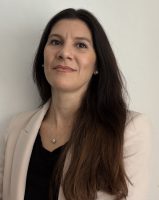 |
Ornela Barisone holds a PhD in humanities and arts and currently works as a Research Assistant at the National Scientific and Technical Research Council of Argentina (CONICET), based at the Centro de Investigaciones en Arte y Patrimonio (CIAP, EAyP, UNSAM-CONICET). As part of this position, she is developing a research project on transnational networks, artistic participation, and mid-twentieth-century avant-gardes in Argentina, Brazil, and France (1949–69). She is also a professor and researcher at the Universidad Autónoma de Entre Ríos (Argentina), where she serves as adjunct professor in History of Art and Associate Professor in Comparative Literatures. She directs the institutional research project “Avant-garde Archives and Magazines as Transnational Platforms,” focused on Edgardo Antonio Vigo and Latin American–European exchanges in the 1960s. Barisone has been awarded, among others, fellowships from CONICET, a UNL–CEAL–UAM–Banco Santander mobility scholarship, a Fulbright Visiting Scholar grant (UCLA), and a postdoctoral research fellowship at EHESS–Paris. She is the author of Experimentos poéticos opacos. Biopsias malditas: del invencionismo argentino a la poesía visual (1944–1969) (Ed. Corregidor, 2017). |
 |
Tuuda Haitula is a heritage professional and curator from Namibia, who is the curator of the Oranjemund Shipwreck under the National Museum of Namibia. His work centers on postcolonial restitution, ethical museum practices, and capacity-building in African museums. Tuuda has contributed to grant management, heritage assessments, and national exhibition development. He is passionate about using museums as tools for healing, knowledge recovery, and social transformation |
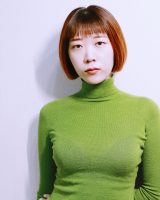 |
Mu He is a contemporary expressionist artist and cross-cultural art researcher. She holds both bachelor’s and master’s degrees in painting from the Rome Academy of Fine Arts, Italy, and is currently pursuing her PhD at the De Institute of Creative Arts and Design, UCSI University, Malaysia. Her doctoral research, “East–West Fusion: A Comparative Study of Gustav Klimt and Pang Xunqin’s Decorative Language in 20th-Century Figure Painting,” examines the transcultural negotiation of decorative vocabularies in modern painting, with a particular focus on the dialogue between Eastern and Western traditions. From 2018 to 2023, she served as a lecturer in oil painting at Hebei Minzu Normal University, China. In 2024, she received the Ernst Mach Grant to conduct research at the University of Applied Arts Vienna. Dedicated to bridging theory and practice and fostering intercultural dialogue, her works have been exhibited in China, Italy, and Malaysia. She continues to publish scholarly articles and is currently preparing a monograph on the comparative study of decorative language in East–West fusion painting. |
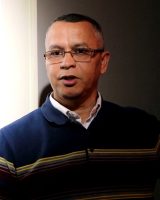 |
Omar ID Tnaine is a scholar and curator based in Agadir, Morocco, dedicated to preserving and promoting cultural heritage. As a curator at prominent Moroccan museums, he designs educational programs and exhibitions that connect diverse audiences with the richness of national and global heritage. Omar has contributed to significant research programs, including the 2025 Open Restitution Africa (ORA) Cohort, where he conducts case studies on North African restitution, focusing on Morocco, to document and share data on cultural heritage repatriation. He also participated in the Museum Lab, refining innovative museum practices, and the SAWA Museum Studies Program, enhancing his expertise in cultural heritage management. These experiences strengthen his commitment to cross-cultural dialogue and education. |
 |
Eve Loh-Kazuhara is an art historian specializing in Japanese art, focusing on the history and historiography of nihonga (Japanese-style painting) from the postwar to contemporary period. Her scholarship also explores the transnational narratives and connections of nihonga across Asia. Eve’s current book manuscript is on post-war Japanese painting through the examination of nihonga artist, Tanaka Isson’s landscapes of Amami Ōshima, an island in Southern Japan. She is the 2025–26 Robert and Lisa Sainsbury Fellow at the Sainsbury Institute for the study of Japanese Arts and Cultures in East Anglia, England. Previously, Eve taught at the National University of Singapore and the University of the Arts, Singapore, and has worked in museum interpretation. |
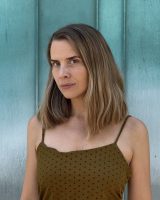 |
Éva Lovra is an associate professor in the Department of Civil Engineering at the University of Debrecen. She is an urban planner and civil engineer, her work is distinguished by its interdisciplinary focus on the protection of built heritage. Her scholarship examines architectural and urban history, with a specialization in urban morphology and the art history of the urban. She is the author of five monographs and has presented her research at numerous international venues, including New York University. Her contributions to the field were recognized with a Fulbright Visiting Professorship at the University of Pittsburgh in 2023. In addition to her academic roles, she is a curator of architectural exhibitions, with a forthcoming on the art and architecture of 1930s Miskolc. She is an active member of leading professional and academic bodies, including the Hungarian National Committee of ICOMOS and the Hungarian Academy of Sciences. |
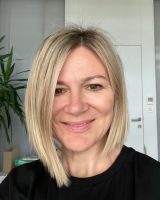 |
Martina Munivrana is a curator and art historian based at the Museum of Contemporary Art, Zagreb (MSU), where she currently serves as head of collections. Her curatorial and research focus centers on contemporary women artists, feminist and postcolonial theory, identity construction, and new media. She is particularly dedicated to increasing the visibility of women artists and developing new interpretations of their practices within institutional and exhibition contexts. She holds an MA in art history and philosophy and completed her PhD in 2023 at the University of Zagreb with a dissertation on the work of artist Breda Beban. At MSU, she has curated numerous research-based projects that challenge established narratives and highlight overlooked or marginalized artistic voices, with a strong emphasis on collaboration and inter-institutional exchange. Munivrana has participated in international conferences and programs, including the Getty Foundation’s Museum Studies Summer Institute (NYU), and has served on national expert councils focused on contemporary and innovative artistic practices. |
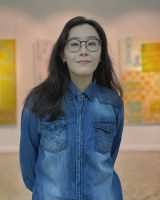 |
Irmuun Unubaatar (Yiri Muen) is a Mongolian artist and PhD candidate in art studies at the National University of Mongolia, specializing in fourteenth-century portraits of Yuan dynasty (1271–1368) emperors and empresses. Her research integrates the study of historical painting techniques with contemporary artistic practice, reflecting her dual role as scholar and practitioner. She has presented her work at international conferences in the United States, Austria, Italy, and Estonia, including the European Conference of Mongolian Studies (Venice, 2024) and the Second International Mongolian Studies Symposium (Vienna, 2024). As an artist, Irmuun focuses on Mongolian traditional scripts and cultural symbols, reinterpreted through modern visual language. She has held solo exhibitions at the Zanabazar Museum of Fine Arts (2023), the National Art Gallery of Mongolia (2016), and participated in international exhibitions such as the Krakow Centrum Sztuki Solvay Biennale in Poland (2025). |
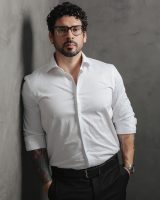 |
Rodolfo Ward de Oliveira is a Brazilian transdisciplinary artist, cultural producer, and researcher with a PhD in visual arts from the University of Brasília (UnB), including a funded research residency at UCLA’s Department of World Arts and Cultures/Dance (2022–23). He is currently a postdoctoral researcher at the Federal University of Amazonas (UFAM), focusing on the Tukano people and their epistemologies. Ward is the founder of HORI and CerrAmazon, hybrid platforms exploring decolonial aesthetics, anthropophagic theory, and cultural innovation. His practice bridges Indigenous art—especially among the Xerente and Tukano peoples—with immersive media, digital humanities, and social theory. From a Latin American perspective, he challenges binary oppositions and connects academic, artistic, and ancestral knowledge to forge a visionary cartography of Brazilian identity through ritual, resistance, and intercultural pedagogy. |
ALUMNI PARTICIPANTS
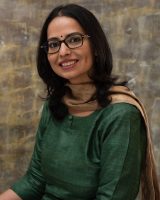 |
Savita Kumari is associate professor and head in the Department of History of Art, Indian Institute of Heritage. With over fifteen years of academic and curatorial experience, she specializes in South and Southeast Asian art. Prior to joining the Institute, she worked with renowned cultural institutions such as the National Gallery of Modern Art and the Indira Gandhi National Centre for the Arts. She has curated significant exhibitions and coordinated numerous national and international seminars, workshops, and collaborative initiatives. Deeply committed to outreach, Dr. Kumari leads art history enrichment programs for educators and students in rural areas. She has been involved in several prominent research and heritage documentation projects of national and international importance. She is a regular speaker at leading institutions in India and abroad. Her scholarly work includes books, articles, and exhibition catalogs, and she has received multiple prestigious fellowships and international travel grants. |
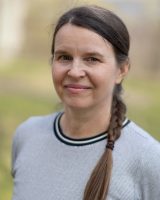 |
Pavlína Morganová is an art historian and curator, based in Prague, Czech Republic. She currently works as a director of the VVP AVU Research Center at the Academy of Fine Arts in Prague. She specializes on the Central and Eastern European art history, performance art and exhibition histories, lectures on Czech Art after 1945. She has participated in several international conferences and takes active part in the representative bodies of Czech art education and research. She recently conducted research concentrated on the medium of exhibition and she is the co-author of the book Exhibition as a Medium. Czech Art 1957−1999 (2020). She is also the author of the books A Walk Through Prague: Actions, Performances, Happenings 1949−1989 (2017) and Czech Action Art / Happenings, Actions, Events, Land Art, Body Art and Performance Art Behind the Iron Curtain (2015). She is a 2019 CAA-Getty International Program alumna. |
 |
Tatiana Muñoz-Brenes is an art historian, curator, museologist, and activist. She holds a BS in psychology and a BA in art history from the University of Costa Rica, and an MA in museum studies from New York University, where she was a Fulbright scholar. Her work critically examines the intersections of gender, sexuality, class struggle, race, coloniality, and institutional power within the fields of art and museums. Grounded in feminist and queer theory, her research exposes the systemic oppression of marginalized subjects within canonical art history and museum practices. She has curated exhibitions and conducted research in Latin America and the United States that closely examines the unequal dynamics between center and periphery. Her practice seeks to challenge white, male-dominated epistemologies and to promote more caring, affective, and community-based approaches to cultural production and display. |
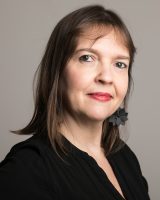 |
Viviana Usubiaga is a researcher at the Research Center in Art and Heritage (CIAP), Universidad Nacional de San Martín (UNSAM) and the National Scientific and Technical Research Council (CONICET), Argentina. She is currently director of the master’s program in Latin American art history at the School of Interdisciplinary Advanced Social Studies, UNSAM, where she is also a professor of contemporary art. She is assistant lecturer in modern and contemporary art at the University of Buenos Aires. From 2019 to 2023, she served as director of the National Division of Heritage Management at the Ministry of Culture of Argentina, and she has worked as a curator and editor. She holds a PhD in art theory and history from the Universidad de Buenos Aires. Her publications explore how art contributes to shaping systems of value and how culture and museums participate in the social construction of historical memory during the post-dictatorship period in South America. She is a 2019 CAA-Getty International Program alumna. |
This program is made possible with support from Getty through its Connecting Art Histories initiative.