
CAA News Today
CWA Picks: Winter 2024–25
posted by CAA — December 20, 2024
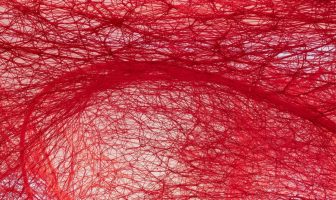
Chiharu Shiota, Between Worlds
Art, like memory, is rarely linear. It ebbs and flows, reshaping itself in the way we consider it. The exhibitions that were chosen for CWA Winter 2024–25 Picks ask us to engage in the act of looking both forward and back while reflecting on how the passage of time, shifting perspectives, and evolving experiences transform our understanding of the artists’ work. Through these acts of reconsideration and reevaluation, we notice that meaning is not static—it is shaped by context, perception, and the continuously shifting relationship between the artist and the audience.
UNITED STATES
Amy Sherald: American Sublime
Through March 9
SFMOMA, San Francisco
This exhibition presents nearly fifty of Amy Sherald’s luminous paintings, including her iconic portraits of Michelle Obama and Breonna Taylor, poetic early works, and new works on view for the first time. Sherald’s artworks convey the quiet power of everyday people and invite viewers to participate in a more complex debate about accepted notions of American identity.
Christine Sun Kim: All Day All Night
February 8–July 2025
Whitney Museum of American Art, New York
California-born, Berlin-based sound artist Christine Sun Kim’s playful, politically resonant infographics on paper, murals, sculptures, performances, and other works address her lived experience as a Deaf individual and speaker of American Sign Language. This first museum survey covers the artist’s works from 2011 to the present.
Field Guide to a Hybrid Landscape: Dana Fritz
February 4–August 2
Marianna Kistler Beach Museum of Art, Manhattan, Kansas
In this series by artist and University of Nebraska–Lincoln professor Dana Fritz (b. 1970), haunting black-and-white photographs present the remains of a spring-fed forest within an otherwise near-empty stretch of semiarid Nebraska prairie, a thirty-one-square-mile plot of trees hand-planted at the turn of the twentieth century. The images raise questions about historical and contemporary environmental efforts: their motivations (here, originally, the desire to create a timber industry from scratch), their failures, and, in the forest’s survival, their successes.
Goddess Tales
Through December 21
Apexart, New York
Goddess Tales reinterprets the function of ritual, techniques that can be tools for the diaspora to feel at home via shared cultural understandings. The exhibition highlights the need to reimagine these practices today. Included artists subvert patriarchal values and gender binaries to create their own future folklores centering on the goddess archetype. The exhibition also foregrounds Native practices that were historically banned because they were seen as threats to colonial power.
Kelli Connell: Pictures for Charis
January 26–May 25
Cleveland Museum of Art, Cleveland, OH
In Pictures for Charis, American photographer Kelli Connell reconsiders the relationship between writer Charis Wilson and photographer Edward Weston through a close examination of Wilson’s prose and Weston’s iconic photographs of the Western landscape and the female nude. Connell weaves together the stories of Wilson and Weston with that of her own relationship with her partner at the time, Betsy Odom, enriching our understanding of the couple from her contemporary queer and feminist perspective. Selections from Pictures for Charis appeared in Art Journal 83, no. 2.
Made of Memory
Through March 16
New Museum Los Gatos (NUMU), Los Gatos, CA
NUMU presents an exhibition of five women artists who explore concepts of memory as it pertain to generational and cultural experience, immigration and migration. Through various media, they explore their experience of inherited memories and unveil personal stories of family and heritage while inviting us all to consider the deeper themes that connect us with the past and with each other. Engaging with culturally significant materials and symbolism, these works examine the vicarious nature of memory and present implicit meanings carried in ancestral artifacts that are passed from one generation to the next. Each artist
Making Their Mark: Works from the Shah Garg Collection
Through April 20
Berkeley Art Museum and Pacific Film Archive (BAMPFA), Berkeley, CA
Making Their Mark brings together more than seventy artworks by women artists from the Shah Garg Collection, illuminating transgenerational affinities, influences, and methodologies among pathbreaking artists from the postwar era to the present.
Pablita’s Wardrobe: Family & Fashion
Through April 12
Wheelwright Museum of the American Indian, Santa Fe, NM
Pablita Velarde, Helen Hardin, and Margarete Bagshaw—mother, daughter, and granddaughter—have a defining role in our understanding of painting traditions in New Mexico. All are tied to, and descended from, the Tewa people of Kha’p’o Owingeh, Santa Clara Pueblo. Each was independently known as one of the finest painters of her generation. Each struggled to be recognized in an artistic field still predominantly defined as Anglo and male. As women artists, defining and holding their own space was important. A means of achieving this was the careful cultivation of self-image while holding onto cultural values beyond the reach of a commercial art scene.
Tamara de Lempicka
Through February 9
de Young Museum, San Francisco
With works that exuded cool elegance and transgressive sensuality, Tamara de Lempicka (1894–1980) helped define Art Deco. Her paintings captured the glamor and vitality of postwar Paris and the cosmopolitan sheen of Hollywood celebrity. This exhibition—the first major museum retrospective of Lempicka in the United States—explores the artist’s distinctive style and unconventional life through four major chapters. More than one hundred works are on display and range from her post-Cubist work in 1920s Paris to her famous nudes and portraits to the melancholic still lifes and interiors of her final days in the United States and Mexico.
Toward Joy: New Frameworks for American Art
Ongoing
Brooklyn Museum, New York
How might American art be experienced at this moment? In honor of the Brooklyn Museum’s 200th anniversary, a transformative reinstallation of the American Art galleries reorients the ways that the Brooklyn Museum exhibits—and audiences rediscover—this acclaimed collection. Black feminist and BIPOC perspectives act as throughlines in this vast presentation of more than four hundred works.
MEXICO
Myra Landau: Sensitive Geometry
Through February 23
Museo Universitario Arte Contemporaneo, Mexico City
Born in Bucharest, Myra Landau (1926–2018) escaped Nazi persecution as a teenager and settled first in Río de Janiero, then in Mexico City (in the early 1970s) and Veracruz (1974–1994) before moving to Rome, Jerusalem, and finally the Netherlands. This exhibition brings much-needed attention to the geometric abstractions Landau produced during the nearly fifty years after her arrival in Mexico. Landau pastels, artists’ books, and works in other media reflect her relatively loose, free handling of abstract form, an approach of the type described by Brazilian critic Roberto Pontual as Geometria sensível.
SOUTH AMERICA
Circumambulatio: Anna Bella Geiger
Through July 27
Museu de Arte Contemporânea de Universidade de São Paolo, Brazil
The process piece Circumambulatio (in Latin, “a walk around”) by Brazilian artist Anna Bella Geiger (b. 1933) and four students has been reassembled here for the first time since its initial presentation in 1972. The group spent three months interrogating the notion of the center by making large-scale imprints in the sand of Rio de Janeiro’s Marapendi Reserve and by asking pedestrians what they thought of as the city’s center. The slides, photographs, experimental music, and handwritten records in this installation treat the theme of the center from scientific, psychoanalytic, philosophical, religious, visual, linguistic, and other perspectives.
EUROPE & UK
Chiharu Shiota: Between Worlds
Through April 20
Istanbul Modern, Istanbul, Turkey
Chiharu Shiota (b. 1972) evokes Istanbul’s position as a port city at the crossroads of Asia and Europe—and her own position as an Osaka-born artist working in Berlin—in “Between Worlds,” her full-gallery installation of an enveloping net punctuated by suitcases. Humanizing the net are its red threads, which suggest blood vessels; the suitcases, too, stand in for people, signifying the memories and feelings we carry through space and time. The exhibition celebrates the hundredth year of diplomatic relations between Turkey and Japan.
Kamilla Szíj: The Path of the Sun
Through January 17
Vintage Galéria, Budapest, Hungary
In these new drawings, Hungarian artist Kamilla Szíj (b. 1957) uses gently applied yet arresting patterns of overlapping, interlocking, cascading ovals to capture the play of light through circular openings in the blinds of her home studio. The works are musings on the passage of time and on the often unaddressed centrality of the sun in human existence.
Nicola L.: I Am the Last Woman Object
Through December 29
Camden Art Centre, London
This is the first in-depth exploration of Nicola L.’s multilayered practice, which encompassed cosmology, environmental concerns, spirituality, mortality, sexuality, and political resistance, and is typically contextualized within Pop art, nouveau realism, feminism, and design. The show includes textile sculptures intended to be participatory as a political gesture—all people united in one skin, regardless of ethnicity or gender. Oversized and caricatured sculptures are imbued with political commentary on equality, collectivity, and place, particularly for women, within society. A series of works on bed sheets memorialize women whose lives ended in tragedy or violence, among them Eva Hesse, Marilyn Monroe, Billie Holiday, and Ulrike Meinhof.
ASIA
The Elemental You: Simryn Gill, Neha Choksi and Hajra Waheed
Through January 9
Kiran Nadar Museum of Art, New Delhi, India
In The Elemental You, works in a wide range of media by South Asian diaspora artists Simryn Gill (b. 1959), Neha Choksi (b. 1973), and Hajra Waheed (b. 1980) explore the geological and cultural relationship of human activity to the Earth’s landscapes. Addressing themes of deep time and of reconciling oneself to loss, the exhibition exposes humanity’s destructive interventions but also reveals the importance of explorations and chronicling by artists, the latter engagements constituting, in curator Akansha Rastogi’s view, acts of care.
Louise Bourgeois: I have been to hell and back. And let me tell you, it was wonderful.
Through January 19
Mori Art Museum, Roppongi, Tokyo
This first solo exhibition of Louise Bourgeois in Japan in the twenty-first century takes place at the Mori Art Museum in the Roppongi Hills development in Tokyo, home to one of the artist’s enormous bronze mother spider sculptures, Maman (1999/2002). The show features paintings from Bourgeois’s first decade in New York, 1938–48, and puts Maman in conversation with other Bourgeois spiders as well as with other large and small-scale sculptures. Passages from the artist’s psychoanalytic writings appear in a new set of projections by Jenny Holzer, here with Japanese translations.
MIDDLE EAST & NORTH AFRICA
Zeinab Al Hashemi: Metempsychosis
Through January 15
Al Serkal Avenue, Dubai, UA
Metempsychosis is a reflection on transformation, where the raw materials of industry and history meet personal healing. This body of work represents Zeinab Alhashemi’s ongoing exploration of the elements that shape her artistic practice while also responding to the trauma of a life-altering car accident. Metal, now a permanent part of her body in the form of screws and hardware, is exposed in her sculptures as a metaphor for the structures that define contemporary existence. These elements highlight the impact of human intervention in reshaping the environment. At the heart of the exhibition are sculptures made from PVC Roman pillar molds, enveloped in camel hides, a material that symbolizes the tension between heritage and industrialism, death, and rebirth. The visible screw bolts serve as both functional elements and symbols of mechanization, echoing the hardware in her own body. These bolts, a recurring motif in Alhashemi’s work, ground her in the industrial era while transforming personal trauma into art.
AFRICA
Annamieke Engelbrecht: Between Worlds: Fragments of a Cosmic Reality
Through January 16
Christopher Moller Gallery, Cape Town, South Africa
Between Worlds: Fragments of a Cosmic Reality by Engelbrecht invites you to set aside preconceived notions of reality and enter a space where familiar ideas dissolve into something vast and unknowable. Through abstract forms and shifting compositions, each work draws us into a liminal space where the finite and infinite converge, offering a sense of cosmic unity that transcends human constructs. Each artwork is a fragment of a larger whole, narrating the landscapes within and the distant strata beyond. These pieces present not a linear story but a layered experience—a vision of boundaries that define and connect us to an ever-expanding cosmos.
OCEANIA
Julia Trybala: Wide Eyed
Through January 25
Station Gallery, Sydney, Australia
In Wide Eyed, Julia Trybala continues to explore relationship dynamics through figurative painting. Her work, inspired by personal conversations with friends and family, captures an emotive response to the social dynamics of contemporary life while also referencing traditional Western painting practices. In this new body of work, the figures step into the spotlight becoming main characters in their own narrative rather than obscured amongst the setting. Hints of objects and landscapes emerge to ground the figures to time and place, suggesting an unfolding story.
CAA113 CAA-Getty International Program Participants Announced!
posted by CAA — December 11, 2024
The CAA-Getty International Program will welcome eight new scholars and four program alumni to the CAA 113th Annual Conference!
Now in its thirteenth year, this program brings a cohort of art historians, museum curators, and other visual arts professionals from around the globe to the CAA Annual Conference to connect with a selection of former participants at a preconference colloquium and alumni session, which examine topics such as historiographies, interdisciplinary and transnational methodologies, decolonizing museums, and other pressing issues in the field.
The 2025 preconference colloquium will be led by special guest Clement Akpang.
Read more about the 2025 program participants below, visit our website to learn more about the first ten years of the CAA-Getty International Program, and register for CAA113!
2025 PARTICIPANTS
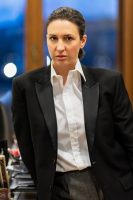 |
Aida Bičakčić obtained her degree in art history from the Faculty of Philosophy at the University of Sarajevo in 2008. From 2009 to 2023 she has held the positions of advisor for movable heritage, and later advisor for art history at the Commission to Preserve National Monuments of Bosnia and Herzegovina, for which she was involved in numerous research projects that resulted in designating cultural assets as National Monuments of Bosnia and Herzegovina. Starting in April 2023 she continued her career as the head of the collection at Ars Aevi, Sarajevo, curating a traveling exhibition of the collection, Sol LeWitt at KRAK Center for Contemporary Culture, and the Ars Aevi Video Art project, while also acting as jury member for a competition for young artists. In 2022, she began her PhD at Faculty of Humanities, Zagreb University, with a focus on history of conservation with the thesis “Protection of Architectural Heritage in the People’s Republic of Bosnia and Herzegovina between 1945 and 1960.” |
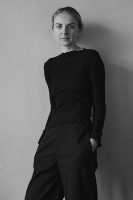 |
Inesa Brašiškė is a Vilnius-based art historian and curator. She holds an MA from the Modern and Contemporary Art: Critical and Curatorial Studies program (MODA) at Columbia University. Her curatorial practice spans multiple institutions including the National Gallery of Art (Vilnius), Contemporary Art Centre (CAC, Vilnius), e-flux screening room, and Art in General. Following a decade of independent curatorial work, she now serves as head of research at the Sapieha Palace, a CAC branch, where she curates contemporary art exhibitions, directs a monthly artists’ film program, and organizes an annual symposium. Brašiškė’s academic research focuses on conceptual art and displacement, artistic labor, feminist art history writing in Eastern Europe, and avant-garde cinema and feminist screen cultures since the 1960s. Brašiškė’s recent scholarship reconsiders abstract painting through feminist histories of making, examines the critical potential of blurring, and explores artistic and curatorial engagements with archives in the Baltics.Her writing has appeared in MoMA’s C-MAP and Mousse as well as in numerous exhibition catalogs and books. Brašiškė was nominated for the ICI Curatorial Award in 2014. Her research has been supported by the Getty Library Research Grant, the Paul Mellon Centre Grant, and the AWARE Research Residency. |
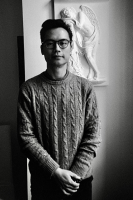 |
Conan Cheong is a PhD candidate in art history and archaeology at SOAS University of London, holding an MA from the same department. His doctoral research, centering on the personal collections of Buddhist monks in Laos of historical photographs and objects. investigates how Buddhist communities conceptualize the self through material practices of memory, memorialization, and representation. He is curatorial advisor for the Museum of Buddhist Art in Vat Saen Sukharam, Luang Prabang (opening in 2026). As curator at the Asian Civilizations Museum, Singapore, from 2016–23, he worked to develop collaborative relationships with source and use communities, and in the exhibition Body and Spirit: The Human Body in Thought and Practice (2022–23). He is a member of Circumambulating Objects: On Paradigms of Restitution of Southeast Asian Art (CO-OP). |
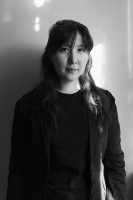 |
Goomaral Dalkh-Ochir is an art historian at the Fine Arts Zanabazar Museum in Ulan Bator, where her research focuses on the history of Mongolian fine art and the study of Mongolian Buddhist art. She completed her bachelor’s and master’s programs in art studies at the National University of Mongolia, focusing on the topic of Zanabazar art, and she is currently pursuing a doctoral program. From 2014–16, she served as a lecturer in medieval art history at the Mongolian National University of Arts and Culture. Since 2014, she has compiled five catalogs that explore the history of Mongolian Buddhist art. She was a coauthor of the book Unique Masterpieces (2018). Since 2017, she has been a member of the Museum and Collection of fine Arts Committee of the International Council of Museums. |
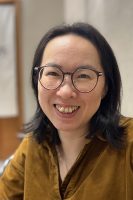 |
Jing Liu is an assistant professor at the Sichuan Fine Arts Institute, China. She received her PhD in art history from Peking University with a dissertation on religious art in southwest China from the tenth to thirteenth centuries. Building on this work, she published The Transformation and Creation of Images: A Study of Guardian Deities of the Song Dynasty in Dazu and Anyue, Sichuan (2024). She is currently working on a new book about natural aesthetics in Chinese landscape painting. Recently, her academic focus has expanded to explore the relationship between cultural heritage and community, including a project examining how patrons, tourists, and pilgrims have interacted with Buddhist carvings over time. As a curator at the Ptolemy Museum in Hong Kong, she is also interested in the spread of Western astronomical imagery in modern China, drawing insights from the museum’s collections. |
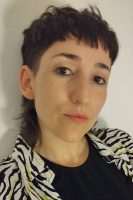 |
Nadia Martin is an assistant researcher at the National Scientific and Technical Research Council of Argentina (CONICET), currently on a postdoctoral fellowship granted by the same institution until her appointment is formalized. She holds a PhD in comparative theory of the arts (CONICET-UNTREF), a master’s degree in visual arts curating (UNTREF), and a bachelor’s degree in communication sciences (UBA). Her research focuses on body, territorial, and techno-scientific imaginaries in contemporary artistic practices, with an emphasis on Latin America. It is framed by perspectives at the intersections of feminisms, new materialisms, and critical posthumanisms. She is involved in the PIP-CONICET and PICT-AGENCIA research projects. Among other distinctions, she is the recipient of the Goethe-Fellowshipat documenta Archiv, the ZUKOnnect Fellowship, and support from the Casa de Velázquez (Madrid). She teaches undergraduate and graduate courses at UNTREF and undergraduate courses at UBA. She is founder and manager of the ENROQUE art-in-territory project. |
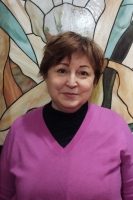 |
Oksana Remeniaka is a chief of department of sociocultural art studies at the Modern Art Research Institute of the National Academy of Arts of Ukraine (Kyiv). She is the author of books and numerous articles on art history and culture. Dr. Remeniaka was a Fulbright Research Scholar, conducting research at Columbia University’s Harriman Institute with the project (2019–20). Dr. Remeniaka is an expert in cultural processes of Polish-Ukrainian borderland, Ukrainian culture at the turn of the nineteenth century, diaspora visual arts of the interwar and postwar periods, and wartime Ukrainian modern art. She is the author of of numerous texts for modern art exhibits and projects in various Ukrainian museums and galleries, including A Chronicle of Inspiration in a Fierce Time (2023), Art in Times of Plague with a virtual catalog of artists’ works from Ukraine, Poland, the United States, Italy, and Georgia (2020). |
 |
Lucía Stubrin holds a PhD in history and theory of the arts from the Universidad de Buenos Aires and is a research professor at the Universidad Nacional de Entre Ríos (Argentina). She directs research projects within the framework of the Grupo de Estudio Biosemiótica, Arte y Técnica (GEBAT), and is an independent curator specialized in technopoetics. She is the author ofBioarte. Poéticas de lo viviente (2020, Eudeba/Ediciones UNL). Since 2010, she has received national (CONICET) and international (Getty Foundation, European Commission Erasmus Mundus, Fundación Carolina, AUGM) doctoral and postdoctoral grants for her research in the field of art-science-technology with emphasis on life sciences and bioart. Since 2023 she has been a research fellow at the Universidad de Barcelona. |
ALUMNI PARTICIPANTS
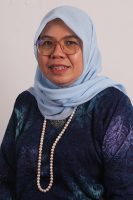 |
Sarena Abdullah, PhD, is an associate professor of art history at Universiti Sains Malaysia. She received the prestigious London, Asia research award in 2017. Additionally, she participated in the CAA-Getty International Program in 2016 and was part of alumni panels in 2017 and 2019. Abdullah is the author ofMalaysian Art since the 1990s: Postmodern Situation (2018) andSeni Lukis di Malaysia sejak Tahun 1990–an: Situasi Pascamoden (2023) and coedited Ambitious Alignments: New Histories of Southeast Asian Art 1945–1990 (2018). Her extensive writings on Malaysian art are featured in renowned academic journals including TRaNS, Southeast of Now, and Wacana Seni, among others. She was the editor of Berita, a bulletin affiliated with the Malaysia, Singapore, Brunei (MSB) Studies group under the Association of Asian Studies (AAS) (2022–24). She is the current Chair of CAA’s International Committee. |
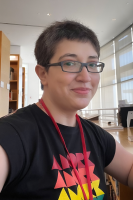 |
Georgina G. Gluzman is a researcher at the Consejo Nacional de Investigaciones Científicas y Técnicas in Argentina. She is also an assistant professor of art history and gender studies at the Universidad de San Andrés in Buenos Aires. She received her PhD from the Universidad de Buenos Aires in 2015, having previously received an undergraduate degree in art history and a teaching certification. Her work focuses mainly on the art of nineteenth- and early twentieth-century Argentine women artists. She is the author of Trazos invisibles: Mujeres artistas en Buenos Aires (1890–1923) (2016). She has served as a guest curator and curatorial adviser at various institutions. Her research has been supported by the Getty Foundation and the Institut National d’Histoire de l’Art, among others. In 2023, she was a fellow at the Madrid Institute of Advanced Studies and the German Center for Art History (DFK) in France, undertaking a project on world’s fairs. |
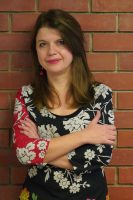 |
Iro Katsaridou is an art historian and museum studies scholar, and assistant professor at the School of Visual and Applied Arts, Aristotle University of Thessaloniki, Greece. Previously she was director of the MOMus-Thessaloniki Museum of Photography (2021–24), and curator at the Museum of Byzantine Culture of Thessaloniki (2005–21). Iro has curated exhibitions of historical and contemporary photography, coordinated the international photography festival Thessaloniki PhotoBiennale 2023 at MOMus, and was a member of the Organizing Committee for the 5th Fast Forward Women in Photography conference (Thessaloniki, 2024). Currently she serves as a coinvestigator in the UK’s Arts and Humanities Research Council (AHRC) funded Museum Dialogues program (2004–25) of the University of Sunderland. Iro has published on photography, socially engaged art history, and curatorial practices. Recently, she coedited with Eve Kalyva and Pamela Bianchi the collective volume Museums and Entrepreneurship. The Effects of Capitalising on Culture in the 21st Century (2024). |
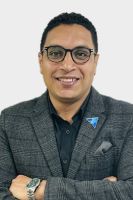 |
Ali Mahfouz is a Cultural Heritage Consultant at FalconViz, King Abdullah University for Science and Technology (KAUST). He began his career in 2012 as an archaeologist with Egypt’s Ministry of Antiquities and later served as director of the Mansoura Storage Museum from 2018–23. His expertise includes heritage and museum management, cultural heritage documentation, and the impact of conflict on art and heritage. Ali holds bachelor’s, postgraduate, and master’s degrees in archaeology and is pursuing a PhD. Throughout his career, Ali has contributed to the field with four published articles and a book. He has served as a jury member for international conferences such as ICOM-ICME in Azerbaijan, Prague, and Mexico. In 2021, he cofounded the Egypt Heritage Association and is a board member of the Egyptian National Committee of ICOM (2021–5). His research focuses on archaeology, decolonization, heritage conservation, and documentation technologies. |
This program is made possible with support from Getty through its Connecting Art Histories initiative.
CAA 2025 Board of Directors Election: Vote Now!
posted by CAA — December 11, 2024
As a CAA member, voting is the best way to shape the future of your professional association. Thank you for taking the time to vote!
The CAA Board of Directors is comprised of professionals in the visual arts who are elected annually by the membership to serve four-year terms (or, in the case of Emerging Professional Directors, two-year terms). The Board is charged with the long-term financial stability and strategic direction of CAA; it is also the Association’s governing body. The Board sets policy regarding all aspects of CAA activities, including publishing, the Annual Conference, awards and fellowships, advocacy, and committee procedures. For more information, please read the CAA By-laws on Nominations, Elections, and Appointments.
MEET THE CANDIDATES
The 2024–25 Nominating Committee has selected the following candidates for election to the CAA Board of Directors. Click the names of the candidates below to read their personal statements and CVs before casting your vote.
BOARD OF DIRECTOR CANDIDATES (FOUR-YEAR TERM, 2025–29)
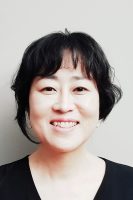
Assistant Professor of Graphic Design and Interactive Arts
University of Wisconsin (Madison, WI)
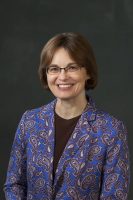
Associate Professor of Architectural History and Theory
Vanderbilt University (Nashville, TN)
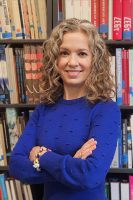
Executive Director
Estate of David Smith (New York, NY)
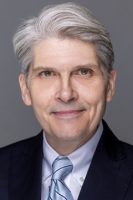
Research Scholar on Organization and Leadership in Higher Education
Columbia University (New York, NY)
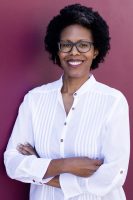
Art History Lead Faculty
Berkeley City College (Berkeley, CA)
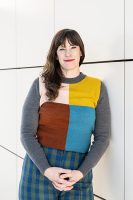
Principal Research Specialist for Digital Art History
Getty Research Institute (Los Angeles, CA)
EMERGING PROFESSIONALS BOARD OF DIRECTOR CANDIDATES (TWO-YEAR TERM, 2025–27)
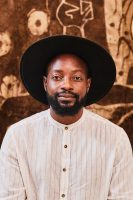
PhD Candidate in History of Art and Visual Culture
UC Santa Cruz (Santa Cruz, CA)
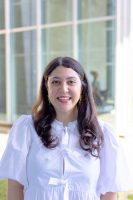
Marketing and Communications Coordinator
Modern Art Museum of Fort Worth (Fort Worth, TX)
CAA members must cast their votes online. The deadline for voting is 5 p.m. ET on Thursday, February 13, 2025.
Elected individuals will be announced at the CAA Annual Business Meeting on Friday, February 14, 12:00–2:00 p.m. ET.
Questions? Contact Maeghan Donohue, CAA Director of Strategic Planning, Diversity, and Governance.
CAA113 Annual Artist Interviews Announced!
posted by CAA — December 06, 2024
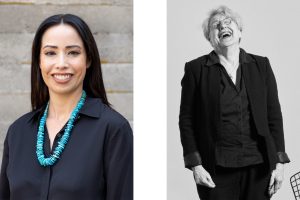
Wendy Red Star (photograph by John D. and Catherine T. MacArthur Foundation) and Martha Rosler (photograph by Tina Barney)
CAA is thrilled to share that artists Wendy Red Star and Martha Rosler will be the featured guests of the CAA 113th Annual Conference Annual Artist Interviews! Red Star will be interviewed by Josh T Franco, head of collecting, Archives of American Art, and Charlotte Ickes, curator of time-based media art and special projects, National Portrait Gallery. Columbia University professor of art history and archaeology Julia Bryan-Wilson will speak with Rosler. This session is supported in part by the Joan Mitchell Foundation in conjunction with Joan Mitchell’s centennial celebration.
Wendy Red Star
Wendy Red Star is an Apsáalooke artist based in Portland, OR, whose multidisciplinary practice explores intersections of Apsáalooke history and colonial narratives through conceptual art and pop culture. Raised in Apsáalooke traditions, she uses her work to reframe historical narratives and amplify Apsáalooke perspectives.
Red Star’s work has been exhibited at major institutions, including the Metropolitan Museum of Art, the Broad, Fondation Cartier, and the Seattle Art Museum. Her monumental sculpture, The Soil You See . . ., debuted on the National Mall in Washington, DC, in 2023, and was later acquired by Tippet Rise Art Center.
Her work is in over eighty public collections, including the Museum of Modern Art, the Whitney Museum of American Art, and the British Museum. A 2024 MacArthur Fellow, Red Star’s artist’s books include Delegation (2022) and Bíilukaa (2023). She holds an MFA from UCLA and has lectured internationally, including at Yale University and the Banff Centre.
Martha Rosler
Martha Rosler’s work centers on the public sphere and everyday life, particularly with respect to women. Recurring themes include food in its many roles and guises, urbanism and spaces of transit, and war and national security. She has initiated a number of events in the US and Europe that bridge diverse publics, including garage sales, pop-up libraries, and a long-standing collaborative project that explores homelessness, housing, and the built environment. Through her varied artistic practice, writing, and activism, she challenges the mechanisms of power and their normalization within imagery, narrative, and discourse.
She has received numerous honors, including the Anonymous Was a Woman Award, the College Art Association Distinguished Feminist Award, the Women’s Caucus for Art Lifetime Achievement Award, the Oskar Kokoschka Prize, the Spectrum International Prize in Photography, the Guggenheim Museum Lifetime Achievement Award, the Asher B. Durand Award, the Lichtwark Prize, and four doctorates Honoris Causa.
Rosler lives in Greenpoint, Brooklyn, whose decades of gentrification have often figured in her work.
The CAA113 Annual Artist Interviews will be held on Friday, February 14, 4:30–7:00 p.m. ET at the New York Hilton Midtown. This event will also be livestreamed via YouTube.
Register now for the CAA 113th Annual Conference, February 12–15, 2025 in New York City!
Kelly M. Ward
posted by CAA — December 04, 2024
I write to express my sincere interest in joining the CAA’s Board. As CAA repositions itself to best represent and advocate for arts communities globally, I believe I can benefit the Association as it addresses today’s challenges.
As an art historian and educator, I welcome the chance to share my experience and represent voices of other emerging scholars and professionals from diverse backgrounds. My journey in the arts began at Louisiana State University where I minored in art history. Upon graduation, I was awarded a teaching assistantship for its art history MA program. In 2023, I joined the Modern Art Museum of Fort Worth; I also teach at Texas Wesleyan University.
Having an immigrant mother and being a first-generation college graduate, I’ve had ample opportunity to reflect on belonging and the ways that institutions can act as gatekeepers to the detriment of the organizations and the public. In my work, whether promoting exhibitions at the Modern or teaching undergraduates—many of whom lack previous experience studying art or visiting museums—I strive to make art accessible. The CAA’s commitment to supporting the diversity of art practices and practitioners, and its efforts to engage people of all backgrounds with the arts, truly resonate with me. I hope you will agree that my skills and experience, my love for the visual arts, and my devotion to inclusivity within them, will make me a valuable contributor to the Board.
Aaron Samuel Mulenga
posted by CAA — December 04, 2024
I am grateful to be nominated for the Emerging Professional position on CAA’s Board of Directors. CAA has continued to be a source of professional and academic growth for me through sustained engagement and mentorship. As an artist and a scholar, I am constantly thinking of broadening the scope of my work and its impact. If selected, I commit to seeking avenues to continue merging spaces for art practice, scholarship, curation, and design, to have closer interactions that do not silo these disciplines but bring them in closer proximity, similar to the work I am doing in my doctoral studies. This would work to fulfill CAA’s vision of creating new opportunities for dialogue among members while also representing and advocating for the visual arts.
I hold a BFA, MA and MFA and decided to pursue a PhD because, coming from Zambia, I wanted to tell my own story (and that of the African arts) from a local perspective. CAA continues to champion diverse voices, which is a stance I aim to uphold as a board member. If elected, I would like to be a liaison on the Services to Artists Committee. I have taught grad-level contemporary African art classes. Through teaching, I see the importance of presenting nuanced perspectives when engaging with unfamiliar cultures. Part of my teaching philosophy involves collaboration and community. As such, I aim to bring my attention to detail and nuance to my work as a board member seeking to engage with the diverse perspectives and peoples reflected in CAA membership. Working on CAA’s board would be a unique and valuable experience that I would be honored to undertake.
Emily Pugh
posted by CAA — December 04, 2024
Emily Pugh, PhD, is Principal Research Specialist at the Getty Research Institute, where she specializes in projects related to digital art history and architectural history. She received her PhD from the CUNY Graduate Center in New York City, where she focused on postwar architecture as well as digital humanities. Her expertise within digital art history centers on the digital media of art history and its related infrastructures, which encompasses the digitization of physical materials, 3D scanning, and computer vision (an approach to image analysis based on artificial intelligence). Emily has been active in CAA in a number of ways. She has regularly contributed to the annual conference, organizing panels and presenting talks on topics related to architecture and to digital art history as well as co-organizing a professional development workshop on digital publishing at the 2017 conference. She also participated in the CAA THATCamps that were organized in 2013, 2014, and 2015. Emily has been involved in CAA affiliated societies as well, having served as an officer for the Historian of Germans and Central European Art and working for many years as the web designer and developer for Nineteenth-Century Art Worldwide, the online publication of the Association of Historians of Nineteenth-Century Art. Emily’s work at the forefront of the technologies of art historical research and scholarship is part of what motivates her to join the CAA Executive Board. Such technologies are changing how art history is practiced, offering both challenges and opportunities to the discipline. Emily hopes her experience and insights on such topics would provide helpful context to the Board in making decisions or developing policy. Indeed, Emily is committed the profession and is eager to contribute to the continued relevance of art history and cultural heritage.
Carolyn Jean Martin
posted by CAA — December 04, 2024
Thank you for considering my candidacy for the CAA Board of Directors. Over the years I have engaged in many aspects of the organization from conference participation as a presenter and co-chair of sessions, to committee membership. I currently serve as an Emerging Director and annual conference committee member. As a tenured community college educator and an individual whose academic background includes graduate degrees in art practice, art history, and the philosophy of aesthetics I embody the academic diversity of CAA membership. My service to the organization has been focused on ensuring that CAA continues to reflect the founding core commitment of advancing knowledge and solidarity with our arts communities, but also reflects contemporary global shifts within the interests and increased intersecting disciplines of the membership.
As a membership driven organization I actively maintain that each of us are part of the dynamic ways in which CAA moves forward into the future. I am keen to actively use placement on the Board to continue my work growing the academic, career, and ethnic diversity of membership, and leadership through strategic outreach and recruitment. During my tenure as Emerging Director I effectively worked as a liaison for the Education and Student and Emerging Professionals committees to represent the interest of members within the development of strategic planning and goals of CAA. I believe that my past professional experience in project management and recruitment, my current career in arts education, as well as my sustained commitment and passion for CAA makes me a strong candidate to continue to serve our diverse membership interests on the Board.
Leslie D. Joynes
posted by CAA — December 04, 2024
I am truly honored to be nominated to serve as a CAA Board Member. CAA has been my home in academia for more than twenty years and has been pivotal in my professional development. This is the best time to be member of CAA. Now witnessing unprecedented change in the arts, education, museums and scholarship, we are adapting with the times to best serve our members.
I have served as a CAA conference presenter, professional development mentor and served CAA’s International Committee and currently serve CAA’s Museum Committee. I am committed to our mission to advance the highest standards of instruction, knowledge, and practice in the visual arts, to foster intellectual engagement, and to advance skills that enrich individuals and society.
Serving our diverse membership, I bring to CAA three- decades of experience as an artist, university educator and scholar. I seek to support the Board’s Strategic plan to embrace our membership in the arts, art history, education, museums and scholarship. I also seek to support diversity, our members’ professional journeys and address and support equitable compensation and fair labor practices, as well as navigating changes brought through new technologies.
As a Board member I bring experience as an artist, arts and education advocate, and experience serving global organizations – and will support our Board in identifying solutions for CAAs future.
Exhibiting artist and arts scholar. I will use my creative skills to advocate for the needs of creative practitioners especially in enhancing their careers through professional development. I trained in art and theory in London and Tokyo and specialized in cross-cultural collaboration in the arts during my PhD in the UK. I served on the curatorial team that created the inaugural Taipei Biennial in 1998 and am now initiating the Inclusive Biennial, an art biennial focused on diversity and inclusivity. I also serve on the 2025-2026 Fulbright U.S. Student Program National Screening Committee selecting our future generations of artists.
Serving college educators. Trained in advanced curriculum design in art colleges, I began teaching in universities in 1999 and have served as Professor of Record from Modern and Contemporary Art History at Renmin University, Visiting Professor of Art History and Cultural Industries, Peking University, Beijing and have lectured on art and entrepreneurship at universities in Asia and Europe. As Fulbright Visiting Associate Professor of Art at Visva Bharati University in India I was the first American Scholar to combine studio practice with contemporary art history with project-based learning. advised on the Future of Art Education at the Thought Leadership Institute.
Fostering connection. Connection is essential for educators in all stages of their careers and as a CAA Board member I seek to enhance our CAA offerings both in and outside of our conferences with workshops and networking opportunities. Sponsored by the US Department of State, I created models for cross-cultural educational exchange in Mongolia and have led Fulbright research projects in Mongolia (2014), China (2017), India (2022) and Sri Lanka (2022). I served as Fulbright Senior Scholar at the Indira Gandhi National Centre for the Arts in India and my research has made me aware of the potential for organizations to enhance their international focus and reach. I have also led events in France, Singapore, South Korea, and Taiwan. As a Columbia University research scholar, I am examining the future of education in a rapidly evolving arts and technology landscape, particularly the impacts of AI on the roles, rules and structures of our professions.
An advocate: CAA is our home in academia. At our CAA conferences, I listen and better understand our members’ goals and career challenges. Some have shared how career advancement at times feels like musical chairs. It is important is that we foster inclusive professional communities that can support members to advocate for themselves in their careers at all stages. This has been a key inspiration for my own training as a coach and mentor serving artists and educators. I have initiated coaching pilots at Yale Center for British Art, California State University, University of Melbourne, and recently initiated India’s first mentoring program to serve tribal communities.
Supporting CAA’s Committees, Juries and Editorial Boards: Active in CAA’s International and Museum Committees, I am experienced working with diverse interest groups and can assist in CAA Fundraising and public events to expand CAA’s reach. I lead an Artistic Research Working Group. where we are exploring the futures of research in art education. For the past seven years, I also serve on the Editorial Board for ProjectAnywhere, a journal at University of Melbourne, Australia.
I support solutions for our strategic and financial direction and expanding CAA’s global reach. In addition to my training in the arts, I also trained in organizational strategy at Boston University (M.Sc. Management) and California State University. (MBA) and have advised global organizations including 3M, Du Pont, General Electric, Dow, and Bayer on their marketing, financial and strategic goals. These experiences uniquely enable me to support our Board and our membership to expand CAA’s reach, build sponsorship and support collaboration with other organizations. In New York, I serve on the board for a children’s charity and the Editorial Board for ProjectAnywhere at University of Melbourne and served as a New York Chair of the Society of Competitive Intelligence Professionals.
Thank you for the opportunity to serve CAA and our membership.
Jennifer Field
posted by CAA — December 04, 2024
I am excited to work alongside other Board members to expand and strengthen CAA’s influence, and to encourage the highest standards of creative and scholarly innovation.
I come from a background in studio practice. I established a career in arts administration and curatorial work after building a resume from part-time jobs in various cultural organizations. I worked full-time while pursuing my graduate degrees, gaining invaluable practical experience alongside senior management and skilled staff at all levels to launch complicated, international projects. As a result, I maintain a diverse professional network and a keen sensitivity to creative career-building strategies. I believe that my insights will benefit students and young professionals who are eager to pursue a career in the arts.
Inclusivity is central to my professional and personal ethos. I enjoy working across teams to reach multiple, concurrent goals. I demonstrate keen negotiating and problem-solving skills, anticipating and avoiding potential pitfalls and remaining adaptable while staying true to mission. My own scholarship has addressed 19th- through 21st-century art in the United States, Latin America, Europe, the Middle East, East Asia, and South Asia as well as the history of identity politics in art criticism. I have lived in California and Hong Kong in addition to New York City.
I feel confident that my pragmatic and collaborative nature, positive attitude, and international perspective will be assets to CAA and its members. I hope to have the opportunity to support arts advocacy on the Board of Directors.