
CAA News Today
Senate Approps Cmte approves FY16 Interior bill
posted Jun 19, 2015
Najean Lee, director of government affairs and education advocacy for the League of American Orchestras, sent the following email on June 18, 2015.
Senate Approps Cmte approves FY16 Interior bill
Senate Approps debated the Interior bill for around 3 hours this morning and they’ve passed their funding bill which includes $146 million for NEA and NEH.
Udall proposed several amendments, the first of which included an increase for the cultural agencies’ budget to the President’s request, but the amendment was not adopted.
News from the Art and Academic Worlds
posted Jun 17, 2015
Each week CAA News publishes summaries of eight articles, published around the web, that CAA members may find interesting and useful in their professional and creative lives.
Why Should Collectors Get All the Breaks?
Many of America’s major museums have benefitted from laws that afford collectors tax breaks when donating works to institutions or charities, and now artists and their advocates are seeking similar compensation for works they gift. While collectors can write off the fair market value of works they donate to museums, artists can only claim for the costs of the materials they used to produce the work. (Read more from the Art Newspaper.)
After the Riots, Baltimore’s Best Shot at Redemption May Be Its Arts Community
On the April day when Freddie Gray died from injuries he suffered in police custody and a week before rioters took to the streets in protest, Karen Brooks Hopkins, president of the Brooklyn Academy of Music, gave a presentation to a small group of Baltimoreans about the future of their city. The symposium, in a state-of-the-art auditorium little more than a mile down North Avenue from the blighted block where Gray was arrested, centered on a question that has sparked revitalization efforts from Detroit to Dublin and from Miami to Marseille: whether arts can turn a city around. (Read more from the Washington Post.)
Dear Liberal Professor, Students Aren’t The Problem
In a recent Vox essay, a self-described “liberal professor,” writing under a pseudonym, explained how students had changed over his nine years in the college classroom. His liberal students now “terrify” him, he wrote, with their identity politics and imagined grievances. Here we go, I thought, another lament of the loss of white-male privilege, this time set at the university. What I quickly realized, however, was that the essay might be better characterized as a jeremiad, a cautionary tale that exaggerates current woes to elicit social change. (Read more from Vitae.)
The Art of Having Difficult Conversations
The ability to have difficult conversations is important for career success, productivity, and relationships in almost every field, and higher education is no exception. However, despite the need to have these conversations, the idea of addressing sensitive issues can be scary. This article provides strategies for having difficult conversations and gives example scripts. (Read more from Inside Higher Ed.)
Ford Shifts Grant Making to Focus Entirely on Inequality
The fight against inequality will take center stage at the Ford Foundation under a sweeping overhaul announced today by the nation’s second biggest philanthropy. Not only will Ford direct all of its money and influence to curbing financial, racial, gender, and other inequities, but it will give lots more money in a way grantees have been clamoring for: It hopes to double the total it gives in the form of unrestricted grants for operating support. (Read more from the Chronicle of Philanthropy.)
MoMA.org Turns 20: Archiving Two Decades of Exhibition Sites
It’s hard to believe that MoMA’s website, which celebrated its twentieth anniversary in May, is older than Google. It began with two relatively simple (by today’s standards) HTML exhibition sites for the Mutant Materials and Video Spaces exhibitions in 1995. Since then, over two hundred exhibition sites have been created, documenting not only the museum’s evolving curatorial interests, but also huge changes in web coding and design. This collection of exhibition sites almost serves as its own online museum of the internet. (Read more from Inside/Out.)
Dying of Exposure
At some point, two years ago, maybe, I stopped doing things for free: no free writing, no free talks, no free critiques with artists or art students, nothing. I didn’t make the decision out of avarice; I made it as a matter of survival. I used to accept all kinds of invitations to do such things, paid or not, when I was a tenured professor. I used to feel that it was sort of crass to think about my economic needs when there were important intellectual ideas to discuss. But, of course, the privilege of not having to think about my intellectual labor in those terms was predicated on the very fact that I was being paid, by my university, if not by the publishers, colleges, students, or artists who hosted the events to which I was invited. (Read more from Art Practical.)
How to Tailor Your Online Image
You should have a curated Internet presence for the job market. The fact is, you will be Googled. That is not usually because search committees are trying to dig up dirt on you, or derail your candidacy. Rather, they just want to know more about you, and get a sense of your intellectual communities, of where and how you are active, and of your “style” of communication (lively, reserved, direct, blunt, tactful, supportive, combative, and so on). (Read more from Vitae.)
People in the News
posted Jun 17, 2015
People in the News lists new hires, positions, and promotions in three sections: Academe, Museums and Galleries, and Organizations and Publications.
The section is published every two months: in February, April, June, August, October, and December. To learn more about submitting a listing, please follow the instructions on the main Member News page.
June/August 2015
Academe

Bridget Alsdorf has been promoted to associate professor, with continuing tenure, at Princeton University in Princeton, New Jersey.

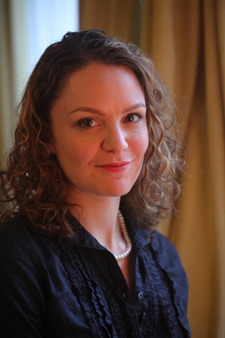 Abigail Krasner Balbale
Abigail Krasner Balbale has joined the faculty at the Bard Graduate Center in New York as assistant professor of Islamic art and material culture.
Brandon Bauer , assistant professor of art at St. Norbert College in De Pere, Wisconsin, has received tenure.
S. Hollis Clayson, Bergen Evans Professor in the Humanities at Northwestern University in Evanston, Illinois, has been named Kirk Varnedoe Visiting Professor at the Institute of Fine Arts, New York University.
David J. Getsy has been appointed interim dean of graduate studies at the School of the Art Institute of Chicago in Illinois.

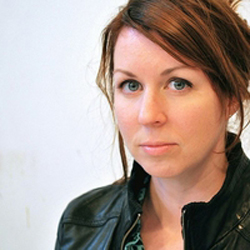 Jennifer A. Greenhill
Jennifer A. Greenhill has left the University of Illinois in Urbana-Champaign to become associate professor of art history at the University of Southern California in Los Angeles.
Jennifer Dorothy Lee has joined the Department of Art History, Theory, and Criticism at the School of the Art Institute of Chicago in Illinois as assistant professor.
Kent Minturn, director of the master’s degree program in modern art at Columbia University in New York, has joined New York University’s Institute of Fine Arts as visiting assistant professor.
Museums and Galleries
William J. Chiego, director of the McNay Art Museum in San Antonio, Texas, since 1991, has announced his resignation, effective September 30, 2016.
Erin B. Coe has been appointed director of the Hyde Collection in Glens Falls, New York.
Philippe de Montebello, director of the Metropolitan Museum of Art from 1977 to 2008, has been named chair of the Hispanic Society Museum in New York.

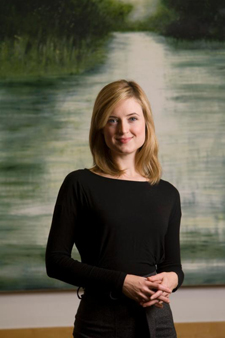 Katherine de Vos Devine (photograph by Jared Lazarus/Duke Photography)
Katherine de Vos Devine has been chosen to lead the Black Mountain College Museum and Arts Center in Asheville, North Carolina, as director.
John Jacob has joined the Smithsonian American Art Museum in Washington, DC, as McEvoy Family Curator for Photography.
Claire L. Kovacs, assistant professor of art history at Canisius College in Buffalo, New York, has become director of the Augustana Teaching Museum of Art at Augstana College in Rock Island, Illinois.
Sarah Montross, formerly Andrew W. Mellon postdoctoral curatorial fellow at the Bowdoin College Museum of Art in Brunswick, Maine, has become the new associate curator for the DeCordova Sculpture Park and Museum in Lincoln, Massachusetts.
Maura Reilly, formerly adjunct professor at the Sydney College of the Arts in Australia, has been appointed chief curator of the National Academy Museum in New York.
Timothy Rodgers, formerly director of the Scottsdale Museum of Contemporary Art in Arizona, has been named director of the Wolfsonian–Florida International University in Miami Beach, Florida.

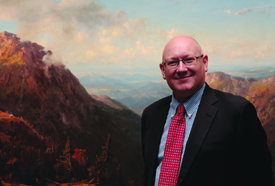 Michael R. Taylor
Michael R. Taylor, formerly director of Dartmouth University’s Hood Museum of Art in Hanover, New Hampshire, has joined the Virginia Museum of Fine Arts in Richmond as chief curator and deputy director for art and education.
Alison Weaver has become executive director of the Moody Center for the Arts in Houston, Texas. The center is scheduled to open in September 2016.

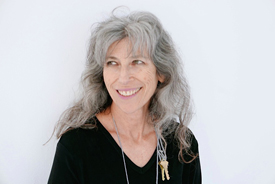 Jan Wurm (photograph by Lin Hsieh)
Jan Wurm has been appointed director of exhibitions at the Richmond Art Center in Richmond, California.
Organizations and Publications
Christopher P. Heuer, Samuel H. Kress Senior Fellow at the Center for Advanced Study in the Visual Arts at the National Gallery of Art in Washington, DC, has become associate director of research and academic programs at the Sterling and Francine Clark Art Institute in Williamstown, Massachusetts.
Tony White, associate chief librarian for reader services at the Metropolitan Museum of Art in New York, has joined the board of directors of the Center for Book Arts, also in New York.
Institutional News
posted Jun 17, 2015
Read about the latest news from institutional members.
Institutional News is published every two months: in February, April, June, August, October, and December. To learn more about submitting a listing, please follow the instructions on the main Member News page.
June/August 2015
The Corning Museum of Glass in Corning, New York, has received a one-time grant of $50,000 from the Henry Luce Fund in American Art to research and digitize part of its American glass collection.
The Harvard Art Museums in Cambridge, Massachusetts, has joined the Google Cultural Institute and contributed 1,061 high-resolution images of works of art from its collection to the institute.

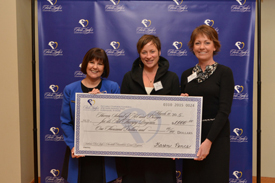 From left: Karen Pence, Juliet King, and Kim Hodges during a reception at the Governor’s residence (photography provided by the Indiana First Lady’s Charitable Foundation)
The Herron School of Art and Design, part of Indiana University–Purdue University Indianapolis, has accepted a $1,000 grant from the Indiana First Lady’s Charitable Fund. The award will support the school’s graduate program in art therapy.
The Metropolitan Museum of Art in New York has launched a new online video series, called The Artist Project. The museum will produce a season of clips in which one hundred artists respond to the permanent collection, choosing either a single work or galleries that spark their imagination.
The Philadelphia Museum of Art in Pennsylvania has accepted a three-year grant of $1,500,000 from the Henry Luce Fund in American Art to help reinstall and reinterpret its American art collection.

The Society of Architectural Historians, based in Chicago, Illinois, has received a three-year $150,000 grant from the Richard H. Driehaus Foundation for general operating support.
The Society of Architectural Historians, based in Chicago, Illinois, has been awarded a $20,000 grant from the Tawani Foundation to support activities related to the organization’s seventy-fifth anniversary.
Govenor proposes closure of the Illnois State Museum
posted Jun 16, 2015
Allison J. Cywin of the Visual Resource Center at the University of Massachusetts in Dartmouth sent the following email on June 15, 2015.
Govenor proposes closure of the Illnois State Museum
I thought I would share the following concern. The Govenor of Illnois wants to closed the state museum. http://northernpublicradio.org/post/rauner-moves-forward-state-facility-closure-plans Please express your concerns and sign the petition (http://petitions.moveon.org/sign/governor-rauner-dont.fb48?source=s.icn.fb&r_by=5646051)
to support the museum.
and spread the news.
Grants, Awards, and Honors
posted Jun 15, 2015
CAA recognizes its members for their professional achievements, be it a grant, fellowship, residency, book prize, honorary degree, or related award.
Grants, Awards, and Honors is published every two months: in February, April, June, August, October, and December. To learn more about submitting a listing, please follow the instructions on the main Member News page.
June/August 2015


Natalie Adamson, senior lecturer in the School of Art History at the University of St Andrews in St Andrews, Scotland, has been named a 2015–16 Getty Scholar by the Getty Research Institute in Los Angeles, California. Her research project is called “What Counts as Painting: Pierre Soulages and the Materiality of Postwar Art in France.”
Hannah Baader, academic program director and senior research scholar at the Kunsthistorisches Institut in Florenz, Max-Planck-Institut, Italy, has been appointed a 2015–16 Guest Scholar at the Getty Research Institute in Los Angeles, California. She will work on “Aesthetics and Materiality of Water, Fifteenth to Nineteenth Century.”
Susan Bean has received a spring 2015 research support grant from the Paul Mellon Centre for Studies in British Art for her project, “Modeling Cosmos and Colony: India’s Clay Sculpture in the Nineteenth Century.”
Christian Berger, research fellow and lecturer in the Department of Art History at the Institut für Kunstgeschichte und Musikwissenschaft at Johannes Gutenberg-Universität in Mainz, Germany, has been appointed Volkswagen Foundation Fellow by the Getty Research Institute in Los Angeles, California. His project is entitled “The Materials of Conceptual Art.”
Gregory Charles Bryda, a PhD candidate in the Department of the History of Art at Yale University in New Haven, Connecticut, has won a 2015–16 Predoctoral Fellowship from the Getty Research Institute in Los Angeles, California. His project is titled “The Spiritual Wood of Late Gothic Germany.”

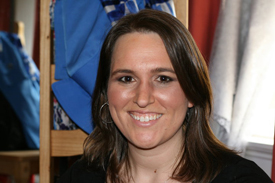 Amy Bryzgel
Amy Bryzgel, lecturer in history of art at the University of Aberdeen in Aberdeen, Scotland, has been awarded an Arts and Humanities Research Council Early Career Fellowship for 2015–16 to support the finalization, publication, and dissemination of her research project, “Performance Art in Eastern Europe since 1960.”

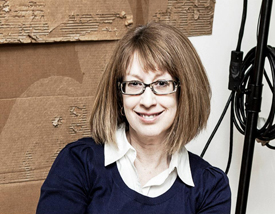 Karen L. Carter (photograph by Matt Gubancsik and provided by Kendall College of Art and Design of Ferris State University)
Karen L. Carter, associate professor in the art-history program of Kendall College of Art and Design of Ferris State University in Grand Rapids, Michigan, will participate in the 2015 NEH Summer Institute, “Teaching the History of Modern Design: Beyond the Canon.”
Henry Colburn, a curatorial fellow in ancient art at the Harvard Art Museums in Cambridge, Massachusetts, has received a 2015–16 Postdoctoral Fellowship from the Getty Research Institute in Los Angeles, California. At the Getty Villa, he will work on “Archaeology of Empire in Achaemenid Egypt.”
Thomas Crow, Rosalie Solow Professor of Modern Art at the Institute of Fine Arts and associate provost for the arts at New York University, delivered the sixty-fourth annual Andrew W. Mellon Lectures in the Fine Arts at the National Gallery in Washington, DC, in March and April 2015.
Susan Dackerman, consultative curator at the Harvard Art Museums in Cambridge, Massachusetts, has been named a 2015–16 Getty Scholar by the Getty Research Institute in Los Angeles, California. Her project is called “Early Modern Print Culture and the Islamic World.”
Vidya Dehejia, Barbara Stoler Miller Professor of Indian and South Asian Art at Columbia University in New York, has been chosen to deliver the sixty-fifth annual Andrew W. Mellon Lectures in the Fine Arts next spring at the National Gallery of Art in Washington, DC.
Nathan S. Dennis of Johns Hopkins University in Baltimore, Maryland, has won a 2015 Rome Prize from the American Academy in Rome in the category of ancient studies.
Ljerka Dulibić has been appointed Craig Hugh Smyth Fellow for 2015–16 at Villa I Tatti, the Harvard University Center for Italian Studies in Florence. She is researching “Italian Renaissance Paintings in the Strossmayer Gallery, Zagreb, Croatia.”
Nina Ergin, associate professor in the Department of Archaeology and History of Art at Koç University in Istanbul, Turkey, has been appointed a 2015–16 Getty Fellow by the Getty Research Institute in Los Angeles, California. She will work on “Heavenly Fragrance from Earthly Censers: Conveying the Immaterial through the Sensory Experience of Material Objects.”
Noémie Etienne, a recent graduate of the Department of Art History at the University of Geneva in Switzerland and the University of Paris 1 Sorbonne in France, has accepted a 2015–16 Postdoctoral Fellowship from the Getty Research Institute in Los Angeles, California. She will research “A Material Art History? Paintings Restoration and the Writing of Art History.”
Andrew Finegold has been appointed a 2015–16 Andrew W. Mellon Postdoctoral Fellow at the Institute of Fine Arts, New York University.
Holly Flora has been selected to be a fellow for 2015–16 at Villa I Tatti, the Harvard University Center for Italian Studies in Florence. She will work on “Cimabue, the Franciscans, and Artistic Change at the Dawn of the Renaissance.”
Caroline O. Fowler has been appointed A. W. Mellon Postdoctoral Fellow at the Center for Advanced Study in the Visual Arts in Washington, DC, by the Getty Research Institute in Los Angeles, California. She will work on “Absence Made Present: An Early-Modern History of Drawing and the Senses.”

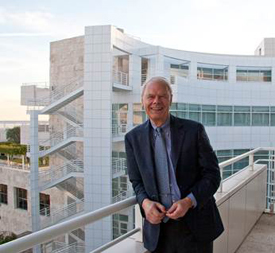 Thomas W. Gaehtgens
Thomas W. Gaehtgens, director of the Getty Research Institute in Los Angeles, California, has been awarded the prestigious Prix Mondial Cino Del Duca 2015. The prize, given by the Simone et Cino del Duca Foundation, is awarded each year by the Foundations of the Institut de France.
Katharine McKenney Johnson of Johns Hopkins University in Baltimore, Maryland, has won a 2015 Rome Prize from the American Academy in Rome in the category of modern Italian studies.
Sonal Khullar has won a spring 2015 research support grant from the Paul Mellon Centre for Studies in British Art for her project, “Fertile Grounds: Art, Primitivism, and Postcoloniality in Twentieth-Century India and Great Britain.”
Christian K. Kleinbub has received a 2015–16 fellowship at Villa I Tatti, the Harvard University Center for Italian Studies in Florence. He will research “Michelangelo’s Inner Anatomies.”
Marci Kwon, a doctoral student at the Institute of Fine Arts, has received a scholarship from New York University’s Graduate School of Arts and Science to attend the 2015 Summer School of Criticism and Theory at Cornell University.
Brett Lazer, a PhD student at the Institute of Fine Arts, has won a 2015–16 Dean’s Dissertation Fellowship from New York University’s Graduate School of Arts and Science.
Barbara London, an independent scholar and curator based in New York and an adjunct professor in the School of Art at Yale University in New Haven, Connecticut, has been appointed a 2015–16 Getty Fellow by the Getty Research Institute in Los Angeles, California. Her research project concerns “Video Art: From Fringe to the Forefront.”
C. Matthew Luther, an artist based in Milwaukee, Wisconsin, has earned a 2015 residency at the Artists’ Cooperative Residency and Exhibitions, better known as ACRE.
Monika Malewska has won a 2015 Working Artist Grant/Art Purchase Award for $1,000 for her watercolor, Bacon Wreath No. 4 (2009).
Leo Mazow, associate professor of art history in the J. William Fulbright College of Arts and Sciences at the University of Arkansas in Fayetteville, has been awarded a Paul Mellon Visiting Senior Fellowship by the Center for Advanced Study in the Visual Arts in Washington, DC.
Susanna McFadden, assistant professor at Fordham University in New York, has been appointed a 2015–16 Getty Scholar by the Getty Research Institute in Los Angeles, California. She will work on “Tales of a Lost Art: Megalographic Wall Paintings and the World of Late Antiquity” at the Getty Villa.
Amy F. Ogata, professor of art history at the University of Southern California in Los Angeles, has become a 2015–16 Getty Scholar. While at the Getty Research Institute in Los Angeles, she will explore on “Metallurgy: Metal and the Making of Modern France.”
Laurel O. Peterson of Yale University in New Haven, Connecticut, has earned a spring 2015 fellowship from the Paul Mellon Centre for Studies in British Art to conduct research in the United Kingdom for her doctoral dissertation, “The Decorated Interior: Artistic Production in the British Country House, 1688–1745.”
John Pollini, professor of classical art and archaeology in the Department of Art History at the University of Southern California in Los Angeles, has been appointed a 2015–16 Getty Villa Scholar. At the Getty Research Institute, he will work on ”From Polytheism to Christianity in Late Antique Egypt.”
Joanna Sheers, a doctoral student at the Institute of Fine Arts, New York University, will be the 2015–17 Anne L. Poulet Curatorial Fellow at the Frick Collection in New York.

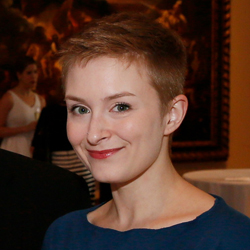 Caitlin Silberman
Caitlin Silberman, a PhD candidate in art history at the University of Wisconsin in Madison, has been selected as a 2015 Committee on Institutional Cooperation–Smithsonian Institution Predoctoral Fellow. She will research her doctoral project, “Thinking with Birds in British Art and Visual Culture, 1840–1900,” at the National Museum of Natural History in Washington, DC.
Laura Splan, an artist based in Brooklyn, New York, has earned a 2015 residency at the Artists’ Cooperative Residency and Exhibitions, better known as ACRE.
Anatole Tchikine has accepted a Craig Hugh Smyth Fellowship for 2015–16 at Villa I Tatti, the Harvard University Center for Italian Studies in Florence. His project is “Water and Form: Reinventing the Fountain in Renaissance and Baroque Italy.”

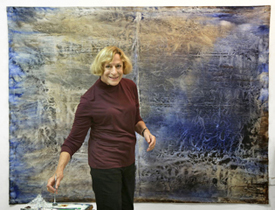 Ruth Weisberg
Ruth Weisberg, an artist and educator, has received the 2015 SGC International Printmaker Emeritus Award.
Bert Winther-Tamaki, a professor of art history at the University of California, Irvine, has been named Consortium Professor with his 2015–16 Getty Fellowship. While at the Getty Research Institute in Los Angeles, he will focuses on “Wood, Ink, Clay, Stone: Bringing Natural Materials to Life for Modern Japan.”
Katharine J. Wright, a PhD candidate at New York University’s Institute of Fine Arts, has accepted an Andrew W. Mellon Curatorial Research Fellowship at the Metropolitan Museum of Art in New York.
Allison Young of the Institute of Fine Arts, New York University, has earned a spring 2015 fellowship from the Paul Mellon Centre for Studies in British Art to conduct research in the United Kingdom for her doctoral dissertation, “‘Torn and Most Whole’: Zarina Bhimji and the ‘Culture Wars’ in Britain, 1970–2002.”
Exhibitions Curated by CAA Members
posted Jun 15, 2015
Check out details on recent shows organized by CAA members who are also curators.
Exhibitions Curated by CAA Members is published every two months: in February, April, June, August, October, and December. To learn more about submitting a listing, please follow the instructions on the main Member News page.
June/August 2015
Dahlia Elsayed. No Rush, No Dawdle. Lower East Side Printshop, New York, March 18–May 17, 2015.
Antje K. Gamble. Mine More Coal: War Effort and Americanism in World War One Posters. University of Michigan Museum of Art, Ann Arbor, Michigan, May 9–September 27, 2015.
Katerina Lanfranco. Heavy Metal. Rhombus Space, Brooklyn, New York, April 10–May 3, 2015.

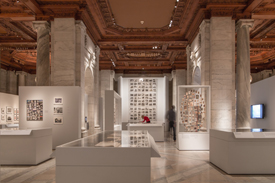 Installation view of Public-Eye: 175 Years of Sharing Photography at the New York Public Library (photograph © Jonathan Blanc)
Stephen Pinson and Elizabeth Cronin. Public-Eye: 175 Years of Sharing Photography. New York Public Library, Stephen A. Schwarzman Building, New York, December 12, 2014–January 3, 2016.

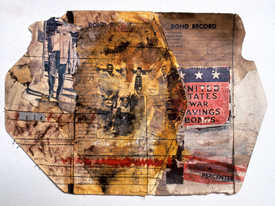 Mildred Howard, US Savings Bond & Westside Court 3, 1981, mixed media, 10 x 11½ in. (artwork © Mildred Howard)
Jan Wurm. Mildred Howard: Spirit & Matter. Richmond Art Center, Richmond, California, March 22–May 24, 2015.
Books Published by CAA Members
posted Jun 15, 2015
Publishing a book is a major milestone for artists and scholars—browse a list of recent titles below.
Books Published by CAA Members appears every two months: in February, April, June, August, October, and December. To learn more about submitting a listing, please follow the instructions on the main Member News page.
June/August 2015

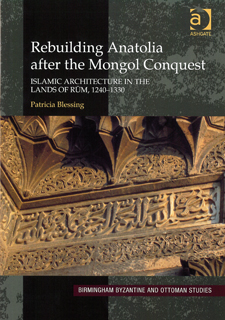
Patricia Blessing. Rebuilding Anatolia after the Mongol Conquest: Islamic Architecture in the Lands of Rūm, 1240–1330 (Burlington, VT: Ashgate, 2014).

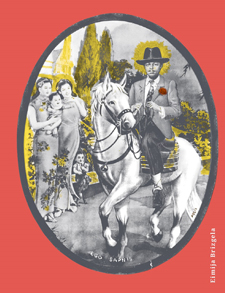
Amy Bryzgel. Miervaldis Polis (Riga, Latvia: Neputns, 2015).

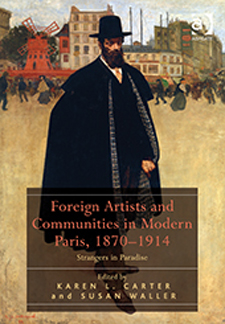
Karen L. Carter and Susan Waller, eds. Foreign Artists and Communities in Modern Paris, 1870–1914: Strangers in Paradise (Burlington, VT: Ashgate, 2015).

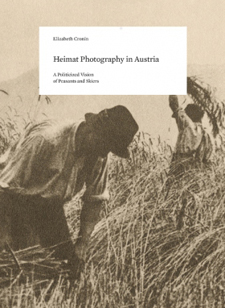
Elizabeth Cronin. Heimat Photography in Austria: A Politicized Vision of Peasants and Skiers (Salzburg: Fotohof edition, 2015).

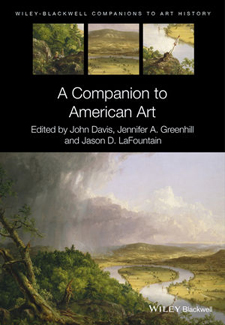
John Davis, Jennifer A. Greenhill, and Jason D. LaFountain, eds. A Companion to American Art (Oxford, UK: Wiley-Blackwell, 2015).

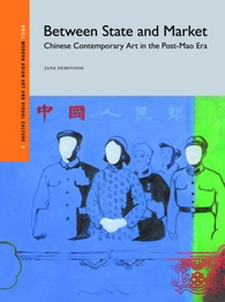
Jane DeBevoise. Between State and Market: Chinese Contemporary Art in the Post-Mao Era (Boston: Brill 2014).

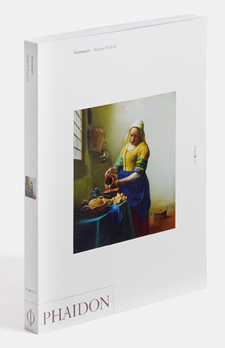
Wayne Franits. Vermeer (New York: Phaidon, 2015).

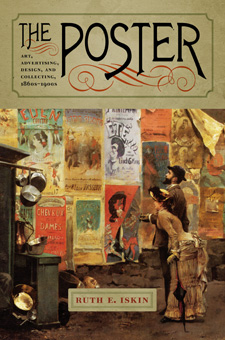
Ruth E. Iskin. The Poster:Art, Advertising, Design, and Collecting, 1860s–1900s (Hanover, NH: Dartmouth College Press, 2015).

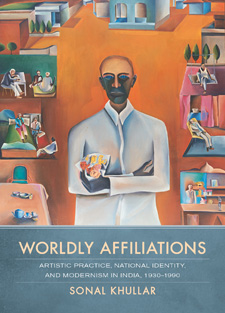
Sonal Khullar. Worldly Affiliations: Artistic Practice, National Identity, and Modernism in India, 1930–1990 (Oakland: University of California Press, 2015).


Peggy Levitt. Artifacts and Allegiances: How Museums Put the Nation and the World on Display (Oakland: University of California Press, 2015).


Lisa Pon. A Printed Icon in Early Modern Italy: Forlì’s Madonna of the Fire (New York: Cambridge University Press, 2015).

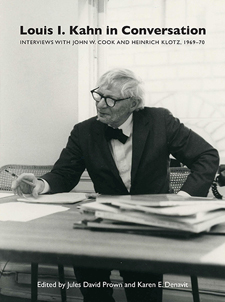
Jules David Prown and Karen Denavit. Louis I. Kahn in Conversation: Interviews with John W. Cook and Heinrich Klotz, 1969–70 (New Haven, CT: Yale Center for British Art, in association with Manuscripts and Archives, Sterling Memorial Library, Yale University, and the Architectural Archives of the University of Pennsylvania, 2015).


Jauneth Skinner. The Way of the Cross (Jacksonville, AL: Quiet Crow Press, 2015).

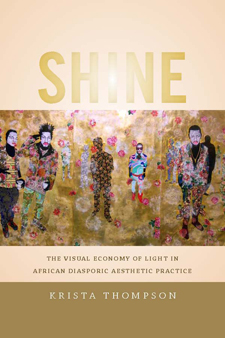
Krista Thompson. Shine: The Visual Economy of Light in African Diasporic Aesthetic Practice (Durham, NC: Duke University Press, 2015).

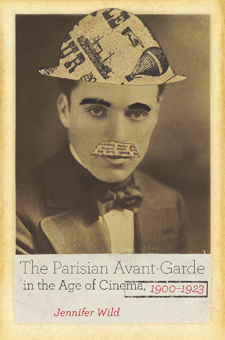
Jennifer Wild. The Parisian Avant-Garde in the Age of Cinema, 1900–1923 (Berkeley: University of California Press, 2015).
American Historical Society Statement on the University of Wisconsin
posted Jun 10, 2015
The American Historical Society prepared the statement below regarding the Wisconsin legislature’s actions to, in effect, eliminate tenure at the University of Wisconsin. The CAA Executive Committee has approved endorsing this statement. Since this statement was crafted two days ago, U of W Faculty Senate voted to reject the proposal in order to maintain control over the university budget and the tenure system.
American Historical Society Statement on the University of Wisconsin
The American system of higher education is the envy of the world. It’s not perfect; few things are. But at a time when many Americans fear their nation may be falling behind competitively, U.S. colleges and universities continue to be universally regarded as the best in the world. The University of Wisconsin system, in particular, is noted for its standards of research and teaching excellence, with the Madison campus recognized among the top fifteen of American public universities by U.S. News and World Report. The University of Wisconsin is a critical contributor to the state’s economy that provides exceptional value with its thirteen campuses serving over 180,000 students. With $1.2 billion of state investment, the system generates over $15 billion of economic activity.
The undersigned associations of scholars across a wide variety of disciplines are gravely concerned with proposals pending in the Wisconsin legislature that threaten to undermine several longstanding features of the state’s current higher education system: shared governance, tenure, and academic freedom.
By situating the locus of control inside the institution, in a partnership between faculty and administrators, the U.S. system of higher education has generated an unmatched diversity that enables students to find the educational environment that works best for them. And by granting faculty tenure after an appropriate period during which their work is rigorously evaluated, we have ensured the continued intellectual vitality and classroom independence so essential to innovation, dynamism, and rigorous scholarship.
Academic freedom is the foundation of intellectual discovery, including in the classroom. It nourishes the environment within which students develop critical habits of mind through encounters with diverse perspectives, experiences, and sources of evidence across disciplines. Our democracy depends on the educated citizens that this system is intended to produce: wide-ranging in their knowledge, rigorous in their ability to understand complicated questions, and dedicated to the public good.
Wisconsin in fact helped pioneer the concept of academic freedom for the entire United States when its Board of Regents declared in 1894 that they would not terminate the employment of economist Richard Ely even though his research and teaching on the benefits of labor unions had offended one of its own members. The Regents’ report in the wake of that controversy remains one of the most ringing endorsements for academic freedom in the history of American higher education: “Whatever may be the limitations which trammel inquiry elsewhere,” they wrote, “we believe the great state University of Wisconsin should ever encourage that continual and fearless sifting and winnowing by which alone the truth can be found.”
The policies recommended by the Joint Finance Committee and included in the 2016 budget pose a direct threat to academic freedom by expanding the circumstances under which tenure can be revoked (beyond dire financial emergencies and just cause) while simultaneously removing its protection under state statute. Tenure is a linchpin of vigorous shared governance and independent rigorous scholarship. This assault on the structure of Wisconsin’s model arrangements poses a threat to the university’s stellar reputation and international leadership in research and education—and it betrays a celebrated Wisconsin tradition that began with the Ely case in 1894.
Since 1904, the “Wisconsin Idea” has stood as an inspiring educational model for the entire nation, demonstrating the immeasurable benefits of a robust partnership between the state university and state government predicated on intellectual independence and active engagement by students and faculty members with the wider world. An earlier draft of the current budget bill sought to remove language about the Wisconsin Idea from the mission statement of the university. This most recent draft now poses no less a threat by undermining several of the most important practical pillars of shared governance and academic freedom that have made Wisconsin a beacon among its peer institutions around the world.
Rather than making the University of Wisconsin system more fiscally nimble, the Joint Finance Committee recommendations threaten to damage, possibly irreparably, the distinguished educational system that has justifiably been the pride of Wisconsin residents for more than a century and a half.
Committee on Women in the Arts Picks for June 2015
posted Jun 10, 2015
Each month, CAA’s Committee on Women in the Arts selects the best in feminist art and scholarship. The following exhibitions and events should not be missed. Check the archive of CWA Picks at the bottom of the page, as several museum and gallery shows listed in previous months may still be on view or touring.
June 2015

Poster image for Bluestocking Film Series 2015
Bluestocking Film Series 2015
SPACE Gallery
538 Congress Street, Portland, ME 04101
July 17–18, 2015
Founded in 2011 by the director and independent filmmaker Kate Kaminski, the Bluestocking Film Series promotes filmmakers who “place female protagonists front and center.” As explained in their mission statement, they “encourage and promote production of narratives driven by strong, complex female protagonists, characters who are as fully-developed, heroic, complex and flawed as their male counterparts,” all this with a preference for “well-structured, highly visual, cutting edge, provocative films, especially ones that explore the plurality and variety of women’s relationships.”
The series focuses on narrative films more than documentaries, and each accepted film must also pass the Bechdel Test. This year an estimated fourteen to sixteen films will be screening over two nights and one afternoon at the SPACE Gallery in Portland, Maine. A special afternoon program, free for low-income girls, was added after Bluestocking received a number of strong films addressing issues of adolescence and coming of age, Kaminiski said. The Irish filmmaker Maureen O’Connell will also join the festival in Maine for the US premiere of her film, Girls.
The Bluestocking Film Series issued a call to filmmakers this year in their Blue Collar Heroine Challenge, seeking films that spotlight the lives of working-class women. “Truly diverse representations of women wage earners who are competent, quick-witted, and enterprising are practically taboo,” Kaminski explained. The challenge was delivered to help fill this void while portraying women who work in skilled manual-labor jobs, including “pink collar” jobs, and in many ways “an ordinary heroine.” Unfortunately, Kaminiski said, they received no films that met the criteria 100 percent. “The fact is, these films may not yet exist,” she said, “and this is the reason why we do.”
Reductress
Online Satirical Women’s Magazine
“The mission of Reductress is to take on the outdated perspectives and condescending tone of popular women’s media, through the eyes of the funniest women in comedy today,” begins the about page on the Reductress website. “Also, we want people to think we’re pretty.” Begun in 2013 by the comedians Beth Newell and Sarah Pappalardo, the online “news” magazine takes aim at all subjects, from news to entertainment, love, sex, and a category called “womanspiration.”
Headlines subtly and not-so-subtly jab at a breadth of issues. Perform a quick search for art, museum, or films and their titles and one will find the art and film industry is not immune to their satire. Titles include: “New Movie Has Women In It,” “Secret Colony of Female Directors Found in a Remote Cave,” “Slave To The Night: Dafna Remembers Art Basel,” “MPAA Gives Film NC-17 Rating for Actress’s Graphic Enjoyment of Dessert,” and (but not limited to) “Date Night Ideas That Will Lead to an Explosive Argument,” which includes the helpful paragraph titled “A Scream-Fight at a Museum.”
Only a short two years into online publication, the authors are adjusting to the increasing talk of feminism in mainstream media. In an interview with the Daily Beast from May 3, 2015, Pappalardo is quoted, “all of a sudden the magazines that we were parodying are talking about feminism and taking it seriously.” But, she says, these are attempts “to be relevant in feminism and co-opt the movement, while still propagating the same messages that make us feel inadequate.”
Milcah Bassel: Father Tongue
Kniznick Gallery
Brandeis University, Women’s Studies Research Center, Epstein Building, 515 South Street, Waltham, MA 02453
April 13–July 16, 2015
The Kniznick Gallery in the Women’s Studies Research Center at Brandeis University features the Hadassah-Brandeis Institute artist-in-residence Milcah Bassel and her work, Father Tongue. The large-scale wall drawings produced at the gallery are based on five letters of the Hebrew alphabet, exploring the “patriarchal roots of this ancient square alphabet through a personal, feminist, and abstract lens.” Bassel, who was raised in Israel, describes her multidisciplinary work as “an experiential investigation of body-space relations incorporating installation, hand-made objects, drawing, photography, video and performance.”
In Father Tongue, Basel explains in an interview with the Brandeis University student newspaper, the Justice, she chose to revisit five specific letters because they are all constructed of right angles and often used frequently as building blocks in Hebrew. As a child, Basel said, her earliest experiences with the alphabet were watching her father, a Jewish scribe, copy letters. This dominantly visual experience, coupled with her career as an artist and transition from an Orthodox family into a secular background, has allowed her, as Basel expressed, to “reclaim the alphabet for myself.”
Basel’s installation treats the space as if the audience is reading Hebrew, from right to left, compiling the five letters in a repetitive, but recognizable pattern. For audiences that read Hebrew this arrangement maintains the relationship to the language, while for others it remains purely within the visual realm.
A video of the installation is available on the WSRC Facebook page.
Pathmakers: Women in Art, Craft, and Design, Midcentury and Today
Museum of Art and Design
2 Columbus Circle, New York, NY 10019
April 28–September 27, 2015
The Museum of Art and Design (MAD) presents Pathmakers: Women in Art, Craft, and Design, Midcentury and Today, an exhibition that position women at the center of the midcentury narrative unveiling their meaningful contributions to modernism in postwar visual culture. As the exhibition curator Jennifer Scanlan states, “Through Pathmakers, MAD aims to expand the historical view of the postwar period, to showcase important artists and designers, and to introduce names that have been overlooked.”
In the 1950s and 1960s women had a significant impact in the use of alternative materials such as textiles, ceramics, and metals, making of craft and design media an important professional pathway. Pioneering women achieved success and international recognition, establishing a model of professional identity for future generations of women.
Pathmakers features more than one hundred works from a group that had a significant impact as innovative designers, artists, and educators, and that came to maturity along with the Museum of Arts and Design itself, which was founded in 1956 as the center of the emerging American modern craft movement. The exhibition includes contributions of European émigrés, such as Anni Albers and Maija Grotell, and highlights Ruth Asawa’s singular installation of hanging sculptures, Marianne Strengell’s Forecast Rug (a commissioned piece by the Aluminum Company of America that aimed to bring this industrial material into the home market), a wide selection of Eva Zeisel’s designs, Margaret Tafoya’s “bear paw vessels” (which merge traditional Pueblo ceramic techniques with contemporary form), and Gabriel A. Maher’s DE___SIGN, in which the artist looks at stereotypically male and female posture and clothing.

Cover of the exhibition catalogue for Sonia Delaunay
Sonia Delaunay
Tate Modern
Bankside, London SE1 9TG United Kingdom
April 15–August 9, 2015
Tate Modern presents the first retrospective of the pioneer of abstraction Sonia Delaunay in the United Kingdom. The exhibition explores the breath of Delaunay’s seventy-year career, providing a unique opportunity to discover one the most versatile and inspiring artist of her time.
Through painting, sketches, graphic, textile, fashion, and even furniture designs, dynamic forms and vibrant colors capture the spirit of modernity, while celebrating urban life, technology, and travel. Perhaps the most modern aspect of her creative process lies in the artist’s willingness to go beyond the traditional confines of fine art. Delaunay embraced fashion, textile, costume and set design, interior decoration, architecture, and advertising, developed and launched her own fashion house, and established her name as a brand.
The artist, born in Odessa as Sara Stern in 1885, developed a unique creative partnership along with her husband, the artist Robert Delaunay, since 1910, and together they approached abstraction distinctively through “simultaneism.” After Robert’s early death in 1941, Sonia continue exploring a variety of media and producing experimental and innovative art until the late 1970s.
The exhibition’s installation allows viewers to navigate her creative path in chronological order throughout twelve sections: Early Years, in which is made evident the influence of Paul Gauguin and the German Expressionists in her early paintings; Towards Abstraction, which introduces the collaborations with Robert Delaunay; Modern Life; Portugal and Spain, which focuses on her work in advertising and design while the couple refuged in these countries during the outbreak of WWI; and Flamenco and Ballet, which displays the opening of Casa Sonia and her first commissions in clothing and custom designs that blossomed in the early 1920s, when the Delaunays returned to Paris. This is made further evident in the section Fashion and Textile through an overwhelming collection of sketches, textiles, and designs, along with a series of fashion shoots displayed as photographs and videos.Through the remaining sections—Poetry and Theatre, Rhythm and Abstraction, Paris, Abstraction and Everyday Life, Gouaches, and Reinventions—viewers can follow Delaunay’s inspirational path, a creative journey that never ceased until her death in Paris in 1979. She was 94.
Yvonne Rainer: The Concept of Dust, or How do you look when there’s nothing left to move?
Museum of Modern Art
Werner and Elaine Dannheisser Lobby Gallery, Fourth Floor, 11 West 53rd Street, New York, NY 10019
June 9–14, 2015
The Museum of Modern Art presents the East Coast premiere of Yvonne Rainer’s The Concept of Dust, or How do you look when there’s nothing left to move? (Moving On), an ongoing work-in-progress that intertwines formal dance with an intimate approach of aging and mortality, as well as humor, through language, music, and movement, which when combined creates a somewhat melancholy ambiance. The performers of this piece have been given the freedom to initiate and/or abort the movement phrases as they wish, making spontaneous decisions throughout the forty-five-minute duration of the piece. Rainer, a founding member of New York’s pioneering Judson Dance Theater, has developed a form known as “performance demonstrations” or “composites,” which combine fragments of choreography with spoken monologues, projections, films, and sounds.
Steffani Jemison: Promise Machine
Museum of Modern Art
11 West 53rd Street, New York, NY 10019
June 25–27, 2015
1:00 PM and 4:00 PM
The Museum of Modern Art presents Promise Machine, a multipart commission of the Brooklyn-based artist Steffani Jemison, in conjunction with the exhibition One Way Ticket: Jacob Lawrence’s Migration Series and Other Visions of the Great Movement North. Jemison (American, b. 1981) works across media and explores ideas of improvisation, repetition, and the fugitive in black history and vernacular culture inspired by the Utopia Neighborhood Club, a Harlem-based women’s social-service organization that directly supported Jacob Lawrence.
Promise Machine comprises a reading group and performance inspired by the notion of utopia that Jemison will premier as a new musical performance with original libretto by the artist and a score composed collaboratively with Courtney Bryan.
Guerrilla Girls: #ProvokeProtestPrevail’s
FUG
Bruce High Quality Foundation University, 431 East 6th Street, New York, NY 10009
June 13, 2015
6:00 PM
FUG is a new project space of New York’s freest art school, the Bruce High Quality Foundation University (BHQFU). Through merging exhibitions, public programs, classes, and workshops, the project will host BHQFU’s visiting artist residency program, which supports artists and collaborative projects from around the globe through three- to six-week residencies.
As the culmination of #ProvokeProtestPrevail’s, the Guerrilla Girls BroadBand exhibition (May 1–June 14, 20154), and as part of its community outreach, BHQFU invites participation in a group action and live “guerrilla” performance that pays an homage to the Russian feminist punk protest group Pussy Riot. Supporting the reproductive rights through the power of music, participants will collaborate on a performance of a Pussy Riot song and edit it into a music video to be shared. For this, instruments, performers, and voices welcome. A closing party will follow.