CAA News Today
New in caa.reviews
posted Sep 07, 2018
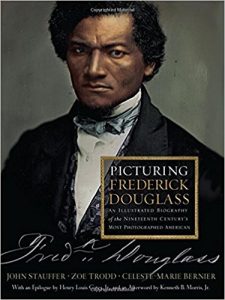

Lauren Kroiz reviews Picturing Frederick Douglass: An Illustrated Biography of the Nineteenth Century’s Most Photographed American by John Stauffer, Zoe Trodd, and Celeste-Marie Bernier. Read the full review at caa.reviews.
André Dombrowski writes about Color in the Age of Impressionism: Commerce, Technology, and Art by Laura Anne Kalba. Read the full review at caa.reviews.
Eva McGraw discusses Paper Promises: Early American Photography by Mazie M. Harris. Read the full review at caa.reviews.
Seeking New Organizations for CAA’s Affiliated Societies
posted Sep 06, 2018
CAA has operated its Affiliated Societies program since the 1970s. Affiliated Societies are learned societies focused on particular areas of art history, art making, or design. We presently have 77 societies who are active members of the program. A complete list of current members appears here.
Affiliated Societies enhance CAA by creating Annual Conference sessions on their specific areas of expertise within the larger domains of art history, design, and the visual arts. For our upcoming annual conference in New York City in February 2019, 77% of the Affiliated Societies will be presenting sessions.
In exchange for a modest annual membership fee, Affiliated Societies receive the following benefits:
• listing in CAA’s Online Directory of Affiliated Societies
• a guaranteed session at the Annual Conference
• a room in which to conduct a business meeting at the Annual Conference
• promotional opportunities in the Affiliated Society section of CAA News
• use of the CAA-administered listserv for outreach to their other societies
• use of a Humanities Commons Group for social networking
We are looking to grow the program and add other societies.
If you would like to learn more about the program you can click here to see if your organization is eligible. The Executive Committee of the Board of Directors will be reviewing new applications at its meeting in February 2019. If you want to be considered for to be part of the program, your materials would need to be completed by December 22, 2018.
If you have any questions, please reach out directly to our executive director Hunter O’Hanian: hohanian@collegeart.org
CAA Opposes the Cuban Government’s Decree 349 and Its Impact on Artists
posted Sep 05, 2018
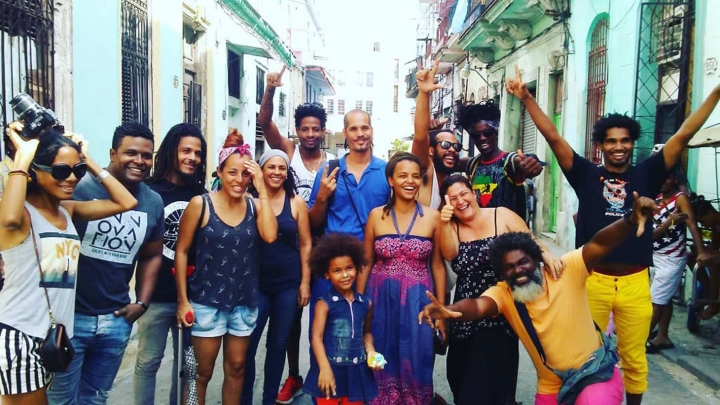
Cuban artists and activists organizing in opposition to the decree. Image: Courtesy Yanelyz Nuñez Leyva via Hyperallergic
In July 2018, the Cuban government issued Decree 349, aimed at the artists’ community on the island nation. The decree is slated to go into effect on December 1, 2018.
The law will criminalize independent artists who do not have authorization from the Ministry of Culture, and it will empower a new cadre of state agents to shut down events, confiscate artists’ equipment and property, impose heavy fines, and make arrests. Cuban artists were not consulted in the development of the decree and will have no recourse to independent arbiters in the event of a dispute. In particular this legislation will affect artists who are black and poor, as well as independent artists.
Amnesty International recently issued a statement about Decree 349:
“Amnesty International is concerned that the recent arbitrary detentions of Cuban artists protesting Decree 349, as reported by Cuban independent media, are an ominous sign of things to come. We stand in solidarity with all independent artists in Cuba that are challenging the legitimacy of the decree and standing up for a space in which they can work freely without fear of reprisals.”
CAA supports the work of Cuban artists and activists inside and outside of Cuba in their campaign to urge the Cuban government to reconsider the law and agree to a public debate with the artistic community. We support the artists’ Open Letter urging the Cuban government to refrain from imposing these harsh restrictions on its artists.
Related: As Criminalization of the Arts Intensifies in Cuba, Activists Organize (Hyperallergic)
Tania Bruguera and Other Artists Are Protesting a New Cuban Law That Requires Government Approval of Creative Production (artnet News)
News from the Art and Academic Worlds
posted Sep 05, 2018
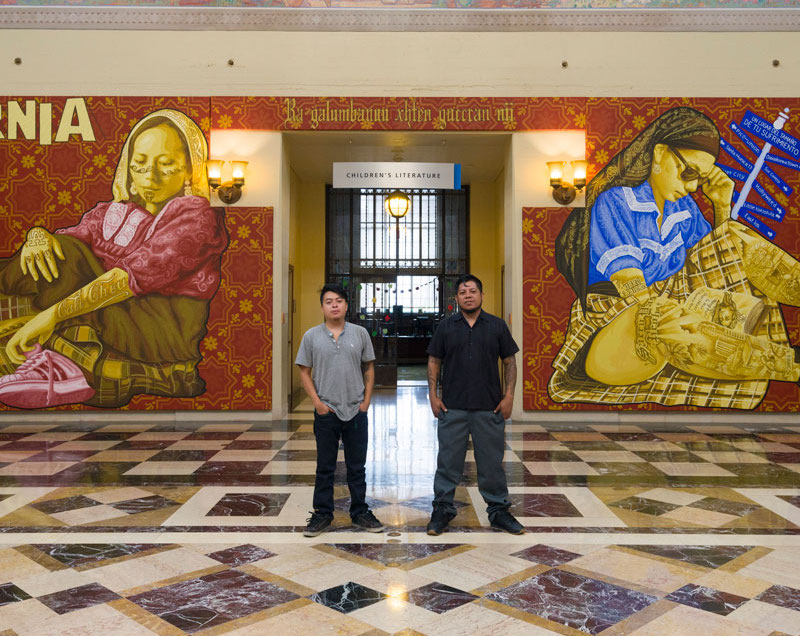
After completing murals for the Los Angeles Public Library, Oaxacan collective Tlacolulokos members Cosijoesa Cernas and Dario Canul were subsequently barred from re-entry to the United States. Photo: Jeff McClane/LAPL via LA Taco
Brazil Museum Fire: ‘Incalculable’ Loss as 200-Year-Old Rio Institution Gutted
Brazil’s oldest and most important historical and scientific museum was consumed by fire, and much of its archive of 20 million items is believed to have been destroyed. (The Guardian)
Is This the Future of Catalogues Raisonnés?
A new online database of Sol LeWitt’s wall drawings offers a template for a more up-to-date—and perhaps richer—resource. (The Art Newspaper)
A Symbol for ‘Nobody’ That’s Really for Everybody
Read CAA Committee on Design member Elizabeth Guffey’s tribute to the International Access Symbol on its 50th birthday. (New York Times)
These Oaxacan Muralists Brought Indigenous Flavor to The Central Library; Now They Are Deported
After completing a monumental mural project on indigenous empowerment at the Los Angeles Public Library, Oaxacan collective Tlacolulokos were subsequently barred from re-entry to the United States. (LA Taco)
Why I Did Not See the Picasso Show at the Tate Modern
“It was with a certain incredibility that I discovered the museum was hosting a major Picasso exhibition titled Love, Fame, Tragedy. Nevertheless, I wanted to see the show for myself.” (Hyperallergic)
It Takes a Village: Are You Getting These Six Perspectives for Your Exhibition?
Rarely are the folks on the front line heavily involved in the decisions they’re going to have to live with. (American Alliance of Museums)
Hunter O’Hanian in Conversation with Eric Segal, Director of Education and Curator of Academic Programs at the Harn Museum
posted Sep 04, 2018
CAA’s executive director, Hunter O’Hanian, recently visited the Harn Museum of Art in Gainesville, Florida to speak with Eric Segal, the museum’s director of education and curator of academic programs, about the role of academic art museums and Resources for Academic Art Museum Professionals (RAAMP).
A project of CAA supported by the Andrew W. Mellon Foundation, RAAMP aims to strengthen the educational mission of academic museums and their parent organizations by providing a publicly accessible repository of resources, online forums, and relevant news and information.
Watch and read the interview below.
Hunter O’Hanian: Hello everybody. My name’s Hunter O’Hanian and I’m the director of the College Art Association. I’m very pleased today to be with Eric Segal, who is the director of education and curator of academic programs here at the Harn Museum in Gainesville, Florida. Hello, Eric. How are you?
Eric Segal: Hunter, I’m doing well. It’s great to have you here in Gainesville.
HO: Well, it’s absolutely beautiful. It’s been great to be spending time here and to go through the museum. Before we start, tell us a little bit about your background. I know you’ve been a CAA member since you were in graduate school, but tell us a little bit about your professional background.
ES: Sure. CAA since 1993.
HO: Yay.
ES: I actually started my college career as a computer engineering major. So, it was a big change when my sister made me take an art history class and that led me into art history, and I studied American art subsequently at UCLA, Masters.
HO: And, I think you won a Terra award, too.
ES: I was really fortunate to have a Terra award in 1999.
HO: Great.
ES: And that was very exciting for me and helped me in my studies. Following the completion of my doctoral dissertation, I took an assistant professor position here at University of Florida. So, I was in the art history department teaching undergraduate and graduate courses in American art, African American art, illustration and even occasionally about museum theory. Later, in 2010, a position opened up in the museum where I was able to take on museum practice a bit more. That position was the academic programs position, which had just been created as the museum realized it was important to draw closer to the university. At that time, before the position opened up, there were perhaps a few dozen courses using the museum, because there was no one doing the outreach to work with faculty across campus.
Since that time, about 10 years, we’ve maybe increased that tenfold. The number of courses, the number of faculty, the number of disciplines and students using the museum—we’ve been really delighted to expand that quite a bit.
HO: That’s great. So, [the] University of Florida here in Gainesville, about 50,000 students here on campus.
ES: Yes.
HO: You have an art history department here. And do you have a studio arts department as well?
ES: It’s a combined school of art and art history and they’re both very robust. There’s a faculty of about seven in art history and the tens, twenties in art and they’re all great colleagues. In fact, in 2019 we will have the studio art faculty show here at the museum, which comes [around] every five years.
HO: Wonderful. So, the Harn Museum has been around since 1990. Roughly, how big is it? How many square feet is the facility?
ES: The museum is about 26,000 square feet.
HO: That’s big for an academic art museum.
ES: It is. We have all of our storage onsite. We have great galleries devoted to five collecting areas. We collect in African [art], in Asian [art], in photography, in modern and contemporary art. And we have a curator in each area. So, we’re very lucky. Many academic museums don’t have such a robust curatorial staff. And we also have classrooms where we can do teaching, where we can bring objects out from storage in order to connect with academic classes on campus if we have a theme we want to try to address, say, “urban imagery.” It may be better just with works that are in storage, rather than those that happen to be on view at a given time.
HO: And 11,000 objects in the collection?
ES: That’s right.
HO: Wow. And so how do you go about procuring objects for the collection?
ES: Right. So our curators are very active along with our development officer and our director in building relationships. So, we do have an endowment for acquisitions, but many of our acquisitions do come through gifts from donors, and that would be in all areas.
HO: I noticed too in going through the museum with you that you also have a fair number of Florida artists in your collection. Can you speak about some of them?
ES: We have Florida artists from the 19th century through the present. Some of them are former faculty at UF with international and national reputations, and some include folk artists who work locally and are widely collected and whose work reveals unexpected and inspiring perspectives on our own community. So, we have both highly-trained professional artists and amateur or untrained artists.
HO: It seems to me also that you’ve done a lot of work in your role as far as inviting members of the local Gainesville community, people who are not part of the academic campus on or into the museum through different programs. Can you talk generally about how you’ve been programming in trying to bring the local Gainesville community into the museum?
ES: Sure. So, as curator of academic programs, I obviously personally focus a lot on the academic community, but I’m also director of education as you mentioned, and I have a staff with whom I work to engage the community. I also consider that my responsibility as well. We have public programs that I think of as creating layers of access. There’s programs that are traditional museum programs of lectures and educational docent tours, which have immediate appeal to people who are familiar with museums and have a museum-going experience and know they might want to learn something about an exhibition, but we also have our whole range of activities that invite the community in perhaps for a first time. We’re creating museum goers out of our local citizenry.
So, those might be experiences that sound more fun and social, but include informal learning opportunities. We have a museum nights event once a month which is open in the evenings. So, lots of programs such as that, but we also think it’s really important to reach audiences that aren’t even looking at the museum as a possible venue for leisure or art experiences and we find it’s really effective to work with the local public schools. All children go to schools and we’re able to work with them to provide transportation and rich tour experiences and programs that engage children and parents as well. Creating the opportunity to connect with families that might not be thinking of the museum, but may learn from the children that it’s a really welcoming, relevant, and meaningful space.
HO: Overall for the whole museum, how big is the staff here?
ES: The staff, including security and frontline staff, is about fifty.
HO: Wow. Great.
ES: So, it’s pretty robust.
HO: And for academic programs and education, how big is that?
ES: In education, we have six full-time staff and a number of part-time staff who support programs and activities. So, we’re also very lucky. There are smaller museums that are working on a narrower range of staff resources.
HO: What challenges do you see for the education programs here at the Harn Museum going forward?
ES: Well, you did ask about our connecting with community audiences and our challenge is to continue to grow that and be relevant and to let audiences know that we are welcoming. We want to reach audiences that have not seen themselves in museums. So, diversity in our audiences is something we’ve done a lot to improve with by partnering with local groups, with activists, with people in different communities. We’ve done a lot to improve our diversity of audiences, but we’re still expanding there. In staff, that’s another area where we really need to work hard and we have focused part of our strategic plan extension into 2019 to focus on developing new ways to build diverse staff members across the museum, including in senior staff, which as we know in museums in the United States is a real problem.
HO: If you were speaking to someone else in your position, maybe in a more rural location or a smaller facility, and they wanted to engage the community more, what advice would you give them?
ES: That’s a great question. I think that it’s really important to let audiences know that they’re welcome and to my mind, the best way to get that message out there is by being out in the community, attending community fora on relevant topics, being part of discussions of education and educational resources, being part of discussions on how universities are trying to engage—the local university or college may be trying to engage the community, both on campus and in the community. Being a face in the community makes you somewhat approachable and starts to build the relationship that’s hard to build with an advertisement in the paper that says, “Everyone’s welcome. Admission is free”. Hopefully.
So, that would be one of the first steps that I think I would try in that position is to really be part of the community and to make contact with community leaders who already have authentic connections to different members of different areas of the community.
HO: We’re going to be recording some video practicum about different areas in the museum and we’ll get into some more of those details later, but it also seems as if you’ve developed good relationships with different departments within the college itself. Can you speak a little bit about doing that and how you go about being successful there?
ES: Some of our failures in doing that have been—not that I wouldn’t continue to do it—you know, I go and give a talk to the faculty senate and I send a letter to all faculty and I get a lot of emails back, if I’m lucky, that say, you know, I saw your email but I didn’t read it last year because you sent it to everyone. So, the hard work is making individual contacts either by email but also being out there again on campus. I try to serve on committees, be it in the international center or on undergraduate curriculum, wherever it might be useful, seeing that the museum could be a resource that can be built into emerging programs and projects. So, being at the table is important. And then building the individual connections to faculty. One faculty member in a language and literature department can be your ambassador to other faculty members.
HO: And, of course you’re familiar with RAAMP resources for academic art museum professionals, and the Harn has been one of the original stakeholders, and this has been a great project that CAA has worked on with the Mellon Foundation.
ES: Yes.
HO: We’ve been very happy with the success. As a resource out there, how have you been able to use RAAMP and also were there any changes you’d like to see to it or more things you’d like to see us add to it?
ES: Yes. RAAMP is a great resource. It’s been wonderful to see it grow and the website has, for anyone who hasn’t visited it recently, really been improved in the last year, making it searchable in a way that it wasn’t before. So, it’s a resource where you can actually find the materials that are there pretty easily now and that makes it especially useful. So, for me, it’s been great as a source of inspiration when I come up against a problem such as “How do I…?” I haven’t found this one yet, but one of my problems is how do I connect with low temperature physics? I’ve never solved that problem, but when someone posts that to RAMP, that’s where I’m going find it.
HO: Great. So, for any of you out there who have an answer to that quick question as to how to deal with low temperature physics, please post it on RAAMP now.
ES: That’s right. But, it’s really a great source of inspiration [for] problem solving and models that exist out there. It’s also I think increasingly going to continue to serve the role of [a] point for conversations, which is something that I’m really looking forward to, because sometimes someone hasn’t posted on low temperature physics, but they may have already done it. And so it’s a chance to get feedback and ideas. I’m also really looking forward to in the future ideas about building diversity, as we discussed earlier. How it’s being pursued at other museums, both in terms of audiences but also in terms of staff. I think as a community academic program officers in museums need to come together to build the pipeline of museum professionals. That includes recruiting students when they’re young. I’ve been working with high school students in the past week to just tell them that museums are a career and that’s important.
It includes supporting internships. I think that discussion can happen in RAAMP about how we can sort of strategically create a pool that we’re all going draw on to diversify our staff. I’m also looking forward to learning from RAAMP more about ideas for academic programs working with development offices.
HO: Interesting. The fundraising piece.
ES: Yes. The fundraising piece. We’re all challenged in our budgets. In the past year, we’ve developed a program on early learning that we built with the college of education, and we built a really robust project, and someone said: “You need to do a video for this.” And that video has been helpful for us in developing private funds to continue to pursue this program that provides education for headstart students.
HO: Which is great, because it gives potential funders the opportunity to see what the programs are really about and be able to see that.
ES: It is. And that’s the kind of thing I’d love to share on RAAMP and also learn from others their strategies for taking our programs and having them be tools for building our funding.
HO: Yes. I’ve been recently reviewing the session proposals for the upcoming CAA conference in New York in February of 2019 and there are a lot of sessions that are coming up for professionals in academic art museums, because I do think it’s a growing field that a lot of PhD students or PhD holders and Masters will be going into it in the future. So, there will be a lot at this year’s conference in February.
ES: That’s really great to hear. And I hope that non-museum professionals, hope that artists and art historians will attend those as well, because their voices are really useful to be part of those conversations that art museum professionals are having. I was thinking about the sort of professionalization that another area of RAAMP is going help us connect on is going to be evaluation. Museums are always challenged in terms of evaluation. We know it’s important to prove that what we do is effective. Evaluation is time-consuming or expensive or both, and sharing expertise and ideas in that area I think is going to be something that’s going to really help us to build our case in the future.
HO: Yes, I mean, ultimately all museums are educational institutions, and we have to be able to quantify how that happened.
ES: I think that is the case.
HO: Eric, thank you so much for your time here. It’s been great to tour the museum and I really have appreciated it. And so good luck with all your work going forward.
ES: Thank you, Hunter, for sharing your interest of the museum with our RAAMP audiences.
New in caa.reviews
posted Aug 31, 2018
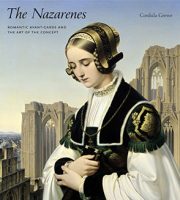
Joseph Leo Koerner writes about The Nazarenes: Romantic Avant-Garde and the Art of the Concept by Cordula Grewe. Read the full review at caa.reviews.
Patricia Blessing reviews the exhibition Outcasts: Prejudice & Persecution in the Medieval World. Read the full review at caa.reviews.
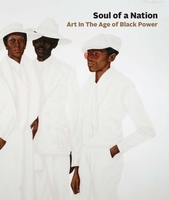
Adrienne L. Childs examines Soul of a Nation: Art in the Age of Black Power, edited by Mark Godfrey and Zoe Whitley. Read the full review at caa.reviews.
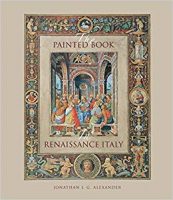
Helena Szépe explores The Painted Book in Renaissance Italy: 1450–1600 by Jonathan J. G. Alexander. Read the full review at caa.reviews.
News from the Art and Academic Worlds
posted Aug 29, 2018
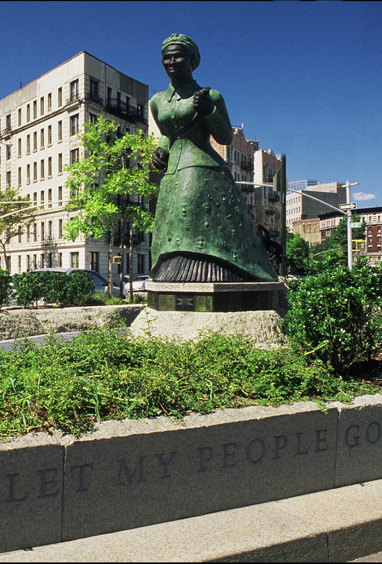
Alison Saar’s statue of Harriet Tubman, Sing Low, 2007, at Harriet Tubman Plaza in Manhattan. Photo: John Back, via Artforum
New York City Launches Public Art Initiative to Honor Women’s History
The city is calling for interested artists to submit responses to the project’s RFP by September 30. The budget for the first work will be up to $1 million. (Artforum)
Why Is the Case of Jailed Photographer Shahidul Alam So Important? Martin Parr, Dayanita Singh, and Others Explain His Significance
Outrage continues to radiate internationally over the detention of photographer Shahidul Alam in Bangladesh. (artnet News)
Getting to the Other Side: Surviving the PhD
Straightforward, helpful advice from Dr. Asia Ferrin at American University for students just starting PhD programs. (Diverse Education)
What Can Art Do That Journalism Can’t?
The Walker Art Center asked four artists with close links to the immigrant experience. (Walker Art Center)
Libraries and Archives: A Humanities Take on Discovery
“Knowledge production — including search engines and search engine optimization — is a culturally informed act. And as such, we ought to be thinking hard about knowledge production at every stage.” (Scholarly Kitchen)
On Understanding What an Education Can and Can’t Do for You
Visual artist Ebony G. Patterson on her break from academia, embracing a nomadic studio practice, and why you should be realistic about what you hope to gain from art school. (The Creative Independent)
Finding Support: Personal Narratives From the Art World
posted Aug 27, 2018
Thursday, September 27, 2018
6 PM – 8:30 PM
Kickstarter, 58 Kent St, Brooklyn, NY 11221
RSVP HERE
In the age of the gig economy, free exposure, and unpaid internships, finding a path to success and stability in the arts is increasingly unreliable. In this conversation, listen to artists, curators, arts workers and scholars discuss their own personal narratives on how, and where, they found support and resources. Panelists will discuss grants, fundraising, the importance of a digital presence for both academics and artists, and recent artist and art world salary surveys.
Panelists include:
- Andisheh Avini, Multimedia Artist
- Connie Choi, Associate Curator, Permanent Collection, Studio Museum in Harlem
- Patton Hindle, Director of Arts, Kickstarter
- Harper Montgomery, Assistant Professor, Hunter College
The conversation will be moderated by Hunter O’Hanian, executive director of CAA. Seating is first come, first served. It will be hosted by Kickstarter and CAA at Kickstarter HQ, and refreshments will follow. The building is wheelchair accessible. Registration is required for entry – click here to RSVP.
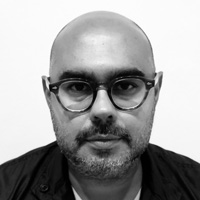
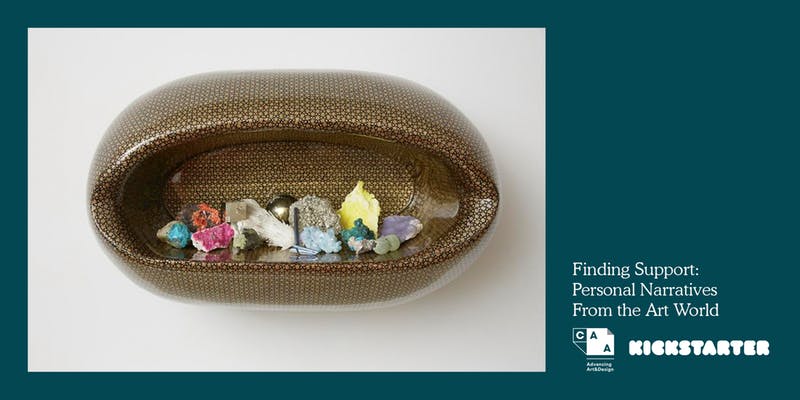
Brooklyn-based artist Andisheh Avini’s (b. 1974) practice includes painting, drawing, and sculpture, and often incorporates the traditional craft of marquetry. Avini explores the duality of his own identity by combining Iranian icons and motifs, from the decorative to the political, with Occidental traditions of minimalism and abstraction. In juxtaposing the sacred geometries of Islamic crafts with the irregularities and chaotic forms of nature, Avini reveals the distances between heritage, expectation, and the rhythms of everyday life. Avini’s approach speaks to a disparate, globalized society of nomads, and reflects a contemporary multicultural experience, marked by both collective and individual memory.
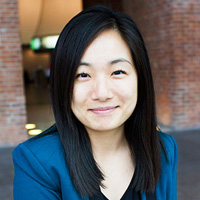
Connie H. Choi is the Associate Curator, Permanent Collection at The Studio Museum in Harlem, where she has worked on the exhibitions Fictions, Regarding the Figure, and Their Own Harlems. She is currently organizing a major traveling exhibition drawn from the museum’s permanent collection. Prior to joining the museum in February 2017, Choi was the assistant curator of American art at the Brooklyn Museum. Choi is a Ph.D. candidate in art history at Columbia University. She received a B.A. in the history of art from Yale University and an Ed.M. from Harvard University.
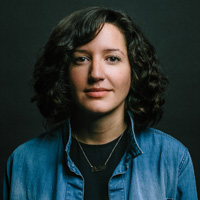
Patton Hindle is the Director of Arts at Kickstarter where she oversees the Arts team which helps visual and performing artists, arts organizations, and cultural institutions realize ambitious projects. Hindle was previously the Director of Gallery and Institutional Partnerships at Artspace and is a founder and current partner at Lower East Side gallery, yours mine & ours. She is a co-author of the forthcoming second edition of How to Start and Run a Commercial Art Gallery. Hindle was raised in London and attended university in Boston.
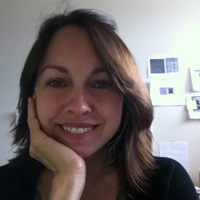
Harper Montgomery teaches in the Art and Art History Department at Hunter College in New York City. She has written for The Art Bulletin, Art Journal, and the Brooklyn Rail; and has organized exhibitions on art of the nineteenth-century, the twentieth-century, and the present for the galleries of Hunter College. Her book The Mobility of Modernism: Art and Criticism in 1920s Latin America was published last year by University of Texas Press and won the Arvey Foundation Book Award for distinguished scholarship on Latin American Art. Her current research concerns the ascent of artesaníawithin contemporary art spaces in Latin America during the 1970s.
Top image credit: Andisheh Avini, Untitled (wood, marquetry, assorted minerals), 2015. Photo credit Emily Hodes, courtesy Marianne Boesky Gallery.
New in caa.reviews
posted Aug 24, 2018
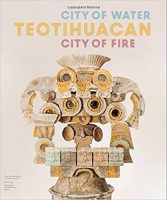
Annabeth Headrick reviews Teotihuacan: City of Water, City of Fire edited by Matthew H. Robb. Read the full review at caa.reviews.
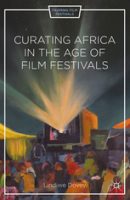
Mahir Șaul discusses Curating Africa in the Age of Film Festivals by Lindiwe Dovey. Read the full review at caa.reviews.
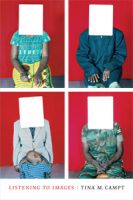
Jerry Philogene examines Listening to Images by Tina M. Campt. Read the full review at caa.reviews.
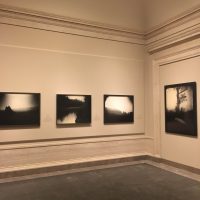
Fred Rush writes about Sally Mann: A Thousand Crossings by Sarah Greenough and Sarah Kennel. Read the full review at caa.reviews.
News from the Art and Academic Worlds
posted Aug 22, 2018
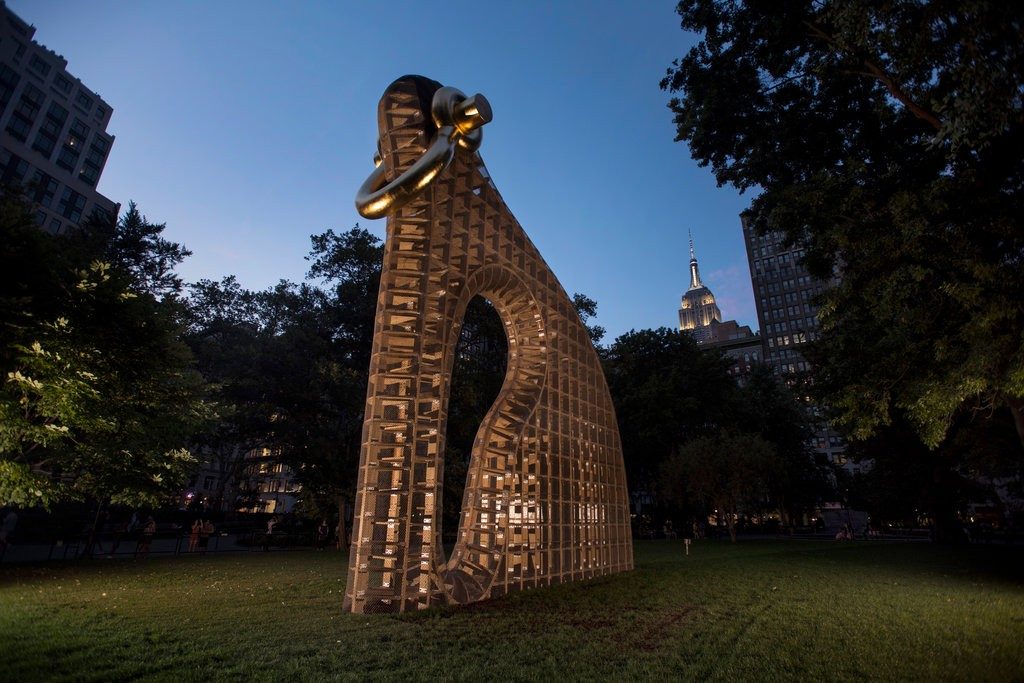
Martin Puryear’s sculpture, Big Bling, in Madison Square Park in 2016. Photo: Philip Greenberg for The New York Times, courtesy the artist and Matthew Marks Gallery
Artist Martin Puryear Chosen for US Pavilion at Venice Biennale
For the second year in a row, an African-American artist will represent the United States. (New York Times)
As Criminalization of the Arts Intensifies in Cuba, Activists Organize
Tania Bruguera and Coco Fusco are among the artists opposing the new legislation. (Hyperallergic)
Public Libraries are Reinventing Access to Higher Education
Bard College and the Brooklyn Public Library will soon launch their “microcollege,” the first ever accredited two-year associate’s degree program in a public library. (Mellon Foundation)
Casanova as Case Study: How Should Art Museums Present Problematic Aspects of the Past?
The Casanova exhibition provided a timely platform to grapple with an important issue. (ARTnews)
Don’t Even Think of Publishing in This Journal
What does it mean when a top journal is too swamped to take on more papers? A major higher education research journal is suspending submissions to clear out a two-year backlog. (Inside Higher Ed)
Uffizi Gallery’s Vast Sculpture Collection Goes Online in Interactive 3D Scans
Thanks to collaboration between the Italian gallery and Indiana University, hundreds of artworks are available as interactive 3D scans. (Hyperallergic)