
CAA News Today
Member Spotlight: Meet New Art Journal Reviews Editor Richard Hylton
posted Mar 17, 2026
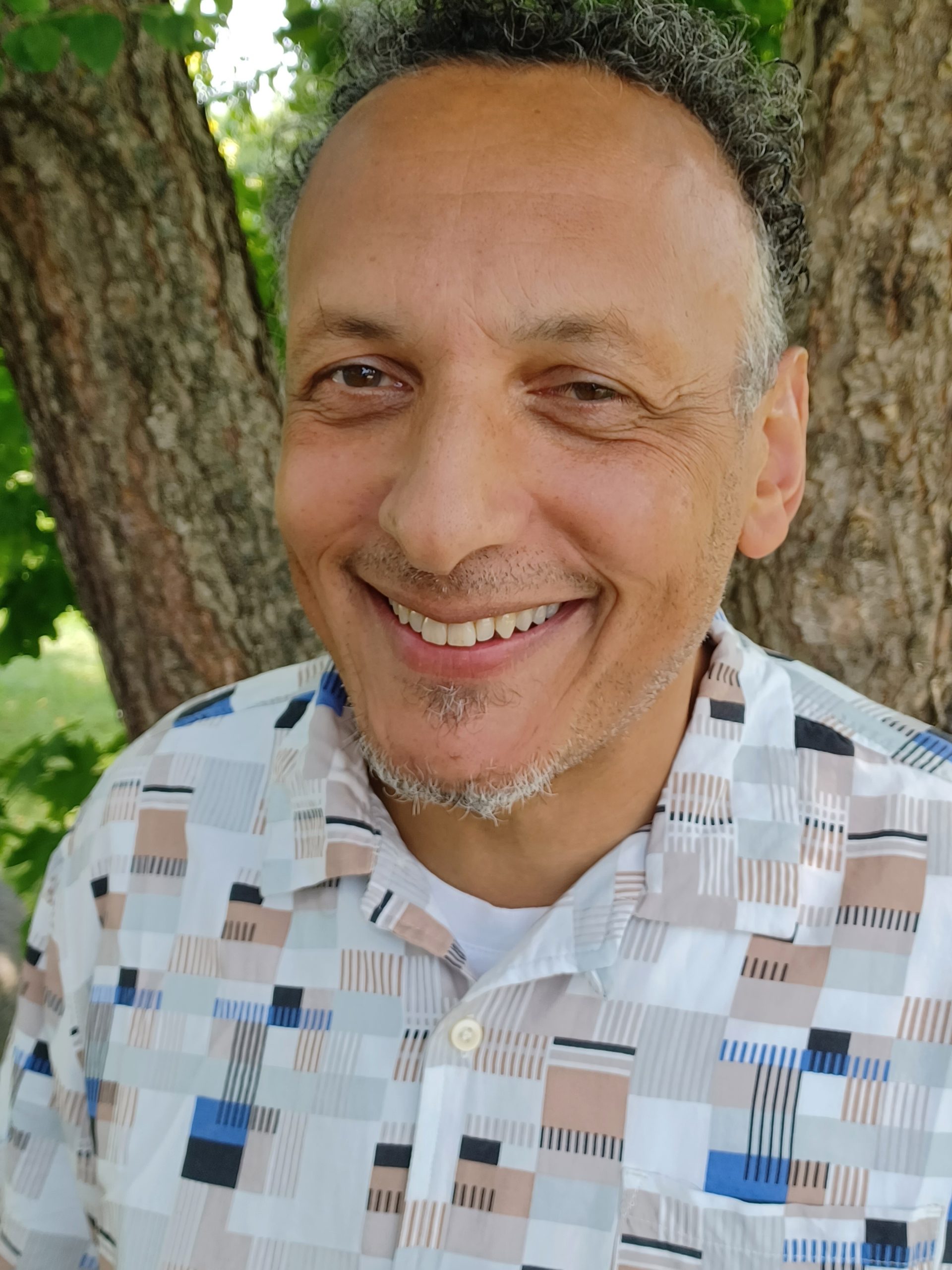
Richard Hylton
Art Journal is pleased to announce its new reviews editor, Richard Hylton. CAA News is happy to introduce him here and has asked him a few questions to help members, readers, and future contributors get to know him a little better. Welcome, Richard!
Tell us about your current academic position and your research interests.
My trajectory into academia is somewhat unconventional, coming from an art school background and then spending many years facilitating and curating exhibitions. I was awarded my PhD from Goldsmiths, in London, in 2018; did postdoc work at the University of Pittsburgh (2019–21); then spent four years teaching at SOAS, London (2021–25). In July 2025, I was appointed Associate Professor in the Department of Art History, at Tyler School of Art and Architecture, Temple University. So, in a roundabout way I’m returning to the US. At Tyler, I contribute to teaching undergraduate and graduate programs, focusing on African diasporic practice which complements the department’s globally orientated syllabi. Currently, I’m aligning teaching fairly closely to areas of my own research, including transatlantic slavery and contemporary art and histories of African American art in the international arena.
Another area of my research concerns the interplay of historical recovery between academia and the museum. This is evident in my recently published book Donald Rodney: Art, Race and the Body Politic (Bloomsbury, 2025) which begins with an examination of the artist’s “posthumous career,” in order to delineate between his lifetime and belated appreciation. How does temporality inform constructions of legacy in art? I’m also interested how contemporary art functions within the ethnographic museum. Beyond the substantial body of critical work rightly being advanced around cultural restitution and plundered artifacts, I am specifically interested in the cultural, social, and economic forces at play when contemporary art practice is thrown into the ethnographic mix. I’m eager to explore how this museological, highly endowed, and often racialized context may or may not inflect the production, collection and reading of contemporary art.
What do you hope to accomplish as Art Journal’s new Reviews Editor? What makes a strong review and who are reviews for?
As Reviews Editor, I certainly hope to continue the good work of my predecessor Balbir Singh. Over the past few years, a key facet of my own work has been to review books and exhibitions. I think it is such a productive and collegial part of being a writer and researcher, to take time away from one’s own research and to engage with the work of other scholars.
The role of Reviews Editor will also enable me to expand my own knowledge and to operate beyond my immediate comfort zones. Bringing attention to scholarly material, be it books or exhibitions, within and beyond the United States, is my goal. I want to commission both book and exhibition reviews to reflect the interplay between academia and museums. I also hope to engage a breadth of scholars, from graduate students and professors to curators and archivists. A good review offers the reader insight integral to which must be critical perspective on any given book or exhibition. How does said book or exhibition fit within and expand the field.
How does your research and public scholarship dovetail with your view of the Reviews section of the journal?
As previously mentioned, the politics of historical recovery in art is an active area of my research. From which positions do acts of historical recovery originate and on whose behalf are they expressed. Such considerations may inform my role as Reviews Editor. The post-2020 world seems to be an important era in which substantial publications and exhibitions, as well as academia, are seeking not only to pluralize art history but also many of art history’s central tenets based on economics, race, gender, etc.
And finally, what are you reading/viewing outside your academic purview these days? What is inspiring you?
My current and future teaching currently demands much of my reading time. But I see this as a good opportunity and excuse to revisit material, relearn, or learn afresh for the classroom and my research. I recently read and reviewed Rebecca Zorach’s Temporary Monuments: Art, Land, and America’s Racial Enterprise (2024) and Eunsong Kim’s The Politics of Collecting: Race and the Aestheticization of Property (2025). In different ways, these two books are bold and insightful acts of historical revisionism and contemporary critique. Other books I’m attempting to read are Black Spartacus: The Epic Life of Toussaint Louverture (2020) by Sudhir Hazareesingh; We Flew Over the Bridge: The Memories of Faith Ringgold (1995); and Jean Toomer: A Hunger for Wholeness by Cynthia Earl Kerman and Richard Eldridge (1987).
Although I am moderately familiar with aspects of Philadelphia’s (art) history—Quakers and slavery, abolitionism, MOVE, Andrea Fraser’s Museum Highlights, Henry Ossawa Tanner, etc.—living here brings a different dimension and perspective to this knowledge. Even the “Sound of Philadelphia,” which, though not an audible presence in the city, was such a part of my growing up in London, offers opportunities for reflection today.