
CAA News Today
Lloyd Engelbrech: In Memoriam
posted Feb 06, 2017
Professor Emeritus, Dr. Lloyd Engelbrecht (1927–2016), died peacefully in his sleep in hospice on New Year’s Eve after battling neuroendocrine cancer for half a year. He was a beloved faculty member of the Art History program at the University of Cincinnati, 1980–2001, where he taught the history of design, and modern art and architecture, and mentored twenty-four M.A. advisees.
He was the author of the first comprehensive, fully-documented biography of László Moholy-Nagy, Moholy-Nagy: Mentor to Modernism (Flying Trapeze Press, 2009) and, with his wife June Engelbrecht, the award-winning biography, Henry C. Trost, Architect of the Southwest (El Paso Library Association, 1981). Together, they also created a catalogue raisonné of the work of Trost and his family firm of Trost & Trost. Additionally, Engelbrecht published essays in Taken by Design: Photographs from the Institute of Design, 1937–1971 (U of Chicago Press, 2002), Best of Triglyph (Arizona State U Press, 2002), The Old Guard and the Avant-Garde: Modernism in Chicago, 1910-1940 (U of Chicago Press, 1990), and 50 Jahre New Bauhaus (Bauhaus-Archiv, 1987). Recently, he was working on a biography of Chicago’s first Modernist painter, Rudolph Weisenborn (1881–1974). Engelbrecht’s publications concerned the influence of the German Bauhaus in the U.S., and he helped mount exhibitions in both American and European museums.
Engelbrecht’s degrees were AB in General Studies, University of California, Berkeley, 1950; MS, Library Science, Columbia University, 1951; and an interdisciplinary doctorate from the Committee on History of Culture at the University of Chicago, University of Chicago, 1973. Engelbrecht received grants from the Graham Foundation for Advanced Studies in the Fine Arts and from the National Endowment for the Humanities.
Engelbrecht was a remarkably kind, generous, and positive man who will be missed by his two daughters, Khadija Engelbrecht Fouad and Julie Rowlands, and their husbands, Aladdin Fouad and David Rowlands, four grandchildren, Omar Fouad, Maryam Fouad, Ibrahim Fouad, and Hussain Fouad, and numerous friends, as well as many devoted former students. He was predeceased by his wife June-Marie Fink Engelbrecht.
Artistic/Academic Freedom Under Attack?
posted Feb 03, 2017
Advocacy has always been part of CAA.
Like many other Americans, we have closely watched the proposed changes to the federal government, its impact on artistic and academic freedom and have grown concerned.
Two weeks ago, I was contacted about a painting properly hanging in a student exhibition in the US Capitol. The painting by eighteen-year-old David Pulphus depicts his insightful point of view regarding circumstances in Ferguson, Missouri. Based on complaints about the painting’s contents, the US government permanently removed it from the exhibition. Grown men with guns felt threatened by a teenager armed only with a paintbrush.
The following week, I was visited by a group of college and university art educators from a variety of public and private institutions who presented shocking stories of threats to their artistic and academic freedom in the classroom. You will be hearing more about their efforts to document institutional and self-imposed censorship in academic settings. As they have said, “Harassment campaigns against targeted professors and institutions are being unleashed with increasing regularity around the country.”
Last week we learned that the newly formed government intends to take steps to defund the National Endowment for the Arts and the National Endowment for the Humanities. CAA President Suzanne Preston Blier and I sent a message on this topic to the entire CAA membership last week.
These are alarming events. For the first time in decades, it appears our artistic and academic freedom is under a coordinated attack. We ask that CAA members vigilantly watch for further infringements. Take steps to reach out to your elected representatives to make your point of view known. Let them know that you are a member of CAA. Together we can work to protect our respective artistic and academic freedoms.
Hunter O’Hanian
Executive Director
Chief Executive Officer
New in caa.reviews
posted Feb 03, 2017
Laura Anne Kalba visits Sonia Delaunay at Tate Modern. The exhibition marked “the first-ever in-depth analysis of the artist’s work in the United Kingdom” and featured “a provocative succession of works of high art, crafts, and industrially produced goods,” which “produced a heightened awareness of the tension between reverence for the unique art object and the allure of the copy.” Read the full review at caa.reviews.
Catherine E. Burdick reads The Spectacle of the Late Maya Court: Reflections on the Murals of Bonampak by Mary Ellen Miller and Claudia Brittenham. In this “thorough text,” the authors “draw from decades of study to advance fresh perspectives regarding the facture, narrative, and reception of these exquisite paintings,” “enriching our knowledge of one of the most complete artworks produced in the pre-Columbian Americas.” Read the full review at caa.reviews.
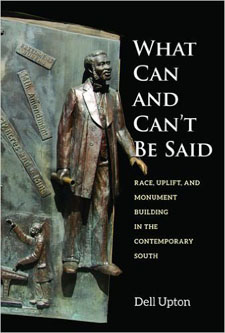 Modupe G. Labode discusses Dell Upton’s What Can and Can’t Be Said: Race, Uplift, and Monument Building in the Contemporary South. A “challenging, carefully argued book,” the volume “explores the meaning of the evolving commemorative landscape” of Confederate and civil rights monuments. Creating a “layered description” of the subject, Upton “reaches unsettling conclusions about race and public life.” Read the full review at caa.reviews.
Robert Bezucha reviews The Museum of French Monuments 1795–1816: ‘Killing art to make history’ by Alexandra Stara. The book traces the history of the “Museum of Monuments,” a “short-lived,” “revolutionary,” and “controversial” institution that, in the words of the author, “heralded the modern understanding of artifact-based history.” Read the full review at caa.reviews.
Scholars and Artists Impacted by Travel Ban
posted Feb 02, 2017
Like many around the world, CAA is concerned with the direction the current US government has taken with regard to international travel in and out of the United States. We view this as having a potentially chilling effect on artistic and academic freedoms. CAA has taken a stand in strong opposition to the current executive order.
However, we would like to do more if we can. If you are planning to attend the 2017 Annual Conference from another county and have been impacted by the travel ban we ask that you contact us immediately. Email our membership department or call 212-691-1051, ext. 1. We will endeavor to assist you in any way we can.
You may also use this Google Form to submit a query if you have been impacted by the immigration ban.
CAA Seeks Advertising Sales Rep
posted Feb 02, 2017
Part-time and commission based
The College Art Association (CAA), a membership and advocacy organization for those working in the visual arts, seeks a part-time advertising sales rep with media sales experience in both print and digital platforms. The ideal candidate should have established contacts in the arts and culture publishing landscape and in the wider culture field. She/he will have the mindset to strategically target prospective clients to build relationships that support CAA’s prestigious publications and events with a strong ad sales program.
The advertising sales rep would work primarily on CAA’s two flagship print journals, The Art Bulletin and Art Journal, with some work on CAA’s digital reviews platform, caa.reviews. Additional work would include selling ads for the graduate program directories and the CAA Annual Conference. Candidates for the position should have experience in billing clients, advertising proposal creation, and proper tracking of invoices and payments.
This is a part-time, commissioned-based position. The position reports to the Director of Communications and Marketing.
DUTIES AND RESPONSIBILITIES
- Manage relationships with current advertising clients and develop strategy for new client growth
- Work closely with staff across all departments to create client strategy aligned with journals, website content, and programs
- Produce client contracts for ad sales
- Oversee invoicing and record keeping for ad sales on journals and relevant websites
- Report and present on ad sales program and results to staff members and constituents
- Work with publications department staff and in-house graphic designer on ad placement and design as needed
- Other duties as assigned or requested
QUALIFICATIONS
- At least 2 years of ad sales or comparable experience
- A warm and welcoming personality that encourages relationship building
- Established relationships with advertisers and companies in the arts and culture field
- Proven track record of closing new business and maintaining current business
- Exceptional written/verbal communication skills
- Ability to work independently, organize multiple concurrent tasks, work efficiently, and follow through on details
- Experience with spreadsheets, systems, and database management and generally accepted programs and office equipment required
- BS/BA degree or equivalent preferred
Send resume and cover letter to nobourn@collegeart.org with the subject line “CAA Ad Sales Rep.”
This job description is intended as a summary of the primary responsibilities of and qualifications for this position. The job description is not intended as inclusive of all duties an individual in this position might be asked to perform or of all qualifications that may be required either now or in the future.
The College Art Association is an equal opportunity employer and considers all candidates for employment regardless of race, color, sex, age, national origin, creed, disability, marital status, sexual orientation, gender expression, or political affiliation.
CAA Statement on Immigration Ban
posted Feb 01, 2017
The College Art Association (CAA), the largest professional group for artists and art historians in the United States, strongly condemns and expresses its grave concern about the recent presidential executive order aimed at limiting the movement of members of CAA and the broader community of arts professionals who fall under the selective set of criteria for national status or ethnic affiliation.
CAA has counted international scholars and artists among its members for many years. Committed to the common purpose of understanding the visual arts in all its forms, professionals throughout the world have enriched CAA’s community by adding diverse perspectives to the study, making, and teaching of art. With funding in recent years from the Getty Foundation to support travel and programs for scholars and curators from Africa, Latin America, Russia and Eastern Europe, and Asia, the association now includes members from seventy countries. More than ten percent of our individual members are international. CAA has counted international scholars and artists among its members since the earliest years of its existence. The roots of CAA’s present-day international program stemmed from a desire to assist European refugees in the 1930s to support personal safety as well as academic and artistic freedom. During that decade, CAA had a “foreign membership” category; as art historians fled Hitler’s Europe, CAA ran a lecture bureau for refugee scholars that created speaking engagements for them at institutions throughout the United States.
The recently announced ban on travel to the United States for residents of seven predominantly Muslim countries not only goes against the inclusive, secular underpinnings of American democracy, it stifles the open access to scholarship and art upon which our work is founded. The executive order goes against our professional and scholarly commitment to diversity, the global exchange of ideas, and the respect for difference. The contribution of immigrants, foreign nationals, and people of all cultural backgrounds greatly strengthens our intellectual and creative world. Further, we believe the executive order law challenges the values at the heart of the US Constitution’s protections on speech and association as well as our national commitment to democratic process for all.
Turning our backs on refugees and closing our borders selectively stifles creative and intellectual work in addition to its very real impact on peoples’ daily lives. We call on our public officials to thwart this attempt to seemingly preserve our own safety at the expense of those who are vulnerable and who also contribute so much.
Without question, CAA welcomes all members and non-members to our upcoming Annual Conference to discuss and debate what constitutes a thriving artistic and intellectual society. Such openness is essential to our mission. We are committed through dialogue and action to help any CAA members who are affected by this policy. To this end, the association and the Board of Directors will continue to monitor and respond to policies related to this order as well as pressure for its immediate repeal.
 Suzanne Preston Blier President |
Hunter O’Hanian Executive Director Chief Executive Officer |
News from the Art and Academic Worlds
posted Feb 01, 2017
Each week CAA News summarizes eight articles, published around the web, that CAA members may find interesting and useful in their professional and creative lives.
What You Need to Know about Colleges and the Immigration Ban
President Trump’s executive order that bars all refugees from entering the US, as well as citizens from seven majority-Muslim countries, prompted colleges to frantically start trying to determine what it meant for them. Who is affected? (Read more from the Chronicle of Higher Education.)
Karen Finley: Donald Trump Owes His Wealth to Arts and Culture
Donald Trump is reportedly considering stripping the budgets for the NEA, the NEH, and the Corporation for Public Broadcasting. This would have devastating consequences for our society; for the many economies connected to promoting cultural heritage, innovation, and production; and to the many municipalities and neighborhoods that depend on cultural institutions for survival. We might ask how the arts have personally enriched the president. (Read more from Time.)
How the NEA’s Budget Nearly Got Slashed in the Early ’90s
Recent reports indicate that the Trump administration has plans to potentially eliminate the NEA and NEH. For many, the notion has recalled events that happened between 1989 and 1991, when the NEA faced backlash from conservative politicians who were concerned that it was funding work by liberally minded artists like Robert Mapplethorpe, Dread Scott, and Andres Serrano. (Read more from ARTnews.)
Those Pink Hats at the Women’s March Can Teach Us Something about Political Art
At Saturday’s supermarch, the sight of a vast sea of pink knit hats seemed almost magical. They were everywhere—hundreds of thousands of handmade caps, flooding the National Mall as far as the eye could see. They were immediately recognized as a natural rejoinder to Donald Trump’s Make America Great Again cap. (Read more from Artnet News.)
75 Arrested in European Crackdown on Art Trafficking
The European police have arrested seventy-five people and recovered about 3,500 stolen archaeological artifacts and other artworks as part of the dismantling of an international network of art traffickers. The criminal network handled artworks looted from war-stricken countries, as well as works stolen from museums and other sites. (Read more from the New York Times.)
Are Artists’ Estates Too Protective of Artists’ Reputations?
The job of managing an artist’s reputation is now big business, with many estates operating along increasingly professional lines. How far should they seek to control public perceptions of an artist’s life and work? (Read more from Apollo Magazine.)
Dear Scholars, Delete Your Account at Academia.edu
As privatized platforms like Academia.edu look to monetize scholarly writing even further, researchers, scientists, and academics across the globe must now consider alternatives to proprietary companies that aim to profit from our writing and offer little transparency as to how our work will be used in the future. (Read more from Forbes.)
The Job-Market Moment of Digital Humanities
Digital humanities present new ways to approach the work of humanities scholarship, and they’ve already delivered not just new results but new kinds of results. They have also become integrated into the academic job market. Will expertise in digital humanities get graduate students the academic jobs that so many of them seek? (Read more from the Chronicle of Higher Education.)
Artifex Press Catalogues Raisonnés – Introductory Webinar Invitation
posted Jan 27, 2017
 Artifex Press, a publisher of digital catalogues raisonnés, is proud to launch their subscription service in February 2017. Currently available are catalogues raisonnes for Chuck Close, Jim Dine, and Tim Hawkinson; and in February 2017 they will release Agnes Martin and James Siena; later in 2017 they will publish Sol LeWitt and Lucas Samaras. Sign up for an introductory webinar about their platform, including a presentation by Tiffany Bell, Editor of their Agnes Martin Paintings catalogue and co-curator of the traveling 2015 – 2017 Agnes Martin Retrospective, which began at the Tate and just closed at the Solomon R. Guggenheim Museum.
Don’t forget to also visit their booth (#1111) at the 2017 CAA Conference!
New in caa.reviews
posted Jan 27, 2017
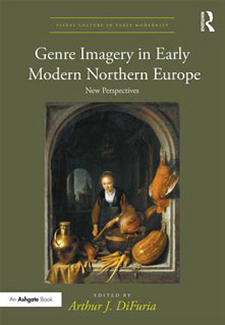 Wayne Franits reviews Genre Imagery in Early Modern Northern Europe: New Perspectives, edited by Arthur J. DiFuria. The eight essays “challenge” and “transcend” traditional studies on this topic “by exploring the complex, heterogeneous reception of such imagery among early modern viewers,” and they achieve this “noteworthy goal” with “varying degrees of success.” Read the full review at caa.reviews.
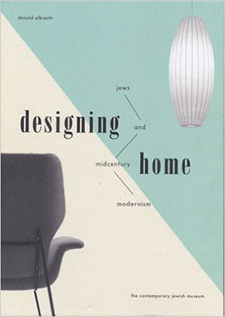 Deborah Lewittes discusses the exhibition catalogue for Designing Home: Jews and Midcentury Modernism, produced by the Contemporary Jewish Museum in San Francisco. Offering “a fresh take on the popular topic of twentieth-century domestic design,” the “elegant” and “graphically stunning” book is “a work of scholarly importance” and “provides interesting cultural tidbits.” Read the full review at caa.reviews.
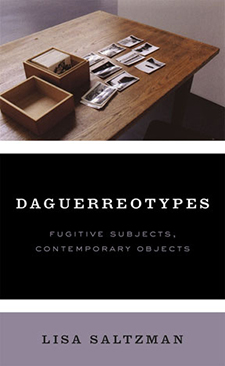 Astrid Köhler examines Daguerreotypes: Fugitive Subjects, Contemporary Objects by Lisa Saltzman. The volume “distinguishes itself from most other theories of photography, both in content and approach, via a lucid analysis” that “brings together heterogeneous objects that share a distinctive relation to time, identity, and memory.” Read the full review at caa.reviews.
News from the Art and Academic Worlds
posted Jan 25, 2017
Each week CAA News summarizes eight articles, published around the web, that CAA members may find interesting and useful in their professional and creative lives.
Does Private Funding Threaten Museums’ Public Missions?
With an incoming presidential cabinet threatening to slash public spending, placing additional strain on institutions, one might well ask: How will the next generation of museums be funded? What changes in museum funding models are already taking place, both in the US and elsewhere? (Read more from Artsy.)
Some Advice on Building Conference Panels
Some of the best panels I’ve created have been with very senior scholars. Even if you are a junior scholar, you can bet that if your panel is well assembled and you craft your approach email with kindness and respect, it’s very likely that invited senior scholars may say yes. (Read more from Raul Pacheco-Vega, PhD.)
Study on Arts Graduates Provides Continuing Evidence on the Value of an Arts Degree
A recent study provides new evidence that individuals with degrees in the arts from North American institutions are extremely satisfied with their arts education, with no substantive changes across income levels and employment status. The report analyzes data from more than 35,000 arts alumni of all ages who responded to a fall 2015 survey. (Read more from the Strategic National Arts Alumni Project.)
Against the Design Thinking Meeting
The people who speak the language of design thinking are the cool kids. Not just the people with the awesome glasses and the black clothing. These are the people who have those awesome jobs with “innovation” or “disruption” on their business cards. (Read more from Inside Higher Ed.)
Artists Are Throwing Wrenches into the Art World’s Works
Even as one visible portion of the art world becomes ever more soaked in money, artists are picking up the ideas of first- and second-generation institutional critique and adapting them to the needs of the present. With increasing frequency, they are investigating, tweaking, and even striking out against the operation of museums, galleries, and the market as an integral part of their larger practices. (Read more from ARTnews.)
The Institution as User: Museums on Social Media
How does a museum talk? Its voice lives in wall texts, whether they deliver art history or gently admonish against touching work or using flash photography. Its tone has to be serious enough to honor the histories it was built to protect, and to convince visitors that the twenty dollars they paid to get in was well spent. (Read more from Art in America.)
Diversity in the Open-Access Movement, Part 1: Differing Definitions
Not only is there wide disagreement as to what “freely available” in open access really means, but not everyone in the movement even agrees that all scholarship must be freely available, or how quickly it should be made freely available, or what mechanisms are appropriate for making it that way. Since the fact of this ideological diversity doesn’t seem to be self-evident, it might be helpful to lay out some evidence for it here. (Read more from the Scholarly Kitchen.)
Strengthening Networks, Sparking Change: Museums and Libraries as Community Catalysts
A new report from the Institute of Museum and Library Services includes case studies and a discussion of conceptual frameworks that can guide libraries, archives, and museums that seek to spark catalytic change in their communities. (Read more from the Institute of Museum and Library Services.)