CAA News Today
New in caa.reviews
posted Nov 04, 2016
Vanessa R. Schwartz discusses the exhibition Revolution of the Eye: Modern Art and the Birth of American Television, organized by the Jewish Museum. “Television clips, furniture, artwork, and ephemera” offer insights into the “bygone age of television,” a revolutionary moment that “included the celebratory embrace of the breakdown between art, commerce, and entertainment.” Read the full review at caa.reviews.
Liz Glass reviews Seth Price’s book Fuck Seth Price, a “self-declared novel” though it “is not a novel in any recognizable sense . . . but rather a somewhat schizophrenic deluge of thoughts on art—and particularly painting—and the future of the artist in the age of the ‘digital.’” Although the “universalizing tone becomes tiresome,” his approach to the novel “is full of contemplation, contradiction, and contrivance.” Read the full review at caa.reviews.
Rachel Silberstein visits China: Through the Looking Glass, an exhibition curated by Andrew Bolton at the Metropolitan Museum of Art. An “exploration of how Chinese dress and aesthetics have influenced the Western fashion world,” the show “innovates in two primary respects,” but does not “allow the audience to explore fashion as a more complex and historical object.” Read the full review at caa.reviews.
Caa.reviews publishes over 150 reviews each year. Founded in 1998, the site publishes timely scholarly and critical reviews of studies and projects in all areas and periods of art history, visual studies, and the fine arts, providing peer review for the disciplines served by the College Art Association. Publications and projects reviewed include books, articles, exhibitions, conferences, digital scholarship, and other works as appropriate. Read more reviews at caa.reviews.
New Content on Art Journal Open
posted Nov 03, 2016
Art Journal Open has recently published new content. Below are the introductory sentences of an essay, an annotated bibliography, and an artist’s project.
Kate Costello
Artist Kate Costello has created a unique animation of her limited edition book, P&P, for Art Journal Open. Costello has taken P&P—which can be read as a compendium of process images (sketches, notes)—full circle by animating and translating the analogue process of paging through the book into a digital form. This project also includes an excerpt from “The Space of the Image” by curator Rita Gonzalez, and an introduction by Art Journal Open’s web editor, Gloria Sutton. Read the full article on Art Journal Open.
Penelope Vlassopoulou
Penelope Vlassopoulou began her Metamorphosis series in her home city of Athens. The series evolved in multidisciplinary dialogue with diverse urban environments including Berlin, Belgrade, and Chicago. In March 2015, Metamorphosis returned to its point of origin with no water tracing a link between Greece’s historical past and the country’s current predicament. Read the full article on Art Journal Open.
Elizabeth Mangini
“Solitary/Solidary: Mario Merz’s Autonomous Artist”
In 1968, while demonstrating students occupied university buildings less than a mile away, the Italian artist Mario Merz hung a handful of neon lights bent into the numerals 1, 1, 2, 3, and 5 above the kitchen stove in his home on Via Santa Giulia in Turin. It wasn’t yet an artwork, just something to think about in the place where he and his wife, fellow artist Marisa Merz, gathered to talk with each other and with friends. Read the full article on Art Journal Open.
Roger F. Malina
“Art-Science: An Annotated Bibliography”
We are witnessing a resurgence of creative and scholarly work that seeks to bridge science and engineering with the arts, design, and the humanities. These practices connect both the arts and sciences, hence the term art-science, and the arts and the engineering sciences and technology, hence the term “art and technology.” Read the full article on Art Journal Open.
News from the Art and Academic Worlds
posted Nov 02, 2016
Each week CAA News summarizes eight articles, published around the web, that CAA members may find interesting and useful in their professional and creative lives.
Net Art Anthology Launches
Net Art Anthology, Rhizome’s two-year online exhibition presenting one hundred works of restored and reperformed net art, has launched. The project will be divided into five chapters: early network cultures and early web; Flash and blogs; surf clubs, early postinternet art, and social-media platforms; and mobile apps and social-media saturation. (Read more from Rhizome.)
Artificial Intelligence as a Bridge for Art and Reality
How to get people interested in art? How to engage millennials? How to expose permanent-collection works that sit in storage? These are questions art museums constantly ponder. Recently, Tate Britain asked another one: How can artificial intelligence help? (Read more from the New York Times.)
MIT Task Force Releases Preliminary “Future of Libraries” Report
An MIT task force has released a preliminary report featuring proposals to help the school’s library system become an “open global platform” enabling the discovery, use, and stewardship of information and knowledge for future generations. The report contains recommendations to develop a global library for a global university while strengthening the library’s relationship with local academic and public communities. (Read more from MIT News.)
Help Desk: Breaking Up Is Hard to Do
Simple in theory, painful in practice—but the way to break up a collaborative partnership is the same as for a romantic one: with as much honesty and compassion as you can muster. If you’re splitting up to pursue solo projects, then you have to say so; if you’ve found a new collaborator, you’ll need to announce it. (Read more from Daily Serving.)
Why Are Some Artists Remembered More Than Others?
Every year, thousands of art-school graduates across the globe embark on their careers in the hopes of becoming professional artists. With the influx of new talent, older generations inevitably make way. But why are some artists remembered and revered, while others remain forgotten? (Read more from Artnet News.)
How Important Is Art History in Today’s Market?
“Rembrandt weeps.” “The humanities are under assault.” “An educational disaster.” These were just a few of the howls of online dismay that followed the announcement that AQA, the last examining board offering History of Art as an A-level test to 16- to 18-year-olds in England, Wales, and Northern Ireland, would be dropping the subject. The small number of students taking the subject and its wide range of topics had made it difficult to compare exam performance, the board explained. (Read more from the New York Times.)
The Remix Wars: Originality in the Age of Digital Reproduction
Is there nothing new under the sun? In the first of a series of articles, New Atlas will examine how twenty-first-century digital technology has given artists a set of tools that has dismantled traditional definitions of originality and is challenging the notions of copyright that dominated much of the twentieth century. (Read more from New Atlas.)
MoMA Curator Laura Hoptman on How to Tell a Good Painting from a “Bogus” Painting
A veteran organizer of cutting-edge exhibitions, Laura Hoptman built her career in part through her insistence on championing the medium, even—or perhaps especially—through its perennial periods of unpopularity and critical disdain. This has earned her both accolades and scorn, but her track record of introducing vital contemporary painters to American audiences largely speaks for itself. (Read more from Artspace.)
Art Journal Seeks Web Editor
posted Nov 01, 2016
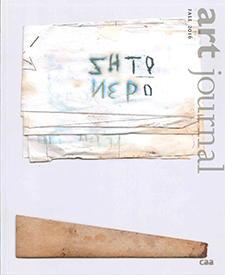 The Art Journal Editorial Board invites nominations and self-nominations for the position of web editor for the term of July 1, 2017–June 30, 2020. A candidate may be an artist, art historian, critic, educator, curator, or other art professional; institutional affiliation is not required. Art Journal Open is an independently edited companion of the quarterly Art Journal; it is likewise devoted to twentieth- and twenty-first-century art and visual culture. Content is published on a continual, rolling basis.
Working with the editorial board, the web editor is responsible for commissioning all content for the Art Journal Open website. He or she solicits or commissions projects, texts, images, and time-based content by artists and other authors, and determines the appropriate scope and format of each project. In consultation with the editor-in-chief and editorial board, the web editor determines which pieces should undergo peer review and subsequent revision before acceptance for publication. The web editor also works with authors and a CAA staff editor on the development and preparation of materials for publication. The editorial board expects that a major portion of the website projects will be by artists or geared to the concerns of artists and that the web editor will endeavor to give voice to under-represented perspectives. Qualifications for the position include a broad knowledge of current art, the ability to work closely with artists in a wide variety of practices, and experience in developing content for an arts website. The three-year term includes membership on the Art Journal Editorial Board and an annual honorarium, paid quarterly.
The web editor attends the three meetings each year of the Art Journal Editorial Board—held by teleconference or in New York in the spring and fall, and at the CAA Annual Conference in February—and submits an annual report to CAA’s Board of Directors.
Candidates must be current CAA members and should not serve concurrently on the editorial board of a competitive journal or on another CAA editorial board or committee. The web editor may not publish her or his own work in the journal or on the website during the term of service. Nominators should ascertain a nominee’s willingness to serve before submitting a name; self-nominations are also welcome. Please send a letter describing your interest in and qualifications for the position, a CV, and at least one letter of recommendation to: Art Journal Web Editor Search, College Art Association, 50 Broadway, 21st Floor, New York, NY 10004; or email the documents to Joe Hannan, CAA editorial director. Deadline: January 9, 2017; finalists will be interviewed on February 15 in New York or via Skype.
caa.reviews Seeks Field Editors for Books and Exhibitions
posted Oct 31, 2016
caa.reviews invites nominations and self-nominations for individuals to join its Council of Field Editors, which commissions reviews within an area of expertise or geographic region, for a term ending June 30, 2019. An online journal, caa.reviews is devoted to the peer review of books, museum exhibitions, and projects relevant to art history, visual studies, and the arts.
The journal seeks field editors to commission reviews of books in museum studies and of exhibitions on the West Coast, in the Midwest, and in Europe. Candidates may be artists, art or design historians, critics, curators, or other professionals in the visual arts; institutional affiliation is not required.
Field editors select content to be reviewed, commissions reviewers, and reviews manuscripts for publication, working with the journal’s editor-in-chief, editorial board, and CAA staff editor as necessary. Field editors for books are expected to keep abreast of newly published and important books and related media in their fields of expertise, and field editors for exhibitions should be aware of current and upcoming exhibitions (and other related projects) in their geographic regions. The Council of Field Editors meets annually at the CAA Annual Conference.
Candidates must be current CAA members and should not serve concurrently on the editorial board of a competitive journal or on another CAA editorial board or committee. Nominators should ascertain their nominee’s willingness to serve before submitting a name; self-nominations are also welcome. Please send a statement describing your interest in and qualifications for appointment, a CV, and your contact information to: caa.reviews Editorial Board, College Art Association, 50 Broadway, 21st Floor, New York, NY 10004; or email the documents to Deidre Thompson, CAA publications assistant. Deadline: January 15, 2017.
New in caa.reviews
posted Oct 28, 2016
Hollis Clayson reads The Work of Art: Plein-air Painting and Artistic Identity in Nineteenth-Century France by Anthea Callen. The “impressive book, chockablock with technical information,” views “the visible painted mark” as not only an “index of an artist’s working methods and tools, but also the inescapable sign of the painter’s aesthetic, social, and institutional allegiances.” Read the full review at caa.reviews.
Claire Grace discusses Taryn Simon: Paperwork and the Will of Capital, an exhibition hosted at Gagosian Gallery, New York. Grace focuses on twelve sculptures that feature plant specimens yet spring “from the world of geopolitics and trade.” Although sculpture “is a departure for Simon,” the series “extends the research-driven, post-documentary axis of her photography-based practice.” Read the full review at caa.reviews.
James Housefield reviews Ruth E. Iskin’s The Poster: Art, Advertising, Design, and Collecting, 1860s–1900s. This “engaging and readable book” “rethinks the role of print media in the creation and transformations of modern art.” Arguing “persuasively for renewed examination of posters” in visual culture, the volume “contributes to the history of modern art, writ large.” Read the full review at caa.reviews.
Jessica N. Richardson examines From Giotto to Botticelli: The Artistic Patronage of the Humiliati in Florence by Julia I. Miller and Laurie Taylor-Mitchell. “A long-awaited study,” the book “traces the entire span of Humiliati art at a single location.” It “provides another model for breaking down period boundaries and envisaging images and objects as communicating through the centuries.” Read the full review at caa.reviews.
Caa.reviews publishes over 150 reviews each year. Founded in 1998, the site publishes timely scholarly and critical reviews of studies and projects in all areas and periods of art history, visual studies, and the fine arts, providing peer review for the disciplines served by the College Art Association. Publications and projects reviewed include books, articles, exhibitions, conferences, digital scholarship, and other works as appropriate. Read more reviews at caa.reviews.
Staff Interview: Paul Skiff
posted Oct 27, 2016
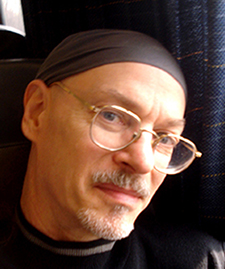 Paul Skiff
As part of the new myCAA campaign where we ask our members to share with us what CAA means to them, we thought it also makes sense to share with our members more about ourselves at CAA. In this spirit, every few weeks we will post an interview with a staff member at CAA. We want our members to know who we are also.
Our first interview in the series is with Paul Skiff, assistant director for Annual Conference.
How long have you worked at CAA?
Seventeen years.
What do you do at CAA?
I handle all space use for the Annual Conference: facility specification and coordinating with facility personnel, logistics, service providers, production, marketing, and sponsorships for the Book and Trade Fair, receptions, tours, onsite direction, and the task of working up budgets for all of this. Essentially I set up the arrangements that enable us at CAA to coordinate everyone and everything into and out of the conference.
What does CAA mean to you?
CAA is a leading international organization promoting visual art and culture in a way that has direct impact on society. The conference brings together the membership, along with related professions, for a large public event that gives a high profile to the cultural sector of the host city and contributes to defining the forward direction of culture in general.
Can you talk about one of your favorite member moments?
Too many to mention, really. CAA members are so frequently a great pleasure to work with no matter what the situation. At its base the organization is a collective, and that really guides so much of what members bring.
What do you like best about the arts and working in the arts?
Art, and culture in general, provides a basis for unity across social, cultural, national, and political boundaries. In the urban culture of the United States, cultural practice is seen as an open forum with authority to comment upon—and provide a way for coping with—the prevailing conditions of the time. Applied this way, cultural practices have as their main goal establishment of a democratizing equality. What I like about one part of the particular work I do in the arts with CAA is that my efforts serve to create opportunities for thousands of people involved in art and culture. Over my time working with CAA, this has amounted to providing a wide variety of opportunities for literally tens of thousands of people involved with art and culture.
Do you have a favorite moment from the Annual Conference each year?
The closing celebration for department staff after sessions conclude on the last day of the conference, when a year’s worth of hard work is complete and you know thousands of people had a pleasurable and fulfilling experience.
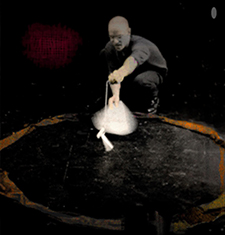 Video capture of Paul Skiff’s performance Blood Circle
What have your most recent performances consisted of?
My most recent performances have been straightforward presentations of texts and poetry spoken live, often with supplemental sound, and mostly presented for community-based cultural organizations with a vision for preserving, promoting, and strengthening local culture.
How do you feel about the differences between your art performed live or recorded on tape?
My live performance often incorporates recorded sound and images, so it is not that easy to separate the two modes of presentation. But to consider electronically recorded material separately, there is of course a vast difference with regard to the resultant sensory phenomenon. The main strength of actual live, spoken work is its generative quality, its immediacy, and its ability to create a “hearership” that can challenge existing listening institutions. With electronically recorded sound and/or images you have the rather endlessly deep toolbox of technology, which mostly amounts to applying exaggeration and distortion to live forms, and playing with time, as well as simply preserving information for transmission. I’m not saying anything profound by that, of course. Applying technology to a live performance enables an extension and transformation of form that allows for many different and new ways to present the work, seek a broader audience, and invent ever more creative solutions.
The creation of electronic information along with storage and retrieval is the most expansive creative environment for us now. At this point in our history telelectricentrism is second nature. Humanity has adapted to this so that forms of experience based on electronic image and sound increasingly dominate everyday life. We are still discovering how this is an asset and liability. It has mixed results and risky implications for our ability to really communicate. But in this for me is a great and absorbing task of applying these distorting and exaggerating technologies to instill acts of rehumanizing our culture. It’s kind of like taking something inherently dangerous and reshaping or repurposing it to provide pleasure, fulfillment, and a greater sense of shared well-being—not to mention preserving and strengthening our sense of self-worth.
News from the Art and Academic Worlds
posted Oct 26, 2016
Each week CAA News summarizes eight articles, published around the web, that CAA members may find interesting and useful in their professional and creative lives.
Doubts about Date: 2016 Survey of Faculty Attitudes of Technology
Most faculty members say data-driven assessments and accountability efforts aren’t helping them improve the quality of teaching and learning at their colleges and universities, according to the 2016 Survey of Faculty Attitudes on Technology. Instead, instructors and many academic technology administrators say the efforts are mainly designed to satisfy accreditors and politicians. (Read more from Inside Higher Ed.)
The Next Step in Diversifying the Faculty
These days there’s no escaping discussions about the need to diversify academe. So it should be. A recent addition to this brimming conversation was a widely discussed essay in The Hechinger Report from Marybeth Gasman, in which she argued that there aren’t more people of color on faculties for a simple reason: colleges and universities don’t want them. (Read more from the Chronicle of Higher Education.)
After a Decade of Growth, MFA Enrollment Is Dropping
Across the country, art schools have minted a growing number of visual art MFA programs over the last ten to fifteen years. Many of them now face a challenge, as application numbers and enrollment figures are falling, according to the better part of a dozen insiders who spoke to Artnet News, some of them on condition of anonymity. (Read more from Artnet News.)
David Salle’s How to See, a Painter’s Guide to Looking at and Discussing Art
The painter David Salle, in his new book How to See: Looking, Talking, and Thinking about Art, goes bravely in search of happiness. His quarry is aesthetic bliss. Salle’s mission is to seize art back from the sort of critics who treat each painting “as a position paper, with the artist cast as a kind of philosopher manqué.” (Read more from the New York Times.)
Toxic Art: Is Anyone Sure What’s in a Tube of Paint?
Artists get called many things—geniuses, madmen, rebels, unemployed—but rarely chemists. Painters, however, increasingly find that they need a degree in organic chemistry when they go to an art-supply store and try to buy a tube of paint. (Read more from the New York Observer.)
How to Work in the Art World without Selling Out Your Politics
What if you realized that an entire community of people were underrepresented in the arts, so you created your own area of study in college to push their work to the forefront? What if you spent the next thirty years trying to change the ratio? Would you have the perseverance to get there? (Read more from New York.)
Why Attend Conferences as a Freelance Academic?
Attending a conference without an institutional affiliation can feel alienating. That alienation, combined with the fact that many freelance academics are no longer searching for faculty positions, can make conferences seem like a colossal waste of time and money. What could you possibly contribute? (Read more from Vitae.)
Missing Out on the Fear of Missing Out
There are three openings tonight in three different parts of the city and it’s only possible to do one. Your old friend, your new friend, and the hip space that just opened. Now make a choice. Was it the right one? (Read more from Momus.)
New in caa.reviews
posted Oct 21, 2016
Melanee C. Harvey reviews The Divine Comedy: Heaven, Purgatory and Hell Revisited by Contemporary Artists, an exhibition catalogue edited by Mara Ambrožič and Simon Njami. The volume expands on three exhibitions—each dedicated to a realm of the afterlife—and illuminates “the potential aesthetic and conceptual configurations in contemporary art that undermine parochial notions of African art.” Read the full review at caa.reviews.
Danielle Carrabino reads Faith, Gender and the Senses in Italian Renaissance and Baroque Art: Interpreting the Noli me tangere and Doubting Thomas by Erin E. Benay and Lisa M. Rafanelli. Comparing the two religious narratives, the authors combine “feminist theory and notions of reception” to argue that gender dictates the way Mary Magdalene and Thomas “experience the resurrected body.” Read the full review at caa.reviews.
Allison Myers discusses International Pop, a traveling exhibition organized by the Walker Art Center. The “ambitious show” aims to “overturn the idea of Pop as a primarily American and British movement by redefining it as a fluid sensibility with international reach.” At the Dallas Museum of Art, the layout “underscores the exhibition’s stakes in the conversation on global art history.” Read the full review at caa.reviews.
Caa.reviews publishes over 150 reviews each year. Founded in 1998, the site publishes timely scholarly and critical reviews of studies and projects in all areas and periods of art history, visual studies, and the fine arts, providing peer review for the disciplines served by the College Art Association. Publications and projects reviewed include books, articles, exhibitions, conferences, digital scholarship, and other works as appropriate. Read more reviews at caa.reviews.
News from the Art and Academic Worlds
posted Oct 19, 2016
Each week CAA News summarizes eight articles, published around the web, that CAA members may find interesting and useful in their professional and creative lives.
“All art is political”: A Conversation with Hank Willis Thomas
Cofounded in January by Hank Willis Thomas as the first artist-run super PAC, For Freedoms has been working tirelessly to engage the public in critical discourse about our political system. For those unfamiliar, a super PAC is an independent political action committee that can raise unlimited funds from corporations, unions, associations, and individuals. (Read more from Arts ATL.)
Make No Mistake, Art History Is a Hard Subject. What’s Soft Is the Decision to Scrap It
In the UK, art history A-level is to be scrapped in 2018. The decision taken by the exam board AQA seems related to the Conservative government’s policy of ranking subjects by perceived relative difficulty, using an analogy of “soft” and “hard” that may be designed to belittle students and teachers who have apparently taken the easy way out. (Read more from Apollo.)
Where Social-Media Sensation Kimberly Drew Sees the Art World in Ten Years
Kimberly Drew stands as one of black contemporary art’s most visible champions. With north of 100,000 followers subscribed to her Instagram handle alone—joined by thousands more across Twitter and Facebook—Drew’s presence is fortified by the type of institutional sheen that comes with running the Metropolitan Museum of Art’s social-media channels. (Read more from Artnet News.)
How Many Hours a Week Should Academics Work?
How many hours do you work in a week? Many academics feel overworked and exhausted by their jobs. But there is little evidence that long hours lead to better results, while some research suggests that they may even be counterproductive. (Read more from Times Higher Education.)
Tasked with Creating a Catalogue Raisonné, These Art Historians Become Detectives
“Something like provenance is the most time-consuming aspect of a catalogue raisonné because, basically, it is detective work,” said Katy Rogers, who coauthored the Robert Motherwell catalogue raisonné and currently serves as the project’s director. “You’re tracking down people, and you’re finding out their stories.” (Read more from Artsy.)
Data Ethics Is a Challenge That Major Foundations Can’t Afford to Ignore
If I ask you to picture “big data,” what do you think of? You probably didn’t think first of a grant-making foundation, social-justice group, or humanitarian-assistance organization. Compared to government agencies and large companies, key players in the social sector lag far behind in realizing the potential of data-intensive methods. (Read more from Equals Change Blog.)
Should We Kill the Conference Panel?
The reality is that the room dynamics of panels just don’t work all that well. It is difficult for panelists to build a narrative that will capture the audience’s attention. Panel discussions become performative rather than enlightening or challenging, and none of us is as good at speaking extemporaneously as we think we are. (Read more from Inside Higher Ed.)
The Middle Market Squeeze, Part II: A Reality Check for Art Galleries
If a flush but lopsided art economy invites confusion, it also demands takeaways. The against-all-economic-odds gallery once begun with boundless ambition and maxed-out credit cards is no more. Here’s the same idea put differently: the era of undercapitalized, illiquid, labor-of-love galleries that rely mostly or exclusively on the primary market for sales is over. (Read more from Artnet News.)