CAA News Today
This Week in caa.reviews
posted Jun 24, 2016
Marnin Young reflects on Georges Seurat: The Art of Vision, Michelle Foa’s thematic analysis of Seurat’s seascapes, early figure paintings, later figure paintings, and drawings, and describes it “as almost certainly the most important book on Seurat in over a decade.” Read the full review at caa.reviews.
Derek Burdette reviews Alena Robin’s Las capillas del Vía Crucis de la ciudad de México: Arte, patrocinio y sacralizacón del espacio, a study of the now-dismantled fourteen chapels marking the Stations of the Cross in Mexico City from the late seventeenth to nineteenth centuries, which “attempts to return the chapels to our collective conscious.” Read the full review at caa.reviews.
Brian Rosa examines two urban political ecology publications focused on water: Matthew Gandy’s The Fabric of Space: Water, Modernity, and the Urban Imagination and Erik Swyngedouw’s Liquid Power: Contested Hydro-Modernities in Twentieth-Century Spain. He applauds them for “expanding the scope and depth of contemporary research into the society-nature nexus, political ecology, and environmental history.” Read the full review at caa.reviews.
Caa.reviews publishes over 150 reviews each year. Founded in 1998, the site publishes timely scholarly and critical reviews of studies and projects in all areas and periods of art history, visual studies, and the fine arts, providing peer review for the disciplines served by the College Art Association. Publications and projects reviewed include books, articles, exhibitions, conferences, digital scholarship, and other works as appropriate. Read more reviews at caa.reviews.
News from the Art and Academic Worlds
posted Jun 22, 2016
Each week CAA News publishes summaries of eight articles, published around the web, that CAA members may find interesting and useful in their professional and creative lives.
Who Can Afford to Be a Starving Artist?
Take a minute and picture a world in which every adult on the planet is a full-time, professional artist. Arts funding and education are abundant, and folks spend their days in the studios, galleries, stages, pages, screens, and streets creating in collaborative groups or in Zenlike isolation. Would that be a good world to live in? (Read more from Createquity.)
Medieval Scots Used Art the Way We Use Social Media
Medieval Scots once gave each other postcard-sized artworks to forge social bonds, in the same way we post pictures on social media today, according to new research. The “postcards on parchment”—whose painted images included patron saints, the Virgin Mary and child, and highly decorated lettering—revealed status, allegiances, and values among the wealthy classes in the fourteenth and fifteenth centuries. (Read more from the Scotsman.)
Learn from My Mistakes as a Dean
If you’re reading this, you most likely are either a new dean or you aspire to the job. Perhaps you are about to start your first deanship this summer. Whether you become a dean at your current institution or at a new one, here are a few things to keep in mind—advice entirely based on what I did wrong in my first few years as a dean. (Read more from Vitae.)
Wrap Up Your Dissertation with a Writing Plan
Anyone pursuing a graduate degree has experienced the feeling that a project will go on forever. Writing a dissertation can be, and quite often is, the biggest academic undertaking that many of us have experienced. Grant applications, manuscripts, and literature reviews pale in comparison to the size of the average dissertation, and writing one can be an incredibly intimidating goal. (Read more from Inside Higher Ed.)
How Do I Get My Foot in the Art World?
I’m a recent grad and want to learn more about the art world, so hopefully, one day, I can work in the arts. I didn’t major in art, but I took several art history and art classes and really loved them. I also love going to galleries and museums. Could you give me some suggestions on how to learn more? (Read more from Burnaway.)
Making “Skins” with Fluid Acrylics
An acrylic “skin” is a dry acrylic film that can be made of paint, medium, or a combination of paint and medium, that is not attached to any substrate. While acrylic skins can be made with just about any acrylic medium, gel, paste, or paint, fluid acrylics work particularly well since the consistency allows for easy pouring and spreading onto a casting surface. (Read more from Just Paint.)
Using Computers to Better Understand Art
A new field of research aims to deepen, and even quantify, our understanding of the aesthetic experience. Visual stylometry uses computational and statistical methods to calculate and compare underlying image features in ways humans never could before. Instead of relying only on what our senses perceive, we can use mathematical techniques to discover novel insights into artists and artworks. (Read more from the Conversation.)
Getty Research Portal Grows with a New Design and More Than 100,000 Digitized Volumes
Marking the occasion of its four-year anniversary, the Getty Research Portal has been rebuilt and redesigned, making it easier to explore the digitized literature of art history. The portal is a catalogue providing free access to books and journals made available online by contributing institutions. (Read more from the Getty Iris.)
Call for Applicants to PIPS Committees for 2017–20 Terms
posted Jun 21, 2016
The Professional Interests, Practices and Standards (PIPS) committees address critical concerns of CAA’s members set out in the goals of CAA’s Strategic Plan. CAA invites members to apply for service on one of these PIPS committees.
Committee on Diversity Practices
http://www.collegeart.org/committees/diversity
The Committee on Diversity Practices supports the development of global perspectives on art and visual culture. The committee promotes artistic, curatorial, scholarly and institutional practices that deepen appreciation of political and cultural heterogeneity, as educational and professional values. To that end, the committee assesses and evaluates the development and implementation of curricular innovation, new research methods, curatorial and pedagogical strategies, and hiring practices that contribute to the realization of these goals.
Committee on Intellectual Property
http://www.collegeart.org/committees/ip
The Committee on Intellectual Property monitors and interprets copyright legislation for the benefit of CAA’s various constituencies. In so doing, it seeks to offer educational programs and opportunities for discussion and debate in response to copyright legislation that affects educators, scholars, museum professionals, and artists.
Committee on Women in the Arts
http://www.collegeart.org/committees/women
The Committee on Women in the Arts (CWA) promotes the scholarly study and recognition of women’s contributions to the visual arts and to critical and art-historical studies; advocates for feminist scholarship and activism in art; develops partnerships with organizations with compatible missions; monitors the status of women in the visual-arts professions; provides historical and current resources on feminist issues; and supports emerging artists and scholars in their careers.
Education Committee
http://www.collegeart.org/committees/education
The Education Committee promotes the visual arts as essential human activity; as a creative Endeavor and subject of cultural and historical inquiry and critical appreciative activity, and encourages excellence in teaching at all levels. Its focus is on pedagogy at the higher education level in art history, visual culture, studio, aesthetics, and art criticism, and on the interface between arts teaching and learning research and practice.
International Committee
http://www.collegeart.org/committees/international
The International Committee seeks to foster an international community of artists, scholars and critics within CAA; to provide forums in which to exchange ideas and make connections; to encourage engagement with the international student community; to develop relationships between CAA and organizations outside the United States with comparable goals and activities; and to assist the CAA Board of Directors by identifying and recommending advocacy issues that involve CAA and cross national borders.
Museum Committee
http://www.collegeart.org/committees/museum
The Museum Committee provides a bridge between scholars and arts professionals in the academic and museum fields. It offers a forum for the discussion of issues of mutual interest and promotes museum advocacy issues within CAA. The committee lends support and mentorship for both seasoned and emerging professionals to protect and interpret the arts within museums.
Professional Practices Committee
http://www.collegeart.org/committees/professional
The Professional Practices Committee responds to specific concerns of the membership in relation to areas such as job placement and recruitment, tenure and promotion procedures, scholarly standards and ethics, studio health and safety, and artists’ practices. The Professional Practices Committee also oversees CAA’s Standards and Guidelines.
Services to Artists Committee
http://www.collegeart.org/committees/services
The Services to Artists Committee (SAC) was formed by the CAA Board of Directors to seek broader participation by artists and designers in the organization and the Annual Conference. SAC identifies and addresses concerns facing artists and designers; creates and implements programs and events at the conference and beyond; explores ways to encourage greater participation and leadership in CAA; and identifies ways to establish closer ties with other arts professionals and institutions. To this end, committee members are responsible for the programming of ARTspace and its related events.
Student and Emerging Professionals Committee
http://www.collegeart.org/committees/student
Established in February 1998, the Student and Emerging Professionals Committee is comprised of CAA members who are students, recent graduates, and experienced arts professionals with the intention of better representing students and emerging professionals within the larger CAA and academic framework.
In the past year the Committee on Diversity continues to address how CAA as an association can positively address diversity awareness, training and implementation and maintains a site for resources on diversity practices: http://www.collegeart.org/diversity/; the Committee on Intellectual Property has organized conference sessions on the new Fair Use Code and maintains a resource cite on intellectual property: http://www.collegeart.org/ip/; the Committee on Women in the Arts provides CWA Picks: http://www.collegeart.org/committees/picks and supports scholarship on women in the arts; the Education Committee organizes conference panels on issues in education, and in 2017 will examine Teaching Art and Art History to Non-Majors; the International Committee promotes interactions between scholars on a global basis and continues to support the CAA/Getty International Travel program that brings international scholars to the annual conference; the Museum Committee focuses on the history and theory of art museums and academia and has implemented its project—Resources for Academic Art Museum Professionals (RAAMP) supported by the Andrew W. Mellon Foundation; the Professional Practices Committee updates and develops important guidelines for the profession; Services to Artists Committee plans and organizes ArtSpace at the annual conference that presents prominent artists and designers, discussions on artist/designer concerns from safety in the workplace to professional development; the Student and Emerging Professionals Committee organizes panels related to emerging professionals and holds mentoring and mock job interviews at the conference. All committees are seeking new members with expertise in these areas.
New this year, each PIPS Committee may propose and present one session on a subject related to their committee charge. If a Committee wishes to propose a second session, that session must be vetted and approved by the Annual Conference Committee.
Committee members serve three-year terms (2017–20), with at least one new member rotating onto a committee each year. Candidates must be current CAA members and possess expertise appropriate to the committee’s work. Members of all committees volunteer their services without compensation. It is expected that once appointed to a committee, a member will involve himself or herself in an active and serious way.
The following vacancies are open for terms beginning in February 2017:
- Committee on Diversity Practices: 3–4 members
- Committee on Intellectual Property: 3–4 members
- Committee on Women in the Arts: 3–4 members
- Education Committee: 3–4 members
- International Committee: 6 members
- Museum Committee: 5 members
- Professional Practices Committee: 7 members
- Services to Artists Committee: 4–5 members
- Student and Emerging Professionals Committee: 3–4 members
CAA’s president, vice president for committees, and executive director review all candidates in the fall, and announce the appointments after November 1, prior to the Annual Conference. New members are introduced to their committees during their respective business meetings at the conference.
Nominations and self-nominations should include a brief statement (no more than 150 words) describing your qualifications and experience and an abbreviated CV (no more than 2–3 pages). Please send all materials to Vanessa Jalet, CAA executive liaison at vjalet@collegeart.org. Deadline: Friday, September 30, 2016. Kindly enter subject line in email: 2017 PIPS Applicant.
Subscribe to CAA’s YouTube Channel!
posted Jun 20, 2016
CAA’s YouTube channel is the home of videos from our Annual Conference, tutorials and presentations on fair use, and content on a variety of other topics. We ask our members “Why are you a CAA Member?” at our 2016 conference. Longtime conference attendees reflect on the impact of their experiences over the years in “In Their Own Words.”
Immerse yourself in social-practice art from our 2016 Distinguished Artists’ Interviews (Joyce Scott with George Ciscle and Rick Lowe with LaToya Ruby Frazier) and watch colleagues and friends honor art historians Richard Powell of Duke University and Linda Nochlin of the Institute of Fine Arts, New York University.
The Cuban artist and activist Tania Bruguera is interviewed by Rachel Weiss, professor of arts administration and policy at the School of the Art Institute of Chicago. William “Bro” Adams, chairman of the National Endowment for the Humanities, talks with Jane Chu, chairman of the National Endowment for the Arts; and Jarl Mohn, president and CEO of National Public Radio, speaks about his personal connection to the arts.
Subscribe to CAA’s YouTube channel to stay up to date on all our videos!
Committee on Women in the Arts Picks for June 2016
posted Jun 16, 2016
Each month, CAA’s Committee on Women in the Arts selects the best in feminist art and scholarship. The following exhibitions and events should not be missed. Check the archive of CWA Picks at the bottom of the page, as several museum and gallery shows listed in previous months may still be on view or touring.
June 2016
In this online database, the curated compilation Facing the Self: Program 2 bring together artists working with the female form, particularly the face. “Using at times elaborate, but more often very limited, visual means and divergent visual and theatrical strategies, each tape explores, asserts, withholds and/or claims power over the representations of the artist’s body, its appearance and experiences.”
Facing the Self is part of the Video Data Bank, founded at the School of the Art Institute of Chicago in 1976. Included in this compilation of early video works are: Hermine Freed, Two Faces (1972); Lynda Benglis, Now (1973); Steina Vasulka, Let it Be (1972); Linda Montano, Mitchell’s Death (1977); Susan Mogul, Take Off (1974); and Eleanor Antin, The Adventures of a Nurse (1976).
“I was writing an essay at the time comparing male artists’ representations of their sexuality with female artists,’” Mogul explains of Take Off. In response to Vito Acconci’s work Undertone, where the artist was supposed to be masturbating while seated at a table, the video that Mogul created posits the artist at the end of a table, directly confronting the viewer and “with a good deal of ironic humor, she transforms the ‘girl’ into a woman and an artist, who positions herself not under the table (as in Acconci’s Undertone) but directly across from the viewer’ alternately discussing the ‘history’ of her vibrator and occasionally using it.”
Louise Fishman: Paper Louise Tiny Fishman Rock
Institute of Contemporary Art
University of Pennsylvania, 118 South 36th Street, Philadelphia, PA
April 29–August 14, 2016
Conceived as a studio visit, Paper Louise Tiny Fishman Rock, at the Institute of Contemporary Art in Philadelphia presents a selection of sketchbooks, miniature paintings, and small sculptures by Louise Fishman, known for her abstract paintings “with an athletic reach of scale and gesture.”
Miniature canvases, as small as two by three inches, accompany sculptures made from found objects, and cast in bronze from plaster models, along with books whose mark making “burst with narrative drive like Amazonian comics rendered abstract.”
Fishman describes her formative years in the 1960s New York scene: “Franz Kline and Willem de Kooning were big for me—Joan Mitchell too. Then Minimalism came along and I was looking at Sol LeWitt and making hard-edge grid paintings. My group encouraged me to see that everything I was doing as a painter—even using stretched canvas and a paintbrush—was male, and this was problematic.”
Paper Louise Tiny Fishman Rock concentrates on the intimate and potent concerns of the artist: her Philadelphia roots, her feminist and queer politics, her Jewish identity, her friendships with Agnes Martin and Eva Hesse, and her meditations on the grid.
Sama Alshaibi: Silsila
Scottsdale Museum of Contemporary Art
7374 East Second Street, Scottsdale, AZ
June 4–September 18, 2016
Named for the Arabic word silsila, or “link,” the exhibition at the Scottsdale Museum of Contemporary Art by the Iraqi-born artist Sama Alshaibi represents the joining of individuals to one another, humans with the natural works, and the self to the divine.
Inspired by the fourteenth century explorer and scholar Ibn Batutah, Alshaibi retraced his path through the Middle East, North Africa, and the Maldives. Her large-scale photographs and videos “provoke contemporary questions about borders, migration, and environmental demise in relation to the human body.”
Working in predominantly Muslim countries since 2009, Alshaibi presents the feminine form as a “metaphor for humanity and the natural world, using jewel-like colors, geometric patterning, mirroring and symmetry to reference the formal qualities of Islamic art traditions.”
No play_Feminist Training Camp
neue Gesellschaft für bildende Kunst (nGbK)
Oranienstraße 25, 10999 Berlin, Germany
May 21–June 24, 2016
In 2013, the nGbK group investigated the pronoun “we” with the project WIR SPIELEN (WE PLAY). Their practice is informed by the idea that the structure of HOW we come together strongly influences WHAT we can do together. Following the group statement and an urgent need to “revive old as well as to develop new feminist and anti-fascist strategies of resistance, survival, and collective action,”nGbK has turned into a Feminist Training Camp: No play, a proposal toward a new social structure seeking to spatially and thematically integrate the space of art as space for action.
This site for activity and exchange is organized in training units developed by international actors from the fields of art, literature, performance, activism, martial arts, health, and film, and includes formats dealing with language as a weapon in political resistance, employing both creative strategies and practice-oriented workshops such as self-defense courses and a feminist repair café. Knowledge exchange from lived experiences is the key. A radio broadcasting system is set up that will allow the recapitulation of the conversations going on in the training camp as form of dissemination.
Based on a queer understanding of feminism, whose issues go far beyond women’s equality, the Feminist Training Camp is structured by zones of different means of production, such as documentary and archival sound and video recordings, a work table, sports mats, and artistic installations. Works and materials are made available in the exhibition space during the course of the training camp and form an infrastructure for planning and training.
At the end of the year a publication of the outcome of the Feminist Training Camp will be released. No Play aims to be developed as a poetic-political manual compiling the strategies, discussions, and experiences of the project.
Michèle Lemieux: The Whole and Its Parts: From Drawings to Animated Films
Canadian Cultural Centre
5, rue de Constantine, Paris, 75007 France
April 15–September 2, 2016
The Canadian Cultural Center in Paris presents The Whole and Its Parts: From Drawings to Animated Films, an exhibition of work by Michèle Lemieux, an illustrator of children’s books, an animated filmmaker, and an educator. The project proposes a reflection on the representation of reality, time, and the human condition.
The Whole and Its Parts: From Drawings to Animated Films invites the viewer to discover the visual experimentations, working methods, and aesthetic of an exceptional artist, the director of films, the latest of which, Here and the Great Elsewhere, was produced at the National Film Board of Canada between 2010 and 2012 with a remarkable instrument—the pinscreen—that was invented in France by the filmmakers Alexandre Alexeïeff and Claire Parker during the 1930s.
Born in Quebec in 1955, Lemieux is a world expert in the technique of pinscreen and will share process and devices in the show. Ephemeral images of the pins and shadows are projected onto a white surface. A fixed camera photographs each drawing and then transmits it to a computer, which records the successive images produced by the tiny changes made to the support. The pinscreen naturally lends itself to morphing one image into another but within the confines of a fixed frame.
This exhibition is both a reflection on Lemieux’s practice and an introduction to her creative process, aiming to open a wider debate beyond the use of drawing in art making, and in film animation in particular, addressing the implications of the use of an archaic tool in contemporary art and design.
Andra Ursuţa: Alps
New Museum of Contemporary Art
235 Bowery, New York, NY 10002
April 27–June 16, 2016
The New Museum presents Alps, the first museum exhibition in New York of Andra Ursuţa.
Born in Romania in 1979, Ursuţa immigrated to the United States in the late 1990s, and yet many of the narrative facets of her upbringing, such as folk traditions and nationalist propaganda, remain evident throughout her work. Since her early practice, Ursuţa has used a fatalistic dark humor to expose power dynamics that inquire the vulnerability of the human body and examine modes of desire.
For her exhibition at the New Museum, Ursuţa debuts a new sculptural installation, Alps (2016), presented in dialogue with the artist’s recent sculptures, including her series Commerce Exterieur Mondial Sentimental (2012) and Whites (2015), which will have their American premiere in this show.
Alps evokes a specific geographical feature, Europe’s major natural barrier that has taken on a new significance in light of current efforts by migrants to cross into Western Europe. The installation seen alongside Whites—a squadron of forlorn obelisks patrolling the premises like ghosts of bygone imperialist ambitions—suggests a commentary on the impulse to guard and fortify borders.
Commerce Exterieur Mondial Sentimental (2012) includes life-sized marble figures adorned with coins glare. Informed by a socialist-realist aesthetic and inspired by a news image of a Roma woman being deported from France, these sculptures evoke lifeless women trapped in an economy in which the value of both human beings and commodities is determined by foreign powers.
Solo Exhibitions by Artist Members
posted Jun 15, 2016
See when and where CAA members are exhibiting their art, and view images of their work.
Solo Exhibitions by Artist Members is published every two months: in February, April, June, August, October, and December. To learn more about submitting a listing, please follow the instructions on the main Member News page.
June 2016
Midwest

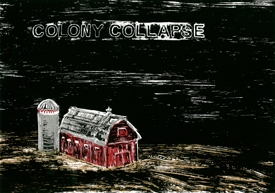 Work included in Ruthann Godollei’s exhibition Dissent (artwork © Ruthann Godollei)
Ruthann Godollei. Concordia University Gallery, Saint Paul, Minnesota, February 29–April 1, 2016. Dissent. Prints and installation.

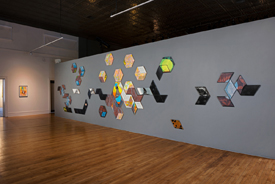 Installation view of Jen P. Harris’s exhibition Ghost Prairie (artworks © Jen P. Harris)
Jen P. Harris. Legion Arts CSPS Hall, Cedar Rapids, Iowa, April 7–July 3, 2016. Ghost Prairie. Painting installation.
Northeast

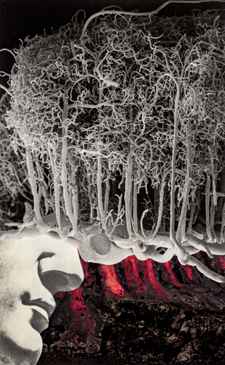 Gail Gregg, Brainstem, 2014, photocollage, dimensions variable (artwork © Gail Gregg)
 Gail Gregg. Luise Ross Gallery, New York, April 14–May 27, 2016. All That Glitters. Mixed media.

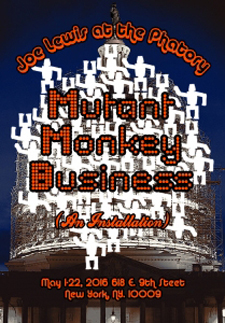 Poster for Joe Lewis’s exhibition Mutant Monkey Business
Joe Lewis. The Phatory, New York, May 1–22, 2016. Mutant Monkey Business. Installation.

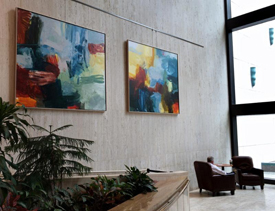 Installation view of Michael Rich’s exhibition (artworks © Michael Rich)
Michael Rich. Atrium Gallery, Providence Art Club, One Financial Plaza, Providence, Rhode Island, April 15–July 15, 2016. Painting.

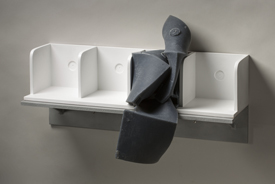 John Richardson, Case Study No. 31, 2013, aluminum, wood, rubber, and paint, 21 x 32 x 14 in. (artwork © John Richardson)
John Richardson. Causey Contemporary Gallery, New York, June 9–July 10, 2016. Fragments. Drawing, prints, and sculpture.

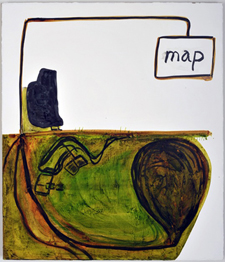 Mira Schor, “Power” Figure #11: Are You?, 2015, ink and Flashe on tracing paper, 45 x 24 in. (artwork © Mira Schor)
Mira Schor. Lyles & King, New York, March 18–April 24, 2016. Death Is a Conceptual Artist. Painting and drawing.

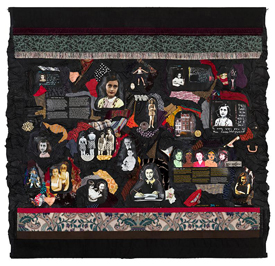 Linda Stein, Anne Frank 839, 2015, fabric, archival pigment on canvas, paints, leather, metal, and zippers, 59 x 59 in. (artwork © Linda Stein)
Linda Stein. Flomenhaft Gallery, New York, April 28–July 14, 2016. Holocaust Heroes: Fierce Females. Tapestry and sculpture.
South

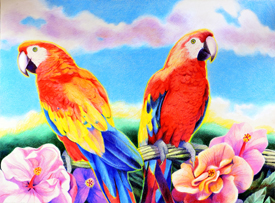 Kyra Belán, Two Macaws in Paradise, colored pencil on paper (artwork © Kyra Belán)
Kyra Belán. Art Gallery, Broadway Palm Dinner Theatre, Fort Myers, Florida, April 6–May 14, 2016. Magical Paradise. Painting.
West
Linda Stein. Bronfman Family Jewish Community Center, Santa Barbara, California, March 3–29, 2016. Holocaust Heroes: Fierce Females. Tapestry and sculpture.
People in the News
posted Jun 15, 2016
People in the News lists new hires, positions, and promotions in three sections: Academe, Museums and Galleries, and Organizations and Publications.
The section is published every two months: in February, April, June, August, October, and December. To learn more about submitting a listing, please follow the instructions on the main Member News page.
June 2016
Academe

Susan Cohen has left her position as director of the Council for the Arts at the Massachusetts Institute of Technology in Cambridge, which she led for ten years.
Kris Ebeling, formerly assistant director of enrollment management for the Art Academy of Cincinnati in Ohio, has joined the exhibit crew at the Cincinnati Museum Center.
Alison Hardie, senior lecturer in Chinese studies at the University of Leeds in England, has retired.
Larry Hinz has stepped down from his position as president of the Santa Fe University of Art and Design in Santa Fe, New Mexico.
Mark Hoversten, currently dean of the College of Art and Architecture at the University of Idaho in Moscow, has been appointed dean of the College of Design at North Carolina State University in Raleigh. Hoversten will start his new job on July 1.

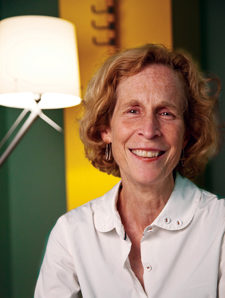 Patricia C. Phillips
Patricia C. Phillips, dean of graduate studies at the Rhode Island School of Design in Providence, has been appointed chief academic officer and academic dean of the Moore College of Art and Design in Philadelphia, Pennsylvania. She will begin her new position on July 1.
Charlie White, professor of fine art in the Roski School of Art and Design at the University of Southern California in Los Angeles, has become head of the School of Art at Carnegie Mellon University in Pittsburgh, Pennsylvania.
Museums and Galleries

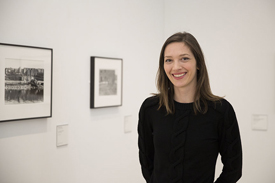 Judy Ditner
Judy Ditner has been appointed Richard Benson Assistant Curator of Photography and Digital Media at the Yale University Art Gallery in New Haven, Connecticut.

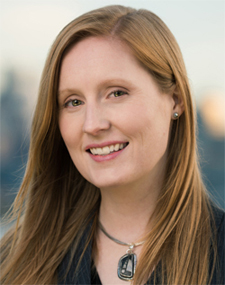 Laura Fry
Laura Fry, the inaugural Haub Curator of Western American Art for the Tacoma Museum of Art in Tacoma, Washington, has joined the Gilcrease Museum in Tulsa, Oklahoma, as curator of art.

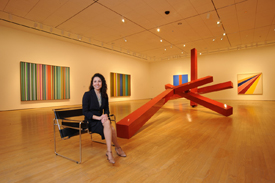 Francesca Giani
Francesca Giani, guest curator for the University of Oklahoma’s Fred Jones Jr. Museum of Art in Norman, has been named curator of modern and contemporary art at the Oklahoma City Museum of Art.
Christine Giviskos, associate curator for the Zimmerli Art Museum at Rutgers University in New Brunswick, New Jersey, has been promoted to curator of prints, drawings, and European art.

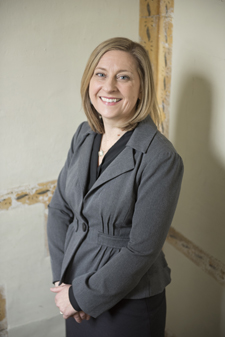 Sarah Johnson (photograph by Sarah Murray)
Sarah Johnson has been appointed director of the Cahoon Museum of American Art in Cotuit, Massachusetts.

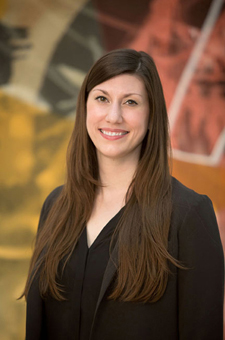 Hannah Klemm
Hannah Klemm, formerly Fisher Collection Graduate Curatorial Fellow at the San Francisco Museum of Modern Art in California, has joined the Saint Louis Art Museum in Missouri as assistant curator of modern and contemporary art.
Brett Knappe, formerly associate professor of art history at Baker University in Baldwin City, Kansas, has been appointed executive director of the Albrecht-Kemper Museum of Art in Saint Joseph, Missouri.

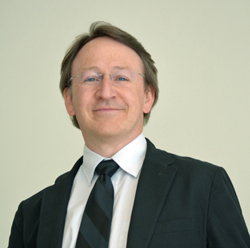 Robert Mintz
Robert Mintz, previously chief curator and curator of Asian art at the Walters Art Museum in Baltimore, Maryland, has joined the Asian Art Museum of San Francisco in California as deputy director of art and programs.

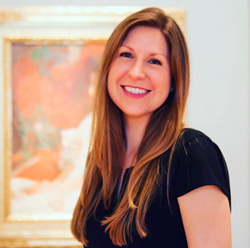 Jennifer Stettler Parsons
Jennifer Stettler Parsons has become the new assistant curator at the Florence Griswold Museum in Old Lyme, Connecticut.

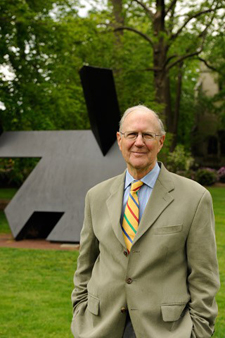 John R. Stomberg (photograph by Gary Westcott)
John R. Stomberg, formerly Florence Finch Abbott Director of the Mount Holyoke College Art Museum in South Hadley, Massachusetts, has become director for Dartmouth College’s Hood Museum of Art in Hanover, New Hampshire.

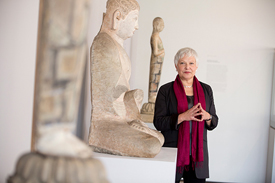 Martha Tedeschi
Martha Tedeschi, previously deputy director for art and research at the Art Institute of Chicago in Illinois, has been appointed Elizabeth and John Moors Cabot Director of the Harvard Art Museums in Cambridge, Massachusetts.

 Jacqueline Terrassa (photograph by Rachel Herman)
Jacqueline Terrassa, managing museum educator for gallery and studio programs at the Metropolitan Museum of Art in New York since 2011, has become the new Woman’s Board Endowed Chair of Museum Education at the Art Institute of Chicago in Illinois.
Julia Tulovsky, associate curator for Rutgers University’s Zimmerli Art Museum in New Brunswick, New Jersey, has been promoted to curator of Russian and Soviet Nonconformist Art.
Jonathan Frederick Walz has left his position as curator of American art at the University of Nebraska’s Sheldon Museum of Art in Lincoln.

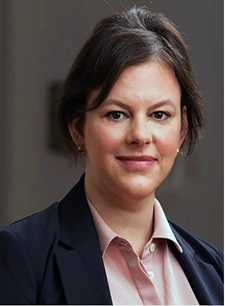 Claire Whitner
Claire Whitner has been promoted to assistant director of curatorial affairs and senior curator of collections at Wellesley College’s Davis Museum in Wellesley, Massachusetts.
Organizations and Publications
Jenny Norton-Wright has left her position at the Islamic Manuscript Association, based in Cambridge, England.
Institutional News
posted Jun 15, 2016
Read about the latest news from institutional members.
Institutional News is published every two months: in February, April, June, August, October, and December. To learn more about submitting a listing, please follow the instructions on the main Member News page.
June 2016
The Bruce Museum of Arts and Science in Greenwich, Connecticut, has announced that its Education Department has won the Cultural Alliance of Fairfield County’s 2016 Arts and Culture Empowerment (ACE) Award for Education. The award celebrates individuals and organizations that have made significant contributions to the Fairfield County community through arts and culture.
The Cincinnati Art Museum in Cincinnati, Ohio, has launched a newly redesigned website that makes digital images of nearly sixty thousand artworks from its collection, accompanied by over four thousand high-quality photographs, accessible online for the first time. In addition, the museum’s upcoming contribution to the Artstor Digital Library will increase access to the collection for universities and educational partners.
The Sterling and Francine Clark Art Institute in Williamstown, Massachusetts, has received a grant of $600,000 from the Andrew W. Mellon Foundation that provides three years of programmatic support for the Institute’s Research and Academic Program to strengthen scholarship in art history and visual studies. The funding specifically enables the program to pursue new initiatives while also continuing support for key programs established with earlier support from the foundation.
The Maryland Institute College of Art in Baltimore has been awarded a three-year, $600,000 grant from the Philip E. and Carole R. Ratcliffe Foundation to launch the development of Up/Start MICA, a college-wide entrepreneurship initiative that will capitalize on the unique talents of the college’s students and recent graduates.
The National Gallery of Art in Washington, DC, has debuted the second release in its Online Editions series, Italian Paintings of the Thirteenth and Fourteenth Centuries by the late Miklós Boskovits, one of the leading scholars of early Italian art. This online catalogue—more than a decade in the making—offers a fresh examination of this collection and made possible through the generous support of the Samuel H. Kress Foundation. Additional funding is provided by the Andrew W. Mellon Foundation through a special endowment for scholarly publications supported by the Getty Foundation.
The National Gallery of Art in Washington, DC, has accepted a $10 million grant from the Walton Family Foundation to establish the John Wilmerding Fund for Education in American Art. The John Wilmerding Fund—named for the museum’s retired curator, deputy director, trustee, and chairman—will support programs with a broad focus on American art, celebrating Wilmerding’s immeasurable contributions to the field.
The Yale University Art Gallery in New Haven, Connecticut, along with Yale’s Beinecke Rare Book and Manuscript Library and the Addison Gallery of American Art at Phillips Academy in Andover, Massachusetts, have jointly acquired the Lucien Aigner Collection, an extraordinary archive of photographs, negatives, recordings, film, books, magazine clippings, letters, and journalistic writings. A pioneer of 1930s photojournalism, Lucien Aigner (1901–1999) belonged to the generation of photographers that included Robert Capa, Henri Cartier-Bresson, Alfred Eisenstaedt, and Erich Salomon.
Grants, Awards, and Honors
posted Jun 15, 2016
CAA recognizes its members for their professional achievements, be it a grant, fellowship, residency, book prize, honorary degree, or related award.
Grants, Awards, and Honors is published every two months: in February, April, June, August, October, and December. To learn more about submitting a listing, please follow the instructions on the main Member News page.
June 2016


Kim Bobier, a doctoral candidate in art history at the University of North Carolina, Chapel Hill, has won a 2016 Henry Luce Foundation/ACLS Dissertation Fellowship in American Art from the American Council of Learned Societies. Her research project is titled “Representing and Refracting the Civil Rights Movement in Late Twentieth-Century Art.”
Judith K. Brodsky, distinguished professor emerita of the Visual Arts Department at Rutgers University in New Brunswick, New Jersey, has received an honorary doctor of fine arts degree from Rider University in Lawrence Township, New Jersey.
Sinem Arcak Casale, assistant professor of art history at the University of Minnesota, Twin Cities, has been named a 2016 ACLS Fellow by the American Council of Learned Societies. Her project is titled “Courtly Encounters in War and Peace: Ottoman-Safavid Gift Exchange, 1501–1660.”


Zirwat Chowdhury, visiting faculty member in art history at Bennington College in Bennington, Vermont, has been named a 2016–17 National Endowment for the Humanities Fellow by the Getty Research Institute in Los Angeles, California. Chowdhury will work on “The Vociferant Image: Sound and the Ethics of Empire in 18th-Century British Art and Visual Culture” from September 2016 to April 2017.
Carolyn Dean, professor of history of art and visual culture at the University of California, Santa Cruz, has been named a 2016–17 Getty Scholar by the Getty Research Institute in Los Angeles. Dean will work on her project, “The Non-Image Challenge to Art History and Anthropology,” between September 2016 and June 2017.
Elisa Dainese, an architect and lecturer in the University of Pennsylvania’s History of Art Department in Philadelphia, has won a 2016 Membership Grant from the Society of Architectural Historians.
Nancy Demerdash of Princeton University in Princeton, New Jersey, has accepted the 2016 Spiro Kostof Fellowship from the Society of Architectural Historians.
Yvonne Elet has earned a 2016 SAH/Mellon Author Award from the Society of Architectural Historians.
Savannah Esquivel of Northwestern University in Evanston, Illinois, has won the the 2016 Edila and Francois-Auguste de Montequin Junior Fellowship from the Society of Architectural Historians.
Keith Garubba, a faculty member of the Baum School of Art in Allentown, Pennsylvania, has won a 2016 Arts Ovation Award in the emerging-artist category from the Allentown Arts Commission and the city of Allentown.
Dale Allen Gyure, professor of architecture at Lawrence Technological University in Southfield, Michigan, and adjunct assistant professor of historic preservation at Goucher College in Baltimore, Maryland, has been awarded a 2016 publication grant from the Graham Foundation for his book Serenity and Delight: The Architecture of Minoru Yamasaki, to be published by Yale University Press.
Patrick Thomas Hajovsky, associate professor in the Sarofim School of Fine Arts at Southwestern University in Georgetown, Texas, has been named a 2016–17 Getty Scholar by the Getty Research Institute in Los Angeles, California. He will work on “Currencies of Wealth and Fame: The Social Lives of Luxury Objects in Aztec Mexico” from April to June 2017.
Grace T. Harpster, a PhD candidate in the History of Art Department at the University of California, Berkeley, has been named a 2016–17 Getty Predoctoral Fellow by the Getty Research Institute in Los Angeles, California. She will work on “Carlo Borromeo’s Itineraries” between September 2016 and June 2017.
Leslie Hewitt, an artist based in New York, has won a publication grant from the Graham Foundation for Untitled (Structures), a book to be produced with Bradford Young and published by Dancing Foxes Press.
Michael Ann Holly, consulting director and Starr Director Emeritus of the Research and Academic Program at the Sterling and Francine Clark Art Institute in Williamstown, Massachusetts, has been named a 2016–17 Guest Scholar by the Getty Research Institute in Los Angeles, California. She will research “At the Back of the Painted Beyond / At the Still Point of the Painted World” from January to March 2017.
Shih-shan Susan Huang, associate professor of art history at Rice University in Houston, Texas, has won a 2016 Frederick Burkhardt Residential Fellowship from the American Council of Learned Societies. She will be in residence at the Huntington Library, Art Collection, and Botanical Gardens in San Marino, Califorina, during academic year 2017–18, working on “First Impressions: Chinese Religious Woodcuts and Cultural Transformation.”
H. H. Joyce of the University of Oxford in England has accepted the 2016 Scott Opler Emerging Scholar Fellowship from the Society of Architectural Historians.
Kate M. Kocyba has won a 2016 Membership Grant from the Society of Architectural Historians.


Lauren Kroiz, assistant professor in the History of Art Department at the University of California, Berkeley, has won the Smithsonian American Art Museum’s 2015 Patricia and Phillip Frost Essay Award. Kroiz’s article, “‘A Jolly Lark for Amateurs’: John Steuart Curry’s Pedagogy of Painting,” appeared in the spring 2015 issue of American Art.
Anneka Lenssen, assistant professor of global modern art in the History of Art Department at the University of California, Berkeley, has been named a 2016–17 Getty Postdoctoral Fellow by the Getty Research Institute in Los Angeles. She will continue work on “Being Mobilized: The Vitality of Arab Art, 1930–1960” between September 2016 and June 2017.
Michael Lobel, professor of art history at Hunter College, City University of New York, has been awarded the twenty-eighth Charles C. Eldridge Prize for Distinguished Scholarship in American Art for his book John Sloan: Drawing on Illustration (New Haven: Yale University Press, 2014).
Maura Lucking, an architectural historian pursuing a PhD in critical studies from the Department of Architecture and Urban Design at the University of California, Los Angeles, has won a 2016 film grant from the Graham Foundation for Church of Schindler, a project in collaboration with the Los Angeles–based documentary filmmaker Andrea Lewis.
Ellen Macfarlane, a doctoral candidate in art and archaeology at Princeton University in Princeton, New Jersey, has won a 2016 Henry Luce Foundation/ACLS Dissertation Fellowship in American Art from the American Council of Learned Societies for her study, “Group f.64 Photography and the Object World.”

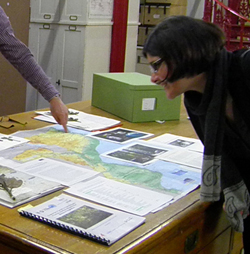 Luciana Martins
Luciana Martins, reader in Latin American visual studies at Birkbeck, University of London, in England, has been awarded a 2016 Leverhulme Research Fellowship for two years for a project entitled “Drawing Together: The Visual Archive of Expeditionary Fieldwork.”
Jeffrey A. Miller has won a 2016 Membership Grant from the Society of Architectural Historians.
Kimberly Minor, a doctoral candidate in art and art history at the University of Oklahoma in Norman, has won a 2016 Henry Luce Foundation/ACLS Dissertation Fellowship in American Art from the American Council of Learned Societies. Her project is titled “Pictographic Motifs: Memory and Masculinity on the Upper Missouri.”
Keith Moxey, Barbara Novak Professor in the Department of Art History at Barnard College in New York, has been named a 2016–17 Guest Scholar by the Getty Research Institute in Los Angeles, California. Moxey will research “Temporalities of Art History” between September and December 2016.

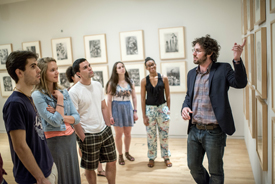 John Murphy
John Murphy has been awarded the 2016 Amy P. Goldman Foundational Fellowship in Pre-Raphaelite Studies from the Delaware Art Museum and the University of Delaware Library, both in Wilmington.
Stella Nair, associate professor in the Department of Art History at the University of California, Los Angeles, has won the Charles K. Williams II Rome Prize from the American Academy of Rome. She will continue work on “Rome in the Andes: The Impact of the Classical World on Inca Architectural History.”
Elisabeth Narkin, a PhD candidate in the Department of Art, Art History, and Visual Studies at Duke University in Durham, North Carolina, has received the 2016 Carter Manny Award for doctoral dissertation research from the Graham Foundation. Her project is called “Rearing the Royals: Architecture and the Spatialization of Royal Childhood in France, 1499–1610.”
Lawrence Nees, professor in the Department of Art History at the University of Delaware in Newark, has been named a 2016–17 Museum Guest Scholar by the Getty Research Institute in Los Angeles, California. Research for his project, “Host Department: Manuscripts,” will take place between April and June 2017.
Christina Neilson, assistant professor of Renaissance and Baroque art history at Oberlin College in Oberlin, Ohio, has been named a 2016 ACLS Fellow by the American Council of Learned Societies. She will continue research on “Living Devotion: Animating Sculpture in Early Modern Europe.”
Fernando Martínez Nespral from the University of Buenos Aires in Argentina has accepted a place in the 2016 SAH-Getty International Program by the Society of Architectural Historians.
Emily Neumeier of the University of Pennsylvania in Philadelphia has won the 2016 Keepers Preservation Education Fund Fellowship from the Society of Architectural Historians.

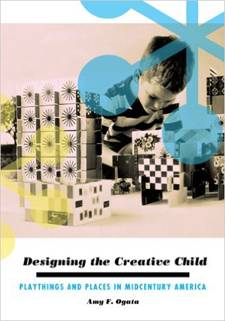
Amy F. Ogata, associate professor at the Bard Graduate Center: Decorative Arts, Design History, Material Culture in New York, has won the 2016 Alice Davis Hitchcock Book Award from the Society of Architectural Historians for Designing the Creative Child: Playthings and Places in Midcentury America (Minneapolis: University of Minnesota Press, 2013).
Pauline Ayumi Ota, associate professor of art and art history at DePauw University in Greencastle, Indiana, has accepted a 2016 Frederick Burkhardt Residential Fellowship from the American Council of Learned Societies. She will work on “Seeing Is Knowing: Visual Perception, Painting, and Cityscapes in Mid-Eighteenth Century Japan” at the Asian Studies Program at the University of Hawai‘i in Manoa during academic year 2016–17.
John Ott, professor of art history at James Madison University in Harrisonburg, Virginia, has received a 2016 Summer Stipend from the National Endowment for the Humanities to work on his book project, “Mixed Media: The Visual Culture of Racial Integration, 1931–1954.”
Nina Rowe, associate professor of art history and music at Fordham University in Bronx, New York, has been named a 2016 ACLS Fellow by the American Council of Learned Societies. She will work on “The World in a Book: Weltchroniken and Society at the End of the Middle Ages.”

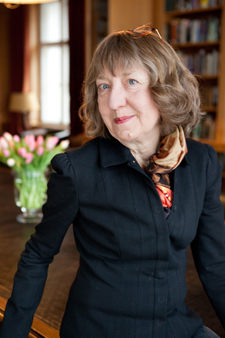 Corine Schleif (photograph by Annette Hornischer)
Corine Schleif, a professor for the Herberger Institute for Design and the Arts at Arizona State University in Tempe, has received the 2015–16 Berlin Prize and is currently John P. Birkelund Fellow in the Humanities at the American Academy in Berlin, where she is completing the book Bending Stone: Adam Kraft and the Sculpting of Art’s History.
Emma Rose Silverman, a doctoral candidate in history of art at the University of California, Berkeley, has won a 2016 Henry Luce Foundation/ACLS Dissertation Fellowship in American Art from the American Council of Learned Societies for her research project, “From Eyesore to Icon: Outsider Art, Racial Politics, and the Watts Towers.”
Kristel Smentek, associate professor of architecture for the Massachusetts Institute of Technology in Cambridge, Massachusetts, has been named a 2016 ACLS Fellow by the American Council of Learned Societies. Her research project is called “Objects of Encounter: China in Eighteenth-Century France.”
Giulia S. Smith, a PhD candidate in the History of Art Department at University College London, England, has been named a 2016–17 Getty Predoctoral Fellow by the Getty Research Institute in Los Angeles, California. She will work on her project, titled “An Anthropology of Ourselves: The Independent Group from Urban Fieldwork to Global Ecology, 1929–1973,” from September 2016 to June 2017.
Joseph Williams, a PhD candidate in the Department of Art, Art History, and Visual Studies at Duke University in Durham, North Carolina, has won the Phyllis W. G. Gordan/Lily Auchincloss/Samuel H. Kress Foundation Pre-Doctoral Rome Prize from the American Academy in Rome. He will continue researching “The Practice and Production of Architecture during the Mediterranean Commercial Revolution: The Church of S. Corrado in Molfetta (ca. 1185–1303).”
Fo Wilson, an artist and associate professor at Columbia College Chicago in Illinois, has won a 2016 exhibition grant from the Graham Foundation. He will use the funds to produce Eliza’s Peculiar Cabinet of Curiosities, on view at the Lynden Sculpture Garden in Milwaukee, Wisconsin, from June 26 to October 30, 2016.
Mary N. Woods, Michael A. McCarthy Professor of Architectural Theory at Cornell University in Ithaca, New York, has been awarded a publication grant from the Graham Foundation for her book Women Architects in India: Histories of Practice in Mumbai and Delhi, to be published by Routledge.
Daniel M. Zolli, a PhD candidate in the History of Art and Architecture Department at Harvard University in Cambridge, Massachusetts, has been named a 2016–17 Getty Predoctoral Fellow by the Getty Research Institute in Los Angeles, California. He will work on “Voices in the Workshop: Donatello and Theories of Making in Fifteenth-Century Oral Culture” from September 2016 to June 2017.
Exhibitions Curated by CAA Members
posted Jun 15, 2016
Check out details on recent shows organized by CAA members who are also curators.
Exhibitions Curated by CAA Members is published every two months: in February, April, June, August, October, and December. To learn more about submitting a listing, please follow the instructions on the main Member News page.
June 2016

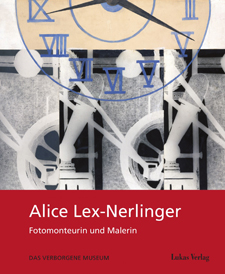
Rachel Epp Buller. Alice Lex-Nerlinger 1893–1975: Fotomonteurin und Malerin. Das Verborgene Museum, Berlin, Germany, April 14–August 7, 2016.

 Imogen Cunningham, Double Image of Joseph Sheridan, 1931, gelatin silver print, 10 x 7½ in. (artwork © Imogen Cunningham Trust)
Rachel Epp Buller. Transition and Turmoil: Human Expressions 1900–1945. Ulrich Museum of Art, Wichita State University, Wichita, Kansas, January 16–May 8, 2016.

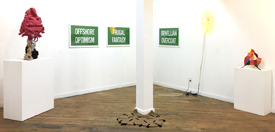 Installation view of Laughing Out Loud
Rhia Hurt and Katerina Lanfranco. Laughing Out Loud. Trestle Gallery, Brooklyn, New York, April 15–June 3, 2016.

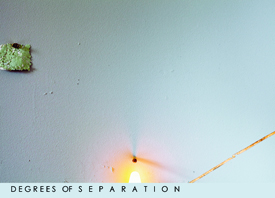 Barbara Weissberger, “Night Light,” 2014, digital photograph/archival pigment print (artwork © Barbara Weissberger)
Kristen Letts Kovak. Degrees of Separation. SPACE, Pittsburgh, Pennsylvania, April 15–June 5, 2016.