
CAA News Today
Books Published by CAA Members
posted Dec 15, 2015
Publishing a book is a major milestone for artists and scholars—browse a list of recent titles below.
Books Published by CAA Members appears every two months: in February, April, June, August, October, and December. To learn more about submitting a listing, please follow the instructions on the main Member News page.
December 2015

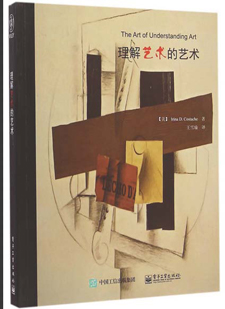
Irina D. Costache. The Art of Understanding Art (Beijing: Publishing House of Electronics Industry, 2015).


Myroslava M. Mudrak and Tetiana Rudenko, ed. Staging the Ukrainian Avant-Garde of the 1910s and 1920s (New York: Ukrainian Museum, 2015).

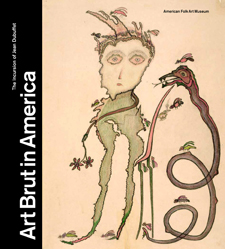
Valérie Rousseau, ed. Art Brut in America: The Incursion of Jean Dubuffet (New York: American Folk Art Museum, 2015).

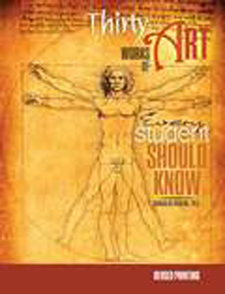
Andrew Jay Svedlow. Thirty Works of Art Every Student Should Know (Dubuques, IA: Kendall Hunt, 2015).
Committee on Women in the Arts Picks for December 2015
posted Dec 10, 2015
Each month, CAA’s Committee on Women in the Arts selects the best in feminist art and scholarship. The following exhibitions and events should not be missed. Check the archive of CWA Picks at the bottom of the page, as several museum and gallery shows listed in previous months may still be on view or touring.
December 2015
Marks Made: Prints by American Women Artists from the 1960s to the Present
Museum of Fine Arts
255 Beach Drive N.E., St. Petersburg, FL
October 17, 2015–January 24, 2016
The Museum of Fine Arts in St. Petersburg, Florida, presents Marks Made, examining women in printmaking. Featuring over 75 works, including those from the printmaking pioneers Helen Frankenthaler, Lee Krasner, Joan Mitchell, and Anni Albers, the exhibition “conveys the breadth of innovation of both technique and conceptual approaches that have emerged in printmaking over the past 50 years.”
The exhibition draws on the private holdings and from the museum’s extensive collection of prints by American women, including Vija Celmins, Janet Fish, Ellen Gallagher, Yvonne Jacquette, Joyce Kozloff, Barbara Kruger, Hung Liu, Elizabeth Murray, Judy Pfaff, Susan Rothenberg, and Pat Steir. Limited-edition prints by the artists Elisabeth Condon and Jane Hammond were also created in collaboration with the University of South Florida and Bleu Acier Editions. Related programming events include film screenings, drawing workshops, and lectures.
“The printmaking process is an intensely collaborative one, between artist and printer. It is also a highly physical process, requiring strength, stamina, and technical prowess—Marks Made tells the story of what happens in the studio and the resulting artworks.” The themes of the exhibition vary from artist to artist and are loosely grouped, allowing interconnected exploration between themes of abstraction, realism, craft, appropriation strategies, and activism.
Linda Stein: The Fluidity of Gender
Noyes Museum of Art
Stockton University, 733 Lily Lake Road, Oceanville, NJ
September 21, 2015–January 3, 2016
The artist Linda Stein at the Noyes Museum of Art presents sculpture exploring “the continuum between the binaries of masculinity and femininity,” with her mixed-media figurative work. The leather and metal figures, along with use of pop0-cultural icons, embody both the essence of a warrior’s armor and comforting protection. Stein’s work concerns gender, oppression, bullying, strength, power, and justice in contemporary culture.
“My goal as an artist is to use my art to transform social consciousness and promote activism for gender justice,” Stein has said. “With my androgynous forms I invite the viewer to seek diversity in unpredictable ways, to ‘try on’ new personal avatars and self-definitions, knowing that every new experience changes the brain’s structure and inspires each of us toward a more authentic self.”
The tall, vertical sculptures of metal, wood, stones, leather, and images of Wonder Woman, among other materials, are wearable, body-swapping armor. “In my art,” Stein said in a June 2015 interview with A&U Magazine, “I place the female front and center for a social idealism that aims to transform violence, destruction, and fragility into strength for anyone who finds themselves bullied, harassed, or abused.” But while, the armor is distinctively female in many cases, with curves for hips and breasts, the body-swapping moment happens when a woman wears materials normally associated with male warrior attributes and a man wearing armor made to resemble a female form. Other creations by Stein, remain more androgynous, presenting what is normally associated as a male figure from behind, but female when viewed from the front.
what’s INSIDE HER never dies … a Black Woman’s Legacy
Yeelen Gallery
294 NW 54th Street, Miami, FL
December 1, 2015–February 28, 2016
Following Mariette Pathy Allen’s solo exhibition TransCuba, Yeelan Gallery continues its exhibition programming on gender with what’s INSIDE HER never dies … a Black Woman’s Legacy, in collaboration with Poets/Artists Magazine. The opening coincides with Art Basel Miami Beach. This group show features two images from Allen, as well as from twenty-four other artists and activists, including Sylvia Parker Maier, Tim Okamura, Joseph Adolphe, Jerome Siomaud, and Numa Perrier.
The exhibition showcases work in a variety of mediums—portraiture, drawing, photography, and installation—all seeking to “pay homage to the beauty and resiliency of the Black Woman,” said Karla Ferguson, the gallery owner and director. A reception for the artists will take place on Saturday, December 5, 2015, at 10:00 PM.
In her photographs, Allen gained access to photograph transgender peoples and friends in the privacy of their homes, as well as out in public during several visits to Cuba in 2012 and 2013. “The transgender people Allen depicts in TransCuba savor their new freedom to be able to be themselves publicly, while continuing to overcome challenges, such as health issues, and lack of steady work and money.”
In contrast, another artist in the exhibition, Judith Peck, often paints on broken plaster shards, “a world falling apart held together with the very same figure depicted within.” In her painting Pulled Over, a young woman sits in what appears to be the driver’s seat of a vehicle, her arm resting on the window and her head looking down, perhaps waiting. “The paintings are about the more universal message of meaning and preciousness of life healing a broken world.”
In addition to the exhibition, Yeelen Gallery will host a panel discussion at 1:00 PM on December 2, 2015, with Sybrina Fulton, the mother of Trayvon Martin, and Kadiatou Diallo, the mother of Amadou Diallo, who will share their stories and grief along with other activist women.
Ebony G. Patterson: Dead Treez
Museum of Art and Design
2 Columbus Circle, New York, NY 10019
The Museum of Art and Design presents Dead Treez,the first solo New York museum show by the Jamaican-born artist Ebony G. Patterson. The exhibition, which spreads across the museum’s second floor, includes installations, floor tapestries, and a life-sized figural tableau of ten male mannequins dressed in a kaleidoscopic mix of floral fabrics.
Dead Treez is a meditation on dancehall fashion and culture, regarded as a celebration of the disenfranchised in postcolonial Jamaica. Borrowing from social media, her tapestries depict murder victims camouflaged in utterly adorned patterns to seduce viewers into witnessing the underreported brutality experienced by those on the lower rungs of the socioeconomic ladder. Furthermore, the artist fusions her collage sensibility with a selection of jewelry from the museum’s permanent collection, transforming the Tiffany Jewelry Gallery’s vitrines into gardenlike environment of poisonous plants, in which bodies wrapped in patterned fabrics have succumbed to the violence often present in marginalized communities. Here, Patterson addresses how choices in jewelry, clothing, or other forms of personal adornment are means of visibility of populations rendered invisible by poverty and racism. Noting that the names of impoverished communities in Jamaica often include the word “garden” in them, Patterson’s …buried again to carry on going… exacerbates the contrast between places that are designed to be about beauty, growth, life, and the hardships that are daily obstacles in her native country’s inner city.
Patterson, (b. 1981, Kingston, Jamaica) splits her time between Kingston and Lexington, Kentucky. Through her extremely adorned mixed-media installations, the artist seduces viewers, with the intention to challenge them to look closer. Throughout Dead Treez the artist explores and reflects on the concept of “visibility,” raising questions about body politics, performance of gender, gender and beauty, beauty and stereotyping, race and beauty, and body and ritual. Throughout this exhibition, Patterson suggests that the popularity of skin alteration, such as skin bleaching and tattooing, may mean a form of “erasure” motivated by the desire of presence rather than a simple adornment.
The Rocca Family (RTF) is an ongoing project located in the everyday gestures of togetherness. A togetherness that could be much broader than just two people, proposing not to separate art/work from daily life, while dreaming of not being attached. Defying the traditional concept of traditional family as a terrible structure that imposes the pressure to be happy and the feeling of shame otherwise, TRF proposes a series of moving spaces that encourage art to take on new forms and identities. One of its ongoing research projects, Family, is an examination of different family structures, dynamics, demands, and expectations, and in that offers a reflection of the reasons behind the strict assumption of the family as a core unit to community.
Named after a cat and with a base in San Francisco, TRF challenges also the identity of art, proposing “events” that are simply moments in the timeline of relationships: conversation, meals, and phone calls. Furthermore, displacement, transit, and immigration help form the core of TRF discussions, with a particular attention on personal politics and an international awareness, as well as a sensitivity for domestic, mundane, flashy, sustainable, and unexpected things.
As Amanda Eicher describes the prohect in Who is TRF Series, #1-b: “Round is another way to describe it—leaving the scientific and transportative world of paths, flights, lines, and planes, we can say that it is a space in which many people come around a table, and they are all not necessarily leading not following either but learning—all parts of something which turns or presses outward from a center to meet a margin-frontier. Or it might be they are pressing together from the outside.”
Women Speaking to Power: An Evening of Conversation with Tania Bruguera and Shirin Neshat
School of Visual Arts Theatre
333 West 23rd Street, New York, NY
December 11, 2015
Organized by SVA’s MA Curatorial Practice program, “Women Speaking to Power” will open a conversation between two of the most significant and influential international contemporary practicing today: Tania Bruguera and Shirin Neshat. They will speak with each other about their experiences as citizens and artists, reflecting on how their works approach to gender and politics in their respective homelands, Cuba and Iran, and beyond. This event, which starts at 7:00 PM, is free and open to the public. Seating is on a first-come, first-served basis.
Support CAA with a Gift to the Annual Fund
posted Dec 10, 2015
As a member of the College Art Association, you understand the importance of the work of CAA in service to the individuals and institutions that make up the world’s largest international professional community in the visual arts. The Association supports and enhances the field through advocacy efforts on important issues such as those impacting populations, like part-time faculty, and the protection of archaeological and historical sites in countries of conflict, to name a few; vital professional tools like CAA’s Standards and Guidelines; critical projects like the Code of Best Practices in Fair Use for the Visual Arts; prestigious publishing grants for books; career-development resources, including the Online Career Center; Professional-Development Fellowships; new scholarship published in The Art Bulletin, Art Journal, and caa.reviews; and CAA’s forum for exchange of creative work, scholarly research and critical issues in the field at the Annual Conference. None of this would be possible without the support of dedicated members like you.
With an ever-changing academic and museum landscape, CAA is responding to the evolving needs of its constituents. Many new member opportunities are being created, such as flexible and expanded Annual Conference programming, as well as new communication tools and platforms to further our dialogue beyond the conference. Even as CAA innovates, it continues its longstanding leadership in career development for early, mid, and senior level visual-arts professionals.
Today, I ask that you support CAA’s important work with a gift to the Annual Fund. Your contribution will enable us to continue providing invaluable resources and services to members like you. Voluntary support from individuals is critical to our collective advancement, and your contribution to the Annual Fund makes this possible. Your gift will benefit those who share your dedication to the visual arts.
Should you have given in the past, please know that your gift was very much appreciated. We hope you will continue your generosity at the same or even greater level. On behalf of the artists, art historians, collectors, critics, curators, designers, educators, and other professionals who make up CAA, I thank you for your dedication. Please give generously!
Sincerely,
John J. Richardson
VP for External Affairs and President-Elect
P.S. This year’s conference in Washington, DC February 3–6 will be one that you will not want to miss. I look forward to seeing you there.
News from the Art and Academic Worlds
posted Dec 09, 2015
Each week CAA News publishes summaries of eight articles, published around the web, that CAA members may find interesting and useful in their professional and creative lives.
Three Artists Who Think outside the Box
Rick Lowe’s achievements resonated well beyond Houston. Theaster Gates and Mark Bradford, who both cite him as an influence, are Lowe’s coconspirators in a mode of political or “social practice” art that actively involves them in underserved neighborhoods. Now old friends who have over the years spoken on many panels together and called each other regularly for advice, the three artists have also assisted each other on their large-scale, community-based artworks. (Read more in the New York Times.)
Revisiting the Educational Turn (How I Tried to Renovate an Art School)
At the dawn of the 2000s, the idea of an “educational turn” in the art world was everywhere. On paper, this evolution seemed irresistible, logical, even profound. So much so that, back then, curators such as Hou Hanru, Maria Lind, Okwui Enwezor, and Ute Meta Bauer started to occupy significant positions within art schools. But none lasted too long. (Read more from Art Review.)
How to Be a Brilliant Conference Chair
Think of the worst conference chairs you have ever experienced. The ones who forgot or mispronounced the speakers’ names or failed to turn up altogether. The ones who didn’t notice the shy hand-raisers and only called on the masters of gesticulation. Or the ones who took advantage of the opportunity to tell the audience about their fascinating research and superior knowledge. Although such debacles can be something of a scholarly rite of passage, there are ways to avoid these pitfalls. (Read more from the Guardian.)
Isabelle Graw on Twenty-Five Years of Texte zur Kunst
There’s no arguing that the publication Texte zur Kunst, founded in 1990 in Cologne by Stefan Germer and Isabelle Graw, has shaped art criticism in Germany and beyond. What started as a small enterprise run from the heart of the German art underground and read by a close circle of like-minded thinkers has, in the course of twenty-five years and one hundred issues, produced a veritable theoretical canon. (Read more from Artnet News.)
I Fit the Description
On his way to get a burrito before work, the artist and professor Steve Locke was detained by Boston police. He noticed a police car in the public parking lot behind Centre Street. As he was walking away from his car, the cruiser followed him. He walked down Centre Street and was about to cross over to the burrito place when the officer got out of the car. “Hey my man,” he said. He unsnapped the holster of his gun. (Read more from Art and Everything After.)
The Mass Market Ain’t What It Used to Be (and What That Means for the Arts)
What does it mean to “engage with an audience”? Whole industries thrive on trying to define, quantify, and strategize engagement and building audience. It breaks down into three parts: Can you find an audience? Can you motivate it to respond in some desired way? Can you convince that audience to continue a relationship with you? (Read more from Diacritical.)
Is It Unwise to Post Unpublished Papers Online?
Is it unwise to make unpublished papers publicly available (e.g., on ResearchGate or Academia.edu)? I’d like to do this but have two concerns. The first is that someone will steal the work. My second concern relates to publishability—journals don’t want previously published work. (Read more from Vitae.)
How to Explain Art to Your Mother
How do I explain to my mother why her sweet little girl, who got straight As in school and still goes to church, is interested in a photograph of a naked child stomping on his mother? In most families you could skirt the issue, tucking it away in the conversational corner reserved for politics and religion. But I’m married to an artist, and just this year we set out to make a living primarily from selling his art. (Read more from Burnaway.)
Support CAA’s Journals with a Gift to the Publications Fund
posted Dec 08, 2015
CAA’s publications deliver the world’s leading scholarship in the visual arts in formats that include long-form essays, innovative artists’ projects, and critical reviews. With the addition of our new digital platforms, we can now engage readers with new multimedia forms of scholarly publications and broader interactive functionality.
In The Art Bulletin, online versions of essays can now incorporate supplemental media files, for example, allowing Halle O’Neal to animate the calligraphy on a jeweled pagoda painting and Lisa Pon to model the effects of Raphael’s Acts of the Apostles tapestries on sound and music in the Sistine Chapel. Art Journal’s website, Art Journal Open, publishes probing interviews with artists and curators, most recently by curator Dina Deitsch exploring the creative processes of three artists with whom she worked on exhibitions, William Lamson, Kate Gilmore, and robbinschilds. Our fully open-access online publication caa.reviews now includes about 150 reviews a year, and covers digital publications on diverse topics and geographic regions, like Hypercities: Thick Mapping in the Digital Humanities (book and website, http://www.hypercities.com/). caa.reviews is now read on every continent, and its audience has grown over 100 percent since it became open access in January 2014.
Readers like you enable CAA to carry out our work. Please support our mission of advancing the highest standards of intellectual engagement in the arts by making a fully tax-deductible gift to the Publications Fund today.
Here are some are some highlights from CAA publications:
In The Art Bulletin:
- The long-form essay remains the backbone of the journal. Recent authors have included Sun-ah Choi on the medieval Chinese reception of an Indian statue of the Buddha, Kim Sexton on architectural manifestations of self-government in communal-period Italy, P. Park on surprising sources of artistic inspiration in late Chosŏn Korea,and Therese Dolan and Darcy Grimaldo Grigsby in twin essays on overlooked aspects of Manet’s Olympia
- In the “Whither Art History?” series, prominent art historians trace advances in the discipline, among them Florina Capistrano-Baker on diasporic art andFiliz Yenişehirlioğlu on global elements of Ottoman art and architecture
- Reviews of books on a wide range of topics, from temporality in Mesopotamian art, to the worldwide textile trade from 1500 to 1800, to art history through a Marxist lens
In Art Journal:
- In a project that will be of critical value to both present-day and future art historians and artists, the artist Carolee Schneemann shared thirty pages of key texts, artworks, and photographs from her personal archive; in the artist’s project “Yoga for Adjuncts,” Christian Nagler considered the working conditions of adjunct professors with wily humor
- Recent essays have featured Silvia Bottinelli on nomadism in Italian art and architecture of the 1960s and 1970s, Caroline V. Wallaceon the work of the Black Emergency Cultural Coalition in diversifying US museum exhibitions, Raven Falquez Munsell on the impact of the overthrow of the Chilean Allende government on the 1974 Venice Biennale, and Christopher Tradowsky on Nietzschean ressentiment in current art of a political cast
- Reviews of new books on topics as diverse as how artists sustain their careers, the art of Bruce Nauman, and feminism in museum culture
- The website Art Journal Open launched a new feature, Bookshelf, with annotated snapshots of books in queue on the shelves of scholars and artists such as Steven Nelson, Judith Rodenbeck, and Lenore Chinn
In caa.reviews:
- Recently reviewed books included: Leonardo, Michelangelo, and the Art of the Figure by Michael Cole, Aesthetic of the Cool: Afro-Atlantic Art and Music by Robert Ferris Thompson, Escultura monumental mexica (revised edition) by Eduardo Matos Moctezuma and Leonardo López Luján, and Words Not Spent Today Buy Smaller Images Tomorrow: Essays on the Present and Future of Photography by David Levi Strauss. Exhibitions reviewed include Italian Style: Fashion Since 1945 at the Victoria and Albert Museum, Playthings: The Uncanny Art of Morton Bartlett at the Los Angeles County Museum of Art, Andrew Wyeth: Looking Out, Looking In at the National Gallery of Art, and Radical Presence: Black Performance in Contemporary Art at the Contemporary Art Museum, Houston
These highly regarded journals reach tens of thousands of readers around the world and serve as essential resources to those working in the visual arts—none of which would be possible without your support. Contributors who give at a level of $250 or higher are prominently acknowledged in the publication they support for four consecutive issues, as well as on the publication’s website for one year, through CAA News, and in the Annual Conference’s convocation booklet. On behalf of the scholars, critics, and artists who publish in the journals, we thank you for your continued commitment to maintaining a strong and spirited forum for the visual-arts community.
With best regards,

Gail Feigenbaum
Vice President for Publications
Work with CAA at the 2016 Annual Conference!
posted Dec 03, 2015
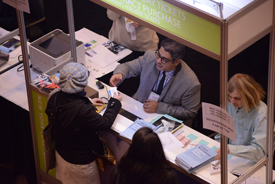
Working as a projectionist, room monitor, or registration attendant at CAA’s 104th Annual Conference, taking place February 3–6, 2016, in Washington, DC, is a great way to save on conference expenses. CAA encourages students, emerging professionals, and any interested CAA members—especially those in the Washington, DC, area—to apply for service. Students should check to see if their schools and universities are CAA institutional members as institutional membership now includes the benefit of specially discounted student memberships.
Projectionists
CAA seeks applications for projectionists for conference program sessions. Successful applicants are paid $12 per hour and receive complimentary conference registration. Projectionists are required to work a minimum of four 2½-hour program sessions, from Wednesday, February 3 to Saturday, February 6; they must also attend a training meeting on Wednesday morning at 7:30 AM (total of twelve hours minimum). Projectionists must be familiar with digital projectors. Please send a two-page CV and a brief letter of interest to Katie Apsey, CAA manager of programs. Deadline extended: January 4, 2016.
Room Monitors
CAA needs room monitors for two Career Services mentoring programs (the Artists’ Portfolio Review and Career Development Mentoring), several offsite sessions, and other conference events, to be held from Wednesday, February 3 to Saturday, February 6; they must also attend a training meeting on Wednesday morning at 7:30 AM. Successful candidates are paid $12 per hour and receive complimentary conference registration. Room monitors are required to work a minimum of twelve hours, checking in participants and facilitating the work of the mentors. Please send a two-page CV and a brief letter of interest to Katie Apsey, CAA manager of programs. Deadline extended: January 4, 2016.
Registration Attendants
CAA seeks registration attendants to work in the registration area at the 2016 Annual Conference in Washington, DC, to be held from Tuesday evening, February 2 to Saturday, February 6. Duties registration attendants must attend a training meeting on Tuesday afternoon, February 2 (between 3:30 and 5:00 PM). Successful candidates are paid $12 per hour and receive complimentary conference registration. Registration attendants are required to work a minimum of twelve hours, registering conference participants, checking membership statuses, and monitoring registration compliance in various session rooms. Please send a two-page CV and a brief letter of interest to Katie Apsey, CAA manager of programs. Deadline extended: January 4, 2016.
All candidates must be US citizens or permanent US residents.
Image: Working the registration booths at the 2015 Annual Conference in New York (photograph by Bradley Marks)
Responses to the Trigger-Warnings Survey
posted Dec 02, 2015
This past spring the National Coalition Against Censorship worked with the Modern Language Association and CAA to produce an online survey of their members regarding trigger warnings and the pressures on instructors. While the survey was not scientific, the over eight hundred responses received offer a bird’s eye view of the debate. Here are some responses to the survey results:
Catherine Rampell, “Young Fogies: Modern Illiberalism Is Led by Students,” Washington Post, November 30, 2015.
Colleen Flaherty, “Trigger Warning Skepticism,” Inside Higher Ed, December 2, 2015.
Robby Soave, “How Trigger Warnings Protect Religious Dogma in the Classroom,” Reason, December 1, 2015.
Tyler Kingkade, “The Prevailing Narrative on Trigger Warnings Is Just Plain Wrong,” Huffington Post, December 1, 2015.
Benjamin Wermund, “Do ‘Trigger Warnings’ Harm Academic Freedom? Most Educators Think So,” Chronicle of Higher Education, December 1, 2015.
College Fix Staff, “Three in Five Professors Say Trigger Warnings Pose a Threat to Academic Freedom,” College Fix, December 1, 2015.
Leah Libresco, “Most Professors Fear, But Don’t Face, Trigger Warnings,” Five Thirty Eight, December 10, 2015.
Jesse Singal, “Is There Any Evidence Trigger Warnings Are Actually a Big Deal?,” Science of Us, December 6, 2015.
News from the Art and Academic Worlds
posted Dec 02, 2015
Each week CAA News publishes summaries of eight articles, published around the web, that CAA members may find interesting and useful in their professional and creative lives.
Black Artists and the March into the Museum
After decades of spotty acquisitions, undernourished scholarship, and token exhibitions, American museums are rewriting the history of twentieth-century art to include black artists in a more visible and meaningful way than ever before, playing historical catch-up at full tilt, followed by collectors who are rushing to find the most significant works before they are out of reach. (Read more from the New York Times.)
Can Art Exist on Social Media?
The arrival of a new passport is not usually newsworthy. But in July 2015, when the Chinese artist and activist Ai Weiwei posted a photo of himself with his new passport to Instagram, the world responded with barely contained excitement. The story was covered by the New York Times, CNN, and Time, among others. (Read more from Apollo.)
Carnegie Museum Computer Program Collects Every Detail on Its 30,098 Artworks
Elysa, a computer-software program named for Andrew Carnegie’s housekeeper, cleans up and standardizes information already known about 30,098 artworks in the Carnegie Museum of Art collection. Elysa (pronounced Eliza) breaks apart a paragraph packed with names and dates and organizes it into a format that computers can manipulate or turn into a map. (Read more from the Pittsburgh Post-Gazette.)
Will Video Kill the Lecturing Star?
You may have heard about the flipped classroom approach, in which lectures are viewed at home and class time is used for discussion, project work, and other practical exercises. You may also have been wondering whether to bother with it, and how it actually would work in practice. (Read more from the Guardian.)
Google Steps Up to Defend Fair Use, Will Fund YouTubers’ Legal Defenses
After years of missteps, blunders, and disasters in which YouTube users have been censored through spurious copyright claims or had their accounts deleted altogether, Google has announced an amazing, new, user-friendly initiative through which it will fund the legal defense of YouTube creators who are censored by bad-faith copyright-infringement claims. (Read more from Boing Boing.)
The New Art-World Math: What It Really Costs to Run a Gallery
Pity the poor art dealer. Not a phrase you hear a lot in an industry for which the stereotype is of jet setting and high living. But veteran art dealers report that some big things have changed to make it more difficult, and less profitable, to run an art gallery—even in what’s been a booming market for contemporary art. (Read more from the New York Observer.)
Where Is the Union for Arts Admin Workers?
Contrary to what you might expect from a New England–born Irish American whose descendants worked on railroads, pubs, and politics, I was raised with a healthy ambivalence toward unions. But having worked in nonprofits and the arts since before I was legally able, I’ve started to think that there might be some value in bringing the camaraderie and collective bargaining of unions into the arts, specifically on the administrative side. (Read more from HowlRound.)
Art Critics Have Ignored the Condition of Artworks for Too Long
Judging the quality of an artwork must always involve some appreciation of its current condition. This is not to say that an artist’s reputation should be defined by the injuries their work may have suffered over the centuries—although an understanding of the endurance of materials might well be one mark of artistic success. Rather, anyone who enjoys looking closely at works of art should always be conscious that they are unlikely to be presented as they were originally intended or achieved by the artist. (Read more from Apollo.)
American Scholarly Societies Joint Statement on “Campus Carry” Legislation
posted Dec 01, 2015
The undersigned learned societies are deeply concerned about the impact of Texas’s new Campus Carry law on freedom of expression in Texas universities. The law, which was passed earlier this year and takes effect in 2016, allows licensed handgun carriers to bring concealed handguns into buildings on Texas campuses. Our societies are concerned that the Campus Carry law and similar laws in other states introduce serious safety threats on college campuses with a resulting harmful effect on students and professors.
American Academy of Religion
American Anthropological Association
American Antiquarian Society
American Association for the History of Medicine
American Folklore Society
American Historical Association
American Musicological Society
American Philosophical Association
American Political Science Association
American Studies Association
American Society for Aesthetics
American Society for Environmental History
American Sociological Association
Association for Slavic, East European, and Eurasian Studies
Association of American Geographers
College Art Association
Latin American Studies Association
Law and Society Association
Medieval Academy of America
Middle East Studies Association
Modern Language Association
National Communication Association
National Council on Public History
Oral History Association
Society for American Music
Society of Architectural Historians
Society of Biblical Literature
Society for Ethnomusicology
World History Association