CAA News Today
Important Conference Information: Registration, Parking, and More
posted Feb 20, 2012
CAA’s 100th Annual Conference takes place this week: Wednesday–Saturday, February 22–25, 2012 at the Los Angeles Convention Center.
Checking In
Early, advance, complimentary, exhibitor, and press registrants can check in at the registration area in Concourse Foyer, Level 1, at the Los Angeles Convention Center beginning Tuesday, February 21, at 5:00 PM. Each registrant is entitled to a conference tote bag, the Conference Program, the Directory of Attendees, online access to Abstracts 2012, and entry to the Book and Trade Fair (open Thursday–Saturday). Your tickets to special events and workshops will be included in your registration packet. If you have not yet purchased tickets for the Centennial Reception and for professional-development workshops, you can do so at registration. These tickets are subject to limited availability.
Registration days and hours are:
- Tuesday, February 21, 5:00–7:00 PM
- Wednesday-Friday, February 22–24, 8:00 AM–7:00 PM
- Saturday, February 25, 8:30 AM–2:30 PM
Plan Ahead
Two large, non-CAA events—ceremonies for newly naturalized US citizens—will take place on Wednesday, February 22, at 9:00 AM and at 1:30 PM. Approximately ten thousand new citizens and their guests are expected to attend each ceremony. CAA strongly recommends that you check in at registration on Tuesday evening. If you arrive on Wednesday, please allow yourself ample time before your first session.
Parking
Parking at the convention center is available in either the West Hall or the South Hall parking lots. The West Hall parking is closest to the conference and located off LA Live Way, between 11th Street and Pico Boulevard, The entrance to South Hall parking is off Venice Boulevard, west of Figueroa Street. Convention-center parking costs $12 per day (subject to change). Overflow parking areas can be found nearby—please download and review this map. Parking rates vary from $10 to $25 per day, and most lots have a daily rate of less than $20 per day. All parking is first-come first-served. For more information, contact the Los Angeles Convention Parking Office at 213-741-1151, ext. 5850.
Hotel Discounts and Shuttle
The Millennium Biltmore has a few rooms left in the CAA block. Prices start at $120 per night for students. Call 800-245-8673 to make your reservation. CAA offers a free shuttle-bus service between the convention center and the Westin Bonaventure and the Millennium Biltmore. The JW Marriott Los Angeles L.A. LIVE and the Figueroa Hotel are within easy walking distance of the convention center.
Abstracts
Your conference registration includes access to the Abstracts 2012, which is available online as a PDF. This publication is not available in print. Log into your CAA account using your CAA User/Member ID# and password and click the Abstracts 2012 icon on the welcome screen to download the 1.9 MB document. If you do not know your User/Member ID# or password, follow the help instructions on the log-in screen.
People in the News
posted Feb 17, 2012
People in the News lists new hires, positions, and promotions in three sections: Academe, Museums and Galleries, and Organizations and Publications.
The section is published every two months: in February, April, June, August, October, and December. To learn more about submitting a listing, please follow the instructions on the main Member News page.
February 2012
Academe

 Joseph Basile
Joseph Basile, a professor of art history and chairperson of the Department of Art History at Maryland Institute College of Art in Baltimore since 1994, has been named associate dean for liberal arts at his school.

Angela Ellsworth, a sculptor and professor of art at Arizona State University in Phoenix, has been awarded tenure.

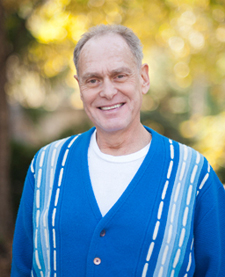 Dennis Farber
Dennis Farber, a faculty member in the Foundation Department at Maryland Institute College of Art in Baltimore since the 1990s, has been named associate dean of foundation studies at his school.

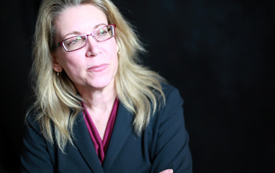 Anne Marie Oliver
Anne Marie Oliver, assistant professor of intermedia and contemporary theory at Pacific Northwest College of Art in Portland, Oregon, has been named cochair of the master’s degree program in critical theory and creative research at her school.

 P. Gregory Warden
P. Gregory Warden, professor of art history and associate dean for research and academic affairs in the Meadows School of Art at Southern Methodist University in Dallas, Texas, has been appointed president of Franklin College in Lugano, Switzerland. Warden will leave his current institution at the end of academic year 2011–12.
Museums and Galleries

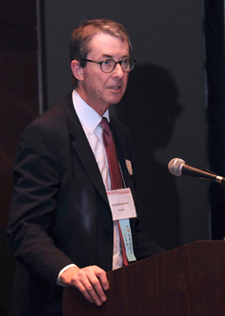 David Bomford (photograph by Bradley Marks)
David Bomford has left his position as acting museum director of the J. Paul Getty Museum in Los Angeles, California. Bomford, who joined the museum in 2007 as associate director for collections, will return to London to pursue research, scholarship, and writing.

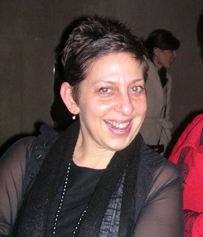 Joy Garnett (photograph by Bradley Marks)
Joy Garnett, a New York–based painter and the editor of NEWSgrist, has become director of Theodore:Art, a gallery that has recently relocated from Manhattan to Brooklyn.
Suzanne Folds McCullagh has been named Anne Vogt Fuller and Marion Titus Searle Chair and Curator of Prints and Drawings at the Art Institute of Chicago in Illinois. A museum staff member since 1975, McCullagh succeeds Douglas Druick as the head of her department.

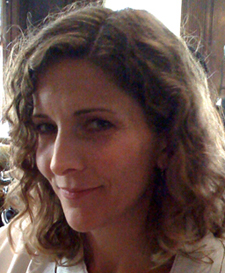 JoAnne Northrup
JoAnne Northrup, previously chief curator at the San Jose Museum of Art in California, has joined the Nevada Museum of Art in Reno as director of contemporary initiatives.
Martha Tedeschi has been named Prince Trust Curator in Prints and Drawings at the Art Institute of Chicago in Illinois. A museum staffer since 1982, Tedeschi takes the curatorial reins from Douglas Druick.
Sheena Wagstaff, chief curator at Tate Modern in London since 2001, has been recruited as the new department head of twentieth- and twenty-first century art at the Metropolitan Museum of Art in New York.
Kenneth Wayne, a consultant for arts organizations since 2010 after leaving a curatorial post at the Heckscher Museum of Art in Huntington, New York, has joined the Noguchi Museum in Long Island City, New York, as deputy director for curatorial affairs.
Institutional News
posted Feb 17, 2012
Read about the latest news from institutional members.
Institutional News is published every two months: in February, April, June, August, October, and December. To learn more about submitting a listing, please follow the instructions on the main Member News page.
February 2012

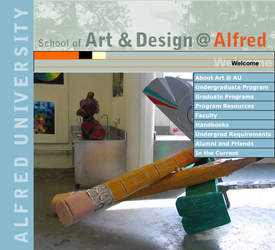 Website of the School of Art and Design at Alfred University
Alfred University in Alfred, New York, has been awarded a $15,000 grant from the National Endowment for the Arts in support of the Institute for Electronic Arts’ Experimental Projects Residency. The School of Art and Design in the New York State College of Ceramics will use the grant to fully fund eight artists chosen for one- to two-week residencies.

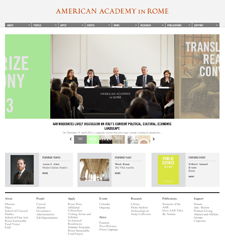 Website of the American Academy in Rome
The American Academy in Rome in Italy has received a $50,000 grant from the National Endowment for the Arts to help fund its yearlong residency program for American artists.

 Website of Anderson Ranch Art Center
The Anderson Ranch Art Center in Snowmass Village, Colorado, has accepted a $10,000 grant from the National Endowment for the Arts for its residency program for emerging and established artists.

The Bard Graduate Center: Decorative Arts, Design History, Material Culture in New York has been awarded a 2011 Hurricane Recovery Grant in support of American Christmas Cards 1900–1960, an exhibition that was held September 21–December 31, 2011. The $3,000 grant came from the New York Council for the Humanities and is intended to aid cultural institutions affected in the wake of Hurricane Irene and Tropical Storm Lee.
California Institute of the Arts in Valencia has been awarded a $70,000 grant from the National Endowment for the Arts in aid of the CalArts Community Partnership Summer Arts Program, a three-week initiative for high school students to learn from professional artists and to participate in a choice of five workshops: visual art, dance, music, film/video, and writing.

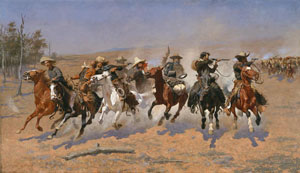 Frederic S. Remington, A Dash for the Timber, 1889, oil on canvas, 48¼ x 84⅛ in. Amon Carter Museum, Fort Worth, Texas (artwork in the public domain)
The Amon Carter Museum of American Art in Fort Worth, Texas, has been awarded a grant of $68,000 from the National Endowment for the Arts. The museum will apply the funds to Color!, an exhibition of fine-art color photography and its accompanying catalogue.
The Cooper Union for the Advancement of Science and Art in New York has received a National Endowment for the Arts grant of $15,000. The school will use the funds for Ruptures, an exhibition of commissioned artworks that address public space, the role of the artist, and social justice. Featured artists will include Sharon Hayes, Rirkrit Tiravanija, and Nancy Davenport.
DePaul University in Chicago, Illinois, has earned a $39,000 grant from the National Endowment for the Arts to help support the DePaul Art Museum’s exhibition War Baby/Love Child: Mixed Race Asian American Art, scheduled for spring 2013.

Electronic Arts Intermix in New York has been awarded a $45,000 grant from the National Endowment for the Arts for its Artists’ Media Distribution Service, a program founded in 1973 that offers an archive and lending library of more than 3,500 titles of video and media art.


The Getty Research Institute in Los Angeles, California, has acquired an important Man Ray archive. Among the highlights of the collection, which includes photographs, ephemera, and correspondences with other artists, are agendas the artist kept that document twenty-seven years of his career.

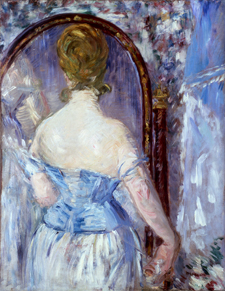 Édouard Manet, Before the Mirror (Devant la glace), 1876, oil on canvas, 92.1 x 71.4 cm. Solomon R. Guggenheim Museum, New York. Thannhauser Collection (artwork in the public domain)
The Solomon R. Guggenheim Museum in New York has been awarded $30,000 from the National Endowment for the Arts for stillspotting nyc, a two-year multidisciplinary collaboration with the New York City Department of Transportation and the Graduate School of Architecture, Planning, and Preservation at Columbia University.
The Mildred Lane Kemper Art Museum, part of Washington University in Saint Louis, Missouri, has earned a $34,000 grant from the National Endowment for the Arts for an upcoming exhibition, Georges Braque and the Cubist Still Life 1928–1944, which will feature more than forty paintings and be accompanied by a catalogue.
Maryland Institute College of Art in Baltimore has received a $25,000 grant from the National Endowment for the Arts. The grant will support the school’s Ceramic and New Technology Research Initiative, a three-week residency program that explores connections between ceramics and digital technology. The college has also launched a new online publication, Community Arts Journal, which describes the school’s relationship to the arts and activism communities in Baltimore and beyond.

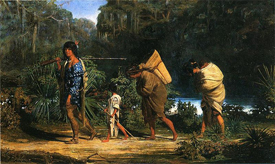 Alfred Boisseau, Louisiana Indians Walking along a Bayou, 1847, oil on canvas, 28⅜ x 44½ x 2 in. New Orleans Museum of Art, Louisiana (artwork in the public domain)
The New Orleans Museum of Art in Louisiana has been awarded a National Endowment for the Arts grant of $20,000 in support of Inspired by New Orleans, a project comprising artist lectures, an original sound piece by Dario Robleto, and a Mississippi-based project designed by the architects David Adjaye and Michael Maltzan.

 Cover of a catalogue for the American Water Color Society
The New York Art Resource Consortium has completed a new digital collection, made in partnership with the Frick Art Reference Library, the Brooklyn Museum Libraries and Archives, and the Museum of Modern Art Library. The collection, called Documenting the Gilded Age: New York City Exhibitions at the Turn of the 20th Century, features materials from the city’s art galleries, associations, and clubs and is available to researchers as full-text digital facsimiles.
The Pennsylvania Academy of the Fine Arts in Philadelphia has been awarded a $34,000 grant from the National Endowment for the Arts to help produce a museum exhibition, Peter Blume: Nature and Metamorphosis, which will present paintings, drawings, sketchbooks, and archival material.

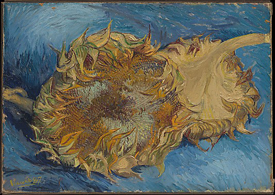 Vincent van Gogh, Sunflowers, 1887, oil on canvas, 17 x 24 in. Metropolitan Museum of Art, New York (artwork in the public domain)
The Philadelphia Museum of Art in Pennsylvania has earned a $61,000 grant from the National Endowment for the Arts in support of the exhibition Van Gogh Up Close, on view February 1–May 6, 2012.
The Picker Art Gallery and the Clifford Art Gallery at Colgate University in Hamilton, New York, have received a $20,000 grant from the National Endowment for the Arts to support the exhibition Recto/Verso: Video by Ann Hamilton, a survey of the video art by Ann Hamilton, on view February 3–April 6, 2012.


Pratt Institute in Brooklyn, New York, has accepted a $20,000 grant from the National Endowment for the Arts to help fund the Pratt Center for Community Development, an outreach program connecting the school to its neighborhood through community events and collaborative projects.

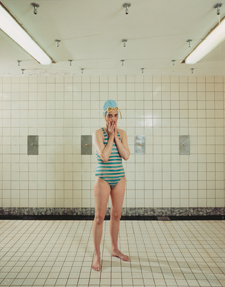 Rineke Dijkstra, Self-Portrait, Marnixbad, Amsterdam, the Netherlands, June 19, 1991, 1991, chromogenic print, 24 7/16 x 20½ in. (artwork © Rineke Dijkstra; photograph provided by the artist, Marian Goodman Gallery, New York and Paris, and the San Francisco Museum of Modern Art)
The San Francisco Museum of Modern Art in California has received a $34,000 grant from the National Endowment for the Arts in support of a retrospective of the Dutch artist Rineke Dijkstra. The exhibition will feature seventy large-scale color photographs and five video installations and be on view February 18–May 28, 2012.

The Skowhegan School of Painting and Sculpture in Skowhegan, Maine, has earned a $27,000 grant from the National Endowment for the Arts to support its nine-week residency program for emerging artists.
The Smithsonian Institution in Washington, DC, has received a $5 million endowment from the New York philanthropist Dame Jillian Sackler for the Freer Gallery of Art and the Arthur M. Sackler Gallery. The gift is in honor of the twenty-fifth anniversary of the naming of the Sackler Gallery.
Tulane University in New Orleans, Louisiana, has been awarded a $34,000 grant to support the Newcomb Art Gallery’s exhibition Women, Art, and Social Change: The Newcomb Pottery Enterprise, which will open in October 2013.
The University of California, Berkeley, has received a $15 million gift from David Woo to support the relocation of the Berkeley Art Museum and Pacific Film Archive. Woo is a 1967 graduate of Berkeley’s College of Environmental Design and was active in the planning of the original museum and archive.

The University of Oregon in Eugene has received a $1.2 million endowment gift from the estate of Ann Swindell to sustain faculty development and help expand the art curriculum in the School of Architecture and Allied Arts.

 Utagawa Kunisada, Kabuki, no date, color woodcut, 13⅝ x 9⅞ in. University of Wyoming Art Museum, Laramie (artwork in the public domain)
The University of Wyoming Art Museum in Laramie has been awarded a $25,000 grant from the National Endowment for the Arts. The museum will use the funds to support an exhibition devoted to the work of the American artist Ralston Crawford (1906–1978).

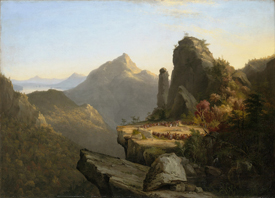 Thomas Cole, Scene from “The Last of the Mohicans,” Cora Kneeling at the Feet of Tamenund, 1827, oil on canvas, 25⅜ x 35 1/16 in. Wadsworth Atheneum Museum of Art, Hartford, Connecticut (artwork in the public domain)
The Wadsworth Atheneum Museum of Art, in Hartford, Connecticut, has accepted a $21,000 grant from the National Endowment for the Arts in support of MATRIX, a dynamic exhibition series founded in 1974 that features emerging artists.
The Whitney Museum of American Art in New York has received a $61,000 grant from the National Endowment for the Arts to help fund the museum’s upcoming retrospective for Jay DeFeo, scheduled for February 28–June 2, 2013.

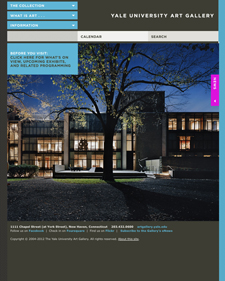 Website of the Yale University Art Gallery
The Yale University Art Gallery in New Haven, Connecticut, has accepted a $68,000 grant from the National Endowment for the Arts for an upcoming exhibition, Coney Island: Visions of an American Dreamland 1861–2008. With more than one hundred artifacts—paintings, drawings, films, and posters—the show will trace the appeal of Coney Island from its prehistory to the present.
Download Abstracts 2012
posted Feb 16, 2012
 Registrants for the 2012 Annual Conference in Los Angeles can now download Abstracts 2012. This publication, available as a PDF, summarizes the contents of hundreds of papers and talks that will be presented in program sessions.
Reading the abstracts in advance can help you plan your daily schedule at the conference. Program sessions are alphabetized by the chair’s last name and appear in the contents pages (4–10). An index in the back of the publication names all the speakers. Alternatively, use your Adobe Reader to conduct a keyword search for terms relevant to your interests.
After conference registrants log into their CAA account, they can click the “Abstracts 2012” image in the middle of the screen to download the PDF (1.9 MB). Abstracts 2012 is part of the registration package; there is no added cost to paid or complimentary registrants for this publication.
Conference attendees who purchase single-time slot tickets, or those who want Abstracts 2012 but are not coming to Los Angeles, may attain the document for a charge: $30 for CAA members and $35 for nonmembers. Abstracts 2012 will remain on the CAA website for download or sale through July 31, 2012.
Beginning with the 2010 conference in Chicago, CAA offers its Abstracts exclusively as a PDF download. Past issues of the printed publication from 1999 to 2009 are also available. The cost per copy is $30 for CAA members and $35 for nonmembers. For more information and to order, please contact Roberta Lawson, CAA office coordinator.
Free Los Angeles Art Apps for Your Smart Phone
posted Feb 15, 2012
CAA encourages you to look into a handful of free and low-cost smart-phone apps to help you navigate museums, galleries, and other art-related events, enhancing your conference experience in Los Angeles. Most of the apps, which offer an abundance of exhibition information for the Hammer and Fowler Museums and for Pacific Standard Time, are designed for iPhones, iPads, and iPod Touches; several work with mobile devices using Android. A few of these apps assist with travel and transportation around the city, and with finding restaurants. The apps are available in the iTunes Store and in the Android Market.
Art Openings and Events
 ArtConcierge is a free guide to galleries, art fairs, and art-related exhibits, including programming for the Getty Center’s Pacific Standard Time and to independently organized events. GPS navigation is available for all selections. ArtConcierge is produced by Fabrik Media Group, which publishes the magazine Fabrik.
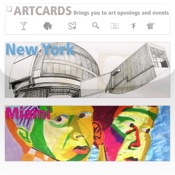 Artcards gives you free instant access to a comprehensive list of current art openings, talks, performances, screenings, and related events in greater Los Angeles. Galleries are grouped by neighborhood or city. Artcards provides names of artists, titles of shows, event day and time, and links to maps and to each gallery’s website.
 The free LA Weekly app offers content from the printed newspaper and its website. Updated events listings include: live music, art openings, comedy clubs, theater, and dining options. Search for a particular event or use a GPS device to find events near you. More than two thousand restaurant listings and write-ups by the celebrated food critic Jonathan Gold. Get it for Apple or Android devices.
Museums and Exhibitions
 Learn all about the Los Angeles art world from the 1940s to today with The Getty: Art in LA, Pacific Standard Time at the Getty Center. This free app for both Apple and Android devices highlights all four Pacific Standard Time exhibitions held at the Getty Center. See paintings, sculptures, photographs, and archival material, listen to audio, and read the stories behind the artworks.
 Getty Goggles will help you explore and learn more about paintings in the Getty Center in Los Angeles. Simply photograph a work of art you are interested in and click the Getty result to hear insightful commentary from artists, curators, and conservators. Getty Goggles works with Apple products and mobile devices using Android.
 This free app for Apple and Android can help you plan a visit to the Los Angeles County Museum of Art. In addition to learning about the museum’s collection, you can reserve tickets for film screenings, concerts, lectures, and gallery talks. Video interviews with artists and curators are also available. The museum has also created an Apple-only app for its exhibition, California Design, 1930–1965: “Living in a Modern Way.”
 Use the free Hammer Museum app to plan your visit and to experience in-depth content about the Hammer’s exhibitions and collections. Features include: interviews with artists and curators discussing specific works of art, videos of artists describing their practices, and excerpts from exhibition catalogues. The Hammer app is compatible with Apple products and mobile devices using Android.
 The free Fowler Museum Guide app provides visitors with a tour of the Fowler Museum’s permanent collection of more than 150,000 art and ethnographic objects and 600,000 archaeological objects representing ancient, traditional, and contemporary cultures of Africa, Native and Latin America, and Asia and the Pacific. The app also gives information on temporary exhibitions.
 Designed to help you learn more about the Norton Simon Museum’s current and upcoming exhibitions and events, this free app lets you browse the collections, listen to podcasts and audio stops, watch videos, and learn about the museum’s history. The app also lists the museum’s hours, admission fees, and directions.
Listen to the award-winning Norton Simon Museum Audio Tour. More than four hundred stops are featured in English and Spanish, including tours for adults and children. Look for the audio-tour icon and stop number on the labels of many of the museum’s artworks.
Navigating the City
 Mappity Los Angeles, available for $.99, offers a map of Los Angeles with features such as street-level map details and custom mapping for door-to-door travel.
 The free Beat the Traffic app for Apple, Android, and BlackBerry tells you about the road and traffic conditions in your desired city. Its features include: real-time traffic maps, GPS displays of traffic jams in your area, and weather information. Beat the Traffic HD Plus+ is an ad-free version that is available for $4.99 in the iTunes Store and $3.99 in the Android Market.
 The California Traffic Report, a free app produced by the University of California, San Diego, delivers real-time traffic reports, including approximate commute time, traffic speeds, and maps. It covers greater Los Angeles, the San Francisco Bay Area, and San Diego.
 Yes, public transportation does exist in Los Angeles. Use the free Go-Metro Los Angeles app to help you navigate the city’s bus system. Features include: maps, timetables, fare information, and a trip planner.
Eat Like a Native
 The Los Angeles Street Food app ($1.99) covers cheap eats in the city, from Vietnamese pho houses to Mexican taco stands to grilled-cheese food trucks. The interactive maps will help you navigate the city, while listings are organized into categories and publish in-depth reviews, Twitter links, and picture slideshows. This app, though, does not track food trucks.
 Vegan Los Angeles supports a healthy vegan lifestyle in Los Angeles. Find recipes and vegan restaurants and watch cooking demonstrations using this free app for Apple and Android mobile devices.
Revised on February 16, 2012.
Grants, Awards, and Honors
posted Feb 15, 2012
CAA recognizes its members for their professional achievements, be it a grant, fellowship, residency, book prize, honorary degree, or related award.
Grants, Awards, and Honors is published every two months: in February, April, June, August, October, and December. To learn more about submitting a listing, please follow the instructions on the main Member News page.
February 2012
Blane De St. Croix, an artist and associate professor of sculpture at Florida Atlantic University in Boca Raton, has accepted a 2011 Massachusetts College of Art Alumni Award for Outstanding Accomplishment.
Alexander Dumbadze, assistant professor of art history at George Washington University in Washington, DC, has received an award from the Arts Writers Grant Program, administered by Creative Capital and the Andy Warhol Foundation for the Visual Arts, in support of his article, “Jack Goldstein and the Origins of Postmodernism.”
Daniel Eisenberg, professor in the Department of Film, Video, New Media, and Animation at the School of the Art Institute of Chicago in Illinois, has been awarded a film/video grant from Creative Capital to help fund The Unstable Object, a film that will address the relationship between factory workers and the objects they produce.
Malik Gaines, a member of the artist collective My Barbarian, has received a grant in visual arts from Creative Capital in support of a series of workshops and public performances, titled Post-Living Ante-Action Theater. His group will collaborate with artists working in Israel and Egypt to stage visual, musical, and theatrical demonstrations.

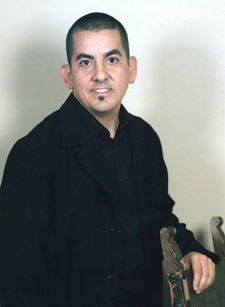 Ken Gonzales-Day
Ken Gonzales-Day had been awarded a visual-arts grant from Creative Capital in support of Profiled, an ongoing project that uncovers racial stereotypes from the seventeenth and eighteenth centuries. Gonzales-Day will use the grant to produce a series of workshops with middle school students in central Los Angeles that will explore themes of racial and ethnographic categorization in art viewing and making.

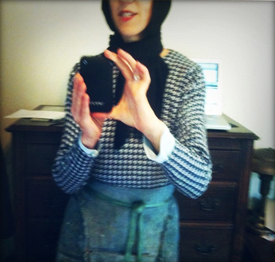 Julie Green
Julie Green, an artist and associate professor of art at Oregon State University in Corvallis, has received a 2011 Joan Mitchell Foundation Award for Painters and Sculptors. Green is one of twenty-five artists nationwide to receive the award.

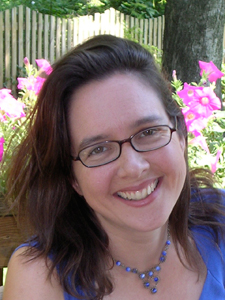 Michele Greet
Michele Greet, associate professor of art history at George Mason University in Fairfax, Virginia, has been awarded a fellowship from the National Endowment for the Humanities for her project, “Transatlantic Encounters: Latin American Artists in Paris between the Wars.”
Natilee Harren, a doctoral candidate in the Department of Art History at the University of California, Los Angeles, is cowinner of the first Art & Education Paper Prize. Harren’s text, “Objects without Objects: The Artwork in Flux,” has been published in Art & Education Papers.
Jane McFadden, associate professor of art and design at Art Center College of Design in Pasadena, California, had received a grant through the Arts Writers Grant Program, a collaboration between Creative Capital and the Andy Warhol Foundation for the Visual Arts, in support of her forthcoming book, There and Not There: Walter De Maria.
Christine Mehring, associate professor of art history at the University of Chicago in Illinois, has accepted an award from the Arts Writers Grant Program, administered by Creative Capital and the Andy Warhol Foundation for the Visual Arts, that will support her forthcoming book, Munich ‘72: Olympian Art and Architecture. Written in collaboration with Sean Keller, Munich ’72 will examine the lost history of the art and architecture of the 1972 Olympics and its lasting effects on the global art world and the construction on German postwar identity.
Melissa Potter, assistant professor of interdisciplinary arts at Columbia College Chicago in Illinois, has received a faculty development grant to help produce a collaboration with a fellow artist and faculty member, Paul Catanese. Their project, Handmade Media, explores the intersection of electronic media and hand papermaking.
Emily Eliza Scott, an independent artist and scholar, has earned a grant from the Arts Writers Grant Program, administered by Creative Capital and the Andy Warhol Foundation for the Visual Arts. The award will support her forthcoming article, “Toxic Gardens: Patricia Johanson’s House and Garden Proposal (1969),” which addresses Patricia Johanson’s radical proposals for New York City parks in the late 1960s and their relationship to Land art, Minimalism, and an emergent ecologically conscious culture.
Roger Shimomura, a painter and professor of art at the University of Kansas in Lawrence, has received a $50,000 United States Artists Fellowship. Shimomura is known for work that investigates Asian American identity and, more recently, Muslim American identity in a post–September 11 world.
Deborah Stratman, a Chicago-based artist and filmmaker, has received a film/video grant from Creative Capital that will help fund her forthcoming film, The Illinois Parables, which explores a series of regional narratives while addressing themes of the rational, the supernatural, the political, and the mystical.
Jesse Sugarmann, an interdisciplinary artist and assistant professor of new genres at California State University, Bakersfield, has received a film/video grant from Creative Capital in support of We Build Excitement, a film about the American automobile industry and the manufacturing of American identity.
Christopher Sullivan, an artist and faculty member in film, video, and new media
at the School of the Art Institute of Chicago in Illinois, has been awarded a Creative Capital grant in film/video to help produce The Orbit of Minor Satellites, his forthcoming animated feature.
Meredith Tromble, an artist, writer, and associate professor at the San Francisco Art Institute in California, has earned a grant through the Arts Writers Grant Program, a collaborative venture between Creative Capital and the Andy Warhol Foundation for the Visual Arts, in support of her blog Art and Shadows, a platform to address contemporary art and its relationship to theories of mind and consciousness.
Murtaza Vali, a writer, art historian, and curator based in Brooklyn, New York, has accepted a grant for short-form writing through Creative Capital and the Andy Warhol Foundation for the Visual Arts’ Arts collaborative initiative, the Arts Writers Grant Program. Throughout the year Vali will produce critical writing that addresses figures of absence and presence in contemporary political art.
William Wilson has been recognized with a grant from the Arts Writers Grant Program, administered by Creative Capital and the Andy Warhol Foundation for the Visual Arts. The funds will help support Ray Johnson: An Illustrated Life in Art, a book that will examine Johnson’s life and work in the context of an extensive personal archive housed in Wilson’s home.
Exhibitions Curated by CAA Members
posted Feb 15, 2012
Check out details on recent shows organized by CAA members who are also curators.
Exhibitions Curated by CAA Members is published every two months: in February, April, June, August, October, and December. To learn more about submitting a listing, please follow the instructions on the main Member News page.
February 2012

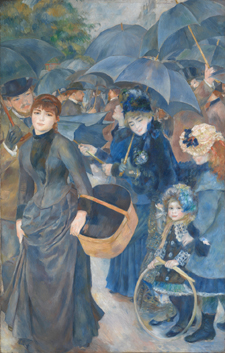 Pierre-Auguste Renoir, The Umbrellas (Les Parapluies), ca. 1881–85, oil on canvas, 71 x 45 in. National Gallery, London, Sir Hugh Lane Bequest, 1917 (artwork in the public domain; photograph © National Gallery, London / Art Resource, NY and provided by the Frick Collection)
Colin B. Baily. Renoir, Impressionism, and Full Length Painting. Frick Collection, New York, February 7–May 13, 2012.

Patricia G. Berman. Luminous Modernism. Scandinavia House, New York, October 25, 2011–February 11, 2012.
Jeanne Brasile. Jones and Roa: Pulvis et Umbra. Cuchifritos Art Gallery/Project Space, New York, November 12–December 18, 2011.
Reni Gower. Papercuts. Norman Shannon and Emmy Lou P. Illges Gallery, Columbus State University, Columbus, Georgia, March 22–April 24, 2012.
John Silvis. Walls and Light: Recent Photographs by Father Paul Anel. First Things Gallery, New York, November 10, 2011–January 9, 2012.

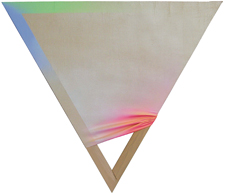 Jorrit Tornquist, Sommertag in Trachtenlook, 1990, acrylic on canvas, 63 x 63 x 63 in. (artwork © Jorrit Tornquist)
Cortney Lane Stell. Jorrit Tornquist: The Intersection of Color and Thought. J. Phillip J Steele Gallery, Denver, Colorado, February 6–March 4, 2012.

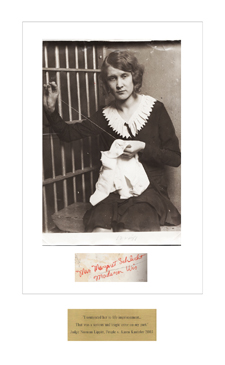 Carol Jacobsen, Mistrial 5, 2010, digital archival print and engraved brass plate, 50 x 29 in. (artwork © Carol Jacobson; photograph provided by Denise Bibro Fine Art)
Thalia Vrachopoulos. Carol Jacobsen: Mistrial. Sixth Floor President’s Gallery, John Jay College of Criminal Justice, City University of New York, New York, October 17–December 16, 2011.

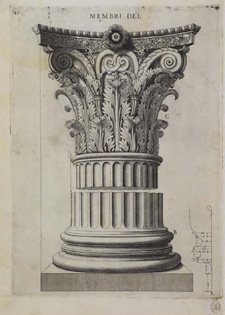 Antonio Labacco (engraving by Mario Labacco), Capital and base from the Temple of Castor and Pollux, Rome, 1559, plate 21, engraving, 13 x 9¼ in. Avery Architectural and Fine Arts Library, Columbia University, Speculum Romanae Magnificentiae Collection (artwork in the public domain)
Michael J. Waters and Cammy Brothers. Variety, Archeology, and Ornament: Renaissance Architectural Prints from Column to Cornice. University of Virginia Art Museum, Charlottesville, Virginia, August 26–December 18, 2011.
Lili White. The Missing Third Festival Show. Another Experiment by Women Film Festival, Anthology Film Archives, New York. March 7, 2012.
Books Published by CAA Members
posted Feb 15, 2012
Publishing a book is a major milestone for artists and scholars—browse a list of recent titles below.
Books Published by CAA Members appears every two months: in February, April, June, August, October, and December. To learn more about submitting a listing, please follow the instructions on the main Member News page.
February 2012

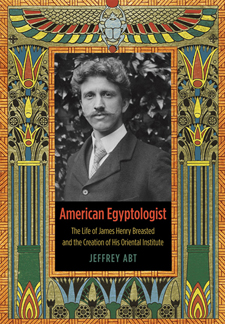
Jeffrey Abt. American Egyptologist: The Life of James Henry Breasted and the Creation of His Oriental Institute (Chicago: University of Chicago Press, 2011).

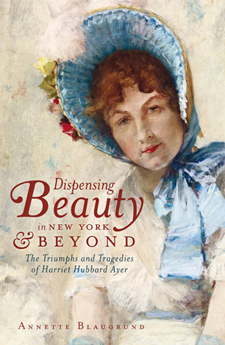
Annette Blaugrund. Dispensing Beauty in New York and Beyond: The Triumph and Tragedies of Harriet Hubbard Ayer (Charleston, SC: History Press, 2011).

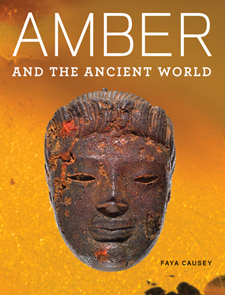
Faya Causey. Amber and the Ancient World (Los Angeles: J. Paul Getty Museum, 2012).

Cora Cohen. Cora Cohen: Works on Paper (Houston: D. M. Allison Editions, 2011).

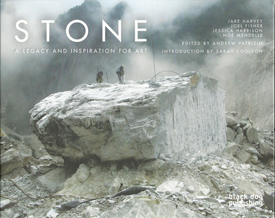
Jake Harvey, Joel Fisher, Jessica Harrison, and Noé Mendelle. Stone: A Legacy and Inspiration for Art (London: Black Dog Press, 2011).

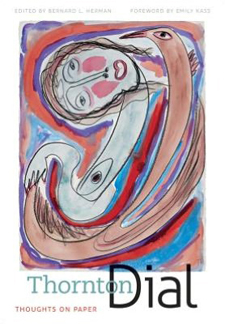
Bernard L. Herman, ed. Thornton Dial: Thoughts on Paper (Chapel Hill: University of North Carolina Press, in association with the Ackland Art Museum, 2012).


Zoya Kocur, ed. Global Visual Cultures: An Anthology (Malden, MA: Wiley Blackwell, 2011).

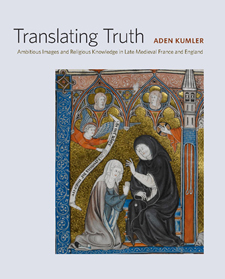
Aden Kumler. Translating Truth: Ambitious Images and Religious Knowledge in Late Medieval France and England (New Haven, CT: Yale University Press, 2011).

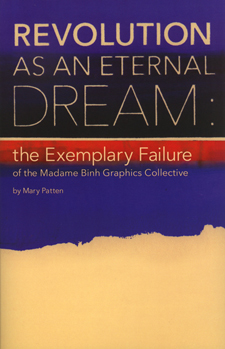
Mary Patten. Revolution as an Eternal Dream: The Exemplary Failure of the Madame Binh Graphics Collective (Chicago: Half Letter Press, 2011).

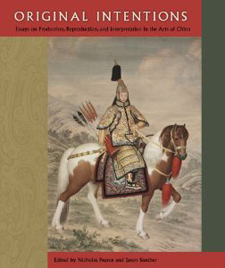
Nicolas Pearce and Jason Steuber, eds. Original Intentions: Essays on Production, Reproduction, and Interpretation in the Arts of China (Gainesville: University Press of Florida, 2012).

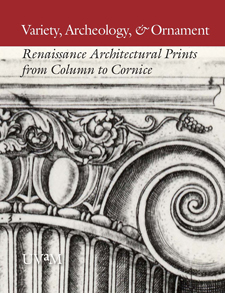
Michael J. Waters and Cammy Brothers. Variety, Archeology, and Ornament: Renaissance Architectural Prints from Column to Cornice (Charlottesville: University of Virginia Art Museum, 2011).
Wireless Internet at the 2012 Conference
posted Feb 14, 2012
Please visit the website for the 100th Annual Conference in Los Angeles for complete details about obtaining access to wireless-internet connections at the Los Angeles Convention Center and the four conference hotels.
February 2012 Picks from CAA’s Committee on Women in the Arts
posted Feb 13, 2012
 Each month, CAA’s Committee on Women in the Arts produces a curated list, called CWA Picks, of recommended exhibitions and events related to feminist art and scholarship in North America and around the world.
The CWA Picks for February 2012 include four solo shows of women artists at museums and galleries across the United States. The Hammer Museum in Los Angeles, California, presents Alina Szapocznikow: Sculpture Undone, 1955–1972, and the Carnegie Museum of Art in Pittsburgh, Pennsylvania, will exhibit the work of Maya Lin. Kathryn Spence: Dirty and Clean is on view at the Aldrich Contemporary Art Museum in Ridgefield, Connecticut, and the Delaware Art Museum in Wilmington has organized a survey of work by the celebrated children’s book author and illustrator, Katharine Pyle (1863–1938).
Check the archive of CWA Picks at the bottom of the page, as several museum and gallery shows listed in previous months may still be on view or touring.
Image: Alina Szapocznikow with her work Naga (Naked), 1961. Alina Szapocznikow Archive/Piotr Stanislawski/National Museum in Kraków (photograph by Marek Holzman and provided by the Museum of Modern Art, Warsaw)