
CAA News Today
Books Published by CAA Members
posted Aug 15, 2011
Publishing a book is a major milestone for artists and scholars—browse a list of recent titles below.
Books Published by CAA Members appears every two months: in February, April, June, August, October, and December. To learn more about submitting a listing, please follow the instructions on the main Member News page.
August 2011

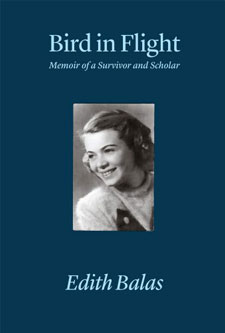
Edith Balas. Bird in Flight: Memoir of a Survivor and Scholar (Pittsburgh, PA: Carnegie Mellon University Press, 2011).

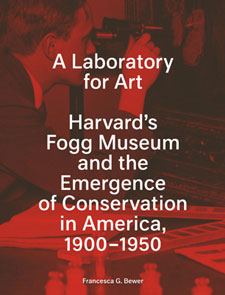
Francesca G. Bewer. A Laboratory for Art: Harvard’s Fogg Museum and the Emergence of Conservation in America, 1900–1950 (Cambridge, MA: Harvard Art Museums, 2010).

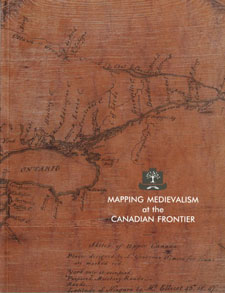
Kathryn Brush, ed. Mapping Medievalism at the Canadian Frontier (London, ON: Museum London and the McIntosh Gallery, University of Western Ontario, 2010).

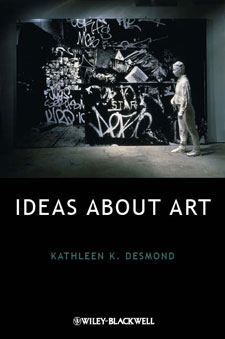
Kathleen K. Desmond. Ideas about Art (Malden, MA: Wiley-Blackwell, 2011).

Sandra Q. Firmin. Artpark: 1974–1984 (New York: Princeton Architectural Press, 2010).

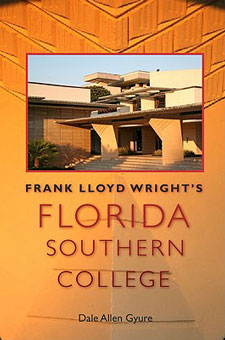
Dale Allen Gyure. Frank Lloyd Wright’s Florida Southern College (Gainesville: University Press of Florida, 2010).

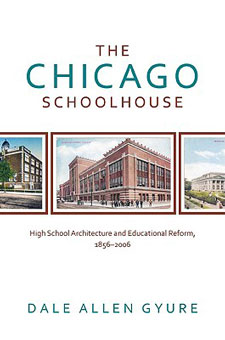
Dale Allen Gyure. The Chicago Schoolhouse: High School Architecture and Educational Reform, 1856–2006 (Chicago: Center for American Places, Columbia College Chicago Press, 2011).

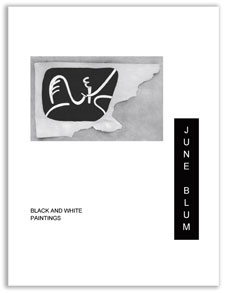
Andrew D. Hottle. June Blum: Black and White Paintings, 1963 through 2010 (Cocoa Beach, FL: Blue Note Publications, 2011).

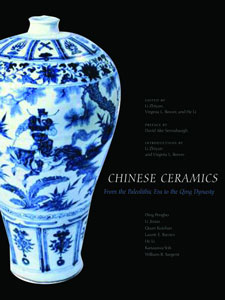
Li Zhiyan, Virginia L. Bower, and He Li, ed. Chinese Ceramics from the Paleolithic Period through the Qing Dynasty (New Haven, CT: Yale University Press, 2010).

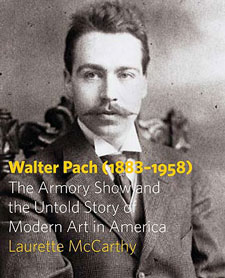
Laurette E. McCarthy. Walter Pach (1883–1958): The Armory Show and the Untold Story of Modern Art in America (University Park: Pennsylvania State University Press, 2011).

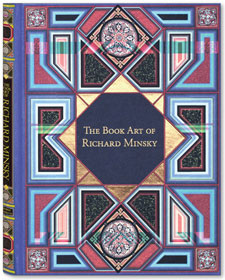
Richard Minsky. The Book Art of Richard Minsky (New York: George Braziller, 2011).

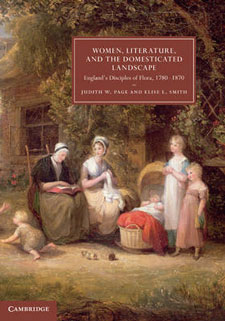
Judith W. Page and Elise L. Smith. Women, Literature, and the Domesticated Landscape: England’s Disciples of Flora, 1780–1870 (New York: Cambridge University Press, 2011).

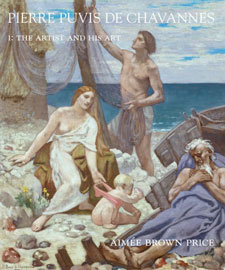
Aimée Brown Price. Pierre Puvis de Chavannes, vol. 1, The Artist and His Art (New Haven, CT: Yale University Press, 2010).

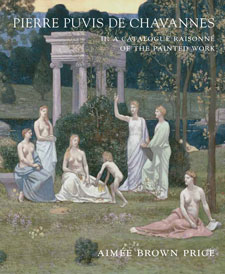
Aimée Brown Price. Pierre Puvis de Chavannes, vol. 2, A Catalogue Raisonné of the Painted Work (New Haven, CT: Yale University Press, 2010)

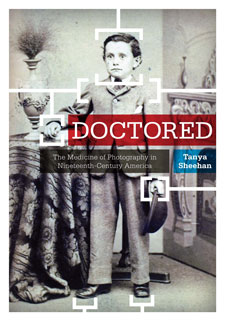
Tanya Sheehan. Doctored: The Medicine of Photography in Nineteenth Century America (University Park: Pennsylvania State University Press, 2011).

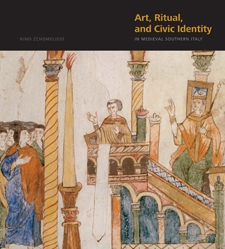
Nino Zchomelidse and Giovanni Freni. Meaning in Motion: The Semantics of Movement in Medieval Art (Princeton, NJ: Princeton University Press, 2011).
Exhibitor and Advertiser Prospectus for the 2012 Annual Conference
posted Aug 11, 2011
 The Exhibitor and Advertiser Prospectus for the 2012 Annual Conference in Los Angeles, California, is now available for download. Featuring essential details for participation in the Book and Trade Fair, the booklet also contains options for sponsorship opportunities and advertisements in conference publications and on the conference website.
The Exhibitor and Advertiser Prospectus will help you reach a core audience of artists, art historians, educators, students, and administrators, who will converge in Los Angeles for CAA’s 100th Annual Conference and Centennial Celebration, taking place February 22–25, 2012. With three days of exhibit time, the Book and Trade Fair will be centrally located in the Los Angeles Convention Center, where most programs sessions and special events take place. CAA offers several options for booths and tables that can help you to connect in person with conference attendees.
In addition, sponsorship packages will allow you to maintain a high profile throughout the conference. Companies, organizations, and publishers may choose one of three packages, sponsor specific areas and events such as Convocation, ARTspace, and the Distinguished Scholar Session, or work with CAA staff to design a custom visibility package. Advertising possibilities include the Conference Program, distributed to over five thousand registrants, and the conference website, seen by thousands more.
The priority deadline for Book and Trade Fair applications is Friday, October 28, 2011; the final deadline for all applications and full payments, and for sponsorships and advertisements in the Conference Program, is Friday, December 9, 2011.
Questions about the 2012 Book and Trade Fair? Please contact Paul Skiff, CAA assistant director for Annual Conference, at 212-392-4412. For sponsorship and advertising queries, speak to Helen Bayer, CAA marketing and communications associate, at 212-392-4426.
Participate in ARTexchange at the Los Angeles Conference
posted Aug 09, 2011
 CAA’s Services to Artists Committee invites artist members to participate in ARTexchange, an open forum for sharing work at the 2012 Annual Conference. Free and open to the public, ARTexchange will be held on Friday, February 24, 5:30–7:30 PM, in a central location at the Los Angeles Convention Center. A cash bar will be available.
ARTexchange is an annual event showcasing the art of CAA members, who can exhibit their paintings, drawings, prints, photographs, sculptures, and digital works using the space on, above, and beneath a six-foot folding table. Artists may also construct temporary mini-installations and conduct performance, sound, and spoken-word pieces in their space. In the past, many ARTexchange participants found the event to be their favorite part of the conference, with the table parameter sparking creative displays.
To be considered for ARTexchange in Los Angeles, please send your full name, your CAA member number, a brief description of the work you want to exhibit (no more than 150 words), and a link to your website to Lauren Stark, CAA manager of programs. Artists presenting performance or sound art, spoken word, or technology-based work, including laptop presentations, must add a few sentences about their plans. Accepted participants will receive an email confirmation. Because ARTexchange is a popular venue with limited space, early applicants will be given preference. Deadline extended: January 6, 2012.
 Participants are responsible for their work; CAA is not liable for losses or damages. Sale of work is not permitted. Participants may not hang artworks on walls or run power cords from laptops or other electronic devices to outlets—bring fully charged batteries. For the first time, CAA will provide wireless internet to ARTexchange participants free of charge.
Top image: The artist Dennis Olsen chats about his work with a fellow printmaker, Pantea Karimi, at ARTexchange in 2011 (photograph by Bradley Marks)
Bottom image: The interdisciplinary artist Rachel Hines performs a work called Interview during ARTexchange in New York (photograph by Bradley Marks)
2012 Annual Conference Website Goes Live
posted Aug 05, 2011
 The website for the 100th Annual Conference and Centennial Celebration, taking place February 22–25, 2012, at the Los Angeles Convention Center, is now live. Get a taste of conference highlights and read about what you receive with registration, such as access to all program sessions and admission to the Book and Trade Fair.
You may also begin thinking about your travel plans: American Airlines, Amtrak, and Avis provide promotional codes for special reduced rates, and CAA offers three travel stipends for attendees, including twenty awards through the newly established CAA International Travel Grant Program, generously funded by the Getty Foundation. Companies and organizations interested in exhibiting in the Book and Trade Fair will find application materials, booth descriptions, and preliminary schedules.
Between now and February, CAA will update the website regularly, with new information on the Awards for Distinction presentation, special receptions, postconference tours, and more. Later this month, CAA will publish the names of the three conference hotels and list room rates and reservation instructions. The titles of program sessions, events in ARTspace, biographies of the Convocation speaker and Distinguished Scholar, participants in the Annual Artists’ Interviews, and topics of professional-development workshops will come later this fall.
Online registration will open in early October 2011, with the lowest rates available for members and nonmembers alike between then and early December.
CAA Seeks Nominations for the 2012 Awards for Distinction
posted Aug 02, 2011
To conclude the Centennial year, CAA encourages members to nominate colleagues for ten of the twelve Awards for Distinction for 2012, to be awarded next February at the 100th Annual Conference in Los Angeles, California. The different perspectives and anecdotes from multiple personal letters of recommendation provide award juries with a clearer picture of the qualities and attributes of the nominees.
In the letter, state who you are; how you know (of) the nominee; how the nominee and/or his or her work or publication has affected your practice or studies and the pursuit of your career; and why you think this person (or, in a collaboration, these people) deserves to be recognized. You should also contact up to five colleagues, students, peers, collaborators, and/or coworkers of the nominee to write letters.
All submissions must include a completed nomination form and one copy of the nominee’s CV (limit: two pages); book awards do not require a CV. Nominations for book and exhibition awards should be for the authors of books published or works exhibited or staged between September 1, 2010, and August 31, 2011. No more than five letters per candidate are considered.
Please read the descriptions of the twelve awards, the names of all past recipients, and the full instructions for nominations. You may also write to Lauren Stark, CAA manager of programs, for more information. Deadline: August 31, 2011. The deadline for the Charles Rufus Morey Book Award and the Alfred H. Barr Jr. Award passed on July 31.
Representative Tim Huelskamp from Kansas Offers Amendment to Eliminate NEH Funding
posted Jul 26, 2011
Jessica Jones Irons, executive director of the National Humanities Alliance (NHA), sent the following Humanities Action Alert by email on Monday, July 25, 2011. Founded in 1981, NHA is a nonprofit organization that works to advance national humanities policy in the areas of research, education, preservation, and public programs.
Rep. Tim Huelskamp from Kansas Offers Amendment to Eliminate NEH Funding
Dear Colleague:
This afternoon, the US House of Representatives began debating the Interior, Environment, and Related Agencies spending bill (H.R. 2584). In last week’s action alert, I mentioned that amendments could be offered on the floor that would further reduce funding for the National Endowment for the Humanities beyond the $135 million in FY 2012 funding approved by the Appropriations Committee ($19.7 million, or 13 percent cut from the current year).
Just hours ago, Rep. Tim Huelskamp (R-KS) offered an amendment to reduce funding in the Interior bill by $3 billion in various accounts, including $1.9 billion in EPA spending, as well as complete elimination of the National Endowment for the Humanities and the National Endowment for the Arts (among other programs). The Huelskamp amendment failed by voice vote, but a recorded vote was requested, and is expected to take place tonight.
Even if the current measure fails, additional amendments to weaken funding for NEH may be offered during this week’s floor consideration of the FY12 Interior bill. If you have not already done so, please email your representative and ask him or her to:
- Oppose any amendments to eliminate or further cut NEH funding in the FY12 Interior bill (H.R. 2584)
- Speak on the floor in support of the humanities and the benefits that NEH provides your community
If you would prefer to call the office directly, you can do so through the Capitol Switchboard at 202-224-3121
Earlier today, the Congressional Humanities Caucus Cochairs, Reps. David Price (D-NC) and Tom Petri (R-WI), issued a Dear Colleague letter urging members to oppose the Huelskamp amendment. Reps. Price and Petri are still planning to lead a bipartisan “strike the last word” effort to protect NEH and provide members an opportunity to join their colleagues on the House floor to speak in support of the humanities. The timing of this effort is likely to coincide with the reading of the bill portion that references NEH funding (expected within the next 1–2 days).
Thank you for taking action. We will continue to post updates as new information becomes available.
Sincerely,
Jessica Jones Irons
Executive Director
National Humanities Alliance
Letter to House of Representatives Protesting Further NEA Budget Cuts
posted Jul 25, 2011
The Executive Committee of the Board of Directors approved the addition of CAA’s name to a letter protesting the proposed budget cuts to the National Endowment for the Arts. Thomas L. Birch, legislative counsel for the National Assembly of State Arts Agencies, spearheaded the initiative and sent the missive to the US House of Representatives today.
Letter to US House of Representatives Protesting Further NEA Budget Cuts
July 25, 2011
US House of Representatives
Washington, DC 20515
Dear Representative,
As the FY12 Interior Appropriations bill comes to the floor for consideration by the full House, we write to urge you to prevent further cuts to funding for the National Endowment for the Arts (NEA). The direct federal investment in the artistic capacity of our nation supports thousands of jobs, strengthens communities, improves lifelong learning, and boosts this country’s international competitive advantage.
Every US Congressional district benefits from an NEA grant, leveraging additional support from a diverse range of private sources to combine funding from government, business, foundation, and individual donors. The NEA awarded almost 2,400 grants in those districts in FY10. The NEA has provided strategic leadership and investment in the arts for more than forty years. Americans can now see professional productions and exhibitions of high quality in their own hometowns. Among the proudest accomplishments of the NEA is the growth of arts activity in areas of the nation that were previously underserved or not served at all, especially in rural and inner-city communities.
Nationally, there are 668,267 businesses in the United States involved in the creation or distribution of the arts that employ 2.9 million people including visual artists, performing artists, managers, marketers, technicians, teachers, designers, carpenters, and workers in a wide variety of trades and professions. By direct grants and through allocations to each state, NEA dollars are distributed widely to strengthen the arts infrastructure and ensure broad access to the arts for communities across the country.
The NEA funds school-based and community-based programs that help children and youth acquire knowledge and understanding of, and skills in, the arts. The NEA also supports educational programs for adults, collaborations between state arts agencies and state education agencies, and partnerships between arts institutions and educators.
We understand fully the shared sacrifice that we all must make in order to help get our nation’s fiscal house in order. But funding for the National Endowment for the Arts was already reduced by $12.5 million in FY11, and the FY12 Interior bill currently includes an additional $20 million in funding cuts. We urge you to prevent any further reduction to the investment in our nation’s arts and culture infrastructure when the Interior Appropriations bill is considered on the House floor.
Sincerely,
American Architectural Foundation
American Federation of Musicians
American Music Center
Americans for the Arts
Association of Art Museum Directors
Association of Performing Arts Presenters
Chamber Music America
Chorus America
College Art Association
Dance/USA
Fractured Atlas
League of American Orchestras
Literary Network
Local Learning: The National Network for Folk Arts in Education
National Alliance for Media Arts and Culture
National Alliance for Musical Theatre
National Assembly of State Arts Agencies
National Association of Latino Arts and Culture
National Council for the Traditional Arts
National Performance Network
OPERA America
Performing Arts Alliance
Society for the Arts in Healthcare
Theatre Communications Group
CAA Publishes an Updated Directory of Affiliated Societies
posted Jul 20, 2011
The Directory of Affiliated Societies, a comprehensive list of information for all seventy-four groups that have joined CAA as affiliate members, has just been updated. Please visit the directory to view a single webpage that includes the following information for each group: name, date of founding, size of membership, and annual dues; a brief statement on the society’s nature or purpose; and the names and contact information for you to get more information or to join. In addition, CAA links directly to each affiliated society’s homepage.
Joining the list this year are four organizations whose applications the CAA Board of Directors approved at its February 2011 meeting: Art, Literature, and Music in Symbolism and Decadence (ALMSD); the Asian American Women Artists Association (AAWAA); the Curator’s Network at Independent Curators International; and the National Alliance of Artists from Historically Black Colleges and Universities (NAAHBCU).
Recent Deaths in the Arts
posted Jul 14, 2011
In its semimonthly roundup of obituaries, CAA recognizes the lives and achievements of the following artists, scholars, curators, collectors, museum directors, and other men and women whose work has had a significant impact on the visual arts.
- Karen Aqua, a filmmaker and teacher based in Cambridge, Massachusetts, whose works in animation can be found in her eleven films and in the twenty-two segments she had created for Sesame Street since 1990, died on May 30, 2011. She was 57 years old
- José Argüelles, an eccentric artist and scholar who, after earning a doctorate in art history, taught aesthetics at universities nationally and wrote about the Mayan calendar in his book The Mayan Factor: Path beyond Technology, passed away on March 23, 2011, at age 72. He is known for organizing the Harmonic Convergence event of 1987
- Thomas N. Armstrong III, director of the Whitney Museum of American Art in New York from 1974 to 1990 and who later led the Andy Warhol Museum in Pittsburgh, died on June 20, 2011, at the age of 78. Armstrong facilitated the museum’s purchase of Frank Stella’s Die Fahne Hoch!, Jasper John’s Three Flags, and Alexander Calder’s Circus; he is also known for his firing of the curator Marcia Tucker, which prompted her to found the New Museum of Contemporary Art
- Ariege Arseguel, an independent art consultant and a former executive director of the Sonoma County Museum in California, died on June 5, 2011, at the age of 49. She had also worked for the San Francisco Art Institute, the San Francisco Museum of Modern Art, and the Museum of Fine Arts, Boston
- Terry Ball, an artist who drew architectural reconstructions, including historic depictions of the Tower of London and Windsor Castle, among other locations, died on February 23, 2011. He was 79 years old
- Luciano Bellosi, an art historian specializing in Italian artists from the thirteenth to fifteenth centuries—notably Cimabue, Duccio, Giotto, and Masaccio—died on April 26, 2011, at age 74. He taught medieval art history at the University of Siena from 1979 to 2006
- Ron Bone, a British painter known for his quiet interior scenes that critics compared to Andrew Wyeth and to seventeenth-century Dutch painting, died on February 26, 2011. He was 60 years old
- Claudio Bravo, a Chilean-born, largely self-taught artist who established his reputation in the 1960s by painting portraits of elite society in Spain and the Philippines, passed away on June 4, 2011, at age 74. Influenced by Mark Rothko and Antoni Tàpies, Bravo transitioned into trompe l’oeil paintings of drapery and crumpled paper in his later years
- Thalia Noras Carlos, a philanthropist who contributed millions of dollars worth of Greek and Roman antiquities to the Michael C. Carlos Museum, which bears the name of her late husband, at Emory University in Atlanta, passed away on May 22, 2011. She was 83 years old
- Leonora Carrington, a British-born Surrealist artist and writer and a muse to Max Ernst, died on May 25, 2011, at the age of 94. Though she traveled and exhibited her work internationally, she settled in Mexico City, where she spent time with her female artistic colleagues, Frida Kahlo and Remedios Varo, and developed her unique, highly praised painting style
- Ira Cohen, a filmmaker, photographer, poet, publisher, and musician whose greatest work was life itself, died on April 25, 2011, at the age of 76. The New York–based Cohen traveled internationally and had collaborated with William Burroughs, Gregory Corso, and Paul Bowles
- Stephen De Staebler, a Bay Area–based creator of figurative sculpture in clay and bronze that depicted hauntingly fractured body parts, died on May 13, 2011, at the age of 78. The de Young Museum in San Francisco will host a retrospective of his work, Matter and Spirit, that opens in January 2012
- Bernhard Heisig, a celebrated and criticized East German painter who addressed themes of suffering in war and under fascism, died on June 10, 2011, at the age of 86. After reunification, Heisig’s work was exhibited across the country and presented in a solo show at Berlin’s Martin Gropius Bau in 2005
- M. F. Husain, a painter often described as the Picasso of India, died on June 9, 2011, at the age of 95. After starting his career as a Bollywood poster and billboard artist, Husain shifted into a style of painting inspired by Hindu temple art and Cubism, and his controversial depictions of deities and politically charged nude women sent him into self-exile
- Denis Mahon, a historian and collector of art who contributed his significant collection of Italian Baroque paintings to several British institutions, died on April 24, 2011, at age 100. His book Studies in Seicento Art and Theory, published in 1947, is a leading text on the subject; he also wrote extensively about Caravaggio and Nicolas Poussin
- Adolfas Mekas, a filmmaker associated with New American Cinema and the founder, with his brother Jonas, of Film Culture, a journal that advanced avant-garde film, died on May 31, 2011, at age 85. Mekas was also a founding member of the film department at Bard College, directing the program from 1971 to 1994 and teaching there until 2004
- Robert Miller, an art dealer whose eponymous New York gallery represents many blue-chip artists and their estates, including Ai Weiwei, Diane Arbus, Lee Krasner, and Alice Neel, died on June 22, 2011. He was 72 years old
- Andrew Morgan, an artist and a professor in the Department of Art and Art History at the University of Miami from 1970 to 1987, died on March 18, 2011, at age 88. He was known for paintings and drawings of the Florida landscape and the Everglades
- Mordechai Omer, director and chief curator of the Tel Aviv Museum for the last seventeen years, passed away in June 2011 at the age of 70. He was also a professor at Tel Aviv University and worked to cultivate the Israeli art scene by supporting both young and established artists
- David E. Rust, a curator who worked at the National Gallery of Art in Washington, DC, for many years until his retirement in 1984, died on April 8, 2011, at the age of 81. A specialist in French painting, Rust also studied Spanish and Italian art
- John S. Slorp, president of the Minneapolis College of Art and Design from 1990 to 2002 and an accreditor for the National Association of Schools of Art and Design, passed away on May 21, 2011, at the age of 74. Previous to his stint in Minnesota, Slorp was president of the Memphis College of Art for eight years
- Jack Smith, one of four artists known as the Beaux Arts quartet—or the Kitchen Sink artists, after an article by the critic David Sylvester—who came to prominence in England in the 1950s with abstract paintings that channeled Social Realism, died on June 11, 2011. He was 82
- Cy Twombly, an influential and revered postwar abstract painter whom the critic Robert Hughes elevated to an artistic pantheon that included Jasper Johns and Robert Rauschenberg, died on July 5, 2011. He was 83 years old
- Osamu Ueda, an Osaka-born curator at the Art Institute of Chicago who catalogued the museum’s collection of Japanese woodblock prints in the Claire E. Buckingham Collection, died on January 30, 2011, at age 83. Ueda was the coeditor of an important museum book, The Actor’s Image: Print Makers of the Katsukawa School, published in 1994
- Polly Ullrich, a Chicago-based journalist who wrote for United Press International, the Milwaukee Journal-Sentinel, the Chicago Sun Times, and the New York Times before she turned to ceramics, which she created and exhibited across the United States, passed away on July 6, 2011, at age 60. Ullrich also lectured across the Midwest and taught at the School of the Art Institute of Chicago, where she earned an MA in art history, theory, and criticism in 1994
Read all past obituaries in the arts in CAA News, which include special texts written for CAA. Please send links to published obituaries to Christopher Howard, CAA managing editor, for the August listing.
Travel Grants to Attend the 2012 Annual Conference in Los Angeles
posted Jul 13, 2011
 CAA offers Annual Conference Travel Grants to graduate students in art history and studio art and to international artists and scholars. In addition, the Getty Foundation has funded a one-year program that will enable twenty applicants from outside the United States to attend the 2012 Annual Conference in Los Angeles. Applicants may apply for more than one grant but can only receive a single award.
CAA Graduate Student Conference Travel Grant
CAA will award a limited number of $150 Graduate Student Conference Travel Grants to advanced PhD and MFA graduate students as partial reimbursement of travel expenses to attend the 100th Annual Conference in Los Angeles, taking place February 22–25, 2012. To qualify for the grant, students must be current CAA members. Successful applicants will also receive a complimentary conference registration. Deadline: September 23, 2011.
CAA International Member Conference Travel Grant
CAA will award a limited number of $300 International Member Conference Travel Grants to artists and scholars from outside the United States as partial reimbursement of travel expenses to attend the 100th Annual Conference in Los Angeles, taking place February 22–25, 2012. To qualify for the grant, applicants must be current CAA members. Successful applicants will also receive a complimentary conference registration. Deadline: September 23, 2011.
CAA International Travel Grant Program
Through the new CAA International Travel Grant Program, generously funded by the Getty Foundation, CAA will provide funds to twenty applicants that fully cover travel, lodging, and meal costs to attend the 100th Annual Conference in Los Angeles, taking place February 22–25, 2012. Recipients will also receive conference registration and a one-year CAA membership. Applicants may be art historians, artists who teach art history, and art historians who are museum curators. Those from developing countries or from nations not well represented in CAA’s membership are especially encouraged to apply. Deadline: September 23, 2011.
Donate to the Annual Conference Travel Grants
CAA’s Annual Conference Travel Grants are funded solely by donations from CAA members—please contribute today. Charitable contributions are 100 percent tax deductible. CAA extends a warm thanks to those members who made voluntary contributions to this fund in 2010.
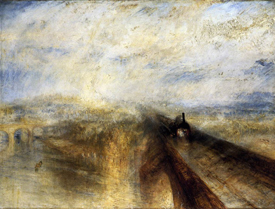
Image: Joseph Mallord William Turner, Rain, Steam and Speed—The Great Western Railway, 1844, oil on canvas, 35⅞ x 49 in. National Gallery, London (artwork in the public domain)