
CAA News Today
Deadline extended: CAA Seeks Two Publications Committee Members
posted by CAA — January 27, 2020
CAA invites nominations and self-nominations for two members-at-large to serve on the Publications Committee for a three-year term, from July 1, 2020, to June 30, 2023.
The Publications Committee is a consultative body that meets three times a year: in the spring, in the fall, and again at the CAA Annual Conference in February. Through its chair, the CAA vice president for publications, the committee advises the CAA Publications staff and the CAA Board of Directors on publications projects and meets with chairs of the editorial boards of The Art Bulletin, Art Journal/AJO, and caa.reviews. The committee chooses candidates to serve on CAA’s book-grant juries; sponsors a practicum session at the Annual Conference; and, with the CAA vice president for publications, serves as liaison to the board, membership, editorial boards, book-grant juries, and other CAA committees.
Committee members pay their travel and lodging expenses to attend the meeting at the Annual Conference. Meetings in the spring and fall are held by teleconference. Members of all committees volunteer their services to CAA without compensation.
We encourage applications from individuals who have served as members of CAA editorial boards in the past, and/or have considerable writing, editorial, or publishing experience. Candidates must be current CAA members and may not serve concurrently on other CAA committees or editorial boards. Applicants may not be individuals who have served as members of a CAA editorial board within the past five years. The Publications Committee is committed to upholding CAA’s values statement on diversity and inclusion.
Please address in your application how your experience would contribute to the Publications Committee. Nominators should ascertain their nominee’s willingness to serve before submitting a name; self-nominations are also welcome. Appointments are made by the CAA president in consultation with the CAA vice president for publications.
Please email a letter of interest, a CV, and your contact information to managing editor Joan Strasbaugh at jstrasbaugh@collegeart.org. Please include “Publications Committee” in the subject line.
Deadline (extended): June 1, 2020
Art Journal / Art Journal Open (AJO) Editorial Board Seeks Three New Members
posted by CAA — January 27, 2020
CAA invites nominations and self-nominations for three individuals to serve on the Art Journal / AJO Editorial Board for a four-year term: July 1, 2020–June 30, 2024. Candidates may be artists, art historians, art critics, art educators, curators, or other art professionals; institutional affiliation is not required. Art Journal, published quarterly by CAA, is devoted to twentieth- and twenty-first-century art and visual culture. AJO is an online forum for the visual arts that presents artists’ projects, conversations and interviews, scholarly essays, and other forms of original content. Committed to fostering new intellectual exchanges in the fields of modern and contemporary art, AJO prioritizes material that makes meaningful use of the web and publishes on a rolling basis.
The editorial board advises the Art Journal and AJO editors-in-chief and assists them in seeking authors, articles, artists’ projects, and other content for the journal; performs peer review and recommends peer reviewers; guides the journals’ editorial programs and may propose new initiatives for them; promotes and advocates for both journals; and may support fundraising efforts on their behalf. Members also assist the editors-in-chief to keep abreast of trends and issues in the field by attending and reporting on sessions at the CAA Annual Conference and other academic conferences, symposia, exhibitions, and events.
The Art Journal / AJO Editorial Board meets three times a year, with meetings in the spring and fall plus one at the CAA Annual Conference in February. The fall and spring meetings are currently held by teleconference. Members are expected to pay travel and lodging expenses to attend the conference in February. Members of all editorial boards volunteer their services to CAA without compensation.
Candidates must be current CAA members in good standing and should not be serving on the editorial board of a competitive journal or on another CAA editorial board or committee. Members may not publish their own work in the journals during the term of service. CAA encourages applications from colleagues who will contribute to the diversity of perspectives on the Art Journal / AJO Editorial Board and who will engage actively with conversations about the discipline’s engagements with differences of culture, religion, nationality, race, gender, sexuality, and access. Nominators should ascertain their nominee’s willingness to serve before submitting a name; self-nominations are also welcome. Please email a letter describing your or your nominee’s interest in and qualifications for appointment, a CV, and your contact information to Joan Strasbaugh, Managing Editor, at JStrasbaugh@collegeart.org.
Deadline: April 15, 2020
New in caa.reviews
posted by CAA — January 24, 2020
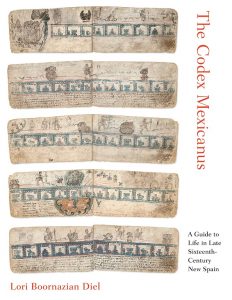
Delia Cosentino reviews The Codex Mexicanus: A Guide to Life in Late Sixteenth-Century New Spain by Lori Boornazian Diel. Read the full review at caa.reviews.
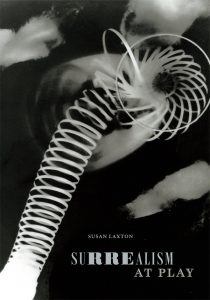
Natalie Dupêcher discusses Susan Laxton’s Surrealism at Play. Read the full review at caa.reviews.
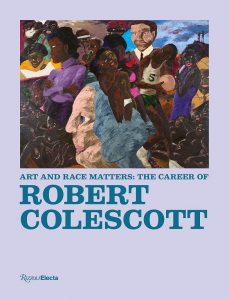
Jessi DiTillio writes about the exhibition catalog Art and Race Matters: The Career of Robert Colescott, edited by Raphaela Platow and Lowery Stokes Sims. Read the full review at caa.reviews.
News from the Art and Academic Worlds
posted by CAA — January 22, 2020
|
|
|
|
|
Want articles like these in your inbox? Sign up: |
New in caa.reviews
posted by CAA — January 17, 2020
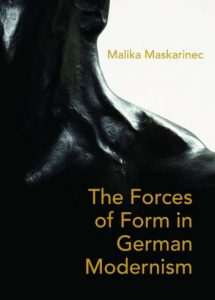
Joyce S. Cheng discusses The Forces of Form in German Modernism by Malika Maskarinec. Read the full review at caa.reviews.
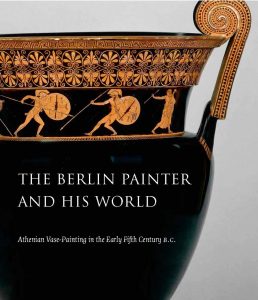
Nikolaus Dietrich reviews The Berlin Painter and His World: Athenian Vase-Painting in the Early Fifth Century B.C., edited by J. Michael Padgett. Read the full review at caa.reviews.
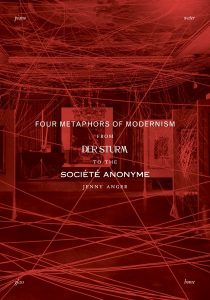
Max Koss writes about Jenny Anger’s Four Metaphors of Modernism: From Der Sturm to the Société Anonyme. Read the full review at caa.reviews.
CAA Affiliate ACSAA Condemns the Assault on Democratic Institutions and Intellectual Freedoms in India
posted by CAA — January 17, 2020
The American Council for Southern Asian Art (ACSAA), a CAA Affiliate Society, has condemned the ongoing assault on democratic institutions and intellectual freedoms in India. Read their statement below.
The American Council of Southern Asian Art (ACSAA), a non-profit organization and a community of academics and humanists, condemns the ongoing assault on democratic institutions and intellectual freedoms in India.
Both the Citizenship Amendment Act (CAA), signed on 11 December 2019, and the National Register of Citizens (NRC) Act, to be implemented in 2021, are openly discriminatory laws. We denounce any attempt at exclusion based on religion, caste, gender, race, or sexual identity, and find both laws to be antithetical to the Indian constitution and its democracy. In particular, as researchers and teachers of India’s art and architecture across millennia, we are committed to preserving the rich contributions of Muslims to its visual culture and intellectual life. We see this commitment as directly threatened by the violent, often state-sanctioned, erasure of such contributions, in instances such as the demolition of the Babri Masjid, the occupation of Kashmir, the renaming of cities, and the rewriting of academic curricula along Hindutva lines.
We stand in full support of the students and teachers at Aligarh Muslim University and the Jamia Millia Islamia, following the events of 15 December 2019; at Jawaharlal Nehru University, following events there on 5 January 2020; and everyone currently participating in peaceful protests and demonstrations across the country. We see the brutal attack at JNU—organized and executed by members of the Akhil Bharatiya Vidyarthi Parishad (ABVP), the student faction of the Hindutva organization, the Rashtriya Swayamsevak Sangh (RSS) and, with the ruling Bharatiya Janata Party (BJP), a member of the Sangh Parivar—as one more instance of a widespread denial of the rights of Indian citizens to critique their government peacefully and openly.
The accusations of “anti-nationalism” directed at marginalized communities at these confrontations – particularly Muslims, Dalits, and women – are reminders of the extent to which extremists will go to erode the secular principles on which the country was founded.
To date, there have been no arrests or investigations into the identity of the attackers at JNU, despite indisputable evidence. We deplore the negligence of the Delhi Police, who looked on as the attacks happened, and call for both an immediate investigation and the resignation of JNU’s Vice Chancellor, M. Jagadesh Kumar. Following as it does the instances of police violence at Aligarh Muslim University and Jamia Millia Islamia, as well as long-term interventions including cuts to funding and fee hikes, the JNU attack urgently increases our concern, as part of the global academic community, for public higher education and critical thought in India.
The American Council for Southern Asian Art (ACSAA) is dedicated to advancing the study and awareness of the art of South and Southeast Asia and the Himalayan regions, spanning all periods and forms of artistic production.
Related reading: In Photos: The World’s Largest Democracy Is in Upheaval (Quartz India, December 15, 2019)
Police Fire Tear Gas as Delhi Protesters Decry Citizenship Law (Al Jazeera, December 15, 2019)
I Saw Police Stand by as Masked Men Attacked Students at a Top Delhi University. It Was Yet Another Assault on India’s Intellectuals (Time, January 8, 2020)
Behind Campus Attack in India, Some See a Far-Right Agenda (New York Times, January 10, 2020)
RAAMP Coffee Gathering: Differentiating Visual Arts Admin and Museum Studies Programs
posted by CAA — January 16, 2020
Coffee Gathering: Differentiating Visual Arts Administration and Museum Studies Programs
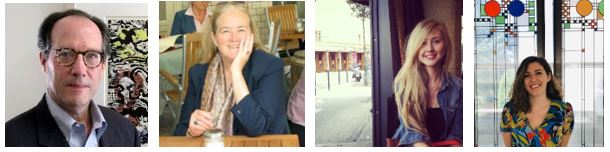
On Thursday, February 6 at 2pm (EST) we will be online with Bruce J. Altshuler, Director and Professor of Museum Studies at New York University and Sandra Lang, Director and Professor of Visual Arts Administration at New York University to discuss their respective programs. Joining them will be Visual Arts Administration student Laura Busby and Museum Studies student Olivia Knauss.
For participant bios, see the full post on RAAMP.
To join this Coffee Gathering, please email Cali Buckley at cbuckley@collegeart.org.
RAAMP Coffee Gatherings are monthly virtual chats aimed at giving participants an opportunity to informally discuss a topic that relates to their work as academic art museum professionals. Learn more here.
Submit to RAAMP
RAAMP (Resources for Academic Art Museum Professionals) aims to strengthen the educational mission of academic art museums by providing a publicly accessible repository of resources, online forums, and relevant news and information. Visit RAAMP to discover the newest resources and contribute.
RAAMP is a project of CAA with support from the Andrew W. Mellon Foundation and the Samuel H. Kress Foundation.
News from the Art and Academic Worlds
posted by CAA — January 15, 2020
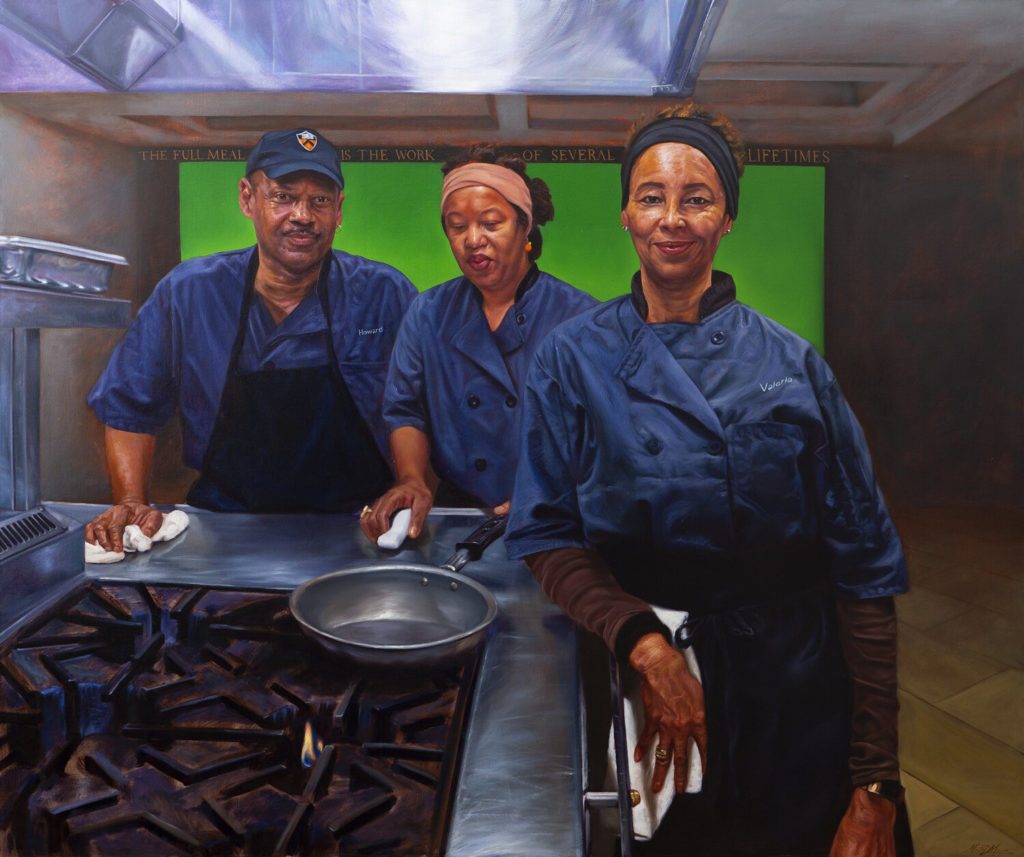
Mario Moore, Several Lifetimes, 2019. Courtesy of the artist.
Want articles like these in your inbox? Sign up: |
New in caa.reviews
posted by CAA — January 10, 2020
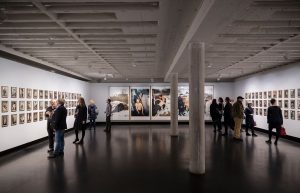
Emily Joyce Evans reviews the C/O Berlin exhibition Boris Mikhailov: Before Sleep/After Drinking. Read the full review at caa.reviews.
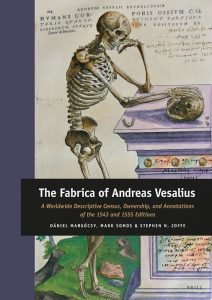
Lyle Massey considers The “Fabrica” of Andreas Vesalius: A Worldwide Descriptive Census, Ownership, and Annotations of the 1543 and 1555 Editions by Dániel Margócsy, Mark Somos, and Stephen N. Joffe. Read the full review at caa.reviews.
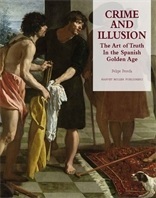
Marcus B. Burke discusses Felipe Pereda’s Crime and Illusion: The Art of Truth in the Spanish Golden Age. Read the full review at caa.reviews.
News from the Art and Academic Worlds
posted by CAA — January 08, 2020
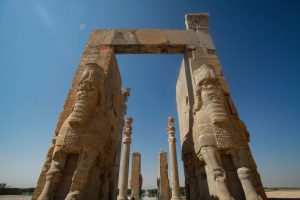
The archaelogical site and ruins of gates and columns of the Persian Achaemenid dynasty ancient capital city of Persepolis. Photo by Nicolas Economou/NurPhoto via Getty Images, via artnet News
Want articles like these in your inbox? Sign up: |