CAA News Today
Grants, Awards, and Honors
posted by CAA — December 15, 2016
CAA recognizes its members for their professional achievements, be it a grant, fellowship, residency, book prize, honorary degree, or related award.
Grants, Awards, and Honors is published every two months: in February, April, June, August, October, and December. To learn more about submitting a listing, please follow the instructions on the main Member News page.
December 2016

Devon Baker, a PhD student in art history at Temple University in Philadelphia, Pennsylvania, has been awarded a 2016–17 Jane and Morgan Whitney Fellowship by the Metropolitan Museum of Art in New York. She will conduct research for her dissertation, which explores print culture in Renaissance Lombardy, using printmaking to examine larger themes of mobility, north-south exchange, and transmateriality.

Amy Beecher, an artist based in New York and Providence, Rhode Island, has received a fall 2016 fellowship from the MacDowell Colony in Peterborough, New Hampshire, in the interdisciplinary artist category.
Daniella Berman, a doctoral candidate at New York University’s Institute of Fine Arts, has been awarded a 2016–17 Theodore Rousseau Fellowship by the Metropolitan Museum of Art to work on her dissertation, which considers the unfinished history paintings of the French Revolution and identifies an emergent aesthetic of “unfinishedness” developed by artists in response to the shifting sociopolitical landscape.
Douglas Brine, associate professor of art history at Trinity University in San Antonio, Texas, has accepted a 2016–17 J. Clawson Mills Scholarship at the Metropolitan Museum of Art in New York to undertake research and writing for his book project, “The Art of Brass in the Burgundian Netherlands: Makers, Markets, Patrons, Products.”
Emily Casey, a PhD candidate in art history at the University of Delaware in Newark, has been given a Sylvan C. Coleman and Pam Coleman Memorial Fund Fellowship for 2016–17 by the Metropolitan Museum of Art in New York. She will examine representations of oceanic space in American art and material culture to show how colonial and early national identities were constructed in relation to these.
Joshua Cohen, assistant professor at City College, City University of New York, has received a 2016–17 Jane and Morgan Whitney Fellowship from the Metropolitan Museum of Art to complete a book that tracks modernist appropriations of African sculpture by European and African artists between 1905 and 1980.
Joelle Dietrick, assistant professor of art and digital studies at Davidson College in Davidson, North Carolina, has accepted a Pollock-Krasner Foundation award to support her studio production during the 2016–17 academic year before she goes to Hamburg, Germany, for her Fulbright Global Award (April–July 2017). As part of the Fulbright, Dietrick will travel to Santiago, Chile, and Hong Kong, China, during the next two winter breaks.
Brad Hostetler, who earned a PhD in art history last year at Florida State University in Tallahassee, has been awarded a 2016–17 Jane and Morgan Whitney Fellowship from the Metropolitan Museum of Art in New York to complete revisions for a book project, “Enshrining Sacred Matter: The Form, Function, and Meaning of Reliquaries in Byzantium, 843–1204.”
Amy Huang, a doctoral candidate in the history of art and architecture at Brown University in Providence, Rhode Island, and an adjunct lecturer for Boston University in Massachusetts, has received a 2016–17 Jane and Morgan Whitney Fellowship from the Metropolitan Museum of Art in New York. She will research visual modes of remembrance in Chinese paintings through seventeenth-century Nanjing and investigate how memory operated through texts, images, and historic sites.
Frances Jacobus-Parker, a PhD student in art and archaeology at Princeton University in Princeton, New Jersey, has been given a Jane and Morgan Whitney Fellowship for 2016–17 by the Metropolitan Museum of Art in New York, where he will work on the first comprehensive study of the oeuvre of the pivotal American artist Vija Celmins.
Samuel Johnson, who earned his PhD in the history of art and architecture at Harvard University in Cambridge, Massachusetts, in 2015, has been awarded a Leonard A. Lauder Fellowship by the Metropolitan Museum of Art in New York. In 2016–17 Johnson will study the effects of the papiers collés of Georges Braques and Pablo Picasso on the photographs of El Lissitzky, László Moholy-Nagy, and Man Ray.
Anna Jozefacka, an adjunct professor at Hunter College, City University of New York, has been awarded a 2016–17 Leonard A. Lauder Fellowship by the Metropolitan Museum of Art to conduct research on Cubism’s relationship to the evolution of modern architectural and interior design in the first three decades of the twentieth century.
Julia McHugh, a doctoral student in art history at the University of California, Los Angeles, has accepted a Douglass Foundation Fellowship in American Art for 2016–17 from the Metropolitan Museum of Art in New York to work on her dissertation, which examines the ways in which patrons used tapestries and other textiles to adorn interiors, both domestic and sacred, in seventeenth- and eighteenth-century Peru.

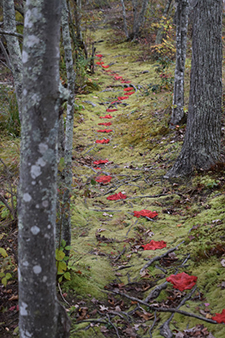 Patricia Miranda, Invasive, 2016 (artwork © Patricia Miranda)
Patricia Miranda, an artist, curator, educator, and founder of MAPSpace, a gallery in Port Chester, New York, has completed an October 2016 residency at I-Park Residency in East Haddam, Connecticut.
Jiha Moon, an artist who lives and works in Atlanta, Georgia, has received a 2016 Artadia Award.
Elyse Nelson, a PhD candidate in the history of art at New York University’s Institute of Fine Arts, has been given a Jane and Morgan Whitney Fellowship by the Metropolitan Museum of Art. During 2016–17 she will work on a dissertation that explores the Italian neoclassical sculptor Antonio Canova’s renewed relationship with his British patrons after Napoleon’s defeat in 1814.
Giulia Paoletti, a core lecturer at Columbia University in New York, has been awarded a 2016–17 Andrew W. Mellon Postdoctoral Curatorial Fellowship by the Metropolitan Museum of Art to research and assist with the development and preparation for a planned reinstallation and renovation of the African art galleries.
John Richardson, professor of art and chair of the James Pearson Duffy Department of Art and Art History at Wayne State University in Detroit, Michigan, has received the 2016 Lifetime Achievement Award from the Mid America College Art Association.
Miriam Said, a doctoral student in the history of art at the University of California, Berkeley, has accepted a 2016–17 Frances Markoe Fellowship by the Metropolitan Museum of Art in New York to explore material-based mechanisms of ritual affect as it was manifested in and between the Near East and Greece in the first millennium BC.
John A. Tyson, a recent recipient of a PhD in art history from Emory University in Atlanta, Georgia, has joined the National Gallery of Art in Washington, DC, as a 2016–17 participant in the fellowship and internships program. He will assist the Department of Modern Art with research for the upcoming Rachel Whiteread retrospective and lead tours in the newly reinstalled East Building permanent and special exhibition galleries.
Aaron Wile, a PhD candidate in the history of art and architecture at Harvard University in Cambridge, Massachusetts, has accepted a Chester Dale Fellowship from the Metropolitan Museum of Art in New York. During 2016–17 he will complete his dissertation, “Painting, Authority, and Experience at the Twighlight of the Grand Siècle, 1690–1721,” and begin transforming it into a book manuscript, consulting materials at the museum.
Katharine Wright, who earned her PhD in art history at the Institute of Fine Arts, New York University, in 2015, has been awarded an Andrew W. Mellon Curatorial Research/Collections Specialist Fellowship for 2016–17 by the Metropolitan Museum of Art to catalogue the Department of Modern and Contemporary Art’s collection of American modernism.
Tara Zanardi, an associate professor at Hunter College, City University of New York, has accepted a 2016–17 Jane and Morgan Whitney Fellowship from the Metropolitan Museum of Art to research the Porcelain Room at the Royal Palace in Aranjuez, a tour-de-force in its implementation and display of porcelain, the interior exemplifies Charles III’s innovative artistic and political strategies at court.
Exhibitions Curated by CAA Members
posted by CAA — December 15, 2016
Check out details on recent shows organized by CAA members who are also curators.
Exhibitions Curated by CAA Members is published every two months: in February, April, June, August, October, and December. To learn more about submitting a listing, please follow the instructions on the main Member News page.
December 2016

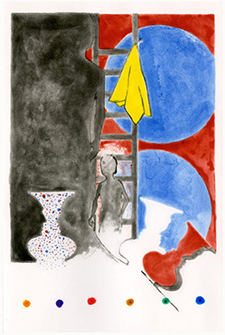 Jasper Johns, Untitled, 2012, intaglio (spitbite, aquatint), 21 x 16 in., edition of 30 (artwork © Jasper Johns)
Guy Ben-Ari and Leah Wolff. No Regrets. LeRoy Neiman Gallery, Columbia University, New York, October 19–November 10, 2016.

 Chitra Ganesh, Shimmering Pulse, 2009, exhibition print from a digital file (artwork © Chitra Ganesh)
Rashmi Viswanathan and Zoe S. Kwok. Contemporary Stories: Revisiting South Asian Art Narratives. Princeton University Art Museum, Princeton, New Jersey, October 22, 2016–January 22, 2017.
Noon Forum Programs at the 2017 Conference Open to the Public
posted by CAA — December 15, 2016
Special forums at the 2017 Annual Conference in New York—taking place during the lunch hour on Wednesday, Thursday, and Saturday—will provide an opportunity for attendees to hear from colleagues, address critical issues, and continue the conversation outside the session grid. With these forums CAA hopes to provide open access to the conference to the public.
The Noon Forum Programs offer two formats. Hot Topics will address critical, time-sensitive issues in the field. The New York conference has slated sessions on “Advocating for Your Department” and “Art Criticism.”
Key Conversations feature scholars, artists, and arts professionals discussing key issues in their fields. Already scheduled for the February meeting are “Navigating Public Opposition to Museum Exhibitions,” “Learning from Experience: Fair Use in Practice,” “Hrag Vartanian with Amin Husain and Nitasha Dhillon,” and “Memorial Session.”
These programs will begin at 12:15 PM and end at 1:15 PM; they are free and open to the public. Please feel free to bring your lunch!
Books Published by CAA Members
posted by CAA — December 15, 2016
Publishing a book is a major milestone for artists and scholars—browse a list of recent titles below.
Books Published by CAA Members appears every two months: in February, April, June, August, October, and December. To learn more about submitting a listing, please follow the instructions on the main Member News page.
December 2016

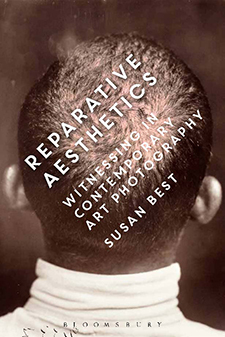
Susan Best. Reparative Aesthetics: Witnessing in Contemporary Art Photography (London: Bloomsbury, 2016).

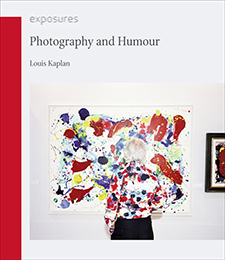
Louis Kaplan. Photography and Humour (London: Reaktion Books, 2016).

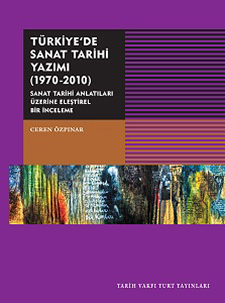
Ceren Özpınar. Turkiye’de Sanat Tarihi Yazimi (1970–2010) [The Art Historiography in Turkey (1970–2010)] (Istanbul: History Foundation Yurt Publications, 2016).
2017 CAA Annual Conference in the News
posted by CAA — December 12, 2016
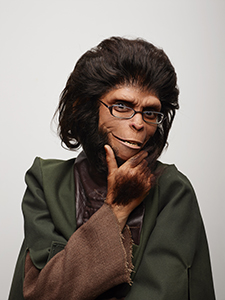
Coco Fusco in costume as Dr. Zira from the Planet of the Apes. Photo Gene Pittman, courtesy Walker Art Center.
Word has spread about some of the sessions and our keynote speaker at the 2017 CAA Annual Conference and Artnet News and Artnews have taken notice.
Diversity has long been a part of CAA’s history and this year’s conference is no different. Artnet News notes how race and politics are “at the forefront” of our programming this year. Our effort to find more ways to involve artists and makers in the conference has not gone overlooked either. Brian Boucher, author of the Artnet piece, cites the CAA collaboration with NYFA to offer professional development programming.
At Artnews, writer
Annual Conference Committee Seeks Members
posted by CAA — December 12, 2016
CAA invites nominations and self-nominations for at-large members of the Annual Conference Committee to serve a three-year term, beginning February 2017, immediately following the 105th Annual Conference. We welcome all members to participation in the nomination process. Working with the Programs Department staff, this committee selects the sessions and shapes the program of the Annual Conference. The committee ensures that the program will reflect the goals of the association and of the Annual Conference, namely, to make the conference an effective place for intellectual, aesthetic, and professional learning and exchange, and to provide opportunities for participation that are fair, equal, and balanced.
The Annual Conference Committee meets at least two times a year via conference call and once during the Annual Conference at the call of the vice president for Annual Conference and the committee’s chair. Members must be available throughout May and June to review a significant amount of material and select 2018 conference content from the submitted proposals.
Please send a 150-word letter of interest and a CV to Katie Apsey, CAA manager of programs. Deadline: January 31, 2017.
Notice of 105th Annual Business Meeting
posted by CAA — December 12, 2016
College Art Association
Notice of 105th Annual Business Meeting
Annual Conference Convocation
February 15, 2017
 The 105th Annual Business Meeting of the members of the College Art Association will be called to order at 5:30 p.m. on Wednesday, February 15th, at the Convocation of the 2017 Annual Conference, in West/East Ballroom, 3rd Floor, New York Hilton Midtown Hotel, 1335 Avenue of the Americas, NY, NY 10019.
CAA President, Suzanne Preston Blier, will preside. The Annual Business Meeting will be held in two parts.
AGENDA
The Agenda for the first part of the Annual Business Meeting is as follows:
- Call to Order and President’s Report – Suzanne Preston Blier
- Report by Annual Conference Chair and VP for Annual Conference – Judith Rodenbeck and N. Elizabeth Schlatter
- Report by Executive Director – Hunter O’Hanian
- Presentation of Annual Awards for Distinction – Suzanne Preston Blier
- Keynote Address – Mary Miller
After the Keynote Address, the Meeting will be recessed and will reconvene on Friday, February 17, 2017 from 12:15 – 1:15 p.m. in the East Ballroom, 3rd Floor at the New York Hilton Midtown Hotel, 1335 Avenue of the Americas, NY, NY 10019. The Agenda for the second part of the Annual Business Meeting is as follows:
- Approval of Minutes of 104th Annual Business Meeting, February 3, 2016 [ACTION ITEM] – see http://www.collegeart.org/pdf/2016-annual-business-meeting-minutes.pdf
- Financial Report: Teresa Lopez, Chief Financial Officer
- Old Business
- New Business
- Results of Election of New Directors: Suzanne Preston Blier
- MY CAA – Open discussion with members, board and staff regarding future growth of the Association.
Proxies
If you are unable to attend the Annual Business Meeting, please complete a proxy online to appoint the individuals named thereon to (i) vote, as directed by you, for directors, and, at their discretion, on such other matters as may properly come before the Annual Business Meeting; and (ii) to vote in any and all adjournments thereof. CAA Members will be notified when the proxy for casting votes becomes available online in early January 2017. A proxy, with your vote for directors, must be received no later than 6:00 p.m. EST Thursday, February 16, 2017.
Next Meeting
The 106th Annual Business Meeting of the College Art Association will take place on February 21, 2018, in Los Angeles.
Roberto Tejada, Secretary
College Art Association
December 12, 2016
New in caa.reviews
posted by CAA — December 09, 2016
 John Hawley visits Van Dyck: The Anatomy of Portraiture at the Frick Collection. The “more than one hundred paintings, drawings, and prints” by Anthony van Dyke and his contemporaries look “exclusively at portraiture, with special attention given to the way drawings (which account for nearly half the exhibited works) highlight Van Dyke’s inimitable process as a portraitist.” Read the full review at caa.reviews.
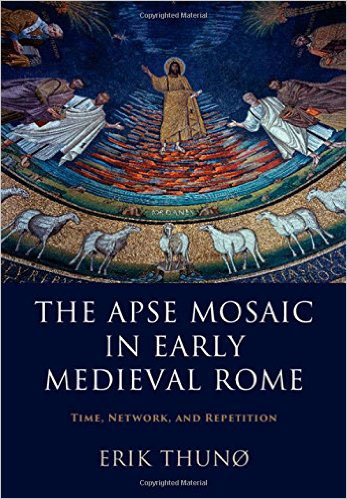
Stephen J. Lucey reads The Apse Mosaic in Early Medieval Rome: Time, Network, and Repetition by Erik Thunø. Presenting “an alternative ‘non-diachronic’ art-historical interpretation of the Roman apse decorations from the sixth through ninth centuries,” the author “promotes the continuity of imagery as a ‘synchronic’ manifestation, which reflects a timeless ecclesiological essence.” Read the full review at caa.reviews.
Jennifer Nelson reviews Visual Acuity and the Arts of Communication in Early Modern Germany, edited by Jeffrey Chipps Smith. The essays “consider German visual culture from the late fifteenth to early eighteenth centuries by means of healthy reliance on present-day creativity and hermeneutic skill” and put “productive pressure on its period’s blind spots.” Read the full review at caa.reviews.
Amy F. Ogata discusses Marta Gutman’s A City for Children: Women, Architecture, and the Charitable Landscapes of Oakland, 1850–1950. The author “explores the long tradition of benevolent concern for the poorest children in the rapidly urbanizing context of Oakland, California,” and argues that the structures “reveal a complex history of adaptive reuse against the drama of class and racial politics.” Read the full review at caa.reviews.
caa.reviews publishes over 150 reviews each year. Founded in 1998, the site publishes timely scholarly and critical reviews of studies and projects in all areas and periods of art history, visual studies, and the fine arts, providing peer review for the disciplines served by the College Art Association. Publications and projects reviewed include books, articles, exhibitions, conferences, digital scholarship, and other works as appropriate. Read more reviews at caa.reviews.
CAA Member Tour of Greece and Italy
posted by CAA — December 07, 2016
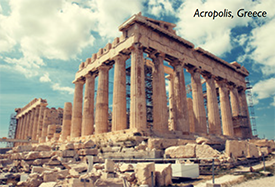 CAA is excited to announce an exclusive offer to its members to spend two weeks exploring the art and art history of Greece and Italy, from June 2 to June 11, 2017. The trip includes stops in Athens, Rome, and Florence. Hosted by CAA Executive Director and CEO, Hunter O’Hanian, this is a once in a lifetime opportunity to explore these majestic cities with fellow CAA members and lovers of art.
Local tour guides in each city will lead the group through numerous cultural and historic sites, museums, and galleries. The tour begins in Athens, where highlights include the National Archaeological Museum, the Benaki Museum, Zappio Gardens, the Acropolis and museum, and the Museum of Cycladic Art. In Rome, the tour will visit the Colosseum, Roman Forum, Capitoline Museums, and the Borghese Gallery, among others. Ending in Florence, the tour will stop at the Duomo and Baptistery, Church of Santa Croce, Galleria dell’Accademia, Medici Chapels, Church of San Lorenzo, and the Uffizi Gallery.
Following Florence, you may choose to extend your trip to Venice where the 57th Venice Biennale will be taking place, May 13 through November 26, 2017.
For more information, including rates and a day-by-day tour itinerary, please download and review the Greece & Italy Art and Art History Tour brochure.
CAA Seeks Part-Time Program Assistant
posted by CAA — December 06, 2016
| Job Title: | Program Assistant | Date: | February 25, 2016 |
| Department: | Programs | ||
| Supervisor: | Manager of Programs |
Part-time position with approximately 20 hours per week, schedule may vary with flexible hours.
COLLEGE ART ASSOCATION ANNUAL CONFERENCE:
The College Art Association Annual Conference is the largest international gathering of professionals in the visual arts. The conference brings together 4,000 of its members to participate in over 250 presentations, panel discussions, workshops, and special events on a wide range of topics on art scholarship and practice; to engage in in-depth discussions on new scholarship, innovative art, and issues in the arts today; and to connect with colleagues from across the country and around the world. The 105th annual conference will be held in New York, February 15- 18, 2017.
FUNCTION:
Reporting to the director of programs, the program assistant provides assistance to both the assistant director for annual conference and manager of programs with all daily operations of the department.
DUTIES AND RESPONSIBILITIES:
- Assists with data entry support (e.g. NetFORUM membership database), detailed record keeping, database document production, and producing reports.
- Assists with the coordination of the scheduling of the CAA conference sessions and events. This includes, but is not limited to, data entry, preparing spreadsheets, proof reading, and creating reports. Communicates with CAA departments on conference details as requested.
- Corresponds with conference participants, service providers, book and trade fair exhibitors, and general membership on conference-related matters.
- Provides internet research to source prospects for the CAA conference book and trade fair.
- Prepare mailings sent to conference participants, exhibitors, advertisers, jurors, committee members, and volunteers. Document production and photo-copying.
- Assist with the development of all conference publications.
- Assists with the coordination of temporary conference staff including, scheduling, correspondence, and training.
- Provides on-site conference support, including but not limited to assisting with all aspects of conference logistics, checking set-up arrangements, posting signs, and providing hospitality as needed.
- Staffs Speaker Ready Room during the conference providing assistance to conference presenters and chairs as needed.
- Provides post-conference support including compiling and summarizing event statistics.
- Assists with financial recording keeping, including but not limited to, processing purchase orders and transactions, creating invoices, tracking expenses, and preparing ledgers and reconciliation reports.
- Provides research and creates reports as requested.
- Performs various administrative and clerical duties for the director of programs. Other duties as assigned.
QUALIFICATIONS:
- Bachelor’s degree required, Master’s degree in art history or MFA preferred.
- Ability to work independently, organize multiple concurrent tasks, work efficiently, and follow through on details.
- Experience with spreadsheets, systems and database management, and generally accepted programs and office equipment required.
- Excellent customer services skills, and writing and editing skills, and oral communication.
- Should possess tact, discretion, and the ability to work confidentially.
- The capacity to remain poised under pressure.
- The ability and willingness to work on-site at annual conference as well as hours outside typical business day, as needed.
Send resume and cover letter to tdugan@collegeart.org
This job description is intended as a summary of the primary responsibilities of and qualifications for this position. The job description is not intended as inclusive of all duties an individual in this position might be asked to perform or of all qualifications that may be required either now or in the future.
The College Art Association is an equal opportunity employer and considers all candidates for employment regardless of race, color, sex, age, national origin, creed, disability, marital status, sexual orientation, gender expression or political affiliation.