
CAA News Today
Institutional News
posted by CAA — December 17, 2015
Institutional News
Read about the latest news from institutional members.
Institutional News is published every two months: in February, April, June, August, October, and December. To learn more about submitting a listing, please follow the instructions on the main Member News page.
December 2015

The University of Virginia in Charlottesville has received a $30,000 grant from the National Endowment for the Arts for the testing and implementation of a prototype for digitizing artist’s books by a group of curators, artists, critics, and scholars.
Grants, Awards, and Honors
posted by CAA — December 15, 2015
CAA recognizes its members for their professional achievements, be it a grant, fellowship, residency, book prize, honorary degree, or related award.
Grants, Awards, and Honors is published every two months: in February, April, June, August, October, and December. To learn more about submitting a listing, please follow the instructions on the main Member News page.
December 2015
Carol Becker, dean of faculty for Columbia University’s School of the Arts in New York, has received the Dayawait Modi Award for Art, Culture, and Education, given by Arts for India.
Henry Colburn, who recently completed a doctorate in the Interdepartmental PhD Program in Classical Art and Archaeology at the University of Michigan in Ann Arbor, has been awarded the ProQuest Distinguished Dissertation Award from the university’s Rackham Graduate School for the superior quality of his 2014 dissertation, “The Archaeology of Achaemenid Rule in Egypt.”
Craig Drennen, assistant professor of painting and drawing at Georgia State University in Atlanta, has accepted a fall 2015/winter 2016 residency at the MacDowell Colony in Peterborough, New Hampshire.
Barbara Foster, an artist based in Oakland, California, has received a spring 2016 residency at Playa in Summer Lake, Oregon.

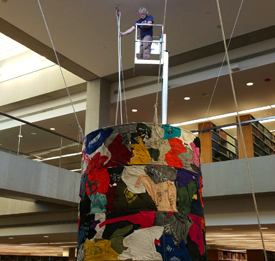 Greg Hull at work during an IUPUI student art installation
Greg Hull, professor of sculpture in the Herron School of Art and Design at Indiana University–Purdue University Indianapolis, has been awarded a Transformational Impact Fellowship from the Arts Council of Indianapolis.

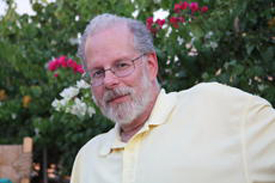 Larry A. Silver
Larry A. Silver, James and Nan Wagner Farquhar Professor of History of Art at the University of Pennsylvania in Philadelphia, has been named a Phi Beta Kappa Visiting Scholar for the 2015–16 academic year.
Noah Simblist has won a 2015 Exhibition Grant from Artis for an exhibition, False Flags, he is organizing for Pelican Bomb in New Orleans, Louisiana, to take place in March 2016.
Exhibitions Curated by CAA Members
posted by CAA — December 15, 2015
Check out details on recent shows organized by CAA members who are also curators.
Exhibitions Curated by CAA Members is published every two months: in February, April, June, August, October, and December. To learn more about submitting a listing, please follow the instructions on the main Member News page.
December 2015
Alexandra Keiser. Archipenko: A Modern Legacy. Palmer Museum of Art, Pennsylvania State University, University Park, Pennsylvania, September 22–December 13, 2015.
Valérie Rousseau. Art Brut in America: The Incursion of Jean Dubuffet. American Folk Art Museum, New York, October 13, 2015–January 10, 2016.
Books Published by CAA Members
posted by CAA — December 15, 2015
Publishing a book is a major milestone for artists and scholars—browse a list of recent titles below.
Books Published by CAA Members appears every two months: in February, April, June, August, October, and December. To learn more about submitting a listing, please follow the instructions on the main Member News page.
December 2015

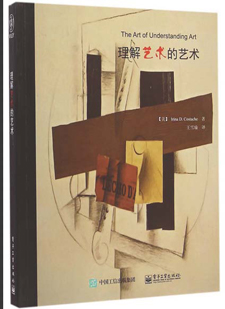
Irina D. Costache. The Art of Understanding Art (Beijing: Publishing House of Electronics Industry, 2015).


Myroslava M. Mudrak and Tetiana Rudenko, ed. Staging the Ukrainian Avant-Garde of the 1910s and 1920s (New York: Ukrainian Museum, 2015).

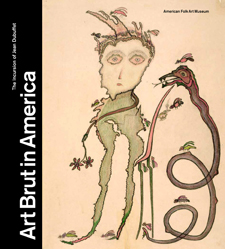
Valérie Rousseau, ed. Art Brut in America: The Incursion of Jean Dubuffet (New York: American Folk Art Museum, 2015).

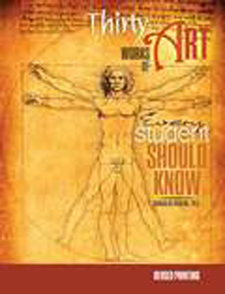
Andrew Jay Svedlow. Thirty Works of Art Every Student Should Know (Dubuques, IA: Kendall Hunt, 2015).
Committee on Women in the Arts Picks for December 2015
posted by CAA — December 10, 2015
Each month, CAA’s Committee on Women in the Arts selects the best in feminist art and scholarship. The following exhibitions and events should not be missed. Check the archive of CWA Picks at the bottom of the page, as several museum and gallery shows listed in previous months may still be on view or touring.
December 2015
Marks Made: Prints by American Women Artists from the 1960s to the Present
Museum of Fine Arts
255 Beach Drive N.E., St. Petersburg, FL
October 17, 2015–January 24, 2016
The Museum of Fine Arts in St. Petersburg, Florida, presents Marks Made, examining women in printmaking. Featuring over 75 works, including those from the printmaking pioneers Helen Frankenthaler, Lee Krasner, Joan Mitchell, and Anni Albers, the exhibition “conveys the breadth of innovation of both technique and conceptual approaches that have emerged in printmaking over the past 50 years.”
The exhibition draws on the private holdings and from the museum’s extensive collection of prints by American women, including Vija Celmins, Janet Fish, Ellen Gallagher, Yvonne Jacquette, Joyce Kozloff, Barbara Kruger, Hung Liu, Elizabeth Murray, Judy Pfaff, Susan Rothenberg, and Pat Steir. Limited-edition prints by the artists Elisabeth Condon and Jane Hammond were also created in collaboration with the University of South Florida and Bleu Acier Editions. Related programming events include film screenings, drawing workshops, and lectures.
“The printmaking process is an intensely collaborative one, between artist and printer. It is also a highly physical process, requiring strength, stamina, and technical prowess—Marks Made tells the story of what happens in the studio and the resulting artworks.” The themes of the exhibition vary from artist to artist and are loosely grouped, allowing interconnected exploration between themes of abstraction, realism, craft, appropriation strategies, and activism.
Linda Stein: The Fluidity of Gender
Noyes Museum of Art
Stockton University, 733 Lily Lake Road, Oceanville, NJ
September 21, 2015–January 3, 2016
The artist Linda Stein at the Noyes Museum of Art presents sculpture exploring “the continuum between the binaries of masculinity and femininity,” with her mixed-media figurative work. The leather and metal figures, along with use of pop0-cultural icons, embody both the essence of a warrior’s armor and comforting protection. Stein’s work concerns gender, oppression, bullying, strength, power, and justice in contemporary culture.
“My goal as an artist is to use my art to transform social consciousness and promote activism for gender justice,” Stein has said. “With my androgynous forms I invite the viewer to seek diversity in unpredictable ways, to ‘try on’ new personal avatars and self-definitions, knowing that every new experience changes the brain’s structure and inspires each of us toward a more authentic self.”
The tall, vertical sculptures of metal, wood, stones, leather, and images of Wonder Woman, among other materials, are wearable, body-swapping armor. “In my art,” Stein said in a June 2015 interview with A&U Magazine, “I place the female front and center for a social idealism that aims to transform violence, destruction, and fragility into strength for anyone who finds themselves bullied, harassed, or abused.” But while, the armor is distinctively female in many cases, with curves for hips and breasts, the body-swapping moment happens when a woman wears materials normally associated with male warrior attributes and a man wearing armor made to resemble a female form. Other creations by Stein, remain more androgynous, presenting what is normally associated as a male figure from behind, but female when viewed from the front.
what’s INSIDE HER never dies … a Black Woman’s Legacy
Yeelen Gallery
294 NW 54th Street, Miami, FL
December 1, 2015–February 28, 2016
Following Mariette Pathy Allen’s solo exhibition TransCuba, Yeelan Gallery continues its exhibition programming on gender with what’s INSIDE HER never dies … a Black Woman’s Legacy, in collaboration with Poets/Artists Magazine. The opening coincides with Art Basel Miami Beach. This group show features two images from Allen, as well as from twenty-four other artists and activists, including Sylvia Parker Maier, Tim Okamura, Joseph Adolphe, Jerome Siomaud, and Numa Perrier.
The exhibition showcases work in a variety of mediums—portraiture, drawing, photography, and installation—all seeking to “pay homage to the beauty and resiliency of the Black Woman,” said Karla Ferguson, the gallery owner and director. A reception for the artists will take place on Saturday, December 5, 2015, at 10:00 PM.
In her photographs, Allen gained access to photograph transgender peoples and friends in the privacy of their homes, as well as out in public during several visits to Cuba in 2012 and 2013. “The transgender people Allen depicts in TransCuba savor their new freedom to be able to be themselves publicly, while continuing to overcome challenges, such as health issues, and lack of steady work and money.”
In contrast, another artist in the exhibition, Judith Peck, often paints on broken plaster shards, “a world falling apart held together with the very same figure depicted within.” In her painting Pulled Over, a young woman sits in what appears to be the driver’s seat of a vehicle, her arm resting on the window and her head looking down, perhaps waiting. “The paintings are about the more universal message of meaning and preciousness of life healing a broken world.”
In addition to the exhibition, Yeelen Gallery will host a panel discussion at 1:00 PM on December 2, 2015, with Sybrina Fulton, the mother of Trayvon Martin, and Kadiatou Diallo, the mother of Amadou Diallo, who will share their stories and grief along with other activist women.
Ebony G. Patterson: Dead Treez
Museum of Art and Design
2 Columbus Circle, New York, NY 10019
The Museum of Art and Design presents Dead Treez,the first solo New York museum show by the Jamaican-born artist Ebony G. Patterson. The exhibition, which spreads across the museum’s second floor, includes installations, floor tapestries, and a life-sized figural tableau of ten male mannequins dressed in a kaleidoscopic mix of floral fabrics.
Dead Treez is a meditation on dancehall fashion and culture, regarded as a celebration of the disenfranchised in postcolonial Jamaica. Borrowing from social media, her tapestries depict murder victims camouflaged in utterly adorned patterns to seduce viewers into witnessing the underreported brutality experienced by those on the lower rungs of the socioeconomic ladder. Furthermore, the artist fusions her collage sensibility with a selection of jewelry from the museum’s permanent collection, transforming the Tiffany Jewelry Gallery’s vitrines into gardenlike environment of poisonous plants, in which bodies wrapped in patterned fabrics have succumbed to the violence often present in marginalized communities. Here, Patterson addresses how choices in jewelry, clothing, or other forms of personal adornment are means of visibility of populations rendered invisible by poverty and racism. Noting that the names of impoverished communities in Jamaica often include the word “garden” in them, Patterson’s …buried again to carry on going… exacerbates the contrast between places that are designed to be about beauty, growth, life, and the hardships that are daily obstacles in her native country’s inner city.
Patterson, (b. 1981, Kingston, Jamaica) splits her time between Kingston and Lexington, Kentucky. Through her extremely adorned mixed-media installations, the artist seduces viewers, with the intention to challenge them to look closer. Throughout Dead Treez the artist explores and reflects on the concept of “visibility,” raising questions about body politics, performance of gender, gender and beauty, beauty and stereotyping, race and beauty, and body and ritual. Throughout this exhibition, Patterson suggests that the popularity of skin alteration, such as skin bleaching and tattooing, may mean a form of “erasure” motivated by the desire of presence rather than a simple adornment.
The Rocca Family (RTF) is an ongoing project located in the everyday gestures of togetherness. A togetherness that could be much broader than just two people, proposing not to separate art/work from daily life, while dreaming of not being attached. Defying the traditional concept of traditional family as a terrible structure that imposes the pressure to be happy and the feeling of shame otherwise, TRF proposes a series of moving spaces that encourage art to take on new forms and identities. One of its ongoing research projects, Family, is an examination of different family structures, dynamics, demands, and expectations, and in that offers a reflection of the reasons behind the strict assumption of the family as a core unit to community.
Named after a cat and with a base in San Francisco, TRF challenges also the identity of art, proposing “events” that are simply moments in the timeline of relationships: conversation, meals, and phone calls. Furthermore, displacement, transit, and immigration help form the core of TRF discussions, with a particular attention on personal politics and an international awareness, as well as a sensitivity for domestic, mundane, flashy, sustainable, and unexpected things.
As Amanda Eicher describes the prohect in Who is TRF Series, #1-b: “Round is another way to describe it—leaving the scientific and transportative world of paths, flights, lines, and planes, we can say that it is a space in which many people come around a table, and they are all not necessarily leading not following either but learning—all parts of something which turns or presses outward from a center to meet a margin-frontier. Or it might be they are pressing together from the outside.”
Women Speaking to Power: An Evening of Conversation with Tania Bruguera and Shirin Neshat
School of Visual Arts Theatre
333 West 23rd Street, New York, NY
December 11, 2015
Organized by SVA’s MA Curatorial Practice program, “Women Speaking to Power” will open a conversation between two of the most significant and influential international contemporary practicing today: Tania Bruguera and Shirin Neshat. They will speak with each other about their experiences as citizens and artists, reflecting on how their works approach to gender and politics in their respective homelands, Cuba and Iran, and beyond. This event, which starts at 7:00 PM, is free and open to the public. Seating is on a first-come, first-served basis.
American Scholarly Societies Joint Statement on “Campus Carry” Legislation
posted by CAA — December 01, 2015
The undersigned learned societies are deeply concerned about the impact of Texas’s new Campus Carry law on freedom of expression in Texas universities. The law, which was passed earlier this year and takes effect in 2016, allows licensed handgun carriers to bring concealed handguns into buildings on Texas campuses. Our societies are concerned that the Campus Carry law and similar laws in other states introduce serious safety threats on college campuses with a resulting harmful effect on students and professors.
American Academy of Religion
American Anthropological Association
American Antiquarian Society
American Association for the History of Medicine
American Folklore Society
American Historical Association
American Musicological Society
American Philosophical Association
American Political Science Association
American Studies Association
American Society for Aesthetics
American Society for Environmental History
American Sociological Association
Association for Slavic, East European, and Eurasian Studies
Association of American Geographers
College Art Association
Latin American Studies Association
Law and Society Association
Medieval Academy of America
Middle East Studies Association
Modern Language Association
National Communication Association
National Council on Public History
Oral History Association
Society for American Music
Society of Architectural Historians
Society of Biblical Literature
Society for Ethnomusicology
World History Association
CAA President, DeWitt Godfrey, Releases Statement on Ashgate Acquisition
posted by CAA — December 01, 2015
CAA acknowledges the concern of many of its members regarding the acquisition of Ashgate by Informa, the parent company of Taylor & Francis. The Ashgate art and humanities publications series have been a critically important venue for art history and critical scholarship because of their high quality production. Ashgate’s art and humanities series have also increased in value as the opportunities for scholarly monograph publishing diminishes. CAA has conveyed the concerns to Taylor & Francis that the high quality of the editorial process at Ashgate be maintained by Taylor & Francis and the art and humanities series continue to publish as fully as in the past.
Committee on Women in the Arts Picks for November 2015
posted by CAA — November 10, 2015
Each month, CAA’s Committee on Women in the Arts selects the best in feminist art and scholarship. The following exhibitions and events should not be missed. Check the archive of CWA Picks at the bottom of the page, as several museum and gallery shows listed in previous months may still be on view or touring.
November 2015
Jumana Manna
Chisenhale Gallery
64 Chisenhale Road, London E3 5QZ UK
September 18–December 13, 2015
Chisenhale Gallery presents the first UK solo exhibition by the Berlin and Jerusalem–based artist Jumana Manna. The exhibition includes A magical substance flows into me (2015), a newly commissioned, seventy-minute feature-length film presented alongside an installation of sculptures.
Manna (b. 1987) works primarily with film and sculpture, addressing the historical and political resonance of materials and the physical relationships between objects and bodies. For the Chisenhale exhibition, the film was installed alongside a series of hollow plaster sculptures that carry an anthropomorphic charge. Installed in combination with plastic chairs and waste bins, these sculptures articulate a set of contradictions also evident in the film, where the audience seated bodies and sculptures extend the concepts explored in screen into a physical and tangible atmosphere.
A magical substance flows into me explores the different musical traditions of myriad communities living in and around Jerusalem. Inspired by her research on the German-Jewish ethnomusicologist Robert Lachmann (who fled to Israel at the beginning of WWII), the artist revisits different diaspora groups—such as Kurds, Moroccans, Yemenite Jews, Samaritans, Palestinians, Bedouins, and Coptic Christians—whose traditional music Lachmann studied and recorded for the 1930s radio series Oriental Music. This recording was developed for the Palestine Broadcasting Service, established under the British Mandate (1920–1948).
Tracing links between physically, culturally, and linguistically separated communities, while allowing for ideas of the representation of authenticity and heritage to emerge through the possibilities of sound and listening, Manna creates a beautifully poignant film that explores how musical customs create identity and overcome cultural suppression. Waving together fragments Jerusalem’s story, the artist includes her parents as well as herself to reflect a personal connection to the subject within the historical narratives she portrays, a narrative in which the power of music truly transcends politics.
Firelei Báez: Patterns of Resistance
Utah Museum of Contemporary Art
20 S. West Temple, Salt Lake City, UT 84101
September 25, 2015–January 16, 2016
The Utah Museum of Contemporary Art presents Patterns of Resistance, the first solo exhibition of the Dominican artist Firelei Báez, on the occasion of the artist being awarded the prestigious Catherine Doctorow Prize for Contemporary Painting. This prize is given by the museum and the Jarvis and Constance Doctorow Family Foundation “to an emerging or mid-career painter whose work expresses a great range of talent and forward thinking within a contemporary idiom.”
Born in 1981 in Santiago de los Caballeros, Dominican Republic, Báez is best known for her large-scale intrincate works on paper. Her laborious studio practice draws together her interest in anthropology, science fiction, black female subjectivity, and women’s work. Throughout her work, Báez explores the humor and fantasy involved in self-making within diasporic societies, a process that implies an individual and creative capability to coexist with cultural ambiguities.
Inspired by lineages of black resistance, Báez’s work traces the history of social movements in the United States and the Caribbean. Throughout Patterns of Resistance, the artist interweaves the lives of eighteenth-century black women in Louisiana and the Cuban roots of the Latin American azabache with symbols used in the US during the tumultuous 1960s. Her paintings and drawings depict textiles, hair designs, and body ornaments linking traditionally loaded symbols with individual human gestures. Primarily focusing on female figures and their subjectivities, Báez has a labor-intensive process that reveals new emblems of power and invokes disparate patterns of resistance within the African diaspora while proposing the illumination of obscured narratives of identity.

Oliver Pickle and Ruth West: She Is Sitting in the Night: Re-visioning Thea’s Tarot
Book, available from Metonymy Press
Described as “a contemporary queer re-visioning of a beautiful feminist tarot deck,” She Is Sitting in the Night by the author and tarot reader Oliver Pickle, with the artist Ruth West, re-presents West’s original feminist drawings from Thea’s Tarot and rejects the “normative readings of the figures and imagery on the decks they discuss.”
The 192-page book features copies of the original seventy-eight drawings by West along with new interpretations celebrating both queer and feminist cultural production. Thea’s Tarot, originally released in 1984, features black and white cut-paper silhouettes, replacing the figures with all women, including child, daughter, mother, and amazon.
Pickle, through their interpretations of West’s work, challenges the heteronormative relationships to figure and body. This intergenerational conversation draws on the relationships between radical feminism of the 1970s and the evolving relationships to gender identity. Where West’s drawings replace male figures, such as the Emperor, with a woman, and the card for Lovers is a paper cut of two females, Pickle uses the absence of commentary by West to reframe the relationship between image/text and gender identity.
The book and drawings are designed to fit a specific need within the tarot community, but they also function as an example of artistic production shifting the binary representation of figure to a more fluid role. In an interview Pickle describes their interpretations of West’s drawings by not “imagining a sexual or gender identity for the person I am speaking to, so they can do interpretations of themselves.”
Nancy Cohen: Hackensack Dreaming
Schuylkill Center for Environmental Education
8480 Hagy’s Mill Road, Philadelphia, PA
November 5–December 19, 2015
Nancy Cohen’s Hackensack Dreaming, at the Schuylkill Center for Environmental Education, fuses the artistic process with environmental education. The large-scale installation of handmade paper, glass, and rubber is the culmination of more than two years of Cohen’s work and time spent in a section of the Mill Creek Marsh tucked behind strip malls and a wastewater treatment plant along the New Jersey Meadowlands.
Exploring Cohen’s installation is to enter a world constructed by the human hand through manipulation of raw materials, a parallel not unlike the reality of marsh. In a subtle self-referential manner, the organic ingredients that constitute the hand-made paper and glass are documents of the natural world.
The installation serves as a document to the soul of the marsh and its own constructed reality. Hackensack Dreaming is rife with referential essence: translucent glass objects hint at cedar forest poking up through the water on an icy New Jersey day, and liquid rubber poured on the paper suggests, interchangeably, a wet or toxic surface.
“I want the viewer to move through Hackensack Dreaming discovering and finding connections—compelled by the beauty and strangeness,” says Cohen, who lives and works in Jersey City, New Jersey. Discovering, likewise, the fragility and strength found in both the installation and natural world by means of physical experience. Through conscious levels of manipulation of materials, Cohen “makes literal the delicate, ephemeral balance” of the marsh. The audience is invited to walk among the work, either by the narrow path at the center of the installation or by delicately placing one’s feet among the glass sculptures and maneuvering one’s body through the realities of Hackensack Dreaming.
Patricia Johanson: Environmental Remedies: Restoring Soil and Water
Winter Visual and Performing Arts Center
60 West Cottage Avenue, Millersville, PA
October 22–December 11, 2015
Related programming:
Conrad Nelson Fellow: Patricia Johanson, Artist Lecture
Ware Center, Millersville University
42 North Prince Street, Lancaster, PA
November 3, 2015, 7:30 PM
Panel discussion:
Ecological Art: Reconstructing Humanity’s Relationship with the Environment
Betsy Damon, Patricia Johanson, and Sue Spaid
Ware Center, Millersville University
42 North Prince Street, Lancaster, PA
November 4, 2015, 7:00 PM
Gallery Talk:
November 4, 2015, 3:00 PM
The Winter Visual and Performing Arts Center at Millersville University will feature work by the artist Patricia Johanson. As the 2015–16 Conrad Nelson Fellow, Johanson has combined sculptural projects, art, ecology, landscaping, and functional infrastructure to remedy environmental degradation and restore ecosystems. Trained as an artist and architect, she has transformed landfills into parks, restored lagoons, conserved land polluted by acid mine drainage and built water gardens that function as treatment plants.
In her 1969 commission by House & Garden, Johanson produced 150 drawings with essays and explanatory notes departing from traditional garden design. “Her images, drawn from precise botanical and biological sources, loop, uncoil, and crawl elegantly across the land, evoking evolution, life, and movement.”
One of Johanson’s early ecological artworks, Fair Park Lagoon in Dallas (1981), transformed the eroding shoreline and water contaminated with algal blooms into a thriving ecosystem. The park was fitted with gigantic, terra-cotta-colored Gunite sculptures that doubled as pathways as well as perches for birds and turtles as the work snaked its way through the park land and water. Fair Park Lagoon in Dallas continues to serve as a place of education and recreation.
In conjunction with her exhibition and the Conrad fellowship, Johanson will present an artist lecture at the Ware Center on November 3, 2015. Additionally, Johanson, along with the ecoartist Betsy Damon and the curator Sue Spaid, will participate in a panel discussion, “Ecological Art: Reconstructiong Humanity’s Relationship with the Environment,” on November 4, 2015. The panelists will discuss their outdoor sculptural projects designed to remedy environmental degradation and strengthen the planet’s weakened defenses.
Our Mother’s House: a multi-component program dedicated to empowering female artists and safeguarding cultural heritage in southern Saudi Arabia
United Nations Headquarters
New York, NY
November 16–27, 2015
Art Jameel, Edge of Arabia, and the Permanent Mission of Saudi Arabia to the United Nations present Our Mother’s House, a program that aims to draw attention to the urgent need of cultural-heritage protection and the equal representation of women in the Middle East.
The launch of this program will include an art exhibition of specially commissioned mural painting that celebrates the centuries-old tradition of (Majli) house-painting by skilled female artisans from the village of Rijal Alma, located in the southwestern region of Saudi Arabia. Highlighting the crucial role that Asiri female artists have played in the composition and archiving of their local history, Our Mother’s House means a celebration the creativity and determination of women artists who play an extraordinary role in preserving the cultural identity of their communities.
Project advisors include the artist Arwa Alnaemi, whose work explores the relationship of women to larger Saudi Society, and Asiri house painter Fatimah Jaber, who is also founder of Fatimah Museum in Abha.
For more information or to request a private tour of the exhibition, please email Mohammed Shaker.
2015 SECAC Conference Report
posted by CAA — November 10, 2015
Vivian Woo is CAA marketing and development manager.
The Southeastern College Art Conference (SECAC) held its 2015 meeting in Pittsburgh, Pennsylvania—the first time ever in a city north of the Mason-Dixon line. This expansion may reflect “the continual growing membership of the organization beyond the traditional confines of the south,” as Kurt Pitluga, an art historian at Slippery Rock University and director of this year’s SECAC, put it in the conference program.
From October 21 to 24, 2015, the industrial city was descended upon by students, educators, and administrators from universities, colleges, community colleges, art schools, and museums, as well as by independent artists and scholars. The four-day event at the Wyndham Grand Hotel in downtown Pittsburgh offered a rich variety of sessions that encouraged conversation and facilitated cooperation about pertinent creative, scholarly, and educational issues among professionals in higher education.
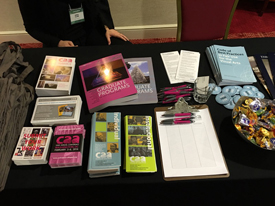 Representing CAA at SECAC this year were Anna Cline, development and marketing assistant, and myself. CAA’s participation as an exhibitor at the conference—alongside the fine-art paper producer Canson, the publisher Thames and Hudson, and the book distributor Scholar’s Choice—was a great opportunity to connect face to face with current CAA members and to meet prospective members. Our table displayed the latest editions of the graduate-program directories, membership brochures, and free copies of the Code of Best Practices in Fair Use for the Visual Arts—a publication that was especially warmly received. Most important, our presence reminded SECAC attendees of CAA’s own Annual Conference next year in Washington, DC, taking place February 3–6, 2016.
SECAC’s 2015 theme—“confluence”—alluded to Pittsburgh’s geographic location on the Allegheny and Monongahela Rivers, which form the Ohio River, and likened it to the conceptual convergence and fluidity of borders related to art, architecture, design, education, and pedagogy today. Highlights of the conference included sessions on various topics in art and design, including “Visual Art and the Aesthetics of Cuteness,” which examined Japanese culture and the power of cuteness in the arts, and “Is Graphic Design Fine Art? Does It Matter?,” where graphic designers and fine artists drew contrasts and comparisons to each other while also exploring the rise of the “meme” and the role of art and design in the internet age. The keynote address by Terry Smith, an art historian and theorist at the University of Pittsburgh, examined the two concepts in the title of his talk, “Defining Contemporaneity; Imagining Planetarity,” in an effort to finding productive connections between them.
Conference attendees were treated to perfect sunny fall weather in a city that offered plenty of art and culture outside the doors of the conference hotel. Gallery crawls were scheduled to visit the gallery Future Tenant, the Society for Contemporary Craft, and the Andy Warhol Museum. Paying tribute to the artist in his hometown, the Warhol Museum treated attendees to seven whole floors of gallery and exhibition space with an art collection that includes approximately nine hundred paintings, one hundred sculptures, and thousands of works on paper, prints, and photographs—a must see for any art lover visiting Pittsburgh. In addition, buses were arranged for attendees to visit the Carnegie Museum of Art, the Miller Gallery at Carnegie Mellon University, and the University Art Gallery at the University of Pittsburgh, among others.
Thank you, SECAC for allowing CAA to connect with familiar and new faces. We will see you again next year!