
CAA News Today
Arts Action Fund Breaking News 7-9-14
posted by CAA — July 09, 2014
The following email from Nina Ozlu Tunceli, executive director of Americans for the Arts, was sent on Wednesday, July 9, 2014.
Arts Action Fund Breaking News 7-9-14
Today, U.S. Rep. Ken Calvert (R-CA), the new House Chairman of the Interior Appropriations Subcommittee, set the initial funding levels for the nation’s cultural agencies’ budgets for FY 2015. The chairman was able to assign small increases to the Smithsonian and National Gallery of Art, but also made some cuts to each of the National Endowments for the Arts and for the Humanities, as well as the Kennedy Center for the Performing Arts.
We now look to the Senate to restore these proposed cuts and hopefully provide an increase to each of these federal cultural agencies. We’ve already prepared an easy-to-customize, pre-written letter for you to e-mail to your two Senators and House Representative. Please take two minutes to help us get the word out.
With your help, I am optimistic that we will be able to secure higher funding levels in the Senate, which coincidentally is voting to confirm new National Endowment for the Humanities Chairman Bo Adams today.
Act Now! Proposed Cuts Would Bring NEH’s Funding to Its Lowest Level since 1972
posted by CAA — July 09, 2014
The following email from Stephen Kidd, executive director of the National Humanities Alliance, was sent on Tuesday, July 8, 2014.
Act Now! Proposed Cuts Would Bring NEH’s Funding to Its Lowest Level since 1972
Dear Humanities Advocate,
This morning, the House subcommittee that oversees funding for the National Endowment for the Humanities proposed to fund NEH at its lowest level since 1972. If enacted, this $8 million cut would bring NEH’s funding level to just $138 million for 2015.
It is time to stop the steady erosion of NEH’s capacity!
The subcommittee will be voting on the proposed cuts tomorrrow, so it is essential that you act now. Please contact your Member of Congress and urge them to oppose the proposed cut to the NEH.
Click here to send our message to your Representative today. They are waiting to hear from you.
Thanks for your help!
Juror Sought for the Millard Meiss Publication Fund
posted by CAA — June 30, 2014
CAA seeks nominations and self-nominations from an architectural historian or an art historian with a specialization in Islamic, East Asian, or contemporary art to serve on the jury for the Millard Meiss Publication Fund for a four-year term, ending on June 30, 2018. Candidates must be actively publishing scholars with demonstrated seniority and achievement; institutional affiliation is not required.
The Meiss jury awards subsidies to support the publication of book-length scholarly manuscripts in the history of art and related subjects. Members review manuscripts and grant applications twice a year and meet in New York in the spring and fall to select the awardees. CAA reimburses jury members for travel and lodging expenses in accordance with its travel policy.
Candidates must be current CAA members and should not be serving on another CAA editorial board or committee. Jury members may not themselves apply for a grant in this program during their term of service. Nominators should ascertain their nominee’s willingness to serve before submitting a name; self-nominations are also welcome. Please send a letter describing your interest in and qualifications for appointment, a CV, and contact information to: Millard Meiss Publication Fund Jury, College Art Association, 50 Broadway, 21st Floor, New York, NY 10004; or send all materials as email attachments to Alex Gershuny, CAA editorial manager. Deadline: July 22, 2014.
Update on the CAA Fair-Use Initiative
posted by CAA — June 25, 2014
Professors Patricia Aufderheide and Peter Jaszi are now in the second phase of CAA’s Fair Use Initiative. The first phase, begun in January 2013, involved interviews with visual arts professionals regarding the use of third-party materials in their creative work and publications. The interviews were summarized by Aufderheide and Jaszi and published by CAA earlier this year: https://www.collegeart.org/news/2014/01/29/caa-publishes-fair-use-issues-report/
This week, Aufderheide and Jaszi completed the last of ten discussion group meetings held over the past few weeks in New York, Dallas, Washington, D.C., Chicago and Los Angeles, in which visual arts professionals explored various situations where fair use can be invoked when using third-party materials and images. Each discussion group consisted of ten to twelve artists, art historians, museum directors, curators, and editors, who were presented with hypothetical scenarios based on the Issues Report. The ensuing discussions have been intense and extremely valuable, providing insights into broadly shared standards for relying on fair use when using copyrighted material.
In the third phase of the project Aufderheide and Jaszi will use the results of the discussion groups to synthesize a code of best practices. A preliminary draft will be reviewed by the Task Force on Fair Use, the Committee on Intellectual Property, the project advisors, and a Legal Advisory Committee before a final version is presented to the CAA Board of Directors for approval.
CAA is pleased to announce the appointment of new advisors to the Fair Use Initiative. Chris Sundt, Editor, Visual Resources: An International Journal of Documentation and past chair of the CAA Committee on Intellectual Property; and Paul Catanese, Director of Interdisciplinary Arts & Media MFA Program, Columbia College Chicago and past chair of the CAA New Media Caucus have agreed to serve in this capacity. The advisors will contribute to the review of the draft code, propose possible candidates for the legal review committee and assist in the dissemination of the code once the CAA Board of Directors has approved it.
A report on the Fair Use Initiative will be presented at the Annual Conference in New York in February 2015.
Solo Exhibitions by Artist Members
posted by CAA — June 22, 2014
See when and where CAA members are exhibiting their art, and view images of their work.
Solo Exhibitions by Artist Members is published every two months: in February, April, June, August, October, and December. To learn more about submitting a listing, please follow the instructions on the main Member News page.
June 2014
Mid-Atlantic

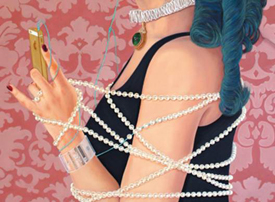
Lisa Ficarelli-Halpern. Visual Arts Center of New Jersey, Mitzi and Warren Eisenberg Gallery, Summit, New Jersey, May 9–June 29, 2014. #BaroqueTechStyle: Portraits by Lisa Ficarelli-Halpern. Oil painting and digital printmaking.

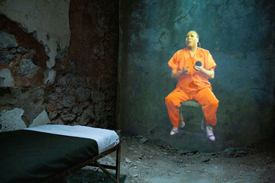
Michelle Handelman. Eastern State Penitentiary, Philadelphia, Pennsylvania, May 9–November 16, 2014. Beware the Lily Law. Installation.
Midwest

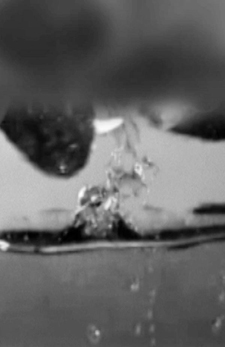
Victoria Fu. Document, Chicago, Illinois, January 31–March 8, 2014. Crossbar Radical-Tick Scoop Star. Installation, video, projection, and photography.
Northeast


Victoria Fu. Simon Preston Gallery, New York, May 4–June 7, 2014. Belle Captive. Installation, video, projection, and photography.

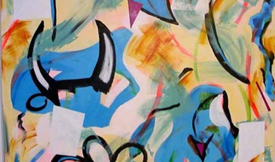
Sue Karnet. BBLA Gallery, Bohemian Benevolent and Literary Association, New York, April 2–29, 2014. Perceptions. Painting.

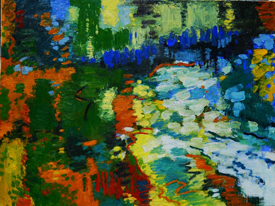
Lorna Ritz. French Cultural Center, Boston, Massachusetts, March 1–31, 2014. A Travelogue in Color. Painting.


Jo Sandman. Gallery Kayafas, Boston, Massachusetts, April 18–May 24, 2014. Transmissions. Transparent images.

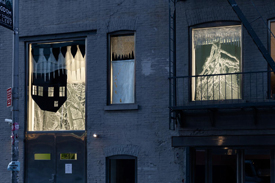
Leigh Tarentino. Mixed Greens Gallery, New York, March 20–May 23, 2014. The Night Hours. Window installation.
West

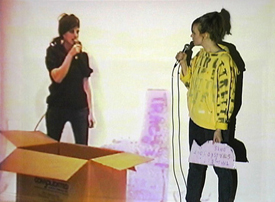
Wynne Greenwood. Henry Art Gallery, University of Washington, Seattle, Washington, April 5–June 15, 2014. Wynne Greenwood: Notes on Tracy + the Plastics. Video archive.
People in the News
posted by CAA — June 17, 2014
People in the News lists new hires, positions, and promotions in three sections: Academe, Museums and Galleries, and Organizations and Publications.
The section is published every two months: in February, April, June, August, October, and December. To learn more about submitting a listing, please follow the instructions on the main Member News page.
June 2014
Academe

Shiben Banerji has joined the Department of Art History, Theory, and Criticism at the School of the Art Institute of Chicago in Illinois as assistant professor of history of architecture.
Emine Fetvaci, an associate professor of Islamic art, has earned tenure in the Department of History of Art and Architecture at Boston University in Massachusetts.
Patrick Hajovsky, an assistant professor of art history who specializes in Precolumbian and colonial Latin American art, has earned tenure in the Art and Art History Department at Southwestern University in Georgetown, Texas.
Seth Kim-Cohen has been appointed assistant professor of contemporary art history in the Department of Art History, Theory, and Criticism at the School of the Art Institute of Chicago in Illinois.
Elena FitzPatrick Sifford has accepted the position of assistant professor of Renaissance and Baroque art at Louisiana State University in Baton Rouge.
Mechtild Widrich has joined the Department of Art History, Theory, and Criticism at the School of the Art Institute of Chicago in Illinois as assistant professor of contemporary art history.
Gregory Williams, associate professor of contemporary art at Boston University in Massachusetts, has received tenure in his school’s Department of History of Art and Architecture.
Museums and Galleries
Paul R. Davis, previously Andrew W. Mellon Postdoctoral Fellow at the Centre for the Creative Arts of Africa at the University of the Witwatersrand in Johannesburg, South Africa, has been appointed curator of collections at the Menil Collection in Houston, Texas.
Douglas Dreishpoon has become the first chief curator emeritus at the Albright-Knox Art Gallery in Buffalo, New York, where he has worked since 1998.

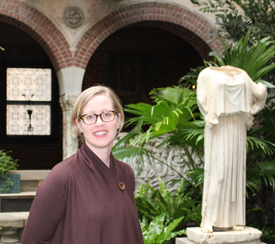 Christine Neilsen
Christine Neilsen, formerly assistant curator of late antique and Byzantine art for the Art Institute of Chicago in Illinois, has been named William and Lia Poorvu Curator of the Collection and Director of Program Planning at the Isabella Stewart Gardner Museum in Boston, Massachusetts.
David Odo has left his position as Bradley Assistant Curator of Academic Affairsat the Yale University Art Gallery in New Haven, Connecticut. He is now director of student programs and research curator of university collections initiatives at the Harvard Art Museums in Cambridge, Massachusetts.

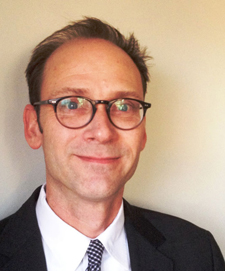 Brandon Ruud
Brandon Ruud, previously curator of American art for the Sheldon Museum of Art at the University of Nebraska in Lincoln, has been named the new Constance and Dudley J. Godfrey Jr. Curator of American Art and Decorative Arts at the Milwaukee Art Museum in Wisconsin.

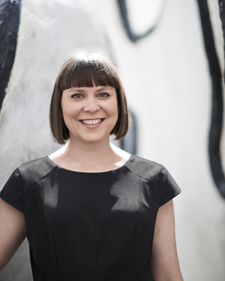 Jill Shaw
Jill Shaw, a research associate at the Art Institute of Chicago in Illinois, has accepted the position of senior curator of collections at Colgate University’s Picker Art Gallery in Hamilton, New York.
Organizations and Publications
Parme Giuntini, professor of art history and assistant chair of liberal arts and sciences at Otis College of Art and Design in Los Angeles, California, has become a contributing editor to the website Art History Teaching Resources.
Kimberly James Overdevest, assistant professor of visual arts at Grand Rapids Community College in Michigan, has joined the website Art History Teaching Resources as a contributing editor.
Virginia Spivey, an independent art historian based in Washington, DC, has become a contributing editor to the website Art History Teaching Resources.
Institutional News
posted by CAA — June 17, 2014
Read about the latest news from institutional members.
Institutional News is published every two months: in February, April, June, August, October, and December. To learn more about submitting a listing, please follow the instructions on the main Member News page.
June 2014
The Baltimore Museum of Art in Maryland has received a $2,500 award from the International Fine Print Dealers Association to fund a curatorial internship in museum print collections.
The Delaware Art Museum in Wilmington has launched a collections website, created with the web-based platform eMuseum. Visitors to the online resource can browse the museum’s collections, search for specific objects, view images, and create their own saved collections of work. To date, over 1,000 works of art have been photographed, catalogued, and added to the website. The museum’s entire 12,500-work collection, including the largest collection of British Pre-Raphaelite art outside the United Kingdom, will be available online by 2018.


The Getty Research Institute in Los Angeles, California, has acquired the archive documenting the first three decades of the Kitchen, a leading alternative space devoted to performance art, dance, music, and video. The large, well-preserved archive includes thousands of videotapes, audiotapes, photographs, posters, and other archival materials documenting the exhibitions, performances, and events presented by the Kitchen between 1971 and 1999.

The Harvard Art Museums—composed of the Fogg Museum, the Busch-Reisinger Museum, and the Arthur M. Sackler Museum—will open their new Renzo Piano–designed facility to the public on November 16, 2014. The renovation and expansion of the museums’ landmark building at 32 Quincy Street in Cambridge, Massachusetts, will bring the three museums and their collections together under one roof for the first time, inviting students, faculty, scholars, and the public into one of the world’s great institutions for arts scholarship and research.

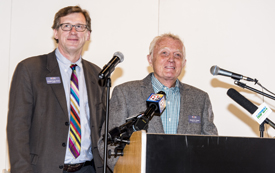 Don Tuski, president of the Maine College of Art (left) with Dan Crewe, brother of Bob Crewe and a college trustee since 2011
The Maine College of Art in Portland has accepted a $3 million gift from the Bob Crewe Foundation to develop a new program that focuses on the study of contemporary music and its relation to visual art. This transformational gift will support an innovative field of study in honor of the internationally known musician, artist, and entrepreneur, Bob Crewe, while supporting students from a wide range of backgrounds wishing to pursue a career in music, art, or both.
The Metropolitan Museum of Art in New York has launched MetCollects, a new series on the museum’s website that offers first looks at recently acquired works of art. MetCollects will feature one work each month, selected from the hundreds that the Metropolitan Museum acquires through gifts and purchases annually. The series will also pair spectacular photography with curatorial commentary, often including video for further contextualization of the works.
Michigan State University in East Lansing has received a $5 million gift from the art collectors Eli and Edythe Broad to increase the endowment for and to help fund exhibitions at the Eli and Edythe Broad Art Museum for the next five years.
The Moore College of Art and Design in Philadelphia, Pennsylvania, and the City of Philadelphia Mural Arts Program have formed a unique partnership to provide innovative, collaborative-style teaching across two new graduate programs at the college: an MA in art and social engagement and an MFA in community practice. The new graduate programs are expected to launch in 2015 and will help Moore establish itself as the region’s educational center for community arts practice.
The Museum of Fine Arts, Houston, in Texas has received a $2,500 award from the International Fine Print Dealers Association to fund a curatorial internship in museum print collections.
The RISD Museum at the Rhode Island School of Design in Providence has accepted a $2,500 award from the International Fine Print Dealers Association to fund a curatorial internship in museum print collections.
The University of Iowa Museum of Art in Iowa City has been given a $2,500 award from the International Fine Print Dealers Association to fund a curatorial internship in museum print collections.
Virginia Commonwealth University in Richmond has announced that it will break ground on a new Institute of Contemporary Art, an exhibition and performance space, laboratory, and incubator for the presentation of visual art, theater, music, dance, and film by nationally and internationally recognized artists, in June 2014.


Yale University Press, based in New Haven, Connecticut, has accepted the thirty-fifth George Wittenborn Memorial Book Award from the Art Librarians Society of North America for Interaction of Color by Josef Albers (App for iPad), published in 2013.
Grants, Awards, and Honors
posted by CAA — June 15, 2014
CAA recognizes its members for their professional achievements, be it a grant, fellowship, residency, book prize, honorary degree, or related award.
Grants, Awards, and Honors is published every two months: in February, April, June, August, October, and December. To learn more about submitting a listing, please follow the instructions on the main Member News page.
June 2014

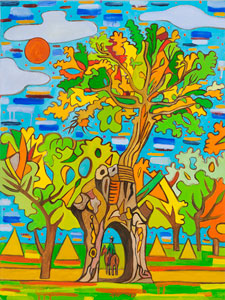 Susan Bee, Autumn Fantasy, 2011, oil on linen, 18 x 14 in. Collection of Leslee Smoke (artwork © Susan Bee)
Susan Bee, a painter and writer based in New York, has received a 2014 fellowship in fine arts from the John Simon Guggenheim Memorial Foundation.


Doris Chon, a lecturer in the Department of Art at the University of California, Los Angeles, has been named Harald Szeemann Research Project Postdoctoral Fellow by the Getty Research Institute in Los Angeles. From September 2014 to June 2016 she will work on “Museum Mythologies: Harald Szeemann’s Museums by Artists, the Museum of Obsessions, and the Legacy of Institutional Critique.”
Denise Rae Costanzo, assistant professor in the H. Campbell and Eleanor R. Stuckeman
School of Architecture and Landscape Architecture at Pennsylvania State University in University Park, has been awarded the 2014–15 Marian and Andrew Heiskell Postdoctoral Rome Prize in modern Italian studies.
Michelle H. Craig, an independent scholar of African and Islamic art who is based in Mansfield Center, Connecticut, has received a National Endowment for the Humanities Fellowship via the Getty Research Institute in Los Angeles, California. From September 2014 to July 2015, she will work on “Across Desert Sands: Trans-Saharan Visual Culture.”
Nathan S. Dennis, a PhD candidate in the history of art at Johns Hopkins University in Baltimore, Maryland, has won the 2014–15 Paul Mellon/Samuel H. Kress Foundation Predoctoral Rome Prize in ancient studies.
Yvonne Elet, an assistant professor of art history at Vassar College in Poughkeepsie, New York, has earned a 2013–14 fellowship from the American Council of Learned Societies for her project, “Materiality and Metamorphosis: Stucco in the Architecture and Decoration of Early Modern Europe.”

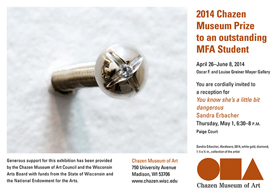
Sandra Erbacher, an MFA student at the University of Wisconsin, Madison, has accepted the 2014 Chazen Museum Prize, offered annually by the Chazen Museum of Art in collaboration with the University of Wisconsin’s Art Department.
Wayne Franits, professor of art history at Syracuse University in Syracuse, New York, has received a grant from the American Philosophical Society that will enable him to conduct research in London for his current project concerning Godfried Schalcken’s English period.
John Craig Freeman has been awarded an Art +Technology grant from the Los Angeles County Museum of Art in California. Freeman will draw on crowdsourcing, augmented reality, and electroencephalography (EEG) technology for a project titled Things We Have Lost.

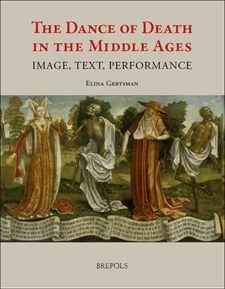
Elina Gertsman has won the 2014 John Nicholas Brown Prize from the Medieval Academy of America for her book, The Dance of Death in the Middle Ages: Image, Text, Performance (Turnhout, Belgium: Brepols, 2010). Established in 1978, the prize is awarded annually for a first book or monograph on a medieval subject judged by the selection committee to be of outstanding quality.
Christopher H. Hallett, professor and chair of the Department of History of Art at the University of California, Berkeley, has been selected as a 2014–15 Getty Scholar at the Getty Research Institute in Los Angeles, California. He will be in residence at the Getty Villa in Malibu from September to December 2014 to work on “The ‘Archaic Revival’ of Augustan Rome: Primitivism in the Art and Monuments of Rome, 30–20 BCE.”
Gregory Halpern, a photographer and assistant professor at the Rochester Institute of Technology in Rochester, New York, has earned a 2014 fellowship in photography from the John Simon Guggenheim Memorial Foundation.
Taro Hattori, an artist and lecturer based in San Francisco, California, has been awarded a 2014 residency from Omi International Arts Center, based in Ghent, New York.
Pablo Helguera, an artist and director of adult and academic education at the Museum of Modern Art in New York, has been named a 2014 ABOG Fellow for Socially Engaged Art by the Manhattan-based organization A Blade of Grass.

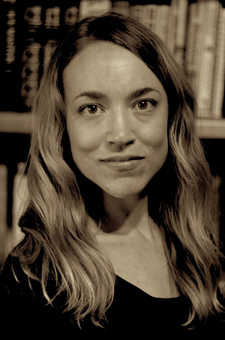 Jessica L. Horton
Jessica L. Horton has been recognized as a 2014–15 National Endowment for the Humanities Postdoctoral Fellow by the Getty Research Institute in Los Angeles, California. She will be in residence at the Smithsonian American Art Museum and the National Museum of the American Indian, both in Washington, DC, to work on “Global Histories of Native American Art” from September 2014 to July 2015.
Jeanette Kohl, associate professor of art history at the University of California, Riverside, has become a 2014–15 Getty Scholar. While at the Getty Research Institute in Los Angeles from September to December 2014, she will work on “Global Faces: Heteronomies and the Afterlife of Renaissance Portraiture.”
Jason Lazarus, an artist, curator, writer, and educator based in Chicago, Illinois, has received a 2014 grant from the Samuel I. Newhouse Foundation. As part of the award, he participated in the Wynn Newhouse Awards Exhibition this past spring.
Sean Villareal Leatherbury, a specialist in Roman, late antique, and Byzantine art and archaeology who earned a PhD from the University of Oxford in Oxford, England, has accepted a 2014–15 Postdoctoral Fellowship from the Getty Research Institute in Los Angeles, California. He will work on “The Arts of Votive Dedication from Rome to Byzantium” at the Getty Villa in Malibu from September 2014 to June 2015.
Julia Orell from the Section for East Asian Art History in the Department of Art History at the University of Zurich in Switzerland, has been named a 2014–15 Postdoctoral Fellow by the Getty Research Institute, based in Los Angeles, California. Her project, “Shifting the Boundaries of Art History: East Asian Art History in Germany, Austria, and Switzerland ca. 1840–1940,” will be worked on from September 2014 to June 2015.
John K. Papadopoulos, professor and chair of the Interdepartmental Archaeology Program at the University of California, Los Angeles, has been selected to be a 2014–15 Guest Scholar and Consortium Professor at the Getty Research Institute in Los Angeles, California, from January to June 2015. His research, currently taking the form of a project titled “The Archaeological Context of Value,” focuses on Aegean prehistory and Greek and Italian archaeology, as well as the history and culture of the Classical and later periods.

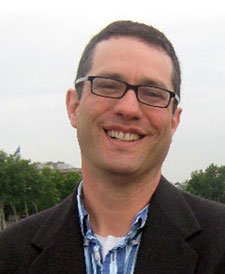 David Raskin
David Raskin, chair of Department of Sculpture and professor in the Department of Art History, Theory, and Criticism at the School of the Art Institute of Chicago in Illinois, has been appointed a fellow in the United States Study Centre at the University of Sydney in Australia for spring 2015.
Kristin E. Romberg, assistant professor in the Department of Art History at the University of Illinois, Urbana-Champaign, has been selected for a 2014–15 Postdoctoral Fellowship at the Getty Research Institute in Los Angeles, California. She will work on “Radical Constructivism: Aleksei Gan’s Grass-Roots Modernism” from September 2014 to June 2015.
Susan Sidlauskas, professor of art history at Rutgers University in New Brunswick, New Jersey, has been named a 2014 fellow in fine arts research by the John Simon Guggenheim Memorial Foundation.
Larry A. Silver, Farquhar Professor of Art History in the Department of the History of Art at the University of Pennsylvania in Philadelphia, has been appointed a 2014–15 Guest Scholar by the Getty Research Institute in Los Angeles, California. From January to June 2015, Silver will work on “Jewish Art as Marked.”
Joanna S. Smith, associate professional specialist in the Department of Art and Archaeology at Princeton University in Princeton, New Jersey, has become a 2014–15 Getty Scholar, thanks to the Getty Research Institute in Los Angeles, California. She will work on her project, “Seal Stratigraphies from Enkomi, Cyprus,” at the Getty Villa in Malibu from April to June 2015.
Jenni Sorkin, assistant professor of history of art and architecture at the University of California, Santa Barbara, has received a 2013–14 fellowship from the American Council of Learned Societies for her project, “Live Form: Women, Ceramics, and Community, 1945–1975.”
Allison Nicole Stielau, a PhD candidate in the Department of History of Art at Yale University in New Haven, Connecticut, has accepted a 2014–15 Predoctoral Fellowship from the Getty Research Institute in Los Angeles, California. She will research “The Unmaking of Metalwork in Early Modern Europe” while at the Getty from September 2014 to June 2015.
Kathleen Tahk, a graduate student in art history at Northwestern University in Evanston, Illinois, has earned a Mellon Fellowship for Dissertation Research in Original Sources from the Council on Library and Information Resources. Tahk’s project is called “A Revolution beyond Borders: The Soviet Art of the Latvian Rifleman, 1917–1938.”
Exhibitions Curated by CAA Members
posted by CAA — June 15, 2014
Check out details on recent shows organized by CAA members who are also curators.
Exhibitions Curated by CAA Members is published every two months: in February, April, June, August, October, and December. To learn more about submitting a listing, please follow the instructions on the main Member News page.
June 2014
Mary Forbes. This Is the Life. Art Car Museum, Houston, Texas, March 15–June 8, 2014.

 Peter Demos, Untitled, 2014, acrylic on dyed canvas, 60 x 30 in. (artwork © Peter Demos)
Katarina Lanfranco. Elusive Abstraction. Rhombus Space, Brooklyn, New York, May 2–25, 2014.

 Don Fritz, Ground Zero, mixed media on paper, 36 x 24 in. (artwork © Don Fritz)
Katarina Lanfranco. Thought Bubbles. Rhombus Space, Brooklyn, New York, March 28–April 27, 2014.

 Future Buddha Maitreya Flanked by the Eighth Dalai Lama and His Tutor, Tibet, 1793–94. Norton Simon Art Foundation (artwork in the public domain)
Melody Rod-ari. In the Land of Snow: Buddhist Art of the Himalayas. Norton Simon Museum, Pasadena, California, March 28–August 25, 2014.
Books Published by CAA Members
posted by CAA — June 15, 2014
Publishing a book is a major milestone for artists and scholars—browse a list of recent titles below.
Books Published by CAA Members appears every two months: in February, April, June, August, October, and December. To learn more about submitting a listing, please follow the instructions on the main Member News page.
June 2014

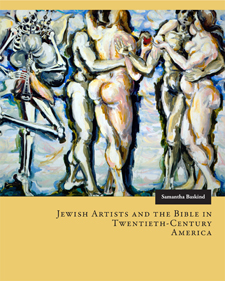
Samantha Baskind. Jewish Artists and the Bible in Twentieth-Century America (University Park: Pennsylvania State University Press, 2014).

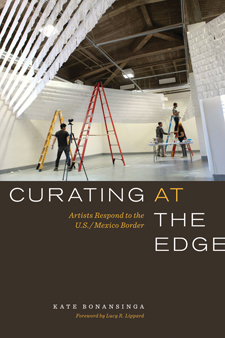
Kate Bonansinga. Curating at the Edge: Artists Respond to the U.S./Mexico Border (Austin: University of Texas Press, 2014).

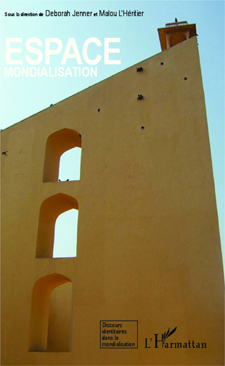
Deborah Jenner and Malou L’Héritier, eds. Espace mondialisation (Paris: l’Harmattan, 2013).

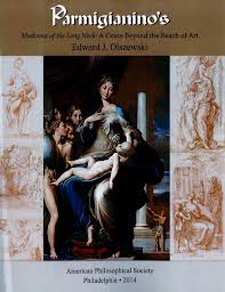
Edward J. Olszewski. Parmigiano’s “Madonna of the Long Neck”: A Grace beyond the Reach of Art (Philadelphia: American Philosophical Society, 2014).

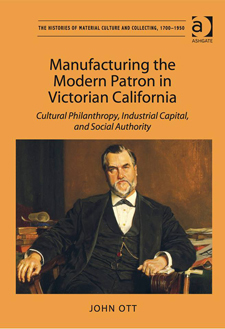
John Ott. Manufacturing the Modern Patron in Victorian California: Cultural Philanthropy, Industrial Capital, and Social Authority (Burlington, VT: Ashgate, 2014).

Donald Preziosi. Art, Religion, Amnesia: The Enchantments of Credulity (New York: Routledge, 2013).

David Levi Strauss. Words Not Spent Today Buy Smaller Images Tomorrow: Essays on the Present and Future of Photography (New York: Aperture, 2014).