CAA News Today
Take the CAA Professional Development Survey
posted by CAA — June 06, 2018

Professional Development is very important to CAA. We strive to create programs both during the Annual Conference and at other times that address the professional needs of the visual arts field and community.
We ask that you give us your feedback on what kinds of professional development programs would work best for you.
Deadline: July 1, 2018
News from the Art and Academic Worlds
posted by CAA — June 06, 2018
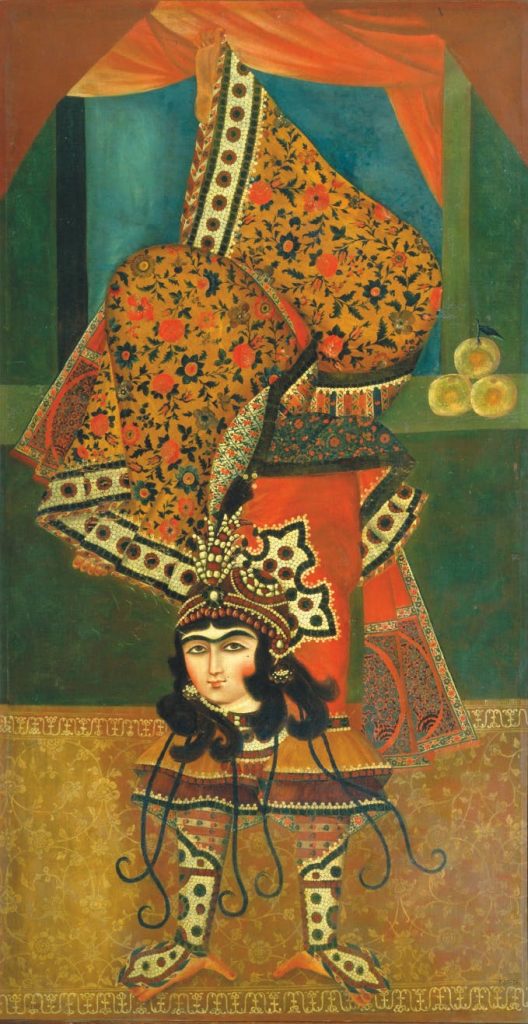
Female tumbler (c. 1800–30), unknown artist. Victoria and Albert Museum, London
Irving Sandler, Art Historian Who Was Close to Artists, Dies at 92
Art critic, historian, and longtime CAA member Irving Sandler passed away on June 2nd. (New York Times)
Museum of Modern Art Staff Protest Outside Fundraising Gala, Demanding a Fair Contract
MoMA workers and their supporters rallied outside the Museum to draw attention to ongoing contract negotiations that are currently at an impasse. (Hyperallergic)
Director Okwui Enwezor to Step Down from Munich’s Haus Der Kunst
The renowned curator and art historian announced he is resigning from his post due to health reasons. (Artforum)
Art Sold Separately: Why Are People Buying Free Felix Gonzalez-Torres Posters?
Gonzalez-Torres made his first work that includes a stack of paper in 1988, and his first to consist of a stack constantly replenished with “endless copies” in 1989. (Greg.org)
The Paintings that Turned Persian Art on its Head in the 19th Century
While Persian arts are usually associated in the popular imagination with miniature paintings and carpets, the arts of the Qajar period are characterized by large-scale works and new technologies. (Apollo Magazine)
Elliott Arkin’s Quest to Counter Art World Elitism Culminated in a 10-Foot-Tall Picasso
Artist Elliott Arkin just spent roughly $120,000 of his own money producing a 10-foot-tall sculpture of Pablo Picasso pushing a lawn mower. (Artsy)
Getty Foundation Supports the CAA-Getty International Program for an Eighth Year
posted by CAA — June 05, 2018
The Getty Foundation has awarded CAA a grant to fund the CAA-Getty International Program for an eighth consecutive year. The Foundation’s support will enable CAA to bring twenty international visual-arts professionals to the 107th Annual Conference, taking place February 13-16, 2019 in New York City. Fifteen individuals will be first-time participants in the program and five will be alumni, returning to present papers during the conference. The CAA-Getty International Program provides funds for travel expenses, hotel accommodations, per diems, conference registrations, and one-year CAA memberships to art historians, artists who teach art history, and museum curators. The program will include a one-day preconference colloquium on international issues in art history on February 12, 2019, to be held at Parsons School of Design.
Read about deadlines and the application process for the 2019 CAA-Getty International Program.
The CAA-Getty International Program was established to increase international participation in CAA and the CAA Annual Conference. The program fosters collaborations between North American art historians and curators and their international colleagues, and introduces visual arts professionals to the unique environments and contexts of practices in different countries. Since the CAA-Getty International Program’s inception in 2012, 105 scholars have participated in CAA’s Annual Conference. Historically, the majority of international registrants at the conference have come from North America, the United Kingdom, and Western European countries. The CAA-Getty International Program has greatly diversified attendance, adding scholars from Central and Eastern Europe, Russia, Africa, Asia, Southeast Asia, Caribbean countries, and South America. The majority of the participants teach art history (or visual studies, art theory, or architectural history) at the university level; others are museum curators or researchers.
One measure of the program’s success is the remarkable number of international collaborations that have ensued, including an ongoing study of similarities and differences in the history of art among Eastern European countries and South Africa, attendance at other international conferences, publications in international journals, and participation in panels and sessions at subsequent CAA Annual Conferences. Former grant recipients have become ambassadors of CAA in their countries, sharing knowledge gained at the Annual Conference with their colleagues at home. The value of attending a CAA Annual Conference as a participant in the CAA-Getty International Program was succinctly summarized by alumnus Nazar Kozak, Senior Researcher, Department of Art Studies, National Academy of Sciences of Ukraine: “To put it simply, I understood that I can become part of a global scholarly community. I felt like I belong here.”
An Interview with Roberto Tejada, CAA’s New Vice President for Diversity and Inclusion
posted by CAA — June 05, 2018
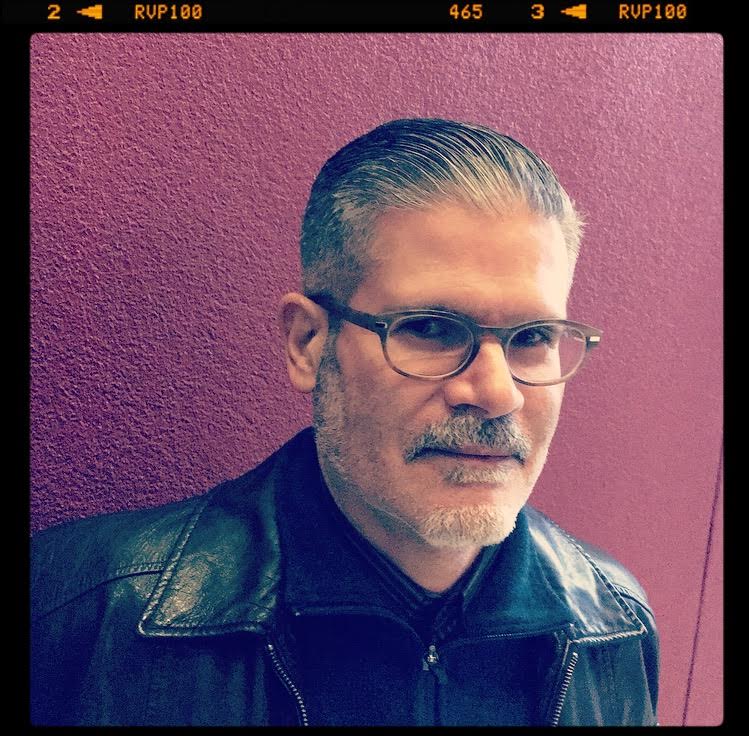
Roberto Tejada
Last week, Roberto Tejada, CAA’s newly elected vice president for diversity and inclusion, talked with Hunter O’Hanian, CAA’s executive director, about the state of the field and why achieving true diversity is so difficult in the arts field.
The interview accompanies CAA’s newly created Values Statement on Diversity and Inclusion, adopted by the CAA board of directors in May 2018.
Hunter O’Hanian: You were elected as CAA’s first vice president for diversity and inclusion last October. Can you tell me why that position was created and what you hope to accomplish?
Roberto Tejada: Let me answer that first with a confession. I joined CAA as an emerging professional many years ago, newly positioned in academia, but not altogether of academia. I’d spent a decade of my formal and informal working years in the art and literary worlds of 1990s Mexico City. When I returned to the US, there were few art history PhD programs with faculty specializing in Latin American and US Latinx art; the art-related disciplines were not especially open or inclusive, and the CAA and its conference consistently felt to me like alienating spaces. So I was never much engaged as a member.
A few years ago, in 2013-2014, I had the opportunity to be in attendance at a CAA retreat held at Clark Art Institute, where I was a fellow. I listened to CAA’s leadership in discussions that led to the drafting of its current strategic plan; and I was impressed with the various commitments among its stakeholders to issues of advocacy and questions of diversity and inclusion. Those conversations inspired me to consider it was possible to effect change from within, so I agreed to put myself forward and was elected by the board in 2016 to serve as Secretary.
My understanding was that CAA’s membership had long sought leadership, whether on the board or staff, to embody, energize, and encourage a commitment to diversity and inclusion at every level of the organization. Under review were resolutions that resulted from the perseverance of CAA’s Committee on Diversity Practices, other subcommittees, and the efforts of many individual members, including the “Resolution to Create a New Officer with the Title of Vice President for Diversity and Inclusion” and the “Resolution Adopting a Values Statement on Diversity and Inclusion.”
Why was the position was created? It’s no secret that the membership of scholarly associations is in decline and that cultural institutions more broadly jeopardize their relevance and sustainability when they fail to make diversity and inclusion central to an organization’s structuring values. For the last decades, cultural life and fields of study have been categorically redefined by the art and scholarship of underrepresented groups; by artists and intellectuals of color, LGBT scholars, and others who have faced the challenges of institutional spaces, often without networks of support.
Also, insofar as the language of diversity and inclusion readily serves the neoliberal agenda, it’s conveniently adopted and used by universities and other organizations as a cover for actual equity in terms of race, ethnicity, skin color, and other social markers of difference, visible and invisible. The promotion of diversity and inclusion involves redressing an entanglement of past narratives but with a steady eye on the present and future. One way to view it, appropriate to art and design, is as a work-in-progress. CAA has been watchful of currents in higher education and the arts and it has led advocacy efforts of great impact for diversity and inclusion. If equity and inclusion were to become the priority issue for CAA and its membership, the human and intellectual vibrancy of our respective institutions could begin to more accurately reflect the plural narratives that have led to the composition of contemporary society. I’m passionate about the role that the board and membership can play to empower others, and so change the faces of CAA.
But in the context of current political discourses in the government and media, the challenge of advancing equity in the arts and humanities is to move beyond the model of appealing to hearts and minds, and to encourage policy-change guidelines that are concrete channels to access.
HO: What particular issues do you see in the fields of art history and visual arts with regard to diversity, either in the academic world or museums? A high percentage of CAA’s members are white. Is there a reason for that?
RT: Despite the multicultural context of the so-called global turn, the fields of art history and the visual arts have not been particularly hospitable to persons deemed different. If you serve on enough admission and hiring committees at different kinds of institutions, you cannot ignore the implicit biases that continue to perpetuate a lack of equity. Although fields of research and curricula have adapted to account for plural histories, the bodies that make art and design, that care and write about practices, history, preservation, and display at universities and museums, are still overwhelmingly white. It’s challenging to recruit emerging professionals of color who feel underrepresented in CAA. Members within the organization, however, have effected change. For example, the US Latinx Art Forum (USLAF) is an affiliated society that was formed by CAA members, and it now includes around 300 artists, art historians, curators, and other art professionals. Its founders Adriana Zavala and Rose G. Salseda, responded to “ongoing marginalization of US Latinx art within the academy and specifically within both ‘American’ and ‘Latin American’ art history.” USLAF’s members advocate for scholarship at the intersections of Latinx, African-American, Asian-American and Indigenous art and art histories. Its efforts are positioned to inspire artists and scholars of color to join and participate in CAA.
HO: In May, the CAA board of directors passed its Values Statement on Diversity and Inclusion. Why this particular statement now?
RT: That statement was a collaborative effort that resulted from discussions first among members of the Committee for Diversity Practices; then among board members, who voted to pass the statement. The statement will strike many as belated. As a starting point, it has been retroactively amended to the Strategic Plan and will serve as a guiding frame of reference for all CAA initiatives and actions moving forward.
HO: What can practitioners/educators in the field do to help diversify their own departments or student cohorts?
RT: Flora Brooke Anthony, Chris Bennett, and Katherine Brion facilitated an excellent workshop at the last CAA Annual Conference in Los Angeles on the “disconnect between intention and practice” and on why faculty hiring guides and administrative initiatives have been unsuccessful at creating diverse departments. Some of the short answers have to do with the professional pipeline, implicit bias, the comfort zone idea of “best fit,” and the social factors to do with accumulation of advantage and disadvantage. The long view requires challenging our membership to lend efforts and energies in the service of inclusion that actually enhances one’s research imagination at the departmental level and in the classroom. There are resources on CAA’s website: standards and guidelines for diversity practices, links to a database on multicultural teaching, digital resources with classroom ideas, archives of digitized imagery, and bibliographies of global visual culture. There are ways that practitioners and educators in art and art history departments can partner with units and other departments on campus whose faculty and graduate student research addresses the scope of human diversity and the structures of exclusion or discrimination. Departments can explore the possibility of creating residency fellowship for recent MFAs or PhDs who bring different embodied experiences. There are CAA-sponsored web platforms to be explored that could serve to link emerging professionals and graduate student to create an open space for questions and concerns relevant to faculty of color in departments unfamiliar with diversity needs. Department can actively recruit from diverse universities and community colleges, with an openness to candidates with experiences and expertise not always associated with the arts.
It’s important to remember as well that students and professionals of color at different stages of a career path often complain that so-called target opportunities are experienced and perceived as marginalizing, empty appeals to special treatment that once again delegitimizes the actual merits and recognition of excellence among underrepresented future scholars, designers, artists, curators and other museum professionals.
HO: Do you see movements, changes and trends on the national level that is making diversity work easier or more difficult?
RT: I think there is enough evidence to discern that the rhetoric fueling racial fears and resentment against minorities, enabled nationally and internationally by those in power, is inclined to have ripple effects in academia and in the arts. It has entitled attitudes and actions that have made the need to advocate for diversity and inclusion all the more urgent.
For more on CAA’s advocacy efforts, click here.
Click here to access the CAA Arts and Humanities Advocacy Toolkit.
New in caa.reviews
posted by CAA — June 01, 2018
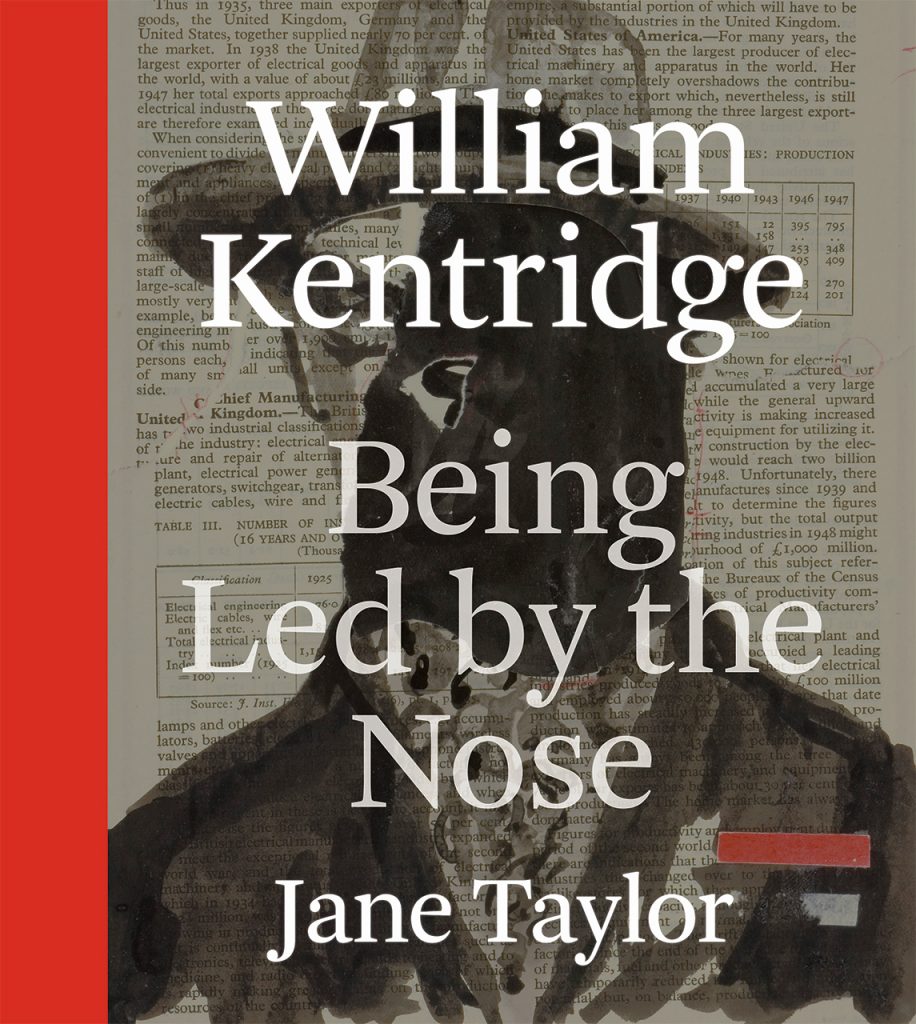
crystal am nelson writes about William Kentridge: Being Led by the Nose by Jane Taylor. Read the full review at caa.reviews.
CAA Internship Program
posted by CAA — May 31, 2018
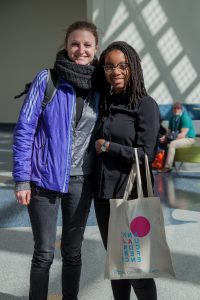
Attendees (art historian Julia Elizabeth Neal on the right) at the 2018 CAA Annual Conference in Los Angeles. Photo: Rafael Cardenas
Starting in September 2018, CAA will begin a new internship program in its New York office for undergraduate and graduate students and recent graduates. Specifically, the program is designed for those who wish to gain experience and develop skills in the following areas:
- Events and Conference Programming
- Publications and Digital Publications
- Marketing & Communications
- Membership Development
Each intern will be assigned a discrete, clearly defined project (or projects) to be completed during the internship period.
The number of hours will depend on the preference of the CAA department, but will generally expected to work 20-30 hours per week in CAA’s New York office sometime between the hours of 9:00AM to 6:00PM, Monday to Friday. All internships require a commitment of eight consecutive weeks. Interns are expected to be commit three days per week.
Eligibility
- Candidates must have successfully completed their junior year at an undergraduate college in any field of study.
- Candidates must have secure housing in the New York area which will allow them to complete the entire internship period.
- Candidates should have had some office experience and should be generally familiar with Microsoft Office, especially Word and Excel. Familiarity with Microsoft Office 365 preferable.
Internship sessions
- Fall 2018 – 8 weeks (September 15 through December 15)
- Spring 2019 – 8 weeks (January 15 through May 15)
- Summer 2019 – 8 weeks (June 1 through August 15)
There will be two interns per session.
Compensation
Each intern will receive a stipend of $500 per month paid bimonthly along with CAA’s regular payroll. Interns will be viewed as independent contractors and no deductions will be made, however a 1099 will be issued and interns are expected to pay all taxes as required under law.
Course credit
CAA will make every effort to assist successful candidates to obtain college credit, if applicable. Please coordinate with your institution’s administrator for semester credit. CAA can provide letters of confirmation and/or complete necessary forms.
To apply
Please submit a cover letter indicating your departmental interests (please rank two preferred departments), and CV to Daniel Tsai, CAA Programs and Publications Administrator: dtsai@collegeart.org. Please also list two professional references and the means to contact them via telephone or email. No phone calls please.
Applications will be accepted until positions are filled.
Events and Conference Programming Internship Tasks:
Assists with Annual Conference Special Events/Special Projects
- pre-conference workshops
- Key Conversation Panels
- events for students and emerging professionals
- Museum visits and tours
Assists with the research and facilitation of the Network Hall programming.
Assists with the research and development and implementation of workshops and programs throughout the year.
Publications and Digital Publications Internship Tasks:
- Assisting with checking layouts and copyediting
- Proofreading the reviews admin site to ensure uniformity of titles, format
- Checking all the links on Art Journal Open site to make sure they work
Marketing & Communications Internship Tasks:
- Editing and proofreading
- Visual design and layout assistance
- Social media
- Assembling press files
- Website review and content review
- Assembling press hits files
- Assembling digital metrics files
- General communications and strategy research
Membership Development Internship Tasks:
- Database cleanup
- Assist with membership growth strategy
- Renewal address file clean up
- Membership card file address clean up, folding cards, post office delivery
- Updating IP addresses indiv/org claims for missing issues
- Returned publications for indiv/orgs
- Adding/updating primary contacts for organizations
- Possible outreach to lapsed organizational members
The CAA is an equal opportunity employer and considers all candidates for employment regardless of race, color, sex, age, national origin, creed, disability, marital status, sexual orientation, gender expression, or political affiliation.
News from the Art and Academic Worlds
posted by CAA — May 30, 2018
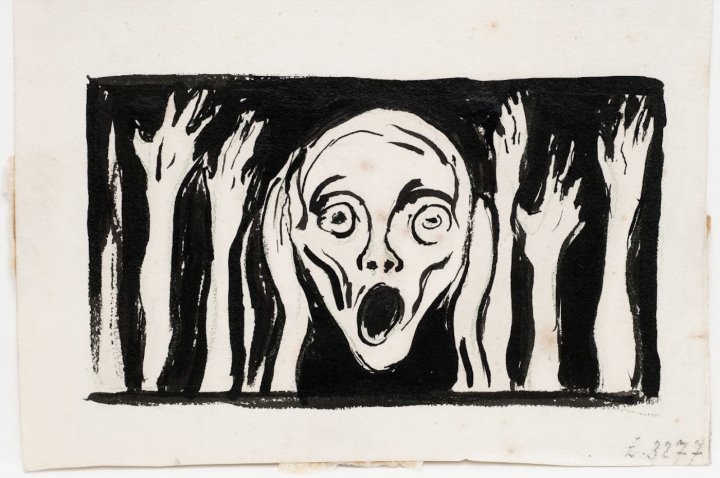
Edvard Munch, “Scream” Head and Raised Arms, ca 1898, via the Munch Museum website.
Amid Debate Over MOCA’s Future, Director Philippe Vergne Will Depart
The museum and director decided “by mutual agreement” not to renew Vergne’s contract when it expires in March 2019. (artnet News)
Return Persian Antiquity to Iran, New York District Attorney Says
The ancient limestone relief was seized from a London antiquities dealer last October. (The Art Newspaper)
Design Thinking Is a Boondoggle
“We shouldn’t pretend that we can boil education — indeed, all of human life — into a five-point diagram for selling stuff.” (Chronicle of Higher Education)
7,600 Edvard Munch Drawings Now Available to Discover Online
The Munch Museum in Oslo digitized not only its own holdings of Munch’s works on paper, but also those from other museums and private collections. (Hyperallergic)
How to Teach Your Children to Care about Art
Expert tips from arts professionals, educators, and museum workers. (Artsy)
Lost, Stolen, Blown Up and Fed To Pigs: The Greatest Missing Masterpieces
A gallery of lost works for optimistic treasure hunters. (The Guardian)
GLOBAL CONVERSATIONS 2018
posted by CAA — May 29, 2018
In 2018, the CAA-Getty International Program featured two main events: a preconference colloquium on February 20 on international issues in art history at which all twenty scholars participated, and an alumni conference session on February 23 that featured five CAA-Getty alumni and an American-based scholar’s response. Included below is the program for the February 20 colloquium, followed by the abstracts and respondent’s remarks for the February 23 alumni conference session.
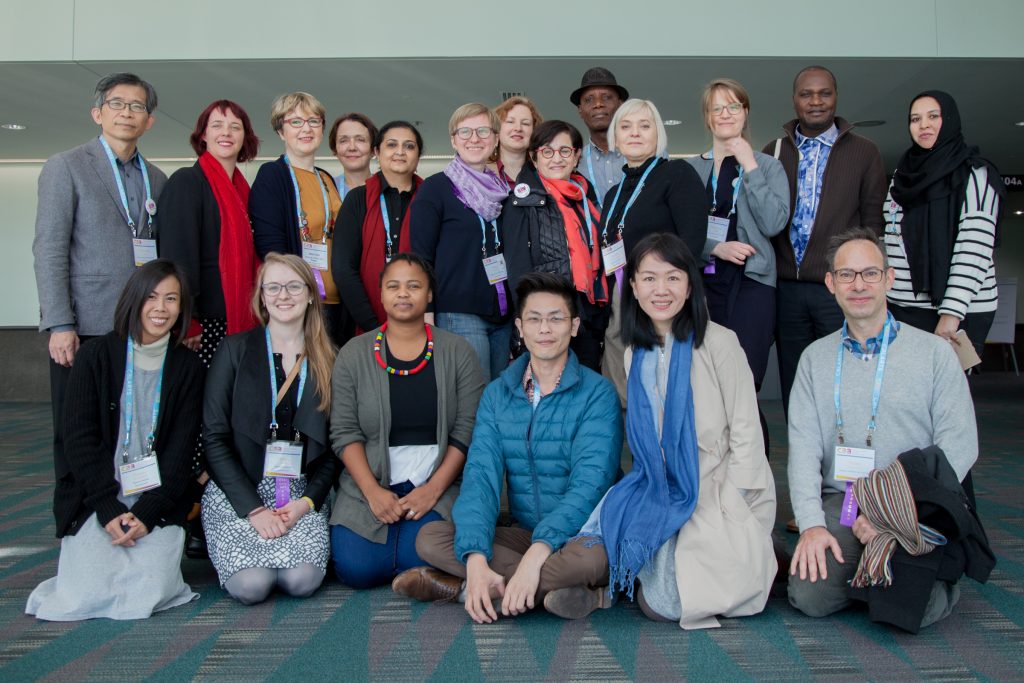
Now in its seventh year, the CAA-Getty International Program brought fifteen new participants and five alumni to the 2018 Annual Conference in Los Angeles. Click here to read their bios and learn more. Photo: Rafael Cardenas
PROGRAM
Global Conversations 2018
Preconference Colloquium
Tuesday, February 20, 2018
The Getty Center
8:30 AM Coffee, welcome, and introductions
9:15 AM Postcolonial and Eurocentric Legacies
Chair: Peju Layiwola, Artist and Professor of Art History, Department of Creative Arts, University of Lagos, Nigeria
Beyond the Readymade: The Use of Found Objects in Contemporary South African Art
Alison Kearney, Lecturer, University of the Witwatersrand (Wits), Johannesburg, South Africa
Resistance to Western Paradigms in East European and Latin American art from the late 1960s to 1989
Katarzyna Cytlak, Postdoctoral Researcher, Universidad Nacional de San Martín, Buenos Aires, Argentina
The Emergence of Taiwan’s Modern Visual Art and the Formation of Identity
Hsin-tien Liao, Dean of College of the Humanities, National Taiwan University of the Arts, Taipei, Taiwan
10:15 AM Global Trends in Museum Research and Exhibitions
Chair: Ildiko Feher, Associate Professor, Department of Art History, Hungarian University of Fine Arts, Budapest, Hungary
Digital Media Exhibition Curating in a University: the Case of the University of Port Harcourt Museum
John Agberia, Professor, University of Port Harcourt, Nigeria
Thinking Cross-culturally: Asian Art in a Visual Dialogue,
Markéta Hánová, Director of the Collection of Asian Art, National Gallery, Prague, Czech Republic
Gender Issues in Museums: Possibility, Provocation, Necessity?
Natalia Keller, Researcher of the Collection, Museo Nacional de Bellas Artes, Santiago, Chile
11:15 AM Interdisciplinary and Transnational Methodologies
Chair: Nomusa Makhubu, Senior Lecturer of Art History, Michaelis School of Fine Art, University of Cape Town, South Africa
Mirrors and the Invention of Perspective
Felipe Chaimovich, Chief Curator and Professor, Museo de Arte Moderna de São Paulo and Fundação Armando Álvares Penteado, Brazil
Experiments and Innovative Strategies in Croatian Photography during the 1960s and 1970s
Sandra Krizic-Roban, Senior Research Advisor, Institute of Art History, Zagreb, Croatia
Understanding African Art: an Interdisciplinary Exercise
Romuald Tchibozo, Senior Lecturer, University of Abomey-Calavi, Benin
12:15 PM Lunch
2:00 PM Cultural Identity, Politics, and the Powers of Art
Chair: Parul Pandya Dhar, Associate Professor of South and Southeast Asian Art History, Department of History, University of Delhi, India
Tracing the Cultural Ideology of the Indus Valley People
Sarah Umer, PhD Coordinator/Assistant Professor, Lahore College for Women, Pakistan
Datok Fatimah in Chinese Body: The Homely and Unhomely Presence of a Klang House Temple
Simon Soon, Senior Lecturer, Visual Art Department, University of Malaya, Kuala Lumpur, Malaysia
Reenergized by the Maidan: A Conjunction of Art and Politics
Natalia Moussienko, Leading Research Fellow, Modern Art Research Institute, National Academy of Arts, Kyiv, Ukraine
3:00 PM Considering an International Art History Curriculum
Chair: Cezar Bartholomeu, Artist and Professor of Art History, School of Fine Arts, Universidade Federal do Rio de Janeiro, Brazil
Terminology and Methodology in Teaching Asian Art to Russian Art History Students
Anna Guseva, Associate Professor, Higher School of Economics, St. Petersburg, Russia
A Chinese Perspective on Cross-cultural Transmissions of Art History
Chen Liu, Associate Professor, Tsinghua University, Beijing, China
Translation and Change: Teaching Art History in Thailand
Thanavi Chotpradit, Silpakorn University, Bangkok, Thailand
4:00 PM Open discussion
Moderator: Steven Nelson, Professor of African and African American Art and Director of the UCLA Center for African Studies
5:00-6:30 PM Cocktail Reception
Eileen MacAvery Kane and Herman Botes
posted by CAA — May 28, 2018
The weekly CAA Conversations Podcast continues the vibrant discussions initiated at our Annual Conference. Listen in each week as educators explore arts and pedagogy, tackling everything from the day-to-day grind to the big, universal questions of the field.
This week, Eileen MacAvery Kane and Herman Botes discuss ethics and graphic design.
Eileen MacAvery Kane is a full-time instructor in the Art Dept. at Rockland Community College in Suffern, NY as well as the author of Ethics: A Graphic Designer’s Field Guide and blog ethicsingraphicdesign.org.
Herman Botes serves as Head of the Department of Visual Communication at Tshwane University of Technology (TUT) in Pretoria, South Africa. He has a forthcoming co-authored book Educating Citizen Designers in South Africa, due out in 2018.
New in caa.reviews
posted by CAA — May 25, 2018
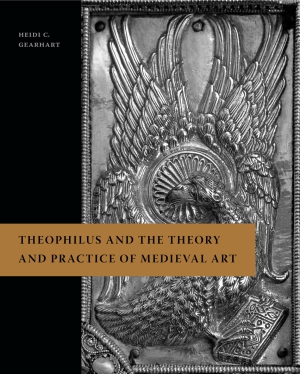
Kate Dimitrova reviews Theophilus and the Theory and Practice of Medieval Art by Heidi C. Gearhart. Read the full review at caa.reviews.
Michelle Millar Fisher writes about SmartHistory.org. Read the full review at caa.reviews.