CAA News Today
An Interview with Elizabeth Hill Boone, 2019 CAA Distinguished Scholar
posted by CAA — November 20, 2018
We are pleased to welcome Elizabeth Hill Boone, Professor of History of Art and Martha and Donald Robertson Chair in Latin American Art at Tulane University, as the 2019 CAA Distinguished Scholar.
An expert in the Precolumbian and early colonial art of Latin America with an emphasis on Mexico, Professor Boone is the former Director of Pre-Columbian Studies at Dumbarton Oaks and recipient of numerous honors and fellowships, including the Order of the Aztec Eagle, awarded by the Mexican government in 1990.
CAA media and content manager Joelle Te Paske corresponded with her recently to learn her thoughts on art history, scholarship, and challenges in the field. Read their interview below.
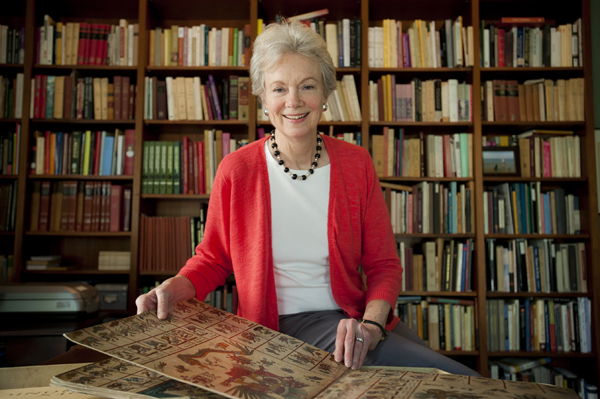
Photo: Paula Burch, Tulane University
Joelle Te Paske: Thanks for taking the time to speak with CAA. So, where are you from originally?
Elizabeth Hill Boone: Coming from a military family rooted in Virginia, I moved from coast to coast often as a child and then attended the College of William and Mary in Virginia for my BA.
JTP: What pathways led you to the work you do now?
EHB: It was at William and Mary, where I was a Fine Arts major. The sculpture professor Carl Roseberg offered a course, Ancient Art, that included a three-week section on the Pre-Columbian Americas. He showed us and presented the then-canonical explanation of the monumental “Coatlicue” sculpture from Aztec Mexico, and I was immensely intrigued. I wondered what kind of mind would conceptualize and carve a work like that as its creator or mother goddess. That question led me into Aztec studies, which took me to the University of Texas at Austin for my PhD, and to Aztec painted books, where similar images were to be found. I became a manuscript specialist because I needed to understand what the manuscript paintings meant, how they related to the Coatlicue, why they came to fill those particular pages. Since the field of Mexican manuscript painting was in its infancy, I left the Coatlicue behind to focus on the other manuscript genres and Mexican pictography as a system. My study of Mexican pictography naturally led me to the issue of how the concept of Writing should be broadened.
JTP: What are you working on currently?
EHB: I am now finishing up a book analyzing the corpus of pictorial manuscripts created in the early colonial period to document the ideologies and practices of Aztec culture. United by their decendency from Mexican pictography, these painted reflections of the Aztec past were re-purposed to inform Europeans principally about Aztec religion, as weapons of conversion and aids for colonial administrators.
JTP: What is your favorite part of the work you do?
EHB: I think most art historians love solving mysteries: discovering connections and uncovering histories and contexts. I want to understand what an object meant to its different audiences at the time of its creation, and also what it can tell us now about our own perspectives. Depending on the object, it can also be rewarding and telling to track its reception and reconceptualization through time.
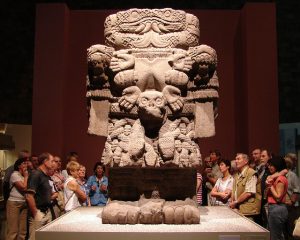
Coatlicue Statue in National Museum of Anthropology, Mexico City. Photo: Antony Stanley
JTP: If you could boil your teaching philosophy down to a central idea, what would it be?
EHB: My goal is to excite students about the potentials of visual expression. This means giving them knowledge of the material such that they can understand its cultural context and power, but also showing the students how the objects speak today as works of art.
JTP: What’s exciting to you right now in the field?
EHB: Globalism. The discipline has broken the confines that once centered it in Western Europe and is now focusing on connections between peoples. Centers of discourse are now shifting toward the larger Atlantic world, the Pacific world, the Silk Road, and the trans-Mediterranean/African network, to name just a few. It is opening up new ways of understanding the meaning and agency of art.
JTP: What do you see as the greatest challenges in the field right now?
EHB: I see two challenges. The first and most important is relevance. Art history must articulate why it matters in these times. As graphic communication (communication that is not oral or gestural) becomes even more the principal form of communication between people, the discipline needs to assert its place as a source of theoretical knowledge and of models for investigative practice.
The second challenge is linked to the increasing study of trans-cultural connections. Scholars who seek to follow the movement of objects and ideas across spaces and between cultures need to develop strong local knowledge of all participants, so that these global connections are grounded in area expertise. In order to avoid facile comparisons and connections, researchers now have to master multiple areas.
JTP: Have you attended CAA conferences? Do you have a favorite memory?
EHB: I have attended many. Perhaps my favorite memories are of cross-cultural sessions that focus on issues relevant to many cultures, for example, civic identity, and in which the presenters push their material to address the large question in a serious way.
JTP: Thank you, Professor Boone. We’re looking forward to seeing you at the 2019 conference.
Elizabeth Hill Boone is Professor of History of Art and Martha and Donald Robertson Chair in Latin American Art at Tulane University. An expert in the Precolumbian and early colonial art of Latin America with an emphasis on Mexico, she is the former Director of Pre-Columbian Studies at Dumbarton Oaks. Professor Boone has earned numerous honors and fellowships, including the Order of the Aztec Eagle, awarded by the Mexican government in 1990. She is a Fellow of the American Academy of Arts and Sciences and a Corresponding Member of the Academia Mexicana de la Historia. Her research interests range from the history of collecting to systems of writing and notation, and are grounded geographically in Aztec Mexico, but extend temporally for at least a century after the Spanish invasion. She is the author of Cycles of Time and Meaning in the Mexican Books of Fate (Texas, 2007) and Stories in Red and Black: Pictorial Histories of the Aztecs and Mixtecs (Texas, 2000), which was awarded the Arvey Prize by the Association for Latin American Art.
Sissel Tolaas, Yelena McLane, and Meredith Lynn
posted by CAA — November 19, 2018
The weekly CAA Conversations Podcast continues the vibrant discussions initiated at our Annual Conference. Listen in each week as educators explore arts and pedagogy, tackling everything from the day-to-day grind to the big, universal questions of the field.
CAA podcasts are now on iTunes. Click here to subscribe.
This week, Sissel Tolaas, Yelena McLane, and Meredith Lynn discuss “Smells, Diversity, Tolerance.”
Sissel Tolaas is an artist and founder of the SMELL RE_searchLab in Berlin.
Yelena McLane is Assistant Professor of Interior Architecture & Design, Florida State University.
Meredith Lynn is Assistant Curator & Director of Galleries, Florida State University.
New in caa.reviews
posted by CAA — November 16, 2018
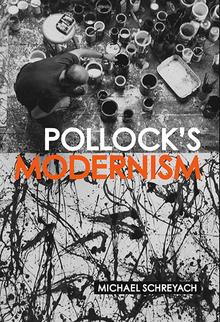
Annika Marie writes about Pollock’s Modernism by Michael Schreyach. Read the full review at caa.reviews.
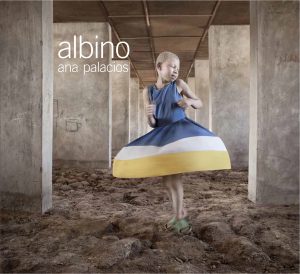
Allison Moore reviews Albino by Ana Palacios. Read the full review at caa.reviews.
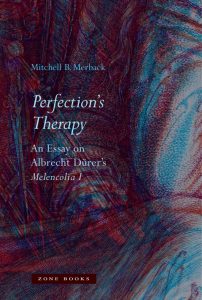
Jennifer Nelson discusses Perfection’s Therapy: An Essay on Albrecht Dürer’s Melencolia I by Mitchell B. Merback. Read the full review at caa.reviews.
Our Community Guidelines for CAA 2019
posted by CAA — November 15, 2018
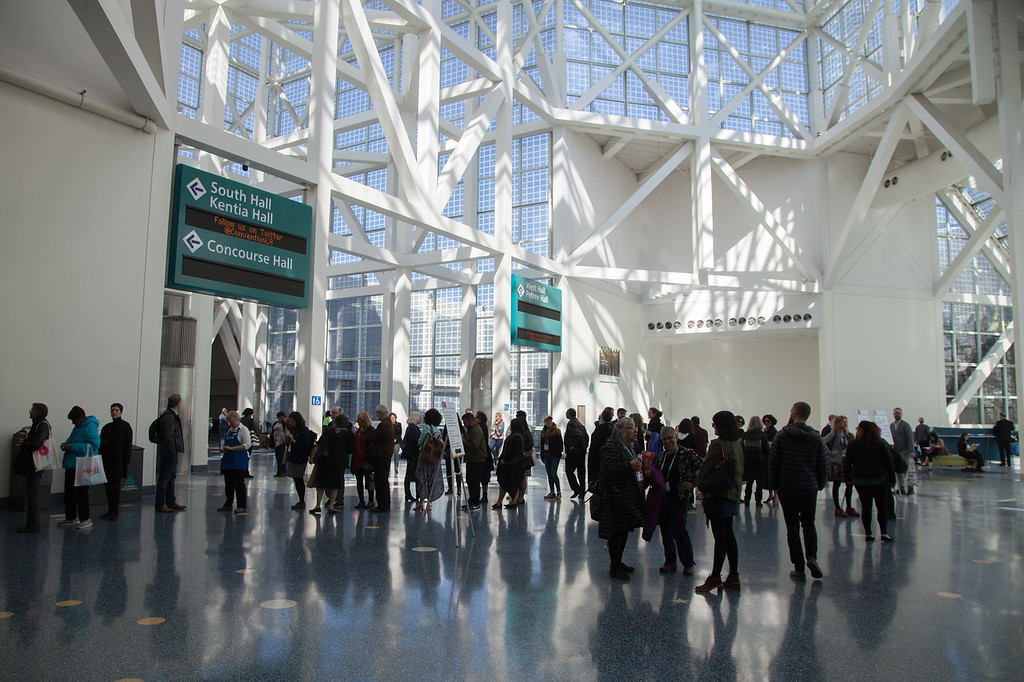
Conference attendees at the 2018 Annual Conference in Los Angeles. Photo: Rafael Cardenas
As we near the 107th Annual Conference, we want to remind all of our attendees about their rights at the conference. Please review the Community Guidelines on the conference website before attending.
Plagiarism at the CAA Annual Conference is prohibited. As a scholarly organization devoted to the pursuit of independent scholarship, CAA does not condone theft or plagiarism of anyone’s scholarship, whether presented orally or in writing. Participants at the conference are not allowed to make audio or video recordings of any session at the Annual Conference, without the expressed permission of all presenters.
If you believe your work has been stolen or plagiarized by some other person, we encourage you to contact us so that an investigation might be conducted, and, if appropriate, we may contact the involved parties and publishers involved.
A Word to the Wise
posted by CAA — November 14, 2018
We want to remind everyone that CAA DOES NOT sell its lists of members, conference attendees or participants in our Book and Trade Fair. If you see someone offering those items for sale or rent, they are trying to scam you. This time of year, we see more of these scams and want you to know to stay away from them.
If you receive a solicitation, please forward it to us at NYOFFICE@collegeart.org and we will get in touch with the scofflaws.
News from the Art and Academic Worlds
posted by CAA — November 14, 2018
Want articles like these in your inbox? Sign up: collegeart.org/newsletter
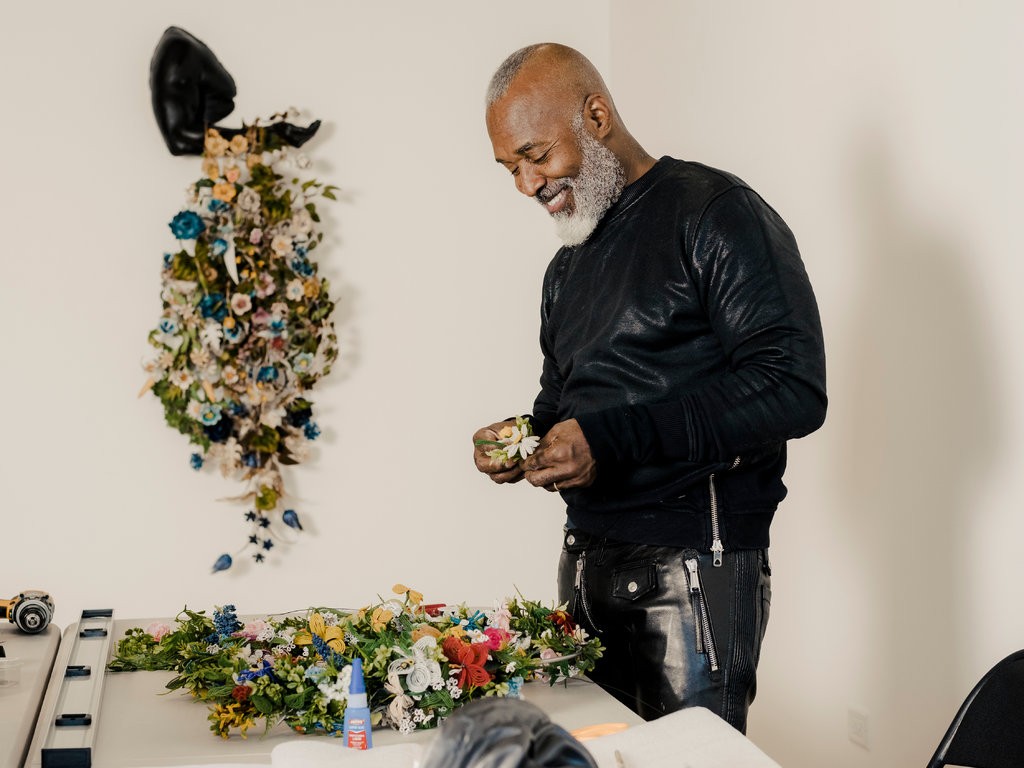
Nick Cave in his studio at Facility, his new multidisciplinary art space in Chicago. Photo: Whitten Sabbatini for New York Times
Artist Covertly Hangs #MeToo-Inspired Wall Labels at the Met Museum
Michelle Hartney posted the guerrilla wall labels next to the artwork of Paul Gaugin and Pablo Picasso. (Hyperallergic)
How Ideas Go Viral in Academia
Can great thinking still catch fire in academia? (CU Boulder)
Nick Cave Uses His Capital to Help Aspiring Creators
Nick Cave and partner Bob Faust have created a new 20,000-square-foot multidisciplinary art space in Chicago. (New York Times)
Still a Problem: Images and Art History in 2018
“Too often we are still using poor quality, lifeless images that we project in the classroom with Powerpoint. We think we can do better.” (Smarthistory)
Countering Myths and Misperceptions of Participating in the Arts
The first in a three-post series examining people’s questions about arts experiences and how organizations can help answer them. (Wallace Blog)
CAA Announces Guidelines for Addressing Proposed Cuts to Arts and Humanities Programs and Departments
posted by CAA — November 12, 2018
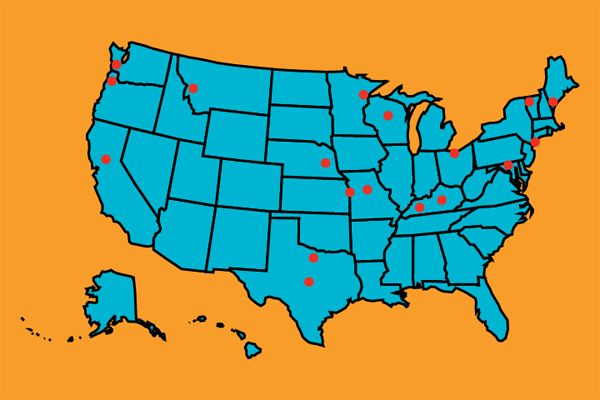
Campuses across the country have been affected by cuts to the arts and humanities. See the full list here. Graphic: Allison Walters
By any number of metrics, the arts and humanities are experiencing challenging times. Funding is under threat from the Federal government. Student enrollment is dropping in higher education classes focusing on the arts and humanities. The number of tenure-track faculty positions are diminishing in arts and humanities departments. The wide support of STEM-centered education has placed an emphasis on career paths with measurable and immediate financial outcomes. Yet, we know the importance of an arts and humanities education, not just for those looking to have careers in the arts and humanities but those across the entire professional spectrum.
In response to the challenges in the arts and humanities, some universities and colleges in the United States have cut programs, collapsed libraries, or shuttered entire departments. These steps, taken as cost-saving measures, only increase the uphill battle for the arts and humanities. Over the past years, CAA has tracked these changes in higher education through the organization’s own research efforts and through narratives relayed directly from our members. These actions taken by administrations are in no way secret. In article after article, the alarm has been sounded. We believe there is a better way to resolve these issues and protect the arts and humanities at the same time.
To bridge this divide, CAA is pleased to release “Guidelines for Addressing Proposed Substantive Changes to an Art, Art History or Design Unit, or Program at Colleges and Universities.”
“These guidelines provide a path for open communication between faculty and administration,” says Hunter O’Hanian, executive director of CAA. “With this new tool to be used by both administrations and faculty equally, CAA builds a resource that is vital to strengthening the arts and humanities on campuses. The guidelines create clearly definable steps and parameters for a process that when handled badly leads to fissures between faculty, students, and administrations.”
The “Guidelines for Addressing Proposed Substantive Changes to an Art, Art History or Design Unit or Program at Colleges and Universities” call for a deeper understanding of the factors and issues that have precipitated the action to close a department or program. The guidelines outline two clear paths: they encourage constituencies to communicate about the potential changes, and they pave the way to resolution without having to eliminate or downsize the program or department.
If those conversations fail to reach a satisfactory outcome with the educational institution, the guidelines emphasize that the institutional administration must do everything it can to see that the program continues. And, as is the case with all scholastic endeavors, the administrations must show their work—they must provide documentation that the department has been adequately resourced and funded. It must demonstrate that growth has been encouraged rather than to allowing it to lay fallow.
“CAA remains convinced that students and society derive lasting benefit when institutions offer a diverse range of academic resources to support different learning styles,” says Jim Hopfensperger, president of the CAA Board of Directors. “These new CAA guidelines outline best practices toward sustaining this essential diversity of academic programs and operational assets.”
Hopfensperger adds that “CAA believes that students, staff, faculty, and institutional leadership teams are all well served by inclusive processes, open lines of communication, engagement across constituencies, and empathetic deliberations.”
IMPACT OF ARTS AND HUMANITIES TOOLKIT
COLLEGES FACING CUTS TO ARTS AND HUMANITIES PROGRAMS
Authors and Contributors for the “Guidelines for Addressing Proposed Substantive Changes to an Art, Art History or Design Unit or Program at Colleges and Universities”:
CAA Working Group for Guidelines for Addressing Proposed Substantive Changes to an Art, Art History or Design Unit or Program at Colleges and Universities: Tom Berding, Michigan State University; Brian Bishop, Framingham State University (Chair, CAA Professional Practices Committee); James Hopfensperger, Western Michigan University (CAA Board President); Charles Kanwischer, Bowling Green State University; Karen Leader, Florida Atlantic University; Richard Lubben, College of the Sequoias; Paul Jaskot, Duke University; Hunter O’Hanian, CAA Executive Director.
Elaine Bezold and Sidney Stretz
posted by CAA — November 12, 2018
The weekly CAA Conversations Podcast continues the vibrant discussions initiated at our Annual Conference. Listen in each week as educators explore arts and pedagogy, tackling everything from the day-to-day grind to the big, universal questions of the field.
CAA podcasts are now on iTunes. Click here to subscribe.
This week, Elaine Bezold and Sidney Stretz discuss failure in the classroom.
Elaine Bezold (Stephen F. Austin State University) is a photographer and educator living in Dover, New Hampshire. She makes work about human-animal interactions, rebirth, loss, and instinct.
Sidney Stretz (University of North Carolina Greensboro) is an artist and educator living and working in Greensboro, North Carolina. She makes work about everyday life and its challenges, strange social situations, and failure.
New in caa.reviews
posted by CAA — November 09, 2018
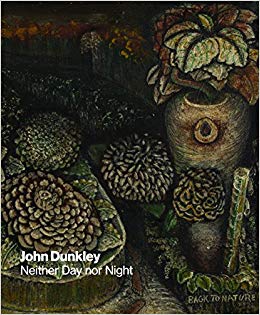

Petrona Morrison writes about John Dunkley: Neither Day nor Night by Diana Nawi, John Dunkley, David Boxer, Olive Senior, and Nicole Smythe-Johnson. Read the full review at caa.reviews.
Daria Kostina discusses the 4th Ural Industrial Biennial of Contemporary Art. Read the full review at caa.reviews.
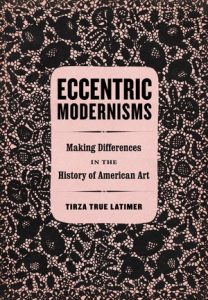
John H. P. Semlitsch reviews Eccentric Modernisms: Making Differences in the History of American Art by Tirza True Latimer. Read the full review at caa.reviews.
Impact of Arts and Humanities Toolkit
posted by CAA — November 08, 2018
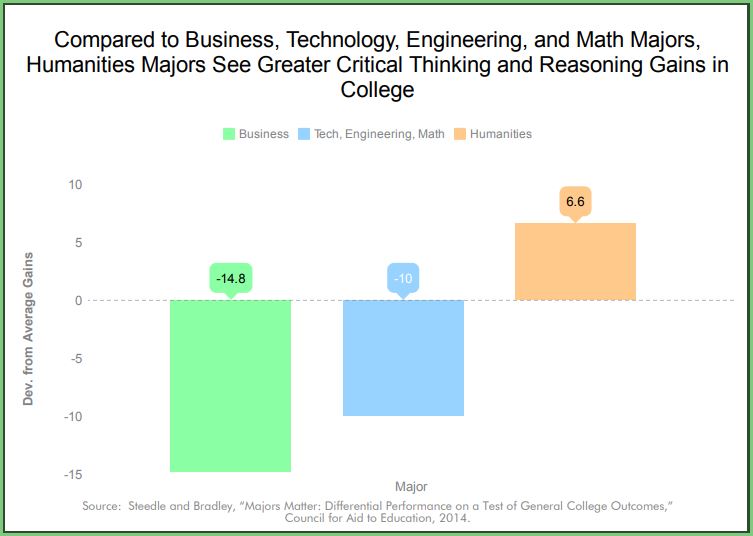
From National Humanities Alliance’s Study the Humanities Toolkit.
In conjunction with the release of our new Guidelines for Addressing Proposed Substantive Changes to an Art, Art History or Design Unit or Program at Colleges and Universities, here are some helpful resources to support the arts and humanities in higher education.
In the News
- Why We Should Spend More on Humanities Research in a High-Tech World (Chronicle of Higher Education, April 2018)
- We Reversed Our Declining English Enrollments. Here’s How. (Chronicle of Higher Education, April 2018)
- It’s Time To Worry When Colleges Erase Humanities Departments (Forbes, March 2018)
- The Arts Contribute More Than $760 Billion to the U.S. Economy (NEA, March 2018)
- STEM May Be the Future—But Liberal Arts Are Timeless (Quartz, February 2018)
- How the Humanities Can Train Entrepreneurs (The Atlantic, September 2017)
- Why Med Schools Are Requiring Art Classes (Artsy, August 2017)
- Liberal Arts in the Data Age (Harvard Business Review, July 2017)
- What Is the Value of an Education in the Humanities? (NPR, February 2016)
See more excellent articles compiled by the National Humanities Alliance.
Online Resources
There is lots of good data to explore online about the impact of the arts and humanities.
From The State of the Humanities 2018: Graduates in the Workforce and Beyond:
- Almost 87% of workers with a bachelor’s degree in the humanities reported they were satisfied with their jobs in 2015, comparable to graduates from almost every other field.
- Over three-quarters of humanities graduates saw themselves at or approaching “the best possible life,” which was similar to the shares among engineering and natural science graduates.
The Study the Humanities Toolkit from the National Humanities Alliance is a collection of resources for higher education faculty and administrators to use in making the case for the value of studying the humanities as an undergraduate.
Americans for the Arts is a hub for data and information about various federal arts agencies and arts education in America.
Data on the arts and humanities can also be found on the National Endowment for the Arts Facts & Figures page.