
CAA News Today
New Curatorial Approaches in Art Journal
posted by CAA — February 06, 2018
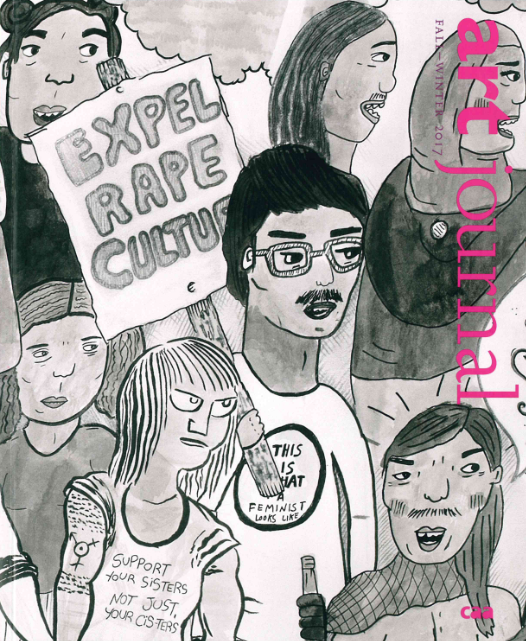
“Curating New Openings: Rethinking Diversity in the Gallery” is the centerpiece of the recently published Fall–Winter issue of Art Journal. The forum, organized by Amanda Cachia, highlights the experimental ideologies and methodologies of curators who root their projects in diversity in ways beyond conventional considerations of difference and access. It features texts by the curators Eliza Chandler, Anne Ellegood, Catherine Flood, Massimiliano Gioni, Naima J. Keith, Rhonda L. Meier, Helena Reckitt, Sara Reisman, Franklin Sirmans, and Cachia herself. The art historian Jonathan D. Katz contributes a polemical text on his dislike of the term “diversity.” The forum also showcases artworks by Firelai Báez, Fayen d’Evie, the collective Gender/Power, Christine Sun Kim, Nadia Myre, Alison O’Daniel, and Matt Smith. And for the first time in Art Journal, captions in the forum include image descriptions.
The afrotrope, the idea of recurrent forms in African and African diasporic visual cultures, is also a recurrent thread in Art Journal. In this issue, the originators of the concept, Huey Copeland and Krista Thompson, reintroduce the theme in a short “user’s guide.” An essay by Allison K. Young then traces the path of afrotrope images from documentary photographs of the 1976 Soweto uprising through artworks created outside South Africa in the following years, particularly in the screenprints of the UK-based artist Gavin Jantjes.
An essay by Tim Stott, a Dublin-based historian, explores the geometries, patterns, and diagrams of paintings, digital prints, and sculpture by Gabriel Orozco, in particular the knight’s move the artist has borrowed from chess.
#silence=violence, an artists’ project by Deirdre Logue and Allyson Mitchell with Heidi Cho and Morgan Sea, unfolds in the issue—quite literally, in a series of unfurling, densely illustrated pages. Responding to an invitation from the Doris McCarthy Art Gallery of the University of Toronto, the artists created the triptych of large-scale drawings, which then became the basis for murals at the university. Dozens of activist figures stream across the panels, addressing sexual violence and harassment on campuses with passion, resolution, and wit—even Siri puts in a cameo appearance.
The Reviews section opens with a critical bibliography on the theme of “possibility aesthetics” in the Anthropocene epoch by the artist Andrew Yang, who ponders eight publications—a graphic novel, a performative lecture, a manifesto, and more—as “opportunities for perceiving the complexity of planet-size facts.” The section continues with reviews of the exhibition and catalogue for A Feast of Astonishments: Charlotte Moorman and the Avant-Garde, 1960s–1980s (by Nicole L. Woods), the exhibition and catalogue for Lynn Hershman Leeson: Civic Radar (by Robert Slifkin), and the exhibition catalogue The Passion according to Carol Rama (by Jennifer Griffiths).
CAA sends print copies of Art Journal to all institutional members and to those individuals who choose to receive the journal as a benefit of membership. The digital version at Taylor & Francis Online is currently available to all CAA individual members regardless of their print subscription choice.
Call for Nominations for CAA Publications
posted by CAA — February 06, 2018
Self-nominations and nominations are now open for several positions with CAA publications. Click the links below to learn more.
THE ART BULLETIN
Call for Editor-in-Chief, The Art Bulletin
The Art Bulletin Editorial Board invites nominations and self-nominations for the position of editor-in-chief for a three-year term: July 1, 2019–June 30, 2022, with service as incoming editor designate, July 1, 2018–June 30, 2019, and as past editor, July 1, 2022–June 30, 2023. The candidate should have published substantially in the field and may be an academic, museum-based, or independent scholar; institutional affiliation is not required. The Art Bulletin features leading scholarship in the English language in all aspects of art history as practiced in the academy, museums, and other institutions. From its founding in 1913, the quarterly journal has published, through rigorous peer review, scholarly articles and critical reviews of the highest quality in all areas and periods of the history of art. Click here to learn more.
Deadline: Monday, April 2, 2018; finalists will be interviewed on Friday, May 4.
ART JOURNAL
Art Journal Seeks Reviews Editor – deadline extended!
The Art Journal Editorial Board invites nominations and self-nominations for the position of reviews editor for a three-year term: July 1, 2019–June 30, 2022 (with service as incoming reviews editor designate, July 1, 2018–June 30, 2019). The candidate may be an artist, art historian, art critic, art educator, curator, or other art professional; institutional affiliation is not required. Art Journal, published quarterly by CAA, is devoted to twentieth- and twenty-first-century art and visual culture. Click here to learn more.
Deadline extended! New deadline is: Tuesday, April 17, 2018; finalists will be interviewed on Thursday, May 3.
Art Journal Editorial Board Seeks New Members
CAA invites nominations and self-nominations for two individuals to serve on the Art Journal Editorial Board for a four-year term: July 1, 2018–June 30, 2022. Candidates may be artists, art historians, art critics, art educators, curators, or other art professionals; institutional affiliation is not required. Art Journal, published quarterly by CAA, is devoted to twentieth- and twenty-first-century art and visual culture. Click here to learn more.
Deadline: Monday, April 16, 2018.
CAA.REVIEWS
caa.reviews Editorial Board Seeks Candidates
CAA invites nominations and self-nominations for two individuals to serve on the caa.reviews Editorial Board for four-year terms, July 1, 2018–June 30, 2022. Candidates may be artists, art historians, art critics, art educators, curators, or other art professionals with stature in the field and experience writing or editing books and/or exhibition reviews; institutional affiliation is not required. The journal also seeks a librarian to serve in an ex officio capacity to advise the editorial board on technical and distribution issues. Click here to learn more.
Deadline: Monday, April 16, 2018.
caa.reviews Seeks TEN Field Editors – deadline extended!
CAA invites nominations and self-nominations for TEN individuals to join the caa.reviews Council of Field Editors for a three-year term, July 1, 2018–June 30, 2021. An online journal, caa.reviews is devoted to the peer review of new books, museum exhibitions, and projects relevant to art history, visual studies, and the arts. Click here to learn more.
Deadline extended! New deadline is: Tuesday, May 1, 2018.
Elizabeth McFalls, Rae Goodwin, and Jane Jensen
posted by CAA — February 05, 2018
The weekly CAA Conversations Podcast continues the vibrant discussions initiated at our Annual Conference. Listen in each week as educators explore arts and pedagogy, tackling everything from the day-to-day grind to the big, universal questions of the field.
This week, Elizabeth McFalls, professor of art and foundations coordinator at Columbus State University and an associate vice president of programming of Integrative Teaching International; Rae Goodwin, associate professor in Art Studio at the University of Kentucky; and Dr. Jane Jensen, associate professor at the University of Kentucky, discuss teaching study abroad courses.
New in caa.reviews
posted by CAA — February 02, 2018
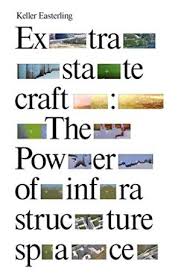
Daniel Barber discusses Extrastatecraft: The Power of Infrastructure Space by Keller Easterling. Read the full review at caa.reviews.
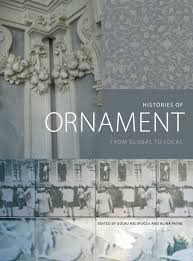
Ellen Kenney reviews Histories of Ornament: From Global to Local edited by Gülru Necipoğlu and Alina Payne. Read the full review at caa.reviews.
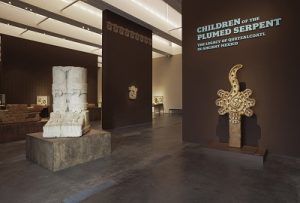
Virginia Miller writes about Children of the Plumed Serpent: The Legacy of Quetzalcoatl in Ancient Mexico by Virginia M. Fields, John M. D. Pohl, and Victoria I. Lyall. Read the full review at caa.reviews.
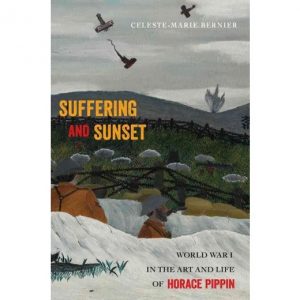
Renée Ater examines Suffering and Sunset: World War I in the Art and Life of Horace Pippin by Celeste-Marie Bernier. Read the full review at caa.reviews.
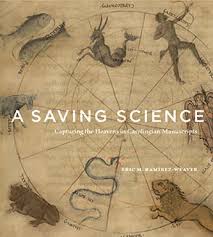
Thomas F. X. Noble discusses A Saving Science: Capturing the Heavens in Carolingian Manuscripts by Eric M. Ramírez-Weaver. Read the full review at caa.reviews.
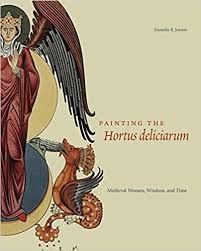
Anne-Marie Bouché reviews Painting the Hortus Deliciarum: Medieval Women, Wisdom, and Time by Danielle B. Joyner. Read the full review at caa.reviews.
Cesar Cornejo discusses On Kawara—Silence by Jeffrey Weiss, Daniel Buren, and Whitney Davis. Read the full review at caa.reviews.
Leslie Wilson writes about After Year Zero: Geographies of Collaboration edited by Annett Busch and Anselm Franke. Read the full review at caa.reviews.
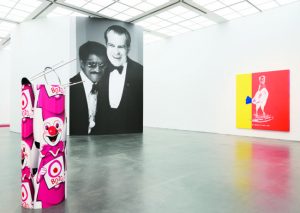
Ariel Evans reviews Kathryn Andrews: Run for President edited by Julie Widholm and Kristine Stiles. Read the full review at caa.reviews.
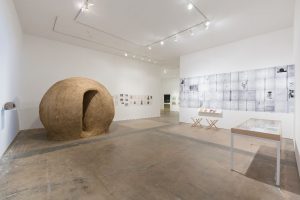
Alicia Guzman examines SITElines.2016: much wider than a line by Rocío Aranda-Alvarado. Read the full review at caa.reviews.
News from the Art and Academic Worlds
posted by CAA — January 31, 2018
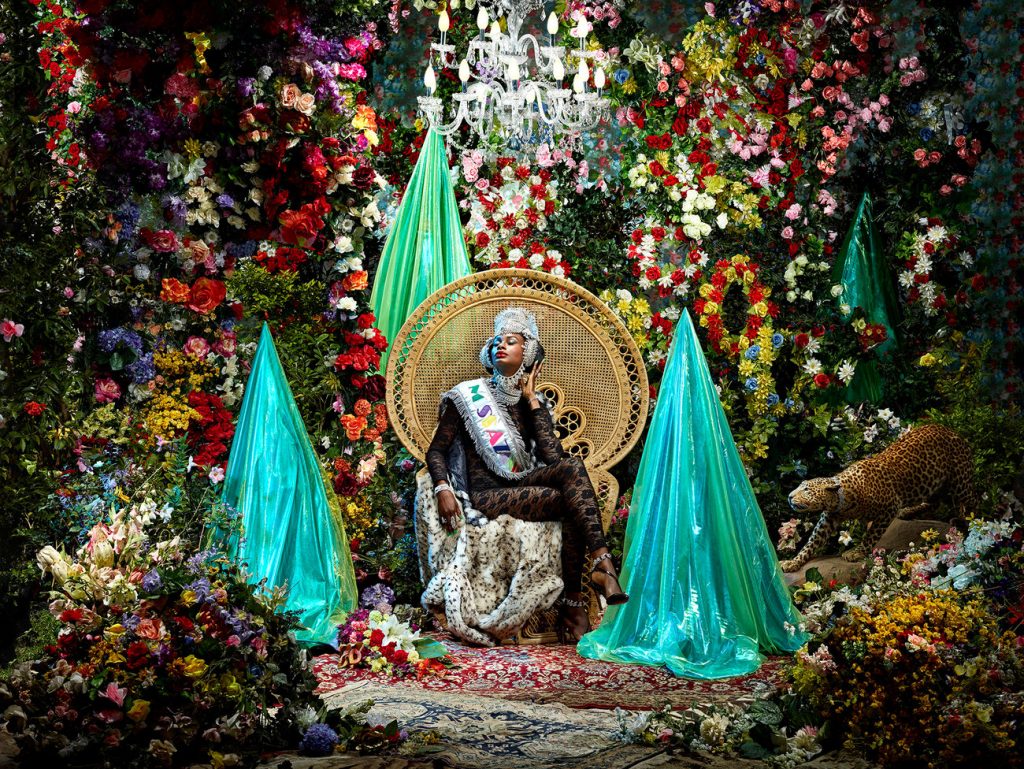
Athi-Patra Ruga, Miss Azania — Exile is waiting, 2015, South Africa, 11th African Biennale of Photography
Each week CAA News summarizes articles, published around the web, that CAA members may find interesting and useful in their professional and creative lives.
Paris on Alert as River Seine Continues to Rise and Louvre Shuts Basements
The iconic museum had to close its basement amid the flooding, in a bid to protect the priceless artworks on display there. (The Sun)
Morris Louis Painting Shown at Jewish Museum, This Time Right-Side-Up
After years of being hung incorrectly, a work by Morris Louis has now been flipped 180 degrees. (New York Times)
PHOTOS: Shaking Up the Idea of What Africa Looks Like
The 11th African Biennale of Photography explores topics of identity and possibility through the theme of “Afrotopia.” (NPR)
Two Rodin Shows Cast the Sculptor’s Legacy in Very Different Lights
In New York, two major Rodin shows are up at the Metropolitan Museum of Art and the Brooklyn Museum. (Hyperallergic)
Around the World in 14,000 “Do Not Disturb” Signs
Collector Edoardo Flores has amassed a collection of over 14,000 designs from more than 200 countries. (Atlas Obscura)
Languages Prioritized Over Arts in UK Government Teacher Plans
As the UK pushes for 75% of its students to study a foreign language, teaching time devoted to music, drama, art and design in secondary schools is set to drop. (Art Professional)
Meet the 2018 Student Scholarship Winners
posted by CAA — January 30, 2018
with support from
For the second year in a row, CAA is proud to partner with our sponsors, multinational publisher, Routledge, Taylor & Francis, and art materials specialist, Blick Art Materials, on student scholarships to assist CAA student members with conference costs.
Routledge, Taylor & Francis Student Scholarship
CAA’s Annual Conference Partner Sponsor, Routledge, Taylor & Francis supports four CAA student members with complimentary registration and an additional $250 in scholarship money to help with conference expenses such as travel, housing, or meals. The 2018 winners are:
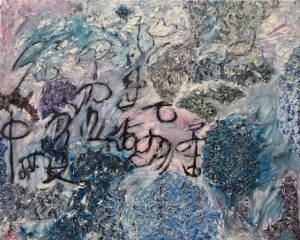
Painting by 2018 Scholarship Winner Patricia Chow, Outremer (detail), 2017
Patricia Chow
“Sustainability and Public Good,” MFA Exhibition at California State University, Los Angeles
Xinran Guo
Session: The Poetics and Politics of “Anonymous” Craft, February 21, 4:00 – 5:30 PM
Kira Jones
Session: He, She, and the In-Between: Reassessing Gender and Sexuality in Ancient Mediterranean Art, February 21, 8:30 – 10:00 AM
Chris Rioux
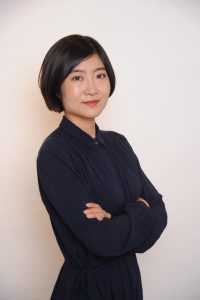
2018 Scholarship Winner Xinran Guo
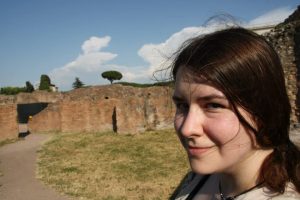
2018 Scholarship Winner Kira Jones
Blick Art Materials Student Scholarship
CAA’s Annual Conference Presenter Sponsor, Blick Art Materials supports conference registration fees for four CAA student members. The 2018 winners are:
Merih Cantarella
Session: The Elements and Elementality in Art of the Premodern World, February 21, 10:30 AM – 12:00 PM
Indie Choudhury
Session: New Directions in Black-British Art History, February 24, 4:00 – 5:00 PM
Alyssa Fridgen
Member of CAA Committee on Women in the Arts
Meeting: February 21, 10:00 AM -12:00 PM
Yi Yi Mon Kyo
Session: Making Things Modular, February 24, 8:30 – 10:00 AM
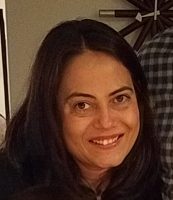 2018 Scholarship Winner Merih Cantarella |
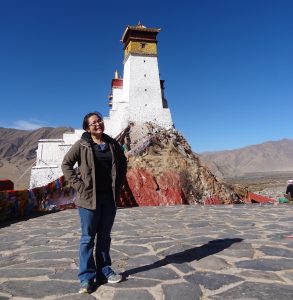 2018 Scholarship Winner Yi Yi Mon Kyo |
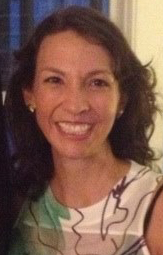 2018 Scholarship Winner Alyssa Fridgen |
See Us Pick the Winners at the CAA Offices
Criteria for the Scholarship
Awardees were chosen at random and fulfilled the following criteria:
- Individuals were registered for the Annual Conference by the Early Registration deadline
- Individuals are current CAA members with proof of student status
- Individuals did not receive conference registration or travel reimbursement from their institution or employer
We look forward to seeing you in Los Angeles! The 106th Annual Conference is February 21-14, 2018. Click here to explore the conference program.
Explore the Latest Issue of The Art Bulletin
posted by CAA — January 30, 2018
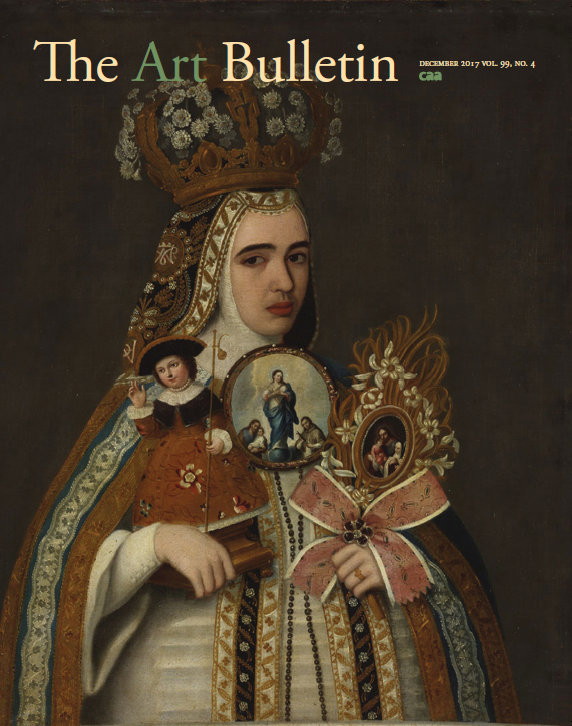
Cover: The Art Bulletin, December 2017.
The portrait of a lavishly dressed young nun, an example of a genre of the “crowned nun,” appears on the cover of the December 2017 issue of The Art Bulletin. Baroque in several senses of the word, the painting by José de Alcíbar dates from ca. 1795 and appears in Cristina Cruz González’s essay “Beyond the Bride of Christ: The Crucified Abbess in Mexico and Spain.”
In other essays featured in the issue: Jenifer Neils assesses the Apollo Sauroktonos, the bronze statue of a boy killing a lizard, traditionally attributed to the fourth-century BCE sculptor Praxiteles, and concludes that the work is neither by Praxiteles nor of the mid-fourth century. Alice Isabella Sullivan relates the miraculous deliverance of Constantinople depicted in sixteenth-century Moldavian church murals to contemporary struggles over Ottoman rule in Eastern Europe. Jessica Maratsos examines the artistic tokens of friendship exchanged between Michelangelo and his patron Vittoria Colonna, and the dissemination of copies of these works in paint, manuscript, and print. Jennifer Van Horn considers the iconoclasm of enslaved and newly freed men and women during the American Civil War, who defaced and repurposed portraits of their former masters as a means of resisting dehumanization and asserting their own agency. Harmon Siegel finds that the interiors of Louise Nevelson’s homes, filled with dark sculptures and assemblages, borrow a page from gothic literature, critiquing domesticity as a trap and troubling the stability of modernist claims to autonomy.
The reviews section, on the theme of “Architectural Networks,” features recent books on the architecture of the Roman world, medieval Spain, Japan, the Caribbean, and the contemporary mosque.
Finally, the art historians Ewa Lajer-Burcharth and Tamar Garb present tributes to the pioneering historian Linda Nochlin, who died in October.
CAA sends print copies of The Art Bulletin to all institutional members and individual members who choose it as a benefit of membership. The digital version at Taylor & Francis Online is available to all CAA individual members regardless of their print subscription choice.
Recipients of the 2017 Professional Development Fellowships
posted by CAA — January 29, 2018
CAA has awarded two 2017 Professional Development Fellowships—one in art history and one in visual art—to graduate students in MFA and PhD programs across the United States. In addition, CAA has named one honorable mention in art history and one in visual art. The fellows and honorable mentions both receive a complimentary one-year CAA membership and free registration for the 2018 Annual Conference in Los Angeles.
The recipient of the $10,000 fellowship in art history is Sooran Choi, a PhD candidate in Art History at CUNY Graduate Center. Accepting the $10,000 fellowship in visual art is Brenna K. Murphy, a MFA candidate in Studio Art at the University of Michigan Stamps School of Art & Design.
The honorable mention for art history goes to Murad Khan Mumtaz, a PhD candidate in the Department of Art and Architectural History at the University of Virginia. The recipient of an honorable mention in visual art is Courtney N. Ryan, a MFA candidate in Ceramics and Sculpture at Georgia Southern University.
Suzanne Preston Blier, president of the CAA Board of Directors, will formally recognize the two fellows and two honorable mentions at the 106th Annual Conference during Convocation, taking place on Wednesday, February 21, 2018, at the Los Angeles Convention Center.
CAA’s fellowship program supports promising artists and art historians who are enrolled in MFA and PhD programs nationwide. Awards are intended to help them with various aspects of their work, whether for job-search expenses or purchasing materials for the studio. CAA believes a grant of this kind, without contingencies, can best facilitate the transition between graduate studies and professional careers. The program is open to all eligible graduate students in the visual arts and art history. Applications for the 2019 fellowship cycle will open in the late spring.
FELLOW IN ART HISTORY
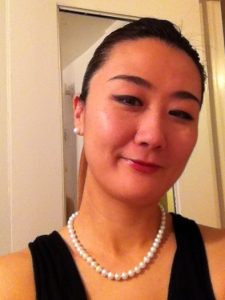 Sooran Choi
Sooran Choi will complete her PhD in Art History at The Graduate Center, City University of New York, in summer 2018. Her dissertation The South Korean “Avant-Garde,” 1967-1992: Subterfuge as Radical Agency concerns the South Korean avant-garde under Cold War military dictatorships from 1967 to 1992, and focuses on the social and political tension between the military dictatorships and the opposition of political dissidents comprised mostly of artists, students, and intellectuals, who defined themselves as “avant-garde artists.” By examining various forms of performative and conceptual art along with the recontextualized rhetoric of the avant-garde in South Korea, Choi argues South Korean artists appropriated and repurposed various Euro-American post-WWII avant-garde practices such as Fluxus, Happenings, Conceptualism, and Environmental art to mask their social and political critique to evade censorship and torture by the military juntas. A re-purposed avant-garde as covert political agency, Choi contends, proved useful for the South Korean artists to further their own social and political ends, and requires a renewed and nuanced interpretation of non-Western art historical trajectories beyond the binary of center/periphery model, and expands the existing discourse on the avant-garde.
Choi has received a Center for Place, Culture and Politics Dissertation Fellowship, and research grants from The Academy of Korean Studies, and the City University of New York. Choi’s scholarly interest in diverse art historical trajectories has carried over into her teaching as an Adjunct Lecturer at the City University of New York and the Fashion Institute of Technology (SUNY) where she teaches art history. Her past writing included topics such as East Asian artists in diaspora, alternative art spaces in South Korea, Gwangju Biennials, the Korean War Memorial in Battery Park (NYC), Japanese students at the Bauhaus, and the eroticism of Japanese Shunga art.
FELLOW IN VISUAL ART
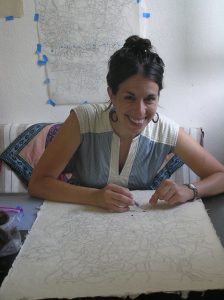
Brenna K. Murphy
Brenna K. Murphy explores the experience of loss and its relationship to the body using fiber-based techniques such as weaving, embroidery, and lace-making. She holds a B.F.A. from the University of North Carolina – Chapel Hill where she graduated with Highest Honors and was the recipient of the Alexander Julian Prize, an award for the Department of Art’s “best students making work with a high standard of design,” and is currently pursuing an M.F.A. from the University of Michigan Stamps School of Art & Design.
A working artist for many years, Brenna has exhibited widely throughout the U.S. and internationally in China, Nepal, and France in community art centers, commercial galleries, and corporate venues. Her work has also been featured in exhibitions at museums and universities such as the Hunter Museum of American Art in Tennessee, the Patan Museum in Kathmandu, the University of Pennsylvania, Moore College of Art & Design, and the Tyler School of Art at Temple University. She has taught courses, led workshops, and given lectures at venues such as the Kathmandu University Center for Art & Design, the Nepal Art Council, and the Tyler School of Art, and her work has been collected by the Henry-Copeland Permanent Art Collection at the University of North Carolina and the prestigious West Collection. She is the recipient of many awards, including a competitive two-year fellowship from the Center for Emerging Visual Artists and the Fleisher Art Memorial Wind Challenge Award in Philadelphia, and has attended several artist residencies, such as the Santa Fe Arts Institute in New Mexico, the Kathmandu Contemporary Arts Centre in Nepal, and the CAMAC Centre d’Art and Cité Internationale des Arts in France.
HONORABLE MENTIONS IN ART HISTORY AND VISUAL ART
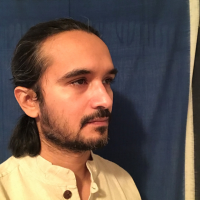
Murad Khan Mumtaz
Murad Khan Mumtaz is a Pakistani-American scholar who examines historical intersections of art, literature and religious expression in South Asia. His primary research focuses on devotional portraiture with a special interest in representations of Muslim saints in early modern India. He is also an artist trained in the traditional practices of North Indian painting, which he exhibits, researches and teaches internationally.
A native of Lahore, Mumtaz was educated at Pakistan’s National College of Arts, where he first studied Indian painting under the guidance of Ustad Bashir Ahmed. He later completed an MFA in visual art as a Fulbright Scholar at Columbia University. He is currently a doctoral candidate in the Department of Art and Architectural History at the University of Virginia and is working toward the completion of his dissertation, “Objects of Devotion: Representations of Muslim Saints in Early Modern South Asian Painting,” which he expects to defend in April 2018.
Mumtaz has been awarded fellowships from the American Institute of Indian Studies, the American Institute of Pakistan Studies and the CLIR-Mellon Program for dissertation research in original sources. As a Theodore Rousseau Fellow of the Metropolitan Museum of Art he has carried out research in European museums and libraries. He was recently appointed an art history research fellow of the Freer-Sackler Galleries at the Smithsonian Institution in Washington, DC.
 Courtney N. Ryan
Receiving her Master of Fine Arts in Ceramics and Sculpture this May, Courtney Ryan is known for her intricate clay sculptures that appear to have emerged organically from their surroundings. She currently resides in Statesboro, Georgia, near Savannah, where she teaches Two-Dimensional and Three-Dimensional design courses as an Instructor of Record at Georgia Southern University. Upon graduation, Courtney intends to continue her studio practice while exhibiting work as she searches for her future career. As an aspiring professor of art, she wants to continue teaching and remain involved within the art world both professionally and academically.
Over the course of her graduate career, Courtney has had the opportunity to travel abroad to experience the Venice Biennale, as well as spend two summers in Ireland on residency through the European Council. As an avid presenter, Courtney has participated in conferences such as SECAC, SLSA, and of course CAA. Last August, she had her first solo exhibition, Domestic Consumption, at Columbus State University, and has since shown her work at other universities including the University of Georgia, Georgia State University, and Augusta University. Featured in Sculpture Magazine as an Honorable Mention for the 2017 Outstanding Student Achievement Award, Courtney continues to push her work into new realms. Currently she is exhibiting in The Delaware Contemporary Museum’s 2017 MFA Biennale: Domestic, as well as an upcoming show-swap with Aalto University in Helsinki, Finland. Having just completed a 40-foot mural and a public arts sculpture, Courtney is also heavily involved in her local community.
Bobby Tso and Andrew Casto
posted by CAA — January 29, 2018
The weekly CAA Conversations Podcast continues the vibrant discussions initiated at our Annual Conference. Listen in each week as educators explore arts and pedagogy, tackling everything from the day-to-day grind to the big, universal questions of the field.
This week, Bobby Tso, assistant professor of Fine Art at Northwest Missouri State University, and Andrew Casto, head of Ceramics at the University of Iowa, discuss teaching Contemporary Craft – Materiality and Concept in Ceramics.
New in caa.reviews
posted by CAA — January 26, 2018

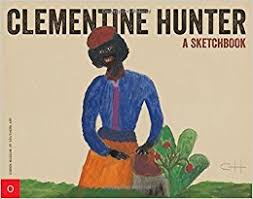
Earnestine Jenkins discusses Clementine Hunter: A Sketchbook by Richard Gasperi. Read the full review at caa.reviews.
Rashmi Viswanathan reviews the exhibition After Midnight: Indian Modernism to Contemporary India, 1947/1997. Read the full review at caa.reviews.
Peter Christensen examines Noah’s Ark: Essays on Architecture by Hubert Damisch. Read the full review at caa.reviews.
Lozana Rossenova writes on Heart of Darkness by Joseph Conrad and Fiona Banner. Read the full review at caa.reviews.
Fred Rush discusses The Brain-Eye: New Histories of Modern Painting by Éric Alliez. Read the full review at caa.reviews.