
CAA News Today
Exhibitions Curated by CAA Members
posted by CAA — February 15, 2015
Exhibitions Curated by CAA Members
Check out details on recent shows organized by CAA members who are also curators.
Exhibitions Curated by CAA Members is published every two months: in February, April, June, August, October, and December. To learn more about submitting a listing, please follow the instructions on the main Member News page.
February 2015

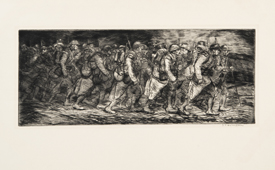 Theophile-Alexandre Steinlen, Marche de nuit (Night March), ca. 1917, etching with drypoint, 6 x 15 3/16 in. Collection Zimmerli Art Museum at Rutgers, Gift of Norma B. Bartman (artwork in the public domain; photograph by Peter Jacobs)
Christine Giviskos. Picturing War: Selections from the Zimmerli Art Museum Collection. Zimmerli Art Museum, Rutgers University, New Brunswick, New Jersey, February 7–July 5, 2015.

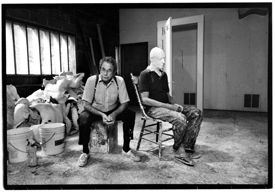 Donald Lokuta, Casting Miles Forst for “The Red Scaffold,” 1990, silver gelatin print, 11 x 14 in. (artwork © Donald Lokuta; photograph provided by the artist and hpgrp Gallery, New York)
Donna Gustafson. George Segal in Black and White: Photographs by Donald Lokuta. Zimmerli Art Museum, Rutgers University, New Brunswick, New Jersey, February 14–July 31, 2015.

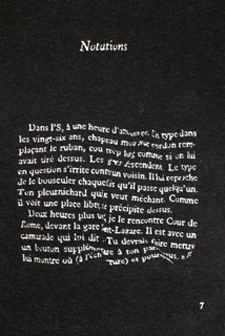 Monica Bengoa, Exercices de Style / Exercises in Style. Notations / Notation, 2014–15, natural wool felt and 493 hand-cut felt letters, 72 x 47 in. (artwork © Monica Bengoa)
Julia P. Herzberg. Monica Bengoa: Exercices de Style / Exercises in Style. Patricia and Phillip Frost Art Museum, Florida International University, Miami, Florida, February 14–April 26, 2015.

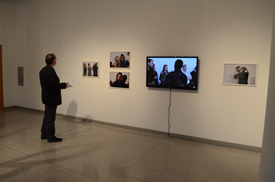 Clifford Owens, Anthology (Kara Walker), 2010, archival pigment prints and video (artwork © Clifford Owens; photograph provided by Martha Wilson, New York and Matthew McNutty)
Katie Grace McGowan and Jaime Marie Davis. Menagerie, or Artwork Not about Love. Elaine L. Jacob Gallery, Wayne State University, Detroit, Michigan, October 24–December 12, 2014.
Books Published by CAA Members
posted by CAA — February 15, 2015
Publishing a book is a major milestone for artists and scholars—browse a list of recent titles below.
Books Published by CAA Members appears every two months: in February, April, June, August, October, and December. To learn more about submitting a listing, please follow the instructions on the main Member News page.
February 2015

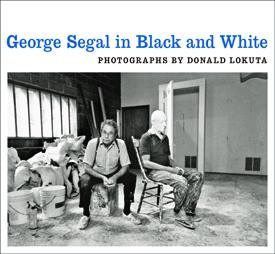
Donna Gustafson. George Segal in Black and White: Photographs by Donald Lokuta (New Brunswick, NJ: Zimmerli Art Museum, Rutgers University, 2015).


Andrew D. Hottle. Shirley Gorelick (1924–2000): Painter of Humanist Realism (Newcastle upon Tyne: Cambridge Scholars Publishing, 2014).

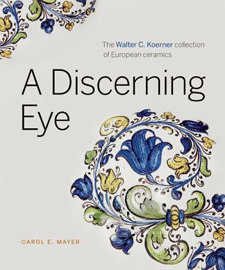
Carol E. Mayer. A Discerning Eye: The Walter C. Koerner Collection of European Ceramics (Vancouver: Figure 1, 2015).

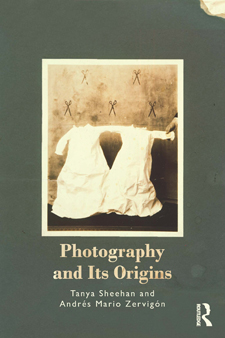
Tanya Sheehan and Andrés Mario Zervigón, eds. Photography and Its Origins (New York: Routledge, 2015).

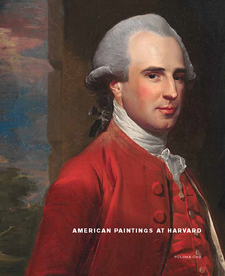
Theodore E. Stebbins Jr. and Melissa Renn. American Paintings at Harvard, Volume 1: Paintings, Watercolors, and Pastels by Artists Born before 1826 (Cambridge, MA: Harvard Art Museums, 2014).

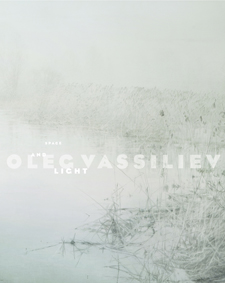
Julia Tulovsky. Oleg Vassiliev: Space and Light (New Brunswick, NJ: Zimmerli Art Museum, Rutgers University, 2014).

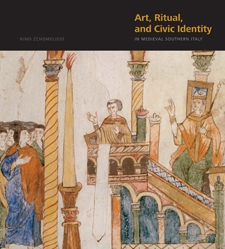
Nino Zchomelidse. Art, Ritual, and Civic Identity in Medieval Southern Italy (University Park: Pennsylvania State University Press, 2014).
Committee on Women in the Arts Picks for the 2015 Annual Conference
posted by CAA — February 10, 2015
Each month, CAA’s Committee on Women in the Arts selects the best in feminist art and scholarship. The following exhibitions and events should not be missed. Check the archive of CWA Picks at the bottom of the page, as several museum and gallery shows listed in previous months may still be on view or touring.
2015 Annual Conference in New York
The CWA Picks for the New York conference are dedicated to Kalliopi Minioudaki for her tremendous efforts in working on the Picks during her tenure on the CWA (2012–15). You will be missed!

Cover of the catalogue for Judith Scott: Bound and Unbound
Judith Scott: Bound and Unbound
Brooklyn Museum
Elizabeth A. Sackler Center for Feminist Art, Fourth Floor, 200 Eastern Parkway, Brooklyn, NY 11238
October 24, 2014–March 29, 2015
Bringing together sculptures and works on paper that span the eighteen years of her career, this much awaited exhibition is the first survey of Judith Scott’s work that Matthew Higgs has described as “one of the most important bodies of work—‘insider’ or ‘outsider’—produced anywhere and under any circumstances in the past twenty years.”
Judith and her twin sister Joyce were born in Columbus, Ohio. Judith was diagnosed with Down syndrome, and considered retarded due to learning difficulties caused from undiagnosed deafness. At the age of eight she was tragically separated from her sister and spent the next thirty-five years of her life as ward in Dickensian institutions for the disabled and the discarded. Her art production begun after Joyce decided to become Judith’s legal guardian and introduced her to a visionary studio art program, the Creative Growth Art Center.
Judith Scott developed a unique and idiosyncratic method to produce a body of work of remarkable originality and visual complexity. Often working for weeks or months on individual pieces, she begun by pilfering and assembling together all sorts of objects; she then enveloped and intertwined them with miscellaneous threads, twines, strings, ropes, fibers, somewhat protecting and concealing their core. As the art historian Lucienne Peiry says, her unconventional textile sculptures “are endowed with an intens
e power of expression: they resemble giant multicolored cocoons and … are evocative of magical fetishes” holding a special connection to life and death. Moreover, although it does not appear that her work was directed by intention “these sculptures conceal a secret that their author always took great care to hide…. There is no doubt but that the sculptures themselves play an essential role in embodying the physical presence—that of ‘the other twin’—throughout the feverish act of creation. Judith Scott’s approach thus involved a process that may seem paradoxical because, on one hand, it consisted of dissimulating and concealing, and on the other hand, of growing and shaping…The emotional and physical reunion with her sister led Judith Scott to recover an identity, and then to develop an intimate experience at a fantasy level where she sublimated the tearing apart of which she was a victim.”
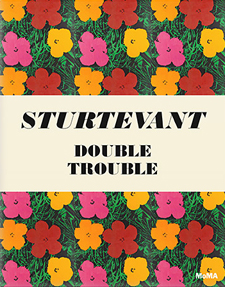
Cover of the catalogue for Sturtevant: Double Trouble
Sturtevant: Double Trouble
Museum of Modern Art
11 West 53rd Street, New York, NY 10009
November 9, 2014–February 22, 2015
Elaine Sturtevant (American, 1924–2014) began “repeating” the works of her contemporaries in 1964, using some of the most iconic artworks of her generation as a source and catalyst for the exploration of originality, authorship, and the interior structures of art and image culture. Beginning with her versions of works by Jasper Johns and Andy Warhol, she initially turned the visual logic of Pop art back on itself, probing uncomfortably at the workings of art history in real time. Yet her chameleonlike embrace of other artists’ art has also resulted in her being largely overlooked in the history of postwar American art. As a woman making versions of the work of better-known male artists, she has passed almost unnoticed through the hierarchies of midcentury modernism and postmodernism, at once absent from these histories while nevertheless articulating their structures.
Far more than copies, her versions, for instance, of Johns’s flags, Warhol’s flowers, and Joseph Beuys’s fat chairs are studies in the action of art that expose aspects of its making, circulation, and canonization. Working primarily in video since 2000, the artist remained deeply engaged with the politics of image production and reception, using stock footage from Hollywood films, television, and advertising to point to the exhaustion built into much of postwar cultural production.
This exhibition is the first comprehensive survey in America of Sturtevant’s fifty-year career and the only institutional presentation of her work organized in the United States since her solo show at the Everson Museum of Art in 1973. Rather than taking the form of a traditional retrospective, the exhibition offers a historical overview of her work from a contemporary vantage point, interspersing more recent video pieces among key artworks from all periods of her career.
Marisol: Self-Portrait Looking at The Last Supper
Metropolitan Museum of Art
Lila Acheson Wallace Wing for Modern and Contemporary Art, Design, and Architecture, Gallery 909, 1000 Fifth Avenue, New York, NY 10028
October 8, 2014–April 5, 2015
For the first time in nearly thirty years, Marisol’s monumental sculptural assemblage, Self-Portrait Looking at The Last Supper, has been on view at the Metropolitan Museum of Art, complementing the retrospective celebration of the renowned yet understudied sculptor by her recent retrospective that travelled to El Museo del Barrio this fall.
Inspired by Leonardo’s monumental fresco, Marisol (Maria Sol Escobar, b. 1930) faithfully rendered the painting’s composition into three dimensions to create this 30-foot-long installation. The biblical scene depicts Christ and his Apostles at the Passover meal, with each disciple reacting to the announcement by Jesus that one of them would betray him. The work is primarily carved from wood, with a rough, sketchy technique that includes painted and drawn elements. Marisol is particularly skillful at joining seemingly incompatible components. In fact, the seated figures are neither fully rounded nor consistently flat, oscillating between two and three dimensions. The artist chiseled the central figure of Christ from a block of salvaged New York City brownstone. Christ’s physical solidity and ashen, serene appearance contrast with the blackened, twisted figure of Judas to provide the composition’s emotional tension. In Marisol’s sculptural version of the Last Supper, a novel figure is added opposite the tableau. It portrays the artist contemplating the scene and with a hieratic presence that shares visual affinities with the stocky, solemn figures of Precolumbian sculpture.
Plastic Age: IN/OUT: Banners and Sculptures by Barbara Madsen
New York Public Library
Mid-Manhattan Library, Corner Room, 455 Fifth Avenue, New York, NY 10016
February 3–May 21, 2015
Barbara Madsen’s work is a hybrid practice between photography, print, and sculpture. Her banners, a series of photographs of inanimate plastic objects occupy the windows of the Corner Room on Fifth Avenue and 40th Street. Madsen’s sculptures facing Fifth Avenue are architectural plywood structures, jutting walls, boxed, minimal, acute—stacked on top of each other. The angled surfaces are covered with photographs of objects that have been consumed and discarded. Vibrant color plays a central tenant in her cast of objects: the child’s crimson fireman’s ladder; a lime-colored dome from a hair drier; and cobalt, yellow, scarlet plastic remnants of toys. Within the complex shadows and highlights of the images, dust and flaws are naked—the invisible becomes visible. Madsen is an artist and associate professor in the Mason Gross School of the Arts at Rutgers University known for her work in photography, prints, sculpture, and installation.
E. E. Smith: The Ballad of Delia
Kim Foster Gallery
529 West 20th Street, New York, NY 10011
January 8–February 14, 2015
The Ballad of Delia is an installation of new photo-based oil prints by E. E. Smith. This piece is part of a series in which Smith uses song forms as the point of departure for her work. The Ballad of Delia consists of ten panels of varying sizes that tell the story of Delia Greene’s murder, an account best known from covers by Johnny Cash and Bob Dylan. Like the singers, and especially the now-forgotten songwriters, Smith takes liberties with the telling of the tale, presenting various details and asking the viewer to fill in the story.
Each panel represents a clue to this murder mystery, yet stylistically they differ. The lush landscape harkens back to the evocative paintings of Albert Pinkham Ryder, drawing us into the location of the crime. Other images are shockingly explicit: the menacing axe and thick footprints allude to police photographic evidence, while the male silhouette suggests a mug shot. And the hand holding a teacup (the victim perhaps?) makes reference to film stills.
In contrast to the songs—and most likely any contemporaneous news accounts—Smith deliberately dispenses with a time-dependent linear narrative, opting instead to display several moments simultaneously. The effect is not so much “the truth” about a murder but “a truth” told without words. The trope of the murder-mystery in American culture is ubiquitous, and Smith’s iteration in The Ballad of Delia makes a compelling episode.
Louise Nevelson: Collage and Assemblage
Pace Gallery
534 West 25th Street, New York, NY 1001
January 24–February 28, 2015
Pace Gallery presents an exhibition of Louise Nevelson’s rarely seen collages, accompanied by a catalogue by Germano Celant. Nevelson began producing collages in the mid-1950s, inspired by her longstanding interest in Cubism and a correspondence with Jean Arp. Prompting her remark “the way I think is collage,” collage signifies an important aspect of her work.
The exhibition features the artist’s earliest collages, produced along her monochromatic black, gold, and white sculptures, by using scraps of wood and metal collected from the streets outside of her Little Italy studio. The show also includes examples of her later unpainted assemblages that manifest a departure from her monochromatic work, while continuing to prove the centrality of collage in her practice. Among the last works of her life, two large-scale, black wall reliefs, including Spring Street (1984), which was installed in Nevelson’s home from its completion until her death, are also part of this exhibition.
Nevelson (b. 1899 Kiev; d. 1988, New York) emigrated from czarist Russia as a child and grew up in Rockland, Maine. As an adult she returned to Europe, where she studied with Hans Hoffmann. Upon her return to the United States, she served as Diego Rivera’s assistant and later as an art instructor in the Works Progress Administration. In 1941, Nevelson had her first solo exhibition and, in 1946, was included for the first time in the Whitney Annual exhibition, which she would participate in eleven more times. The artist exhibited her first all-black sculptures in the mid-1950s. Although she worked in white and gold and later with painted steel, her developments in the 1950s sustained her work throughout the rest of her life. Considered today as one of America’s most significant artists, Nevelson has been the subject of one-artist exhibitions and retrospectives at numerous institutions in the US, and her work is found in many prominent museums and public collections worldwide.
Yael Bartana
Petzel Gallery
456 West 18th Street, New York, NY 10011
January 8–February 14, 2015
Petzel Gallery is pleased to announce a new exhibition by the Israeli artist Yael Bartana (b. 1970, Kfar-Yehezkel, Israel) that debuts her latest two films: Inferno and True Finn. This will be the gallery’s second solo show with the artist.
Bartana studied at the Bezalel Academy of Arts and Design in Jerusalem, the School of Visual Arts in New York, and the Rijksakademie in Amsterdam. She has had several solo exhibitions held at various international venues and in New York. Bartana was Poland’s choice for the 2011 Venice Biennale, where she was the first non-Polish citizen to represent the country. Bartana’s photography, film, and sound works investigate society, spirituality, and politics. Her films, film installations, and photographs challenge the national consciousness that is propagated by her native country of Israel. Homeland, return, and belonging are the central questions that she explores. Her investigation includes ceremonies, public rituals and social diversions that are intended to reaffirm the collective identity of countries. Working outside the country, Bartana observes it from a critical distance. Her early films were primarily registrations in which aesthetic interventions, including soundtracks, slowing the image, and specific camera perspectives, played a role.
In Inferno, Bartana films the inauguration of a grand temple, the destruction of it, and the worship of its debris. The starting point is the construction of a replica of Solomon’s Temple in São Paulo by an evangelical neo-Pentecostal church called the Universal Church of the Kingdom of God (UCKG). The temple is built with stones imported from Israel, as UCKG intends to bring part of the Holy Land to São Paulo, thus inverting the traditional path taken by pilgrims who would leave Brazil for the Holy Land. The film’s conflation of place, history, and belief allows Bartana to weave connections between the complex realities of São Paulo and Jerusalem. Shot and edited with stylistic references to Hollywood action epics, her film employs what she refers to as “historical pre-enactment,” a methodology that commingles fact and fiction, and prophesies and histories. Using this powerful cinematic language, Inferno combines histories of antiquity in the Middle East with Brazil’s contemporary hybrid culture.
True Finn is a documentary-style film asking eight people from Finland one simple question: who is a true Finn? Bartana’s objective with True Finn, produced in connection of Finland’s Pro Arte Foundation, was to create and record a utopian moment that would yield an answer to this question. As a result of an open call, eight Finnish residents of different ethnic, religious, and political background came to live together for seven days in a house in the countryside. Life, discussions, and specifically designed assignments were filmed, with the edited material forming the core of the artwork and allowing True Finn to probe questions about identity, nationhood, and belonging.
Diana Thater: Science, Fiction
David Zwirner
533 West 19th Street, New York, NY 10011
January 8–February 21, 2015
David Zwirner presents new work by Diana Thater in the form of a new type of installation that involves an enclosed video projection, ceiling screen, and light, as well as two new video walls. Thater is one of the most important video artists working today. Since the early 1990s, she has created a wide range of film, video, and installation-based works whose sculptural forms engage spatial perception in physical and conceptual terms. Her work pushes the boundaries of how new-media art is displayed. Through a combination of the temporal qualities of video and the architectural dimension of its installation, Thater’s work explores the artifice of its own production and its capacity to construct perception about the world through its image. Natural diversity, wildlife, and conservation have been persistent themes in the artist’s work. While her in-depth studies of ecosystems and animal behavior propose observation as a kind of understanding in itself, her ethical position is implicit in the work, providing subtly political views of the sublime.
In Science, Fiction, Thater focuses on the dung beetle and the intricate navigation system it deploys in disposing balls of animal excrement, its main source of nutrition. Recent studies have revealed that the species uses the Milky Way to orientate itself at night, currently the only insect known to do so. Thater’s video projection appears at once abstract and particular, juxtaposing the sophistication of the small insects’ navigation systems with the close-up views of their earthy setting in a meditative fusion of macro and micro realms. Deploying a new type of installation, Thater presents the footage on a screen attached to the ceiling, projected from within a closed-off, freestanding box. Mirroring the setup of the scientific experiment with the dung beetles, the white square further references the Light and Space movement in California in the 1960s. The exhibition is illuminated by soft blue lights, creating an environment that mimics the evening sky, while the walls of the box themselves are lit from below, which offers the illusion of levitation. Also on view are two video walls showing the Milky Way, respectively titled Sidereus Nuncius and The Starry Messenger.
Born in 1962 in San Francisco, Thater lives and works in Los Angeles. She studied art history at New York University before receiving her MFA from the Art Center College of Design in Pasadena, California. Over the past decade, her work has been the subject of solo exhibitions at prominent institutions worldwide, and she is the recipient of many awards. In fall 2015, the Los Angeles County Museum of Art will host a midcareer survey of her work, which will coincide with an installation at the Aspen Art Museum in Colorado.
Araya Rasdjarmrearnsook
SculptureCenter
44-19 Purves Street, Long Island City, NY 11101
January 25–March 30, 2015
SculptureCenter presents Araya Rasdjarmrearnsook, the Thai artist’s first retrospective in the United States. The exhibition, which brings together over twenty artworks spanning over a decade of the artist’s career, includes video, sculpture, and photography, presenting significant highlights as well as works that have rarely been viewed in the US. As such the show features The Class and Conversation series, for which Rasdjarmrearnsook conducts discussions with corpses, and the video Village and Elsewhere: Artemisia Gentileschi’s Judith Beheading Holofernes; Jeff Koons’ Untitled, and Thai Villagers (2011), in which a Buddhist monk leads a comical conversation about these two Western paintings in a temple. A more recent group of works featured focuses on the status of dogs in Thai culture and beyond. SculptureCenter will also include works produced specifically for this exhibition.
Rasdjarmrearnsook is one of the leading visual artists working in Southeast Asia. She is based in the northern city of Chiang Mai in Thailand, where she teaches in the Faculty of Fine Arts at Chiang Mai University. Rasdjarmrearnsook is internationally known for videos and installations that profoundly explore aspects of human experience and understanding, often touching on taboo topics such as death and insanity. In 2005 she represented Thailand in the Venice Biennale. Working with psychologically rich materials, she considers a wide range of subjects that have existed in marginal spaces, including women, the deceased, the insane, and animals. She creates complex narratives that confront societal structures of power and pedagogy. Concerned with systems of language and communication, Rasdjarmrearnsook attempts to converse with subjects who don’t speak in languages that are comprehended by or even acknowledged by mainstream society.
Looking Back: The 9th White Columns Annual
White Columns
320 West 13th Street, New York, NY 10014
January 13–February 21, 2015
Not an exhibition of women artists, this year’s White Columns Annual is curated by an all women’s curatorial collective, Cleopatra’s. Founded in 2008, Cleopatra’s works collaboratively with artists and cultural producers to create projects that forge new networks and dialogues among individuals, art practices, and institutions. These projects are realized in their flagship noncommercial storefront in Greenpoint, Brooklyn. From 2011 to 2012 the collective also operated a satellite art space in Berlin, Germany. Further investigations also occur in the form of offsite public programs, events, and printed publications, encompassing various fields and locales. The aim of Cleopatra’s is to present work and advance ideas informed by both individual and collective perspectives, and to disseminate that work and those ideas among a broad and diverse audience. Current and founding members of the Cleopatra’s are Erin Somerville, Colleen Grennan, Bridget Finn, and Bridget Donahue.
Samara Golden: The Flat Side of the Knife
MoMA PS1
22-25 Jackson Avenue, Long Island City, NY 11101
October 26, 2014–August 30, 2015
MoMA PS1 presents Samara Golden’s first solo museum exhibition and her largest installation to date: The Flat Side of the Knife. The Los Angeles–based Golden (American, b. 1973) creates immersive installations that explore what the artist calls the “sixth dimension,” where a multiple pasts, presents, and futures coexist. Golden’s multilayered installation fills the double-height of MoMA PS1’s Duplex Gallery with staircases, beds, couches, lamps, musical instruments, video, and sound. The Flat Side of the Knife combines physical with illusory spaces. Some appear only in mirrors, reflecting what the artist refers to as “layers of consciousness,” akin to psychological and hallucinatory spaces in the mind. Her use of mirrors in conjunction with sculptural elements made from a silvery insulation board allows the illusion of space to expand in multiple directions, suggesting imaginary spaces, such as adjacent rooms that do not exist in reality.
Golden received her MFA from Columbia University and has exhibited her work at the Museum of Contemporary Art, Los Angeles; SculptureCenter in New York; Night Gallery in Los Angeles; CANADA in New York; Cardi Black Box in Milan; Loyal Gallery in Stockholm; and Galerie Crevecoeur in Paris. Most recently, her work was featured in the Hammer Museum’s biennial, Made in L.A., in 2014.
Anne Imhof: DEAL
MoMA PS1
22-25 Jackson Avenue, Long Island City, NY 11101
January 31–March 9, 2015
MoMA PS1 presents DEAL, Anne Imhof’s inaugural solo project in the United States, which consists of a two-day performance followed by an exhibition. The project, conceived specifically for the museum, revolves around the structures of illegal street transactions that are underpinned by strict rules and codes while functioning beyond words and juridical regulations. Along the opening performances, nine performers will enact highly complex and abstract movements, evoking power relations, secret codes, and unspoken rules that underlie daily human interactions. Here, tasks and patterns are unceasingly repeated over an entire day and progressively shift as they push toward a point of collapse. The exhibition expands on the same formal interrogations and ideas through diverse media such as drawing, video, sculpture, painting, and a variation of the initial performance, SOTSB for DEAL, which repeats every Sunday during museum hours.
Imhof (German, b. 1978) was trained as a visual artist and considers the different media as integral to the process for creating images that gradually emerge in time. Live events, their documentation, objects, and props—Imhof believes that each component in a body of work is interrelated and of equal relevance, contributing to the creation of a visual image that is perpetually in process, highly precarious, and in a constant verge of dissolution.
Chitra Ganesh: Eyes of Time
Brooklyn Museum
Elizabeth A. Sackler Center for Feminist Art, Herstory Gallery, Fourth Floor, 200 Eastern Parkway, Brooklyn, NY 11238
December 12, 2014–July 12, 2015
The Herstory Gallery at the Brooklyn Museum is hosting Eyes of Time, an exhibition by the Brooklyn-based artist Chitra Ganesh that explores ideas of femininity, empowerment, and multiplicity. Her drawing, installation, text-based work, and collaborations suggest and excavate buried narratives typically absent from official canons of history, literature, and art. For more than a decade, Ganesh has used the iconography of mythology, literature, and popular culture to bring to light feminist and queer narratives.
For Eyes of Time, the artist draws inspiration from the museum’s encyclopedic collection to create a site-specific multimedia installation at the gallery. Eyes of Time focus on the portrayal of female power and plurality based on Kali—the Hindu goddess of destruction and rebirth—as well as other figures from Judy Chicago’s The Dinner Party as point of departure. Tales of Amnesia (2002)—a zine inspired by Indian comic books acquired by the museum—is also on view.
As stated about her creative practice, “by layering disparate materials and visual languages, Ganesh asks her viewers to ‘seek and consider new narratives of sexuality and power.’ In this process the body becomes a site of transgression and transformation, both social and psychic, doubled, dismembered and continually exceeding its limits.”
TENDREL – Interconnections
Tibet House
22 West 15th Street, New York, NY 10011
January 2–March 2, 2015
TENDREL – Interconnections is an exhibition by artists who are linked to and inspired by the life work of Jetsunma Tenzin Palmo, the first Western woman to become a Buddhist nun. Diverse yet interconnected, the themes investigated by the artists include Tibet and its culture, Buddhism, women, spiritual life, meditation, and activism. Works consist of photographs of nomads and nunneries in Tibet that provide profound insight and stark contrast to the social cultural changes of the Tibetan community, and art based on Buddhist and meditative iconography that explores the practice of visualization in painting, sculpture, drawing, and detailed stained-glass artistry. Among those presenting works are these artists: Diane Barker, Caterina De Re, Mary DeVincentis, Maxine Henryson, Heather Kessinger, Chrysanne Stathacos, Tsunma Jamyang Donma/Yulokod Studios, and Kate Temple.
Art in the First Person Lecture Series
School of Visual Arts
Various Locations in Manhattan
February 3–17, 2015
The School of Visual Arts presents the spring 2015 lineup of its Art in the First Person lecture series, jointly presented by the following departments: MA Curatorial Practice, MPS Digital Photography, BFA Fine Arts, MFA Fine Arts and BFA Visual and Critical Studies. All events are free and open to the public. The lecture series includes:
- Amy Smith-Stewart, independent curator and art advisor, on Tuesday, February 3, 6:00 PM
- Lumi Tan, curator at the Kitchen, on Tuesday, February 10, 6:00 PM
- Kira Pollack, director of photography at Time, on Tuesday, February 10, 7:00 PM
- Judith Page, artist, on Tuesday, February 17, 6:00 PM
Collective Creativity: Collaboration and Collectives in Feminist Art Practice
Feminist Art Project
Museum of Arts and Design, 2 Columbus Circle, New York, NY 10019
February 14, 2015
Committee on Women in the Arts Picks for February 2015
posted by CAA — February 10, 2015
Each month, CAA’s Committee on Women in the Arts selects the best in feminist art and scholarship. The following exhibitions and events should not be missed. Check the archive of CWA Picks at the bottom of the page, as several museum and gallery shows listed in previous months may still be on view or touring.
February 2015
The February CWA Picks are dedicated to Kalliopi Minioudaki for her tremendous efforts in working on the Picks during her tenure on the CWA (2012–15). You will be missed!
Poetry and Exile
British Museum
Gallery 34, Great Russell Street, London
WC1B 3DG United Kingdom
October 1, 2014–March 1, 2015
Housed within the Islamic World Galleries, Poetry and Exile displays a series of works by artists of the Middle East and North Africa recently acquired by the British Museum. This small but powerful exhibition explores the effects of exile through the eyes of four women artists:Ipek Duben, Mireille Kassar, Mona Saudi, and Canan Tolon.
Tolon’s series ofink and graphite drawings, titled Futur Imparfait, is a memoir fromher exile from Istanbul to France, where she spent a decade in hospital as a result of contracting polio as a child. In the series Tolon portrays an exile not only from home, but also from her own body. Duben’s book Refugee belies the helplessness and terror suffered by people forced to flee their homeland with images on delicate gauze pages and using childlike embroidery that depicts the crossing of borders. The Istanbul-born Duben has been making books and installations that focus on identity, domestic violence, and the worldwide forced migration of the twentieth century.
The Jordanian artist Saudi combines the evocative verses of the Palestinian poet Mahmoud Darwish with drawings, while the Lebanese-born Kassar developed a series of drawings inspired by the Persian poem The Conference of the Birds. Here, Kassar conjures a story of exile from her own family history. Originally from Mosul and Mardin—present day Iraq and Turkey—her ancestors fled the Ottoman massacres of minorities during the late-nineteenth and early twentieth century.

Zoe Strauss, Drying Money, Mississippi Gulf Coast, Mid September, 2005 (artwork © Zoe Strauss)
Zoe Strauss: Sea Change
Cantor Fitzgerald Gallery
Haverford College, Whitehead Campus Center, 370 Lancaster Avenue, Haverford, PA 19041
January 23–March 6, 2015
Cantor Fitzgerald Gallery presents Sea Change, an exhibition of photographs, vinyl prints, and projected images by Zoe Strauss. Throughout this project, the celebrated Philadelphia photographer traces the aftermath of Hurricane Katrina in 2005, the BP Deepwater Horizon oil spill in southern Louisiana in 2010, and Hurricane Sandy in 2012: three ecological disasters that have changed America’s landscape.
With little formal training as a photographer or artist, Strauss (b. Philadelphia, 1970) uses photography as the most direct means of representing her chosen subjects. Her images, often both disturbing and touching, are focused mainly on American working-class experience. She founded the Philadelphia Public Art Project in 1995 with the aim of exhibiting art in nontraditional venues in order to give the citizens of Philadelphia access to art in their everyday lives. She now refers to this initiative as an “epic narrative” of her own neighborhood that reflects the beauty and struggle of everyday life.
True to her creative statement, Strauss captures the fast and slow tragedies of global warming through the portrayal of an irreparable damage and the hope of mending. Flattened sceneries and architectural remains stand alongside graffiti and signs including encouraging pleas, words that express the despair of a sudden displacement as much as the hope to return and belong, again. Sea Change is accompanied by a publication designed by Random Embassy.
Otobong Nkanga: Tracing Confessions
Museum Folkwang
Museumsplatz 1, 45128 Essen, Germany
January 23–May 18, 2015
Museum Folkwang presents Tracing Confessions, a two-part project created by Otobong Nkanga (born Nigeria, 1974). Based in the museum collection, Nkanga explores issues of identity and relationships between objects and people. As part of the Kunststiftung NRW’s project 25/25/25, Nkanga invited members of the museum’s staff to be photographed with selected pieces from this collection. During the month of January, the resulting photographs will be distributed as billboards throughout the city. Bringing the museum to the public space, the piece aims to connect with Essen residents in their everyday lives. This public intervention is presented along an installation designed specifically for the museum. Unveiling shared stories between objects and people, Tracing Confessions interrogates the origin of the museum artifacts, and in that their potential of shaping identities.
Trained in the converging traditions of performance and live arts, Nkanga leads an intensive research-based artistic practice. Her heterogeneous and multidisciplinary practice includes drawing, photography, installation, and performance art. Her sensitive observation on social and topographical changes in the environment, and on the concept of diaspora, examines the regional and cultural complexities that are embedded in these experiences. Using her own and others’ body and voice, Nkanga proves that the subjects of her projects are to be a lived and truly embodied experience. Through language and visual and physical narratives, her work invites viewers to engage in a dialogue that reflects on identity, memory, and perception.
Carolee Schneemann: Infinity Kisses
Merchant House
Herengracht 254, 1016BV, Amsterdam, the Netherlands
January 22–April 12 2015
The Merchant House in Amsterdam presents Carolee Schneemann: Infinity Kisses, an exhibition of works on paper, photographs, and a video by the renowned American multimedia artist. The exhibition pivots on a site-specific installation of the video Infinity Kisses-The Movie (2008), first shown in Amsterdam. The show is also accompanied with a fully illustrated catalogue with an essay by Kalliopi Minioudaki.
The experiential body—yet not only her own naked one, as this exhibition argues—has been paramount in Carolee Schneemann’s multifariously radical politics and idiosyncratic poetics. Focusing on the photographic series (2004) and video (2008) that sensually portray the morning kisses given to Schneemann by her cats, Cluny and Vesper, this exhibition foregrounds the radical centrality of the cat in her work—as lifelong companion and a symbol of what patriarchal culture represses and dismisses, namely female sexuality. Returning Schneemann’s legendary yet controversial interspecies “kisses” to a house that variously evokes her own—due to the fact that the Merchant House is located in a historic canal house that reminds the artist of her home in Springtown, New York, itself central in her production—this exhibition highlights the domesticity that characterizes the poetics of intimacy inherent in a great part of her work.
In contrast to the ecstatic bodies of Infinity Kisses, the accompanying works in the exhibition juxtapose gruesomely violated or caged feline bodies with news images of global atrocities. Sampling the gestural painterliness and collage aesthetics that underpin much of her work, these prints hint at the darker role the body plays in Schneemann’s sorrowful diagnosis of the malaises of modernity and patriarchy, of Western civilization, and of the current stage of the society of spectacle. An extraordinary example of her conceptual feminist poetics, Unexpectedly Research (1992) illuminates the research and “double knowledge” that underpin not only Schneemann’s feminist critique of the suppression of the sacred feminine, but also its radical bodily retrieval by the artist.

Janet Biggs, production still from Can’t Find My Way Home, 2015, four-channel video, high-definition video installation with sound, 8:35 min. (artwork © Janet Biggs)
Janet Biggs: Echo of the Unknown
Blaffer Art Museum
University of Houston,
120 Fine Arts Building, Houston, TX 77204-4018
January 17–March 21, 2015
Janet Biggs: Echo of the Unknown is part of the Science Spring at the Blaffer Art Museum. Organized by the independent curator Janet Phelps, this multidisciplinary exhibition combines video, sound, and objects to explore the role of memory in the construction of identity. Drawing from the artist’s personal memories of the effects of Alzheimer’s on various family members, stories of public figures coping with the disease, and research conducted with neurologists and geoscientists, Echo of the Unknown raises fundamental questions about how we become—and how we lose our sense of—who we are.
Works in the exhibition include Can’t Find My Way Home, a four-channel video installation inspired by memories of the artist’s grandfather, an avid mineral collector who could recall the most difficult names of mineral species yet not his own as he succumbed to the disease. This piece juxtaposes documentation of neurological research conducted in New York and Houston laboratories with footage shot in the crystal cavern below the Merkers salt mine in Germany, itself a potent metaphor for the brain and its sites of memory.
The video installation The Persistence of Hope focuses on the solace Biggs’s uncle found in his residual memory of birds. Only after his death Biggs discovered her uncle’s peculiar ritualized attempt to sustain beauty and hold onto life as he felt it fade away by gathering hummingbirds and placing them in his freezer. Alternating imagery of gravity-defying hummingbirds with footage shot in the Arctic and in laboratories where human brain cells are preserved in freezers for neurological research, The Persistence of Hope paints a tender picture of life caught between hope and futility.
Breathing without Air follows an aging mineral collector as he searches for the perfect specimen at a trade show, where he eventually loses his way among the many aisles of vendors and displays. All three pieces share a soundscape based on Glen Campbell’s 1968 song “Wichita Lineman.” Comprising scores based loosely on Campbell’s tune by various composers, Biggs’s Wichita Lineman is a haunting sonic homage to the tenacity of Campbell who, upon his diagnosis with Alzheimer’s, decided to continue to tour for as long as he could.
An ambitious series of lectures, gallery talks and panel discussions accompanies the exhibition throughout its duration, enhancing the exhibition’s role as a catalyst for cross-disciplinary learning.
Lynn Hershman Leeson: Civic Radar
ZKM | Karlsruhe
Lorenzstraße 19, 76135 Karlsruhe, Germany
December 13, 2014–April 6, 2015
Lynn Hershman Leeson has been mining body art and new media for more than forty years. Her cutting-edge work has run a broad gamut that ranges from the feminist performance Roberta Breitmore, for which she lived a double life as herself and an alter ego for most of the 1970s, to a series of science-fiction films starring Tilda Swinton. Acknowledged for her feminist politics, Hershman Leeson chronicled the feminist movement in the 2011 documentary Women Art Revolution. Yet her contributions to technologically sophisticated art have been widely understudied. Conversely, Lynn Hershman Leeson: Civic Radar, the first comprehensive retrospective of her work in a museum and especially in Germany, not only overviews all the creative phases of her work, bringing together rarely shown early works like her 1960s wax and burned sculptures along with masterful highlights, but it also strives to acknowledge her pioneering role as an innovative and influential new-media artist.
As such Civic Radar brings together works that exemplify Hershman Leeson’s multimedia investigation of identity and various modes of surveillance, such as Lorna (1983/84), one of the first interactive projects on videodisc, and Teknolust (2002), which addresses cyberidentity, artificial intelligence, cloning, and the decoupling of sexuality and human reproduction. The exhibition also include recent works that use robots, mass-communication media such as smart-phones, and the latest scientific developments in the field of genetics and regenerative medicine, including three-dimensional bioprinters that create human body parts.
Hershman Leeson received a bachelor of science in museum administration and art at Case Western Reserve University in Cleveland and a master of arts in art criticism at San Francisco State University. From 1993 through 2004 she was professor of electronic arts at the University of California, Davis. From 2004 through 2010 Hershman Leeson held the Andrew D. White Chair at Cornell University in Ithaca. In 2007 the artist assumed charge of the San Francisco Art Institute’s Film Department. Over the years, she has received numerous awards, including the Siemens Medienkunst Preis in 1995 and the Prix Ars Electronica (Golden Nica) in 1995.
Committee on Women in the Arts Picks for January 2015
posted by CAA — January 10, 2015
Each month, CAA’s Committee on Women in the Arts selects the best in feminist art and scholarship. The following exhibitions and events should not be missed. Check the archive of CWA Picks at the bottom of the page, as several museum and gallery shows listed in previous months may still be on view or touring.
January 2015
Nicole Miller at Artists’ Film International
Ballroom Marfa
108 East San Antonio Street, Marfa, TX 79843
November 22, 2014–February 22, 2015
Ballroom Marfa is presenting two recent videos by Nicole Miller, as a highlighted artist participating at the Artists’ Film International. This project means a collection of artists’ film, video and animation from around the world that has been coorganized with Whitechapel Gallery in London.
Miller (b. 1982; Tucson, Arizona) lives and works in Los Angeles. Her films and installations explore the transformative capabilities of the moving image to reconstruct interpretations of self and culture. Through storytelling, self-representation and self-presentation become a narrative in search for the reconstitution of physical and psychic manifestations of loss. Her videos often focus on the interplay between preconception and reality in terms of African American identity, as in the case of The Conductor (2009), presented earlier this year at the High Line Art Program.
In this occasion, Ballroom Marfa is presenting two recent projects by Miller. In David (2012) we can observe the fragmented image of the profile of a man that the artist encountered by chance on the street. Here, he narrates the events that lead to the amputation of his left arm whilst his right limb is reflected in a mirror—a rehabilitation technique that helps patients deal with the painful symptoms of a phantom limb. Death of a School (2014) is a predominantly silent four-channel video that meditates on the events of a soon to be shutdown school in Tucson, which is Miller’s hometown. Presented together, Miller’s films become powerful narratives that carry the possibility of reconstitution of lost histories and identities.
Johanna Calle: Indicios
Casas Reigner
Calle 70A # 7-41, Bogotá, Colombia
October 2, 2014–January 30, 2015
Casas Riegner presents Indicios (Signs), an exhibition that gathers Johanna Calle’s most representative works produced between 1990 and 2014. Seeking to examine closely the visual language that has characterized her work for more than two decades, the exhibition includes a selection of projects in which different processes developed by the artist are juxtaposed. In each series of work, Calle exposes her approach to the creative process, where she also unveils a sense of unsettledness and curiosity.
Featuring her conceptual research and creative use of unconventional materials, the display includes Calle’s assemblages, signs, and phonetic representations of indigenous languages, photographic drawings made on vintage analogue photographs, and the intervention of archives and documents that are part of different research projects. For the documentation-based installation Hermanas Figueiredo (2013–14), Calle reconstructed a story as a gesture of redemption to the Brazilian sisters that devoted their life to a scientific research around the life of butterflies in the first half of the twentieth century. However, they have lost the legal battle with a recognized Brazilian professor who was hired to catalogue their collection and had deliberately chosen to wrongly assign its authorship and ownership. The case was dismissed and labeled as exhaustive and rigorous maniac women’s work.
Calle holds a BFA from Universidad de Los Andes en Bogotá and an MFA from Chelsea College of Arts in London, England. Her projects Perímetros I and Perímetros II were included at the thirty-first Bienal de São Paulo, Brazil in 2014.
Donna Sharrett: Love Songs
Pavel Zoubok Gallery
531 West 26th Street, New York, NY 10001
January 8–February 7, 2015
Pavel Zoubok Gallery presents Love Songs, a solo exhibition of new work by Donna Sharrett, including two of her largest—yet humanly scaled—works to date, framed by Sampling, a related group show curated by Dara Meyers-Kingsley.
With a variety of needlework techniques, Sharrett creates painstakingly wrought concentric assemblages sewn together from a potent and personal material lexicon consisting of donated or inherited jewelry, clothing, and buttons; hair, bone beads, dirt, and guitar strings. Passed down from a congenial and ancestral sorority of craftswomen and fiber artists, Sharrett’s techniques instill in each piece cross-cultural references to life, death, and rebirth. Addressing the shared human ability and desire to remember, her works transcend the confines of economic, religious and cultural boundaries.They instead evoke “life as it is lived and remembered—a notion of lineage that is not always linear and narrative but sometimes acts more like a spiral—a growing flower that rises from the earth and whose seeds scatter to become the next crop.”
Sharrett (b. Philadelphia, 1958) is the recipient of two fellowships from the New York Foundation for the Arts as well as notable residencies and grants from Smack Mellon, the Bronx Museum and the Millay Colony for the Arts Residency. Her work has been widely exhibited, including a solo exhibition at the Everson Museum in Syracuse, New York, and group exhibitions at the Museum of Arts and Design in New York; the Bellevue Arts Museum in Bellevue, Washington; the University of Rochester in Rochester, New York; and Marianne Boesky Gallery in New York. Her work is represented in the collections of the Museum of Contemporary Arts and Design in New York; the United States Embassy in Valletta, Malta; the Hebrew Home for the Aged in New York; and J. P. Morgan Chase in New York. A full-color catalogue will accompany the exhibition.
Cameron: Songs for the Witch Woman
MOCA Pacific Design Center
8687 Melrose Avenue, West Hollywood, CA 90069
October 11, 2014–January 18, 2015
Cameron: Songs for the Witch Woman is the first survey of Cameron’s work since 1989 and explores the artist’s role as a seminal figure within Los Angeles’s midcentury counterculture, her unique melding of surrealism and mysticism, and her unwavering commitment to live her life as art. “Navigating between disciplines and traditions of poetry, cinema, visual arts, and spirituality; Cameron has opened many doors that continue to intrigue and inspire generations of artists,” while “her hallucinated vision … embodies an aspect of modernity that deeply doubts and defies cartesian logic at a moment in history when these values have shown their own limitations,” as stated by MOCA’s director, Philippe Vergne.
Born in Belle Plaine, Iowa, Cameron (Marjorie Cameron Parsons Kimmel) (1922–1995) emerged as an artist, performer, poet, and occult practitioner in Los Angeles, uniquely bridging the city’s flourishing spiritual and art worlds at midcentury. She arrived in Los Angeles by way of the Second World War, where she drew maps and labored in a photographic unit for the United States Navy. A visionary painter and unparalleled draftsman best known today for her paintings and drawings of human and fantastical figures, she spend her last days in West Hollywood largely unrecognized. Cameron’s frenetic, delicate renderings of mythological figures reveal a singular attention to line and the idea of spiritual metamorphosis, evoking the surrealism and symbolism of the French poets. She is closely associated with Beat artists such as Wallace Berman, George Herms, and Dennis Hopper, the filmmakers Kenneth Anger and Curtis Harrington, and the occultist Aleister Crowley, while she was mentor to younger artists and poets such as David Meltzer and Aya (Tarlow). Cameron’s artwork appeared in the first issue of Berman’s celebrated journal Semina (1955–64) and has also been included in group exhibitions at the Whitney Museum of American Art in New York, the J. Paul Getty Museum in Los Angeles, the Martin-Gropius Bau in Berlin, the Pasadena Museum of California Art, the Centre Pompidou in Paris, and the Los Angeles Municipal Art Gallery in 1989.
Comprised of nearly one hundred artworks and ephemeral artifacts, the exhibition includes pieces formerly thought to be lost, ranging from early paintings to drawings, sketchbooks, and poetry from her late years, as well as ephemera and correspondence with individuals such as her husband Jack Parsons (1914–1952), a rocket pioneer and a founder of the Jet Propulsion Laboratory, and the renowned mythologist Joseph Campbell. The exhibition brings to life the recently published book titled Songs for the Witch Woman that features a series of poems written by Parsons alongside illustrations drawn by Cameron that echo the intimate themes of their turbulent love story.
In conjunction with the exhibition, the Cameron Parsons Foundation is producing an eighty-eight-page catalogue with approximately seventy-five full-color illustrations.
Sylvie Blocher: S’inventeur autrement
Mudam Luxemburg
Musée d’Art Moderne Grand-Duc Jean 3, Park Dräi Eechelen L-1499 Luxembourg-Kirchberg
August 11, 2014–May 25, 2015
Since the early 1990s, the French artist Sylvie Blocher has built up a body of video work that takes the human as its material, in all its fragility, unpredictability, and yet full presence. She engages with a poetics of relation, emancipation, the questioning of identities, the writing of history, the permeability of the masculine/feminine border, and codes of representation in a world under control. Created in different geographic regions, her works are based on exchange: they often involve the participation of lay people, who are invited to present themselves in a completely new fashion before the camera, as the artist “shares her authority with her models” to create what she calls Living Pictures.
This solo exhibition at Mudam Luxembourg revolves around an ambitious project titled Dreams Have a Language, which combines a participative work, a video installation, and the production of a movie. As envisioned by the artist, the show was meant to be “the story of an event at a museum in Luxembourg in which the visitors will not be content to look politely at the works, but decide impulsively to experience leaving the world for a few minutes, in a journey filmed and broadcast, a story of fragmented, floating bodies. Then a movie, the start of another story.”
During the first weeks of the exhibition, the museum’s Grand Hall became a fully active film studio that centered on the operation of a flying machine twelve meters tall. Through the placement of an ad in various media, Blocher invited the public to visit the museum, to leave the ground for a few minutes, and to “rethink the world.” “Shooting conditions: allow one hour and present yourself at Mudam with an idea to change the world. It might be poetic, political, aesthetic, emotional, revolutionary, scientific, architectural, educational, financial, culinary, sonic, etc.” Forming the content for a video installation at the center of the exhibition, the pictures of the suspended bodies will be the starting point for a movie created with the Luxembourg director Donato Rotunno, to be released in spring 2015. By combining a documentary approach with fictional writing, the movie will offer “an assemblage of words, gestures and moments that will open up an imaginary universe, an expectancy, a suspense.”
A survey of the artist’s work is also presented in two of the museum’s galleries, where video installations and drawings sample key themes of Blocher’s work: the sharing of responsibility, the question of politics, identity, dreams, and utopia. By using music to give new life to important speeches and manifestos made in contemporary history (by Angela Davis, Édouard Glissant, and Barack Obama, among others), the five videos that form the series Speeches (2009–12), which are part of the Mudam Collection, engage with the political dimension of the imagination, individual and collective. Other works, such as the diptych Change the Scenario (Conversation with Bruce Nauman) (2013) and the three videos recently created by Blocher in Texas, tackle historic and racial aspects in the construction of the individual. Placed at the entrance to each gallery, a series of drawings that the artist has made every day for a year, based on the front page of the newspaper Libération, emphasizes the passages between the personal and the political initiated by her practice.
Committee on Diversity Practices highlights for January/February 2014
posted by CAA — January 09, 2015
The CAA Committee on Diversity Practices highlights exhibitions, events, and activities that support the development of global perspectives on art and visual culture and deepen our appreciation of political and cultural heterogeneity as educational and professional values. Current highlights are listed below; browse past highlights through links at the bottom of this page.
January/February 2015
Chitra Ganesh: Eyes of Time
Brooklyn Museum, New York
December 12, 2014–July 12, 2015
“Exploring ideas of femininity, empowerment, and multiplicity, Brooklyn-based artist Chitra Ganesh draws inspiration from the Museum’s encyclopedic collection, including representations of the goddess Kali, to create a site-specific multimedia installation for the Herstory Gallery. Chitra Ganesh: Eyes of Time centers on a monumental mural that takes Kali, the Hindu goddess of destruction and rebirth, and other figures from Judy’s Chicago’s The Dinner Party as starting points for portraying female power and plurality. The artist expands on this theme by showcasing works from our Egyptian, Indian, and Contemporary collections. For more than a decade, Ganesh has used the iconography of mythology, literature, and popular culture to bring to light feminist and queer narratives. One of her first major works, Tales of Amnesia (2002)—a zine inspired by Indian comic books that the Museum acquired out of our 2004 exhibition Open House: Working in Brooklyn—is also on view. Chitra Ganesh: Eyes of Time is organized by Saisha Grayson, Assistant Curator, Elizabeth A. Sackler Center for Feminist Art, Brooklyn Museum. This exhibition is made possible by the Elizabeth A. Sackler Foundation.” (http://www.brooklynmuseum.org/exhibitions/chitra_ganesh/)
More information:
http://www.brooklynmuseum.org/home.php
Judith Scott–Bound and Unbound
Brooklyn Museum, New York
October 24, 2014–March 29, 2015
“Judith Scott’s work is celebrated for its astonishing visual complexity. In a career spanning just seventeen years, Scott developed a unique and idiosyncratic method to produce a body of work of remarkable originality. Often working for weeks or months on individual pieces, she used yarn, thread, fabric, and other fibers to envelop found objects into fastidiously woven, wrapped, and bundled structures. Born in Columbus, Ohio, with Down syndrome, Scott (1943–2005) was also largely deaf and did not speak. After thirty-five years living within an institutional setting for people with disabilities, she was introduced in 1987 to Creative Growth Art Center—a visionary studio art program founded more than forty years ago in Oakland, California, to foster and serve a community of artists with developmental and physical disabilities. As the first comprehensive U.S. survey of Scott’s work, this retrospective exhibition includes an overview of three-dimensional objects spanning the artist’s career as well as a selection of works on paper Judith Scott—Bound and Unbound is organized by Catherine J. Morris, Sackler Family Curator for the Elizabeth A. Sackler Center for Feminist Art, Brooklyn Museum, and Matthew Higgs, artist and Director/Chief Curator of White Columns, New York. The accompanying catalogue is published by the Brooklyn Museum and Prestel. This exhibition is made possible by the Elizabeth A. Sackler Foundation. Additional generous support has been provided by the Helene Zucker Seeman Memorial Exhibition Fund and Deedie Rose.” (http://www.brooklynmuseum.org/exhibitions/judith_scott/)
More information:
http://www.brooklynmuseum.org/home.php
LOUD silence
gallery@Calit2
University of California San Diego
January 22–March 13, 2015
“LOUD silence is an exhibition that offers the opportunity for viewers to consider definitions of sound, voice, and notions of silence at the intersection of both deaf and hearing cultures. The exhibition displays prints, drawings, sculptures, videos, and a film installation, and features work by four artists who have different relationships to deafness and hearing, including Shary Boyle, Christine Sun Kim, Darrin Martin and Alison O’Daniel. These four artists explore how the binary of loudness and silence might be transformed in politicized ways through their own specificities, similarities and differences in relationship to communication and language. The stereotypical view of the deaf experience is that they live a life of total silence, where they retain little to no concept of sound. But on the contrary, deaf people actually know a lot about sound, and sound informs and inhabits their world just as much as the next person. Through these artworks, the artists aim to loudly explode the myth of a silent deaf world, and they seek to trouble just how “inaudible” sound really is through their own visceral experiences of it. The distinction between the deaf person and the hearing person in their relationship to sound is the extent to which deaf people use senses other than the auditory to understand what they are hearing. Sound is felt and sound is seen. Indeed, some of the artists’ “deaf hearing” in this exhibition often involves sensory input from a variety of sources, and is not simply confined to the ears. Ultimately, the work in LOUD silence offers an avenue for eradicating deaf oppression, where new ways of listening and thinking about sound and silence might be developed. A full-color catalogue will accompany this exhibition produced in partnership with the Grand Central Art Center at California State University Fullerton, with essays written by the exhibition curator, Amanda Cachia, alongside Dr. Zeynep Bulut, Lecturer in Music, Kings College, London, and Michael Davidson, Professor of American Literature in the Literature Department, UCSD.” (http://www.calit2.net/events/popup.php?id=2444)
Solo Exhibitions by Artist Members
posted by CAA — December 22, 2014
See when and where CAA members are exhibiting their art, and view images of their work.
Solo Exhibitions by Artist Members is published every two months: in February, April, June, August, October, and December. To learn more about submitting a listing, please follow the instructions on the main Member News page.
December 2014
Mid-Atlantic

Terence Hannum. Guest Spot at the Reinstitute, Baltimore, Maryland, November 15, 2014–January 17, 2015. Decay. Sound collage, zines, and handmade artist’s books.
Northeast
Richard Barlow, Michael Stolzer Fine Art, Oneonta, New York, September 18–October 1, 2014. Recognition Study Cards. Letterpress prints.

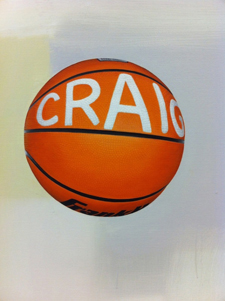 Craig Drennen, detail of HELLO CRAIG, 2014, oil and alkyd on canvas, 52 x 40 in. (artwork © Craig Drennen)
Craig Drennen. Samsøñ Projects, Boston, Massachusetts, October 31–December 24, 2014. Poet & Awful. Painting.

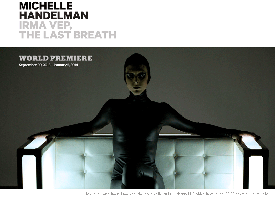 Michelle Handelman, Irma Vep, the last breath, 2013, 4-channel HD video installation, 33:00 min. (artwork © Michelle Handelman; photograph by Laure Leber)
Michelle Handelman. Soho House New York in partnership with the Film-Makers’ Cooperative, New York, November 7, 2014. Irma Vep, the Last Breath. Single-channel video.
South
Veronica Ceci. 02 Gallery, Austin, Texas, November 7–December 3, 2014. QR/PR. Printmaking.
People in the News
posted by CAA — December 17, 2014
People in the News lists new hires, positions, and promotions in three sections: Academe, Museums and Galleries, and Organizations and Publications.
The section is published every two months: in February, April, June, August, October, and December. To learn more about submitting a listing, please follow the instructions on the main Member News page.
December 2014
Academe
Edith Balas has retired after thirty-five years of teaching art history at Carnegie Mellon University in Pittsburgh, Pennsylvania.

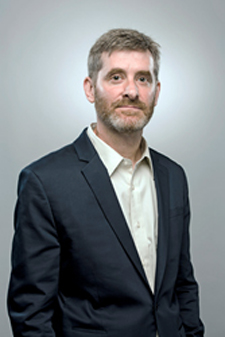 Jeff Bellantoni (photograph by Peter Tannenbaum)
Jeff Bellantoni, formerly chairperson and professor of the Graduate Communications Design Department at Pratt Institute in Brooklyn, New York, has been appointed vice president for academic affairs at Ringling College of Art and Design in Sarasota, Florida.
Lori Cole, formerly the Charlotte Zysman Postdoctoral Fellow in the Humanities and Lecturer in Fine Arts at Brandeis University in Waltham, Massachusetts, has become assistant professor and faculty fellow at the John W. Draper Interdisciplinary Master’s Program in Humanities and Social Thought at New York University.
Ryan Hoover has been appointed a 2014–15 full-time faculty member in the Interdisciplinary Sculpture Department at Maryland Institute College of Art in Baltimore.
Christian Luczanits, senior curator at the Rubin Museum of Art in New York, has been named David L. Snellgrove Senior Lecturer in Tibetan and Buddhist Art at the University of London’s School of Oriental and African Studies in England.
Kiel Mutschelknaus has joined Maryland Institute College of Art in Baltimore as a full-time faculty member in graphic design for the 2014–15 academic year.

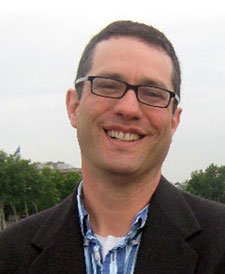 David Raskin
David Raskin has been named Mohn Family Professor of Contemporary Art History at the School of the Art Institute of Chicago in Illinois, thanks to a recent $2.5 million gift from the Mohn Family Foundation.
Daniel Tucker has been appointed graduate-program manager in social and studio practice at the Moore College of Art and Design in Philadelphia, Pennsylvania.
Museums and Galleries
Carol Damian has stepped down as director and chief curator of the Patricia and Phillip Frost Art Museum at Florida International University in Miami. She will serve as a professor in the school’s Art and Art History Department.
Tracy Fitzpatrick, chief curator of the Neuberger Museum of Art at Purchase College, State University of New York, has been appointed director of the museum.
Meredith Fluke has been appointed Kemper Curator of Academic Programs at the Davis Museum at Wellesley College in Wellesley, Massachusetts.
Aimeé E. Froom, an independent scholar based in Paris, France, has become curator of Islamic art at the Museum of Fine Arts, Houston, in Texas.

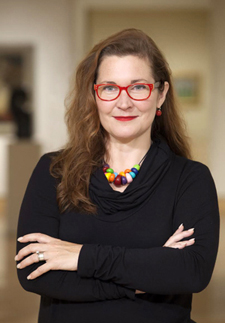 Erika Holmquist-Wall
Erika Holmquist-Wall, formerly of the Minneapolis Institute of Arts in Minnesota, has been hired by the Speed Art Museum in Louisville, Kentucky, as curator of European and American painting and sculpture.
Monica Obniski, formerly assistant curator of American decorative arts at the Art Institute of Chicago in Illinois, has been hired by the Milwaukee Art Museum in Wisconsin as curator of design and decorative arts.
Amy L. Powell, previously a Cynthia Woods Mitchell Curatorial Fellow at the University of Houston’s in Texas, has become curator of modern and contemporary art at the Krannert Art Museum, part of the University of Illinois, Urbana-Champaign.

 Namita Gupta Wiggers
Namita Gupta Wiggers has resigned from being director and chief curator for the Museum of Contemporary Craft in Portland, Oregon. She will continue working with the museum as an adjunct curator and with Pacific Northwest College of Art as an adjunct instructor in the MFA Applied Craft and Design Program.
Scott Wilcox, chief curator of art collections and senior curator of prints and drawings at the Yale Center for British Art in New Haven, Connecticut, has been promoted to deputy director for collections.
Organizations and Publications
Richard Brettell has been chosen to lead the newly created Edith O’Donnell Institute of Art History in Dallas, Texas, as director and Edith O’Donnell Distinguished Chair.
Paul Catanese, associate professor and director of the Interdisciplinary Arts and Media MFA Program at Columbia College Chicago in Illinois, has joined the ISEA International Foundation Board.
Institutional News
posted by CAA — December 17, 2014
Read about the latest news from institutional members.
Institutional News is published every two months: in February, April, June, August, October, and December. To learn more about submitting a listing, please follow the instructions on the main Member News page.
December 2014
The Archives of American Art, part of the Smithsonian Institution in Washington, DC, has received a $413,000 award from the Terra Foundation for American Art to support a survey of archival collections related to American art that are located in the Chicago area, as well as a few other initiatives on Chicagoan art, artists, and archives.
The Mary and Leigh Block Museum of Art at Northwestern University in Evanston, Illinois, has accepted a $85,000 award from the Terra Foundation for American Art to support the exhibition The Left Front: Radical Artists in the “Red Decade,” 1929–1940.
The College of the Holy Cross in Worcester, Massachusetts, has developed a three-day conference called “Global Encounters in Early America” with support from a $25,000 grant from the Terra Foundation for American Art.
The Delaware Art Museum in Wilmington has received three generous gifts totaling $1.7 million to fully endow the museum’s Curator of the Bancroft Collection of Pre-Raphaelite Art. Two donations were given anonymously, and a third came from Peggy and Ed Woolard. The endowment will be named the Annette Woolard-Provine Endowed Curator of the Bancroft Collection, in honor of the Woolards’ daughter.
The Maine College of Art in Portland has received accreditation for its ten-month master of art in teaching program by the National Association of Schools of Art and Design and the state of Maine. The college has also accepted funding from the Bob Crewe Foundation to initiate a program that explores the intersection of music and art.
The Pennsylvania Academy of the Fine Arts in Philadelphia has received a three-year $150,000 grant from the Institute of Museum and Library Services to support the new School and Community Partnership Program, which will unite the academy’s existing resources for schools, families, and community outreach into a single initiative.
The Philadelphia Museum of Art in Pennsylvania has been awarded a $165,000 grant from the Terra Foundation for American Art to help fund the exhibition Paul Strand: Photography and Film for the Twentieth Century.
The Princeton University Art Museum in Princeton, New Jersey, has accepted a $99,493 grant from the Institute of Museum and Library Services to help complete the cataloguing and digitization of the Minor White Archive.
The School of the Art Institute of Chicago in Illinois has received a $2.5 million gift from the Mohn Family Foundation to advance the school’s leadership in the history of contemporary art. The funds will support a professorship and graduate-student fellowship within the Department of Art History, Theory, and Criticism.
Stanford University in California has accepted a $30,780 grant from the Terra Foundation for American Art to help the Department of Art and Art History fund a two-day conference called “The Ends of American Art.”
The University of California, Santa Barbara, has accepted a $136,479 grant from the Terra Foundation for American Art to support an academic exchange symposium and a publication associated with “Modernism in the United States and China,” a project organized by the university and the China Art Academy in Hangzhou.
The University of Texas at Dallas has partnered with the Dallas Museum of Art to create the Edith O’Donnell Institute of Art History, which will offer master’s and doctoral degrees. The institute is funded by a $17 million gift from Edith O’Donnell.
The Yale Center for British Art in New Haven, Connecticut, has received a $25,000 grant from the Terra Foundation for American Art to support the borrowing of Hiram Power’s statue The Greek Slave (1844), along with an attendant two-day colloquium, in conjunction with the exhibition Sculpture Victorious: Art in an Age of Invention, 1837–1901.
Yale University Press in New Haven, Connecticut, has accepted an $80,000 grant from the Terra Foundation for American Art to support a translation prize for a book-length publication by a non-US author that contributes to scholarship on historical American art.
Grants, Awards, and Honors
posted by CAA — December 15, 2014
CAA recognizes its members for their professional achievements, be it a grant, fellowship, residency, book prize, honorary degree, or related award.
Grants, Awards, and Honors is published every two months: in February, April, June, August, October, and December. To learn more about submitting a listing, please follow the instructions on the main Member News page.
December 2014

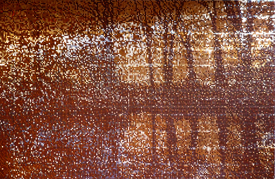 Richard Barlow, Pixelated Bromide, plastic sequins and latex paint, 132 x 204 in. (artwork © Richard Barlow)
Richard Barlow, an artist, musician, and assistant professor of art at Hartwick College in Oneonta, New York, has received the 2014 Jerome Foundation Travel and Study Grant and the 2014 Hartwick College Faculty Development Grant.

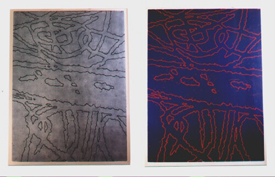 Two podographs by Mark Staff Brandl, 2012 (artwork © Mark Staff Brandl)
Mark Staff Brandl, an artist and art historian based in Trogen, Switzerland, has completed an artist residency in the Italian village of Portico di Romagna, where he made drawings and had a small exhibition.
Abigail DeVille, an artist based in Bronx, New York, has won a 2014 emerging-artist grant of $10,000 from the Rema Hort Mann Foundation, based in New York.

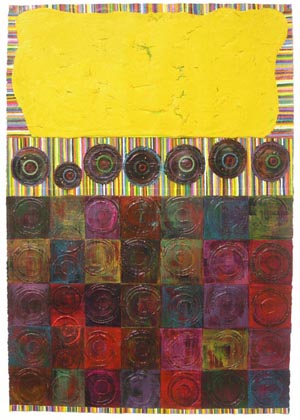 Reni Gower, Pivot.6, 2010, acrylic on paper, mounted on canvas-covered panel, 38 1/2 x 27 in. Collection of Harry L. Davis, Leesburg, VA (artwork © Reni Gower)
Reni Gower, an artist and professor of painting and printmaking at Virginia Commonwealth University in Richmond, has completed an artist residency at the Center for Book and Paper Arts at Columbia College Chicago, where she worked with the center’s team to explore pulp painting, blow-outs, and watermarks.
James Herring, exhibitions manager and designer for the Patricia and Phillip Frost Museum of Science in Miami, Florida, has received a $10,000 exhibition research grant from the Center for Craft, Creativity, and Design, based in Asheville, North Carolina.

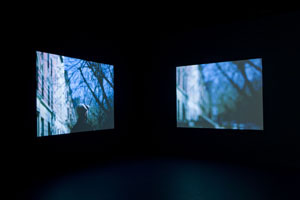 Leslie Hewitt in collaboration with Bradford Young, Untitled (Level), 2010, dual-channel video projection, 35mm film transferred to digital video, 1:00 min. loop. Studio Museum in Harlem, Museum Purchase with funds provided by the Acquisition Committee 10.8.1 (artwork © Leslie Hewitt)
Leslie Hewitt, an artist based in New York and Houston, Texas, has been named a USA Francie Bishop Good and David Horvits Fellow in Visual Arts by United States Artists. The award comes with an unrestricted $50,000 prize.
Faheem Majeed, associate director and faculty in the School of Art and Art History at the University of Illinois in Chicago, and Jeremiah Hulsebos-Spofford, a teacher of sculpture at the Chicago High School for the Arts and in the Contemporary Practices Department of the School of the Art Institute of Chicago, have earned a 2014–15 DCASE Studio Artist Residency Award from their city’s Department of Cultural Affairs and Special Events and the Joyce Foundation.
Norie Sato, an artist based in Seattle, Washington, has been recognized twice this year: the 2014 Public Art Network Leadership Award from Americans for the Arts, awarded in June at that organization’s conference in Nashville, Tennessee; and the 2014 Governor’s Art and Heritage Award for an Independent Artist, conferred by her state’s government at the end of October.
Alex J. Taylor, an Australian art historian of modern American art and visual culture, has been appointed to a three-year position at Tate as the Terra Foundation Research Fellow in American Art by the London–based museum and Chicago’s Terra Foundation for American Art.
Hilary Wilder has accepted a 2014–15 artist’s residency from the Galveston Artist Residency in Texas.