
CAA News Today
Exhibitions Curated by CAA Members
posted by CAA — October 15, 2014
Check out details on recent shows organized by CAA members who are also curators.
Exhibitions Curated by CAA Members is published every two months: in February, April, June, August, October, and December. To learn more about submitting a listing, please follow the instructions on the main Member News page.
October 2014

Charlotte Ickes and Iggy Cortez. Itinerant Belongings. Slought Foundation and Charles Addams Fine Arts Hall, University of Pennsylvania, Philadelphia, Pennsylvania, November 1–December 20, 2014 (Slought Foundation); November 1–22, 2014 (Charles Addams Fine Arts Hall).

 Courtney Puckett, May Day’s Eye Flower, 2014, fabric, marker, and thread, 48 x 48 in. (artwork © Courtney Puckett)
Katerina Lanfranco. All Worked Up. Rhombus Space, Brooklyn, New York, September 12–October 5, 2014.
Tirza True Latimer. Harmony Hammond: Becoming/UnBecoming Monochrome. RedLine, Denver, Colorado, August 2–September 28, 2014.

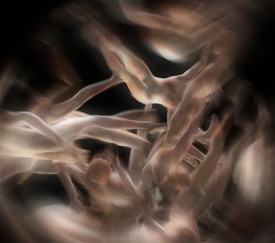 Kurt Hentschläger, detail of HIVE, 2011, 3D-animated audiovisual installation (artwork © Kurt Hentschläger)
Ellen K. Levy. Sleuthing the Mind. Pratt Manhattan Gallery, New York, September 17–November 5, 2014.

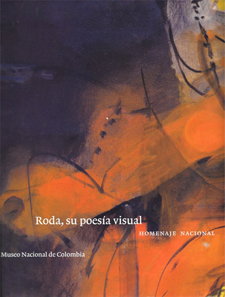 Promotional image for Roda, su poesía visual
María Margarita Malagón-Kurka. Roda, su poesía visual. Museo Nacional de Colombia, Bogotá, Columbia, April 11–August 3, 2014.
Theresa Papanikolas. Art Deco Hawaii. Honolulu Museum of Art, Honolulu, Hawai‘i, July 3, 2014–January 11, 2015.

 Promotional image for Paper Bullets
Catherine Tedford. Paper Bullets: 100 Years of Political Stickers from around the World. Hatch Kingdom Sticker Museum, Berlin, Germany, September 13–October 24, 2014.
Books Published by CAA Members
posted by CAA — October 15, 2014
Publishing a book is a major milestone for artists and scholars—browse a list of recent titles below.
Books Published by CAA Members appears every two months: in February, April, June, August, October, and December. To learn more about submitting a listing, please follow the instructions on the main Member News page.
October 2014


Laura Auricchio. The Marquis: Lafayette Reconsidered (New York: Alfred A. Knopf, 2014).

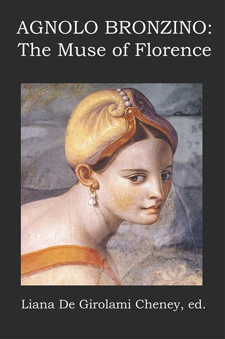
Liana De Girolami Cheney, ed. Agnolo Bronzino: The Muse of Florence (Washington, DC: New Academia Publishing, 2014).

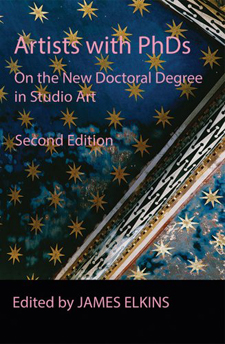
James Elkins, ed. Artists with PhDs: On the New Doctoral Degree in Studio Art, 2nd ed. (Washington, DC: New Academia Publishing, 2014).

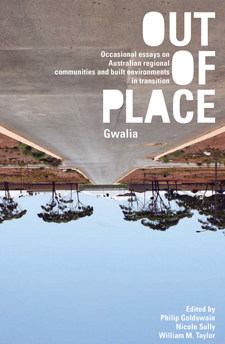
Philip Goldswain, Nicole Sully, and William M. Taylor, eds. Out of Place (Gwalia): Occasional Essays on Australian Regional Communities and Built Environments in Transition (Crawley: University of Western Australia Press, 2014).

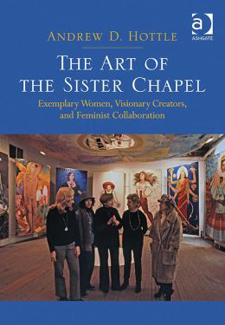
Andrew D. Hottle. The Art of the Sister Chapel: Exemplary Women, Visionary Creators, and Feminist Collaboration (Burlington VT: Ashgate, 2014).

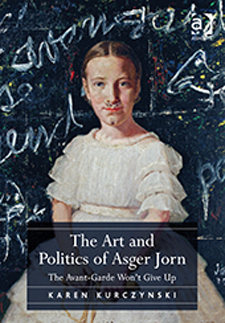
Karen Kurczynski. The Art and Politics of Asger Jorn: The Avant-Garde Won’t Give Up (Burlington VT: Ashgate, 2014).

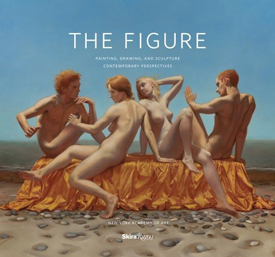
Margaret McCann, ed. The Figure: Painting, Drawing, and Sculpture (New York: Skira Rizzoli, 2014).
Committee on Women in the Arts Picks for October 2014
posted by CAA — October 10, 2014
Each month, CAA’s Committee on Women in the Arts selects the best in feminist art and scholarship. The following exhibitions and events should not be missed. Check the archive of CWA Picks at the bottom of the page, as several museum and gallery shows listed in previous months may still be on view or touring.
October 2014

Cover of the catalogue for Judith Scott: Bound and Unbound
Judith Scott: Bound and Unbound
Brooklyn Museum
Elizabeth A. Sackler Center for Feminist Art, Fourth Floor, 200 Eastern Parkway, Brooklyn, NY 11238
October 24, 2014–March 29, 2015
Bringing together sculptures and works on paper that span the eighteen years of her career, this much-awaited exhibition is the first survey of Judith Scott’s work that Matthew Higgs has described as “one of the most important bodies of work—‘insider’ or ‘outsider’—produced anywhere and under any circumstances in the past twenty years.”
Judith and her twin sister Joyce were born in Columbus Ohio. Judith was diagnosed with Down syndrome and considered retarded due to learning difficulties caused from undiagnosed deafness. At the age of eight she was tragically separated from her sister and spent the next thirty-five years of her life as ward in Dickensian institutions for the disabled and the discarded. Her art production began after Joyce decided to become Judith’s legal guardian and introduced her to a visionary studio-art program, the Creative Growth Art Center.
Judith Scott developed a unique and idiosyncratic method to produce a body of work of remarkable originality and visual complexity. Often working for weeks or months on individual pieces, she begun by pilfering and assembling together all sorts of objects; she then enveloped and intertwined them with miscellaneous threads, twines, strings, ropes, and fibers, somewhat protecting and concealing their core. As the art historian Lucienne Peiry says, her unconventional textile sculptures “are endowed with an intense power of expression: they resemble giant multicolored cocoons and … are evocative of magical fetishes” holding a special connection to life and death. Moreover, although it does not appear that her work was directed by intention, “these sculptures conceal a secret that their author always took great care to hide…. There is no doubt but that the sculptures themselves play an essential role in embodying the physical presence—that of ‘the other twin’—throughout the feverish act of creation. Judith Scott’s approach thus involved a process that may seem paradoxical because, on one hand, it consisted of dissimulating and concealing, and on the other hand, of growing and shaping…. The emotional and physical reunion with her sister led Judith Scott to recover an identity, and then to develop an intimate experience at a fantasy level where she sublimated the tearing apart of which she was a victim.”
Marlene Dumas: The Image as Burden
Stedelijk Museum
Museumplein 10, Amsterdam, the Netherlands
September 6, 2014–January 4, 2015
Closely examining key themes and motifs that Marlene Dumas has developed throughout her career, Marlene Dumas: The Image as Burden is the first major solo exhibition of her work in the Netherlands in twenty years. It is also the most comprehensive retrospective survey of her work in Europe to date. The title of the exhibition derives from the work The Image as Burden (1993) and refers to the conflict between the painterly gesture and the illusion of the painted image. The exhibition brings together almost two hundred drawings and paintings from private and museum collections throughout the world.
Dumas was born in Cape Town, South Africa, in 1953 and moved to Amsterdam after her studies at the Ateliers ‘63 in Haarlem. Today she is considered one of the most significant and influential painters. While often inspired by images found in newspapers and magazines, she has been renewing the meaning of painting in an era dominated by visual culture. Believing that the endless stream of photographic images that bombards us every day influences how we see each other and the world around us, she redresses this onslaught by focusing on the psychological, social, and political aspects of the image. Her intense, emotionally charged paintings and drawings address existentialist themes and often reference art-historical motifs and current political issues.
In addition to her most important and iconic works, the exhibition presents lesser-known paintings and drawings, including many works never before seen in the Netherlands, and a selection of her most recent paintings. While paying special attention to her early Amsterdam production (1976–82), the Stedelijk presentation features a number of exclusive highlights, such as a gallery devoted to drawings that have come straight from her studio, which have rarely been on public view, and the one-hundred-piece series Models from the collection of the Van Abbemuseum.
Niki de Saint Phalle
Grand Palais Galeries Nationales
Paris, France
September 17–February 2, 2015
Curated by Camille Morineau for the Grand Palais and traveling to the Guggenheim Museum in Bilbao, this is a major retrospective of the work of Niki de Saint Phalle, one of the most popular and innovative artists of the previous century. Mapping the opposing and often conflicting forces of eros and thanatos, creation and destruction, joie de vivre and trauma, feminity and masculinity, that underpin her production and illuminating key aspects of her poetics and multifaceted politics, the exhibition brings together an incredible assortment of her prolific oeuvre in all the media that she worked—paintings, assemblages, sculptures, works on paper, films, theater settings, illustrated books, etc.
Already by the early 1960s de Saint Phalle had an unusually successful international career for a female artist of her time. Propelled by the outrageousness of her shooting events as well as the joie de vivre of her signature Nanas, her fame quickly transcended not only national borders but continents, often providing rare inspiration to other female artists as manifested by her inclusion, by Mona Gorovitz in a 1965 essay in São Paolo that highlighted the achievements of women artists. While honored with major museum shows, retrospectives, including a museum dedicated to her in Japan, both posthumously and while still living, the complexities of de Saint Phalle’s contribution to international postwar avant-garde and their diverse politics, including the feminism underpinning her work, have not yet been fully examined or appreciated. Her recent inclusion in the Museum of Modern Art’s sixties rooms acknowledges finally her place in postwar Neodada and Pop scene; yet the failure of this exhibition to be hosted in an American institution proves the ongoing resistance to embrace de Saint Phalle as a great artist rather than a beautiful woman or just the partner of Jean Tinguely, an exotic outsider, a commercially successful irrelevance, a naïve colorist or essentialist. Illuminating lesser-known bodies of works with feminist effects, such as her series Devouring Mothers, and accompanied with a catalogue that brings together leading scholars of postwar art, de Saint Phalle and feminist art—such as Amelia Jones and Sarah Wilson, in thorough investigation of all periods and aspects of her work, including her life and writings, the exhibition offers a serious reassessment of de Saint Phalle’s work and its importance.
De Saint Phalle was born in France to an upper-class family of aristocratic and Catholic Franco-American origins and raised in New York. Although educated for the “marriage market,” and briefly modeling, she turned decisively to art upon a nervous breakdown while leading an unconventional family life in France. In the early 1960s she left her children to devote herself to art, eventually joining Tinguely to an extraordinary creative partnership that outlived their relationship. In 1961 she was the only female artist accepted in the circle of New Realism in Paris for her shooting paintings, themselves a groundbreaking performative and participatory form of painting by gun, but the politics of her work were also welcomed as example of the Figuration Narrative. Around 1963 she rediscovered herself as a sculptor, channeling the protofeminist underpinnings of her multifaceted rebellion against patriarchal power to a critical investigation of the stereotypical role of the feminine in Western society as well as an empowering and celebratory reenvisioning of it through the grotesque and joyous bodies of her now signature Nanas. Complementing her own critical contemplation on maternity and motherhood, her pioneering film Daddy in 1973 (in collaboration with Peter Whiteread) debunked patriarchal power, daringly addressing and revenging a repressed childhood trauma, her violation by her father, that she would later continue to address in autobiographic writings. In interviews of the early 1960s, de Saint Phalle, however, was always describing one major driving dream of her practice since her first encounter of the work of Gaudí and Facteur Cheval: to make joyous sculpture gardens. Since the 1970s she indeed channeled her energy in making her dream a reality, with a true belief in the life-changing democratic power of joy-giving public art. Her magnum opus, The Tarot Garden (1978–98), is the ultimate proof of the ambition and vision, monumentality and complexities of her architectural sculptural oeuvre, but so are many homes, playgrounds, public fountains, and sculptural complexes around the world that unfold central themes of her mythopoetic imagination and its politics.
Mika Tajima: Total Body Conditioning
Art in General
79 Walker Street, New York, NY 10013
September 13–October 25, 2014
Art in General presents Total Body Conditioning,a new commission by the New York–based artist Mika Tajima. Invoking technologies developed to control and affect the body, the exhibition is presented as three scenes: display, work, and fitness. Each scene in the exhibition outlines bodily experiences in different time and space. Contexts change, while the human body consistently becomes a target of power, where individual practices of freedom are intertwined with modes of domination.
Born in Los Angeles in 1975, Tajima use sculpture, painting, video, music, and performance to investigate how material objects define the action and engagement of the performing subject in a constructed space.
Exhibited works include hot-tub painting, reverse spray enameled in saturated gradient colors. Created specifically for the exhibition, these objects are ergonomically molded to the human form, emphasizing how the body is articulated in relation to an object. Tajima will also present a new group of works from her Furniture Art series. This consist of spray-enameled transparent paintings that are subtitled based on diverse geographic locations that draw on the psychological and geographic associations produced by the affective names of industrial colors and paints.
In addition, the exhibition features Negative Entropy‖, a new series of abstract acoustic-woven textile portraits resulted from recordings at a Toyota car factory in Japan and a server collocation center. The recordings were translated into image files and later interpreted by a weaving designer into a tangible fabric. Many of the works in the exhibition are set to shifting lighting and sound sequences, among them, a sound collaboration between New Humans, a group with which Tajima has collaborated before.
Disobedient Objects
Victoria and Albert Museum
Cromwell Road, London SW7 2RL United Kingdom
July 26, 2014–February 1, 2015
The Victoria and Albert Museum presents Disobedient Objects, a pioneering exhibition that investigates the powerful role of objects in movements for social change. Focusing on the period from the late 1970s until now, a time of constant technological development and political challenges, the exhibition demonstrates how political activism drives toward a collective creativity that challenges standard definitions of art and design. Evidencing arts of rebellion from around the world, the object are mostly produced by “nonprofessional” makers that work collaboratively with limited and accessible resources, resulting in effective responses to complex situations.
Since many of the artifacts were loaned directly from activist groups, the objects exhibited were hardly ever seen in a museum before. This exhibition provides a unique opportunity to observe these Disobedient Objects within a contextual background that includes newspaper cuttings, how-to guides, interviews, and footage of the objects in action, along with the makers’ statement explaining how and why the objects were created.
The exhibition is organized in several sections, including the introduction of the design of activist objects in relation to four ways of effecting social change: direct action, speaking out, making worlds, and solidarity. From a tableau of three puppets used in protests against the first Gulf War by the politically radical United States–based Bread and Puppet Theater, to simple pamphlets, to hand-painted placards by gay-rights activists, to banners used in conjunction with social media—solidarity can be demonstrated by even the smallest objects.
The final part of the exhibition maps out every “visual” protest since 1979. The case studies include an installation of masks and posters by the Guerrilla Girls, the anti–death penalty Tiki-Love Truck by the artist Carrie Reichardt, and a project by the Barbie Liberation Organization, responsible for switching the voice boxes on hundred of toys, including talking GI Joe and Barbie dolls, a project that sparked a widespread discussion about gender stereotypes.
Katie Paterson: Future Library
Oslo, Norway
The Berlin-based artist Katie Paterson launched Future Library, her new public artwork that will unfold over the next one hundred years in the city of Oslo, Norway. From 2014 to 2114, Paterson, along the leading publishers and editors from Future Library Trust, will invite one writer every year to contribute a new text to a growing collection of the as-yet unpublished and unread manuscripts. The Future Library project has received its foundations as a gift from the City of Oslo: a forest in Nordmarka. There, Paterson planted one thousand new trees in May 2014. These trees will be cut down in 2114 in order to provide the paper on which the commissioned texts along a century will be printed as an anthology of books. Currently, Future Library exists as a limited-edition “certificate” print that entitles the holder to a copy of the anthology in 2114, an anthology of stories that will only be read beyond the lifetime of certificate holders, writers, and the artist herself.
Paterson (b. 1981, Glasgow) is known for her conceptually driven works that make use of sophisticated technologies. Her poetic installations evidence her philosophical engagements between people and their natural environment, an engagement that derives from an intensive and sensitive research and collaboration with specialists as diverse as astronomers, geneticists, nanotechnologists, and fireworks.
Paterson has named the prizewinning author, poet, essayist, and literary critic Margaret Atwood as the first writer to contribute to Future Library. Atwood has begun writing the first text that will be handed over at a special event to be held in May 2015. While the forest shows the slow growth of the trees and the library, inch by inch, year by year, Paterson’s work engages with the landscape, as a physical entity and as an idea. As Atwood stated when invited to be part of this endeavor: “This project, at least, believes the human race will still be around in a hundred years!”—a hopeful sense of reality that stands beyond the purely visible.
Committee on Women in the Arts Picks for September 2014
posted by CAA — September 10, 2014
Each month, CAA’s Committee on Women in the Arts selects the best in feminist art and scholarship. The following exhibitions and events should not be missed. Check the archive of CWA Picks at the bottom of the page, as several museum and gallery shows listed in previous months may still be on view or touring.
September 2014

Simone Forti, Crescent Roll in an unknown venue in New York, 1979, gelatin silver print, (photograph © Nathaniel Tileston)
Thinking with the Body: A Retrospective in Motion
Museum der Moderne Salzburg
Mönchsberg 32, 5020 Salzburg, Austria
July 18–November 9, 2014
Museum der Moderne Salzburg presents the first comprehensive retrospective of the significant work of the “movement artist” Simone Forti (b. 1935, Florence). The program for Thinking with the Body: A Retrospective in Motion includes numerous performances, many of them presented in live enactments, as well as an exhibition of the artist’s sculpture, drawing, work with holograms and sound, and video that demonstrates her strikingly broad creative practice.
A choreographer, dancer, artist, and writer, Forti figured prominently in postmodern dance and Minimal art. She has been engaged with kinesthetic awareness and composition, dedicating herself to experimentation and improvisation. Her artistic projects include collaborations with other artists, such as the musicians Charlemagne Palestine and Peter Van Riper. In the early 1960s, together with dancers including Steve Paxton and Yvonne Rainer, Forti introduced movements from everyday life, revolutionizing the idea of dance and performance art. When living near the zoo in Rome in the late 1960s, she began to develop performance pieces based on the movements of animals. Forti also explored working with minimalist objects made of simple materials. In her most recent works, the News Animations, she includes spoken words in her dance, evidencing her ongoing interest in incorporating current events into movement. Through these works, the artist states that physicality and the language relationship to thought are pretty basic to us.
During the duration of the exhibition, students at the Salzburg Experimental Academy of Dance will enact Forti’s famous Dance Constructions (1960–61) and other performance pieces in the galleries and in public spaces.
Annette Messager: Motion/Emotion
Museum of Contemporary Art Australia
140 George Street, The Rocks, Sydney, NSW 2000, Australia
July 24–October 26, 2014
The Museum of Contemporary Art Australia celebrates the work of the internationally renowned French artist Annette Messager with the artist’s first retrospective in Australia. Messager’s diverse practice encompass drawing, artist’s books, photography, sculpture, and installation and is characterized by her modest choice of materials (clothing, stuffed toys, yarn, etc.), images culled from pop culture, a multifaceted toying with language, and the underpinning centrality of the body.
As put by the curator of the show, Rachel Kent, “since her debut in the Paris art scene in 1971–72, Messager has created an eccentric menagerie of creatures” whose often hybrid nature captures the “complexity of life as well as the mythologies, superstitions, and vanities that underpin it—the shadowy ‘other’ within us all. From her earliest works exploring concepts of the feminine, to works of the 1980s that explore hybrid beings or ‘chimeras,’ to later works featuring dismembered soft toys, unraveled woolen sweaters, and hand-stitched limbs and organs, the body remains central, while identity is destabilized.”
Featuring works from the early 1970s to the present, including her large kinetic installations, Annette Messager: Motion/Emotion reflects a crucial duality—motion and emotion—that underpins the artist’s practice and infatuation with what she describes as the fantastic in everyday life, rather than in the imagination. While motion is central to Messager’s recent works—whether employing mechanical elements, complex inflating mechanisms, household objects, or the movement of the spectator—it is by “probing the body from outside and within” that Messager’s work reveals “the keen interest in humanity and fragile, emotional core” that this exhibition seeks to highlight.
Ewa Partum: Installations and Provocations
Limerick City Gallery of Art
Carnegie Building, Pery Square, Limerick, Ireland
July 17–September 14, 2014
Limerick City Gallery of Art presents the first exhibition of Ewa Partum’s work in Ireland, examining notions of gestural and symbolic “public place.” Defining the essence of her work through the tautology of “the act of thought” and the “act of art,” Partum (b. 1945, Grodzisk Mazowiecki) belongs to the first generation of the Polish conceptual avant-garde and is a pioneer of feminist art. Embedded in the mail-art tradition, concrete poetry, and performance, and with a language-oriented conceptual spine, her work, since the mid 1960s, has variously and provocatively touched upon such issues as the notion of public space, the situation of women, female subjectivity, and the Polish political context. She was the first woman artist to encroach upon public space in the nude in Poland, publicly making a value statement about being a female artist, basing her art and its vocabulary on her specific experience as a woman, and connecting her artistic gestures with political statements and a visible presence in the public. Her work includes actions, objects, photography, films that she herself calls “tautological cinema,” visual poetry performances, and mail art.
For a long time the reception of Partum’s work was hampered by East–West division, and following the imposition of martial law in Poland she left her country to live in Berlin (since 1983). Her 2006 retrospective in Gdansk and her inclusion in Wack! Art and the Feminist Revolution (2007–8) have marked her recent international acknowledgment as one of the leading figures of feminist and conceptual avant-garde in Poland and beyond.
Three Person Show: Tamar Ettun, Monika Sziladi, Aimee Burg
Bosi Contemporary
48 Orchard Street, New York, NY 10002
September 17–October 18, 2014
Curated by Naomi Lev, this exhibition explores the distinct role of object-human relationship as manifested in the work of three New York–based artists: Tamar Ettun, Monika Sziladi, and Aimee Burg, all 2010 graduates of the Yale MFA program but of diverse cultural origins and practices.
Incorporating repetitive and meditative tasks using metaphoric objects from everyday life, Burg’s installation revolves around the notion of rituals and the suspension of time. Her recycling of mundane objects of everyday rituals renders them archeological artifacts that preserve ancient ceremonial events. The installation’s dynamic presence plays with the relevance of “time” by bringing the past into a science fiction–like future.
In her recent series of works, Ettun explores the concept of “neuron mirroring.” Originally defined as “mirror neuron,” the term refers to a neuron that fires both when an animal acts and when the animal observes the same action performed by another. Her sculptures, video, and onsite installation are a reflection of a longer process, which traces the correspondence between objects and bodies, as well as sculptures and movement. As she often states, in her works the body becomes sculptural and the objects become performative.
Through a photographic process Sziladi creates unique digital collages that are constructed from scenes she shoots at events, conventions, and meet-ups of various subcultures that communicate through social networks. In her most recent series, Prisoners of Our Own Device, she enhances moments of the complex physical and psychological exchange we develop with objects, garments, architecture, devices, or other people with which we surround ourselves.
Reflections on the Aftermath: Lydda Airport
Bristol Museum and Art Gallery
Queen’s Road, Bristol BS8 1RL, United Kingdom
July 26, 2014–January 4, 2015
The Bristol Museum and Art Gallery, in partnership with Arnolfini, presents Lydda Airport by the Palestinian artist Emily Jacir (b. Bethlehem, 1970), as part of the program “Reflections on the Aftermath: Global to Local.” Through a subtle and delicate narrative set in an airport built in Palestine in 1936 by the British Mandate, Jacir considers politics, place, and history. While this haunting film was shown previously in New York (2009) and at the Sharjah Biennial (2010), its screening in the United Kingdom in the context of a program that reflects on the impact of the First World War around the globe becomes particularly meaningful.
Lydda Airport, an important stop along the empire route for the British government, is shown under construction and deserted except for the figure of Jacir and the main character, Hannibal, one of the largest passenger planes in the world at the time, that disappeared in 1940 over the Gulf of Oman on its way to Sharjah. The film also invokes the story of Amelia Earhart, the pioneering pilot who crossed the Atlantic Ocean on her own in 1932 and disappeared over the Pacific in her journey around the world in 1937.
Jacir—an artist known for her historical narratives through photography, film, installation, social intervention, writing, and sound—wrote, directed, performed, and created the soundtrack for this film. The animation was created using archive footage from the Library of Congress as well as original aerial photographs taken by Geoffrey Grierson. The exhibition also includes the artist’s re-creation of the original proposed model of the airport, a solid representation that contrasts with the fragile narrative of a film that exacerbates the experience of absence and disappearance.
Geta Brătescu / MATRIX 254
Berkeley Art Museum and Pacific Film Archive
University of California, Woo Hon Fai Hall, 2626 Bancroft Way, Berkeley, CA 94720
July 25–September 28, 2014
Organized by Apsara DiQuinzio, MATRIX 254 features the first solo exhibition in an American museum of the Romanian artist Geta Brătescu (b. 1926, Ploesti). Brătescu is a central figure in postwar Romanian art. With a practice that spans a wide range of media, such as illustration, graphic design, drawing, video, textiles, performance, installation, photography, and printmaking, the artist defines herself as a natural drawer. In her own words: “For me, the line is the essence. Drawing is the foundation of my language. I draw with a pencil, I draw with scissors … with anything.”
Having maintained a rigorous and mostly secluded studio practice that continues into the present, Brătescu exhibited regularly in Romania throughout her career. She has chosen to remain in Romania during the Communist times, and she feels it was the right choice. However, due primarily to Communist totalitarian regime (1967–89) and the subsequent political isolation of the country, Brătescu’s work was little known to international audiences until fairly recently.
In this context, MATRIX 254 presents a focused selection of the artists’ key works made between 1974 and 2000, in which the space of Brătescu’s studio assumes an essential position within the artist’s oeuvre. In her early video The Studio (1978), we can see the artist creating inside this intimate room surrounded by her artworks, an environment that captures the playful, experimental, and feminine (as she defines it) approach that characterizes her practice, making also evident her frequent use of role playing and self-portraiture.
Solo Exhibitions by Artist Members
posted by CAA — August 22, 2014
See when and where CAA members are exhibiting their art, and view images of their work.
Solo Exhibitions by Artist Members is published every two months: in February, April, June, August, October, and December. To learn more about submitting a listing, please follow the instructions on the main Member News page.
August 2014
Mid-Atlantic

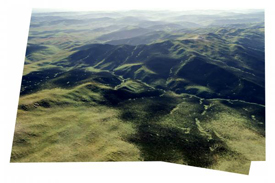 Mark Tribe, 4348–4352, from the Plein Air series, 2014, UV print on Dibond, 55 x 84 in. (artwork © Mark Tribe)
Mark Tribe. Corcoran Gallery of Art, Washington, DC, July 19–September 28, 2014. Mark Tribe: Plein Air. Digital photography.
South

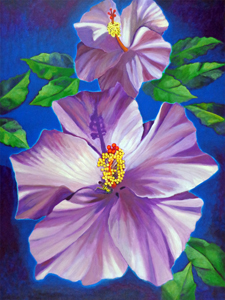 Kyra Belán, Isis and Nephthys, from the American Beuaty series (artwork © Kyra Belán)
Kyra Belán, Art Gallery, Broadway Palm Dinner Theatre, Fort Meyers, Florida, May 27–June 22, 2014. Acrylic and oil painting.
West

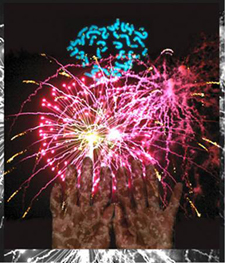 Deborah Cornell, Outbreak: Vector, 2013, archival digital print, 52 x 44 in. (artwork © Deborah Cornell)
Deborah Cornell. Los Angeles Center for Digital Art, Los Angeles, California, July 10–August 30, 2014. In the Space We Left Vacant. Digital prints and video.
People in the News
posted by CAA — August 17, 2014
People in the News lists new hires, positions, and promotions in three sections: Academe, Museums and Galleries, and Organizations and Publications.
The section is published every two months: in February, April, June, August, October, and December. To learn more about submitting a listing, please follow the instructions on the main Member News page.
August 2014
Academe
Wayne “Mick” Charney, associate professor of architecture at Kansas State University in Manhattan, has been designated the 2014–2015 Coffman Chair for University Distinguished Teaching Scholars.
R. Luke DuBois, assistant professor of integrated digital media for New York University’s Polytechnic School of Engineering and director of the Brooklyn Experimental Media Center, has earned tenure at his school.

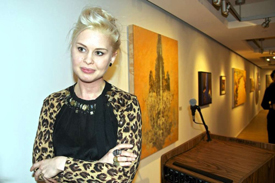 Allison Leigh
Allison Leigh has accepted a 2014–15 postdoctoral fellowship in art history in the Faculty of Humanities and Social Sciences at the Cooper Union for the Advancement of Science and Art in New York.
Michele Matteini, assistant professor of East Asian art, architecture, and visual culture, has been appointed to a joint appointment at New York University’s Institute of Fine Arts and Department of Art History.
Robert A. Maxwell, associate professor at the University of Pennsylvania in Philadelphia, has joined the faculty of the Institute of Fine Arts at New York University.
Lisa M. Strong, previously manager of curatorial affairs at the Corcoran Gallery of Art in Washington, DC, has been appointed director of the MA program in art and museum studies and associate professor of the practice at Georgetown University, also in Washington, DC.
Museums and Galleries

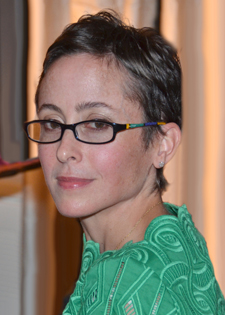 Jill Deupi
Jill Deupi, director and chief curator of University Museums at Fairfield University in Fairfield, Connecticut, has been appointed director of the Lowe Art Museum at the University of Miami in Florida.
Barbara Buhler Lynes, founding curator of the Georgia O’Keeffe Museum in Santa Fe, New Mexico, has become Sunny Kaufman Senior Curator for Nova Southeastern University’s Museum of Art in Fort Lauderdale, Florida.

 Vanja Malloy
Vanja Malloy, formerly Chester Dale Fellow in the Department of Modern and Contemporary Art at the Metropolitan Museum of Art in New York, has been named curator of American art at Amherst College’s Mead Art Museum in Amherst, Massachusetts.
Alia Nour, associate curator for the Dahesh Museum of Art in New York, has been promoted to full curator at her institution.
Mary Reid, director and curator of the School of Art Gallery at the University of Manitoba in Winnipeg, has accepted a position as director and curator of the Woodstock Art Gallery in Woodstock, Ontario.
Organizations and Publications
Laura Beach, formerly deputy editor of The Magazine Antiques, has rejoined Antiques and The Arts Weekly as managing editor.
Rachel Stephens, assistant professor of art in the Department of Art and Art History at the University of Alabama in Tuscaloosa, has been named editor of SECAC Review, a scholarly journal published by the Southeastern College Art Conference.
Institutional News
posted by CAA — August 17, 2014
Read about the latest news from institutional members.
Institutional News is published every two months: in February, April, June, August, October, and December. To learn more about submitting a listing, please follow the instructions on the main Member News page.
August 2014
The Baltimore Museum of Art in Maryland has received a $69,556 grant from the National Historical Publications and Records Commission to build on previous efforts to catalogue the museum’s archive—which includes correspondence with artists, exhibition research, photography, and audio recordings of lectures and events—and to create finding aids for it.

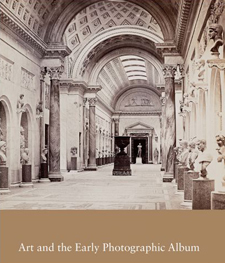
The Center for Advanced Study in the Visual Arts at the National Gallery of Art in Washington, DC, has announced that its publication series Studies in the History of Art is now accessible on JSTOR.
The Fitchburg Art Museum in Fitchburg, Massachusetts, has been awarded a $140,000 grant from the Massachusetts Cultural Facilities Fund, facilitated by the Massachusetts Cultural Council, to update and modernize parts of the museum.
The Frick Collection in New York has announced plans to enhance and renovate its museum and library, which includes the construction of a new addition and the renovation and expansion of existing interior spaces.
The Galleries at Moore College of Art and Design in Philadelphia, Pennsylvania, has received a $240,000 grant from the Pew Center for Arts and Heritage to support an exhibition called Strange Currencies.
The Hood Museum of Art at Dartmouth College in Hanover, New Hampshire, has received a $10 million gift to support the expansion of gallery and teaching spaces, as well as a new entrance.

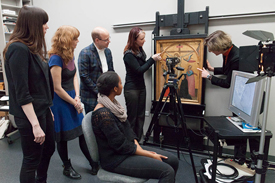 Gathered in the Art Institute of Chicago’s Conservation Examination Room, art-history graduate students Hannah Klemm from the University of Chicago, Ashley Dunn and Grace Deveney (seated) from Northwestern University, and Max Koss (University of Chicago), watch closely as the Art Institute’s assistant paintings conservator Kelly Keegan and Andrew W. Mellon Senior Conservation Scientist Francesca Casadio reveal fascinating learnings from Francescuccio Ghissi’s The Crucifixion (ca. 1370)
Northwestern University in Evanston, Illinois, has received a grant from the Andrew W. Mellon Foundation to enhance the study of art history through a focus on working with objects. The four-year effort, a collaboration among three Chicago-area institutions, is called the Andrew W. Mellon Foundation Chicago Objects Study Initiative.
The Philadelphia Museum of Art in Pennsylvania has received a $300,000 grant from the Pew Center for Arts and Heritage to support the reinstallation of its eight galleries of South Asian art, titled South Asian Art: Experimentation, Interpretation, and Evaluation.


The Smithsonian American Art Museum in Washington, DC, has accepted a $5.4 million gift from David M. Rubenstein for the renovation of its Renwick Gallery. The donation completes the private fundraising goal for the museum’s capital renovation project.
St. Johns University in Jamaica, New York, will soon launch a master of arts degree program in museum administration, housed in the College of Liberal Arts and Sciences, in fall 2014.
The Tyler School of Art at Temple University in Philadelphia, Pennsylvania, has received a $360,000 grant from the Pew Center for Arts and Heritage to support an installation called reFORM by the artist Pepón Osorio.

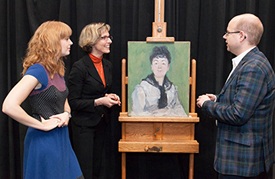 Ashley Dunn, Francesca Casadio, and Max Koss discuss Edouard Manet’s Portrait of a Woman with a Black Fichu (ca. 1878)
The University of Chicago in Illinois has received a grant from the Andrew W. Mellon Foundation to enhance the study of art history through a focus on working with objects. The four-year effort, a collaboration among three Chicago-area institutions, is called the Andrew W. Mellon Foundation Chicago Objects Study Initiative.

The University of South Carolina in Columbia has replaced the Department of Art with the School of Visual Art and Design. In addition, the school received a $32,790 grant from the Windgate Charitable Foundation to support ceramics and small metals.
The University of the Arts in Philadelphia, Pennsylvania, has accepted a $71,880 grant from the Pew Center for Arts and Heritage to help fund an exhibition called Invisible City: Philadelphia and the Vernacular Avant-Garde.
Grants, Awards, and Honors
posted by CAA — August 15, 2014
CAA recognizes its members for their professional achievements, be it a grant, fellowship, residency, book prize, honorary degree, or related award.
Grants, Awards, and Honors is published every two months: in February, April, June, August, October, and December. To learn more about submitting a listing, please follow the instructions on the main Member News page.
August 2014

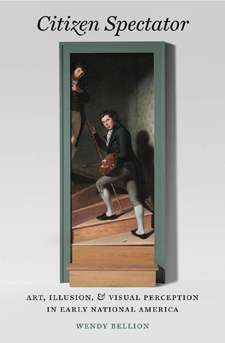
Wendy Bellion, associate professor of American art and material culture at the University of Delaware in Newark, has been awarded the Charles C. Eldredge Prize for Distinguished Scholarship in American Art from the Smithsonian American Art Museum for her book Citizen Spectator: Art, Illusion, and Visual Perception in Early National America (Chapel Hill: University of North Carolina Press; Williamsburg, VA: Omohundro Institute of Early American History and Culture, 2011).
Elizabeth Buhe, a doctoral student in art history at New York University’s Institute of Fine Arts, has received a Student Research Grant from the Mellon Research Initiative to participate in “From ‘Surface’ to ‘Substrate’: The Archaeology, Art History, and Science of Material Transfer,” a conference taking place November 7–8, 2014.
Jennifer Cohen, a PhD candidate in art history at the University of Chicago in Illinois, has earned a William H. Truettner Predoctoral Fellowship from the Smithsonian American Art Museum in Washington, DC. She will work on “Fantastic Boxes: Shop Windows and Surrealist Space in Wartime New York.”
Laura Dickey Corey, a PhD candidate in art history at New York University’s Institute of Fine Arts, has been awarded the Frick Center for the History of Collecting Junior Fellowship for summer/fall 2014.
John Fagg, a lecturer in the school of English, Drama, and American and Canadian Studies at the University of Birmingham in England, has won the 2014 Terra Foundation for American Art International Essay Prize for “Bedpans and Gibson Girls: Clutter and Matter in John Sloan’s Graphic Art,” which will appear in the journal American Art in 2015.
Annika Fine, a doctoral student in art history at New York University’s Institute of Fine Arts, has received a Student Research Grant from the Mellon Research Initiative to give a presentation during “From ‘Surface’ to ‘Substrate’: The Archaeology, Art History, and Science of Material Transfer,” a conference taking place November 7–8, 2014.
Kristen Gaylord, a doctoral student in art history at New York University’s Institute of Fine Arts, has been awarded the Joan R. Challinor Award for distinction in the area of women and Catholicism from the Arthur and Elizabeth Schlesinger Library on the History of Women in America at the Harvard University’s Radcliffe Institute for Advanced Study. Gaylord has also received the Patricia Dunn Lehrman Fellowship from NYU’s Graduate School of Arts and Sciences.
Orit Halpern, assistant professor in history at the New School of Social Research and Eugene Lang College and an affiliate in the graduate program in design studies at Parsons the New School for Design, all in New York, has won a 2014 research grant from the Graham Foundation. She will work on “Rational Utopias,” a project that explores the history and ethnography of “smart” territories and ubiquitous computing.
Nicholas Hartigan, a PhD student in art history at the University of Michigan in Ann Arbor, has been named a Committee on Institutional Cooperation-Smithsonian Predoctoral Fellow by the Smithsonian American Art Museum in Washington, DC. His research project is called “The Changing Function of Public Sculpture.”
Leslie Hewitt, an artist based in New York, has won a 2013 Biennial Award from the Louis Comfort Tiffany Foundation, which comes with a $20,000 grant.
Alicia Imperiale, assistant professor of architectural history, theory, and design at Temple University’s Tyler School of Art in Philadelphia, Pennsylvania, has won a 2014 research grant from the Graham Foundation. Her project is called “An Alternate Organicism in the Journal Zodiac, 1965–1974.”
Katherine Jentleson, a doctoral student in art history at Duke University in Durham, North Carolina, has become a Douglass Foundation Predoctoral Fellow in American Art at the Smithsonian American Art Museum in Washington, DC, for her project, “Gatecrashers: The First Generation of Outsider Artists in America.”
Steve Locke, an artist based in Boston, Massachusetts, has accepted a 2013 Biennial Award from the Louis Comfort Tiffany Foundation. He will receive a $20,000 gift.
Katherine Markoski, an independent scholar based in Alexandria, Virginia, has received a postdoctoral fellowship at the Smithsonian American Art Museum in Washington, DC. Her research examines “The Imagination of Community: Artistic Practice at Black Mountain College”
Rachel Middleman, assistant professor of art history at Utah State University in Logan, has won a postdoctoral fellowship at the Smithsonian American Art Museum in Washington, DC, to research “Radical Eroticism: Women, Art, and the Transformation of Sexual Aesthetics in the 1960s.”
Jennifer Stettler Parsons, a graduate student in art history at the University of Virginia in Charlottesville, has received a Sara Roby Predoctoral Fellowship in 20th-Century American Realism from the Smithsonian American Art Museum in Washington, DC. Her project is titled “John Sloan: Between Philadelphia and New York, 1892–1907.”

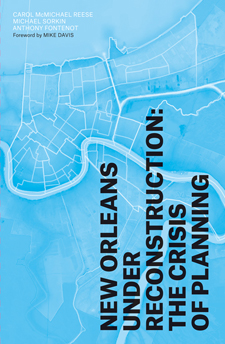
Carol McMichael Reese, Mary Louise Christovich Associate Professor in the School of Architecture at Tulane University in New Orleans, Louisiana, has been awarded a 2014 publication grant (with her two coeditors) from the Graham Foundation for New Orleans under Reconstruction: The Crisis of Planning, the first book to illustrate and analyze architectural, landscape, and planning responses for post-Katrina New Orleans.

 Margaret Samu
Margaret Samu, from the Art History Department at Yeshiva University’s Stern College for Women in New York, has been awarded a Summer Fellowship in Garden and Landscape Studies at Dumbarton Oaks Research Library and Collection in Washington, DC. She will use the fellowship to work on her project “Baroque Sculpture Display in Peter the Great’s Summer Garden.”
Nina Schleif from the Bavarian State Art Museums has become a Terra Foundation Senior Fellow in American Art at the Smithsonian American Art Museum in Washington, DC. She is investigating “Warhol’s Drawings of the Fifties: Sources, Techniques, Meanings.”
Michelle Smiley, an MA student in history of art at Bryn Mawr College in Bryn Mawr, Pennsylvania, has been accepted into the 2014 summer internship program at the National Gallery of Art in Washington, DC.
Juliet Sperling, a graduate student in art history at the University of Pennsylvania in Philadelphia, has accepted a Wyeth Foundation Predoctoral Fellowship from the Smithsonian American Art Museum in Washington, DC. She will research “Animating Flatness: Seeing Moving Images in American Painting and Mass Visual Culture, 1820–95.”
Edit Tóth, who teaches at Juniata College in Huntingdon, Pennsylvania, and Pennsylvania State University in Altoona, has earned a 2014 research grant from the Graham Foundation for her book, Bauhaus Photography and Design: Moholy-Nagy, Breuer, Henri, Yamawaki, and Kepes.
Jesús Vassallo, assistant professor in the School of Architecture at Rice University in Houston, Texas, has accepted a 2014 research grant from the Graham Foundation for his project, “Building with Images.”
Jillian Vaum, a graduate student pursuing a master’s degree in art history at the University of Pennsylvania in Philadelphia, has participated in the 2014 summer internship program at the National Gallery of Art in Washington, DC.
Megan Whitney, an MA student in art history at the University of Tucson in Arizona, has been accepted into the 2014 summer internship program at the National Gallery of Art in Washington, DC.

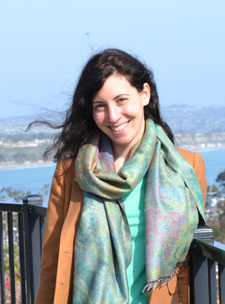 Lara Yeager-Crasselt
Lara Yeager-Crasselt, a lecturer in the Department of Art at the Catholic University of America in Washington, DC, has been awarded a Belgian American Educational Foundation Fellowship for academic year 2014–15. She will carry out postdoctoral work as a research fellow in the Department of Art History at KU Leuven in Belgium.
Molly Zuckerman-Hartung, an artist based in Chicago, Illinois, has received a 2013 Biennial Award from the Louis Comfort Tiffany Foundation. She will receive a $20,000 gift from the foundation.
Exhibitions Curated by CAA Members
posted by CAA — August 15, 2014
Check out details on recent shows organized by CAA members who are also curators.
Exhibitions Curated by CAA Members is published every two months: in February, April, June, August, October, and December. To learn more about submitting a listing, please follow the instructions on the main Member News page.
August 2014
Kelly Baum. Lee Bontecou: Drawn Worlds. Princeton University Art Museum, Princeton University, Princeton, New Jersey, June 28–September 21, 2014.
Kelly Baum. Rothko to Richter: Mark-Making in Abstract Painting from the Collection of Preston H. Haskell. Princeton University Art Museum, Princeton University, Princeton, New Jersey, May 24–October 5, 2014.

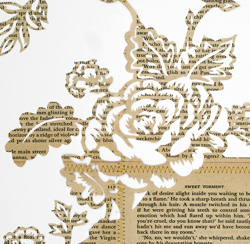 Lauren Scanlon, detail of Sweet Torment (Sorrel II), 2010, hand-cut romance-novel book pages and gold thread on paper, 17½ x 15¼ in. (artwork © Lauren Scanlon)
Reni Gower. Papercuts. Robert L. Ringel Gallery, Patti and Rusty Rueff Galleries, and Fountain Gallery, Purdue University Galleries, Purdue University, Lafayette, Indiana, July 2–August 9, 2014.

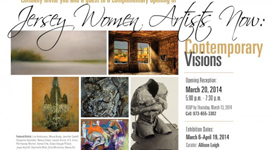
Allison Leigh. Jersey Women Artists Now: Contemporary Visions. George Segal Gallery, Montclair State University, Montclair, New Jersey, March 6–April 19, 2014.

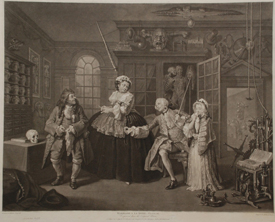 William Hogarth, Viscount with His Paramour Consulting an Empiric (from Marriage à la Mode), ca. 1743–45, engraving on paper, 18½ x 24 in. (artwork in the public domain)
Sarah Lippert. Fantasy, Fiction, and Fact in Popular Illustration: 1750–1900. Flint Institute of Arts. Flint, Michigan, May 3–August 3, 2014.
Cary Liu. Chigusa and the Art of Tea in Japan. Princeton University Art Museum, Princeton University, Princeton, New Jersey, October 11, 2014–February 1, 2015.

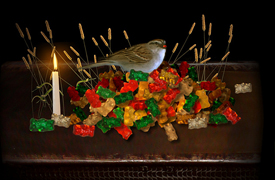 Lisa Crafts, Still Life with Gummi Bears (artwork © Lisa Crafts)
Patricia Miranda. STEAM: Art, Science and Technology. ArtsWestchester, White Plains, New York, May 20–August 15, 2014.

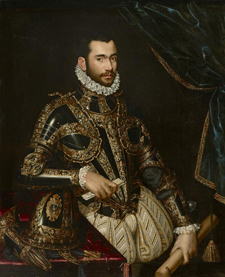 Scipione Pulzone, Jacopo Boncompagni, 1574, oil on canvas, 48 x 39 in. (artwork in the public domain; photograph by Michael Bodycomb)
Jeongho Park. Men in Armor: El Greco and Pulzone Face to Face. Frick Collection, New York, August 5–October 26, 2014.

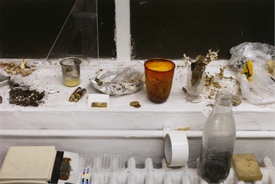 Wolfgang Tillmans, Nachtstilleben (Night Still Life), 2011 (negative)/2013 (print), chromogenic print, image and sheet: 53⅛ × 79¾ in. Philadelphia Museum of Art (artwork © Wolfgang Tillmans)
Nathaniel M. Stein. In Dialogue: Wolfgang Tillmans. Philadelphia Museum of Art, Philadelphia, Pennsylvania, July 1–October 26, 2014.
James Steward. Alexander Calder 1967. Princeton University Art Museum, Princeton University, Princeton, New Jersey, January 15–October 28, 2014.
Books Published by CAA Members
posted by CAA — August 15, 2014
Publishing a book is a major milestone for artists and scholars—browse a list of recent titles below.
Books Published by CAA Members appears every two months: in February, April, June, August, October, and December. To learn more about submitting a listing, please follow the instructions on the main Member News page.
August 2014


Ronald R. Bernier. The Unspeakable Art of Bill Viola: A Visual Theology (Eugene, OR: Wipf and Stock Publishers, 2014).

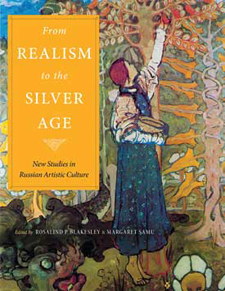
Rosalind P. Blakesley and Margaret Samu, eds. From Realism to the Silver Age: New Studies in Russian Artistic Culture (DeKalb: Northern Illinois University Press, 2014).

Norma Broude and Mary D. Garrard. Introducing Feminist Art History (Amazon ebook, 2014).

Jason Fulford and Gregory Halpern, eds. The Photographer’s Playbook: 307 Assignments and Ideas (New York: Aperture, 2014).

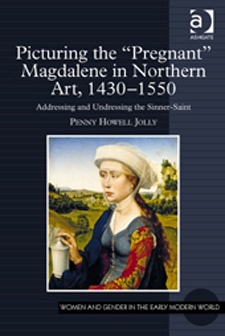
Penny Howell Jolly. Picturing the “Pregnant” Magdalene in Northern Art, 1430–1550: Addressing and Undressing the Sinner-Saint (Burlington, VT: Ashgate, 2014).

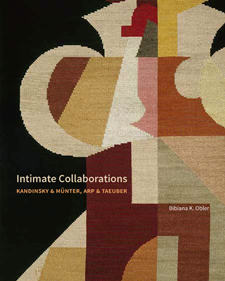
Bibiana K. Obler. Intimate Collaborations: Kandinsky and Münter, Arp and Taeuber (New Haven: Yale University Press, 2014).

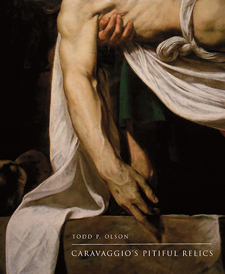
Todd P. Olson. Caravaggio’s Pitiful Relics (New Haven: Yale University Press, 2014).

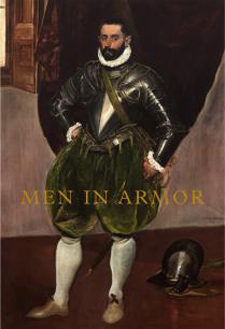
Jeongho Park. Men in Armor: El Greco and Pulzone Face to Face (New York: Frick Collection, 2014).

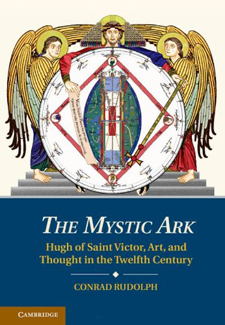
Conrad Rudolph. The Mystic Ark: Hugh of Saint Victor, Art, and Thought in the Twelfth Century (New York: Cambridge University Press, 2014).

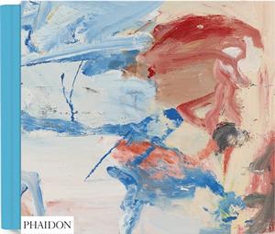
Judith Zilczer. A Way of Living: The Art of Willem de Kooning (New York: Phaidon, 2014).