CAA News Today
News from the Art and Academic Worlds
posted Mar 22, 2017
Each week CAA News summarizes eight articles, published around the web, that CAA members may find interesting and useful in their professional and creative lives.
Could Blockchain Put Money Back in Artists’ Hands?
By registering artworks with blockchain to establish authenticity and create property rights which can then be split off and traded, argues Amy Whitaker, artists can retain an “equity share” in their works, much like the founder of a startup retains an ownership stake that grows in value as the company expands. (Read more from Artsy.)
Report from the 2016 Craft Think Tank
Last June the Center for Craft, Creativity, and Design convened a two-day, special-topic Craft Think Tank, bringing together experts across disciplines to assess the state of craft in academia. The group discussed and made recommendations concerning the content, format, approach, audience, and resources needed to create a relevant and successful program. (Read more from the Center for Craft, Creativity, and Design.)
Detroit Exits Bankruptcy, Thanks to Its Art Museum
A federal judge approved Detroit’s bankruptcy plan, allowing the city government to hit the reset button after years of financial mismanagement. The bankruptcy could have been far lengthier, and even more painful for retirees, had it not been for an unusual deal designed to save the Detroit Institute of Arts while minimizing cuts to pensions. (Read more from Slate.)
The Skillful Curator: A Case Study in Curatorial Pedagogy and Collective Exhibition-Making
For a recent CAA panel on pedagogy, feminism, and activism, I presented a graduate curatorial practice course I developed at the School of the Art Institute of Chicago, for which I organized an exhibition alongside sixteen students, as a case study. While the curatorial field is considered hospitable to women, the curator’s role often operates within structures that reinforce patriarchy and inequality. How? (Read more from Art History Teaching Resources.)
Midcareer Faculty: Five Great Things about Those Long Years in the Middle
In a recent post on tired teaching I identified the major challenge of the midcareer stretch—keeping your teaching fresh and keeping yourself engaged, enthusiastic, and instructionally moving forward. On the other hand, special opportunities are afforded by that long stretch in the middle. The question is whether we’re taking full advantage of them. (Read more from Faculty Focus.)
The Sculpture of a Fearless Girl on Wall Street Is Fake Corporate Feminism
Fearless Girl features a branded plaque at its base. The companies that installed it had a permit. They are the advertising firm McCann New York—whose leadership team has only three women among eleven people, or 27 percent women—and the asset manager SSGA—whose leadership team has five women among twenty-eight people, or 18 percent women. SSGA is a division of State Street, which has a board of directors that includes only 27 percent women. (Read more from Hyperallergic.)
Dispute on Cultural Appropriation Leads to Assault Charges
Last week a Hampshire College student was in a Massachusetts court to face charges that she assaulted a member of the women’s basketball team of Central Maine Community College when, at a January game, the woman refused to take out braids that she had in her hair—braids that Carmen Figueroa, the student facing charges, demanded be removed because they are an example of cultural appropriation. (Read more from Inside Higher Ed.)
Did ISIS Inadvertently Uncover the Secret to the “Lost” Hanging Gardens of Babylon?
To the surprise of the archaeologists, upon examining the reconquered Iraqi city of Mosul, they found evidence that when ISIS blew up parts of the Nebi Yunus shrine, the militants unveiled a major discovery: a palace that predated the tomb of the Prophet Jonah and had been buried beneath it—unseen for thousands of years. (Read more from Salon.)
Exclusive Promotional Offer from Frieze
posted Mar 20, 2017
 CAA is pleased to extend an exclusive promotional offer from frieze, one of our partner organizations.
As a special offer to institutional members of the College Art Association, frieze is offering a free trial issue of the magazine for your institution or library!
Founded in 1991, frieze is the leading international magazine on contemporary art and culture. Including essays, reviews and columns by today’s most forward-thinking writers, artists and curators, including amongst others, Michael Bracewell, Brian Dillon, Olivia Laing, Lynne Tillman, Jan Verwoert and Maria Warner.
Recently redesigned for 2017, frieze has a new look, comprising of a new suite of typefaces, additional room for images and more commissioned photography. This visual rethink reflects frieze’s ongoing commitment to both providing fresh perspectives on more established artists and highlighting new trends.
Published 8 times a year and with offices in London, New York and Berlin. frieze is essential reading for anyone interested in visual arts and culture.
We are offering our upcoming April issue as a free trial to institutional members of CAA. This issue focuses on whether art can be used as an effective form of protest and includes a roundtable on the theme of protest including contribution from, amongst others, Tania Bruguera, Okwui Enwezor and Slavs and Tatars.
There are a limited number of free copies on a first-come-first served basis. To register to receive your free issue, please click here.
- Orders are limited to one copy per institution
- The offer is for libraries/institutions only
- The free trial copy applies to the April issue only
- Orders must be placed by 1 April
- Subscription offer is for new subscribers only
New in caa.reviews
posted Mar 17, 2017
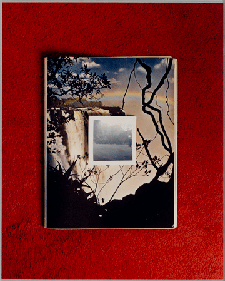 Vanessa Rocco visits Photo-Poetics: An Anthology at the Solomon R. Guggenheim Museum. The “exhibition of ten contemporary photographers” is grounded in the “passionate advocacy of investing time in looking closely at photographs.” As a whole, the works on display were “striking,” though “some individuals and groups were more compelling than others.” Read the full review at caa.reviews.
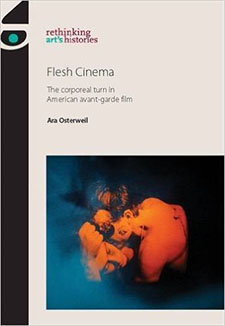 Nicholas C. Morgan reviews the book Flesh Cinema: The Corporeal Turn in American Avant-Garde Film by Ara Osterweil. In “one of the most compelling studies of the body’s relation to avant-garde art and film,” the author “articulate[s] ‘flesh cinema’ as a coherent, if shifting, category of postwar film” and insists “on the impossibility of divorcing ‘flesh cinema’ from the flesh of the world.” Read the full review at caa.reviews.
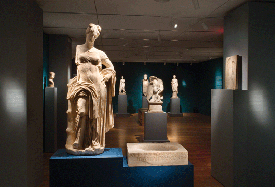 Anne Hrychuck Kontokosta discusses Gods and Mortals at Olympus: Ancient Dion, City of Zeus at the Onassis Cultural Center. The exhibition “delighted viewers with a carefully curated collection” of objects” and “focused on archeological research,” facilitating “a comprehensive and contextualized understanding of the ancient city of Dion.” Read the full review at caa.reviews.
 Gülru Çakmak reads Gustave Moreau: History Painting, Spirituality, and Symbolism by Peter Cooke. The author traces the artist’s “lifelong endeavor to revitalize le grand art in France … and to combat the endemic materialism of the age,” showing how “the antinaturalist and antidemocratic aesthetic” of Moreau’s work “countered the dominant naturalist paradigm in French art.” Read the full review at caa.reviews.
Serve on a CAA Award Jury
posted Mar 16, 2017
CAA invites nominations and self-nominations for individuals to serve on seven of the twelve juries for the annual Awards for Distinction for three years (2017–20). Terms begin in May 2017; award years are 2018–20. CAA’s twelve awards honor artists, art historians, authors, curators, critics, and teachers whose accomplishments transcend their individual disciplines and contribute to the profession as a whole and to the world at large.
Candidates must possess expertise appropriate to the jury’s work and be current CAA members. They should not hold a position on a CAA committee or editorial board beyond May 31, 2017. CAA’s president and vice president for committees appoint jury members for service.
Jury vacancies for spring 2017:
- Alfred H. Barr Jr. Award: two members
- Artist Award for a Distinguished Body of Work: two members
- CAA/AIC Award for Distinction in Scholarship and Conservation: one member
- Distinguished Feminist Award: two members
- Distinguished Lifetime Achievement Award for Writing on Art: one member
- Distinguished Teaching of Art History Award: one member
- Frank Jewett Mather Award: two members
Nominations and self-nominations should include a brief statement (no more than 150 words) outlining the individual’s qualifications and experience and a CV (an abbreviated CV no more than two pages, may be submitted). Please send all materials by email to Katie Apsey, CAA manager of programs; submissions must be sent as Microsoft Word or Adobe PDF attachments. For questions about jury service and responsibilities, contact Tiffany Dugan, CAA director of programs.
Deadline Extended: May 31, 2017.
Statement on the US President’s FY2018 Budget Proposal
posted Mar 16, 2017
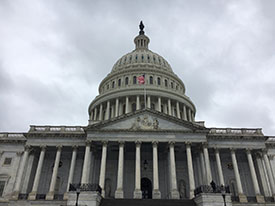 Today the US President released his proposal for 2018 federal budget – it envisions transferring additional billions of dollars to the Department of Defense, Veterans Affairs, and Homeland Security from many important domestic programs such as the Environmental Protection Agency, education, and legal services. As expected, the budget also calls for the complete elimination of the Corporation for Public Broadcasting, National Endowment for the Arts, National Endowment for the Humanities, and 16 other federal agencies. CAA was one of the first national organizations to speak against these cuts.
Read the statement against these cuts that CAA released on January 23, 2017.
As educators, art historians, artists, curators, museum directors, designers, scholars, and other members of the visual arts community we must act to defend the role of arts and humanities in our society. The budget process is long and ultimately controlled by the US House and Senate. Earlier this week, CAA traveled to Washington for Humanities Advocacy Day to meet with many congressional offices to discuss the importance of continued NEA and NEH funding. We will return again next week to do the same for Arts Advocacy Day.
In addition, CAA assembled an Arts and Humanities Advocacy Toolkit with information on how to contact your representatives in Congress to voice your support for the NEA and NEH and the many quality programs they fund. Call their offices. Email them. Attend Town Halls. You can learn how these agencies support activities in your area here: funded by the NEA and funded by the NEH. Be sure to let your representatives know of the impact of the arts and humanities in your districts. Spread the word to your colleagues and friends.
Despite the White House’s opposition to continued funding for the NEA and NEH, there is sufficient reason to believe that many members of the US House and Senate will support a budget that includes continued funding for these agencies. I ask our members to join in the effort to make sure all members of Congress knows the importance of the work done by these agencies.
Hunter O’Hanian
Executive Director
Chief Executive Officer
News from the Art and Academic Worlds
posted Mar 15, 2017
Each week CAA News summarizes eight articles, published around the web, that CAA members may find interesting and useful in their professional and creative lives.
Can .art Domain Give the Art Business an Online Boost?
London’s Institute of Contemporary Art adopted the new .art suffix last week, a sign that the art and culture business may be coming to terms with its future in the digital realm. The ICA ditched its fusty ica.org.uk domain for the streamlined and descriptive ica.art, and the move may soon be followed at other prestigious art institutions around the world. (Read more from the Guardian.)
BHQFU on How to Run a Free Art School with the “Worst” Business Model
If there’s one thing that sets US education apart from education in other nations, it’s student debt. For art students with vague graduate degrees that don’t offer much job security, the cost of tuition has left many of them worse off after graduating than they were before becoming a student. What can be done? (Read more from Artspace Magazine.)
What Happens to Whitney Biennial Curators after the Show’s Over?
Inclusion in the Whitney Biennial—the influential and sometimes controversial snapshot of contemporary American art that takes place every two years—has launched or resuscitated many an artist’s career. But those tapped to do the selecting have experienced their own professional transformation, as this year’s organizers Christopher Y. Lew and Mia Locks may well discover. (Read more from Artsy Editorial.)
Trigger Warning: Academic Standards Apply
“I don’t like this whole idea of academic standards. Ever since I was in grade school, they’ve made me feel pressured and stressed out. I think academic standards are bullying. Whenever I deal with them, they bring back all these old bad memories. It’s like PTSD or something.” So declared a student from one of my courses at California State University, Fresno. (Read more from Inside Higher Ed.)
New Travel Ban Still Sows Chaos and Confusion
A long-anticipated executive order restricting travelers from a half-dozen predominantly Muslim countries is likely to bring little certainty to American college campuses. The new order imposes a ninety-day ban on issuance of new visas, including student visas, to citizens of Iran, Libya, Somalia, Sudan, Syria, and Yemen. (Read more from the Chronicle of Higher Education.)
Museums Chart a Response to Political Upheaval
As President-elect Donald J. Trump’s Inauguration Day approached, hundreds of artists, critics, and others asked American museums, galleries, and other institutions to close their doors in protest. They wanted museums to show that they are “places where resistant forms of thinking, seeing, feeling, and acting can be produced,” the organizers wrote in a petition for a J20 Art Strike. (Read more from the New York Times.)
When the Private Sector Funds the Arts
I recently wrote a piece defending the NEA, a grant-making organization that is somehow such a drag on the economy that it is now on the chopping block for the federal 2017 budget. This move makes perfect sense for Donald Trump the businessman, according to GOP enablers, because if the arts and so-called free expression are so worthy, the private sector will step in and fund them. (Read more from the Millions.)
US Embassy Art Scheme Should Survive Trump
The Trump administration is considering cutting federal funding for the arts, among other spending programs, to reduce domestic spending. However, one US cultural initiative appears to be secure—the State Department’s Art in Embassies program, which places works by US artists in embassies and ambassadorial homes around the world. (Read more from the Art Newspaper.)
Thanks to 2017 Career Services Mentors and Workshop Leaders
posted Mar 14, 2017
CAA extends a warm thank-you to all of the artists, scholars, curators, critics, educators, and other visual-arts professionals who served as Career Services mentors during the 2017 Annual Conference. Your knowledge and expertise helped to enrich the Artists’ Portfolio Review, Career Development Mentoring, and Mock Interviews. We also appreciate the efforts of the members who created and led Professional Development Workshops and Brown Bag Sessions based on members’ needs.
Artist’s Portfolio Review
Susan Canning, Sculpture; Jill Conner, Artists Studios; Carrie Ida Edinger, Independent Artist; Nancy Hart, Artist/263 Gallery; Richard Heipp, University of Florida; David Howarth, Zayed University; Paul Hunter, Artist/Painter; Jason Lahr, University of Notre Dame; Suzanne Lemakis, Citibank, retired; Sharon Lippman, Art Without Walls; Craig Lloyd, Mount St. Joseph University; Yelena McLane, Florida State University; Dinah Ryan, Principia College; Paul Bernard Ryan, Mary Baldwin University, Emeritus; and Greg Shelnutt, Clemson University.
Career Development Mentoring
Susan Altman, Middlesex County College; Michael Aurbach, Vanderbilt University, Emeritus; Roann Barris, Radford University; Colin Blakely, University of Arizona; Leda Cempellin, South Dakota State University; Crista Cloutier, The Working Artist; Rebecca J. DeRoo, Rochester Institute of Technology; James Farmer, Virginia Commonwealth University; Reni Gower, Virginia Commonwealth University; Antoniette (Toni) Guglielmo, Getty Leadership Institute; Dennis Ichiyama, Purdue University; Zach Kaiser, Michigan State University; Ann B. Kim, University East; Carol Herselle Krinsky, New York University; Emmanuel Lemakis, CAA, retired; Jeffery Cote de Luna, Dominican University; Heather McPherson, University of Alabama, Birmingham; Liliana Milkova, Oberlin College; Mark O’Grady, Pratt Institute; Doralynn Pines, CAA; Thomas Post, Ferris State University; Heather Snyder Quinn, DePaul University; Jack Risley, University of Texas at Austin; Andrew Svedlow, University of Northern Colorado; Joe A. Thomas, Kennesaw State University; Ann Tsubota, Raritan Valley Community College; and Barbara Yontz, St. Thomas Aquinas College.
Mock Interview Sessions
Megan Koza Mitchell (Student and Emerging Professionals Committee Chair), Prospect New Orleans; Amanda Wainwright (Student and Emerging Professionals Committee), University of South Carolina; Tamryn Mcdermott, Temple University; Annie Storr, Brandeis University; Lauren Puzier, Sotheby’s; Abbey Hepner, University of Colorado; Rachel Kreiter, Spelman College; Nathan Manuel (Student and Emerging Professionals Committee); Lauren O’Neal, Lamont Gallery, Phillips Exeter Academy; DeWitt Godfrey, Colgate University; Dennis Ichiyama, Purdue University; Rachel Stephens, University of Alabama; Matt King, VCU School of the Arts; Carol Garmon, University of Mary, Washington; Craig Lloyd, Mount St. Joseph University; Maile S. Hutterer, University of Oregon; Mark O’Grady, Pratt Institute; Thomas Post, Kendall College of Art and Design; Greg Shelnutt, Clemson University; Maria Ann Conelli, Brooklyn College, City University of New York; Rebekah Beaulieu, Bowdoin College Museum of Art ; David LaPalombara, Ohio University; Arthur Blake Pierce, Valdosta State University; Michael Lobel, Hunter College; Susan Altman, Middlesex County College; David Howarth, Zayed University; and Colin Blakely, University of Arizona.
Brown Bag Lunches and Sessions
Megan Koza Mitchell (Student and Emerging Professionals Committee Chair), Prospect New Orleans; Amanda Wainwright (Student and Emerging Professionals Committee), University of South Carolina; Tamryn Mcdermott, Temple University; Annie Storr, Brandeis University; Lauren Puzier, Sotheby’s; Abbey Hepner, University of Colorado; Rachel Kreiter, Spelman College; Nathan Manuel, SEPC; Andrea Kirsch, Rutgers University; and Mattie M. Schloetzer, National Gallery of Art.
Professional Development Workshops
Maria Michails, Rensselaer Polytechnic Institute; Susana Sevilla Aho, Modern Language Association; Susan Altman, Middlesex County College; Michael Aurbach, Vanderbilt University, Emeritus; Emily Pugh, Getty Research Institute; Elizabeth Buhe, Institute of Fine Arts, New York University; Petra ten–Doesschate Chu, Seton Hall University; Kate Kramer, University of Pennsylvania; Shannon Connelly, Lebanese American University; Craig Dietrich, The Claremont Colleges; Jon Ippolito, University of Maine; John Bell, Dartmouth College; Molly Fox, Indiana University; Rebekah Beaulieu, Bowdoin College Museum of Art; Deborah Lutz, Pamela Lawton, Annie Leist, and Emilie Gossiaux, all from the Metropolitan Museum of Art; Alexa Sand, Utah State University; Sara Orel, Truman State University; Jenn Karson, University of Vermont FabLab; Martha Schwendener, New York Times/New York University; Jack Henrie Fisher, University of Illinois, Chicago; and Alan Smart, University of Illinois, Chicago.
Learning from Experience: Fair Use in Practice
posted Mar 14, 2017
We are eager to learn how individual CAA members are relying on fair use. Please take the following survey to let us know if, how, and to what extent you rely on fair use! Link here.
At last month’s Annual Conference, CAA’s Committee on Intellectual Property (CIP) organized “Learning from Experience: Fair Use in Practice,” a panel addressing fair use and how reliance on this aspect of copyright law has increased since CAA published its Code of Best Practices in Fair Use for the Visual Arts two years ago. The CIP session featured leading visual arts professionals in four areas: the academic art library, publishing, art-making, and artist-endowed foundations, each of whom described the importance of fair use in her work. The session, which was attended by more than ninety conference-goers, was led by CIP’s new chair, Anne Collins Goodyear, co-director of the Bowdoin College Museum of Art, and CAA president emerita, during whose tenure CAA undertook its fair use project, which culminated in the publication of the Code.
The panel opened with a brief overview of CAA’s fair use initiative by Goodyear, and then offered compelling examples of the Code’s application. Carole Ann Fabian, the Director of the Avery Architectural and Fine Arts Library at Columbia University reported that Columbia advances the principal of open access policy where possible, and that Avery librarians draw upon three fair use codes when advising library users about quoting from or reproducing copyrighted materials: that developed by the Association of Research Libraries (2012), CAA’s Code of Best Practices (2015), and the Association of Art Museum Directors (AAMD) Guidelines (2016). The shared norms of the CAA and AAMD codes, both of which champion a liberal assertion of fair use, provide particularly helpful guidance on fair use applications related to copyrighted images. Avery is often the first point of contact for students and faculty who have questions about these issues, and as a collecting organization, is also a provider of primary content (and their digital surrogates) to scholars worldwide. Fabian noted that the work librarians perform educating users about copyrights and the doctrine of fair use is ongoing with each year’s influx of new students and faculty. Having a concise resource like CAA’s Code, makes it infinitely easier to introduce library users to this essential feature of American copyright law.
Victoria Hindley, Associate Acquisitions Editor, MIT Press, reported that discussions about fair use at last year’s CAA Annual Conference motivated her to work with her colleagues at MIT Press to pursue a fair use initiative of their own. With support from Executive Editor Roger Conover, Press Director Amy Brand, legal counsel, and others, Hindley helped to define a progressive position in support of responsible fair use. “One of our primary goals,” she said, “was to figure out how to reduce the burden of clearing permissions placed on the author.” The resulting proposal, which is undergoing final Institute approval, is a robust document that most notably, as she explained: “would no longer require authors to indemnify the press when they have made a reasonable good faith determination of fair use.” MIT Press has developed proposed new contract language in support of this position; and, to further empower authors, the Press has crafted permissions guidelines that take advantage of the CAA Code and also refer authors to it. “The CAA Code of Best Practices has proven to be an invaluable guide for us as we’ve held these discussions and made decisions about our own guidelines,” noted Hindley. The new policy pending adoption at MIT Press would provide protections similar to those that CAA grants contributors to its publications.
The third speaker was the distinguished artist Martha Rosler, who received a Lifetime Achievement Award during the conference from the Women’s Caucus for Art. Rosler has for decades incorporated into her work images circulating in what she has called the public sphere of mass media, including newspapers, magazines, and television, without stopping to consider copyright. While showing examples of her work, Rosler described the importance of processes like hers, which, she said, for many artists “constitute an essential form of critique.” Although Rosler’s practice predates the publication of CAA’s Code of Best Practices, she acknowledged that the Code serves to clarify the principles on which such a practice is based. She also noted that the Code has the potential to offer support and encouragement to other artists who might otherwise shy away from the legitimate use of copyrighted material in their work, for fear of adverse consequences. She also observed, with regret, that many artists, particularly those working in video, have deliberately abandoned or failed to undertake projects involving appropriation precisely because the legal departments of broadcast entities bar the airing of such works, out of fear of reprisal for purported infringements.
Francine Snyder, Director of Archives and Scholarship at the Robert Rauschenberg Foundation, was the fourth speaker in the CIP session. She talked about the positive effect on the Foundation of a proactive fair use policy in the year since it was introduced. The main goal of the policy has been to foster scholarship about Rauschenberg, disseminate knowledge, and enhance educational initiatives. In this regard, Snyder reported, the policy has proven a great success, generating more scholarship and innovative projects. Among the outcomes to which she referred is an online gallery for children that includes images of Rauschenberg’s work. Snyder indicated that one of the most important values of the Foundation’s public turn to fair use has been to reduce anxiety on the part of those who want to reproduce the artist’s work for creative and scholarly purposes. Snyder mentioned that the fair use policy does not apply to commercial uses, for which the Foundation relies on licensing through VAGA. By way of conclusion, she explained that the Foundation is committed to an open dialogue as interpretations of fair use continue to evolve, as seen in the multiple applications of CAA’s Code of Best Practices.
Following the formal presentations, Jeffrey P. Cunard, CAA’s counsel, and Co-Chair of its Fair Use Task Force, moderated a discussion with the speakers and audience. Cunard noted the importance of the Rauschenberg Foundation’s turn to the doctrine of Fair Use in making work by Rauschenberg available for scholarly and creative purposes, and the relationship between fair use and an open approach to licensing images. He also clarified, in conversation with Rosler, that copyright holders had not objected to her pioneering work, which may not have been surprising, given the transformative nature of her use of appropriated material.
The talks by each of the speakers on this panel, along with the great interest expressed by the audience, point to increased awareness of the application of fair use since CAA published the Code of Best Practices two years ago. While detailing the many ways in which fair use is benefitting scholarship and creative practice, the session also makes clear the need for ongoing education about the Code, and the importance of publicizing and encouraging its use. We invite further examples of fair use in action, and any suggestions for the continued dissemination of the Code and the guidance it provides.
Meiss Call for Jurors 2017
posted Mar 13, 2017
CAA seeks nominations and self-nominations for one individual to serve on the Millard Meiss Publication Fund Jury for a four-year term, July 1, 2017–June 30, 2021. Candidates must be actively publishing scholars with demonstrated seniority and achievement; institutional affiliation is not required.
The Meiss jury awards subsidies to support the publication of book-length scholarly manuscripts in the history of art and related subjects. Members review manuscripts and grant applications twice a year and meet in New York in the spring and fall to select the awardees. CAA reimburses jury members for travel and lodging expenses in accordance with its travel policy. Members volunteer their services to CAA without compensation.
Candidates must be CAA members and should not currently serve on another CAA editorial board or committee. Jury members may not themselves apply for a grant in this program during their term of service. Nominators should ascertain their nominee’s willingness to serve before submitting a name; self-nominations are also welcome. Please send a letter describing your interest in and qualifications for appointment, a CV, and contact information to: Millard Meiss Publication Fund Jury, College Art Association, 50 Broadway, 21st Floor, New York, NY 10004; or send all materials as email attachments to Deidre Thompson, CAA publications assistant, dthompson@collgeart.org. Deadline: April 21, 2016.
Affiliated Society News for March 2017
posted Mar 10, 2017
Association of Academic Museums and Galleries (AAMG)
Registration and program information for the 2017 AAMG Annual Conference in Eugene, OR is now available. Please click here to access the schedule of presentations, workshops, receptions, and much more.
Online registration, as well as hotel and travel information, is also now online. Please note: AAMG institutional and individual members will need to login with their username and password to be eligible for the $250 early bird rate. The special member rate is available through April 15. If you have difficulty with logging in to your account, click here to reset your password or contact membership@aamg-us.org.
We hope to see you in Eugene this summer for what will be our biggest and best AAMG Annual Conference to date!
Association of Historians of American Art (AHAA)
The Association of Historians of American Art (AHAA) was happy to see many members at CAA for its Annual Meeting and its sponsored session, “The Gustatory Turn in American Art.” February 2017 also marked a changing of the guard of sorts, as we welcome several new board members to our ranks. We wish to express our gratitude to outgoing Board members Anna Marley (Chair Emerita), Monica Jovanovich-Kelley (Treasurer), Jillian Russo (Secretary), Melissa Renn (Membership Coordinator), and Annelise Madsen (Web Coordinator). We are grateful for their years of service to the organization!
We welcome the following incoming board members: Miguel de Baca (Co-Chair), Diana Seave Greenwald (Treasurer), Naomi Slipp (Secretary), Jonathan Walz (Membership Coordinator), and Jeff Richmond-Moll and Andrea Truitt (Web Co-Coordinators). Additionally, the Executive Editors of our online journal Panorama will be joining the board, and so we are pleased to work even more closely with Betsy Boone, Sarah Burns, and Jennifer Jane Marshall.
AHAA is also delighted to announce the venue for our October 2018 Symposium: Minneapolis, Minnesota! We look forward to sharing more information in the coming months as our colleagues at the University of Minnesota, the Minneapolis Institute of Art, and the Minnesota Museum of American Art develop their plans.
As always, we welcome hearing your news and views. You can learn more about AHAA or share your news by visiting our website at ahaaonline.org or emailing info@ahaaonline.org. We also welcome submissions, pitches, and proposals for our online journal; please visit journalpanorama.org.
Community College Professors of Art and Art History
CCPAAH wants to thank all of the presenters and participants at our Affiliated Society session at the 2017 CAA Annual Conference in New York. The panel Reinventing the Familiar: Updated Approaches in Art History and the Studio, was chaired by Susan Altman, Middlesex County College and included the following presentations: Taking Art History Beyond the Classroom by Maya Jiménez, Borough of Manhattan Community College, CUNY and Cheryl Hogue Smith, Kingsborough Community College, CUNY; Crowd-sourcing Global Art: Wikis and the Non-Western Canon by Jill Foltz, Collin College; Gaming the Critique: Providing Framework and Fun to the Group Critique by Tyrus Clutter, College of Central Florida; and Waging Art: When Fine Arts meets Workplace Development by Kathleen M. Dlugos, Westmoreland College. The successful Project Share at our early morning business meeting gave everyone lots of new ideas to bring back to our studio and art history classrooms.
CCPAAH will be sponsoring a session: Draw and Repeat: Reconsidering the Sketchbook at this year’s FATE Conference in Kansas City in April. Interested in presenting? The call for papers for next year’s CCPAAH Affiliated Session at the 2018 CAA Annual Conference will be posted is open through April 15, 2017. Submission site here.
Please follow us on Facebook: Community College Professors of Art and Art History and Instagram: @ccpaah. Interested in getting more involved? Contact Susan Altman at: ccpaah@gmail.com
FATE (Foundations in Art: Theory and Education)
Thank you to all who came to the FATE Affiliate Society session, “Using the F-word for Good, Not Evil: Fail, Fail Again, Fail Better,” at CAA this year. We had an excellent turn out!
Coming up, KCAI’s Foundation Department will host To the Core and Beyond, FATE’s 16th Biennial Conference from April 6th – 8th, 2017 at the Intercontinental at the Plaza in Kansas City. There, FATE members will gather as leading voices in fundamental art and design instruction and examine place, geography, introspective and reflexive actions, pedagogical values, and the potency of origins across the world. Influences from inside and outside the studio drive the development of Foundation programs and their students. In response to the conference theme, a broad spectrum of artists and academics will examine our reach as educators, and question how we instill world values through Foundation instruction and diverse programmatic structures. Enrique Martínez Celaya will be the 2017 FATE Conference Keynote Speaker.
More information about FATE’s 2017 conference.
In other news, FATE’s Positive Space: Episode 6 podcast is now live. In Episode 6, Jessica Burke (JB), Georgia Southern University & Emily Sullivan Smith, University of Dayton thoughtfully discuss the role of a Foundations Coordinator, balancing administrative roles with teaching & the pros/cons of a unified foundations curriculum.
More info? Please contact: Naomi J. Falk, naomijfalk@gmail.com
International Sculpture Center
Call for Panels now open for 27th International Sculpture Conference: Intersections + Identities. The ISC is seeking a diverse and comprehensive program, covering topics relevant to sculpture today. Apply online now! The call is open through March 13, 2017.
2017 Outstanding Student Achievement in Contemporary Sculpture Awards. Faculty, nominate your sculpture students today! Rules and details. Deadline: March 29, 2017. Email: studentawards@sculpture.org Phone: 609-689-1051 ext. 312
Japan Art History Forum (JAHF)
In recent elections, JAHF members elected: Julie Nelson Davis (University of Pennsylvania) to a 3-year term as President, Namiko Kunimoto (Ohio State University) to a 3-year term as Vice President, and Holly Rubalcava (University of Wisconsin-Madison) to a 2-year term as Graduate Representative.
The winner of the 2016 Chino Kaori Memorial Essay Prize for outstanding scholarship by a graduate student was Elizabeth Self, a PhD candidate in the Dept. of the History of Art and Architecture, University of Pittsburgh, for her paper titled “A Mausoleum Fit for a Shogun’s Wife: The Two Seventeenth-Century Mausolea for Sūgen-In.” The Chino Kaori Memorial Essay Competition is generously supported by the Japanese Art Society of America (JASA) and by University of Hawai’i Press. More information on the Chino Kaori Memorial Essay Prize.
The 2016 Clark Center Graduate Travel Grant was awarded to Ja Won Lee of the University of California, Los Angeles, who will be visiting the Museum of Fine Arts, Boston, to examine Japanese artworks from the collection in the context of her research on the collecting of Chinese antiques and its impact on visual and material culture in 19th and early twentieth-century Japan and Korea. More information on the Clark Center Graduate Travel Grant.
SECAC
SECAC was represented at CAA 2017 on the following session panels and with the following speakers: “In the Studio,” chaired by Elizabeth Heuer, University of North Florida; “Shared Space: The Home-Studio of Thomas Moran & Mary Nimmo Moran,” with Shannon Vittoria, The Metropolitan Museum of Art; “Dueling Studios: The Public and Private Images of Chaim Gross. Dueling Studios: The Public and Private Images of Chaim Gross,” with Sasha Davis, The Renee and Chaim Gross Foundation; “Free Markets, Free People: Discourse and Behavior in Lynda Benglis’ Lost Studio Tapes,” with Katie Anania, The University of Texas at Austin; and “The Studio as Model: From André Breton’s Wall to Fischli & Weiss’s Polyurethane Object Installations and Piero Giolio’s Studio,” with Susan Power, Los Angeles County Museum of Art.
SECAC 2017 Call for Papers deadline is April 20, 2017, midnight, EDT. Membership in SECAC is due at the time of paper acceptance, and registration fees are required of all. Columbus College of Art & Design (CCAD) looks forward to hosting “Microscopes and Megaphones,” the 73rd annual SECAC Conference, October 25-28, 2017. Eleanor Fuchs, Associate Provost at CCAD, will serve as conference director. Find more information here.
Society of Architectural Historians (SAH)
The Society of Architectural Historians (SAH) will host its 70th Annual International Conference in Glasgow, Scotland, from June 7–11, 2017. This is the first time that SAH has met outside North America in over 40 years! Meeting in Scotland’s largest city, world renowned for its outstanding architectural heritage, reflects the increasingly international scope of the Society and its conference. Architectural historians, art historians, architects, museum professionals and preservationists from around the world will convene to share new research on the history of the built environment. The Glasgow conference will include 36 paper sessions, eight roundtables, an introductory address and plenary talk, architecture tours, the SAH Glasgow Seminar, and more. Early registration ends March 14, 2017. Tours-only registration opens to the public on March 15, 2017.
The call for papers for the SAH 2018 Annual International Conference in St. Paul, MN, will open on March 31, 2017.
SAH is seeking educators to produce K-12 lesson plans for SAH Archipedia, an authoritative online encyclopedia of the built world published jointly by the Society of Architectural Historians and the University of Virginia Press. Interested educators should submit a proposal that includes a 500-word abstract outlining the topic of the lesson plan and include a preliminary list of the SAH Archipedia content the project would incorporate. Read the submission instructions here. Proposals are due by March 31, 2017.
SAH is accepting applications for the SAH/Mellon Author Awards through June 1, 2017. These awards are designed to provide financial relief to scholars who are publishing their first monograph on the history of the built environment, and who are responsible for paying for rights and permissions for images or for commissioning maps, charts or line drawings in their publications.