CAA News Today
New in caa.reviews
posted Mar 10, 2017
 Dawn Odell discusses Asia in Amsterdam: The Culture of Luxury in the Golden Age, an exhibition catalogue produced by the Peabody Essex Museum and Rijksmuseum. “The marvel of this publication is its breadth,” as it “draws together a collection of stunning objects” and focuses “on the important role the Dutch played in facilitating and celebrating the material results of cross-cultural trade.” Read the full review at caa.reviews
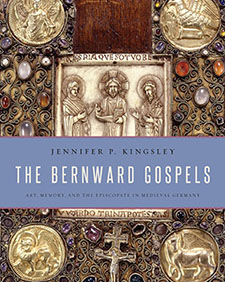 Karen Blough reads The Bernward Gospels: Art, Memory, and the Episcopate in Medieval Germany by Jennifer P. Kingsley. “Focusing minutely on a single patron and the visual program of one commission,” the author “brilliantly addresses a multitude of issues in Ottonian theology, history, and art” and makes “a valuable contribution to English-language scholarship on Ottonian art history.” Read the full review at caa.reviews
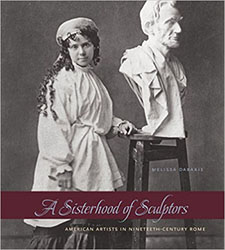 Emily C. Burns reviews Melissa A. Dabakis’s A Sisterhood of Sculptors: American Artists in Nineteenth-Century Rome. The author puts “sculptural production in dialogue with literature, visual culture, and the political and social histories of Rome and the United States,” tracing the city “as a welcoming site for feminine creativity” and “a complex site for gender politics and constructions of American culture.” Read the full review at caa.reviews
Committee on Women in the Arts Picks for March 2017
posted Mar 10, 2017
Each month, CAA’s Committee on Women in the Arts selects the best in feminist art and scholarship. The following exhibitions and events should not be missed. Check the archive of CWA Picks at the bottom of the page, as several museum and gallery shows listed in previous months may still be on view or touring.
March 2017
From the Collection: Sister(s) In the Struggle: Angela Davis and Kathleen Cleaver
Ryerson Image Centre
33 Gould Street, Toronto, Ontario, Canada
Photographs of Angela Davis on view: January 18–March 5, 2017
Photographs of Kathleen Cleaver on view: March 7–April 9, 2017
Curated by Julie Crooks, Sister(s) In the Struggle: Angela Davis and Kathleen Cleaver features photographs of two leading female figures of the Black Panther Party taken from the Black Star Collection at the Ryerson Image Centre. “They were photographed excessively,” Crooks said in an interview with Flare, “and their images were ubiquitous. They were in newspapers, they were in journals, they were on posters and their representations, or likenesses, were all over the place and that created this kind of cult presence…. At times the photographs could be detrimental to one’s image, especially someone like Angela Davis, but I think they also fed into this kind of iconic status.”
In choosing to pull photographs from the Black Star Collection from the civil rights area, Crooks explained that she wanted to humanize the representation of Davis and Cleaver, selecting images that offered a previously unexplored way of looking at them. The exhibition creates comparisons to many other women behind the scenes—those who are not remembered. “I wanted to highlight these photographs because the Black Power statement was, ‘black is beautiful’ and that was kind of a relentless message: that we are beautiful, despite hundreds of years of representation that told us otherwise, Crooks told Flare.
This exhibition is part of a collaboration between the Ryerson Image Centre and Black Artists’ Networks Dialogue, called Power to the People: Photography and Video of Repression and Black Protest, which will run until April 9.
Amy Jorgensen: Something Old, Something New, Something Borrowed, Something Blue
Elizabeth Houston Gallery
190 Orchard Street, New York, NY
February 8–March 12, 2017
Something Old, Something New, Something Borrowed, Something Blue by Amy Jorgensen is a series of delicate handkerchiefs emblazoned with historic images of suffragettes. In fact, displayed on each piece of linen is the surveillance images of eighteen women taken from the 1913 Criminal Records Office of Scotland Yard.
“Recognizing in this episode a peculiar confluence of gazes, Jorgensen re-contextualizes and re-situates these images into the wider question of how women’s identities are constructed, and how they are obstructed…. The gift of the handkerchief is a matrimonial tradition passed from mother to daughter, woman to woman. This work investigates the search for, or the making of, identity that draws upon the plurality and fraction of the self, and the span of influence that is made from generation to generation.”
These discrete portraits of women suffragettes were taken and cataloged by Scotland Yard after a series of acts of civil disobedience, including arson, window breaking, and other public disturbances, which in turn created a national scandal. Jorgensen, who transferred the photographs to the handkerchief using cyanotype, an early-nineteenth-century photographic process pioneered by a woman, first discovered the images while researching Edna Berg, her great aunt and an impassioned suffragette from New York.
“The juxtaposition of these two histories—that of the matrimonial ceremony and that of the women of the suffragette movement—provides a jarring collision point for the examination of patriarchal structures both in history and contemporary culture.”
Jennifer Brea: Unrest
Film
SXSW, Austin, Texas
March 10–19, 2017
After making its debut at the 2017 Sundance Film Festival, Unrest by the director Jennifer Brea travels to SXSW in Austin, Texas, this March. The film focuses on the life of Brea, who was diagnosed with Myalgic Encephalomyelitis, commonly referred to as chronic fatigue syndrome. Brea, a PhD student at Harvard University, found that she could not sign a check at a restaurant, becoming progressively worse in the months before her wedding. When doctors told her it was “all in her head,” Brea turned her camera on herself, filming from the confines of her bed.
Myalgic Encephalomyelitis (ME) is a systemic neuroimmune condition characterized by post-exertional malaise—a severe worsening of symptoms after even minimal exertion. The root causes and physical effects are not fully understood, especially in women. As Brea described in a TED Talk, her neurologist diagnosed her with conversion disorder and said her physical symptoms were the result of some distance emotional trauma. “It is a perfect custom prison,” Brea observed. “How can a disease this devastating be forgotten by medicine?”
“As I got sick, I found myself as part of cohort of women in their late 20s whose bodies were falling apart,” Brea explained, “and how hard it was to be taken seriously.” Her film explores her own diagnosis but also seeks to address the millions of others with the same condition.
As SXSW nears, screening days and times for Unrest will be posted on the schedule page. The full TED Talk with Brea can be found online.
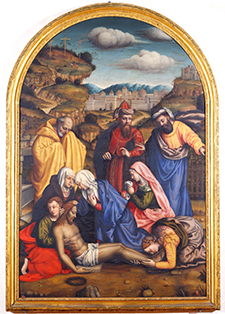
Suor Plautilla Nelli, Lamentation with Saints (1550)
The Art of Suor Plautilla Nelli
Uffizi Gallery
Piazzale degli Uffizi, 6, Florence, Italy
March 8–April 30, 2017
In the first of an open-ended, annual series of exhibitions dedicated to women artists—what the Italian press is calling “pink exhibitions”—the Uffizi Gallery will showcase the work of Suor Plautilla Nelli (1523–1587), an artist nun who was Florence’s first known female Renaissance artist. Works culled from her Domenican convent, as well as from churches and museums across central Italy, will go on display on March 8 to coincide with International Women’s Day; they will remain on view until April 30. The Florence-based organization Advancing Women Artists Foundation, which has been instrumental in facilitating the restoration of Nelli’s works, published the exhibition catalogue. Eike Schmidt, the Uffizi’s current director, was motivated to pursue this initiative after a conversation with the Guerrilla Girls.
Leila Alaoui: No Pasara
Musée des Beaux-Arts
1380, rue Sherbrooke O, Montreal, Canada
Through April 30, 2017
On January 18, 2016, a young French-Moroccan photographer named Leila Alaoui was killed in an attack in Burkina Faso. Alaoui, who had been in the West African nation on assignment for a report on women’s rights for Amnesty International, used her photography to highlight issues related to migration, displacement, and cultural identity. The twenty-four images of No Pasara, which means “no entry,” depict young Moroccans who dream of a better life on the other side of the Mediterranean. The series was commissioned by the European Union in 2008.
In a review of her work last year, a critic for the Economist wrote: “Alaoui’s photojournalism drove the reasons for the movement of humans—before and beyond today’s crises—home, by turning a lens on those who have been and continue to remain unseen between world crises. Economic migrants in the regions she captured, including young Moroccans, Lebanese and Sub-Saharan Africans willing to make perilous crossings for a life in Europe were the consistent thread through her projects.” Alaoui’s hauntingly beautiful images offer a trenchant and poignant vantage point from which to consider the global immigration crisis.
Walled Garden in an Insane Eden
Sara Zanin Gallery
Via della Vetrina, 2, Rome, Italy
February 9–March 25, 2017
“Is it only the external landscape which is altering? How often recently most of us have had the feeling of déjà vu, of having seen all this before, in fact of remembering these swamps and lagoons all too well. However selective the conscious mind may be, most biological memories are unpleasant ones, echoes of danger and terror. Nothing endures for so long as fear.”
—J. G. Ballard from The Drowned World (1962)
Borrowing its title from J. G. Ballard’s science-fiction novel and one of its dystopic tales, this exhibition brings together a contingency of London-based artists whose work engages with the political uncertainties introduced into the European landscape in 2016. Their responses, which include drawings, paintings, sculptures, textiles, and performance, range from skeptical to hopeful. Organized by Marcelle Joseph, the exhibition features mostly women artists, including Rebecca Ackroyd, Gabriella Boyd, Kira Freije, Marie Jacotey, Florence Peake, and Zadie Xa.
CAA Seeks Ad Sales Rep
posted Mar 08, 2017
Part-time and commission based
The College Art Association (CAA), a membership and advocacy organization for those working in the visual arts, seeks a part-time advertising sales rep with media sales experience in both print and digital platforms. The ideal candidate should have established contacts in the arts and culture publishing landscape and in the wider culture field. She/he will have the mindset to strategically target prospective clients to build relationships that support CAA’s prestigious publications and events with a strong ad sales program.
The advertising sales rep would work primarily on CAA’s two flagship print journals, The Art Bulletin and Art Journal, with some work on CAA’s digital reviews platform, caa.reviews. Additional work would include selling ads for the graduate program directories and the CAA Annual Conference. Candidates for the position should have experience in billing clients, advertising proposal creation, and proper tracking of invoices and payments.
This is a part-time, commissioned-based position. The position reports to the Director of Communications and Marketing.
DUTIES AND RESPONSIBILITIES
- Manage relationships with current advertising clients and develop strategy for new client growth
- Work closely with staff across all departments to create client strategy aligned with journals, website content, and programs
- Produce client contracts for ad sales
- Oversee invoicing and record keeping for ad sales on journals and relevant websites
- Report and present on ad sales program and results to staff members and constituents
- Work with publications department staff and in-house graphic designer on ad placement and design as needed
- Other duties as assigned or requested
QUALIFICATIONS
- At least 2 years of ad sales or comparable experience
- A warm and welcoming personality that encourages relationship building
- Established relationships with advertisers and companies in the arts and culture field
- Proven track record of closing new business and maintaining current business
- Exceptional written/verbal communication skills
- Ability to work independently, organize multiple concurrent tasks, work efficiently, and follow through on details
- Experience with spreadsheets, systems, and database management and generally accepted programs and office equipment required
- BS/BA degree or equivalent preferred
Send resume and cover letter to nobourn@collegeart.org with the subject line “CAA Ad Sales Rep.”
This job description is intended as a summary of the primary responsibilities of and qualifications for this position. The job description is not intended as inclusive of all duties an individual in this position might be asked to perform or of all qualifications that may be required either now or in the future.
The College Art Association is an equal opportunity employer and considers all candidates for employment regardless of race, color, sex, age, national origin, creed, disability, marital status, sexual orientation, gender expression, or political affiliation.
CAA Seeks Ad Sales Rep
posted Mar 08, 2017
Part-time and commission based
The College Art Association (CAA), a membership and advocacy organization for those working in the visual arts, seeks a part-time advertising sales rep with media sales experience in both print and digital platforms. The ideal candidate should have established contacts in the arts and culture publishing landscape and in the wider culture field. She/he will have the mindset to strategically target prospective clients to build relationships that support CAA’s prestigious publications and events with a strong ad sales program.
The advertising sales rep would work primarily on CAA’s two flagship print journals, The Art Bulletin and Art Journal, with some work on CAA’s digital reviews platform, caa.reviews. Additional work would include selling ads for the graduate program directories and the CAA Annual Conference. Candidates for the position should have experience in billing clients, advertising proposal creation, and proper tracking of invoices and payments.
This is a part-time, commissioned-based position. The position reports to the Director of Communications and Marketing.
DUTIES AND RESPONSIBILITIES
- Manage relationships with current advertising clients and develop strategy for new client growth
- Work closely with staff across all departments to create client strategy aligned with journals, website content, and programs
- Produce client contracts for ad sales
- Oversee invoicing and record keeping for ad sales on journals and relevant websites
- Report and present on ad sales program and results to staff members and constituents
- Work with publications department staff and in-house graphic designer on ad placement and design as needed
- Other duties as assigned or requested
QUALIFICATIONS
- At least 2 years of ad sales or comparable experience
- A warm and welcoming personality that encourages relationship building
- Established relationships with advertisers and companies in the arts and culture field
- Proven track record of closing new business and maintaining current business
- Exceptional written/verbal communication skills
- Ability to work independently, organize multiple concurrent tasks, work efficiently, and follow through on details
- Experience with spreadsheets, systems, and database management and generally accepted programs and office equipment required
- BS/BA degree or equivalent preferred
Send resume and cover letter to nobourn@collegeart.org with the subject line “CAA Ad Sales Rep.”
This job description is intended as a summary of the primary responsibilities of and qualifications for this position. The job description is not intended as inclusive of all duties an individual in this position might be asked to perform or of all qualifications that may be required either now or in the future.
The College Art Association is an equal opportunity employer and considers all candidates for employment regardless of race, color, sex, age, national origin, creed, disability, marital status, sexual orientation, gender expression, or political affiliation.
News from the Art and Academic Worlds
posted Mar 08, 2017
Each week CAA News summarizes eight articles, published around the web, that CAA members may find interesting and useful in their professional and creative lives.
On Hiring and Diversity This Week
Many colleges and universities want to attract a more diverse workforce and foster greater inclusivity in their faculty and administrative ranks, but don’t know how. The Chronicle of Higher Education is helping by sharing stories, news, and data aimed at helping hiring managers and recruiters make better, more informed decisions about diversity hiring at their institutions and across higher education generally. (Read more from Vitae.)
How to Fix the Met: Connect Art to Life
With the precipitous decrease in art and history education in schools, much of the Metropolitan Museum of Art’s encyclopedic collection now means little to younger viewers. It feels foreign and remote and unsociable in a way that contemporary art, with its familiar references, does not. (Read more from the New York Times.)
Russian and Syrian Forces Retake Palmyra from ISIL
Syrian government troops have retaken Palmyra from Islamic State forces, with help from Russian air support, the Syrian army said last week. Politicians in Russian welcomed the news as a triumph, as widely reported by the state’s media, but few details have emerged about the condition of the ancient site, where ISIL has previously wreaked large-scale destruction. (Read more from the Art Newspaper.)
The Earthquake in Amatrice, Norcia, and the Marche: A Cultural Emergency
This area of Italy—the Valnerina, the Appennine Marches, the Teramo region of the Abruzzo, and a segment of Lazio—has a distinguished cultural patrimony. There may be no large museums or significant art galleries, but in most cases the works of art are still in the buildings for which they were conceived, whether churches, convents, or tiny chapels in the mountains. (Read more from the Burlington Magazine.)
Very Serious Play: A Conversation with Jess Benjamin
The Nebraska-born sculptor Jess Benjamin creates work with an austere sensibility and eloquent narrative that is inextricably tied to the land—more specifically to the water—of her home state. The daughter of a rancher, she earned her BFA in ceramics from Hastings College before working as a studio assistant for Jun Kaneko, and then earning an MFA at Bowling Green State University. (Read more from Sculpture.)
SUPERFLEX’s Hospital Equipment: Context Is Everything
“Sometimes context is everything,” SUPERFLEX’s Jakob Fenger wrote, as he Instagrammed a photo of the latest installation of Hospital Equipment in a gallery in Switzerland. The Danish collaborative calls Hospital Equipment a “readymade upside down” because it pulls objects into an art context, only to send them on their way to a new context, as functional objects. (Read more from Greg.org.)
A Question of Resources
We hear regularly from arts funders and opinion formers about the need to diversify funding streams within the arts to protect future sustainability. And this is absolutely true. Any arts organization that finds itself over-reliant on government or statutory sources, or one single income stream that then dries up, can find itself in trouble. (Read more from Arts Professional.)
Identifying Quality in Scholarly Publishing: Not a Black-and-White Issue
Like every industry, publishing is open to scamming and deceptive behavior in many forms, and there are various influencing factors at play—including the pressure to publish that academics face. An abundance of unfamiliar new publications makes it difficult to know which can be trusted, and the merits of blacklisting or whitelisting publishers are being widely discussed. (Read more from the Open Access Scholarly Publishers Association.)
New in caa.reviews
posted Mar 03, 2017
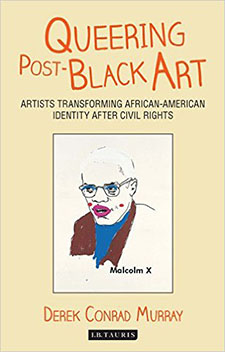 Michele Prettyman Beverly reads Queering Post-Black Art: Artists Transforming African-American Identity after Civil Rights by Derek Conrad Murray. The volume “amounts to the most comprehensive (and engaging) post-black theoretical methodology to date,” offering a new level of “critical rigor and innovative thinking” and “highlighting the intersection of black queer and sexual identities.” Read the full review at caa.reviews.
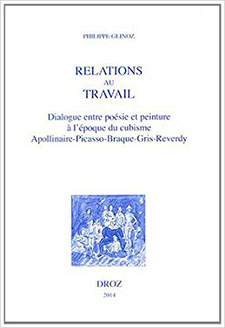 Charles Palermo reviews Philippe Geinoz’s Relations au travail: Dialogue entre poésie et peinture à l’époque du cubism: Apollinaire-Picasso-Braque-Gris-Reverdy. Among the literary genre of these– or habilitation-turned books, it “is among the very best,” “filled with close readings, wide-ranging and thoughtful use of existing literature, and a framework of pertinent intellectual-historical context.” Read the full review at caa.reviews.
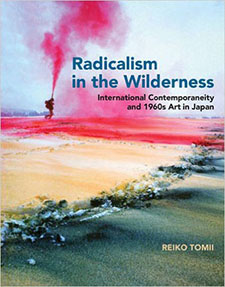 John Clark reviews Radicalism in the Wilderness: International Contemporaneity and 1960s Art in Japan by Reiko Tomii. This “impeccably researched and well-written contribution” offers a “challenge to art history” by “understanding the way in which modernisms from the periphery within a cultural continuum coordinate with international and transnational tendencies to constitute contemporaneity.” Read the full review at caa.reviews.
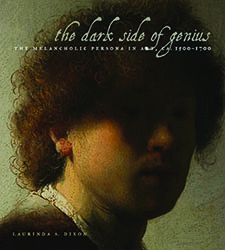 Stephanie S. Dickey discusses Laurinda S. Dixon’s The Dark Side of Genius: The Melancholic Persona in Art, ca. 1500–1700. “Much more than an iconographic or visual survey,” the book “presents a solidly researched, interdisciplinary synthesis of early modern thinking about melancholia as a medical and cultural condition,” blending “medical, literary, and art-historical learning and lore.” Read the full review at caa.reviews.
CAA Arts and Humanities Advocacy Toolkit
posted Mar 02, 2017
“The phone calls and emails began coming in a few weeks ago to the Nebraska congressional delegation — all Republicans, and all potentially crucial to an expected fight over the very existence of the National Endowments for the Arts and the Humanities under President Trump.” –“How to Block Trump Arts Cuts? Groups Look for G.O.P. Help,” The New York Times, February 28, 2017
Arts and Humanities Advocates are already taking action. CAA encourages its members and all advocates of the arts and humanities to be persistent and do more.
On January 23, 2017, CAA released a statement condemning the proposed budget cuts to the National Endowment for the Arts and the National Endowment for the Humanities, among other federal agencies.
“For more than a century, the College Art Association (CAA) has represented art historians, artists, museum professionals, designers, and others who think and care about the visual arts and its impact on our culture. We do this in part through direct advocacy for artistic and academic freedom.
Like many other Americans, we have closely watched the proposed changes to the federal government. Recent news reports reveal that the US President intends to propose the elimination of funding for the National Endowment for the Arts (NEA) and the National Endowment for the Humanities (NEH). This proposal is reportedly based in part on a recommendation by the Heritage Foundation that states, ‘As the U.S. Congress struggles to balance the federal budget and end the decades-long spiral of deficit spending, few programs seem more worthy of outright elimination than the National Endowment for the Arts.’
We offer our complete and total opposition to these efforts.”
The current administration’s proposal to cut funding for the NEA and NEH is based on a 1997 Heritage Foundation report, titled “Ten Good Reasons to Eliminate Funding for the National Endowment for the Arts.”
To support our statement, CAA has put together an Arts and Humanities Advocacy Tool Kit to help our members and anyone who wants to advocate for the arts and humanities. Information is power, after all. The Tool Kit information is pulled from a variety of sources that aid in forging partnerships, obtaining accurate data on the impact of the arts and humanities, and actions one can take in order to use your voice effectively.
We encourage you to contact us at CAA also. CAA staff will attend both Arts Advocacy Day and Humanities Advocacy Day. The more stories we can share as we meet with colleagues and representatives, the more influence we collectively bring to the table.
Locate and Call
Call your representatives about any and all pressing issues.
Find your local representative
This is a helpful guide on how to contact your local representative:
The How-to Guide to Contacting your Local Official
Face-to-Face
Face-to-face meetings with representatives are the most effective way to deliver your message. Hand your representative a physical document with facts and figures and be sure to explain who you are and how the group you represent relates to your local politician’s constituency.
Town Halls are one good way to voice your opinion to your local representative in person. The Federation for American Immigration Reform has a guide on how to attend Town Hall meetings.
You can also organize and request an appointment at the offices of your representative. The National Priorities Project has a good guide to setting up office appointments.
Sign Petitions
There are myriad petitions floating around these days, addressing vast numbers of topics. It can be hard to keep track or know which petitions to sign.
Change.org remains one of the best places to find a database of petitions by topic. The site also provides explanations and background information for each petition.
To sign the petition to support the NEA and NEH you can sign the White House created petition, the Change.org petition, and the Arts Action Fund petition.
Advocates can also send postcards directly to members of Congress that are customized with their artwork or other artworks, thanks to the #savethearts Postcard Project.
Arm Thyself with Data and Information
There is lots of good data about the impact of the arts and humanities on people and places. The National Humanities Alliance is working on several data gathering and mapping projects.
Americans for the Arts is also a hub for data and information about various federal arts agencies and arts education in America.
Data on the arts and humanities can also be found on the National Endowment for the Arts Facts & Figures page and the National Endowment for the Humanities Impact Reports.
This nifty website is a running tally of all the programs that the NEA funded in 2016.
You can also search the NEA website to see all grants they have awarded since 1996. Check to see what organizations in your local area are funded by the NEA.
The same search for grants can be done on the NEH website.
News from the Art and Academic Worlds
posted Mar 01, 2017
Each week CAA News summarizes eight articles, published around the web, that CAA members may find interesting and useful in their professional and creative lives.
What NEA Supporters Can Learn from the Republicans Who Tried to Destroy It
How can we save the NEA? Since Republicans argue they are merely trimming the bloated federal budget, it is tempting to rely on the simple fact that eliminating the NEA will do little toward this goal. But this fiscal argument, while factually correct, won’t galvanize people to come out and support the agency. (Read more from Artsy.)
Why Small Grants from the Endangered NEA and NEH Matter
If quality of life and nourishment of intellect and spirit are as important to our national well-being as military might, then maintaining support for the arts is a no-brainer. Maybe the arts legions descending on Washington, DC, this month should try to seduce members of Congress with excerpts from performances and art displays that our tax dollars have helped to make possible. (Read more from CultureGrrl.)
Removal of Student Painting in Capital Leads to Federal Lawsuit
David Pulphus, a high school artist from Saint Louis, may never become a free-speech cause célèbre akin to Chris Ofili, the London artist who caused a furor in 1999. Still, Rep. William Lacy Clay from Missouri filed a federal lawsuit arguing that the removal of a work by Pulphus from the Cannon House Office Building in Washington, DC, violates the artist’s First Amendment rights. (Read more from the New York Times.)
Research Finds Career, Entrepreneurial Training Leads to Stronger Career Outcomes for Arts Graduates
Recent graduates with arts degrees have better career and entrepreneurial training than those who came before them, according to a report released by the Indiana University School of Education. The research, based on a survey of arts graduates, demonstrates that new approaches to arts education are helping prepare students for careers and give them tools they need to succeed. (Read more from the Strategic National Arts Alumni Project.)
Professors and Politics: What the Research Says
When Betsy DeVos accused liberal faculty members of forcing their views on students, she infuriated many professors and won praise from conservatives. Most faculty members who weighed in on social media denied the indoctrination and unfairness charges. While not disputing her assertion that they are more likely than others to be liberal, they said it was unfair to say that this meant they were indoctrinating anyone. (Read more from Inside Higher Ed.)
Appalachian Identities and Photography as Social Commentary
Most of my students in art history and art appreciation are first-generation college students, and many of them come from the economically depressed counties within a short driving distance of my institution, Morehead State University in eastern Kentucky. Through in-class discussion and office-hour chats, I have learned that many of them feel strong ties to an Appalachian identity. (Read more from Art History Teaching Resources.)
Bice Curiger on Why Parkett Is Closing
“Young kids think everything has to be free,” said the curator and publisher Bice Curiger in a recent phone interview, shortly after the announcement that Parkett—the hefty, finger-on-the-pulse German-English magazine she cofounded some ninety-nine issues ago—would cease publication. “How can you survive?” (Read more from Artnet News.)
Thinking about Open Access and Library Subscriptions
Is there good reason to expect that open access is likely to lead libraries and other customers to cancel their paid journal subscriptions? The context in which we have to ask this question is, quite frankly, one of dire economic straits in many academic libraries. Of course, libraries have been saying this for years, even decades. (Read more from the Scholarly Kitchen.)
CAA Seeks Publications Committee Member
posted Feb 28, 2017
CAA invites nominations and self-nominations for one member-at-large to serve on the Publications Committee for a three-year term, July 1, 2017–June 30, 2020.
The Publications Committee is a consultative body that meets three times a year. Through its chair, the CAA vice president for publications, the committee advises the CAA Publications Department staff and the CAA Board of Directors on publications projects and meets with chairs of the editorial boards of The Art Bulletin, Art Journal, and caa.reviews three times each year. The committee chooses candidates to serve on CAA’s book-grant juries; sponsors a practicum session at the Annual Conference; and, with the CAA vice president for publications, serves as liaison to the board, membership, editorial boards, book-grant juries, and other CAA committees.
Each year the committee meets twice in the spring and fall and once at the CAA Annual Conference in February. Members pay their travel and lodging expenses to attend the meeting at the conference. Meetings in the spring and fall are currently held by teleconference. Members of all committees volunteer their services to CAA without compensation.
Candidates must be current CAA members and should not serve concurrently on other CAA committees or editorial boards. Applicants may not be individuals who have served as members of a CAA editorial board within the past five years. Nominators should ascertain their nominee’s willingness to serve before submitting a name; self-nominations are also welcome. Appointments are made by the CAA president in consultation with the CAA vice president for publications.
Please send a letter of interest, a CV, and your contact information to: Vice President for Publications, c/o Deidre Thompson, College Art Association, 50 Broadway, 21st Floor, New York, NY 10004. Materials may also be via email to dthompson@collegeart.org. Deadline: April 21, 2017.
caa.reviews Editorial Board Seeks Candidates
posted Feb 28, 2017
CAA invites nominations and self-nominations for three individuals to serve on the caa.reviews Editorial Board for four-year terms, July 1, 2017–June 30, 2021. Candidates may be artists, art historians, art critics, art educators, curators, or other art professionals with stature in the field and experience writing or editing books and/or exhibition reviews; institutional affiliation is not required. The journal also seeks a librarian to serve in an ex officio capacity to advise the editorial board on technical and distribution issues.
CAA encourages applications from candidates with a strong record of scholarship who are committed to the imaginative development of caa.reviews. An online journal, caa.reviews is devoted to the peer review of recent books, museum exhibitions, and projects relevant to the fields of art history, visual studies, and the arts.
The editorial board advises the editor-in-chief and field editors for the journal, and helps them to identify books and exhibitions for review and to solicit reviewers, articles, and other content for the journal. The editorial board guides the journal’s editorial program and may propose new initiatives for it. Members stay abreast of trends and issues in the field by attending and reporting on sessions at the CAA Annual Conference and academic conferences, symposia, and other events in their fields.
The caa.reviews Editorial Board meets three times a year, twice in the spring and fall and once at the CAA Annual Conference in February. Members also attend the annual meeting of the caa.reviews Council of Field Editors at the Annual Conference. Members pay their travel and lodging expenses to attend the meeting at the conference. Meetings in the spring and fall are currently held by teleconference. Members of all editorial boards volunteer their services to CAA without compensation.
Candidates must be current CAA members and should not currently serve on the editorial board of a competitive journal or another CAA editorial board or committee. Nominators should ascertain their nominee’s willingness to serve before submitting a name; self-nominations are also welcome. Please send a statement describing your interest in and qualifications for appointment, a CV, and your contact information to: caa.reviews Editorial Board, College Art Association, 50 Broadway, 21st Floor, New York, NY 10004; or email the documents to Deidre Thompson, CAA publications assistant. Deadline: April 21, 2017.