CAA News Today
News from the Art and Academic Worlds
posted Dec 02, 2015
Each week CAA News publishes summaries of eight articles, published around the web, that CAA members may find interesting and useful in their professional and creative lives.
Black Artists and the March into the Museum
After decades of spotty acquisitions, undernourished scholarship, and token exhibitions, American museums are rewriting the history of twentieth-century art to include black artists in a more visible and meaningful way than ever before, playing historical catch-up at full tilt, followed by collectors who are rushing to find the most significant works before they are out of reach. (Read more from the New York Times.)
Can Art Exist on Social Media?
The arrival of a new passport is not usually newsworthy. But in July 2015, when the Chinese artist and activist Ai Weiwei posted a photo of himself with his new passport to Instagram, the world responded with barely contained excitement. The story was covered by the New York Times, CNN, and Time, among others. (Read more from Apollo.)
Carnegie Museum Computer Program Collects Every Detail on Its 30,098 Artworks
Elysa, a computer-software program named for Andrew Carnegie’s housekeeper, cleans up and standardizes information already known about 30,098 artworks in the Carnegie Museum of Art collection. Elysa (pronounced Eliza) breaks apart a paragraph packed with names and dates and organizes it into a format that computers can manipulate or turn into a map. (Read more from the Pittsburgh Post-Gazette.)
Will Video Kill the Lecturing Star?
You may have heard about the flipped classroom approach, in which lectures are viewed at home and class time is used for discussion, project work, and other practical exercises. You may also have been wondering whether to bother with it, and how it actually would work in practice. (Read more from the Guardian.)
Google Steps Up to Defend Fair Use, Will Fund YouTubers’ Legal Defenses
After years of missteps, blunders, and disasters in which YouTube users have been censored through spurious copyright claims or had their accounts deleted altogether, Google has announced an amazing, new, user-friendly initiative through which it will fund the legal defense of YouTube creators who are censored by bad-faith copyright-infringement claims. (Read more from Boing Boing.)
The New Art-World Math: What It Really Costs to Run a Gallery
Pity the poor art dealer. Not a phrase you hear a lot in an industry for which the stereotype is of jet setting and high living. But veteran art dealers report that some big things have changed to make it more difficult, and less profitable, to run an art gallery—even in what’s been a booming market for contemporary art. (Read more from the New York Observer.)
Where Is the Union for Arts Admin Workers?
Contrary to what you might expect from a New England–born Irish American whose descendants worked on railroads, pubs, and politics, I was raised with a healthy ambivalence toward unions. But having worked in nonprofits and the arts since before I was legally able, I’ve started to think that there might be some value in bringing the camaraderie and collective bargaining of unions into the arts, specifically on the administrative side. (Read more from HowlRound.)
Art Critics Have Ignored the Condition of Artworks for Too Long
Judging the quality of an artwork must always involve some appreciation of its current condition. This is not to say that an artist’s reputation should be defined by the injuries their work may have suffered over the centuries—although an understanding of the endurance of materials might well be one mark of artistic success. Rather, anyone who enjoys looking closely at works of art should always be conscious that they are unlikely to be presented as they were originally intended or achieved by the artist. (Read more from Apollo.)
American Scholarly Societies Joint Statement on “Campus Carry” Legislation
posted Dec 01, 2015
The undersigned learned societies are deeply concerned about the impact of Texas’s new Campus Carry law on freedom of expression in Texas universities. The law, which was passed earlier this year and takes effect in 2016, allows licensed handgun carriers to bring concealed handguns into buildings on Texas campuses. Our societies are concerned that the Campus Carry law and similar laws in other states introduce serious safety threats on college campuses with a resulting harmful effect on students and professors.
American Academy of Religion
American Anthropological Association
American Antiquarian Society
American Association for the History of Medicine
American Folklore Society
American Historical Association
American Musicological Society
American Philosophical Association
American Political Science Association
American Studies Association
American Society for Aesthetics
American Society for Environmental History
American Sociological Association
Association for Slavic, East European, and Eurasian Studies
Association of American Geographers
College Art Association
Latin American Studies Association
Law and Society Association
Medieval Academy of America
Middle East Studies Association
Modern Language Association
National Communication Association
National Council on Public History
Oral History Association
Society for American Music
Society of Architectural Historians
Society of Biblical Literature
Society for Ethnomusicology
World History Association
CAA President, DeWitt Godfrey, Releases Statement on Ashgate Acquisition
posted Dec 01, 2015
CAA acknowledges the concern of many of its members regarding the acquisition of Ashgate by Informa, the parent company of Taylor & Francis. The Ashgate art and humanities publications series have been a critically important venue for art history and critical scholarship because of their high quality production. Ashgate’s art and humanities series have also increased in value as the opportunities for scholarly monograph publishing diminishes. CAA has conveyed the concerns to Taylor & Francis that the high quality of the editorial process at Ashgate be maintained by Taylor & Francis and the art and humanities series continue to publish as fully as in the past.
Fall 2015 Recipients of the Millard Meiss Publication Fund
posted Dec 01, 2015
This fall, CAA awarded grants to the publishers of seven books in art history and visual culture through the Millard Meiss Publication Fund. Thanks to the generous bequest of the late Prof. Millard Meiss, CAA gives these grants to support the publication of scholarly books in art history and related fields.
The seven Meiss grantees for fall 2015 are:
- Monica Amor, Theories of the Nonobject: Argentina, Brazil, Venezuela, 1944–1968, University of California Press
- Benjamin Anderson, Cosmos and Community in Early Medieval Art, Yale University Press
- Julia Bryan-Wilson, Fray: Art and Textile Politics since the 1970s, University of Chicago Press
- Ivan Drpic, Epigram, Art, and Devotion in Later Byzantium, Cambridge University Press
- Frances Guerin, The Truth Is Always Grey: Painting from Grisaille to Gerhard Richter, University of Minnesota Press
- Laura Kalba, Color in the Age of Impressionism: Commerce, Technology, and Art, Pennsylvania State University Press
- Yun Chiahn Sena, From Archaism to Antiquarianism: Antiquity in Song Culture, University of Washington Press
Books eligible for Meiss grants must already be under contract with a publisher and on a subject in the visual arts or art history. Authors must be current CAA members. Please review the application guidelines for more information.
Fall 2015 Recipients of the Meiss/Mellon Author’s Book Award
posted Nov 30, 2015
CAA has announced the five recipients of the Meiss/Mellon Author’s Book Award for fall 2015. Thanks to a grant of $60,000 from the Andrew W. Mellon Foundation, CAA is supporting the work of emerging authors who are publishing monographs on the history of art and related subjects.
The five Meiss/Mellon grantees for fall 2015 are:
- Anastasia Aukeman, Welcome to Painterland: Bruce Conner and the Rat Bastard Protective Association, University of California Press
- Mari Dumett, Corporate Imaginations: Fluxus Strategies for Living, University of California Press
- Namiko Kunimoto, Anxious Bodies: Gender and Nation in Postwar Art, University of Minnesota Press
- Miya Lippit, Aesthetic Life: The Artistic Discouse of Beauty in Modern Japan, Harvard University Press
- Allison Morehead, Nature’s Experiments and the Search for Symbolist Form, Pennsylvania State University Press
The purpose of the Meiss/Mellon subventions is to reduce the financial burden that authors carry when acquiring images for publication, including licensing and reproduction fees for both print and online publications.
News from the Art and Academic Worlds
posted Nov 25, 2015
Each week CAA News publishes summaries of eight articles, published around the web, that CAA members may find interesting and useful in their professional and creative lives.
Regulating Art That Offends
Almost three months after a racially charged art project stirred controversy at the State University of New York at Buffalo, administrators, faculty members, and students are still deliberating whether to adopt guidelines for public art on campus. At the root of the debate is a series of signs reading “White Only” and “Black Only” that appeared mysteriously and suddenly around campus in September, eliciting fear and shock from students. (Read more from Inside Higher Ed.)
Permission to Fail
An artist girlfriend and I used to go to galleries and see shows together. Sometimes when she looked at a piece she would say, “Oh, that’s something I did in art school.” After a while it dawned on me that much of what she dismissed as student exercises—gambits she figured she’d outgrown—were things I liked. I started to think that she had inadvertently taught me, if not a definition of good art, then at least a kind of rule of thumb for identifying it in the field. (Read more from the Nation.)
Free and Easy? DIY Universities
Scholars dissatisfied with their university administrations might ponder the case of the American Marxist academic Allen Krebs, who cofounded two “free universities” on opposite sides of the Atlantic. In 1965, after a falling-out with Adelphi University, where he was assistant professor of sociology, Krebs helped open the Free University of New York, one of the most successful of the first wave of free universities that swept across North America and Western Europe in the 1960s. (Read more from Times Higher Education.)
A Body of Work
I once gave a lecture on Jack Goldstein, an artist synonymous with the Pictures Generation and postmodernism. Others also associate him with romantic failure, with his “disappearance” from the art world in the 1990s and his suicide in 2003. After the talk concluded, an art historian I respect asked me if I thought Goldstein was “a great artist.” I was caught off guard and fumbled for a response. Eventually, I said with some hesitation, “I don’t know.” (Read more from the Brooklyn Rail.)
Our Designers Talk Book Covers
Don’t judge a book by its cover,” the popular adage goes. But, as humans, we often do just that. In this week’s blog post, as part of our 2015 AAUP blog tour, our book designers (Nancy Ovedovitz, design director; James Johnson, senior designer; Sonia Shannon, senior designer; and Mary Valencia, senior designer) discuss the design and creation of book covers. (Read more from Yale Books Unbound.)
Turning a Big-Box Store into an Artist’s Playground
Upon entering a big-box department store, many shoppers fall into a zombielike trance, focusing only on what they need to purchase. Carson Davis Brown felt a bit like that while in the automotive aisle of a Meijer store in Michigan. He was texting with a friend when he suddenly looked down the aisle. “I noticed everything was yellow,” he said. “I did a double take.” (Read more from Slate.)
What If I’ve Never Taught Solo?
I’m always dismayed to hear about departments that don’t let graduate students teach, because the experience of running your own class is an essential element of a competitive record. Sure it’s possible to get a tenure-track job without that experience but it is much, much harder. (Read more from Vitae.)
Going Rogue: Authenticating Warhol after the Board’s Disbanding
This month Richard Polsky launched a Warhol authentication service. It’s a task that is both necessary and risky, given the lengthy, and very costly, legal battles the artist’s prolific output has sparked over the years. After a series of suits resulted in a reported $7 million in legal fees, the Andy Warhol Foundation for the Visual Arts, which manages the artist’s estate, dissolved the board in 2012. (Read more from Blouin Artinfo.)
2015 Wyeth Foundation for American Art Publication Grant Winners
posted Nov 25, 2015
CAA is pleased to announce six 2015 recipients of the annual Wyeth Foundation for American Art Publication Grant, established in 2005. Thanks to a generous grant from the Wyeth Foundation, these awards are given annually to publishers to support the publication of one or more book-length scholarly manuscripts in the history of American art, visual studies, and related subjects. For this grant program, “American art” is defined as art created in the United States, Canada, and Mexico.
The six grantees for 2015 are:
- Anastasia Aukeman, Welcome to Painterland: Bruce Conner and the Rat Bastard Protective Association, University of California Press
- Mary Campbell, Civil Saints: Polygamy, Pornography, and Mormon Citizenship in the Work of Charles Ellis Johnson, University of Chicago Press
- Dale Allen Gyure, Serenity and Delight: The Architecture of Minoru Yamasaki, Yale University Press
- Jessica Horton, Places to Stand: Native American Modernisms on an Undivided Earth, Duke University Press
- Rebecca Peabody, Consuming Stories: Kara Walker and the Imagining of American Race, University of California Press
- Nizan Shaked, The Synthetic Proposition: Conceptualism and the Political Referent in Contemporary Art, Manchester University Press
Eligible for the grant are book-length scholarly manuscripts in the history of American art, visual studies, and related subjects that have been accepted by a publisher on their merits but cannot be published in the most desirable form without a subsidy. Authors must be current CAA members. Please review the application guidelines for more information.
What’s All This about Trigger Warnings?
posted Nov 18, 2015
Survey reveals a complex picture: threats to academic freedom are not just about “political correctness.”
If the headlines are correct, college students everywhere are demanding professors provide so-called “trigger warnings” to flag material that might make them feel uncomfortable, and in some cases to allow students to avoid the material. If this is happening widely, the free speech implications are enormous: A broad range of works, from a documentary about sexual assault to an historical account of slavery, could be considered “triggering,” along with the possibility that many professors would steer clear of potentially controversial work.
But how prevalent are these demands? Is a resurgent tide of political correctness threatening higher education, or are the media jumping to conclusions?
To shed some light, NCAC worked with the Modern Language Association and the College Art Association this spring on an online survey of their members. While the survey is not scientific, the over 800 responses we received offer a birds’ eye view of the debate over trigger warnings, and the pressures on instructors.
The survey finds that formal university trigger policies are extremely rare: Less than one percent of respondents say their schools have them. But there is abundant anecdotal evidence suggesting that something is going on. It appears to be a bottom-up phenomenon: Students make complaints to individual professors or administrators, and instructors—many of whom are reasonably nervous about job security. As one survey respondent put it, “After teaching a course for the first time, a student complained in the anonymous evaluation. Ever since, I verbally include a trigger warning at the start of each semester.”
Fifteen percent of respondents reported that students had requested trigger warnings in their courses, while over half reported that they had voluntarily provided warnings for course materials, with 23 percent saying they have offered them “several times” or “regularly.”
So who is doing the complaining? In much of the media commentary, the focus is on left-leaning students using trigger warnings to chill speech they find offensive. One widely-read essay on the subject was titled, “I’m a Liberal Professor, and My Liberal Students Terrify Me.” While this is certainly happening, and many respondents reported sensitivities to content depicting rape and sexual assault, the survey paints a more complex picture. Contrary to conventional thinking, warnings are sought by both conservative and liberal students. “I used trigger warnings to warn about foul or sexual language, sexual content, or violence in order to allow our very conservative students to feel more in control of the material,” wrote one instructor. Another teacher was aware of “religious objections to nude models in studio courses” and “homoerotic content in art history.” Another teacher noted the use of trigger warnings “because some students were upset by the realization that certain artists were homosexuals.”
Another common theme is that it is impossible “to be able to predict which topics will be problematic for students, or will ‘trigger’ a response.” “I’ve had students want pretty detailed and specific trigger warnings for, well, everything…,” including violent imagery in a horror film class. Reported complaints concern spiders, indigenous artifacts, “fatphobia,” and more.
Many respondents draw a distinction between “trigger warnings” and course or content descriptions. The latter are widely accepted as ways to convey information about the scope, substance and requirements of a given course. As many instructors have pointed out, offering students information about course materials does not necessarily flag content as disturbing or offensive, or offer students an opportunity to avoid it, but simply provides an explanation about what material will be taught.
The strongest findings in the survey are that instructors believe that trigger warnings, if widely used, would threaten academic freedom and inquiry. Nearly half of respondents (45 percent) think trigger warnings have or will have a negative effect on classroom dynamics; on the broader question of academic freedom, 62 percent see a possible negative effect.
Those who oppose warnings say they reinforce taboos, infantilize students, “tend to impede conversation,” “stifle meaningful discussion,” and send a message to students “about what it’s ok for them to get upset about.” In contrast, supporters say they build trust and “create a positive classroom environment,” show respect for the “individual needs of students,” create “a positive and safe space for dialogue,” prepare students “to engage with the material in meaningful ways,” and prevent them from feeling “blindsided.”
The survey revealed that many instructors are deeply concerned about their students’ wellbeing, and how best to fulfill the mission of higher education. And the demand for trigger warnings may reflect a desire by students to be more engaged in their education and their communities, which has positive aspects. However, the trick is to ensure that such an interest is not expressed in ways that preclude discussion, debate, and even disagreement.
Reprinted from Censorship News, No. 123 (Fall 2015), National Coalition Against Censorship www.ncac.org.
News from the Art and Academic Worlds
posted Nov 18, 2015
Each week CAA News publishes summaries of eight articles, published around the web, that CAA members may find interesting and useful in their professional and creative lives.
Internationalization and Tenure
Should universities incorporate internationally focused criteria in their tenure and promotion policies? A majority of institutions (52 percent) have identified internationalization as one of their top five strategic priorities, but only a minority (8 percent) report having guidelines in place specifying international work or experience as a consideration in faculty tenure and promotion decisions. (Read more from Inside Higher Ed.)
“This Is a Genocide”: Art Historian Zainab Bahrani on ISIS’s Destruction of Cultural Heritage
Last year, news outlets began reporting that the Islamic State in Iraq and Syria had begun bombing and bulldozing cultural-heritage sites and artifacts, some dating back to ancient times. A few weeks ago, I sat down with Zainab Bahrani, Edith Porada Professor of Ancient Near Eastern Art and Archaeology at Columbia University and director of Mapping Mesopotamian Monuments, to ask about her perspective on the matter. (Read more from ARTnews.)
Online Arts Publishing: A Roundtable with Artnet News, Momus, and Temporary Art Review
Everything about publishing is changing, including art criticism and news. What sort of art coverage we consume, how we consume it, and on what devices is rapidly and constantly evolving. If art magazines are dead, then what is taking their place—and why? (Read more from Temporary Art Review.)
Unseen Art Is Crowdfunding an Open-Source Platform to Make Fine Art Accessible via 3D Printing
Making art more accessible to blind and visually impaired people is Unseen Art’s founder Marc Dillon’s new mission. After almost a quarter century working in the mobile industry, he says it’s time to give back. “I’ve been in mobile for twenty-five years nearly and I wanted to do something that gives back to people,” Dillon said. “I wanted to find a place where I could basically find a community that had a need and give back to that, with the experience that I have.” (Read more from TechCrunch.)
Using SmartHistory to Generate Good Conversations in the Art-History Survey
I had been aware of Smarthistory for years, occasionally assigning videos as supplemental readings and directing students to its content. But following their use of the Khan Academy platform in 2011, the site’s content expanded exponentially. Suddenly, there were enough videos on diverse topics that I could assign Smarthistory videos for every topic in my syllabus. (Read more from Smarthistory.)
With $170.4 Million Sale at Auction, Modigliani Work Joins Rarefied Nine-Figure Club
In an overheated art market where anything seems possible, a painting of an outstretched nude woman by the early-twentieth-century artist Amedeo Modigliani sold last week for $170.4 million with fees to Liu Yiqian, a former taxi driver turned billionaire art collector, in a packed sales room at Christie’s. It was the second-highest price paid for an artwork at auction. (Read more from the New York Times.)
Why Are Art Galleries White Cubes?
Four white walls and appropriate lighting is the go-to, de facto way of presenting art. But it hasn’t always been that way. The existence of art galleries in general is a relatively new concept in the grand scheme of history. So how did it standardize so quickly? Why is the white cube the “best” place to present art, commercially and institutionally? Will it always be this way? (Read more from Hopes and Fears.)
The Etiquette Minefield of the Interview Meal
As you prepare for the job market you are undoubtedly focusing on your research, polishing your job market paper, and honing your presentation skills. Those absolutely should be your highest priorities. However, when you have time, you should also be sure to brush up on your dining etiquette. It can save you stress and embarrassment later. (Read more from Vitae.)
Meet the 2016 Participants in the CAA-Getty International Program
posted Nov 17, 2015
CAA is pleased to announce the 2016 recipients of travel support through the CAA-Getty International Program. In an effort to promote greater interaction and exchange among art historians internationally, CAA will bring scholars from around the world to participate in the program, to be held during CAA’s 104th Annual Conference in Washington, DC, from February 3 to 6, 2016. This is the fifth year of the program, which has been generously funded by the Getty Foundation since its inception. The participants—professors of art history, curators, and artists who teach art history—were selected by a jury of CAA members from a highly competitive group of applicants. In addition to covering travel expenses, hotel accommodations, and per diems, the CAA-Getty International Program includes support for a preconference on international issues in art history, conference registration, and a one-year CAA membership.
Activities for participants in the CAA-Getty International Program will begin with a one-day preconference colloquium on international issues in art history, during which they will meet with North-American–based CAA members to discuss common interests and challenges. Participants will also be assisted throughout the conference by CAA member hosts, who will recommend relevant panel sessions and introduce them to colleagues who share their interests. Members of CAA’s International Committee have agreed to serve as hosts, along with representatives from several affiliated societies of CAA, including the Arts Council of the African Studies Association, the Association for Latin American Art, and the Society of Historians of East European, Eurasia, and Russian Art and Architecture.
This program has increased international participation in CAA’s activities and expanded international networking and the exchange of ideas during and after the conference. The CAA-Getty International Program supplements CAA’s regular program of Annual Conference Travel Grants for graduate students and international artists and scholars. CAA looks forward to welcoming the 2016 recipients at the upcoming Annual Conference in Washington, DC, this February.
2016 CAA-Getty International Program Participants
 Sarena Abdullah is a senior lecturer in the School of the Arts at the Universiti Sains Malaysia in Penang, where she teaches art history to undergraduate and graduate students. She received an MA in art history from the University at Buffalo, State University of New York, and a PhD in art history from the University of Sydney in Australia. Specializing in contemporary Malaysian and Southeast Asian art, Abdullah is widely published locally and abroad and has presented papers at conferences in Malaysia, Singapore, Australia, and the United States. She is a field leader for Ambitious Alignments: New Histories of Southeast Asian Art, a research project led by the Power Institute Foundation for Art and Culture at the University of Sydney and funded by the Getty Foundation. With two research grants from the Universiti Sains Malaysia, Abdullah is working on a project called “Theorizing Early Modernism and Cosmopolitanism in Early Twentieth Century Penang by Examining Modern Artistic Works and Print Medium Pertaining to Penang (1826–1942).”
 Abiodun Akande studied fine arts at Obafemi Awolowo University in Ile Ife, Nigeria, and received an MA and PhD from the Institute of African Studies at the University of Ibadan, also in Nigeria. His dissertation on “Yoruba Traditional Religious Wood-Carvings in Oyo, Sabe, and Ife” reflects his broader interest in the diffusion history of Yoruba peoples and their material culture across national boundaries. Akande is also interested in recording the effects of diffusion on sociocultural and artistic productivity and the resultant identities and iconologies of this culture group. Akande teaches art history, museology, art education, and painting at the Emmanuel Alayande College of Education in Oyo. In 2013, he participated in the first Basel Summer School in African Studies at the University of Basel in Switzerland; he also attended a graduate symposium hosted by the School of Arts at Peking University in Beijing, China.
 María Isabel Baldasarre holds a PhD in art history from the Universidad de Buenos Aires in Argentina, having earned an undergraduate degree in art history from the same university and a National Professor of Sculpture degree from the Escuela Nacional de Bellas Artes Prilidiano Pueyrredón. Baldasarre is currently a researcher at the Consejo Nacional de Investigaciones Científicas y Técnicas (CONICET), an associate professor and coordinator of the master’s degree program in Argentinean and Latin American art history at the Universidad Nacional de San Martín, and a member of the board of the Centro Argentino de Investigadores de Arte. Baldasarre has received scholarships and grants from CONICET, the Antorchas Foundation, the Latin American Studies Association, the Getty Foundation, the Institut National d’Histoire de l’Art, and the Kunsthistorisches Institut in Florenz. A specialist in late-nineteenth- and early-twentieth-century European and Argentinean art, art collecting, and the art market, Baldasarre is the author of Los dueños del arte. Coleccionismo y consumo cultural en Buenos Aires (Buenos Aires: Edhasa, 2006).
 Danielle Becker is an adjunct lecturer in the Department of Visual Arts at Stellenbosch University in Stellenbosch, South Africa, and the Michaelis School of Fine Art at the University of Cape Town. She was previously the head of visual studies at the Stellenbosch Academy of Design and Photography. Her PhD research, in progress at the University of Cape Town, examines how South African art history is framed in art-historical curricula at tertiary institutions, in art-historical writing, and in museum displays. Becker’s interests include art historiography, postcolonial theory, and the framing of African art. Before beginning her doctoral research, she completed a fine-arts degree at Cape Town, worked as the arts coordinator for a nonprofit called South African Education and Environment Project, and completed a master’s degree in art history at the University of Manchester in England. Her forthcoming publications include a book chapter on Instagram in Africa’s Media Image in the Twenty-First Century: From the Heart of Darkness to Africa Rising (forthcoming from Routledge) and an essay, “Locating the Label on the Luggage: Towards a Continued Decolonization of South African Visual Culture.” (forthcoming from Third Text: Critical Perspectives on Contemporary Art and Culture.)
 Bùi Thị Thanh Mai is a lecturer in art history, theory, and criticism at the Vietnam University of Fine Arts in Hanoi. She is also head of the university’s Department of Academic Research Management and International Relations and a member of the editorial board for the university’s journal, Art Research Magazine. Bùi specializes in the history of Vietnamese art, with a focus on modern and contemporary art; she is also interested in art theory, art education, and curatorial theory and practice. Bùi is working on three concurrent projects: “Optimistic Characterization in Painting in Hanoi in 1945–1990” within the framework of the Ambitious Alignments: New Histories of Southeast Asian Art program; “Art Theory and Criticism in Vietnam: Actual Situations and Solutions of the Effect on the Artistic Life”; and a textbook on Vietnamese art history for the Vietnam University of Fine Arts.
 Heloisa Espada received a PhD in art history and art criticism from the School of Communications and Arts at the University of São Paulo in Brazil in 2011. She studies Brazilian art after World War II, with a special focus on geometric abstraction and photography. In 2014 Espada began postdoctoral studies at her university’s Museum of Contemporary Art, where she is researching the origins of Concrete art in the city, supported by a grant from the Coordenação de Aperfeiçoamento de Pessoal de Nível Superior, a Brazilian government agency. Espada wrote Hércules Barsotti (São Paulo: Folha de São Paulo, 2013), Geraldo de Barros e a fotografia (São Paulo: Instituto Moreira Salles and Edições SESC, 2014), and Monumentalidade e sombra: o centro cívico de Brasília por Marcel Gautherot (forthcoming from Annablume). Since 2008, she has been the head of visual arts at the Instituto Moreira Salles, where she is also researcher and curator.
 Ildikó Gericsné Fehér received an MA and PhD in art history from Eötvös Loránd University in Budapest, Hungary. As associate professor in the Department of Art History of the Hungarian University of Fine Arts in Budapest, she lectures and leads seminars on Renaissance and Baroque art. She is also a consultant to the university’s Conservation Department. Fehér’s research interests include detached wall paintings from medieval and Renaissance Italy in the collection of the Museum of Fine Arts Budapest; Florentine art dealers at the end of the nineteenth century; Károly Pulszky’s purchases of paintings in Italy for the museum circa 1890; wall paintings in Umbria from the fourteenth to sixteenth century; self-portraits by Hungarian artists in the Uffizi Gallery; and the works of Jacopo Palma il Giovane.
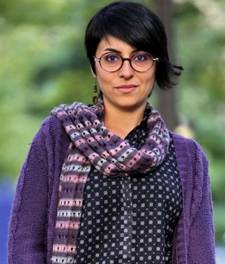 Peyvand Firouzeh specializes in the art and architecture of the Islamic world, with a focus on Iran, Central Asia, and India in the medieval period. She is particularly interested in interconnections between architecture and power, patronage of art and architecture, cross-cultural exchanges between Iran and India, and museum studies. Firouzeh obtained her BA (2004) and MA (2007) in architecture from the Tehran University of Art in Iran and her MPhil (2011) and PhD (2015) in the history of art and architecture and Asian and Middle Eastern studies from the University of Cambridge in England. She was the acting curator of Islamic collections from Iran, Central Asia, and India at the British Museum in London in 2014–15. Firouzeh is currently a fellow of art histories and aesthetic practices (2015–16) at the Forum Transregionale Studien and Museum für Islamische Kunst in Berlin, where she is working on a new project, “Depicted Legitimacy: Sufi-Sultan Encounters in the Visual and Textual Cultures of South Asia.”
 Lev Maciel graduated from the Medieval Studies Department at Lomonosov Moscow State University in Russia in 1998, with an M.A. thesis on fifteenth-century Spanish history. His dissertation on eighteenth-century Siberian architecture earned him a PhD in 2004 from the State Institute for Art History in Moscow. Currently Maciel is an associate professor in the Faculty of Humanities of the National Research University Higher School of Economics in Moscow, where he supervises the recently created program in art history. He is also a part-time research associate professor at the Institute for Theory and History of Architecture and Town Planning in Moscow. Maciel’s research interests include a wide range of subjects within the history of architecture, including the late Renaissance and Baroque (Russia, southern Italy, Brittany, Spain, and Latin America), late antiquity and Byzantium, the Islamic world, Mongolia and Tibet, and nonmodernist movements in the twentieth century.
 Emmanuel Moutafov is a Byzantinist, art historian, and epigrapher who holds a PhD in world history of the fifteenth to nineteenth centuries from the Institute for Balkan Studies at the Bulgarian Academy of Sciences in Sofia. He has been a visiting research fellow at the Program in Hellenic Studies at Princeton University; a Mellon Foundation fellow at the Institute for Advanced Studies in Berlin; a Mellon Foundation fellow at the W. F. Albright Institute of Archaeological Research in Jerusalem; and a Getty Foundation research fellow in the summer research group Visions of Byzantium in Istanbul, Turkey. In 2013 he became a supervisor of research at the board of directors of the Institute for Art Studies at the Bulgarian Academy of Sciences and last year was appointed a director of the same institute.
 Ceren Özpınar is a lecturer and a scholar of art historiography and the history of art whose research covers feminist temporalities in art historiography and contemporary art in Turkey. She is currently a British Academy Newton International Fellow in the Department of Art History at the University of Sussex (2015-17). Özpınar received a PhD in the history of art from Istanbul Technical University in 2015, with a thesis on the historiography of contemporary art in Turkey. In 2013, she held a one-year position of visiting research fellow at the University of Leeds, for which she was awarded a doctoral research grant by the Scientific and Technological Research Council of Turkey. She is among the authors of National Art Histories in an Unfinished World (forthcoming from McGill-Queen’s University Press). Özpınar teaches undergraduate and graduate courses in art history, art management, and visual culture.
 Horacio Ramos is a Peruvian art historian who specializes in Latin American vanguardism and neovanguardism. He teaches at the Pontificia Universidad Católica del Perú in Lima and also works as researcher at Museo de Arte de Lima. Ramos holds a BA in philosophy and an MA in art history from the Universidad Católica. In previous research, he explored the reform of Lima’s main square (or Plaza de Armas) during the first half of the twentieth century, a complex process that involved debates about nationalism, architectural heritage, and modernism. Currently he is focusing on how invasiones (precarious urban settlements at the periphery of Peruvian cities) have been represented in documentary photography and neovanguardist art of the later twentieth century. Since invasiones and abandoned archeological ruins share the deserted landscape of the coast, his investigation seeks to trace the complex interconnections between art, archeology, landscape, and social exclusion.
 Olaya Sanfuentes Echeverría earned a bachelor’s degree in history from the Pontificia Universidad Católica de Chile in Santiago, a master of arts from Georgetown University in Washington, DC, and a PhD in art history from the Universitat Autònoma de Barcelona in Spain. She is a professor at the Institute of History, a part of the Department of History, Geography, and Political Science at the Pontificia Universidad Católica de Chile. Sanfuentes’s current research focuses on devotional practices involving art, especially religious statues used in festivals and rites in honor of the saints and virgins in Andean communities, as well as similar practices related to nativity cribs. More generally, Sanfuentes is interested in practices surrounding visual representations, history, and material culture, and how communities deal with cultural heritage.
 Paulo Silveira holds bachelor’s degrees in fine arts (with qualifications in drawing and painting) and in communication studies from the Universidade Federal do Rio Grande do Sul in Porto Alegre, Brazil. He earned an MA and PhD in visual arts, with an emphasis in art history, theory, and criticism, from the same university. His graduate studies included doctoral research in France at the Université Paris 1 Panthéon-Sorbonne. Silveira is a professor of art history at the Instituto de Artes at the Universidade Federal do Rio Grande do Sul. His research interests include visual arts, with a focus on the formal and contextual study of the artistic process, the intellectual and artistic foundations of contemporary art, intermedia, perception of works of art, aesthetics, rhetoric of artist’s publications, and methodology. Silveira is a member of the Brazilian Committee of Art History and the National Association of Researchers in Fine Arts (serving on its committee for history, theory, and criticism).
 Sandra Uskoković is an assistant professor in the Department of Arts and Restoration at the University of Dubrovnik in Dubrovnik, Croatia. Her primary areas of research include architectural theory, modern architecture, urban culture, performance art, and cultural studies and heritage. She received an MA in architectural history and heritage preservation from George Washington University in Washington, DC, and a PhD in historic preservation and architectural history from the University of Zagreb. During 2002–3 Uskoković served as an intern at the International Centre for the Study of the Preservation and Restoration of Cultural Property in Rome, Italy, and at the International Committee on Monuments and Sites (US/ICOMOS) in Washington, DC. She is a member of the ICOMOS Scientific Committee on Twentieth-Century Heritage and has participated in conferences on international preservation. Uskoković is the author of three books: Modern Architectural Heritage of Dubrovnik (Zagreb: Antibarbarus, 2010), Contemporary Design in Historic Settings (Zagreb: Antibarbarus, 2013), and Architect Lovro Perković: Sensibility of Space Design (Zagreb: Ex Libris, 2015). She also has published numerous articles in academic and artistic journals. Since 2015 she has coordinated a regional interdisciplinary forum for research in urban culture in the Balkans, called Urban Hum.
For more information about the CAA-Getty International Program, please contact project director Janet Landay at jlanday@collegeart.org or 212-392-4420.