CAA News Today
Support CAA’s Journals through the Publications Fund
posted Dec 15, 2014
This was an exciting year for CAA’s publications—for the very first time The Art Bulletin and Art Journal were published online using a multi-media platform that allows authors to include video and hyperlinks directly in their essays, and caa.reviews became fully open-access with broader interactive functionality coming soon. Most important, the journals continued to bring readers more of what they expect from the world’s leading publisher of art history journals: exceptional in-depth scholarship exploring the full range of the visual arts, in formats as diverse as long-form essays, innovative artists’ projects, and critical reviews. It is the support of readers like you that enable CAA to carry out this vital work.
Because you share our mission of advancing the highest standards of intellectual engagement in the arts, please make a tax-deductible gift to the Publications Fund today.
Here are some recent highlights from CAA publications:
In The Art Bulletin:
- Continued support of the long-form, peer-reviewed essay, including John K. Papadopoulos reinterpreting the Greek fifth-century BCE Motya Youth, Douglas Brine on the architectural and cultural context of a Jan van Eyck painting, Aaron Wile identifying a distinctly modern sense of self in Wattaeu’s fête galantes, and Joseph Siry on Frank Lloyd Wright’s theater for Dallas
- In the recurring “Whither Art History?” Cheng-Hua Wang examines artistic interaction between China and Europe in the early modern period
- Reviews of books on a wide variety of topics, from Maya art to sixteenth-century sculpture in Florence, from the politics of Mughal architecture to the materiality of color
In Art Journal:
- Projects by artists such as the sculptor Conrad Bakker, the British animator Jonathan Hodgson, and Karen Schiff, whose colorful drawings intervened in the very fabric of the printed journal
- A forum devoted to conceptual art in Latin America in the 1970s, a time of political oppression and upheaval, featuring four essays in the original Spanish and Portuguese with facing-page English translations
- The journal’s open-access website relaunched with a new name, Art Journal Open, and a new editor, the new-media scholar and curator Gloria Hwang Sutton
- Reviews of monographs on the artists Forrest Bess; books by Claire Bishop, Tom Finkelpearl, and Lev Manovich; and a Le Corbusier exhibition at MoMA
In caa.reviews:
- New Field Editor position established for reviews covering Digital Humanities and Art History
- Over 150 book and exhibition reviews across many subject areas and geographic regions
With your support, CAA publications will continue to delight, challenge, and engage readers for many years to come. Contributors who give at a level of $250 or higher are prominently acknowledged in the publication they support for four consecutive issues, as well as on the publication’s website for one year and through CAA News. On behalf of the scholars, critics, and artists who publish in the journals, we thank you for your continued commitment to maintaining a strong and spirited forum for the visual-arts community.
With best regards,
Suzanne Preston Blier
Vice President for Publications
Grants, Awards, and Honors
posted Dec 15, 2014
CAA recognizes its members for their professional achievements, be it a grant, fellowship, residency, book prize, honorary degree, or related award.
Grants, Awards, and Honors is published every two months: in February, April, June, August, October, and December. To learn more about submitting a listing, please follow the instructions on the main Member News page.
December 2014

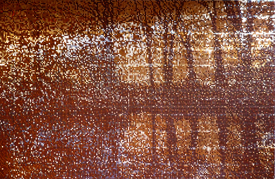 Richard Barlow, Pixelated Bromide, plastic sequins and latex paint, 132 x 204 in. (artwork © Richard Barlow)
Richard Barlow, an artist, musician, and assistant professor of art at Hartwick College in Oneonta, New York, has received the 2014 Jerome Foundation Travel and Study Grant and the 2014 Hartwick College Faculty Development Grant.

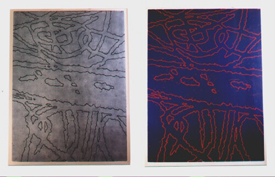 Two podographs by Mark Staff Brandl, 2012 (artwork © Mark Staff Brandl)
Mark Staff Brandl, an artist and art historian based in Trogen, Switzerland, has completed an artist residency in the Italian village of Portico di Romagna, where he made drawings and had a small exhibition.

Abigail DeVille, an artist based in Bronx, New York, has won a 2014 emerging-artist grant of $10,000 from the Rema Hort Mann Foundation, based in New York.

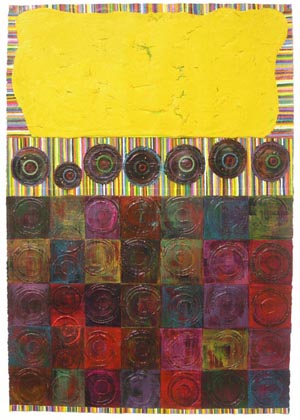 Reni Gower, Pivot.6, 2010, acrylic on paper, mounted on canvas-covered panel, 38 1/2 x 27 in. Collection of Harry L. Davis, Leesburg, VA (artwork © Reni Gower)
Reni Gower, an artist and professor of painting and printmaking at Virginia Commonwealth University in Richmond, has completed an artist residency at the Center for Book and Paper Arts at Columbia College Chicago, where she worked with the center’s team to explore pulp painting, blow-outs, and watermarks.
James Herring, exhibitions manager and designer for the Patricia and Phillip Frost Museum of Science in Miami, Florida, has received a $10,000 exhibition research grant from the Center for Craft, Creativity, and Design, based in Asheville, North Carolina.

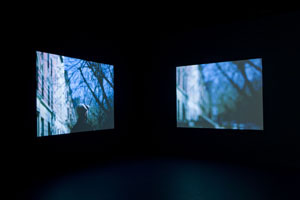 Leslie Hewitt in collaboration with Bradford Young, Untitled (Level), 2010, dual-channel video projection, 35mm film transferred to digital video, 1:00 min. loop. Studio Museum in Harlem, Museum Purchase with funds provided by the Acquisition Committee 10.8.1 (artwork © Leslie Hewitt)
Leslie Hewitt, an artist based in New York and Houston, Texas, has been named a USA Francie Bishop Good and David Horvits Fellow in Visual Arts by United States Artists. The award comes with an unrestricted $50,000 prize.
Faheem Majeed, associate director and faculty in the School of Art and Art History at the University of Illinois in Chicago, and Jeremiah Hulsebos-Spofford, a teacher of sculpture at the Chicago High School for the Arts and in the Contemporary Practices Department of the School of the Art Institute of Chicago, have earned a 2014–15 DCASE Studio Artist Residency Award from their city’s Department of Cultural Affairs and Special Events and the Joyce Foundation.
Norie Sato, an artist based in Seattle, Washington, has been recognized twice this year: the 2014 Public Art Network Leadership Award from Americans for the Arts, awarded in June at that organization’s conference in Nashville, Tennessee; and the 2014 Governor’s Art and Heritage Award for an Independent Artist, conferred by her state’s government at the end of October.
Alex J. Taylor, an Australian art historian of modern American art and visual culture, has been appointed to a three-year position at Tate as the Terra Foundation Research Fellow in American Art by the London–based museum and Chicago’s Terra Foundation for American Art.
Hilary Wilder has accepted a 2014–15 artist’s residency from the Galveston Artist Residency in Texas.
Exhibitions Curated by CAA Members
posted Dec 15, 2014
Exhibitions Curated by CAA Members
Check out details on recent shows organized by CAA members who are also curators.
Exhibitions Curated by CAA Members is published every two months: in February, April, June, August, October, and December. To learn more about submitting a listing, please follow the instructions on the main Member News page.
December 2014
Katerina Lanfranco. PostPartumParty. Rhombus Space, Brooklyn, New York, November 21–December 14, 2014.
Katerina Lanfranco. Funkdafied. Rhombus Space, Brooklyn, New York, October 17–November 9, 2014.
Melody Rod-ari. Home and Away: The Printed Works of Ruth Asawa. Norton Simon Museum, Pasadena, California, September 19, 2014–January 19, 2015.
Jan Wurm. Closely Considered: Diebenkorn in Berkeley. Richmond Art Center. Richmond, California, September 14–November 16, 2014.
Books Published by CAA Members
posted Dec 15, 2014
Publishing a book is a major milestone for artists and scholars—browse a list of recent titles below.
Books Published by CAA Members appears every two months: in February, April, June, August, October, and December. To learn more about submitting a listing, please follow the instructions on the main Member News page.
December 2014

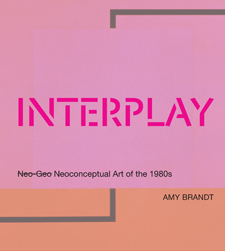
Amy Brandt. Interplay: Neo-Geo Neo-Conceptual Art of the 1980s (Cambridge, MA: MIT Press, 2014).

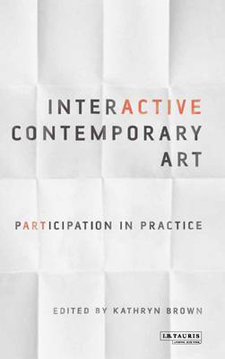
Kathryn Brown, ed. Interactive Contemporary Art: Participation in Practice (London: I. B. Tauris, 2014).

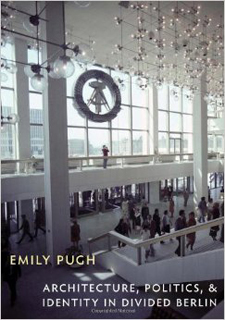
Emily Pugh. Architecture, Politics, and Identity in Divided Berlin (Pittsburgh: University of Pittsburgh Press, 2014).

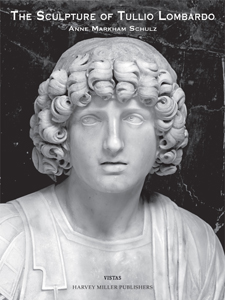
Anne Markham Schulz. The Sculpture of Tullio Lombardo (Turnhout, Belgium: Harvey Miller, 2014).
Finalists for the 2015 Morey and Barr Awards
posted Dec 11, 2014
CAA is pleased to announce the finalists for the 2015 Charles Rufus Morey Book Award and the Alfred H. Barr Jr. Award. The winners of both prizes, along with the recipients of ten other Awards for Distinction, will be announced in mid-December and presented during Convocation in New York, in conjunction with the 103rd Annual Conference.
Charles Rufus Morey Book Award
The Charles Rufus Morey Book Award honors an especially distinguished book in the history of art, published in any language between September 1, 2013, and August 31, 2014. The four finalists for 2015 are:
- Megan Holmes, The Miraculous Image in Renaissance Florence (New Haven: Yale University Press, 2013)
- Matthew C. Hunter, Wicked Intelligence: Visual Art and the Science of Experiment in Restoration London (Chicago: University of Chicago Press, 2013)
- Karl Whittington, Body-Worlds: Opicinus de Canistris and the Medieval Cartographic Imagination (Toronto: Pontifical Institute of Medieval Studies, 2014)
- Catherine Zuromskis, Snapshot Photography: The Lives of Images (Cambridge, MA: MIT Press, 2013)
Alfred H. Barr Jr. Award
The Alfred H. Barr Jr. Award for museum scholarship is presented to the author(s) of an especially distinguished catalogue in the history of art, published between September 1, 2013, and August 31, 2014, under the auspices of a museum, library, or collection. The two finalists for 2015 are:
- Kimberly A. Jones, et al., Degas/Cassatt (Washington, DC: National Gallery of Art and DelMonico Books, 2014)
- Susan Weber, ed., William Kent: Designing Georgian Britain (New York: Bard Graduate Center: Decorative Arts, Design History, Material Culture; New Haven: Yale University Press, 2013)
The Barr jury did not shortlist any books for the second Barr Award for Smaller Museums, Libraries, or Collections.
The presentation of the 2015 Awards for Distinction will take place on Wednesday evening, February 11, 5:30–7:00 PM, at the New York Hilton Midtown. The event is free and open to the public. For more information about CAA’s Awards for Distinction, please contact Lauren Stark, CAA manager of programs and archivist.
Committee on Women in the Arts Picks for December 2014
posted Dec 10, 2014
Each month, CAA’s Committee on Women in the Arts selects the best in feminist art and scholarship. The following exhibitions and events should not be missed. Check the archive of CWA Picks at the bottom of the page, as several museum and gallery shows listed in previous months may still be on view or touring.
December 2014
Suzanne Lacy: Gender Agendas
Museo Pecci Milano
Ripa di Porta Ticinese 113, Milan, Italy
November 14, 2014–January 6, 2015
The Milan Pecci Museum is presenting a Suzanne Lacy’s Gender Agendas. This retrospective exhibition launches a whole new line of investigation at the the Centre for Contemporary Art Luigi Pecci that has been dedicated to the pioneering work in the arts developed internationally in the sixties, seventies, and eighties. Born in California in 1945 and based in Los Angeles, Lacy is an influential artist, educator, and writer. She is known as one of the pioneer artists blending Conceptual and Performance art with social commitment in the early seventies in Los Angeles. Her approach to researching and making follows her questioning the relationship of “service” to “activism,” and of both to “art practice.” Her diverse approach to this investigation stretches from explorations of the body and intimate reflections to the production of large and lengthy public demonstrations involving dozens of artists and thousands of spectators.
Gender Agendas presents, for the first time in Europe, a large series of Lacy’s projects that follow a constant of her artistic development: the investigation of the female condition. From a more intimately approach to a strong political and civic one, Lacy explores the power of art as a useful and effective tool for social struggle and for the promotion of progressive ideas, digging in this way into the meanings of the hundreds of anonymous female and working-class performers who would have no access to the communication systems otherwise. Sexual exploitation, violence, media representation of the aging woman, and social issues ranging from racism to the conditions of labor and class may have been provocative and avant-garde in the seventies and eighties, but are still deeply relevant today.
Through the curatorial approach of Lacy’s retrospective exhibition, Fabio Cavallucci and Megan Steinman, propose a readaptation of some of her most important works, including Prostitution Notes (1974); Three Weeks in May (1977); In Mourning and In Rage (1977); The Crystal Quilt (1985–87); and Full Circle (1994); as well as one of her most recent projects, Storying Rape (2012), a discussion among significant personalities in the media, activists, and politicians in an attempt to find a new cultural narrative that describes sexual violence.
Birgit Jurgenssen
Fergus McCaffrey
514 West 26th Street, New York, NY 10001
November 6–December 20 2014
For the second exhibition of Birgit Jurgenssen, Fergus McCaffrey brings together a large group of her photographic works in combination with a number of sculptures in order to underscore the variety and complexity of her work.
Highly experimental, Jurgenssen’s photographic work is exemplified by her Stoff-arbeiten (Fabric Works), which were created from the late 1980s to the early 1990s. The “fabric works” consist of photographic prints mounted on canvases that have been screwed to iron frames made by the artist, giving a highly sculptural character to their combinations. Thin, translucent fabrics such as gauze are stretched over the surface, veiling and slightly obscuring the images. The photographs themselves are created through a range of processes, including photograms, solarization, and multiple exposures. The juxtaposition of hard-welded iron frames and delicate textile emphasizes their materiality and draws a direct relationship to Jürgenssen’s sculptural works.
The exhibition also includes works that Jurgenssen referred to as “painted” photography. These large format photograms were created by manipulating sheets of photo paper in developer and fixing baths and by pouring photo chemicals directly over the paper. The resulting marbled and dripped images were then exposed to light and fixed, after which the surfaces were scratched, creating gestural drawings over the “painted” photographic surfaces.
Born and educated in Vienna, Jürgenssen (1949–2003) died prematurely at the age of 54. Her studio practice encompassed drawing, performance, photography, and sculpture, through which she compellingly combined classically refined draftsmanship, mixed media, and experimental photo techniques. She is best known for her connection to the Austrian feminist movement of the 1970s. Equally important is her engagement with Surrealism and her concern for materials and processes.
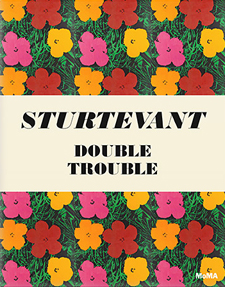
Cover of the catalogue for Sturtevant: Double Trouble
Sturtevant: Double Trouble
Museum of Modern Art
Special Exhibitions Gallery, Third Floor; and Sue and Edgar Wachenheim III Painting and Sculpture Gallery, Gallery 5, Fifth Floor, 11 West 53rd Street, New York, NY 10009
November 9, 2014–February 22, 2015
Elaine Sturtevant (American, 1924–2014) began “repeating” the works of her contemporaries in 1964, using some of the most iconic artworks of her generation as a source and catalyst for the exploration of originality, authorship, and the interior structures of art and image culture. Beginning with her versions of works by Jasper Johns and Andy Warhol, she initially turned the visual logic of Pop art back on itself, probing uncomfortably at the workings of art history in real time. Yet her chameleonlike embrace of other artists’ art has also resulted in her being largely overlooked in the history of postwar American art. As a woman making versions of the work of better-known male artists, she has passed almost unnoticed through the hierarchies of midcentury modernism and postmodernism, at once absent from these histories while nevertheless articulating their structures.
Far more than copies, her versions, for instance, of Johns’s flags, Warhol’s flowers, and Joseph Beuys’s fat chairs are studies in the action of art that expose aspects of its making, circulation, and canonization. Working primarily in video since 2000, the artist remained deeply engaged with the politics of image production and reception, using stock footage from Hollywood films, television, and advertising to point to the exhaustion built into much of postwar cultural production.
This exhibition is the first comprehensive survey in America of Sturtevant’s fifty-year career and the only institutional presentation of her work organized in the United States since her solo show at the Everson Museum of Art in 1973. Rather than taking the form of a traditional retrospective, the exhibition offers a historical overview of her work from a contemporary vantage point, interspersing more recent video pieces among key artworks from all periods of her career.
Michelle Stuart: Silent Movies
Leslie Tonkonow: Art Works and Projects
535 West 22nd Street, Sixth Floor, New York, NY 10011
November 1–December 20, 2014
Michelle Stuart (American, b. 1933) became internationally known in the 1970s for innovative works that synthesize Land art, drawing, and sculpture, as well as her pioneering use of natural materials in sculpture, painting, and drawing. Since 2011 photography has been her primary medium, although present in her work both literally and conceptually since the 1970s. Devising a highly personal and original method of photographic manipulation, Stuart conveys the impression of deeply felt images seen through time and layers of consciousness. It is “a combination of fact and fiction, truth and lies—and lies that tell the truth,” as put by the artist.
The exhibition at Leslie Tonkonow comprises photographs drawn from Stuart’s vast archive of analogue and digital photographs taken for almost half a century. Stuart activates their aesthetic and storytelling potential by arranging them in gridlike groups or occasionally altering them. Each work is composed of between seven and seventy separate images, digitally printed on 8½ x 11 inch sheets of archival paper. Both painterly and cinematic in their rhythmic visual arrangement, the works in this exhibition amount to meditations on the nature of memory.
As dreamlike recollections of her past, these works continue her lifelong artistic engagement with specific locations, while affirming the significance of place as a unique source of memory. “Memories are silent until we either articulate them in words on paper or depict them visually,” as put by the artist herself. Two years ago, in Palimpsests, her first solo show of exclusively photographic works, Stuart expressed thoughts on war, the cosmos, the passing of time, and on form itself. The compositions in Silent Movies, all created since then, present universal themes with deeply personal associations that contain keys to momentous events and evoke times and places in a manner that is both specific and archetypical. With abundant literary, cinematic, and historical references, these works do not merely address memories, but, as put in the press release, the very process of recall itself.
News from the Art and Academic Worlds
posted Dec 10, 2014
Each week CAA News publishes summaries of eight articles, published around the web, that CAA members may find interesting and useful in their professional and creative lives.
What’s a “Work for Hire” and Why Should You Care?
A provost learns to his dismay that the university shares copyright ownership of a popular MOOC with the professor who created it. A professor finds to her surprise that students who helped produce an animation to illustrate a lecture are co-owners of the copyright. Yet another professor, who wrote and put together a video for his course, is shocked to learn that the university that employs him and the company that produced the video share copyright ownership of it—without him. (Read more from the Chronicle of Higher Education.)
Artists Call the Shots
When Gustave Courbet organized an exhibition of his work in 1855, it was a radical act—but now artist-curators are everywhere. That raises some questions: Do the restrictions faced by institutional curators lead to more historically accurate exhibitions? Does the pluralist attitude that fosters artist-curated shows open the door to curatorial misconceptions? Are artists simply more likely to get it wrong than academic curators? (Read more from the Art Newspaper.)
Help Desk: Participatory Project
I’m an artist working with a poor family on a participatory project at a local museum. The family is Latino, and the project is about the members’ perceptions on art. Who might I talk to or where might I look for similar projects, or even guidance on working with this population? I’m neither Latino nor poor. (Read more from Daily Serving.)
Are Museums The Best Place to Appreciate Art?
Philippe de Montebello, the longest-serving director of the Metropolitan Museum of Art in its history, discusses how and why we look at art. In his new book, Rendez-vous with Art, he reflects on the importance of museums but wonders if they might be the worst possible places to look at art. (Read more from WNYC.)
Where the Time Goes
New data about time to degree in PhD programs from the American Academy of Arts and Sciences complicate some current reform efforts to help students get through graduate school faster. At the same time, the data suggest that real time to degree is shorter than many people think it is, and that it’s decreasing in some disciplines—albeit slowly. (Read more from Inside Higher Ed.)
War Can Both Inspire and Inhibit Artistic Creativity
War can inhibit creativity. Societies engaged in conflict have fewer resources to spend on art; they also often restrict the freedom artists require. On the other hand, war can inspire creativity. Patriotic creators might feel an impulse—or receive an order—to create works intended to unite and galvanize the citizenry. Given those cross-currents, no wonder researchers have found an “ambiguous and counterintuitive relationship between war and the arts,” in the words of Karol Jan Borowiecki of the University of Southern Denmark. (Read more from Pacific Standard.)
Are There Banner Works of Art on Instagram?
For me, Instagram is a land of the midnight sun, a wide-open place that’s always lit up, bristling with visions, pictures, strangers, shooting stars, screwballs, and well-known artists posting images from everywhere, together creating this immense abstract missive or amazing rebus that seems to speak just to me, the curious curator of my own lit-up Instagramland. (Read more from Vulture.)
Learning to Love the Conference
In 2012, I was all set for the most important conference of my life. All three major branches of musicology would be there: theorists, musicologists, and ethnomusicologists. It was going to be my last real year on the academic job market, and, despite my rapidly aging degree, I was well positioned. I had conference interviews. I had meetings scheduled with publishers. I was going to put everything into that conference. (Read more from Vitae.)
Meet the 2015 Participants in the CAA-Getty International Program
posted Dec 04, 2014
CAA has published short biographies for this year’s recipients of travel support through the CAA-Getty International Program. In an effort to promote greater interaction and exchange between American and international art historians, CAA will bring scholars from around the world to participate in the 2015 program, held during the association’s Annual Conference in New York City from February 11–14, 2015. This is the fourth year of the program, which has been generously funded by grants from the Getty Foundation since its inception. The participants—professors of art history, curators, and artists who teach art history—were selected by a jury of CAA members from a highly competitive group of applicants. In addition to covering travel expenses, hotel accommodations, and per diems, the CAA-Getty International Program includes support for conference registration and a one-year CAA membership.
Click here to read the biographies of the fifteen participants.
News from the Art and Academic Worlds
posted Dec 03, 2014
Each week CAA News publishes summaries of eight articles, published around the web, that CAA members may find interesting and useful in their professional and creative lives.
Is the Cultural Sector Ready to Move Beyond Data for Data’s Sake?
As any internet geek or high-priced consultant will tell you, we find ourselves today in the age of Big Data. You know, the era when science and numbers are supposed to solve all our problems forever? That one. And yet in the cultural sector, according to a report published earlier this year, we don’t have the data we need; we don’t know what to do with the data we have; and even if we did, we still wouldn’t use it to make decisions. (Read more from Createquity.)
Whose Work Is It Really? On the Much-Maligned Role of the Artist’s Assistant
The job of artist’s assistant has a confusing reputation in the press. Articles about the ongoing saga of Jasper Johns’s civil suit against his longtime assistant for the theft and sale of $3.4 million of his drawings is a prime example of the way the media talks about the relationship between artist and assistant. The horrifyingly theft aside, one recent article about the incident presents the power difference between an artist and his assistant as tauntingly acute and palpable. (Read more from Artslant.)
Assessing Assessment
In higher education circles, there is something of a feeding frenzy surrounding the issue of assessment. The federal government, due to release a proposed rating system later this fall, wants assessments to create ways to allow one to compare colleges and universities that provide “value”; accrediting organizations want assessments of student learning outcomes; state agencies want assessments to prove that tax dollars are being spent efficiently; institutions want internal assessments that they can use to demonstrate success to their own constituencies. (Read more from Inside Higher Ed.)
Help Desk: Ghost in the Art-Writing Machine
I’m a young curator and an arts writer with a museum job, but like everyone in the world, I can always use extra money. I’ve been approached before about “ghostwriting” for more established curators who get asked to write catalogue essays for galleries and small exhibition projects. In general, I feel weird but not too weird about this. After all, I like the practice and the opportunity to think about an artist’s work that I might not otherwise consider or know of. (Read more from Daily Serving.)
Teaching Feminism in Relation to Contemporary Art
Survey courses in contemporary art have tended to organize the field through movements, tendencies, and geographical areas. Women artists have been present in every movement, in every country, and in increasing numbers in contemporary art—approximately 20 to 40 percent of biennials and retrospectives and 40 to 50 percent of all artists today. It is possible to introduce a broad range of examples and case studies of work by women artists into every lecture. (Read more from Art History Teaching Resources.)
Paint and Paper: Making a Watercolor
Watercolor paper is an active part in the creation of a painting, for watercolor artists paint with their paper rather than simply upon it. For this reason, the watercolor paper an artist selects influences both the painting process and the finished work. Paper choice can be as personal as color palette and subject, and it is not unusual for a painter to have a favorite paper surface from a specific manufacturer. (Read more from Just Paint.)
A Letter to My Younger Self
Well you’ve done it. You started graduate school and, at two months in, you are beginning to get the hang of things. By now you’ve figured out that the coffee from the cafe downstairs is terrible, but at least this end of campus has all the good food trucks. You’re meeting people who will turn out to be incredible colleagues and friends. You’ve also developed a few organizational habits already, even though it’s been a chaotic start to the semester. I’m writing to let you know how unbelievably helpful those habits are going to be over the next five years. (Read more from Vitae.)
Professors’ Place in the Classroom Is Shifting to the Side
Professors have long made assumptions about their place in the classroom. They have seen themselves as the experts whose job is to transmit a body of knowledge, typically through a lecture. Students are there to absorb content. But after years of exhortations for faculty members to become guides on the side instead of sages on stage, those assumptions are shifting, and they carry consequences that could be significant for professors and students. (Read more from the Chronicle of Higher Education.)
What’s Next?
As part of my job, I mentor graduate students and early career faculty through the transition to nonacademic jobs. These career-changers have usually thought long and hard about their decision to seek a nonacademic career. It is not something that anyone seeking my help takes lightly. The most common thing I hear from my students and clients is, “I don’t know how to even begin looking for other types of jobs.” (Read more from Inside Higher Ed.)
Fall 2014 Recipients of the Millard Meiss Publication Fund
posted Dec 03, 2014
This fall, CAA awarded grants to the publishers of nine books in art history and visual culture through the Millard Meiss Publication Fund. Thanks to the generous bequest of the late Prof. Millard Meiss, CAA gives these grants to support the publication of scholarly books in art history and related fields.
The nine Meiss grantees for fall 2014 are:
- Amy R. Bloch, Lorenzo Ghiberti’s “Gates of Paradise”: Humanism, History, and Artistic Philosophy in the Italian Renaissance, Cambridge University Press
- Elena Boeck, Imagining the Byzantine Past, Cambridge University Press
- Palmira Brummett, Mapping the Ottomans: Sovereignty, Territory, and Identity in the Early Modern Mediterranean, Cambridge University Press
- Robert DeCaroli, Image Problems: The Origin and Development of the Buddha’s Image in Early South Asia, University of Washington Press
- Lisa Pon, Printed Icon: Forlì’s Madonna of the Fire in Early Modern Italy, Cambridge University Press
- Maggie Popkin, The Architecture of the Roman Triumph: Monuments, Memory, and Identity, Cambridge University Press
- Stephanie Porras, Pieter Bruegel’s Historical Imagination, Pennsylvania State University Press
- Mary Roberts, Istanbul Exchanges: Ottomans, Orientalists, and Nineteenth-Century Visual Culture, University of California Press
- Freek Schmidt, Passion and Control: Dutch Architectural Culture of the Eighteenth Century, Ashgate
Books eligible for Meiss grants must already be under contract with a publisher and on a subject in the visual arts or art history. Authors must be current CAA members. Please review the application guidelines for more information.