CAA News Today
Solo Exhibitions by Artist Members
posted Oct 22, 2014
See when and where CAA members are exhibiting their art, and view images of their work.
Solo Exhibitions by Artist Members is published every two months: in February, April, June, August, October, and December. To learn more about submitting a listing, please follow the instructions on the main Member News page.
October 2014
Mid-Atlantic

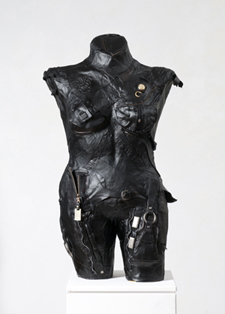 Linda Stein, Defender 696, 2010, leather, metal, and mixed media, 38 x 22 x 14 in. (artwork © Linda Stein)
Linda Stein. HUB Gallery, HUB-Robeson Center, Pennsylvania State University, University Park, Pennsylvania, September 5–November 20, 2014. The Fluidity of Gender: Sculpture by Linda Stein. Sculpture.
Northeast

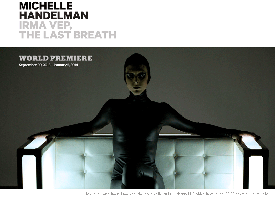 Michelle Handelman, Irma Vep, the last breath, 2013, 4-channel HD video installation, 33:00 min. (artwork © Michelle Handelman; photograph by Laure Leber)
Michelle Handelman. NewFest, Lincoln Center, New York, July 27, 2014. Irma Vep, the Last Breath. Single-channel video.

Michael Rich. Old Spouter Gallery, Nantucket, Massachusetts, August 8–21, 2014. A Season’s Journey, Not Far from Home. Painting.
West
Angela Ellsworth. Lisa Sette Gallery, Scottsdale, Arizona, January 2–February 1, 2014. Volume. Works on paper and cardboard.
Michelle Handelman. Outfest, REDCAT, Los Angeles, California, July 19, 2014. Irma Vep, the Last Breath. Single-channel video.
News from the Art and Academic Worlds
posted Oct 22, 2014
Each week CAA News publishes summaries of eight articles, published around the web, that CAA members may find interesting and useful in their professional and creative lives.
AIA Statement on the Recent Sale of Artifacts by the St. Louis Society
The Archaeological Institute of America has learned with grave concern that the AIA St. Louis Society has sold a collection of Egyptian artifacts entrusted to its care. These objects were intended to benefit the citizens of St. Louis by helping them to understand the record of past human achievement. The decision to sell these objects after a century of custodianship contravenes this expectation. (Read more from the Archaeological Institute of America.)
Publishers Win Reversal of Court Ruling That Favored “E-Reserves” at Georgia State University
How much copyrighted material can professors make available to students in online course reserves before they exceed the boundaries of educational fair use? That’s the essential question at the heart of a long-running copyright-infringement lawsuit that has pitted three academic publishers against Georgia State University. Last week, in a setback for the university, a federal appeals court reversed a May 2012 ruling that mostly favored Georgia State. (Read more from the Chronicle of Higher Education.)
Nurturing Talent
Design education leaves designers lacking in business skills—it’s hard enough to learn to be a designer, but there needs to be a next step for the business side that caters to the entrepreneur. Who wants to spend two years getting an MBA if you’ve got a hot idea? We need a place where smart, talented designers can get an on-demand education about how to start a business, which includes everything from financial planning and costing to how to stay out of trouble. (Read more from Metropolis.)
“Looking” at Art in the Smartphone Age
“Beyoncé and Jay-Z Take Selfie with Mona Lisa!” headlines all over the internet blared. And it’s true, the first couple of American pop culture did take a photo of themselves in front of one of the masterpieces of European art history. But in the instantly iconic image, the two musicians aren’t even looking at the famous work of art that they knowingly appropriate. In fact, they have their backs turned to it, with the Mona Lisa’s face poking out over their shoulders like a photobomb across the centuries. (Read more from Pacific Standard.)
Soft Fabrics Have Solid Appeal
Once dismissed as utilitarian, homespun, and intellectually flimsy, textiles are gaining international stature in art museums. The artist Richard Tuttle just unveiled a vast installation in Tate Modern’s Turbine Hall, called I Don’t Know, or the Weave of Textile Language, while new and older works are on view in his retrospective at the Whitechapel Gallery in east London. Meanwhile, there are shows on fiber art, weaving, and embroidery at the Drawing Center in New York and the Institute of Contemporary Art, Boston. (Read more from the Art Newspaper.)
Hanging a Tapestry in the Met Is a Lot More Complicated Than You Think
The Metropolitan Museum of Art recently opened a new exhibition: Grand Design, a collection featuring nineteen massive tapestries by the Renaissance master Pieter Coecke van Aelst. The tapestries are epic, intricate pieces, spanning up to thirty feet in length and weighing an average of one hundred pounds—which begs the question of how, exactly, the museum hangs them. (Read more from Slate.)
The Confidence Gap in Academic Writing
As a writing workshop instructor, I’ve become familiar with the garden-variety problems that graduate students face in writing a dissertation. Often those difficulties boil down to an avoidance of the daily grind of writing itself. Sometimes students lack any concrete feedback on their drafts or receive comments that are too general to be of much help in the revision process. Many students are unfamiliar with the tricks and tools of the writing trade itself—things like reverse outlines, free writing, or “storyboarding.” (Read more from Vitae.)
Managing Your Academic Career
In my ten years of interviewing and/or observing approximately one hundred faculty members at various types of institutions, I have learned a great deal about how to shape and manage academic work in ways that promote meaningful, balanced, and satisfying careers. To prepare for a presentation at new faculty orientation at Saint Joseph’s University, I reviewed the field notes, interview transcripts, and publications from my past studies with one question in mind: What strategies might best help new faculty members manage their academic careers during a time of rising expectations, decreasing resources, and diminishing boundaries between work and life? (Read more from Inside Higher Ed.)
caa.reviews Seeks 2014 Doctoral Dissertations
posted Oct 21, 2014
Dissertation titles in art history and visual studies from American and Canadian institutions, both completed and in progress, are published annually in caa.reviews, making them available through web searches. PhD-granting institutions may send a list of their doctoral students’ dissertation titles for 2014 to dissertations@collegeart.org. The complete Dissertation Submission Guidelines regarding the format of listings are now available. CAA does not accept listings from individuals. Improperly formatted lists will be returned to sender. For more information, please write to the above email address or visit the guidelines page. Deadline: January 15, 2015.
CAA Seeks Jury Members for the Terra Foundation Publication Grant
posted Oct 20, 2014
The College Art Association (CAA) seeks nominations and self-nominations for one US scholar and two scholars based outside the United States to serve on the jury of CAA’s Terra Foundation for American Art International Publication Grant through June 30, 2017. Candidates must be actively publishing scholars with expertise in any branch of American art history, visual studies, or a related field with demonstrated seniority and achievement; institutional affiliation is not required.
The Terra Foundation for American Art awarded CAA a major, three-year grant to administer an annual program to support book-length scholarly manuscripts in the history of American art. The Terra Foundation for American Art International Publication Grant will award funds of up to $15,000 to US and non-US publishers for books that examine American art in an international context, increase awareness of American art internationally through publication outside the United States, allow wider audiences to access important texts through translation, and/or result from international collaboration. For grant guidelines, detailed eligibility requirements and application instructions, please visit www.collegeart.org/terrafoundation.
Members of the Terra Foundation International Publication Jury meet once each year to select awardees. The first meeting of the jury will take place at CAA’s Annual Conference in New York on February 11, 2014. Subsequent meetings will take place via teleconference each February. Two months prior to the meeting, CAA staff will provide all application materials and reader’s reports to jurors for review prior to the jury meeting. Jurors for this grant would serve as volunteers and would not be entitled to receive compensation for service, however, travel and hotel expenses for the 2014 jury meeting will be paid by the College Art Association.
US candidates must be CAA members in good standing and should not currently serve on another CAA editorial board or committee. Jury members may not themselves apply for a grant in this program during their three-year term of service. Nominators should ascertain their nominee’s willingness to serve before submitting a name; self-nominations are also welcome. Please send a letter describing your interest in and qualifications for appointment, a curriculum vitae, and contact information to: Terra Foundation for American Art International Publication Grant, College Art Association, 50 Broadway, 21st Floor, New York, NY 10004; or send all materials as email attachments to Betty Leigh Hutcheson, bhutcheson@collegeart.org. Deadline: December 1, 2014.
About CAA
The College Art Association is dedicated to providing professional services and resources for artists, art historians, and students in the visual arts. CAA serves as an advocate and a resource for individuals and institutions nationally and internationally by offering forums to discuss the latest developments in the visual arts and art history through its Annual Conference, publications, exhibitions, website, and other programs, services, and events. CAA focuses on a wide range of advocacy issues, including education in the arts, freedom of expression, intellectual-property rights, cultural heritage and preservation, workforce topics in universities and museums, and access to networked information technologies. Representing its members’ professional needs since 1911, CAA is committed to the highest professional and ethical standards of scholarship, creativity, criticism, and teaching. Learn more about CAA at www.collegeart.org.
About the Terra Foundation
The Terra Foundation for American Art is dedicated to fostering exploration, understanding, and enjoyment of the visual arts of the United States for national and international audiences. Recognizing the importance of experiencing original works of art, the foundation provides opportunities for interaction and study, beginning with the presentation and growth of its own art collection in Chicago. To further cross-cultural dialogue on American art, the foundation supports and collaborates on innovative exhibitions, research, and educational programs. Implicit in such activities is the belief that art has the potential both to distinguish cultures and to unite them.
People in the News
posted Oct 17, 2014
People in the News lists new hires, positions, and promotions in three sections: Academe, Museums and Galleries, and Organizations and Publications.
The section is published every two months: in February, April, June, August, October, and December. To learn more about submitting a listing, please follow the instructions on the main Member News page.
October 2014
Academe
Amy Freund, previously an assistant professor at Texas Christian University in Fort Worth, has become assistant professor and Kleinheinz Family Endowed Chair in Art History in the Meadows School of the Arts at Southern Methodist University in Dallas.
Adriene Jenik, director of the Herberger Institute School for Design and the Arts at Arizona State University in Tempe, has taken a year’s leave, which began on August 1, 2014.
Stephanie Langin-Hooper has left Bowling Green State University in Bowling Green, Ohio, to begin a new position as assistant professor and Karl Kilinski II Endowed Chair of Hellenic Visual Culture in the Department of Art History at Southern Methodist University in Dallas, Texas.
Aleca Le Blanc has left her position as managing editor of the Getty Research Journal at the Getty Research Institute in Los Angeles, California, to become assistant professor of Latin American art in the Department of the History of Art at the University of California, Riverside.
Kathryn Maxwell has been appointed acting director of the Herberger Institute School for Design and the Arts at Arizona State University in Tempe.
Judith Rodenbeck, professor of modern and contemporary art at Sarah Lawrence College in Bronxville, New York, has accepted a position on the faculty of the Department of Media and Cultural Studies at the University of California, Riverside, for the 2014–15 academic year.
Ashley Thompson, formerly senior lecturer in the School of Fine Art at Leeds University in England, has become professor and Hiram W. Woodward Chair in Southeast Asian Art in the University of London’s School of Oriental and African Studies.
Museums and Galleries
Esther Bell, formerly curator of European paintings, drawings, and sculpture at the Cincinnati Art Museum in Ohio, has become the new curator in charge of European paintings at the Fine Arts Museum in San Francisco, California.
Kate Ezra has left her position as Nolen Curator of Education and Academic Affairs at the Yale University Art Gallery in New Haven, Connecticut.
Erika Holmquist-Wall, formerly assistant curator of paintings at the Minneapolis Institute of Arts in Minnestoa, has been named Mary and Barry Bingham Sr. Curator of European and American Painting and Sculpture at the Speed Art Museum in Louisville, Kentucky.
Ted Mann, formerly assistant curator at the Solomon R. Guggenheim Museum in New York, has become a San Francisco–based consulting curator for the museum’s Panza Collection.
Virginia Reynolds, curatorial assistant for the Detroit Institute of Arts in Michigan, has left her position at the museum.
Kailin Weng has left her position at Chinese art project manager at the Smithsonian Institution’s Freer and Sackler Galleries in Washington, DC. She is now a graduate student at Harvard University in Cambridge, Massachusetts.
Organizations and Publications
Roger Thorp, formerly publishing director for Tate Publishing in London, England, has been appointed editorial director for art and children’s books at Thames and Hudson, also in London.
Institutional News
posted Oct 17, 2014
Read about the latest news from institutional members.
Institutional News is published every two months: in February, April, June, August, October, and December. To learn more about submitting a listing, please follow the instructions on the main Member News page.
October 2014
The Sterling and Francine Clark Art Institute in Williamstown, Massachusetts, has been awarded a grant of $118,737 from the Institute of Museum and Library Services, a federal agency, in the Museums in America program. The Clark will use the funds to digitize significant volumes from the Julius S. Held Collection of Rare Books.
The North Carolina Museum of Art in Raleigh has accepted a $1.9 million grant from the State Employees’ Credit Union Foundation to help fund research in art education.
The University of Texas at Dallas has received a $17 million contribution from the arts patron Edith O’Donnell to create the school’s new Edith O’Donnell Institute of Art History, which opened this fall.
Get Mentored at the 2015 Annual Conference
posted Oct 16, 2014
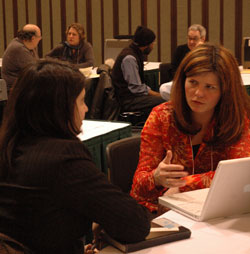 As a CAA member, you have access to a diverse range of mentors at Career Services during the 103rd Annual Conference, taking place February 11–14, 2015, in New York. All emerging, midcareer, and even advanced art professionals can benefit from one-on-one discussions with dedicated mentors about artists’ portfolios, career-management skills, and professional strategies.
You may enroll in either the Artists’ Portfolio Review or Career Development Mentoring—please choose one. Participants are chosen by a lottery of applications received by the deadline; all applicants are notified of their scheduled date and time slot by email in early 2015. Both sessions are offered free of charge. Conference registration, while encouraged, is not necessary to participate. All applicants must be current CAA members.
Artists’ Portfolio Review
The Artists’ Portfolio Review offers CAA members the opportunity to have digital images or DVDs of their work reviewed by artists, critics, curators, and educators in personal twenty-minute consultations. Whenever possible, CAA matches artists and mentors based on medium or discipline. You may bring battery-powered laptops; wireless internet, however, is not available in the room. Sessions are filled by appointment only and are scheduled for Thursday, February 12, and Friday, February 13, 2015, 8:00 AM–NOON and 1:00–5:00 PM each day.
To apply, download and complete the Career Development Enrollment Form. Send the completed form by email to Lauren Stark, CAA manager of programs; by fax to 212-627-2381; or by mail to: Artists’ Portfolio Review, College Art Association, 50 Broadway, 21st Floor, New York, NY 10004. Deadline extended: January 9, 2015.
Career Development Mentoring
Artists, art historians, art educators, and museum professionals at all stages of their careers may apply for one-on-one consultations with veterans in their fields. Through personal twenty-minute consultations, Career Development Mentoring offers a unique opportunity for participants to receive candid advice on how to conduct a thorough job search; present cover letters, CVs, and digital images; and prepare for interviews. Whenever possible, CAA matches participants and mentors based on medium or discipline. Sessions are filled by appointment only and are scheduled for Thursday, February 12, and Friday, February 13, 2015, 8:00 AM–NOON and 1:00–5:00 PM each day.
To apply, download and complete the Career Development Enrollment Form. Send the completed form by email to Lauren Stark, CAA manager of programs; by fax to 212-627-2381; or by mail to: Career Development Mentoring, College Art Association, 50 Broadway, 21st Floor, New York, NY 10004. Deadline extended: January 9, 2015.
Grants, Awards, and Honors
posted Oct 15, 2014
CAA recognizes its members for their professional achievements, be it a grant, fellowship, residency, book prize, honorary degree, or related award.
Grants, Awards, and Honors is published every two months: in February, April, June, August, October, and December. To learn more about submitting a listing, please follow the instructions on the main Member News page.
October 2014
Grimanesa Amorós, an artist based in New York, has been named the 2014 Lebowitz Visiting Artist in Residence for the Mary H. Dana Women Artists Series at the Institute for Women and Art at Rutgers University in Piscataway, New Jersey.
Paul Catanese, associate professor at Columbia College Chicago in Illinois and director of his school’s MFA program for interdisciplinary arts and media, has received a 2014 Efroymson Contemporary Arts Fellowship. The award will support his studio practice and help to expand work on his project visible from space. Catanese will also develop visible from space in early October during a Playa Artists’ Residency in eastern Oregon.
Blane De St. Croix has received a 2014–15 residency in Brooklyn, New York, from the Sharpe-Walentas Studio Award Space Program (formerly known as the Marie Walsh Sharpe Art Foundation).
Caitlin Earley, a graduate student in the Department of Art and Art History at the University of Texas at Austin, has received a 2014–15 junior fellowship in Precolumbian studies from Dumbarton Oaks Research Library and Collection in Washington, DC. The award will support her project, titled “At the Edge of the Maya World: Power, Politics, and Identity in Monuments of the Comitán Valley.”
Danielle Joyner, assistant professor of medieval art history at the University of Notre Dame in Notre Dame, Indiana, has received a 2014–15 fellowship in garden and landscape studies from Dumbarton Oaks Research Library and Collection in Washington, DC. She will work on a project called “Landscapes and Medieval Arts.”
Micheline Nilsen, a faculty member in art history at Indiana University South Bend, has accepted a 2014–15 fellowship in garden and landscape studies from Dumbarton Oaks Research Library and Collection in Washington, DC. Her project is titled “From Turnips to Lawn Chairs: Allotment Gardens in Europe, 1920 to 1975.”
Camille Serchuk, professor of art at Southern Connecticut State University in New Haven, has been awarded a 2014–15 fellowship from the National Humanities Center, based in Research Triangle Park, North Carolina. She will work on her project, “Realm and Representation: Art, Cartography and Visual Culture in France, 1450–1610.”
Exhibitions Curated by CAA Members
posted Oct 15, 2014
Check out details on recent shows organized by CAA members who are also curators.
Exhibitions Curated by CAA Members is published every two months: in February, April, June, August, October, and December. To learn more about submitting a listing, please follow the instructions on the main Member News page.
October 2014
Charlotte Ickes and Iggy Cortez. Itinerant Belongings. Slought Foundation and Charles Addams Fine Arts Hall, University of Pennsylvania, Philadelphia, Pennsylvania, November 1–December 20, 2014 (Slought Foundation); November 1–22, 2014 (Charles Addams Fine Arts Hall).

 Courtney Puckett, May Day’s Eye Flower, 2014, fabric, marker, and thread, 48 x 48 in. (artwork © Courtney Puckett)
Katerina Lanfranco. All Worked Up. Rhombus Space, Brooklyn, New York, September 12–October 5, 2014.
Tirza True Latimer. Harmony Hammond: Becoming/UnBecoming Monochrome. RedLine, Denver, Colorado, August 2–September 28, 2014.

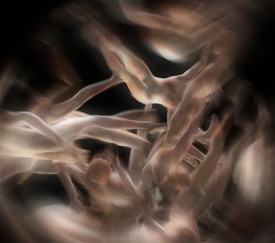 Kurt Hentschläger, detail of HIVE, 2011, 3D-animated audiovisual installation (artwork © Kurt Hentschläger)
Ellen K. Levy. Sleuthing the Mind. Pratt Manhattan Gallery, New York, September 17–November 5, 2014.

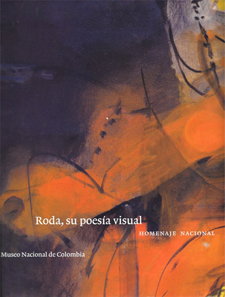 Promotional image for Roda, su poesía visual
María Margarita Malagón-Kurka. Roda, su poesía visual. Museo Nacional de Colombia, Bogotá, Columbia, April 11–August 3, 2014.
Theresa Papanikolas. Art Deco Hawaii. Honolulu Museum of Art, Honolulu, Hawai‘i, July 3, 2014–January 11, 2015.

 Promotional image for Paper Bullets
Catherine Tedford. Paper Bullets: 100 Years of Political Stickers from around the World. Hatch Kingdom Sticker Museum, Berlin, Germany, September 13–October 24, 2014.
Books Published by CAA Members
posted Oct 15, 2014
Publishing a book is a major milestone for artists and scholars—browse a list of recent titles below.
Books Published by CAA Members appears every two months: in February, April, June, August, October, and December. To learn more about submitting a listing, please follow the instructions on the main Member News page.
October 2014

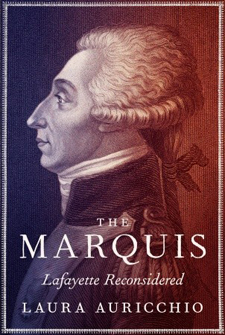
Laura Auricchio. The Marquis: Lafayette Reconsidered (New York: Alfred A. Knopf, 2014).

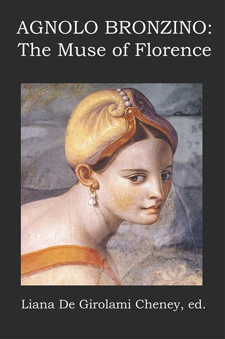
Liana De Girolami Cheney, ed. Agnolo Bronzino: The Muse of Florence (Washington, DC: New Academia Publishing, 2014).

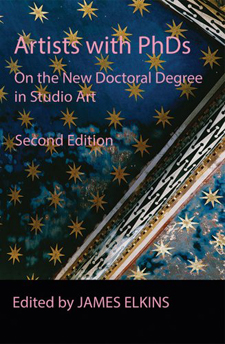
James Elkins, ed. Artists with PhDs: On the New Doctoral Degree in Studio Art, 2nd ed. (Washington, DC: New Academia Publishing, 2014).

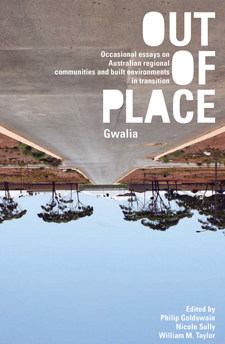
Philip Goldswain, Nicole Sully, and William M. Taylor, eds. Out of Place (Gwalia): Occasional Essays on Australian Regional Communities and Built Environments in Transition (Crawley: University of Western Australia Press, 2014).

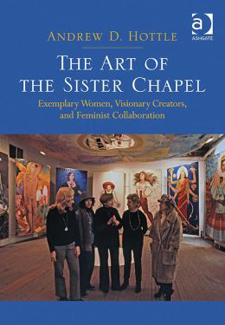
Andrew D. Hottle. The Art of the Sister Chapel: Exemplary Women, Visionary Creators, and Feminist Collaboration (Burlington VT: Ashgate, 2014).

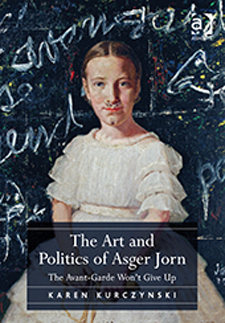
Karen Kurczynski. The Art and Politics of Asger Jorn: The Avant-Garde Won’t Give Up (Burlington VT: Ashgate, 2014).

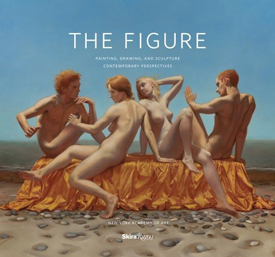
Margaret McCann, ed. The Figure: Painting, Drawing, and Sculpture (New York: Skira Rizzoli, 2014).