CAA News Today
New Appointments to CAA’s Editorial Boards
posted Jun 24, 2014
The president of CAA’s Board of Directors, DeWitt Godfrey, has made appointments to the editorial boards of CAA’s three scholarly journals, in consultation with the editorial boards and the vice president for publications, Suzanne Preston Blier. The appointments take effect on July 1, 2014.
Art Journal
Two new members-at-large have joined the Art Journal Editorial Board. Tirza True Latimer is an associate professor at the California College of the Arts in San Francisco and chair of its graduate program in visual and critical studies. Janet Kraynak is an associate professor of contemporary art history at the New School in New York, with joint appointment at Parsons the New School for Design and Eugene Lang College. The terms for Latimer and Kraynak extend until June 30, 2018.
The Art Bulletin
The Art Bulletin has announced its next reviews editor: Nancy Um, associate professor in the Department of Art History at Binghamton University, State University of New York, and a scholar of Islamic art and visual culture. For the past year, Um has been a scholar in residence at the Getty Research Institute in Los Angeles. From 2011 to 2014, she served as the inaugural reviews editor of the International Journal of Islamic Architecture. Um is the author of The Merchant Houses of Mocha: Trade and Architecture in an Indian Ocean Port (University of Washington Press, 2009), as well as many essays and book chapters. Um will succeed Rachael DeLue of Princeton University, beginning a three-year-term as reviews editor on July 1, 2015, with the preceding year as reviews editor designate.
caa.reviews
The caa.reviews Editorial Board welcomes two new members-at-large: Meredith Cohen and Suzanne Hudson. Cohen is a historian of the art, architecture, and urbanism of medieval Europe and an assistant professor of art history at the University of California, Los Angeles. Hudson is an assistant professor of art history and fine arts at the University of Southern California in Los Angeles and currently serves as the caa.reviews field editor for exhibitions of modern and contemporary art on the West Coast. Both Cohen and Hudson will serve four-year terms on the editorial board, from July 1, 2014, to June 30, 2018.
The caa.reviews Council of Field Editors has four new members. Phillip Bloom, an assistant professor of art history at the University of Indiana in Bloomington and a visiting researcher at the Institute for Advanced Studies on Asia at the University of Tokyo for 2013–14, will commission reviews of books on Chinese art. Edward A. Vazquez, assistant professor of history of art and architecture at Middlebury College in Vermont, will be the field editor for exhibitions of modern and contemporary art in the northeastern United States. Megan Cifarelli, an associate professor at Manhattanville College in Purchase, New York, and chair of her school’s program in art history, will assign reviews of books on ancient Egyptian and Near Eastern art for the journal. Finally, Pamela M. Fletcher, a professor of art history and codirector of the Digital and Computational Studies Initiative at Bowdoin College in Brunswick, Maine, joins caa.reviews to oversee reviews of digital projects in the visual arts.
Solo Exhibitions by Artist Members
posted Jun 22, 2014
See when and where CAA members are exhibiting their art, and view images of their work.
Solo Exhibitions by Artist Members is published every two months: in February, April, June, August, October, and December. To learn more about submitting a listing, please follow the instructions on the main Member News page.
June 2014
Mid-Atlantic


Lisa Ficarelli-Halpern. Visual Arts Center of New Jersey, Mitzi and Warren Eisenberg Gallery, Summit, New Jersey, May 9–June 29, 2014. #BaroqueTechStyle: Portraits by Lisa Ficarelli-Halpern. Oil painting and digital printmaking.

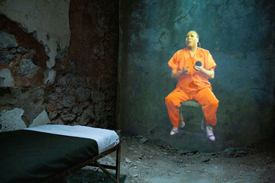
Michelle Handelman. Eastern State Penitentiary, Philadelphia, Pennsylvania, May 9–November 16, 2014. Beware the Lily Law. Installation.
Midwest

Victoria Fu. Document, Chicago, Illinois, January 31–March 8, 2014. Crossbar Radical-Tick Scoop Star. Installation, video, projection, and photography.
Northeast


Victoria Fu. Simon Preston Gallery, New York, May 4–June 7, 2014. Belle Captive. Installation, video, projection, and photography.

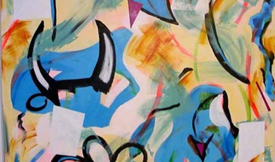
Sue Karnet. BBLA Gallery, Bohemian Benevolent and Literary Association, New York, April 2–29, 2014. Perceptions. Painting.

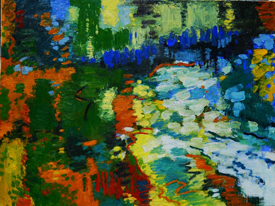
Lorna Ritz. French Cultural Center, Boston, Massachusetts, March 1–31, 2014. A Travelogue in Color. Painting.


Jo Sandman. Gallery Kayafas, Boston, Massachusetts, April 18–May 24, 2014. Transmissions. Transparent images.

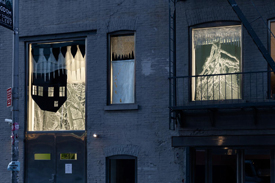
Leigh Tarentino. Mixed Greens Gallery, New York, March 20–May 23, 2014. The Night Hours. Window installation.
West

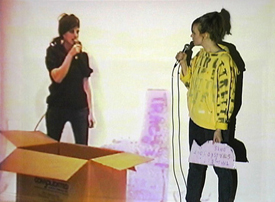
Wynne Greenwood. Henry Art Gallery, University of Washington, Seattle, Washington, April 5–June 15, 2014. Wynne Greenwood: Notes on Tracy + the Plastics. Video archive.
CAA Statement on Delaware Art Museum
posted Jun 19, 2014
 CAA endorses the Association of Art Museum Directors sanction against the Delaware Art Museum for selling an object from their permanent collection to address financial challenges. The work in question is William Holman Hunt’s Isabella and the Pot of Basil (1868) sold at Christie’s this week for a final hammer price of $4.25 million, half the amount estimated.
The sanction will result in the Delaware Art Museum not receiving loans of works of art from the AAMD member museums: http://galleristny.com/2014/06/aamd-sanctions-delaware-art-museum/. This sale is unethical and a breach of fiduciary responsibility according to the collection policies of Association of American Museums, AAMD and CAA. Museum collections are held in the public trust, and proceeds of sales of works from permanent collections are to be used for future growth of collections.
Image: William Holman Hunt, Isabella and the Pot of Basil, 1868, oil on canvas, 74 x 46 in. (artwork in the public domain)
Report on the May 4, 2014, CAA Board of Directors Meeting
posted Jun 18, 2014
The Strategic Plan 2015-2020 was approved by the directors and the following priorities were established by the new president, DeWitt Godfrey:
- Advocate for workforce issues particularly for part-time faculty;
- Review the Professional Interests, Practices and Standards committees to ensure addressing critical issues in the visual arts field;
- Increase membership nationally, internationally and in terms of diversity; increase communication with members, including social communication;
- Find ways of extending the annual conference to a larger group of members; and
- Enhance utilization of digital capabilities by journal authors and promote digital expertise.
The directors are grateful to the Strategic Planning Task Force chaired by president emerita Anne Collins Goodyear and all the members who contributed to the development of this new plan.
The directors gratefully approved the endowment gift by Mary Douglas Edwards of $50,000 to support travel and registration to attend the CAA annual conference by women who are emerging scholars pursuing a doctoral degree or who have received their Ph.D. within two years prior to the submission of the application for the award of the grant and who will present research papers at an art history session at the conference with strong preference for papers on any topic pertaining to the art of ancient Greece or Rome, Medieval Europe from 400 – 1400, or Europe and North American from 1400 – 1950.
The directors approved the IRS Form 990 for Fiscal Year Ended June 30, 2013.
The directors approved CAA joining the Partner Program of the Society of Architectural Historians.
The directors also approved the Resolution to commend the Women’s Art Journal requested by the Committee on Women in the Arts for the maintenance of high quality scholarship that serves as a forum for re-examining feminist concerns of the women’s art movement. A letter of commendation was sent to Joan Marter, Professor of Art History, Rutgers University and Editor, Women’s Art Journal.
The directors established a Task Force on Design, chaired by Debra Riley Parr, , to investigate and make recommendations to the directors on 1) tenure and promotion standards for designers; 2) CV guidelines for designers; 3) representation of design fields in all the professional committees; and 4) scheduling sessions at the annual conference on design issues.
The directors decided to evaluate the Professional- Development Fellowships in Art History and Visual Arts in light of the current job market and in the context of the Strategic Plan 2015-2020 and to temporarily suspend the program.
News from the Art and Academic Worlds
posted Jun 18, 2014
Each week CAA News publishes summaries of eight articles, published around the web, that CAA members may find interesting and useful in their professional and creative lives.
The World’s Most Influential MFA Programs, Part 2
You may have noticed that our recent survey of ten of the world’s most influential MFA programs was heavily focused on the United States. That’s because we’re patriots. But numerous other art schools around the world have also made enormous impacts on the history of art, yielding generations of exalted alumni, boasting world-class faculty, and operating on a totally different scale and historical timeframe than schools of the US model. (Read more from Artspace Magazine.)
Foundations Add $13 Million to Grand Bargain Pot for DIA, Pensions
Two more leading national charitable foundations have pledged a combined $13 million to help the Detroit Institute of Arts reach its $100-million commitment to the grand bargain, which would protect the city-owned museum from having to sell its treasures while easing cuts to city pensioners in Detroit’s bankruptcy. (Read more from the Detroit Free Press.)
Detroit, DIA, in Preparation for Court Battle, Hire Art Advising Firm
As legal jockeying continues in Detroit’s bankruptcy, the city and the Detroit Institute of Arts have jointly hired a New York art investment firm whose personnel could be called as expert witnesses to push back against creditors trying to force a sale of art in court. Artvest Partners, a company that advises attorneys, dealers, insurers, and collectors, has been engaged to provide a price range for the entire 66,000-piece collection at the city-owned museum and assess the viability and practicality of selling art or otherwise monetizing the collection. (Read more from the Detroit Free Press.)
Shopkeepers of the World Unite
One evening last summer, far from New York City, I was cornered by a senior curator from a prestigious arts institution. The woman, who was urbane, stylish, and in her late thirties, had a pressing question. “You live in Los Angeles,” she noted. “Can you tell me, is Petra Cortright a feminist?” I squirmed as I considered how to avoid falling into this trap. (Read more from Artforum.)
Applying Rules of All Markets to Art
There’s a sentiment afloat in this frothy art market that rampant flipping and other practices among the creators, buyers, and sellers of art that were perhaps previously considered questionable are in fact entirely ethically neutral. This fairly widespread sentiment, that ethics don’t come into this matter, relies heavily on the assertion that such practices are entirely in line with the well-established rules of any market, and that art is no different from any other commodity and never has been. (Read more from Edward Winkleman.)
A Dereliction of Duty
In London, on June 17, Christie’s, the international auction house, will be offering for sale a painting by the English Pre-Raphaelite artist William Holman Hunt. Entitled Isabella and the Pot of Basil, it carries a presale estimate of $8.4 million to $13.4 million. Such sales—and such prices—are commonplace in today’s overheated art market. This one, however, is different because the seller, the Delaware Art Museum, is an institution that holds one of the finest collections of Pre-Raphaelite art outside Britain. Why would it choose to part with a work of such quality? (Read more from the Wall Street Journal.)
A Study Shows How Audiences Are Changing, but Should Data Guide Artistic Decisions?
No facet of society—not even the arts—is immune to the conversation about metrics, measurement, and big data. Last week in downtown Los Angeles, museum administrators, marketers, and cultural leaders gathered at the Walt Disney Concert Hall for the presentation of “Culture Track 14,” hosted by the Music Center. Billed as revealing a “dramatically changed cultural landscape,” the 2014 study—and the conversations around it—drove home many particulars that audience members already assumed and other dynamics long at play. (Read more from the LA Weekly.)
Starbucks College Achievement Plan
Starbucks believes in the promise and pursuit of the American Dream. This fall, the company will make it possible for thousands of part- and full-time US partners to complete a college degree. In a first of its kind collaboration with Arizona State University, Starbucks will offer partners the opportunity to finish their bachelor’s degree with full tuition reimbursement. Partners may choose from forty undergraduate degree programs through Arizona State’s research driven and top-ranked program, delivered online. (Read more from Starbucks.)
caa.reviews Publishes Dissertations Completed and In Progress for 2013
posted Jun 17, 2014
caa.reviews recently published the authors and titles of doctoral dissertations in art history and visual studies—both completed and in progress—from American and Canadian institutions for calendar year 2013. You may browse by listing date or by subject matter. Each entry identifies the student’s name, dissertation title, school, and advisor.
Each institution granting the PhD in art history and/or visual studies submits dissertation titles once a year to CAA for publication. The caa.reviews list also includes dissertations completed and in progress between 2002 and 2012, making basic information about their topics available through web searches.
People in the News
posted Jun 17, 2014
People in the News lists new hires, positions, and promotions in three sections: Academe, Museums and Galleries, and Organizations and Publications.
The section is published every two months: in February, April, June, August, October, and December. To learn more about submitting a listing, please follow the instructions on the main Member News page.
June 2014
Academe

Shiben Banerji has joined the Department of Art History, Theory, and Criticism at the School of the Art Institute of Chicago in Illinois as assistant professor of history of architecture.
Emine Fetvaci, an associate professor of Islamic art, has earned tenure in the Department of History of Art and Architecture at Boston University in Massachusetts.
Patrick Hajovsky, an assistant professor of art history who specializes in Precolumbian and colonial Latin American art, has earned tenure in the Art and Art History Department at Southwestern University in Georgetown, Texas.
Seth Kim-Cohen has been appointed assistant professor of contemporary art history in the Department of Art History, Theory, and Criticism at the School of the Art Institute of Chicago in Illinois.
Elena FitzPatrick Sifford has accepted the position of assistant professor of Renaissance and Baroque art at Louisiana State University in Baton Rouge.
Mechtild Widrich has joined the Department of Art History, Theory, and Criticism at the School of the Art Institute of Chicago in Illinois as assistant professor of contemporary art history.
Gregory Williams, associate professor of contemporary art at Boston University in Massachusetts, has received tenure in his school’s Department of History of Art and Architecture.
Museums and Galleries
Paul R. Davis, previously Andrew W. Mellon Postdoctoral Fellow at the Centre for the Creative Arts of Africa at the University of the Witwatersrand in Johannesburg, South Africa, has been appointed curator of collections at the Menil Collection in Houston, Texas.
Douglas Dreishpoon has become the first chief curator emeritus at the Albright-Knox Art Gallery in Buffalo, New York, where he has worked since 1998.

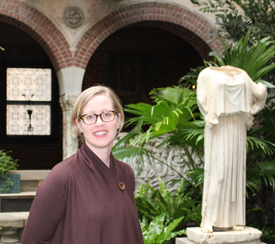 Christine Neilsen
Christine Neilsen, formerly assistant curator of late antique and Byzantine art for the Art Institute of Chicago in Illinois, has been named William and Lia Poorvu Curator of the Collection and Director of Program Planning at the Isabella Stewart Gardner Museum in Boston, Massachusetts.
David Odo has left his position as Bradley Assistant Curator of Academic Affairsat the Yale University Art Gallery in New Haven, Connecticut. He is now director of student programs and research curator of university collections initiatives at the Harvard Art Museums in Cambridge, Massachusetts.

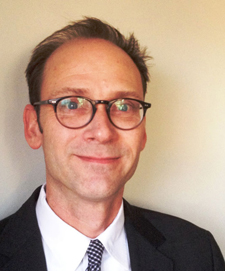 Brandon Ruud
Brandon Ruud, previously curator of American art for the Sheldon Museum of Art at the University of Nebraska in Lincoln, has been named the new Constance and Dudley J. Godfrey Jr. Curator of American Art and Decorative Arts at the Milwaukee Art Museum in Wisconsin.

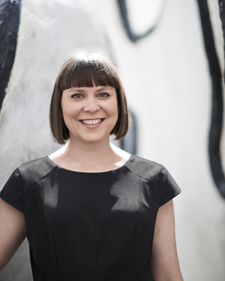 Jill Shaw
Jill Shaw, a research associate at the Art Institute of Chicago in Illinois, has accepted the position of senior curator of collections at Colgate University’s Picker Art Gallery in Hamilton, New York.
Organizations and Publications
Parme Giuntini, professor of art history and assistant chair of liberal arts and sciences at Otis College of Art and Design in Los Angeles, California, has become a contributing editor to the website Art History Teaching Resources.
Kimberly James Overdevest, assistant professor of visual arts at Grand Rapids Community College in Michigan, has joined the website Art History Teaching Resources as a contributing editor.
Virginia Spivey, an independent art historian based in Washington, DC, has become a contributing editor to the website Art History Teaching Resources.
Institutional News
posted Jun 17, 2014
Read about the latest news from institutional members.
Institutional News is published every two months: in February, April, June, August, October, and December. To learn more about submitting a listing, please follow the instructions on the main Member News page.
June 2014
The Baltimore Museum of Art in Maryland has received a $2,500 award from the International Fine Print Dealers Association to fund a curatorial internship in museum print collections.
The Delaware Art Museum in Wilmington has launched a collections website, created with the web-based platform eMuseum. Visitors to the online resource can browse the museum’s collections, search for specific objects, view images, and create their own saved collections of work. To date, over 1,000 works of art have been photographed, catalogued, and added to the website. The museum’s entire 12,500-work collection, including the largest collection of British Pre-Raphaelite art outside the United Kingdom, will be available online by 2018.


The Getty Research Institute in Los Angeles, California, has acquired the archive documenting the first three decades of the Kitchen, a leading alternative space devoted to performance art, dance, music, and video. The large, well-preserved archive includes thousands of videotapes, audiotapes, photographs, posters, and other archival materials documenting the exhibitions, performances, and events presented by the Kitchen between 1971 and 1999.

The Harvard Art Museums—composed of the Fogg Museum, the Busch-Reisinger Museum, and the Arthur M. Sackler Museum—will open their new Renzo Piano–designed facility to the public on November 16, 2014. The renovation and expansion of the museums’ landmark building at 32 Quincy Street in Cambridge, Massachusetts, will bring the three museums and their collections together under one roof for the first time, inviting students, faculty, scholars, and the public into one of the world’s great institutions for arts scholarship and research.

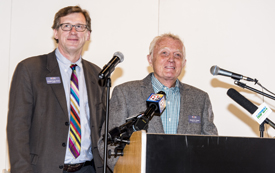 Don Tuski, president of the Maine College of Art (left) with Dan Crewe, brother of Bob Crewe and a college trustee since 2011
The Maine College of Art in Portland has accepted a $3 million gift from the Bob Crewe Foundation to develop a new program that focuses on the study of contemporary music and its relation to visual art. This transformational gift will support an innovative field of study in honor of the internationally known musician, artist, and entrepreneur, Bob Crewe, while supporting students from a wide range of backgrounds wishing to pursue a career in music, art, or both.
The Metropolitan Museum of Art in New York has launched MetCollects, a new series on the museum’s website that offers first looks at recently acquired works of art. MetCollects will feature one work each month, selected from the hundreds that the Metropolitan Museum acquires through gifts and purchases annually. The series will also pair spectacular photography with curatorial commentary, often including video for further contextualization of the works.
Michigan State University in East Lansing has received a $5 million gift from the art collectors Eli and Edythe Broad to increase the endowment for and to help fund exhibitions at the Eli and Edythe Broad Art Museum for the next five years.
The Moore College of Art and Design in Philadelphia, Pennsylvania, and the City of Philadelphia Mural Arts Program have formed a unique partnership to provide innovative, collaborative-style teaching across two new graduate programs at the college: an MA in art and social engagement and an MFA in community practice. The new graduate programs are expected to launch in 2015 and will help Moore establish itself as the region’s educational center for community arts practice.
The Museum of Fine Arts, Houston, in Texas has received a $2,500 award from the International Fine Print Dealers Association to fund a curatorial internship in museum print collections.
The RISD Museum at the Rhode Island School of Design in Providence has accepted a $2,500 award from the International Fine Print Dealers Association to fund a curatorial internship in museum print collections.
The University of Iowa Museum of Art in Iowa City has been given a $2,500 award from the International Fine Print Dealers Association to fund a curatorial internship in museum print collections.
Virginia Commonwealth University in Richmond has announced that it will break ground on a new Institute of Contemporary Art, an exhibition and performance space, laboratory, and incubator for the presentation of visual art, theater, music, dance, and film by nationally and internationally recognized artists, in June 2014.


Yale University Press, based in New Haven, Connecticut, has accepted the thirty-fifth George Wittenborn Memorial Book Award from the Art Librarians Society of North America for Interaction of Color by Josef Albers (App for iPad), published in 2013.
Two Meiss/Mellon Author’s Book Awards for Spring 2014
posted Jun 17, 2014
CAA is pleased to announce the two recipients of the Meiss/Mellon Author’s Book Award for spring 2014. Thanks to a grant from the Andrew W. Mellon Foundation, CAA is supporting the work of emerging authors who are publishing monographs on the history of art and related subjects.
The spring 2014 grant recipients are:
- Sonal Khullar, Worldly Affiliations: Artistic Practice, National Identity, and Modernism in India, 1930–1990, University of California Press
- Pepper Stetler, Stop Reading! Look! Modern Vision and the Weimar Photographic Book, University of Michigan Press
The purpose of the Meiss/Mellon subventions is to reduce the financial burden that authors carry when acquiring images for publication, including licensing and reproduction fees for both print and online publications. Authors must be current CAA members. Please review the application guidelines for more information. Deadline for the fall 2014 grant cycle: September 15, 2014.
Spring 2014 Grants from the Millard Meiss Publication Fund
posted Jun 16, 2014
This spring, CAA awarded grants to the publishers of eight books in art history and visual culture through the Millard Meiss Publication Fund. Thanks to the generous bequest of the late Prof. Millard Meiss, CAA gives these grants to support the publication of scholarly books in art history and related fields.
The grantees for spring 2014 are:
- Una Roman D’Elia, Raphael’s Ostrich, Pennsylvania State University Press
- Sonal Khullar, Worldly Affiliations: Artistic Practice, National Identity, and Modernism in India, 1930–1990, University of California Press
- Elizabeth Kindall, Geo-Narratives of a Filial Son: The Paintings and Travel Diaries of Huang Xiangjian (1609–1673), Harvard University Asia Center
- Vered Maimon, The Photographic Imagination: Talbot and the Conception of Photography in the Early 19th Century, University of Minnesota Press
- Pepper Stetler, Stop Reading! Look! Modern Vision and the Weimar Photographic Book, University of Michigan Press
- Erik Thunø, The Apse Mosaic in Early Medieval Rome, Cambridge University Press
- Jason Weems, Barnstorming the Prairies: Aerial Vision and Modernity in Rural America, 1920–1940, University of Minnesota Press
- Marnin Young, Later Realism and the Politics of Time, Yale University Press
Books eligible for Meiss grants must already be under contract with a publisher and on a subject in the visual arts or art history. Authors must be current CAA members. Please review the application guidelines for more information. Deadline for the fall 2014 grant cycle: September 15, 2014.