
CAA News Today
Solo Exhibitions by Artist Members
posted Oct 22, 2012
See when and where CAA members are exhibiting their art, and view images of their work.
Solo Exhibitions by Artist Members is published every two months: in February, April, June, August, October, and December. To learn more about submitting a listing, please follow the instructions on the main Member News page.
October 2012
Mid-Atlantic

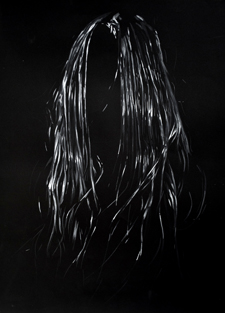 Terence Hannum, Empyrean, 2012, gouache on paper, 30 x 22 in. (artwork © Terence Hannum)
Terence Hannum. Stevenson University Art Gallery, Stevenson, Maryland, August 27–October 6, 2012. Veils. Drawing and collage.
Midwest

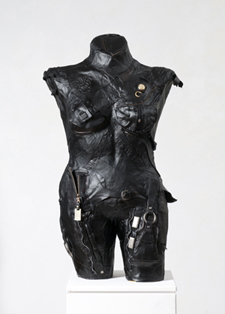 Linda Stein, Defender 696, 2010, leather, metal, and mixed media, 38 x 22 x 14 in. (artwork © Linda Stein)
Linda Stein. George A. Spiva Center for the Arts, Joplin, Missouri, July 19–September 7, 2012. The Fluidity of Gender: Sculpture by Linda Stein. Sculpture.
Northeast

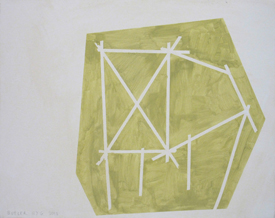 Sharon Butler, Rooftop Structure (Green), 2012, pigment and binder on prestretched canvas, 18 x 24 in. (artwork © Sharon Butler)
Sharon Butler. Real Art Ways, Hartford, Connecticut, September 20–November 11, 2012. Sharon Butler: Gone Wrong. Painting.

Cora Cohen. Heather Gaudio Fine Art, New Canaan, Connecticut, September 29–November 29, 2012. Another Blank Space: Recent Paintings by Cora Cohen. Painting.

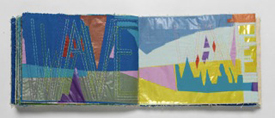 Dianna Frid, The Waves, 2011, unique book with canvas, cloth, embroidery floss, adhesives, paper, acrylic paint, and cellophane, 7½ x 11½ in. open, 7½ x 21½ in. closed (artwork © Dianna Frid)
Dianna Frid. BravinLee Programs, New York, September 6–October 13, 2012. “The Waves” and “The Comets.” Artist’s books.

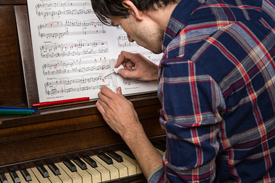 John William Keedy, It’s Hardly Noticeable XV, 2012, archival pigment print, 27 x 40 in. (artwork © John William Keedy)
John William Keedy. Genesee Center for the Arts and Education, Rochester, New York, September 14–October 27, 2012. It’s Hardly Noticeable. Photography.

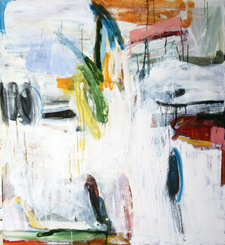 Michael Rich, First Signs of Spring, 2011, oil and wax on canvas, 40 x 36 in. (artwork © Michael Rich)
Michael Rich. Chace-Randall Gallery, Andes, New York, September 21–November 4, 2012. Traveler. Painting.

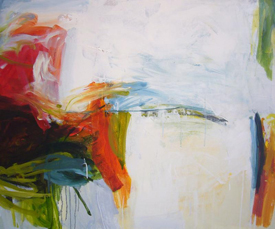 Michael Rich, All Is Quiet, 2012, oil and wax on canvas, 29 x 35 in. (artwork © Michael Rich)
Michael Rich. Old Spouter Gallery, Nantucket, Massachusetts, August 10–23, 2012. Restoration. Painting.

 Lorna Ritz, Darkness Falling, 2010, oil on canvas, 40 x 50 in. (artwork © Lorna Ritz)
Lorna Ritz. Augusta Savage Gallery, University of Massachusetts, Amherst, Massachusetts, September 10–28, 2012. Falling into the Night Sky. Painting.
Fotini Vurgaropulou. A Repeat Performance, Antiques etc, Greenwood Lake, New York, October 8–November 2, 2012. Cast & Reel. Cast glass sculpture and mixed media.
South

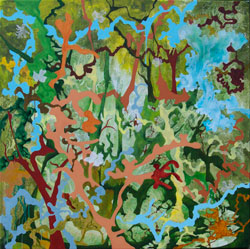 Heather Deyling, detail of Color Sprawl, 2012, acrylic on felt (artwork © Heather Deyling)
Heather Deyling. Cochenour Gallery, Georgetown College, Georgetown, Kentucky, August 24–September 16, 2012. Color Sprawl: Works by Heather Deyling. Painting, collage, and installation.

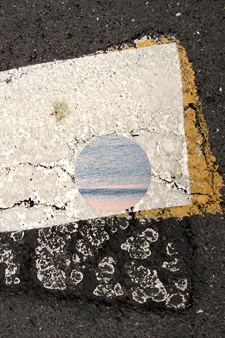 Corinne Diop, Circle, 2012, photomontage, 30 x 20 in. (artwork © Corinne Diop)
Corinne Diop. Smith House, Arts Council of the Valley, Harrisonburg, Virginia, September 7–October 1, 2012. Surface. Photomontage and mixed media.

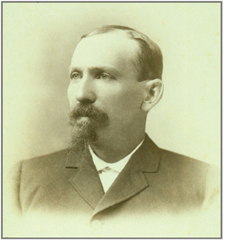 Rev. James Randolph Denton
Beauvais Lyons. Downtown Gallery, University of Tennessee, Knoxville, Tennessee, September 7–8, 2012. The Legacy of Rev. James Randolph Denton: Performance and Installation. Printmaking and taxidermy.

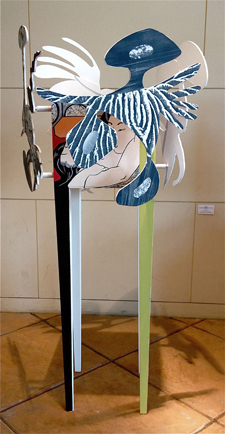 Judith Pratt, Shunga, 2011, acrylic and magnets on wood, 60 x 28 x 28 in. (artwork © Judith Pratt)
Judith Pratt. Charles E. Beatley Jr. Central Library, Alexandria Commission for the Arts, Alexandria, Virginia, August 1–December 27, 2012. Judith Pratt: Portable Apparitions. Sculpture.

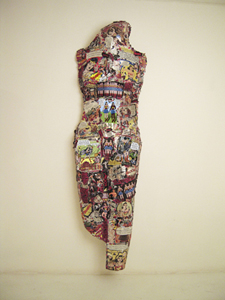 Linda Stein, Justice for All 698, 2010, acrylicized metallic paper, archival inks, and mixed media, 79 x 40 x 9 in. (artwork © Linda Stein)
Linda Stein. Alexandria Museum of Art, Alexandria, Louisiana, September 21–November 24, 2012. The Fluidity of Gender: Sculpture by Linda Stein. Sculpture.
THATCamp CAA: An Unconference on Digital Art History
posted Oct 17, 2012
Registration for CAA’s THATCamp has now closed.
CAA invites interested participants to attend its first Humanities and Technology Camp (THATCamp) “unconference” on digital art history, taking place on the two days immediately preceding the Annual Conference: Monday, February 11, NOON–5:00 PM, and Tuesday, February 12, 9:00 AM–3:00 PM. The event will take place at Macaulay Honors College, City University of New York, located at 35 West 67th Street in Manhattan.
CAA’s THATCamp is free and open to graduate students and scholars at all career stages. The only requirements for attendance are an active interest in how digital technology is affecting the discipline of art history and the humanities in general and a willingness to share your questions and ideas. Space is limited! Register today to secure your place. Graduate students may apply for a limited number of fellowships funded by the Samuel H. Kress Foundation to lessen the cost of travel expenses to New York.
The purpose of the CAA unconference is manifold: to increase awareness of existing digital projects in art history, architectural history, and archeology; to foster a community of scholars invested in digital art history; to identify digital tools that may be used to improve future CAA conferences; to facilitate technology workshops and training sessions; and to provide support for art-history professionals pursuing nontraditional career paths.
“Unconference” is a term that may be new to people in art and academia but has, in fact, been around since the late 1990s. It is used to describe a participant-driven meeting that in many respects is the opposite of a traditional academic conference. Formal presentations or a set program of speakers are not determined beforehand. Unconferences generate productive encounters among diverse groups of people, an experience that can be compared to being a member of an improvisational acting troupe.
THATCamp itself, however, is a recent invention, founded in 2008 at the Center for History and New Media at George Mason University in Fairfax, Virginia, as a meeting for technology and humanities professionals—including professors, librarians, and museum curators—to share ideas and collaborate on projects. The camps have since sprung up in locations across the United States and internationally.
People in the News
posted Oct 17, 2012
People in the News lists new hires, positions, and promotions in three sections: Academe, Museums and Galleries, and Organizations and Publications.
The section is published every two months: in February, April, June, August, October, and December. To learn more about submitting a listing, please follow the instructions on the main Member News page.
October 2012
Academe

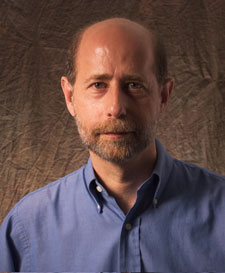 Steven Bleicher
Steven Bleicher, an artist and professor of foundations in the Department of Visual Arts at Coastal Carolina University in Conway, South Carolina, has been promoted to associate dean of the Thomas W. and Robin W. Edwards College of Humanities and Fine Arts at his school.
Lucy Bradnock, formerly managing editor of the Getty Research Journal and a research associate at the Getty Research Institute in Los Angeles, California, has been appointed lecturer in art history at the University of Nottingham in England.
Blane De St. Croix, an installation artist and sculptor, has been appointed to head the Sculpture Department with the rank of tenured associate professor at the Henry Radford Hope School of Fine Arts at Indiana University in Bloomington. De St. Croix was formerly associate professor of sculpture at Florida Atlantic University in Boca Raton.
Andrea Giunta has been appointed to the newly established endowed chair in Latin American art history and criticism in the department of art and art history at the University of Texas at Austin. Her position is partially endowed by a $1 million grant from the Longhorn Network and an anonymous matching donation. Giunta founded the school’s Center for Latin American Visual Studies program in 2009.
Elisa P. Korb, assistant professor of humanities at Anderson University in Anderson, Indiana, has accepted a position as assistant professor of fine arts at Misericordia University in Dallas, Pennsylvania.

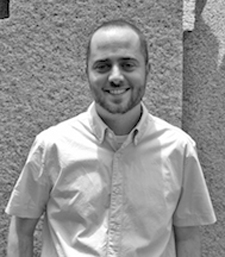 Jason LaFountain
Jason LaFountain, a recent PhD graduate from Harvard University in Cambridge, Massachusetts, has joined the Art History Department of Northwestern University in Evanston, Illinois, as the Terra Foundation Postdoctoral Fellow in American Art. LaFountain specializes in colonial American and early modern British subjects.
Alix Lambert, an artist and filmmaker, has been named visiting assistant professor at the Henry Radford Hope School of Fine Arts at Indiana University in Bloomington.
Richard Meyer, formerly an associate professor of art history and fine arts at the University of Southern California in Los Angeles, has been appointed professor of art history at Stanford University in Stanford, California.
Guna Nadarajan, formerly vice provost for research and dean of graduate studies at Maryland Institute College of Art in Baltimore, has been selected as the new dean of the School of Art and Design at the University of Michigan.
Howard Paine, associate professor of printmaking at the Memphis College of Art in Tennessee, has been released from the faculty. The controversial decision to eliminate several positions, in June 2012, was made as a result of the college’s financial burden.
Museums and Galleries
Ethan Lasser, a former curator of the Chipstone Foundation in Milwaukee, Wisconsin, has been appointed Margaret S. Winthrop Associate Curator of American Art in the Harvard Art Museums’ Division of European and American Art, where he is currently developing two new exhibitions, The Practice and Poetics of Repair and Makers: Craft and Industry in American Art.

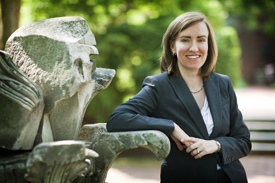 Melissa Jordan Love
Melissa Jordan Love has been appointed the first academic curator of the Fralin Museum of Art at the University of Virginia in Charlottesville. Love holds a joint appointment in the McIntire Department of Art in the College of Arts and Sciences and will participate in the new Institute of the Humanities and Global Cultures.

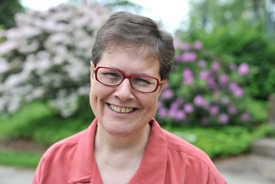 Elizabeth Milroy
Elizabeth Milroy, professor of art history and American studies at Wesleyan University in Middletown, Connecticut, has joined the Division of Education at the Philadelphia Museum of Art in Pennsylvania as Zoë and Dean Pappas Curator of Education for Public Programs. Milroy is a specialist in the history of the city of Philadelphia and a scholar of cultural institutions in the United States.
Mary Morgan Darby Radcliff has served as a summer 2012 intern at the National Gallery of Art in Washington, DC, where she assisted the Development Office. Radcliff is pursuing an MA in visual arts administration at New York University.

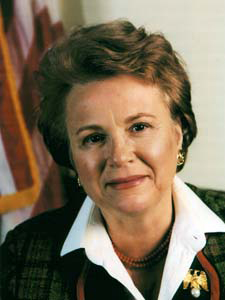 Anne-Imelda Radice (photograph by Dennis Brack)
Anne-Imelda Radice, a senior consultant for the Dilenschneider Group and a member of the CAA Board of Directors, has been named the director of the American Folk Art Museum in New York.

 David Russick
David Russick has joined the staff of the Milwaukee Art Museum in Wisconsin as its new exhibition designer. Russick formerly was the chief designer at the Indianapolis Museum of Art in Indiana.
Institutional News
posted Oct 17, 2012
Read about the latest news from institutional members.
Institutional News is published every two months: in February, April, June, August, October, and December. To learn more about submitting a listing, please follow the instructions on the main Member News page.
October 2012
The Cincinnati Art Museum in Ohio has been awarded a $1.5 million grant by the state of Ohio in support of a major renovation project of the museum’s Romanesque revival building, library, and archives. In addition, the museum has also won a grant from the Institute of Museums and Library Services for $149,656, with a matching amount of $176,722, to aid its digital inventory of approximately 25,000 works on paper, including pastels, watercolors, posters, and illustrated books.

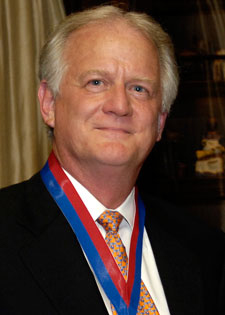 Karl Kilinski
The Meadows School of the Arts at Southern Methodist University in Dallas, Texas, has received a $1.5 million gift from the estate of the late professor Karl Kilinski to fund an endowed chair in Hellenic visual vulture. The award will allow the university to hire a professor with expertise in the art of the Bronze Age, classical Greece, and Byzantium.
The Mount Holyoke College Art Museum in South Hadley, Massachusetts, has received a Museums for America grant from the Institute of Museums and Library Services for $148,599, with a matching amount of $400,696. The grant will be used to digitize approximately four thousand objects in its collection, including works on paper, objects of American material culture, and American and European silver.
The Museum of Fine Arts, Houston has won a grant from the Institute of Museums and Library Services for $146,559, with a matching amount of $264,122. The award will be used to develop the Texas Artisans and Artists Archive, a digital resource that documents the lives and practices of individuals who lived and worked in Texas in the early twentieth century.

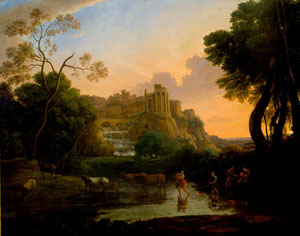 Claude Lorrain, Ideal View of Tivoli, 1644, oil on canvas, 117 x 147 cm. New Orleans Museum of Art (artwork in the public domain)
The New Orleans Museum of Art in Louisiana has received a Museums for America grant of $150,000, with a matching amount of $360,179, to help fund the second phase of a digitization project that will make ten thousand images of works held in the collection accessible online.
The Philadelphia Museum of Art in Pennsylvania has been awarded a Museums for America grant of $150,000, with a matching amount of $444,884. The award money will be applied to a digitization project of more than four thousand items in the museum’s holdings, including paintings and decorative objects from its Chinese collection.
Philbrook Museum of Art in Tulsa, Oklahoma, has received a grant from the Institute of Museums and Library Services for $141,232, with a matching amount of $143,162, to support a program, called Free 2nd Saturdays, that seeks diversify the museum’s public.
The Seattle Art Museum in Washington has earned a grant from the Institute of Museums and Library Services for $140,000, with a matching amount of $146,134. The funds will support the museum’s teen programs, which help educate young people using the museum’s collection.
The Virginia Museum of Fine Arts in Richmond has received a Museums for America grant of $150,000, with a matching amount of $550,622, to aid in the creation of an online catalogue of the museum’s collection. The new catalogue system will make accessible works of art that are held in offsite storage facilities.
The Walters Art Museum in Baltimore, Maryland, has won a grant from the Institute of Museums and Library Services for $111,615, with a matching amount of $298,447. The museum will apply the money toward a twenty-three-month educational program called American Visions: Engaging the Community with American Art.
The Worcester Art Museum in Worcester, Massachusetts, has received a grant of $123,679 administered by the Institute of Museums and Library Services. The award will aid in the museum’s digital archiving of eight hundred American and European paintings currently in storage. The project will make available works by artists such as Mary Cassatt, John Singer Sargent, Gustave Courbet, and Camille Pissarro.
Grants, Awards, and Honors
posted Oct 15, 2012
CAA recognizes its members for their professional achievements, be it a grant, fellowship, residency, book prize, honorary degree, or related award.
Grants, Awards, and Honors is published every two months: in February, April, June, August, October, and December. To learn more about submitting a listing, please follow the instructions on the main Member News page.
October 2012


Fred C. Albertson, associate professor in the Department of Art at the University of Memphis in Tennessee, has been named a 2012–13 Getty Scholar at the Getty Research Institute in Los Angeles, California. Albertson will be in residence at the Getty Villa in Malibu, working on a project titled “Palmyrene Sculpture in North American Museums.”
Ronni Baer, the William and Ann Elfers Senior Curator of Paintings at the Museum of Fine Arts, Boston, has been named a Museum Guest Scholar at the Getty Research Institute in Los Angeles, California. Baer will be in residence from January to March 2013.
Martina Bagnoli, curator of medieval art at the Walters Art Museum in Baltimore, Maryland, will be a scholar in residence at the Center for Advanced Study in the Visual Arts at the National Gallery of Art in Washington, DC. Bagnoli will use her residency to research “The Five Senses and Medieval Art.”
Susanna Berger, a graduate student at the University of Cambridge in England, has been awarded a 2011–13 Samuel H. Kress Fellowship via the Center for Advanced Study in the Visual Arts at the National Gallery of Art in Washington, DC. The title of Berger’s research project is “The Art of Philosophy: Early Modern Illustrated Thesis Prints, Broadsides, and Student Notebooks.”

 Kathryn Brown
Kathryn Brown, assistant professor of art history at Tilburg University in the Netherlands, has been awarded a funded visiting fellowship at the Humanities Centre of the Australian National University in Canberra for July and August 2013. Her project is titled “Global Art and the Networked City.”

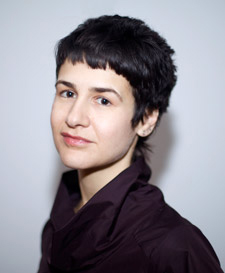 Kaira Marie Cabañas
Kaira Marie Cabañas, a lecturer and director of the MA Program in Modern Art: Critical and Curatorial Studies in the Department of Art History and Archaeology at Columbia University in New York, has been named a 2012–13 Getty Scholar at the Getty Research Institute in Los Angeles, California. She will spend her residency on “Expressive Restraint: Geometric Abstraction and the History of Madness in Brazil.”
Matthew P. Canepa, assistant professor of art history at the University of Minnesota, Twin Cities, will be a Getty Scholar in residence at the Getty Villa in Malibu, California. Canepa, a specialist in the art and archeology of ancient Iran and the Mediterranean, will be working on a project, “Royal Glory, Divine Fortune: Contesting the Global Idea of Iranian Kingship in the Hellenized and Iranian Near East, Central and South Asia (330 BCE–642 CE).”
Tiziana D’Angelo, a doctoral candidate in the Department of the Classics at Harvard University in Cambridge, Massachusetts, has been awarded a predoctoral fellowship from the Getty Research Institute in Los Angeles, California. D’Angelo’s residency will be devoted to a research project, titled “Travelling Colors: Artistic Models and Cultural Transfers in South Italian Funerary Wall Painting (IV–II BCE).”
Thierry de Duve, emeritus professor at the Charles de Gaulle Université Lille 3 in Villaneuve, France, has been awarded a William C. Seitz Senior Fellowship at the National Gallery of Art’s Center for Advanced Study in the Visual Arts in Washington, DC. His research project is called “Manet’s Testament, Duchamp’s Message, Broodthaers’ Lesson.”
Jessica Feldman, an intermedia artist based in New York, has earned an emerging artist fellowship from Socrates Sculpture Park in Long Island City, New York. An exhibition of outdoor work by the fifteen fellowship recipients will be on view from September 9, 2012, to March 31, 2013.

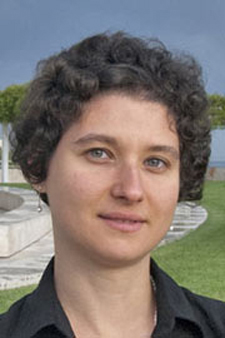 Ksenya Gurshtein
Ksenya Gurshtein, a recent PhD graduate of the University of Michigan in Ann Arbor, has been named a 2011–13 Andrew W. Mellon Postdoctoral Curatorial Fellow at the National Gallery of Art in Washington, DC.
Cynthia Hahn, professor of art history at Hunter College and the Graduate Center, City University of New York, has been named an Ailsa Mellon Bruce Senior Fellow at the Center for Advanced Study in the Visual Arts at the National Gallery of Art in Washington, DC. Hahn will use the fellowship to work on her project, “Reliquaries: Objects, Action, Response.”
Marius Bratsberg Hauknes, a doctoral candidate in the Department of Art and Archaeology at Princeton University in Princeton, New Jersey, has been awarded a twenty-four-month Chester Dale Fellowship. The 2011–13 fellowship is administered by the Center for Advanced Study in the Visual Arts at the National Gallery of Art in Washington, DC. Hauknes’s dissertation is titled “Imago, Figura, Scientia: The Image of the World in Thirteenth-Century Rome.”

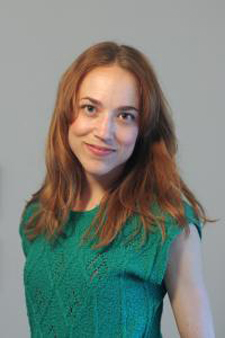 Jessica L. Horton
Jessica L. Horton, a PhD candidate in the Graduate Program in Visual and Cultural Studies at the University of Rochester in Rochester, New York, has been named a 2011–13 Wyeth Fellow through the Center for Advanced Study in the Visual Arts at the National Gallery of Art in Washington, DC. She will use her fellowship, from the International Dissertation Research Fellowship Program, to conduct research on “Places to Stand: Native Art beyond the Nation.”
Mark Jamra, a typographic designer and associate professor at the Maine College of Art in Portland, has won a Stonington Residency at the Stephen Pace House in Stonington, Maine. The residency provides studio space and living accommodations and is open only to college alumni, faculty, and staff members.

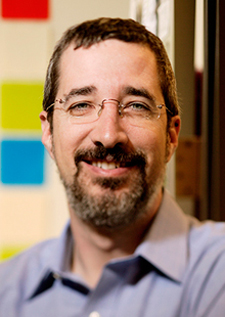 Paul B. Jaskot
Paul B. Jaskot, professor of the history of art and architecture at DePaul University in Chicago, Illinois, has been named Ailsa Mellon Bruce Visiting Senior Fellow at the Center for Advanced Study in the Visual Arts at the National Gallery of Art in Washington, DC. Jaskot will use his fellowship to work on a project, titled “Cultural Fantasies, Ideological Goals, and Political Economic Realities: The Built Environment at Auschwitz.”

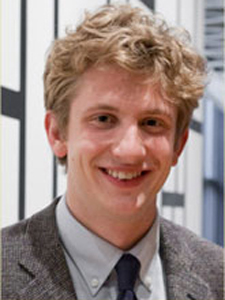 Nathaniel B. Jones
Nathaniel B. Jones, a doctoral student in art history at Yale University in New Haven, Connecticut, has received the David E. Finley Fellowship via the Center for Advanced Study in the Visual Arts at the National Gallery of Art in Washington, DC. He intends to conduct research on his dissertation, “Nobilibus pinacothecae sunt faciundae: The Inception of the Roman Fictive Picture Gallery,” in Europe for two years, spending the third year of the fellowship in residence at CASVA.
Jennifer Josten, assistant professor in the Department of History of Art and Architecture at the University of Pittsburgh in Pennsylvania, has been named a Getty Postdoctoral Fellow at the Getty Research Institute in Los Angeles, California. Josten’s project is titled “Mathias Goeritz’s Arquitectura Emocional: Shades of the New Monumentality in Midcentury Mexico.”
Subhashini Kaligotla, a poet and a doctoral student in the Department of Art History and Archaeology at Columbia University in New York, has been named an Ittleson Fellow at the Center for Advanced Study in the Visual Arts at the National Gallery of Art in Washington, DC. Her fellowship, which spans from 2012 to 2014, will be devoted to her dissertation, “Shiva’s Waterfront Temples: Reimagining the Sacred Architecture of India’s Deccan Region.”
Cindy Kang, a PhD candidate in the Institute of Fine Arts at New York University, has been named a Getty predoctoral fellow for 2012–13. Kang will be in residence at the Getty Research Institute in Los Angeles, California, working on her dissertation, “Wallflowers: Tapestry and the Nabis in the Fin-de-siècle France.”
Jinah Kim has been named a National Endowment for the Humanities Fellow at the Getty Research Institute in Los Angeles, California. Kim, a recent PhD graduate of the University of California, Berkeley, will devote her fellowship to “Visions and the Visual: Color in Esoteric Buddhist Visual Practices in Medieval South Asia.”
Stuart Lingo, associate professor of art at the University of Washington’s School of Art in Seattle, has been named a Samuel H. Kress Senior Fellow at the Center for Advanced Study in the Visual Arts at the National Gallery of Art in Washington, DC. Lingo will use his fellowship to work on a project titled “Bronzino’s Bodies: Fortunes of the Ideal Nude in an Age of Reform.”
Beili Liu, a multidisciplinary artist and associate professor of art at the University of Texas at Austin, received the Distinction Award at the 2011 Kaunas Biennial in Lithuania. Liu’s art uses elemental materials, such as wood, paper, salt, metal, and incense, to transform gallery spaces into meditative installations.
David S. Mather, who recently earned his PhD in the Visual Arts Department at the University of California, San Diego, has received a postdoctoral fellowship from the Getty Research Institute in Los Angeles. Mather will use his residency at the Getty Center to further develop “‘The Wild Joy of Color’: Boccioni and the European Avant-Garde,” a chapter from his dissertation.
Jennifer Nelson, a graduate student in the Department of the History of Art at Yale University in New Haven, Connecticut, has been awarded a Robert H. and Clarice Smith Fellowship for 2012–13 from the Center for Advanced Study in the Visual Arts at the National Gallery of Art in Washington, DC. Nelson will use the award to work on “Image beyond Likeness: The Chimerism of Early Protestant Visuality, 1517–1565.”
Joshua O’Driscoll, a doctoral candidate in the Department of the History of Art and Architecture at Harvard University in Cambridge, Massachusetts, has been named a 2011–14 Paul Mellon Fellow at the Center for Advanced Study in the Visual Arts at the National Gallery of Art in Washington, DC. O’Driscoll will spend time on “Picti Imaginativo: Image and Inscription in Ottonian Manuscripts from Cologne.”

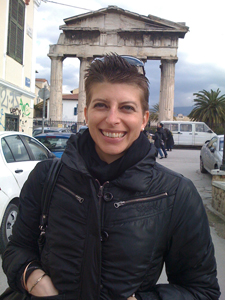 Ann E. Patnaude
Ann E. Patnaude, a PhD student in the Department of Art History at the University of Chicago in Illinois, has received a twelve-month Chester Dale Fellowship for 2012–13, administered by the Center for Advanced Study in the Visual Arts at the National Gallery of Art in Washington, DC. Her dissertation is called “Locating Identity: Mixed Inscriptions in Archaic and Classical Greek Pottery and Stone, ca. 675–336 BCE.”

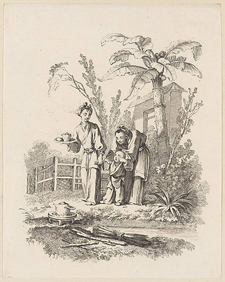 Gabriel Huquier, after François Boucher, Chinese Man and Woman Fishing at the Fish-Pond, ca. 1738–45, etching and engraving, 11⅞ x 9 5/16 in. Metropolitan Museum of Art, New York (artwork in the public domain)
David Pullins, a doctoral candidate the Department of the History of Art and Architecture at Harvard University in Cambridge, Massachusetts, has been named a David E. Finley Fellow for 2012–15. The fellowship, which comes from the Center for Advanced Study in the Visual Arts at the National Gallery of Art in Washington, DC, will allow him to work on his dissertation, “Cut and Paste: The Mobile Image from Watteau to Pillement.”
William W. Robinson, the Maida and George Abrams Curator of Drawings in the Fogg Museum’s Division of European and American Art at Harvard Art Museums in Cambridge, Massachusetts, has been named a Museum Guest Scholar at the Getty Research Institute in Los Angeles, California. Robinson will be in residence at the Getty from July to September 2013.
Sophia Ronan Rochmes, a PhD candidate in the Department of the History of Art and Architecture at the University of California, Santa Barbara, has received a predoctoral fellowship from the Getty Research Institute in Los Angeles, California. Rochmes will work on “Shades of Gray: Functions of Color and Colorlessness in Grisaille Manuscripts.”
Jennifer Margaret Simmons Stager, who earned her PhD from the History of Art Department at the University of California, Berkeley, has received a fellowship to study at the Getty Research Institute in Los Angeles, California, supported by the National Endowment for the Humanities. She will be in residence at the Getty Villa in Malibu, researching “The Embodiment of Color in Ancient Mediterranean Art.”

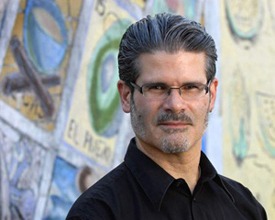 Roberto Tejada
Roberto Tejada, the Distinguished Endowed Chair in Art History in the Meadows School of Art at Southern Methodist University in Dallas, Texas, has been named the 2012–13 recipient of the Fulbright-FAAP Distinguished Chair in the Visual Arts. The award from the Fulbright US Scholar Program will enable Tejada to engage in scholarship with faculty and students at the Fundação Armando Alvares Penteado (FAAP) in São Paulo, Brazil.

 Krista Thompson
Krista Thompson, associate professor of art history at Northwestern University in Evanston, Illinois, has received an American Council of Learned Societies fellowship for her project, “Photography, Screen, and Spectacle in Contemporary African Diasporic Cultures.”


Ming Tiampo, associate professor of art history at Carleton University in Ottawa, Ontario, has received an honorable mention from the Dedalus Foundation’s Robert Motherwell Book Award for Gutai: Decentering Modernism (Chicago: University of Chicago Press, 2011).
Noa Turel has been awarded a postdoctoral fellowship from the Getty Research Institute in Los Angeles, California. Turel, who recently received her PhD from the University of California, Santa Barbara, will be in residence from September 2012 to June 2013, working on “Living Color: The Animation Paradigm of Pictorial Realism 1350–1550.”
Susan M. Wager, a PhD student in the Department of Art History and Archaeology at Columbia University in New York, has been named a Samuel H. Kress Fellow for 2012–14 from the Center for Advanced Study in the Visual Arts at the National Gallery of Art in Washington, DC. Wager, whose specialty is eighteenth- and nineteenth-century French visual culture, will research her dissertation, titled “Boucher’s Bijoux: Luxury Reproductions in the Age of Enlightenment.”

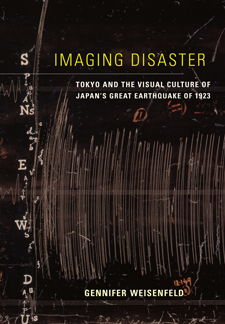
Gennifer Weisenfeld, associate professor in the Department of Art, Art History, and Visual Studies at Duke University in Durham, North Carolina, has been awarded a grant from the Graham Foundation for Advanced Studies in the Fine Arts for her book, Imaging Disaster: Tokyo and the Visual Culture of Japan’s Great Earthquake of 1923 (Berkeley: University of California Press, 2012).
Stephen Hart Whiteman has been awarded a 2012–14 A. W. Mellon Postdoctoral Fellowship at the Center for Advanced Study in the Visual Arts at the National Gallery of Art in Washington, DC. His project is titled “Vocabularies of Culture: The Landscape of Multiethnic Emperorship in the Early Qing Dynasty (1661–1722).”
Jeff Williams, an artist and assistant professor in studio art at the University of Texas at Austin, has won the 2012 Texas Prize, a $30,000 triennial award sponsored by the Austin Museum of Art/Arthouse. The prize, given to an emerging artist based in Texas, is juried by an international group of artists, scholars, and curators.
Marie Yasunaga, a PhD candidate in the Department of Comparative Literature and Culture at the University of Tokyo in Japan, has received a predoctoral fellowship from the Getty Research Institute in Los Angeles, California. Yasunaga will be a resident from September 2012 to June 2013; her project is titled “Color Theories in Museum Spaces: Installation Experiments by Karl Ernst Osthaus and Karl With. From German Kunstgewerbe-Reformbewegung through Symbolism and Expressionism to the Era of the White Cube.”
Mantha Zarmakoupi, a Humboldt Postdoctoral Fellow in the Archäologisches Institut at the Universität zu Köln in Germany, has been named a 2012–13 Getty Scholar at the Getty Research Institute in Los Angeles, California. Zarmakoupi specializes in classical art and archeology, which she will explore during her residency in a project titled “The Idea of Landscape in Roman Luxury Villas.”
Exhibitions Curated by CAA Members
posted Oct 15, 2012
Check out details on recent shows organized by CAA members who are also curators.
Exhibitions Curated by CAA Members is published every two months: in February, April, June, August, October, and December. To learn more about submitting a listing, please follow the instructions on the main Member News page.
October 2012
Reni Gower. Heated Exchange. Upstairs Artspace, Tryon, North Carolina, September 21–November 17, 2012.

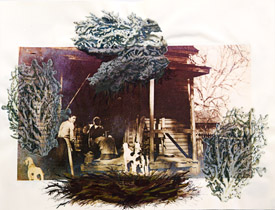 Martha Jackson Jarvis, Ancestors’ Bones #4, 2010–11, mixed-media drawing with black walnut ink, watercolor, oil, wax, raw pigment, collage, and photo transfer, 20 x 26¼ in. (photograph provided by Martha Jackson Jarvis Studio)
Julie L. McGee. Martha Jackson Jarvis: Ancestors’ Bones. Mechanical Hall Gallery, University of Delaware, Newark, Delaware, September 5–December 9, 2012.

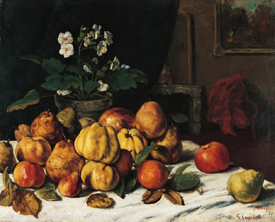 Gustave Courbet, Apples, Pears, and Primroses on a Table, 1871–72, oil on canvas, 23½ x 28¾ in. Norton Simon Art Foundation (artwork in the public domain)
Gloria Williams Sander. Significant Objects: The Spell of Still Life. Norton Simon Museum of Art, Pasadena, California, July 20, 2012–January 21, 2013.
Cortney Lane Stell. Something about the State of Being. Philip J. Steele Gallery, Rocky Mountain College of Art and Design, Denver, Colorado, August 31–October 13, 2012.
Books Published by CAA Members
posted Oct 15, 2012
Publishing a book is a major milestone for artists and scholars—browse a list of recent titles below.
Books Published by CAA Members appears every two months: in February, April, June, August, October, and December. To learn more about submitting a listing, please follow the instructions on the main Member News page.
October 2012

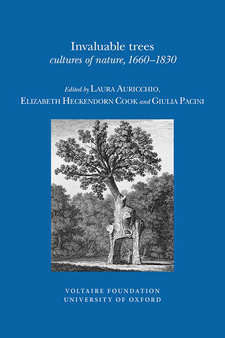
Laura Auricchio, Elizabeth Heckendorn Cook, and Giulia Pacini, eds. Invaluable Trees: Cultures of Nature, 1660–1830 (Oxford, UK: Voltaire Foundation, 2012).

Judith K. Brodsky and Ferris Olin, eds. The Fertile Crescent: Gender, Art, and Society (New Brunswick, NJ: Institute for Women and Art, Rutgers University, 2012).

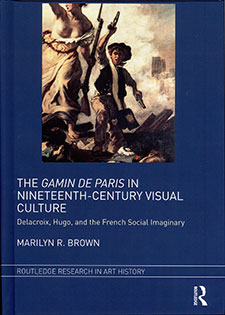
Kathryn Brown. Women Readers in French Painting 1870–1890: A Space for the Imagination (Burlington, VT: Ashgate, 2012).

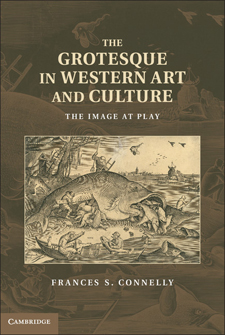
Frances S. Connelly. The Grotesque in Western Art and Culture: The Image at Play (New York: Cambridge University Press, 2012).


Zoya Kocur and Simon Leung, eds. Theory in Contemporary Art since 1985, 2nd ed. (Oxford, UK: Wiley-Blackwell, 2012).

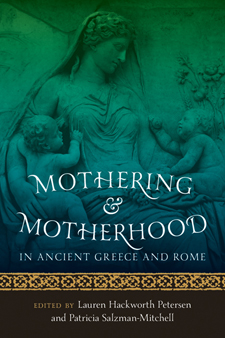
Lauren Hackworth Petersen and Patricia Salzman-Mitchell, eds. Mothering and Motherhood in Ancient Greece and Rome (Austin: University of Texas Press, 2012).
Ming Tiampo. Gutai: Decentering Modernism (Chicago: University of Chicago Press, 2011).
Gennifer Weisenfeld. Imaging Disaster: Tokyo and the Visual Culture of Japan’s Great Earthquake of 1923 (Berkeley: University of California Press, 2012).
caa.reviews Seeks 2012 Doctoral Dissertations
posted Oct 15, 2012
Dissertation titles in art history and visual studies from American and Canadian institutions, both completed and in progress, are published annually in caa.reviews, making them available through web searches. PhD-granting institutions may send a list of their doctoral students’ dissertation titles for 2012 to dissertations@collegeart.org. The complete Dissertation Submission Guidelines regarding the format of listings are now available. CAA does not accept listings from individuals. Improperly formatted lists will be returned to sender. For more information, please write to the above email address or visit the guidelines page. Deadline: January 16, 2013.
Register for the 2013 Annual Conference
posted Oct 11, 2012
 Registration is now open for the 101st Annual Conference, taking place February 13–16, 2013, in New York. Register before the early deadline, December 14, 2012, to ensure the lowest rate and your place in the online Directory of Attendees.
Registration includes access to all conference sessions and to the Book and Trade Fair. Each registrant will receive a copy of the Conference Program and access to the online Directory of Attendees, along with online access to Abstracts 2013 and free admission to selected museums and galleries throughout greater New York during the conference.
Those interested in Career Services should sign up now to secure a place in several high-demand activities. Register for a variety of Professional Development Workshops covering topics ranging from grant writing to tenure issues. Sign up for Mentoring Sessions that include the Artists’ Portfolio Review and Career Development Mentoring.
Making travel plans and hotel reservations? Check out the special discounts available to conference attendees. Students can take advantage of further reductions on accommodations at select conference hotels.
You may also purchase tickets for a variety of Events taking place in the New York area, including:
- Opening Night Reception at the Solomon R. Guggenheim Museum
- Chelsea Gallery District Walking Tour
- Montclair Art Museum Tour and Reception
Space is limited, so please register early.
CAA will regularly update the conference website over the next few months, with additional details on the program, awards, tours, and more. A list of session names and chairs has been posted, with the names of all speakers and the titles of their presentations coming in November.
The CAA Annual Conference is the world’s largest international forum for professionals in the visual arts, offering more than two hundred stimulating sessions, panel discussions, roundtables, and meetings. CAA anticipates more than six thousand artists, art historians, students, curators, critics, educators, art administrators, and museum professionals to attend the meeting, which brings CAA’s Centennial year to a close.
Appraisers Association of America Presents “On and Off the Road,” an Evening with America’s Most Popular Appraisers
posted Oct 04, 2012
The Appraisers Association of America, an affiliated society, invites CAA members to attend “On and Off the Road,” an evening with America’s most popular appraisers, to be held at the Grolier Club in New York on Tuesday, October 16, 2012. Experts from television’s Antiques Roadshow—Lee Dunbar, Kathleen Harwood, Daile Kaplan, Leigh Keno, Betty Krulik, Kevin Zavian, and Alasdair Nichol—will share their experiences on and off camera. Attendees will have the rare opportunity to hear some of the country’s leading appraisers discuss the process of evaluating everything from fine art to memorabilia. You also have the chance for private appraisal consultation to find out if you own a hidden gem. Meet and speak with some of the most trusted experts in the business.
Tickets are $85 for individuals and $75 for CAA members, staff, and guests ; $200 for patrons and $175 CAA members, staff, and guests; and $350 for a patron duo and $300 CAA members, staff, and guests. Tickets are tax deductible, with the proceeds benefiting the association’s Appraisal Institute to support educational programs on connoisseurship, assessment, and valuation.
Doors open at 6:00 PM. The panel discussion begins at 6:30 PM, followed by a reception at 7:30 PM. Free appraisal consultations are offered to those with patron tickets; please RSVP by October 9 by calling 212-889-5404, ext. 11., or writing to programs@appraisersassoc.org .
The Grolier Club is located at 47 East 60th Street , New York, NY 10065 (map). For the Appraisal Consultation Guidelines, and for information about the Appraisers Association of America, please visit www.appraisersassociation.org or call 212-889-5404, ext. 11.