
CAA News Today
Brandeis Department of Fine Arts Responds to Museum Closing
posted Feb 03, 2009
The Department of Fine Arts at Brandeis University, chaired by Charles B. McClendon, the Sidney and Ellen Wien Professor in the History of Art, has published a statement on the closing of the Rose Art Museum. It was sent to all university faculty, students, alumni, and friends of this department. Here is the letter in full:
Late Monday afternoon (January 26) the Department of Fine Arts was notified that the University Board of Trustees resolved to disband the Rose Art Museum and sell the collection at auction to raise funds for the university. In addition to despairing at the Trustees’ action, we wish to make clear that at no point in the decision making process was the Department of Fine Arts faculty consulted. Neither was there any communication regarding the decision with the Rose Board of Overseers on which a member of the faculty sits. Nor was any reference made to the museum at the university-wide faculty meeting last Thursday (January 22) when strategies to confront the current fiscal crisis were discussed.
The department faculty wishes to express our profound sadness at the consequences of this abrupt action for the liberal arts mission, cultural life, and intellectual legacy of the university. Since its founding in 1961, the Rose Art Museum has been building a collection of post-war and contemporary art, gradually, steadily, and with the generous support of donors who believe in Brandeis. Often cited as the best in New England, the collection includes superb examples of work by nearly every major artist from the post-war decades, such as Jasper Johns and Willem de Kooning, and deep holdings of art of the present and of classic modern art from both sides of the Atlantic. No other university in the region can claim a more renowned resource for the study of modern and contemporary art. In the past year thousands of visitors came to the Rose to admire the collection.
The Rose has been a leading expression of the value Brandeis places on the arts. The museum has demonstrated the commitment of Brandeis to intellectual rigor in the humanities as well as social sciences and hard sciences. In the last few years it has served as a place where faculty and students from many disciplines come together for symposia, exhibitions, lectures, and concerts. Through the Rose, Brandeis has publicly placed a premium on creative thinking in whatever form it may take. Binding art to the mission of Jewish sponsored scholarship and education was critical to the history of post-war American art. The continued connection between art and education at Brandeis has been a defining aspect of the Brandeis contribution to American higher education. This mission and the values it has imbued in generations of students have been fundamental to the growth and successes of the educational program of the Department of Fine Arts. The Rose is essential to the character of this department as it exists today.
The collection is an intellectual history of post-war society that corresponds to the history of Brandeis itself. Curators and art historians have been drawing on our collection to tell histories of American art and culture to audiences here in Waltham and around the globe. Hundreds of students from studio art and art history classes study the collection each semester. For some, the collection has been the seedbed for important careers in the arts, Academe, and great museums.
As to the proposed future of the museum building, at no time before or after notification of the decision, have members of the Fine Arts Department expressed a desire to change the function of the Rose or reuse the building. There is no academic advantage to be salvaged from closing the museum and selling our art. It is a sad response to the current fiscal crisis that treasures left in trust for current and future students are now being sacrificed. The department remains committed to continuing the legacy of the intellectual and artistic practice here. We are losing an irreplaceable tool to fulfill that goal.
The Department of Fine Arts offers undergraduate degrees in studio art and art history and hosts a postbaccalaureate program in studio art. Both the department and the Rose Art Museum are CAA institutional members.
NEA Names New Acting Chairman
posted Feb 03, 2009
The National Endowment for the Arts (NEA) announced yesterday the appointment of Patrice Walker Powell as acting chairman. In this position, she will provide oversight for agency grantmaking and day-to-day agency operations and supervise administrative activities. She assumed the role on January 29.
In 2008, Powell was appointed deputy chairman for states, regions, and local arts agencies. In that role, she was responsible for managing the agency’s grants and special projects involving a national network of governmental and nonprofit partners; small grant programs such as Challenge America Fast-Track; and the NEA’s AccessAbility activities that are also carried out in conjunction with state and regional organizations. Powell has been a staff member at the NEA since 1991.
In addition, Anita Decker was appointed by the White House as NEA director of government affairs effective February 4. In this role she manages the endowment’ relations with Congress and the White House, international and federal partnership programs, and the operations of the National Council on the Arts. Previously, Decker was on the staff of President Barack Obama’s election campaign.
NEA NAMES NEW ACTING CHAIRMAN
posted Feb 03, 2009
The National Endowment for the Arts (NEA) announced yesterday the appointment of Patrice Walker Powell as acting chairman. In this position, she will provide oversight for agency grantmaking and day-to-day agency operations and supervise administrative activities. She assumed the role on January 29.
In 2008, Powell was appointed deputy chairman for states, regions, and local arts agencies. In that role, she was responsible for managing the agency’s grants and special projects involving a national network of governmental and nonprofit partners; small grant programs such as Challenge America Fast-Track; and the NEA’s AccessAbility activities that are also carried out in conjunction with state and regional organizations. Powell has been a staff member at the NEA since 1991.
In addition, Anita Decker was appointed by the White House as NEA director of government affairs effective February 4. In this role she manages the endowment’ relations with Congress and the White House, international and federal partnership programs, and the operations of the National Council on the Arts. Previously, Decker was on the staff of President Barack Obama’s election campaign.
Winter 2008 Art Journal Published
posted Feb 02, 2009
 The Winter 2008 issue of Art Journal has just been published. The table of contents is posted on the CAA website, and your printed copy will arrive in the mail this month.
In the Forum, Suzanne Hudson and Anne Byrd collected papers first presented at their cochaired CAA session from the 2008 Annual Conference in Dallas–Fort Worth. Entitled “I’ll Be Your Mirror, or Why and How Do We Work on Living Artists,” the section presents essays and responses from Hudson, Byrd, Ágnes Berecz, Huey Copeland, Phyllis Tuchman, and Johanna Burton. Richard Meyer’s essay here “ ‘Artists sometimes have feelings,’ ” won CAA’s 2009 Art Journal Award, to be awarded at the upcoming conference in Los Angeles.
Features include “Toward an Aesthetic Marine Biology,” a deep-sea investigation by J. Malcolm Shick, a professor of zoology and oceanography, of underwater imagery in historical and contemporary art and its use in his classroom. Two other texts on pedagogy round out the section: Julia Morrisroe and Craig Roland consider “A Collaborative Approach to Preparing MFA Art Students to Teach at the University Level,” and Harrell Fletcher leads a conversation with his students on the MFA in social practice that he developed at Portland State University.
In Reviews, Lisa Frye Ashe examines the exhibition Morris Louis Now: An American Master and its catalogue, published to accompany a show that originated at the High Museum of Art in Atlanta, Georgia, in 2006 and traveled to San Diego and Washington, DC. In related art-historical areas, Harry Cooper reviews Mark Godfrey’s book Abstraction and the Holocaust, and Gail Levin looks at the exhibitions Action Painting (on view in Basel, Switzerland in 2008) and Action/Abstraction: Pollock, de Kooning, and American Art, 1940–1976 (opening on February 13 at the Albright-Knox Art Gallery in Buffalo, New York, after stops in New York and St. Louis), while also reviewing their catalogues.
Friday News on the Rose Art Museum
posted Jan 30, 2009
Yesterday about two hundred students and other protesters staged a sit-in at the Rose Art Museum, reports the Boston Globe, which has been following the story closely since Monday. A Facebook group and a website, established this week shortly after the news of the closing, played a major role in rallying students and support.
The Boston Globe also presents some of the larger issues surrounding Brandeis University’s finances. Modern Art Notes has published an general email sent by Brandeis president Jehuda Reinharz to those who wrote to him. In it Reinharz gives a few more details about his school’s financial situation. The Justice, the independent student newspaper at Brandeis, and the Wall Street Journal are also looking into this part of the developing story.
The Brandeis Hoot also weighs in on the situation, and Emily Leifer of the Justice writes an op-ed about Brandeis’s public image.
Art & Education, the academic wing of e-flux and Artforum, republished and emailed CAA’s statement against the closing.
Friday News on the Rose Art Museum
posted Jan 30, 2009
Yesterday about two hundred students and other protesters staged a sit-in at the Rose Art Museum, reports the Boston Globe, which has been following the story closely since Monday. A Facebook group and a website, established this week shortly after the news of the closing, played a major role in rallying students and support.
The Boston Globe also presents some of the larger issues surrounding Brandeis University’s finances. Modern Art Notes has published an general email sent by Brandeis president Jehuda Reinharz to those who wrote to him. In it Reinharz gives a few more details about his school’s financial situation. The Justice, the independent student newspaper at Brandeis, and the Wall Street Journal are also looking into this part of the developing story.
The Brandeis Hoot also weighs in on the situation, and Emily Leifer of the Justicewrites an op-ed about Brandeis’s public image.
Art & Education, the academic wing of e-flux and Artforum, republished and emailed CAA’s statement against the closing.
Rose Art Museum Updates
posted Jan 29, 2009
Ford W. Bell, president of the American Association of Museums, has issued a Statement on the Closure of the Rose Museum at Brandeis University. Read it at the Boston Globe’s Exhibitionist blog.
Artinfo.com has published the response from the Association of Art Museum Directors.
The Association of College and University Museums and Galleries, a CAA affiliated society, has published its statement, ACUMG Responds to the Closure of the Rose Art Museum, Brandeis University.
Also as reported in the Boston Globe, the president of Brandeis University, Jehuda Reinharz, said that while he would not reconsider closing the museum, he is entertaining the possibility that his school might not sell the Rose Art Museum’s art collection and reaffirmed that the museum building would become a “fine arts teaching center with studio space and an exhibition gallery.” CAA notes that the Rose Art Museum as it stands now is already this.
Other updates and articles can be found at Bloomberg.com, the New York Times, and Modern Art Notes, including a Q&A with Michael Rush, director of the Rose Art Museum. Time also interviewed Rush on Tuesday, and Lee Rosenbaum at CultureGrrl has additional information.
Donn Zaretsky at Art Law Blog is also writing about the Rose situation, with deaccessioning in mind.
CAA Protests Rose Art Museum Closing and Art Collection Sale
posted Jan 29, 2009
The College Art Association (CAA) was shocked and dismayed to learn of the decision by Brandeis University to close the Rose Art Museum and sell its entire art collection for operating revenue.
CAA supports the Codes of Ethics of the American Association of Museums and the Association of Art Museum Directors, which clearly state that works of art in museum collections are held as a public trust and that any proceeds of sales must only support the acquisition of new works. However, perceiving an entire art collection as a disposable financial asset and then dismantling that collection wholesale to cover other university expenses is deeply troubling for all college and university collections.
The closing of the museum at Brandeis will be devastating to the academic community, not only affecting our colleagues at the museum and students and faculty in the Department of Fine Arts, which offers programs in both studio art and art history, but also depriving the entire arts-loving public in New England and around the world. The teaching of art and art history in higher education is untenable without the direct study of physical works of art, and it appears the Brandeis Board of Trustees has disregarded the kind of scholarship and creativity that have been the hallmark of CAA members for nearly one hundred years.
According to news reports, neither Brandeis University nor the Rose Art Museum is on the brink of economic collapse, nor are they unable to maintain the collections. Given that no clear explanation has been offered on the school’s financial exigencies, the closure of the Rose Art Museum and the sale of its collection appear to be in violation of professional museum standards and of academic transparency and due process; the decision also demonstrates a lack of academic responsibility and fiduciary foresight. We appeal to the Trustees of Brandeis to revisit and reverse their decision.
Paul B. Jaskot
President, College Art Association
Professor of Art History
Department of the History of Art and Architecture
DePaul University
Linda Downs
Executive Director, College Art Association
Download a PDF of this letter from the CAA website.
Film Screenings at the Los Angeles Conference
posted Jan 29, 2009
What would a trip to Tinseltown be without taking in a few films? During the upcoming CAA Annual Conference in Los Angeles, a pair of excellent documentaries on contemporary artists will be screened.
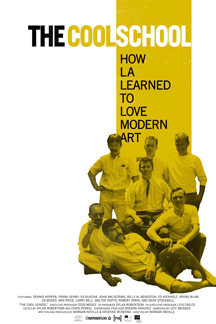 Join us at REDCAT: The Roy and Edna Disney/CalArts Theater (REDCAT) in downtown Los Angeles for a screening of The Cool School, a documentary about how a few renegade artists built the Los Angeles art scene from scratch. The principal cast includes: Ed Ruscha, Dennis Hopper, Frank Gehry, Billy Al Bengston, Irving Blum, and Robert Irwin. The film’s director, Morgan Neville, will be on hand for a Q&A session after the film.
The screening of The Cool School will take place on Thursday, February 26, from 7:00 to 9:00 PM. Tickets are $15; space is limited. Tickets can be purchased by calling CAA Member Services at 212-691-1051, ext 12., or in the registration area at the Los Angeles Convention Center only; they cannot be sold or purchased at REDCAT.
Produced and directed by Jeffrey Perkins, The Painter Sam Francis, a feature-length film portrait of the artist Sam Francis (1923–1994), portrays his entire life and professional career. Forty years in the making, the film shows the artist at work in his studios from 1969 to 1992; it also includes interviews with the artist, his family members, art historians, and artists such as Ed Ruscha, James Turrell, and Bruce Conner. The film is an intimate portrait of an important artist at work, as well as an personal view as told by the artist himself and those that knew him.
The Painter Sam Francis will be screened on Friday, February 27, and Saturday, Febru-ary 28, 12:30–2:00 PM, in the Ahmanson Auditorium at the Museum of Contemporary Art, Los Angeles; admission if free.
Rose Art Museum Updates
posted Jan 29, 2009
Ford W. Bell, president of the American Association of Museums, has issued a Statement on the Closure of the Rose Museum at Brandeis University. Read it at the Boston Globe’s Exhibitionist blog.
Artinfo.com has published the response from the Association of Art Museum Directors.
The Association of College and University Museums and Galleries, a CAA affiliated society, has published its statement, ACUMG Responds to the Closure of the Rose Art Museum, Brandeis University.
Also as reported in the Boston Globe, the president of Brandeis University, Jehuda Reinharz, said that while he would not reconsider closing the museum, he is entertaining the possibility that his school might not sell the Rose Art Museum’s art collection and reaffirmed that the museum building would become a “fine arts teaching center with studio space and an exhibition gallery.” CAA notes that the Rose Art Museum as it stands now is already this.
Other updates and articles can be found at Bloomberg.com, the New York Times, and Modern Art Notes, including a Q&A with Michael Rush, director of the Rose Art Museum. Time also interviewed Rush on Tuesday, and Lee Rosenbaum at CultureGrrl has additional information.
Donn Zaretsky at Art Law Blog is also writing about the Rose situation, with deaccessioning in mind.