CAA News Today
Vote for CAA’s 2019 Board of Directors and Proposed By-Law Changes
posted Dec 10, 2018
As a CAA member, voting is one of your most important responsibilities in shaping the future of the organization. Thank you for taking the time to vote.
For 2019, there are two items to vote on: the 2019 CAA Board of Directors Election and Proposed Changes to CAA’s By-Laws.
Scroll down to learn more and submit your online voting form.
2019 CAA Board of Directors Election
The CAA Board of Directors comprises professionals in the visual arts who are elected annually by the membership to serve four-year terms. The Board is charged with CAA’s long-term financial stability and strategic direction; it is also the Association’s governing body. The board sets policy regarding all aspects of CAA’s activities, including publishing, the Annual Conference, awards and fellowships, advocacy, and committee procedures. For more information, please read the CAA By-laws on Nominations, Elections, and Appointments.
Meet the Candidates
The 2018–19 Nominating Committee has selected a slate of six candidates for election to the CAA Board of Directors for the 2019–23 term. Click the names of the candidates below to read their statements and resumes before casting your vote. The candidates are:
CAA members may vote for up to four (4) candidates, including one write-in candidate (who must be a CAA member). The four candidates receiving the most votes will be elected to the board.
CAA members must cast their votes for board members and submit their proxies online using the form below; no paper ballots will be mailed. The deadline to vote for the board is 6:00 PM (Eastern Time) on Thursday, February 14, 2019.
Proposed Changes to CAA’s By-Laws
In addition, on November 16, 2018, the CAA Board of Directors voted to recommend that the membership amend the Association’s By-laws, as described here by Jim Hopfensperger, CAA president, and Hunter O’Hanian, CAA chief executive officer and executive director. Click here to review the proposed changes before voting.
To vote on the proposed changes, CAA members may either cast their votes online using the form below or in-person at the 2019 Annual Conference.
Submit Your Vote Below
You can use the form below to vote for both the 2019 CAA Board of Directors Election and Proposed Changes to CAA’s By-Laws. Please have your CAA user/member ID# and password handy when you are ready to vote.
Use the scroll bar on the right side of the form to scroll down, make your choices, and submit.
The election results will be announced at CAA’s 107th Annual Conference during the second segment of the Annual Business Meeting scheduled from 2:00 PM to 3:30 PM on Friday, February 15, 2019 in the Hudson Suite at The New York Hilton Midtown.
Questions? Contact Vanessa Jalet, executive liaison, at (212) 392-4434 or vjalet@collegeart.org
Notice of CAA 107th Annual Business Meeting
posted Dec 10, 2018
College Art Association
Notice of 107th Annual Business Meeting
New York, New York
Wednesday, February 13 and Friday, February 15, 2019
The 107th Annual Business Meeting of the members of the College Art Association will be called to order at 6:00 PM on Wednesday, February 13th, during Convocation at the 2019 Annual Conference, in the Grand Ballroom Foyer, 3rd Floor, New York Hilton Midtown Hotel, 1335 Avenue of the Americas, New York, NY 10019.
CAA President, Jim Hopfensperger, will preside. The Annual Business Meeting will be held in two parts.
AGENDA
The Agenda for the first part of the Annual Business Meeting is as follows:
I. Welcome – Hunter O’Hanian, CAA Executive Director and CEO
II. Presentation by Jim Hopfensperger, CAA President
III. Executive Director’s Report – Hunter O’Hanian
IV. Presentation of CAA Awards for Distinction
V. 2019 Professional Development Fellowships in Visual Arts and Art History
VI. Keynote Address – Joyce Scott
After the Keynote Address, the Meeting will be recessed and will re-convene on Friday, February 15, 2019 from 2:00 – 3:30 PM in the Hudson Suite at the New York Hilton. The Agenda for the second part of the Annual Business Meeting is as follows:
VII. Approval of Minutes of 106th Annual Business Meeting, February 23, and 25, 2018 – see https://www.collegeart.org/news/2018/12/10/caa-106th-annual-business-meeting-minutes/
VIII. Financial Report: Teresa Lopez, CAA Chief Financial Officer
IX. Old Business
X. New Business
- Announcement of election results by Jim Hopfensperger
- Amendments to the By-laws: Jim Hopfensperger
The proposed changes, set out in red on the attached version of the By-Laws, are a result of the work of two Governance Task Forces (2015-2018) that examined CAA’s governance structure to make the Association more responsive to the needs of its members and the changing demographics in the field. The Board of Directors submits these changes to the membership with the recommendation that they approve them. Members may vote on-line or at the Annual Business Meeting.
XI. Open discussion with members, Board and staff
Proxies
If you are unable to attend the Annual Business Meeting, please complete a proxy online to appoint the individuals named thereon to (i) vote, as directed by you, for directors, and, at their discretion, on such other matters as may properly come before the Annual Business Meeting; and (ii) to vote in any and all adjournments thereof. CAA Members will be notified when the proxy for casting votes becomes available online in early January 2019. A proxy, with your vote for directors, must be received no later than 6:00 PM EST, Thursday, February 14, 2019.
Next Meeting – 2020
The 108th Annual Business Meeting of the College Art Association will be held in Chicago in 2020, and again will be divided into two parts – one at Convocation on Wednesday, February 12, and a second meeting and open discussion on Friday, February 14, 2020.
CAA 106th Annual Business Meeting Minutes
posted Dec 10, 2018
MINUTES of
College Art Association 106th Annual Business Meeting
Part One – Room 502 A + B
Los Angeles Convention Center
1201 S. Figueroa Street, Los Angeles, CA
Wednesday, February 21, 2018: Convocation, 6:00 PM
and
Part Two – Room 403B, Los Angeles Convention Center,
Friday, February 23, 2018: myCAA, 2:00 – 3:30 PM
Part One
CAA’s President, Suzanne Preston Blier, welcomed attendees to CAA’s Convocation and to the Association’s 106th Annual Business Meeting. The Annual Business Meeting will be held in two parts.
The Convocation proceeded with President Blier’s opening comments followed by the Annual Awards for Distinction ceremony. The Keynote Address was given by Charles Gaines of Cal Art, School of Art.
Part Two
I. Call to Order
President Suzanne Blier called to order Part Two of the Annual Business Meeting. With 400+ proxies, there was a quorum for reconvening the Annual Business Meeting.
II. President Blier called for approval of the minutes from the 2017 Annual Business Meeting. The approval of the minutes of the 2017 Annual Business Meeting was moved and second. The minutes were approved.
III. President Blier called on Teresa Lopez, CAA’s Chief Financial Officer, to give the financial report for fiscal year 2017.
Ms. Lopez noted that the Association ended fiscal year 2017 with a deficit of $176,152. The CAA staff, with Board participation, was developing a budget to eliminate deficits in future years. Reducing the full-time staff from 27 to 22 employees would assist in reducing deficits in future years.
As of June 30, 2017, the Association had 8,712 individual members and 1,229 institutional members (including 718 subscribers handled via Taylor & Francis), for a total of 9,941 members.
Lopez reported that the fair market value of CAA’s investment portfolio increased from $9,398,571 on July 1, 2016 to $9,838,150 on June 30, 2017.
Copies of the audited financial statement for FY 2017 were made available as handouts and a pdf was posted on CAA’s website.
IV. President Blier called for old business. There was none.
V. President Blier called for new business. There was none.
VI. Results of Board Election: President Blier announced the results of the election to the Board of Directors. The following were elected as directors:
Laura Anderson Barbata
Audrey Bennett
Dahlia Elsayed
Alice Ming Wai Jim.
President Blier congratulated all the candidates and thanked them for their willingness to serve CAA.
VII. President Blier and CAA Executive Director Hunter O’Hanian opened the discussion to all attendees. There was no discussion.
VIII. The meeting was adjourned.
Respectfully submitted,
Melissa Potter, Secretary
November 15, 2018
Next CAA Annual Business Meeting in 2019
The 107th Annual Meeting of the College Art Association will take place during Convocation on Wednesday, February 13, 2019 at 6:00 PM and on Friday, February 15, 2019 from 2:00 – 3:30 PM at the New York Hilton Midtown Hotel, in New York City.
Denise Burge, Lisa Siders, and Jenny Ustick
posted Dec 10, 2018
The weekly CAA Conversations Podcast continues the vibrant discussions initiated at our Annual Conference. Listen in each week as educators explore arts and pedagogy, tackling everything from the day-to-day grind to the big, universal questions of the field.
CAA podcasts are now on iTunes. Click here to subscribe.
This week, Denise Burge, Lisa Siders, and Jenny Ustick discuss interdisciplinary collaboration.
Denise Burge is an instructor of Drawing and Animation at the University of Cincinnati.
Lisa Siders is a fiber and installation artist living on Whidbey Island, Washington.
Jenny Ustick is the Interim Director of the Masters of Fine Arts Program, Foundations Coordinator, and Instructor of Drawing at the University of Cincinnati.
New in caa.reviews
posted Dec 07, 2018


Mark Duerksen reviews Architecture and Politics in Nigeria: The Study of a Late Twentieth-Century Enlightenment-Inspired Modernism at Abuja, 1900–2016 by Nnamdi Elleh. Read the full review at caa.reviews.
Holly Shaffer writes about Worldly Affiliations: Artistic Practice, National Identity, and Modernism in India, 1930–1990 by Sonal Khullar. Read the full review at caa.reviews.
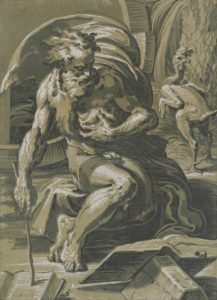
Kristoffer Neville discusses The Chiaroscuro Woodcut in Renaissance Italy by Naoko Takahatake. Read the full review at caa.reviews.
Announcing Milette Gaifman and Lillian Lan-ying Tseng as Coeditors of The Art Bulletin
posted Dec 06, 2018
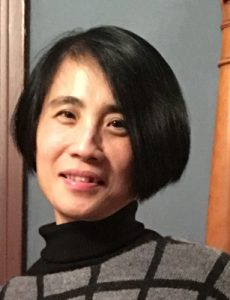
Lillian Lan-ying Tseng
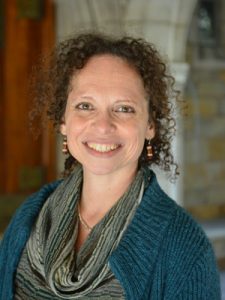
Milette Gaifman
We’re pleased to announce the appointment of Lillian Lan-ying Tseng and Milette Gaifman as the new coeditors of The Art Bulletin. The appointment marks the first joint editorship in the 105-year history of the journal. The Art Bulletin is the flagship journal of art history, covering prehistoric to 21st-century art. Previous editors of The Art Bulletin have included H. W. Janson, George Kubler, Millard Meiss, and John Shapley, among many others. The Art Bulletin editorship rotates every three years.
“CAA believes in interdisciplinary practice and collaboration in all programs and publications. The Art Bulletin’s rich and long history as the journal of record for the art history field will only benefit from this new coeditor approach,” said Hunter O’Hanian, executive director of CAA. “Professors Tseng and Gaifman are highly respected in the field and will bring to the journal diverse experiences and expertise that will be reflected in The Art Bulletin over the years of their editorship.”
Lillian Lan-ying Tseng is associate professor of East Asian art and archaeology at the Institute for the Study of the Ancient World at New York University and specializes in Chinese art and archaeology. The mediums she investigates are diverse, including city planning, architecture, sculpture, painting, calligraphy, textile, and bronze objects. The timeframes of her publications cluster in early imperial China, later imperial China, and the twentieth century. The issues she explores concern not only art objects but also broader contexts in which they are situated, such as how artisans appropriated scientific knowledge for religious purposes, how memory facilitated the creation, circulation, and reception of artifacts, and how political intentions or situations stimulated the development of visual and material cultures. She is the author of Picturing Heaven in Early China (Harvard University Press, 2011). She is currently at work on two book projects: one looks into the reception of antiquity and its impact on visual production in 18th-century China, while the other examines frontiers and visual imaginations in Han China.
“Art and visual culture are central elements in the study of ancient civilizations, as they are of all periods of history,” said Alexander Jones, Leon Levy Director and Professor of the Exact Sciences in Antiquity, Institute for the Study of the Ancient World, NYU. “The Institute for the Study of the Ancient World is proud and delighted on the occasion of Lillian Tseng’s appointment as coeditor of The Art Bulletin.”
Milette Gaifman is associate professor of classics and history of art at Yale University. She is a scholar of ancient art and archaeology, focusing primarily on Greek art of the Archaic and Classical periods. At Yale, she is jointly appointed in the departments of Classics and History of Art. Her research interests include the interaction between visual culture and religion, the variety of forms in the arts of antiquity, the interactive traits of various artistic media, and the reception of Greek art in later periods. In addition, her scholarship explores the historiography of the academic disciplines of art history and archaeology. She is the author of Aniconism in Greek Antiquity (Oxford University Press, 2012), and The Art of Libation in Classical Athens (Yale University Press, 2018); and coeditor of “Exploring Aniconism,” a thematic issue of Religion (2017), and “The Embodied Object in Classical Art,” a special issue of Art History (June 2018).
“It is a significant honor for Yale and for the field of Classical Greek Art that Milette Gaifman has been appointed co-editor of The Art Bulletin. Successor in this role to such hallowed Yale luminaries as Creighton Gilbert and Walter Cahn, Milette will bring the same dynamism and intellectual energy to the position that can be seen in her publications and her hugely successful teaching in our Department,” said Timothy Barringer, Chair and Paul Mellon Professor in the Department of the History of Art at Yale University. “Author of two path-breaking books, Milette is a scholar of wide-ranging tastes and interests, who insists on methodological rigor but also enjoys crossing scholarly borders and dismantling the shibboleths of orthodox thinking. Working with our respected former colleague, Lillian Tseng, she will doubtless bring a new, iconoclastic and perhaps occasionally irreverent spirit to an august journal.”
Lynne Allen
posted Dec 06, 2018
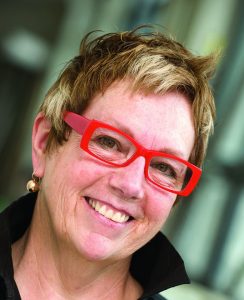
STATEMENT
As a member of CAA since 1987 and attending the conference nearly every year, I feel I understand and grow the continuing mission of the organization. I am a visual artist and have always found the annual conference to be influential for not only my own practice, but my teaching. The mission to “cultivate the ongoing understanding of art as a fundamental form of human expression” is necessary today more than ever. As scholars, reinforcing how art addresses human dignity and empathy is our greatest challenge.
What used to be 5-year strategic plans in higher education have grown to 20- 40-year strategic plans. Things change, and they change fast. Students change and we have to educate ourselves to their new natures. The workplace changes, and we have to educate ourselves to understand a changing higher administration. The country is changing faster than we thought possible, and the world itself is not the same as it was even five years ago. There are those that believe higher education has “peaked” and we are on the downward slide. Adam Harris in the Atlantic says, “we are living through the greatest time in history to be a learner, with the availability of so many high-quality free materials online. But at the same time, the institutions most affiliated with knowledge and learning are facing crisis.” That includes budget cuts, declining enrollments, student debt, declining research dollars, loss of faculty lines, etc. etc. None of this is new to any of us. Some programs take a proactive approach and innovate their way out of these problems, going on-line and increasing continuing education, building a wider audience. Will these approaches last? Are they the answer?
The basic issues that drives us, as art educators, have not changed. We value the arts and the humanity that comes with it. We feel they are more important now than they ever have been. The argument that you cannot get a job over-rides real data, which proves that there are more jobs out there for creative thinkers than ever before. The empathy we feel for our society turns out to be the major solution for our survival.
Yes, we can tackle some of the nuts and bolt issues, but our main goal is to tackle the perception that the arts don’t matter. This is where CAA comes in. We work not only in higher ed, but in communities in urban and rural areas, we partner, and we touch people. We don’t all come from the same place, yet we have everything in common.
Nearly 30 years in academia has shown me that hurtles can be surmounted, that compromise can take place, and we can retool education for the world our students live in. Working in both private and public universities has offered different kinds of experiences so the constraints we all feel are not new to me. It would be an honor to work alongside other scholars, artists, critics, and curators as a CAA board member.
Greg Watts
posted Dec 06, 2018
 STATEMENT
I have been an active member of the College Art Association for more than twenty years and I truly respect and appreciate the forum the association provides for us to refine our collective wisdom through advocacy, engagement and vision.
As a member of the CAA Board of Directors I will endeavor to advance the inclusivity, breadth, and depth of our membership, and encourage greater reciprocity with our peer organizations. With such intent, I currently serve as a member of the Executive Committee and as the Chair of the Commission on Accreditation for the National Association of Art and Design (NASAD). Through this work, as well as past and present work with other organizations, I support active participation that I believe strengthens our prospects for a richly collaborative future. The creative economy, broader advocacy for the arts, greater student involvement, and emergent technologies as methods of building community are examples of areas that I believe are worthy of ongoing consideration for the future of the association – all of which must be on an increasingly global stage.
The heart of my own purpose, within the visual arts in higher education, is to always encourage professional success in concert with personal fulfillment. I believe that we must nurture creativity in both our students and our colleagues; engage in bold conversations about grand ideas; and compel purpose and establish identity through our shared endeavors.
As a member of the CAA Board of Directors I will offer you leadership derived from the breadth of my international experience in concert with an extensive academic background. As an artist, educator, and administrator functioning across complex organizations, I relish the opportunity to give back to our CAA community through my service to the board. I would appreciate your vote! Thank you.
Niku Kashef
posted Dec 06, 2018
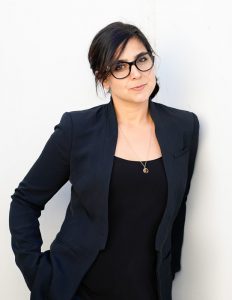 STATEMENT
Hello, I’m Niku Kashef, a Los Angeles based artist, educator, and independent curator. I also maintain a commercial photography practice. I have both taught and exhibited work at the local and international levels and produced arts programming for more than a decade. I came to academia after a long time away working in various other areas in the arts, namely: Los Angeles theater; design and video production; technology; building professional resources for creatives in commercial and fine-art; co-developing one of the first online portfolio hosting resources for artists and working in the commercial arts.
I question how non-constituents can become further involved, and how we can more broadly reach and bring the standards set by CAA to contingent faculty, non-academic artists, and those balancing other arts careers like the commercial-arts/design professionals. I excited by the focus of CAA’s Strategic plan to extend the dialogue we have with each other once a year in more dynamic ways beyond the February conference to include regional meetings, outreach, networking opportunities and for our members to find new ways to share scholarship and advocacy work in underrepresented areas.
I am also interested in bringing diversity and representation to the Board from my roles as a part-time lecturer of art, a full-time interdisciplinary artist, a full-time single mother, a part-time commercial artist, a past Director for the National Women’s Caucus for Art, a two-time Past-President of the Southern California Women’s Caucus for Art, an independent curator, and an Angelino. My practice in all these areas begins with non-hierarchical feminist values of equity and agency for diverse perspectives. I believe these varied experiences allow me to identify with many of our CAA members, and engage the larger community who balance their practice by wearing multiple-hats.
My interest to serving on the CAA Board stems from the desire to offer more resources for individuals like myself while fostering closer relationships with the non-academic art community, art historians, curators, and arts administrators. I was first introduced to CAA in 2007 during graduate school. While a member of CAA, I have served on two committees: Student and Emerging Professionals (SEPC) for three years and Services to Artists (SAC) for four years, the latter of which I have additionally served on as Chair for an additional three years. The SAC produces content for ARTspace and MediaLounge as well as the Distinguished Artist interviews and ARTexchange.
The participation in production of conference offerings, sharing time, space and ideas with like-minded peers, as well as a desire to be of service to young artists’ professional development was the powerful draw that brought me to join the SEPC. On that committee I helped create the mock interviews and what would later become the informal “discussions” now named the brown bag lunch.
During my time with SAC, I helped create a series of panels about artists in non-traditional career paths, parent-artist and family collaborations, and balancing family/personal life and practice; I have continued this series of artist-as-parent offerings yearly since it’s inception. I have also helped lead the development of a new dynamic conference offering “Open Source: Artist Resource Roundtables” bringing local and National organizations to a dynamic roundtable format.
If elected to the Board, I feel my background can support the concerns of the full spectrum of CAA’s membership as well as speak to ways we can consider how to expand our advocacy in underrepresented areas in our arts community.
Jennifer Rissler
posted Dec 06, 2018
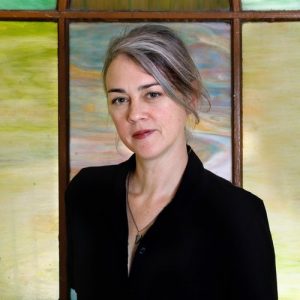 STATEMENT
I have dedicated my 20-year professional career to educate, to support, and to advance artists and cultural production in the visual arts at the San Francisco Art Institute (SFAI), where I serve currently as Vice President and Dean of Academic Affairs. A small, independent fine arts college founded in 1871, SFAI is one of the nation’s oldest and most prestigious schools of higher education in contemporary art. SFAI’s core philosophy is one of fostering creativity and critical thinking in an open, experimental, and interdisciplinary environment. This mission statement informs my approach to and work within the visual arts generally, and I believe CAA shares a similar ethos, one that should be advanced to ensure its organizational longevity and relevancy for its members. That, in brief, is my main motivation for joining the Board of Directors.
As reflected on my CV, I serve this professional and personal mission through many board positions with non-profit organizations –including the Skowhegan School for Painting and Sculpture in Skowhegan, ME and Oakwood Arts/P35 in Richmond, VA. Both organizations, although distinct from one another in several ways, exist and were founded to advance creativity and artists’ roles in our society. Both are sustained by a shared belief in this value proposition, which places education at the fore. Higher education, specifically liberal and visual arts education, is increasingly under attack by a dangerous national rhetoric which aims to assault intellectualism, critical and creative thinking. Our roles – as arts administrators, scholars, and practitioners — therefore is exceedingly important against such a cultural context. Advocacy, which is a platform I believe CAA can steward in a more impactful manner, becomes even more urgent.
Currently, it is my desire to return serving a membership organization. As President Emerita of ArtTable, Inc., a non-profit membership organization dedicated to advancing women’s leadership in the visual arts, I’m familiar with the challenges inherent in stewarding organizational initiatives toward member responsiveness. I am excited by the prospect of serving a member-based organization dedicated to advancing scholarship of and advocacy for art and design. Toward that end, I believe unequivocally in Executive Director Hunter O’Hanian’s recent statement, “We must be a leader in the national conversation about the future of art history and studio arts education; indeed, we can work to strengthen all humanities departments in colleges and universities.” Organizations as august as CAA must be responsive to its membership base, cognizant of the ever-shifting landscape of higher education, while balancing the tensions of its founding mission and ethos with the pressure to remain relevant. I have a proven track record of stewarding initiatives in response to a diverse membership base, as my tenure with ArtTable demonstrates. Specifically, I led a strategic planning process that gave more autonomy to its members outside of the tri-state area (ArtTable’s offices are in midtown Manhattan), enhanced programming that addressed prescient issues facing women leaders in the visual arts, and expanded our mentoring initiatives to support emerging leaders in the field. I deduce from many conversations with members of CAA’s Committee on Women in the Arts (which I chair currently) a shared desire to expand CAA programming along similar vectors. That is a task I am ready for, and I would welcome the opportunity to serve CAA members.