
CAA News Today
CAA Statement on Recent Remarks by President Trump
posted Jan 16, 2018
CAA, the largest professional association supporting art historians and visual artists, strongly supports the statement of the African Studies Association, denouncing statements made by President Donald J. Trump, which characterize African and Caribbean countries as “shithole countries.” CAA celebrates the important artists, scholars, curators, and art critics from these countries and their contributions to the arts both in the United States and internationally. In particular, CAA supports ASA’s statement: “It is shocking that such crude racist expressions of xenophobia are now part and parcel of executive office discourse. Not only do President Trump’s words disparage the people of an entire continent, on issues of immigration, they defy reality.”
“Whether it is funding for the arts and humanities, clean water and environmental regulations, fair hiring practices or gender and racial inclusion, CAA has a long history of taking positions and expressing values which support the field, as well as society,” said Executive Director Hunter O’Hanian. “The individual occupying the White House has embraced sexist, racist, and mendacious viewpoints over and over. He has shown concern only with enriching himself, sacrificing human decency and the good will of this country on the global stage.”
Read more: Statement by the ASA Board of Directors regarding President Trump’s Remarks
Jenn Proctor and Jon Rattner
posted Jan 15, 2018
The weekly CAA Conversations Podcast continues the vibrant discussions initiated at our Annual Conference. Listen in each week as educators explore arts and pedagogy, tackling everything from the day-to-day grind to the big, universal questions of the field.
This week, Jenn Proctor, filmmaker and associate professor in Journalism and Screen Studies at the University of Michigan-Dearborn, and Jonathan Rattner, filmmaker and assistant professor in the Cinema & Media Arts Program and the Art Department at Vanderbilt University, discuss teaching film and video production.
New in caa.reviews
posted Jan 11, 2018
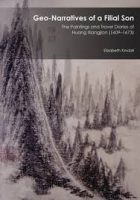
Julia K. Murray discusses Geo-Narratives of a Filial Son: The Paintings and Travel Diaries of Huang Xiangjian (1609–1673) by Elizabeth Kindall. Read the full review at caa.reviews.
Kara Fiedorek reviews In the Wake: Japanese Photographers Respond to 3/11 by Anne Nishimura Morse and Anne E. Havinga. Read the full review at caa.reviews.
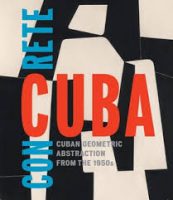
Adrian Anagnost writes about Concrete Cuba: Cuban Geometric Abstraction from the 1950s by Abigail McEwen and Susanna Temkin. Read the full review at caa.reviews.
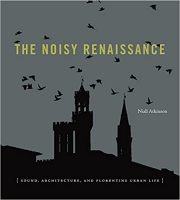
David G. Wilkins discusses The Noisy Renaissance: Sound, Architecture, and Florentine Urban Life by Niall Atkinson. Read the full review at caa.reviews.
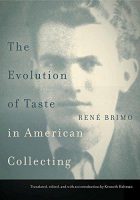
Carol Troyen writes on The Evolution of Taste in American Collecting by René Brimo. Read the full review at caa.reviews.
News from the Art and Academic Worlds
posted Jan 10, 2018
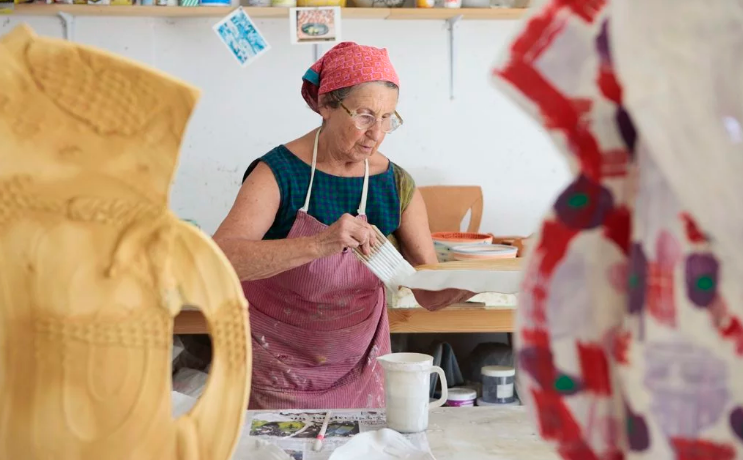
Betty Woodman in her studio. The sculptor passed away this week at the age of 87. Photo: Stefano Porcinai, courtesy Salon 94 via artnet News.
Each week CAA News summarizes articles, published around the web, that CAA members may find interesting and useful in their professional and creative lives.
Backlash Building against La Salle University over Art Sale
The American Alliance of Museums and the Association of Art Museum Directors condemned a plan by La Salle University to sell 46 artworks from its collection. (Philadelphia Inquirer)
The Met Museum Is Changing Its Pay-As-You-Wish Admission Policy
Beginning March 1, The Metropolitan Museum of Art will charge a mandatory admission fee to visitors who do not live in New York State. (Huffington Post)
Betty Woodman, Visionary Sculptor of Ceramic Vessels, Has Died at 87
Woodman had been working with her chosen medium since her high school years, in the 1940s. (artnet News)
First Center for Empathy and Art Launched in Minneapolis
The center will bring together researchers, artists, historians and philosophers to learn how art museums can promote empathy and understanding. (Smithsonian Magazine)
As Flow of Foreign Students Wanes, US Universities Feel the Sting
The downturn follows a decade of explosive growth in foreign student enrollment. (New York Times)
Why the Magritte Foundation Still Authenticates Work, as Other Foundations Back Away
The Magritte Foundation was founded in 1998 in Brussels to safeguard the work and reputation of the artist. (Artsy)
CWA Picks for December 2017/January 2018
posted Jan 09, 2018

CAA’s Committee on Women in the Arts selects the best in feminist art and scholarship to share with CAA members on a monthly basis. After this combination post, updates will resume monthly.
December Picks
Unfinished Business: Perspectives on art and feminism
December 15, 2017–March 25, 2018
Australian Centre for Contemporary Art
111 Sturt Street
Southbank Victoria
Melbourne, Australia
In the newest exhibition at the Australian Centre for Contemporary Art, Unfinished Business: Perspectives on art and feminist critical and underrepresented practices and debates are examined within contemporary Australian art and society. New commissions, recent works and historical projects are presented from art historians, artist, and theorists from the 1970s to the present.
The exhibition includes painting, performance, photography, film, community engagement and cultural activism to name several mediums. Focusing on the “dynamic formal invention and social engagement of feminist artists,” the exhibit explores gender identity, representation, and intersectional politics through performance, text and media technologies, humor and critique.”
“Asking why feminism is still relevant, necessary and critical, Unfinished Business explores trans-generational legacies, inheritances and shifts, alongside contemporary conditions and concerns – to stimulate new debates and discussions around the ‘unfinished business’ of feminism today.”
November 13, 2017–February 16, 2018
Artist’s Lecture & Reception: January 17, 5 – 8 pm
The Kniznick Gallery
Brandeis University
Women’s Studies Research Center
Epstein Building
515 South Street, Waltham, MA
In this solo exhibition by Clarity Haynes at the Kniznick Gallery at Brandeis University, large-scale painted portraits depicts the history of displaying social power through the painted portrait.
In Haynes’s paintings she features the torso as the site for storytelling, paying homage to women, trans and gender nonconforming people. “”Tattoos, scars, evidence of illness, aging, exposure to sun, childbirth, surgeries, synthetic hormones, moles, birthmarks, stretch marks and veins, all tell a story of a body’s life, and Haynes seeks to portray them larger-than-life and divine.”
The name of the exhibition, Baba Na Gig, or “Old Woman of the Breasts”, is in honor of Baba Yaga, the old woman goddess of Eastern Europe, and the goddess Sheela Na-Gig, or “Sheela of the Breasts.”
In acknowledging the social history and social power of the portrait, Haynes seeks to redistributes power to people outside of cultural norms. “Her years-long process of making each work contributes to a reverence for the way bodies change and redefine what power can be.”
In addition to the artist’s lecture on January 17, 2017, the gallery will hold an event with art historian and museum educator, Annie Storr. Storr will lead an “Exercise for the Quiet Eye” on January 30, 2017 to encourage patient reflection, appreciation, and interpretation.
Solidary & Solitary: The Joyner/Giuffrida Collection
September 30, 2017–January 21, 2018
Ogden Museum of Southern Art
925 Camp Street
New Orleans, LA
In the exhibition Soliday & Solitary at the Ogden Museum of Southern Art the history of art is reinterpreted through African-American artists from the 1940s through the present. The Joyner/Giuffrida collection is primarily focused on abstract art, a “meaningful political focus, rather than stylistic preference.
“For black artists, abstraction is charged with the refusal of representation that is socially dictated, both by racist stereotypes of the dominant culture, and the pressure from within the black community to create positive imagery. Abstract art as a practice embodies the possibility of individual freedom and autonomy, even within larger social identities.”
Among the artists in the exhibition are sonic and visual artist Jennie C. Jones, painter Lynette Yiadom-Boakye, painter and sculptor Shinique Smith along with Kevin Beasley, Mark Bradford, Leonardo Drew, Melvin Edwards, Charles Gaines, Sam Gilliam, Norman Lewis, Glenn Ligon, Serge Alain Nitegeka, Tavares Strachan, and Jack Whitten.
[closed] October 26–December 16
Blum & Poe
2727 S. La Cienega Blvd.
Los Angeles, CA 90034
“Lynda Benglis’ legendary practice began in 1960s New York City, her commitment to merging content and form, subverting the paradigms of Minimalism and Modernism, established her formidable role in contemporary art history as a leader in the Post Minimalism movement. Her iconic works have been coined “frozen gestures”—referencing the body and the landscape, sexual and gender politics—realized in poured latex, wax, polyurethane, ceramics, bronze, paper, video, glass, neon, and more.
Spanning two levels of exhibition space and including the outdoor gardens, here Benglis presents works from a sculptural practice that engenders hybrid compositions, embracing the subjective touch of the artist’s hand and the inextricable link between process, material, and form. Each room features a distinct body of work, showcasing the artist’s multifarious range—including glazed ceramics; examples from her bronze fountain series; large-scale biomorphic aluminum sculptures; a constellation of recent paper wall works; and the eleven-foot phosphorescent cast polyurethane HILLS AND CLOUDS (2014).”
July 8, 2017–January 14, 2018
Museum of Contempoary Art
220 E. Chicago Ave
Chicago, IL 60611
“Woman with a Camera presents photographs by 14 women artists who come from a diverse set of backgrounds and generations, and address various artistic concerns. This intimate show includes established masters of the medium—such as Catherine Opie, Laurie Simmons, and Carrie Mae Weems—alongside exceptional younger artists—including Anne Collier, Xaviera Simmons, and Mickalene Thomas—who use photography to explore facets of politics, history, and identity. Though their practices are disparate, their works draw on three central themes in photography: rendering the human figure, capturing public or private spaces, and commenting on our media-saturated culture.”
Although essentially a show acknowledging the gifts of particular collectors (Sandra and Jack Guthman), the works provide an opportunity to reflect on the heterogeneous practices of a generationally diverse array of artists. Other artists represented: Emily Jacir, Michele Abeles, Marina Abramović, Sophie Calle, Leslie Hewitt, Melanie Schiff, Eve Sussman/Rufus Corporation, and Anna von Hausswolff.
November 11, 2017–January 13, 2018
Kohn Gallery
1227 North Highland Ave
Los Angeles, CA 90038
“A group exhibition featuring seventeen contemporary artists who are revolutionizing the way we visualize conventional gender as exclusively male or female. Through painting, a medium that has traditionally embraced this binary, these artists are pushing the genre in new, unprecedented directions, challenging the ways in which paintings can be used to deconstruct and rewrite conventional notions of personal identity. The exhibition highlights the inter-blending of traditional and figurative abstraction as the foundation for more fluid and inclusive expressions of identity, engendering a new visual pronoun.”
The exhibition attempts to get “beyond the binary” of figurative representation, and the visual hailing of particularly gendered bodies. Painting is the medium of choice, and works like Emily Mae Smith’s Abyss, 2017, challenge easy associations with masculine or feminine imagery. Other works in the show, such as Christina Quarles’s paintings, which are filled with bendy and androgynous bodies, highlight how the figurative can be transformed through formal applications of paint—itself a sometimes viscous and sticky goo.
Artists included: Mequitta Ahuja, Firelei Báez, Hernan Bas, Zoë Charlton, Jonathan Lyndon Chase, Nicole Eisenman, Natalie Frank, Heidi Hahn, Loie Hollowell, Sadie Laska, Jesse Mockrin, Jennifer Packer, Christina Quarles, Nathaniel Mary Quinn, Tschabalala Self, Emily Mae Smith, Jansson Stegner
January Picks
Magnetic Fields: Expanding American Abstraction, 1960s to Today
October 13, 2017–January 21, 2018
January 17, 2018: Gallery Talk, Get the 411 on Abstraction
January 19, 2018: Artist’s Talk with Maren Hassinger
National Museum of Women in the Arts
1250 New York Ave NW
Washington, D.C.
The National Museum of Women in the Arts presents a look at abstract works by twenty-one black female artists. Magnetic Fields: Expanding American Abstraction 1960s to Today features artists born between 1891 and 1981, cutting across generations to unveil under-recognized leaders in abstraction.
“Artists in Magnetic Fields dispel the notion that figurative art is the only means for visualizing personal experience. The titles of their works and their construction methods evoke intense associations. Mary Lovelace O’Neal’s use of allusive titles, such as Racism is Like Rain, Either it’s Raining or it’s Gathering Somewhere (1993), informs the reading of her monumentally-scaled painting while Maren Hassinger similarly uses socio-politically inflected titles and materials—specifically New York Times newspapers—in her textural floor sculpture Wrenching News (2008).”
Artists presented in Magnetic Fields include Candida Alvarez, Betty Blayton, Chakaia Booker, Lilian Thomas Burwell, Nanette Carter, Barbara Chase-Riboud, Deborah Dancy, Abigail DeVille, Maren Hassinger, Jennie C. Jones, Evangeline “EJ” Montgomery, Mary Lovelace O’Neal, Howardena Pindell, Mavis Pusey, Shinique Smith, Gilda Snowden, Sylvia Snowden, Kianja Strobert, Alma Woodsey Thomas, Mildred Thompson, and Brenna Youngblood.
Exhibition programming includes a short gallery talk on Wednesday, January 17, 2018, exploring highlights with NMWA Senior Educator Adrienne L. Gayoso, as well as an in-depth artist’s talk with Maren Hassinger about her work, Wrenching News, created in response to Hurricane Katrina’s aftermath.
LSFF: Radical Softness Through a Haptic Lens: Barbara Hammer and Chick Strand + Q&A
January 13, 2018, 4pm, Cinema 1
The ICA
The Mall
London
The retrospective by the ICA Cinema of the work of experimental filmmakers Chick Strand, and Barbara Hammer, a pioneer of queer cinema, explore the idea of ‘radical softness’- “the power in being both abrasively feminine and openly vulnerable, subverting emotion from weakness to strength.”
“Thematically, my work deconstructs a cinema that often objectifies or limits women,” Barbara Hammer says on her website. “My work makes these invisible bodies and histories visible. As a lesbian artist, I found little existing representation, so I put lesbian life on this blank screen, leaving a cultural record for future generations.”
“Strand (1931-2009) played a vital role in the 1960s Bay Area filmmaking community both through her work and her involvement in the co-founding of Canyon Cinema—which would become the San Francisco Cinematheque—with friend Bruce Baillie in 1961. Strand also taught film for twenty-five years at Occidental College in Los Angeles, influencing a generation of filmmakers.” (http://hcl.harvard.edu/hfa/films/2016marmay/strand.html)
The screening will feature Dyketactics (1974, 4 mins), Superdyke Meets Madame X (1975, 20 mins) both by Barbara Hammer, and Soft Fictions by Chick Strand (1979, 54 mins).
January 21, 2018–June 3, 2018
Pasadena Museum of California Art
490 East Union Street
Pasadena, CA
In the exhibition, The Feminine Sublime, the Pasadena Museum of California Art presentes a counter-narrative “that upends previous ideas of the sublime in painting with a unique feminist perspective.”
“With their large-scale artworks, the artists situate the viewer within the annihilating and terrifying effects of global climate change, nuclear catastrophe, 9/11, consumerist environmental degradation, and even post-apocalyptic landscapes. Though they articulate ideas of dystopian insecurity, fragmentation, and collapse, all of the works paradoxically invoke transformation, transition, and the possibilities for painting to still promote the kind of skepticism instrumental for the renewal of human consciousness.”
Artists include Los Angeles-based painters Merion Estes, Yvette Gellis, Virginia Katz, Constance Mallison, and Marie Thibeault.
Esther Ferrer: All Variations are Valid, Including This One
October 26—February 25, 2018
Museo Nacional Centro de Arte Reina Sofia
Calle Santa Isabel, 52
Madrid, Spain
A member of the avant-garde performance-based group Zaj, Ferrer’s artistic output is experimental (ranging across many media) and focused (prime numbers and education are recurring themes). In this exhibition, which privileges archival materials and Ferrer’s installations alike, the Museo Reina Sofia gives the monographic treatment to an artist well-known in Spain, but underrecognized abroad.
One of the central figures in Spanish performance art, Ferrer’s engagement with the conceptual structures of chance and repetition are enduring concerns. This exhibition also gathers together a group of Ferrer’s theoretical writings and speeches in the accompanying catalog.
Polly Apflebaum: Dubuffet’s Feet My Hands
November 24, 2017—February 2, 2018
Frith Street Gallery
17-18 Golden Square
London
“This exhibition is the latest in a series of installations that incorporate hand-woven carpets, ceramics, and immersive colour. […] Curator Kate McNamara has noted that carpets are the logical conclusion of Apfelbaum’s longstanding engagement with the floor, with pliable supports, fabric and decorative art traditions.
“For this installation, Apfelbaum worked with weavers in Oaxaca, Mexico, where the Zapotec people have been weaving textiles for over 2,000 years. Entitled Dubuffet’s Feet, this floor work is based on a small drawing titled Footprints in the Sand by Jean Dubuffet from his 1948 sketchbook El Golea II, which the artist saw at the Museum of Modern Art, New York. Apfelbaum has translated the image into a series of hand-woven rugs, each depicting an enormous footprint of a figure who would be over 100 feet tall. There are four carpets, two with left feet and two with right, aligned as parallel pairs, implying the trace of two giants. While Apfelbaum’s carpets are woven in earth tones that may evoke the 1970s, they also correspond with the sand in which Dubuffet’s footprints may have been left, and thus the natural landscape […]
“The parallel series My Hands has evolved from Apfelbaum’s ongoing experiments with glazed ceramics. They take their inspiration from the ‘floating hand of God’ in the mosaics of the basilica of Sant’Apollinare Nuovo in Ravenna, which she visited during a residency at the American Academy in Rome in 2013. Apfelbaum was fascinated by this image of the disembodied hand as the symbol of creation and intervention. Apfelbaum has used her own hand as a template for these works, creating a relationship to the artist’s touch while also dealing with ideas about craft and making, from prehistoric times to children’s pre-school handprints […].”
Sexuality Stories
October 20, 2017—February 14, 2018
Guerrilla Girls: Graphic, 1985-2017
September 29, 2017—February 14, 2018
MASP
Av Paulista, 1578
São Paulo, Brazil
There’s something delicious about a Guerrilla Girls retrospective holding space with a much more broadly conceived exhibition on sexuality—as the group of anonymous gorilla-mask-wearing feminists have had much to say about sexuality (and the depiction of it) across art’s histories and in the contemporary moment. Staged in the museum Lina Bo Bardi built in 1968, these shows serve as counterpoints, with the Guerrilla Girls retrospective underlining the radicality of the team-curated collections exhibition, Sexuality Stories.
In one of the new works on display at MASP, the Guerrilla Girls update their famous Do Women Have To Be Naked… poster, this time addressing São Paulo’s Museum of Art (where 60% of the nudes are women, but only 6% of the artists are). The catalog for the exhibition does the important work of translating the Guerrilla Girls’ mostly text-based work into Portuguese. The exhibition is curated by Adriano Pedrosa, artistic director of MASP, and Camila Bechelany, curator of Latin American Art.
For Sexuality Stories Pedrosa and Bechelany curatorial efforts are combined with those of Lilia Schwarcz, adjunct curator of MASP stories, and Pablo León de la Barra. Together they have programmed a variety of solo shows in advance of this installation (the Guerrilla Girls exhibition is only one). The intent, according to the curators, is to affirm a “respect for the other, difference and artistic freedom.” In gathering together historical works from across MASP’s collections, as well as those from contemporary artists, Sexuality Stories addresses sexuality as one of the enduring concerns of representation.
Kirsten Olds and Heather Vinson
posted Jan 08, 2018
The weekly CAA Conversations Podcast continues the vibrant discussions initiated at our Annual Conference. Listen in each week as educators explore arts and pedagogy, tackling everything from the day-to-day grind to the big, universal questions of the field.
This week, Kirsten Olds, associate professor of Art History at University of Tulsa, and Heather Vinson, visiting professor of Art History at Kalamazoo College, discuss diversity and inclusion in art history curricula.
News from the Art and Academic Worlds
posted Jan 03, 2018
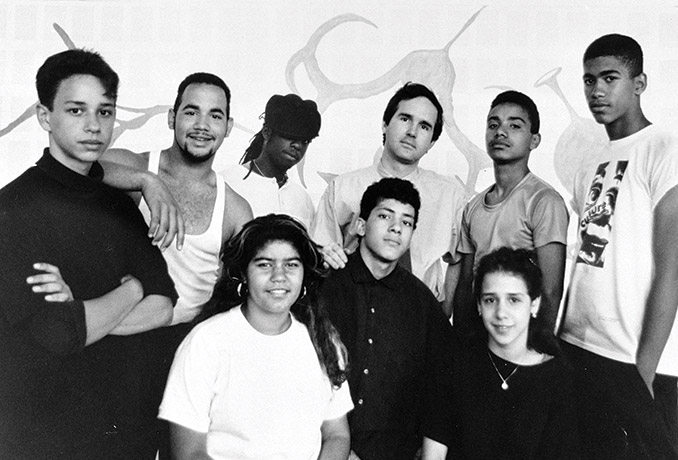
Tim Rollins and K.O.S. in 1988. Photo: Mary Boone Gallery via ARTnews
Each week CAA News summarizes articles, published around the web, that CAA members may find interesting and useful in their professional and creative lives.
Tim Rollins, Artist and Activist Whose Work Thrived on Collaboration, Dies at 62
Much of Rollins’s work was produced in collaboration with a group known as the Kids of Survival, or K.O.S. (ARTnews)
Art Historian Finds Missing Monet Painting Through a Google Search
Believed to have been missing since 1895, Monet’s painting Effet de Brouillard (1872) will soon go on view. (Hyperallergic)
Saddle Up: 7 Trends in Higher Education Coming in 2018
Lisa M. Rudgers and Julie A. Peterson predict the challenges that higher education will face in the coming year. (Inside Higher Ed)
37 Museums in Southern California Will Be Free on January 28
Institutions including the Los Angeles County Museum of Art, Pasadena Museum of California Art, and the Craft & Folk Art Museum are participating in the free admission initiative. (Hyperallergic)
A Look Inside Cézanne’s Studio, Through the Eyes of Joel Meyerowitz
A fitting homage to an artist who once wrote, “Painting is first and foremost an optical affair. The stuff of our art is there, in what our eyes are thinking.” (The New Yorker)
Eight of Art History’s Greatest Mysteries—from Stonehenge to Banksy
The study of artworks and objects of visual culture is a tantalizing exercise in unraveling the unknown. (Artsy)
New in caa.reviews
posted Dec 22, 2017

Sarah J. Scott discusses Critical Approaches to Ancient Near Eastern Art edited by Brian A. Brown and Marian H. Feldman. Read the full review at caa.reviews.
William Truettner reviews A Strange Mixture: The Art and Politics of Painting Pueblo Indians by Sascha T. Scott. Read the full review at caa.reviews.
Kathryn Simpson writes on The Face of Medicine: Visualising Medical Masculinities in Late Nineteenth-Century Paris by Mary Hunter. Read the full review at caa.reviews.
Fred S. Kleiner discusses Leisure and Luxury in the Age of Nero: The Villas of Oplontis Near Pompeii edited by Elaine K. Gazda and John R. Clarke. Read the full review at caa.reviews.
Jennifer P. Kingsley writes about A Feast for the Senses: Art and Experience in Medieval Europe edited by Martina Bagnoli. Read the full review at caa.reviews.
Meet the Meiss Fund Recipients for Fall 2017
posted Dec 22, 2017

Eric Huntington’s Creating the Universe: Depictions of the Cosmos in Himalayan Buddhism is a Fall 2017 Meiss grantee. Image: The life of the Buddha (detail), 1700–1800. Tibet. Ink and colors on cotton. Courtesy Asian Art Museum.
MEET THE GRANTEES
Twice a year, CAA awards grants through the Millard Meiss Publication Fund to support book-length scholarly manuscripts in the history of art, visual studies, and related subjects that have been accepted by a publisher on their merits, but cannot be published in the most desirable form without a subsidy.
Thanks to the generous bequest of the late Prof. Millard Meiss, CAA began awarding these publishing grants in 1975.
The Millard Meiss Publication Fund grantees for Fall 2017 are:
- Cranston, Jodi, The Green Worlds of Renaissance Venice (Pennylvania State University Press)
- Drimmer, Sonja, The Art of Allusion: Illuminators and the Making of Middle English Literature, 1403-1476 (University of Pennsylvania Press)
- Gaziambide, Maria C., Retrograde Modernity: The Deliberate Anachronism of Venezuela’s El Techo de la Ballena (University Press Florida)
- Huntington, Eric, Creating the Universe: Depictions of the Cosmos in Himalayan Buddhism (University of Washington Press)
- Lakey, Christopher, Sculptural Seeing: Relief, Optics, and the Rise of Perspective in Medieval Italy (Yale University Press)
- Lerner, Jullian, Graphic Culture: Illustration and Artistic Enterprise in Paris, 1830-1848 (McGill-Queen’s University Press)
- O’Neal, Halle, Word Embodied: The Jeweled Pagoda Mandalas in Japanese Buddhist Art (Harvard University Press)
- Romberg, Kristin, Gan’s Constructivism: Aesthetic Theory for an Embedded Modernism (University of California Press)
- Sturgeon, Justin, Text and Image in Rene d’Anjou’s Livre des tournois, c. 1460: Constructing Authority and Identity in Fifteenth Century Court Culture (Boydell & Brewer)
Read a list of all recipients of the Millard Meiss Publication Fund from 1975 to the present. The list is alphabetized by author’s last name and includes book titles and publishers.
BACKGROUND
Books eligible for a Meiss grant must currently be under contract with a publisher and be on a subject in the arts or art history. The deadlines for the receipt of applications are March 15 and September 15 of each year. Please review the Application Guidelines and the Application Process, Schedule, and Checklist for complete instructions.
CONTACT
Questions? Please contact Aakash Suchak, CAA grants and special programs manager, at 212-392-4435.
Scripting A Smeary Spot on Art Journal Open
posted Dec 21, 2017
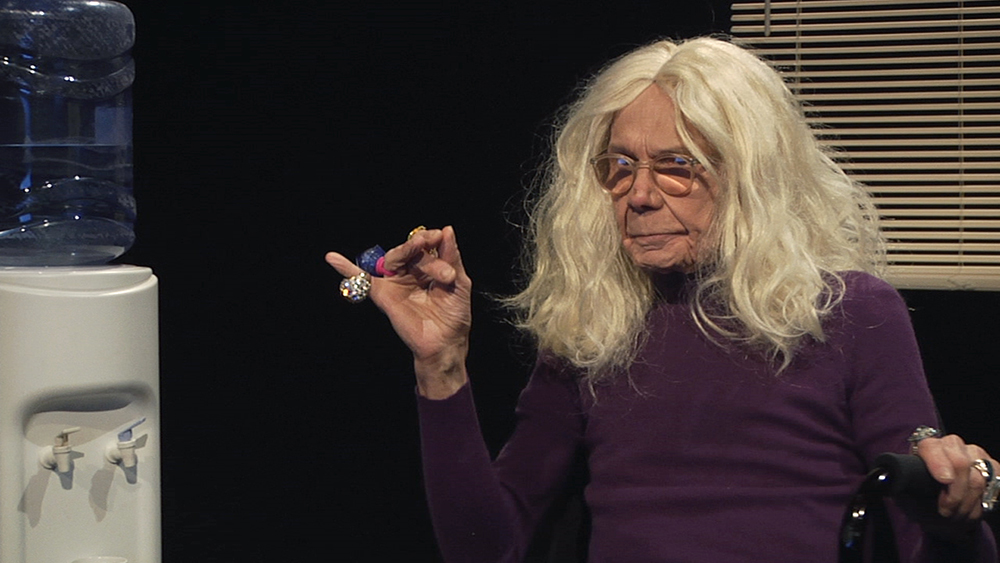
The late Jack Doroshow performs as Mother Flawless, a clairvoyant psyche. In this scene she recites an excerpt from Joanna Russ’ sci-fi novel We Who Are About To. . . , A.K. Burns, video still from A Smeary Spot, 2015, four-channel video installation, HD color, six-channel sound, TRT 53:13 (artwork © A.K. Burns; image provided by the artist, Callicoon Fine Arts, NY, and Michel Rein Gallery, Paris/Brussels)
In this annotated commentary, artist A.K. Burns and art historian and critic Melissa Ragain explore the script, performances, and citations in Burn’s video installation A Smeary Spot (2015), which is the first episode in her five-part Negative Space film cycle.
From Ragain’s introduction: “In this annotated commentary, A.K. and I discuss the first episode of Negative Space titled A Smeary Spot, a fifty-three-minute, four-channel video installation that premiered in September 2015 at Participant Inc. in New York. We walk through selections from the script, which A.K. constructed out of appropriated and altered excerpts from poetry, philosophy, and fiction. Feminist sci-fi by writers like Joanna Russ, Ursula K. Le Guin, and the new materialist philosophy of Karen Barad were starting points for Negative Space though its cultural touchstones are far more wide-ranging.”
Visit Art Journal Open to explore Scripting A Smeary Spot.