
CAA News Today
Bobby Tso and Andrew Casto
posted Jan 29, 2018
The weekly CAA Conversations Podcast continues the vibrant discussions initiated at our Annual Conference. Listen in each week as educators explore arts and pedagogy, tackling everything from the day-to-day grind to the big, universal questions of the field.
This week, Bobby Tso, assistant professor of Fine Art at Northwest Missouri State University, and Andrew Casto, head of Ceramics at the University of Iowa, discuss teaching Contemporary Craft – Materiality and Concept in Ceramics.
New in caa.reviews
posted Jan 26, 2018

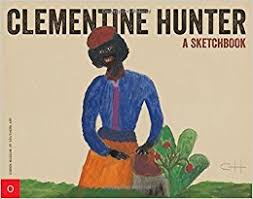
Earnestine Jenkins discusses Clementine Hunter: A Sketchbook by Richard Gasperi. Read the full review at caa.reviews.
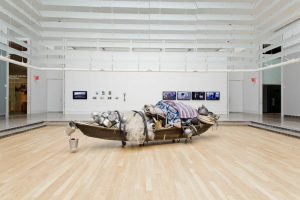
Rashmi Viswanathan reviews the exhibition After Midnight: Indian Modernism to Contemporary India, 1947/1997. Read the full review at caa.reviews.
Peter Christensen examines Noah’s Ark: Essays on Architecture by Hubert Damisch. Read the full review at caa.reviews.
Lozana Rossenova writes on Heart of Darkness by Joseph Conrad and Fiona Banner. Read the full review at caa.reviews.
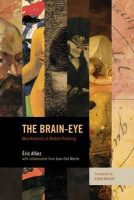
Fred Rush discusses The Brain-Eye: New Histories of Modern Painting by Éric Alliez. Read the full review at caa.reviews.
CAA Announces 2018 Awards for Distinction Recipients
posted Jan 25, 2018
Honorees this year include Pepón Osorio, Firelei Báez, Kellie Jones, Joseph Masheck, Lynn Hershman Leeson, Lowery Stokes Sims, and many other scholars, artists, authors, and teachers
CAA Annual Conference, Los Angeles, CA, February 21-24, 2018
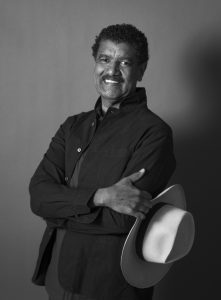
Pepón Osorio. Courtesy the artist.
CAA is pleased to announce the recipients and finalists of the 2018 Awards for Distinction and the creation of a new Award for Excellence in Diversity. Honorees this year are among the leading scholars, artists, teachers, and authors in the field of visual arts. The CAA Awards for Distinction are presented during Convocation at the CAA Annual Conference on Wednesday, February 21 at 6:00PM at the Los Angeles Convention Center. The CAA Annual Conference runs from February 21-24, 2018.
Among the winners this year is Pepón Osorio, recipient of the 2018 Distinguished Artist Award for Lifetime Achievement. Osorio is the first artist of Puerto Rican descent to receive the award from CAA. Drawing on his childhood in Puerto Rico and his adult life as a social worker in the Bronx, Osorio creates meticulous installations incorporating the memories, experiences, and cultural and religious iconography of Latino communities and family dynamics. “The work is created when I bring together where I am and where the rest of society is,” said Osorio in an Art21 documentary about his work. Osorio is a professor in the Community Arts Practices Program at the Tyler School of Art at Temple University. He is also the recipient of a 2018 United States Artists Fellowship, among many other awards and fellowships.
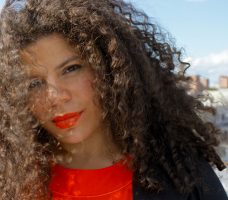
Firelei Báez. Courtesy of the artist and Gallery Wendi Norris, San Francisco.
Firelei Báez is the winner of the 2018 Artist Award for Distinguished Body of Work. Báez was born in the Dominican Republic and works in New York City. Her work on paper, canvas, and in sculpture explores black female subjectivity, myth, and science fiction. Baez is a creator of fantastical figures that transmute through ornate pattern and vivid color. She has held residencies at Headlands Center for the Arts, Joan Mitchell Center, Fine Arts Work Center, Lower East Side Print Shop, and Lower Manhattan Cultural Council Workspace, and is the recipient of the Joan Mitchell Painters and Sculptors Award, the Jacques and Natasha Gelman Award in Painting, the Catherine Doctorow Prize for Contemporary Painting, and the Chiaro Award from Headlands Center for the Arts.
The newly created Award for Excellence in Diversity recognizes the work of an individual in the visual arts whose commitment to inclusion in scholarship or in practice stands out as groundbreaking and unifying.
The inaugural winner of the Award for Excellence in Diversity is Kellie Jones, Associate Professor in Art History and Archeology and the Institute for Research in African American Studies at Columbia University. Jones’s research and teaching concerns African American and African Diaspora artists, Latinx and Latin American artists, and issues in contemporary art and museum theory. Her most recent book, South of Pico: African American Artists in Los Angeles in the 1960s and 1970s, was published by Duke University Press in 2017.
CAA will also award for the first time two Distinguished Feminist Awards, one to a visual artist and one to a scholar. The winners of the 2018 Distinguished Feminist Awards are Lynn Hershman Leeson (visual artist) and Lowery Stokes Sims (scholar).
In publishing, CAA recognizes the achievements of several authors and editors.
Charles Rufus Morey Book Award
Benjamin Anderson
Cosmos and Community in Early Medieval Art, Yale University Press, 2017
Laura Anne Kalba
Color in the Age of Impressionism: Commerce, Technology, and Art, Penn State University Press, 2017
Finalists:
Susanna Berger
The Art of Philosophy: Visual Thinking in Europe from the Late Renaissance to the Early Enlightenment, Princeton University Press, 2017
Dorothy Ko
The Social Life of Inkstones: Artisans and Scholars in Early Qing China University of Washington Press, 2017
Alfred H. Barr Jr. Award
Barbara Drake Boehm and Melanie Holcomb, editors
Jerusalem, 1000–1400: Every People Under Heaven, The Metropolitan Museum of Art, 2016
Finalists:
Wanda M. Corn
Georgia O’Keeffe: Living Modern, Brooklyn Museum, DelMonico Books, Prestel, 2017
Matthew Affron
Paint the Revolution: Mexican Modernism, 1910–1950, Yale University Press, 2016
Robert Cozzolino, Anne Classen Knutson, and David M. Lubin, editors
World War I and American Art, Princeton University Press, 2016
Pilar Silva Maroto
Bosch: The 5th Centenary Exhibition, Thames & Hudson, 2016
Alfred H. Barr Jr. Award for Smaller Museums, Libraries, Collections, and Exhibitions
Melissa Rachleff
Inventing Downtown: Artist-Run Galleries in New York City, 1952–1965, Grey Art Gallery, New York University and DelMonico Books, Prestel, 2017
Finalists:
Jane A. Sharp, editor
Thinking Pictures: The Visual Field of Moscow Conceptualism, Zimmerli Art Museum, Rutgers University, 2016
Kevin Sharp, editor
Wild Spaces, Open Seasons: Hunting and Fishing in American Art, University of Oklahoma Press, 2016
Frank Jewett Mather Award for Art Criticism
Elise Archias
The Concrete Body: Yvonne Rainer, Carolee Schneemann, Vito Acconci, Yale University Press, 2016
Art Journal Award
Heather Igloliorte
“Curating Inuit Qaujimajatuqangit: Inuit Knowledge in the Qallunaat Art Museum,” Art Journal, Summer 2017
Finalists:
Nazar Kozak, “Art Embedded into Protest: Staging the Ukrainian Maidan,” Art Journal, Spring 2017
Allison Young, “Visualizing Apartheid Abroad: Gavin Jantje’s Screenprints of the 1970s,” Art Journal, Fall/Winter 2017
Arthur Kingsley Porter Prize
Aaron M. Hyman
“Inventing Painting: Cristóbal de Villalpando, Juan Correa, and New Spain’s Transatlantic Canon,” The Art Bulletin, June 2017
AWARDS FOR DISTINCTION IN TEACHING, WRITING ON ART, AND CONSERVATION
Helen Frederick is the winner of the 2018 Distinguished Teaching of Art Award.
Edward S. Cooke, Jr., and Alex Potts are the winners of the 2018 Distinguished Teaching of Art History Award.
Joseph Masheck is the winner of the 2018 Distinguished Lifetime Achievement Award for Writing on Art.
The CAA/American Institute for Conservation Award for Distinction in Scholarship and Conservation award for 2018 will be given to Paul Messier.
Learn about the juries that select the recipients of the CAA Awards for Distinction.
Contacts
Nick Obourn, Director of Communications, Marketing, and Membership
nobourn@collegeart.org, 212-392-4401
Joelle Te Paske, Media and Content Manager
jtepaske@collegeart.org, 212-392-4426
IMAGES AVAILABLE UPON REQUEST
Hashtags: #CAA2018 #CAALA #CAAworks #CAAadvocacy #CAAfairuse
CAA Statement on Deaccession of Artworks at La Salle University
posted Jan 24, 2018
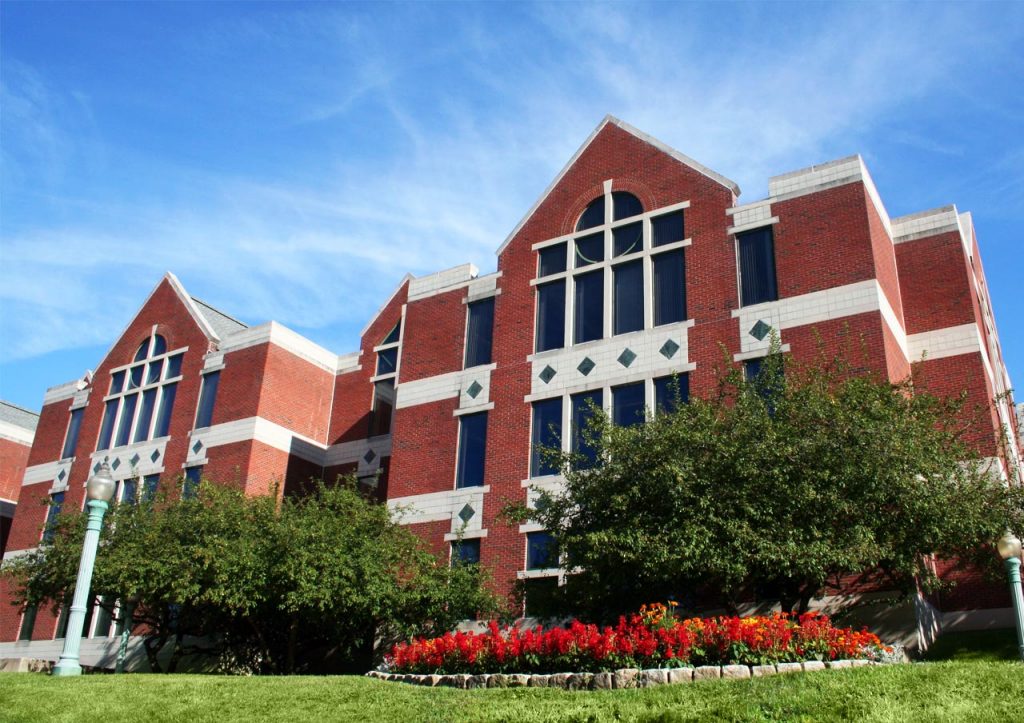
La Salle University. Image: Wikimedia Commons
CAA, the largest professional organization of visual artists and art historians, was disappointed to learn that La Salle University in Philadelphia plans to sell part of its art collection at the university’s museum. The university is currently planning to sell 46 works of art at a Christies’s auction estimated to bring in between $4.8 and $7.3 million. The university states that the proceeds from the sale will be “invested in the future of our university to help grow and to be financially sustainable. More importantly, we are really looking to enhance student experience and student outcome.” A university spokesperson further points out that the decision to deaccession the works was the result of months of careful consideration by its Board of Trustees, which examined all of the university’s assets and made a decision that select artworks from their art museum could be reallocated for funding the university’s new strategic five-year plan. Read the Artnet News story about the deaccession.
Similar to other cultural professional organizations, CAA has set guidelines for conditions under which items in museums collections are to be divested or deaccessioned. CAA Executive Director Hunter O’Hanian said, “We join our colleagues from the American Alliance of Museums and Association of Art Museum Directors in questioning this sale. CAA’s guidelines make it clear that art held by museums is not to be considered ‘an asset’ in the traditional sense. Museums should sell work from their collection only under very limited circumstances. And best practices dictate that the sale of the proceeds should only be used to acquire new works of art. We hope that the university Board of Trustees rethinks this position about selling the works that it holds in public trust.”
News from the Art and Academic Worlds
posted Jan 24, 2018
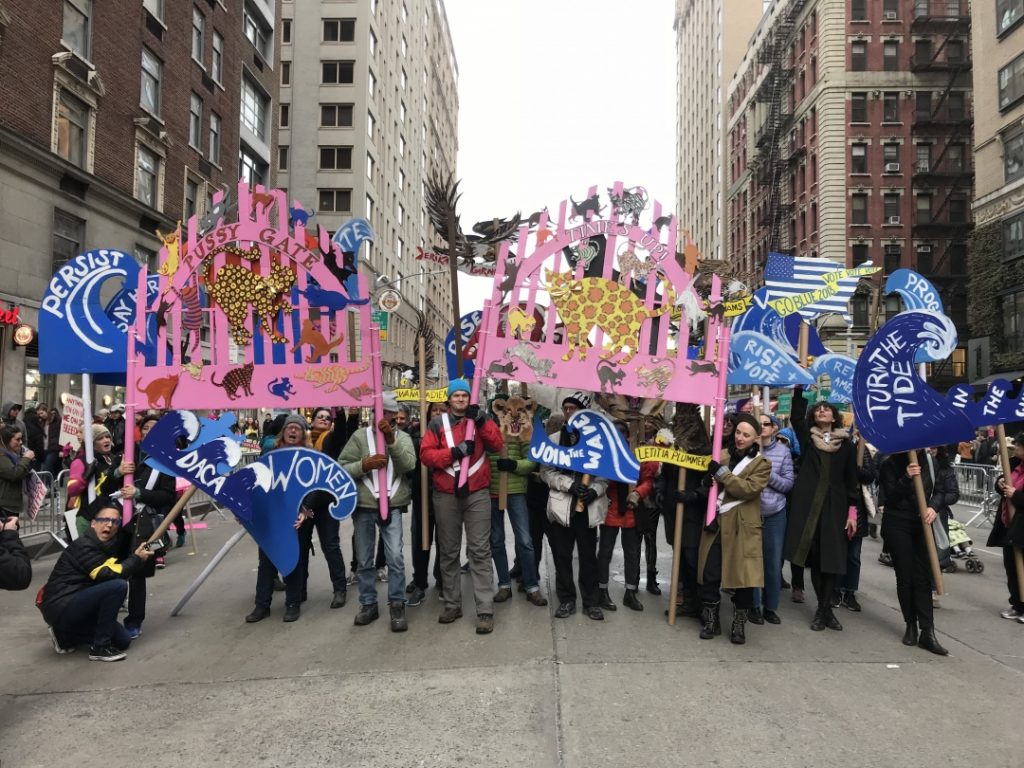
Members of activist-artist collective We Make America at the NYC Women’s March. Photo: Deborah Stein, via Hyperallergic.
Each week CAA News summarizes articles, published around the web, that CAA members may find interesting and useful in their professional and creative lives.
Signs of Creative Resistance at the 2018 Women’s March
For the second year in a row, creativity was on full display. (Hyperallergic)
The Artist Questioning Authorship
Danh Vo’s art recasts the historical events and political ideas that have shaped his world. (The New Yorker)
Recovering Our Lost Public Esteem
Three ways higher education leaders can respond to declining public support and confidence. (Inside Higher Ed)
The Farewell to Utopia in Revolutionary Cuban Art
An interview with Rachel Weiss, author and professor of Arts Administration and Policy at the School of the Art Institute of Chicago. (Walker Reader)
The Ballets Russes Showcased Some of Picasso’s and Matisse’s Most Experimental Work
A look at the work of the groundbreaking dance company, active between 1909 and 1929. (Artsy)
A Checklist for Transformative Leaders
Transformative leadership is about shared ownership — buy-in rather than buying. (Chronicle of Higher Education)
Elliott King and Abigail Susik
posted Jan 22, 2018
The weekly CAA Conversations Podcast continues the vibrant discussions initiated at our Annual Conference. Listen in each week as educators explore arts and pedagogy, tackling everything from the day-to-day grind to the big, universal questions of the field.
This week, Elliott King, assistant professor of Art History at Washington and Lee University, and Abigail Susik, associate professor of Art History at Willamette University in Oregon, discuss teaching Surrealism.
New in caa.reviews
posted Jan 19, 2018

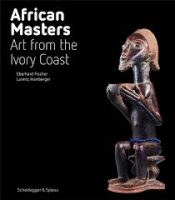
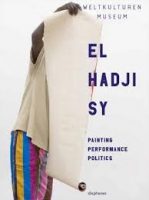
Tania Tribe discusses El Hadji Sy: Painting, Performance, Politics edited by Clémentine Deliss and Yvette Mutumba. Read the full review at caa.reviews.
Will Rea reviews African Masters: Art from the Ivory Coast edited by Eberhard Fischer and Lorenz Homberger. Read the full review at caa.reviews.
Andrea Korda examines Pictures-within-Pictures in Nineteenth-Century Britain by Catherine Roach. Read the full review at caa.reviews.
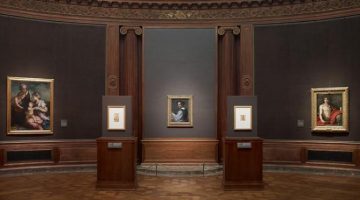
Robert Williams discusses Andrea del Sarto: The Renaissance Workshop in Action by Julian Brooks. Read the full review at caa.reviews.
An Interview with Andrea Iaroc, Founder and Executive Director of the CORAI Project
posted Jan 18, 2018
Andrea Iaroc created the CORAI Project to help art historians, in particular those without the privileges to access professional networks and generous financial resources. For more than ten years, her passion for historical research, teaching, writing, and philanthropy have advanced her work in museums and other art institutions, and forwarded her understanding of non-profits and intentional community work. An iconographer at heart, her current independent research interests focus on cultural hybridity and identity art.
Joelle Te Paske, CAA media and content manager, spoke with Andrea to learn more about the work CORAI is doing, her thoughts on CAA, and fundraising for inclusive art history.
This interview has been edited for length and clarity.
Andrea Iaroc: I’ve been a member of CAA since 2007. I see the way the organization has moved in the past years—it’s definitely a different direction.
Joelle Te Paske: Most definitely. That’s part of the reason why I’m here, too.
AI: It used to be a little bit more traditional. That’s one of the things I’m focused on—moving art history away from that traditional foundation, [which is] very ivory tower. It’s exclusive and I wanted to change that in founding the CORAI Project.
It was frustrating as a woman of color—but, I admit that I do have privilege. I don’t have college debt, but I saw friends in school sometimes struggle with simple things, such as professors asking us to go to a gallery, or buy a membership to CAA for instance. The question was always: “Okay, do I use this money to pay for my books for this class, or do I …?” It was this thought in the back of my head, and those things happen because art history has been a “girls with the pearls” academic field. We still have that image problem.
JTP: Yes. That’s the stereotype.
AI: When you’re trying to do fundraising for art history, a lot of people ask: “What exactly are you doing, are you going to save the world?” It’s not a practical STEM field, but we need to equalize it in reflection of current sociocultural changes. We need to amplify the voices that have not been heard because of European ethnocentrism and patriarchy. The way that we experience the world, the way we grow up, our background—all inform the way we interpret things. That is important for me.
In August 2016, I finally managed to realize the idea of creating something new [the CORAI Project]—getting a logo, a mission, values, and building up a board. We’re just over a year old. CORAI stands for Creating Opportunities for Representing Art History Inclusively. Our logo features a heliconia plant, a South American Heliconia Bihai (even though I was born in Brooklyn, NY my parents are Colombian). The foundation of the logo is very Greco-Roman, but the heliconia is breaking through that ionic capital, moving up and breaking through. Our logo is pretty much what we want to do.

From the CORAI website: The Greek Ionic order is studied in every art history 101 class. It is part of classic architecture and, to this day, is used in governmental and certain religious buildings. It very much represents the Western roots of the field, as well as the palm that opens up on the background. Both Romans and Greeks were fond of foliage to adorn their capitals. In the middle, however, is a South American heliconia shooting upwards – transcending the heavy and old marble foundation. Design by Bella Hall.
JTP: I love that.
AI: Yes, it’s time to break through and do different things. [CORAI Project] gives away springboard grants, small grants to give a little ‘push’, to art historians who identify as PoC, people of color, in the state of Washington. So far, our first grantee back in the spring of 2017 used her money to go to the Rubin Museum of Art so that she could use their collections to complete her thesis.
JTP: That’s terrific.
AI: She was studying thangka paintings of Tibet [Tibetan painting using ground mineral pigment on cotton or silk]. She was the only person in the University of Washington, Seattle, doing this which therefore will change the records of art history in the university because she’s only one of two students this year that are graduating with a focus on Chinese art history.
The person that received the grant in fall 2017 is going to invest it in Japanese translation to ensure her thesis is correct. Although she’s faced resistance to her art historical Japanese art focus, she’s following through. One of the things that happens is that professors who do not have experience in what they call “non-western” arts, question PoC’s methodologies, settings, and interpretations because a traditional art history is the only thing they know. You need to do what you want to do.
That’s what this is about, and it’s small. But we’re out there and hopefully we can inspire other art history organizations to break the mold.
JTP: That is wonderful work. What would you say is the most exciting part for you personally?
AI: The moment the grants are given away. I see their motivation and enthusiasm for what they want to do in school or independently to shake things up in art history. That’s the best part.
JTP: Yes, you see the changes they’re putting in place.
AI: Exactly, because it gives results. It’s something solid. If the only thing I do in this life is to change one person’s take on art history, which is also my career, then so be it. So far we’ve helped a couple of them.
JTP: I’m with you. It’s definitely slow, but it’s exciting to see those changes happen.
I’m curious, have you heard about the recent Ford Foundation and Walton Foundation initiative?
AI: Yes, I read about it.
JTP: What do you think about it?
AI: I thought that CAA made an interesting question [on Facebook] at the end, like, “Do you think it’s a little too late?”
JTP: That was me [laughs]. Six million dollars is a lot of money, but spread over 20 organizations over three years…
AI: Exactly. That’s one of the things that I struggle with—I mean we’re a community organization—and I have been told by several people, “Oh, just talk to so-and-so, they’ll give you the money.” But the problem is, they’re very powerful and they want to jump on the bandwagon of “diversity and inclusion” and so their name is going to be attached to this project, but do they really mean it? What have they done that maybe goes against the integrity of who I am and what my organization is? This is the case when big organizations move the right way, but what does that mean? For instance, does that mean that they’re going to get Walmart to diversify?
JTP: Or let their workers unionize?
AI: Right, exactly.
JTP: A friend of mine online made the point of: we’re looking at how to get women and people of color and LGBTQ folks into leadership positions—we’re not talking internships.
AI: It’s good that people are a little bit more critical about these things because to [the Walton family] six million, it’s really nothing. What is this really about?
JTP: Yes, and I think it can be both good and bad. But asking the question is really important.
AI: Exactly.
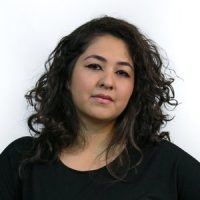
Andrea Iaroc. Courtesy CORAI Project.
JTP: Have you attended CAA conferences in the past? What did you think?
AI: Yes. In 2012 I attended the 100th conference in Los Angeles. It was a big deal.
Back then, I was just coming out of five years of research for my thesis on Jewish art, specifically iconography. I looked for a relevant session and when I went, the organizer said it had taken them 16 years to get CAA to have a session on Jewish art. That it took them 16 years was disappointing, but there we were.
There were talks already of having another Jewish session in 2013 and now I can see that things have changed. The way that the conferences look now five years later is different.
Back then I went to a Pre-Columbian session where you had all these folks who, yes, of course, are excellent at their research profession and uphold conservation and believe in the return of a lot of these items to their countries. But at the same time I felt, “Really, you couldn’t find one Latin American professor that could talk about this? Just one?” You have all these folks that are white American and Canadian and they’re telling you about your heritage—it feels really strange.
When you look at [the conference sessions] now, the layout in terms of the list of people who are talking and where they come from and the sessions—it’s much better.
JTP: That’s good to know. I’ve been involved with the organization for less time than a lot of its members, including you, so I’m always curious to ask people. I think energy apart from the conference is also really important, making sure that people feel supported not just when they’re in one place together.
AI: Exactly.
JTP: Do you have suggestions for organizations besides CORAI that people should be following?
AI: There’s Art History That. It’s run by two women (Karen J. Leader and Amy K. Hamlin) and sometimes they post their own writings. They gave us our first Facebook shout out for our first grant. They’re very supportive about anything that’s changing in art history, the paradigms, the way that we even talk about women sometimes. In 2017 when you go to an Art History 101 class, women are still muses, but we’re not the artists. We’re still not taken into account as having a genius, especially when we’re talking about classics. The way that we talk—that language needs to be changed.
There’s also Smarthistory. They are from New York and they offer free resources for art history.
Material Collective, you may have heard of it because it’s connected to Art History Teaching Resources. They’re both connected and even have this big group of medievalists who are trying to fight the white supremacist narrative.
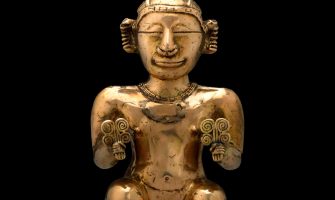
A piece featured in Smarthistory’s “South America before European colonization” section. Hands up close (detail), Seated Female Poporo, c. 500 B.C.E. – 700 C.E. Early Quimbaya, tumbaga (gold alloy), Colombia © The Trustees of the British Museum. Courtesy Smarthistory.
JTP: Excellent, thanks! What is the focus of your own research? You’ve mentioned it, but just to reiterate.
AI: Jewish art and iconography was my original focus, but because of it I’ve switched to cultural hybridity art.
JTP: Oh, interesting.
AI: Cultural hybridity includes artists who, because of the way our world has different heritages, draw inspiration from their mixed background. For instance, I had been researching contemporary Jewish artists and I ran across a work from Maya Escobar, who is from Missouri. Her dad is from Guatemala, he’s of Mayan ancestry, and her mom is Jewish, Ashkenazi, and so she made a tallit, a Jewish prayer shawl, using Mayan weaving techniques. That fusion of tradition—I’m very interested in it.
JTP: Do you think artists and art historians can change the world?
AI: Because I think that everything is connected, I always say art history does not exist in a vacuum.
JTP: I agree.
AI: Everything that’s happening scientifically, economically—it’s reflected. You’re going to see it in 50 years when you look back at art, you’re going to see it. Can it change the world? It can help change the world because humanities play a crucial role. The humanities help you see the world in a different way. They help your critical thinking skills and help you read humans. It helps you build community.
News from the Art and Academic Worlds
posted Jan 17, 2018
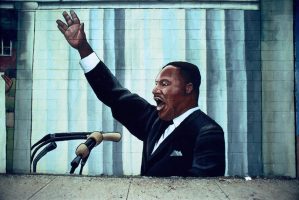
MLK Jr. mural at Callowhill and 2nd Avenue, Gift of Life, Philadelphia, 2009. Photo: Camilo José Vergara
Each week CAA News summarizes articles, published around the web, that CAA members may find interesting and useful in their professional and creative lives.
A Wall Street Giant Makes a $75 Million Bet on Academic Philosophy
The gift appears to be the largest by far to a philosophy department anywhere in the world. (New York Times)
Google App Goes Viral Making an Art Out of Matching Faces to Paintings
The Google Arts & Culture app tapped into the zeitgeist over the weekend, allowing social media users to share their doppelgangers from art history. (NPR)
Artists, Museum Directors, Scholars Voice Concern about Documenta’s Future
An open letter calls for business chief Annette Kulenkampff’s reinstatement and a new budget plan. (The Art Newspaper)
Why These 6 Artists Destroyed Their Own Art
Six stories of artists who chose to destroy their own art, including Michelangelo, Monet, and Georgia O’Keeffe. (Artsy)
The Martin Luther King Jr. Murals of America
Since the 1970s, Camilo José Vergara has documented hand-painted images of the civil rights leader across the US. (Citylab)
Helen Maudsley on How to Read Art: “Learn to Do What the Picture Tells You”
After a career spanning seven decades, the 90-year-old Australian artist expects her audience to put in an effort. (The Guardian)
Affiliated Society News for January 2018
posted Jan 16, 2018
Affiliated Society News shares the new and exciting things CAA’s affiliated organizations are working on including activities, awards, publications, conferences, and exhibitions. For more information on Affiliated Societies, click here.
Association of Academic Museums and Galleries
We hope to release 2018 Annual Conference registration, hotel and lodging information, and scholarship applications within the next month. Stay tuned for announcements via membership emails, the website, social media, and the AAMG listserv!
In the meantime, save the date!
June 21 – 24, 2018
Lowe Art Museum (University of Miami)
SECAC
SECAC 2017: 73rd ANNUAL CONFERENCE:
In October, SECAC met for the 73rd time in Columbus, Ohio, hosted by the Columbus College of Art and Design. One hundred and seven sessions were held, and 502 members representing 277 institutions attended. In its seventh year, participation in the SECAC mentoring program nearly doubled with 50 members meeting as mentors and mentees. Highlights of the conference included the SECAC 2017 Annual Juried Exhibition at CCAD’s Beeler Gallery and a keynote address at the Columbus Museum of Art by Tyree Guyton and Jenenne Whitfield of the Heidelberg Project.
At the annual business meeting SECAC President Jason Guynes of the University of Alabama introduced new members of the Board of Directors: Georgia, Jeff Schmuki, Georgia Southern University; South Carolina, Sarah Archino, Furman University; Virginia, Jennifer Anderson, Hollins University; West Virginia, Heather Stark (continuing), Marshall University; and At Large #2 Al Denyer (continuing), University of Utah. A. Lawrence Jenkens of the University of North Carolina at Greensboro was unanimously elected 1st Vice President of SECAC, a post he will hold for three years before becoming President. A Constitutional Amendment to add a third At-Large position to the SECAC Board was carried unanimously. At the end of the meeting, President Guynes passed the gavel to 1st Vice President and President-Elect Sandra J. Reed of Marshall University who will serve as SECAC President for three years.
SECAC 2018 will be hosted by the University of Alabama at Birmingham, October 17-20. A call for session proposals is now on the SECAC website, www.secacart.org. Calls for presentations, juried exhibition entries, and award nominations will be published on the website in early 2018.
AWARDS PRESENTED AT SECAC 2017
The SECAC Artist’s Fellowship, a $5,000 prize, was awarded to Stacey M. Holloway, Assistant Professor of Sculpture at the University of Alabama at Birmingham. Her proposed exhibition, Not to Be Otherwise, will be on view at SECAC 2018 in Birmingham, Alabama.
Ashley Elston, Assistant Professor of Art History, Berea College, won the fourth annual William R. Levin Award, a $5,000 prize, for her project Layered Media in the Sacred Art of Early Modern Italy.
The 2017 SECAC Award for Excellence in Teaching was awarded to Beauvais Lyons, Professor of Art at the University of Wisconsin-Green Bay.
The 2017 SECAC Award for Excellence in Scholarly Research and Publication was awarded to Christine Filippone, Associate Professor in Art History at Millersville University of Pennsylvania, for Science, Technology, and Utopias: Women Artists and Cold War America, Routledge Press, 2017.
The Awards Committee recognized two winners of the 2017 SECAC Award for Outstanding Artistic Achievement: Reni Gower, Professor in the Painting and Printmaking Department at Virginia Commonwealth University, and Carol Prusa, Professor of Painting and Drawing at Florida Atlantic University.
The 2017 SECAC Award for Outstanding Professional Achievement in Graphic Design was awarded to Meaghan Dee, Assistant Professor and Chair of Visual Communication Design at Virginia Tech.
The Awards Committee recognized two winners of the 2017 SECAC Award for Outstanding Exhibition and Catalogue of Historical Materials: the Georgia Museum of Art (University of Georgia) for Icon of Modernism: Representing the Brooklyn Bridge, 1883–1950, curated by Sarah Kate Gillespie; and Edward Irvine, Associate Professor of Art at the University of North Carolina Wilmington for Art From Flour: Barrel to Bag, at the Cameron Art Museum, Wilmington, North Carolina.
The 2017 SECAC Award for Outstanding Exhibition and Catalogue of Contemporary Materials was awarded to the Georgia Museum of Art (University of Georgia) for Paper in Profile: Mixografia and Taller de Gráfica Mexicana.
Nine graduate students received Gulnar Bosch Travel Awards in the amount of $220: Cyndy Epps, Georgia Southern University; Kimiko Matsumura, Rutgers University; Kathleen Pierce, Rutgers University; Daniel Ralston, Columbia University; Courtney N. Ryan, Georgia Southern University; Florencia San Martin, Rutgers University; William J. Simmons, University of Southern California; Madison Treece, University of California, Santa Cruz; and Angela Whitlock, Institute for Doctoral Studies in the Visual Arts.
Juror Tyler Cann, Curator of Contemporary Art at the Columbus Museum of Art, selected three prize winners for the SECAC 2017 Annual Juried Exhibition: Best in Show, Brooks Dierdorff, University of Central Florida, for What Else Do You Need?, Inkjet on vinyl mesh, stained glass, styrofoam coolers, 42” x 14” x 11”; Second Prize, Erica Mendoza, University of Tennessee Knoxville, for #WasterHerTim-2013to2017, Hand-embroidered ex-boyfriend clothing, approximately 91” x 63”; and Third Prize, Kofi Opoku, West Virginia University, for Face of Homelessness (Chuck), Video, 5’ 47”. Prizes were $1,500, $750, and $500, respectively.
The Art Libraries Society of North America (ARLIS/NA)
- The Art Libraries Society of North America (ARLIS/NA) is sponsoring a session the 2018 CAA conference in Los Angeles entitled “Engaging the Iterative: Pedagogical Experiments across Art and Design Disciplines.”
- The 46th Annual Conference of the Art Libraries Society of North America (ARLIS/NA) will be held in New York City at the New York Hilton Midtown from February 25 through March 1, 2018. This year’s conference, which is the preeminent event for the ARLIS/NA organization of art and visual information professionals, carries the theme Out of Bounds, and emphasizes sessions that expand the boundaries of art librarianship, featuring speakers who borrow ideas from outside the library profession to solve problems, spark new initiatives, or broaden audiences for library activities.
- In collaboration with the Art Libraries Society of North America (ARLIS/NA) the Sotheby’s Research Institute is once again sponsoring a research award for students writing on the subjects of art collecting or the art market http://www.sothebysinstitute.com/news-and-events/news/call-for-student-paper-submissions-arlis-award/ . This generous award of $3000 to the winner (individual or group effort) and $1000 to the assisting library will be presented at the 2018 ARLIS conference in New York.
Association for Critical Race Art History (ACRAH)
The Association for Critical Race Art History’s Bibliographic resource launched on January 9, 2017, and received over 1000 hits on the first day. In conjunction with the publication of the bibliography, reading groups were formed in the San Francisco Bay Area, Boston, New York, and Washington, D.C. to bring together art historians engaged with issues of the representation of race and ethnicity and their histories. To date, 42 people have participated in the reading groups, which have covered a wide array of topics including hybridity, empire, borders, primitivisms, and the contemporary status of identity politics. The reading groups were organized by Caitlin Beach (NY), Layla Bermeo (Boston), Margarita Karasoulas (Washington, D.C.), Marci Kwon (Bay Area), and Sean Nesselrode Moncada (NY). The organizers would like to thank Jacqueline Francis and Camara Dia Holloway, co-founders of the Association for Critical Race Art History, for their support and guidance in this endeavor.
Association for Latin American Art (ALAA)
The Association for Latin American Art (ALAA) is pleased to announce our Emerging Scholars of Latin American Art sponsored session at the upcoming College Art Association Conference. This session showcases the scholarship of graduate students and early career scholars of Latin American art, from the pre-Columbian to contemporary period. The session, chaired by Lisa Trever (UC-Berkeley) and Elena FitzPatrick Sifford (Louisiana State University), takes place on Thursday, February 22 from 10:30 am to 12:00 pm in room 402 and includes the following papers:
“Singular Plural: Serials, Rulership, and Time in the Architectural Ornament of Teotihuacan, Mexico” (Trent Barnes, Harvard University)
“‘These things do not exist’: Painting Grotesques in Sixteenth-Century New Spain” (Savannah Esquivel, University of Chicago)
“Migrant Constructions: Mahjar Monuments and the Crafting of Transnational Identities in Modern Argentina (1910–1955)” (Caroline “Olivia” M. Wolf, Rice University).
Renaissance Society of America
The Renaissance Society of America is holding its Annual Meeting in New Orleans on 22-24 March 2018. More than 200 of the 550 sessions at the conference feature topics relating to art and architecture, 1300-1700. See the RSA New Orleans web page for more information.
Historians of German, Scandinavian, and Central European Art and Architecture (HGSCEA)
The Board recently awarded travel stipends to two members of HGSCEA, Tomasz Grusiecki and Max Koss, to help defray the costs of their participation in CAA’s annual conference this coming February. The Board is also deliberating on the submissions to this year’s HGSCEA Emerging Scholars Prize competition. The winner will be announced at the reception and dinner in Los Angeles on Thursday, February 22, from 7 to 9 p.m. As always, the dinner is free to current members, who should mark their calendars if they plan to attend. An invitation with more details will be sent soon.
HGSCEA’s sponsored session at the annual conference, “Critical Race Art Histories in Germany, Scandinavia, and Central Europe,” is being chaired by Allison Morehead on Saturday, February 24, from 2:00-3:30 p.m. Rebecca Houze, Patricia Berman, Bart Pushaw, and Kristin Schroeder will read papers on Hungarian, Nordic, and German art and design. For more information, go to the HGSCEA website (http://hgscea.org/) and the conference website (http://conference.collegeart.org/programs/critical-race-art-histories-in-germany-scandinavia-and-central-europe/)
The annual business meeting is scheduled for Thursday, February 22. It will take place in Room 506 of the Convention Center from 12:30-1:30 p.m. Members are welcome to attend.
The New Media Caucus
The New Media Caucus is pleased to welcome our newly elected board members Rene Ferro (Chair of the Events and Exhibitions Committee), Jim Jeffers, (Treasurer), Jessye McDowell (Chair of the Communications Committee), Nadav Assor, Stephanie Tripp, Carrie Ida Edinger, Patrick Lichty, Jennifer Zayela, Byron Rich, Johanna Gosse and Liat Berdugo.
We also thank Bill Miller and Joyce Rudinsky for their years of invaluable leadership to our organization and Carlos Rosas, Meredith Hoy and Daniel Temkin for their service over the years as members of the Board.
As part of the Annual CAA conference, the New Media Caucus will be hosting multiple panels, workshops and our annual Member Showcase. You can find the New Media Caucus events information at http://www.newmediacaucus.org/2018-caa-los-angeles-events/.
National Council of Arts Administrators (NCAA)
National Council of Arts Administrators (NCAA) Activities at CAA-LA 2018 include our NCAA-CAA Affiliate Session: Transforming Communities Through the Arts, (Thursday, February 22, 10:30a.m.-12:00 p.m.) and the annual NCAA Reception (Thursday, February 22, 5–7 p.m., rm. tba). NCAA welcomes new and current members, and all interested parties. Please join us.
2018 NCAA Annual Conference: Purposeful Relationships: transforming communities through art and design, will be hosted by the Kendall College of Art and Design of Ferris University, Grand Rapids, MI, September 26-29, 2018. Registration available online in late spring 2018 at www.ncaaarts.org
New NCAA Board Members and Officers:
NCAA President: Lynne Allen, Boston University, Treasurer: Cathy Pagani, University of Alabama, Secretary: Peter Chametzky, University of South Carolina
New NCAA Board Members: Colin Blakely, University of Arizona, Jade Jewett, California State University, Fullerton, Charles Kanwishcher, Bowling Green State University
Historians of Netherlandish Art
HNA events at the College Art Association annual Conference, Los Angeles, February 21-24, 2018:
This year our HNA sponsored session, “All in the Family: Northern European Artistic Dynasties, CA. 1350-1750 will take place on Wednesday, February 21st, from 4-5:30 pm in Room 404A at the LA Convention Center.
Join us for the yearly HNA reception on Friday February 23rd, from 5:30-7 pm. in the San Bernadino Room at the Westin Bonaventure Hotel.
HNA Conference, Ghent, 2018
Registration is open for the quadrennial HNA conference in Ghent, May 23-26, 2018: https://hnanews.org/hna-conference-ghent-2018
We are pleased to announce 3 new board members:
Stephanie Porras, Assistant Professor at Tulane University
Marisa Bass, Assistant Professor and Director of Undergraduate Studies in the History of Art Department of Yale University
Freyda Spira, Associate Curator of Northern Renaissance and Baroque works on paper at the Metropolitan Museum of Art
and our new HNA Administrator:
Caroline Fowler, A.W. Mellon Postdoctoral Fellow, Yale University
Websites:
Don’t forget to check out our newly launched websites including HNAR, our online review of books, where past reviews will be available. The final print issue of the HNA Newsletter and Review of Books was published in November 2017. Issues produced since May 2002 are now available in pdf format on the site for viewing and download. Please take a look: https://hnanews.org, https://jhna.org, https://hnanews.org/hnar, and https://hnanews.org/hnar/archive.
Publication opportunity:
The next formal deadline for submission of articles to the Journal of Historians of Netherlandish Art (jhna.org) is March 1, 2018 (for publication in 2018 or 2019), although we welcome submissions at any time.
Society of Architectural Historians
Early registration is open for the Society of Architectural Historians’ 71st Annual International Conference in Saint Paul, Minnesota, April 18–22, 2018. Architectural and art historians, architects, museum professionals, and preservationists from around the world will convene at the Saint Paul RiverCentre to present new research on the history of the built environment and explore the architecture of Saint Paul. Roundtable discussions, workshops, networking receptions, keynote talks, SAH’s annual awards ceremony, and public architecture tours in the Minneapolis–Saint Paul region will supplement the program. Early registration ends February 20. Tours-only and public events registration opens on February 21. Visit www.sah.org/2018.
SAH is accepting session proposals for its 72nd Annual International Conference in Providence, Rhode Island, April 24–28, 2019. Since the principal purpose of the SAH annual conference is to inform attendees of the general state of research in architectural history and related disciplines, session proposals covering every time period and all aspects of the built environment, including landscape and urban history, are encouraged. SAH membership is not required to submit a proposal; however, you will be required to join SAH if your proposal is accepted. The submission deadline is January 16, 2018. Visit www.sah.org/2019.
SAH has partnered with the Global Architectural History Teaching Collaborative (GAHTC) to offer Research-to-Teaching Grants and Field Seminar Travel Grants. These new grants are part of the GAHTC’s nearly $500,000 in funding to build new content for its free, digital platform of teaching materials. Learn more at www.gahtc.org/grants.
European Postwar and Contemporary Art Forum (EPCAF)
A new group of counselors has joined EPCAF. Their bios, along with those of the new director of research and president are below. Karen Kurczynski’s review of the conference, “Multiple Modernisms: A Symposium on Globalism in Postwar Art,” was recently published at http://epcaf.org/reviews/
President:
Lily Woodruff is Assistant Professor of Art History at Michigan State University. Her first book, Disordering the Establishment: Participatory Art and Institutional Critique in France, 1958-1981 focuses on the Groupe de Recherche d’Art Visuel, Daniel Buren, André Cadere, and the Collectif d’Art Sociologique.
Director of Research:
Emmanuel Guy is Assistant Professor of Art and Design History at The New School, Parsons Paris. His book focuses on Guy Debord’s Game of War, and he curated among other exhibitions, “Guy Debord. Un Art de la Guerre” at the Bibliothèque nationale de France in 2013.
Counselors:
Amy Bryzgel is Senior Lecturer in Film and Visual Culture at the University of Aberdeen in Scotland. She is the author of Performance art in Eastern Europe since 1960, and Performing the East: Performance Art in Russia, Latvia and Poland Since 1980.
Brianne Cohen is Assistant Professor of Contemporary Art History at the University of Colorado, Boulder. Her book, Preventive Publics: Contemporary Art and the Idea of Europe, examines the art of Harun Farocki, Thomas Hirschhorn, and the collective Henry VIII’s Wives.
Liam Considine is Visiting Assistant Professor of art history at Pratt Institute. His book, New Realisms: Pop and Politics in France, 1962-1968, examines the impact of Pop art in France across painting, cinema and graphic design during the 1960s.
Sophie Cras is Maître de conférences at Université Paris 1 Panthéon-Sorbonne. An English translation of her book, L’économie à l’épreuve de l’art. Art et capitalisme dans les années 1960.
Deborah Laks is Scientific Coordinator at the Deutsches Forum für Kunstgeschichte, and teaches at the Panthéon-Sorbonne University, Sciences po, and École du Louvre. She is the author of Des déchets pour mémoire. L’utilisation de matériaux de récupération par les nouveaux réalistes (1955-1975).
Jasmina Tumbas is Assistant Professor in the Department of Art at the University at Buffalo. Her first book is titled The Erotics of Dictatorship: Art, Sex, and Politics under Yugoslav Socialism.
FATE (Foundations in Art: Theory and Education)
Upcoming for CAA 2018: An Inclusion and Empathy Roundtable discussion and podcasting session will be hosted during FATE’s Business Meeting at the conference: Th, Feb 22, 12:30 – 1:30p, Rm 402A, LA Convention Center.
02/22/2018: 6:00PM–7:30PM, Room 409A: “Let’s Dance, But Don’t Call Me Baby: Dialogue, Empathy, and Inclusion in the Classroom and Beyond”
FATE’s CAA Affiliate Representative, Naomi J. Falk, and Richard Moninski, will co-chair FATE’s Affiliated Society session. Feeling welcome, acknowledged, and heard encourages learning. Fostering inclusiveness and empathy on behalf of minority students legitimizes perspectives. Examples of readings, projects, tools, and exercises for building inclusive, encouraging, and productive dialogues included. More info? Please contact: Naomi J. Falk, naomijfalk@gmail.com
Feb 10, 2018: FATE Regional Event: Skill Swap Workshop @ SHSU, 10:00am – 5:00pm at Sam Houston State University, WASH (Workshop in Art Studio + History), 2220 Ave. M, Huntsville, TX, 77340. $20.00 covers breakfast, zine and demo materials, lunch, and takeaway information. Coordinators: Jessica Simorte & Valerie Powell, Register by Jan 10: jessicasimorte@hotmail.com
Other Regional events, incl. Apr 2018 in Columbus: http://www.foundations-art.org/regional-events
Positive Space podcast: http://www.foundations-art.org/positive-space-podcast
Episode 21, features Jessica Mongeon, Visiting Assistant Professor of Studio Foundations at Arkansas Tech University, discusses student habits, using technology in the classroom & strategies for creating inclusive learning environments at a time when social & political issues often alienate many. Unpacking trends in foundations pedagogy, Emily Ward Bivens, professor of Time-Based Art at the University of Tennessee, discuss the benefit of introducing students to performative activities, mentorship and the challenge/adventure involved in juggling the role of artist, educator, and administrator. Recent episodes also include Colby Jennings, Heather Szatmary, and Chung-Fan Chang.
Membership: Starting the 2018/2019 membership period, FATE has made changes to the Individual Membership fees including a new Adjunct Faculty Membership rate for part-time and contingent faculty members: http://www.foundations-art.org/membership
International Sculpture Center
The 2018 International Sculpture Conference will be held in Philadelphia, PA from October 25-28, 2018. The Call for Panels will open in January 2018. We will be seeking a diverse program with a wide range of topics in contemporary sculpture. For updates and to apply, visit www.sculpture.org/philly2018.
Tickets to the Lifetime Achievement Award Gala honoring Alice Aycock and Betye Saar are on sale. The gala will be held on April 18, 2018 at Tribeca Rooftop, NY, NY. For more information, and to purchase tickets visit www.sculpture.org/aycocksaar, or contact the ISC events department at events@sculpture.org.