CAA News Today
Call For Applications: CAA-Getty International Program 2027
posted by CAA — March 20, 2026
Thanks to generous support from Getty, the program—now in its sixteenth year—enables scholars from around the world to travel to New York to participate in the CAA 115th Annual Conference, February 3–6, 2027. The program features a preconference colloquium on international issues in art history, followed by a week of sessions, workshops, events, museum visits, and professional development opportunities.
To date, the program has gathered 189 scholars from sixty-three countries and continues to have significant global impact on the field. These annual convenings have yielded collaboration, community, and lasting connections while also serving to diversify CAA membership, increase international presence at CAA conferences, and foster greater cross-cultural discourse around international art scholarship and practice.
We also invite program alumni to apply to return and support first-time participants, take part in program events, and present at the Annual Conference.
The individuals selected for the 2027 program will receive a one-year CAA membership, have their conference registration fee, travel expenses, and accommodation costs covered, and will receive per diems for meals and incidentals.
International art historians, curators, and other visual arts professionals are encouraged to apply!
Visit our CAA-Getty page for eligibility and application requirements. All interested Getty applicants, whether new scholars or alumni, will need to submit a general conference application (individual presentation proposal) and indicate their interest in participating in the CAA-Getty International Program.
Deadline: April 25
This program is made possible with support from Getty.
Member Spotlight: Meet New Art Journal Reviews Editor Richard Hylton
posted by CAA — March 17, 2026
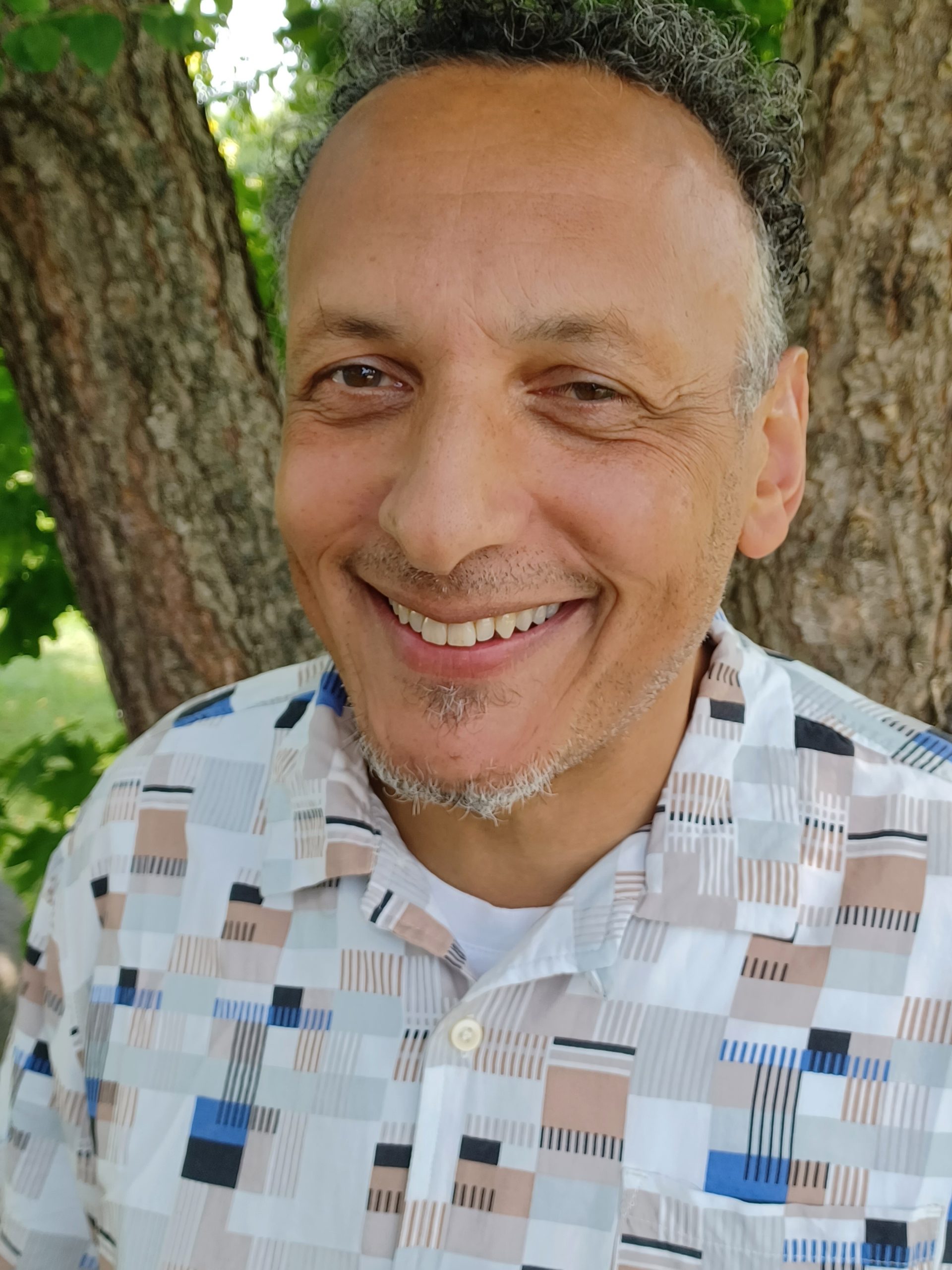
Richard Hylton
Art Journal is pleased to announce its new reviews editor, Richard Hylton. CAA News is happy to introduce him here and has asked him a few questions to help members, readers, and future contributors get to know him a little better. Welcome, Richard!
Tell us about your current academic position and your research interests.
My trajectory into academia is somewhat unconventional, coming from an art school background and then spending many years facilitating and curating exhibitions. I was awarded my PhD from Goldsmiths, in London, in 2018; did postdoc work at the University of Pittsburgh (2019–21); then spent four years teaching at SOAS, London (2021–25). In July 2025, I was appointed Associate Professor in the Department of Art History, at Tyler School of Art and Architecture, Temple University. So, in a roundabout way I’m returning to the US. At Tyler, I contribute to teaching undergraduate and graduate programs, focusing on African diasporic practice which complements the department’s globally orientated syllabi. Currently, I’m aligning teaching fairly closely to areas of my own research, including transatlantic slavery and contemporary art and histories of African American art in the international arena.
Another area of my research concerns the interplay of historical recovery between academia and the museum. This is evident in my recently published book Donald Rodney: Art, Race and the Body Politic (Bloomsbury, 2025) which begins with an examination of the artist’s “posthumous career,” in order to delineate between his lifetime and belated appreciation. How does temporality inform constructions of legacy in art? I’m also interested how contemporary art functions within the ethnographic museum. Beyond the substantial body of critical work rightly being advanced around cultural restitution and plundered artifacts, I am specifically interested in the cultural, social, and economic forces at play when contemporary art practice is thrown into the ethnographic mix. I’m eager to explore how this museological, highly endowed, and often racialized context may or may not inflect the production, collection and reading of contemporary art.
What do you hope to accomplish as Art Journal’s new Reviews Editor? What makes a strong review and who are reviews for?
As Reviews Editor, I certainly hope to continue the good work of my predecessor Balbir Singh. Over the past few years, a key facet of my own work has been to review books and exhibitions. I think it is such a productive and collegial part of being a writer and researcher, to take time away from one’s own research and to engage with the work of other scholars.
The role of Reviews Editor will also enable me to expand my own knowledge and to operate beyond my immediate comfort zones. Bringing attention to scholarly material, be it books or exhibitions, within and beyond the United States, is my goal. I want to commission both book and exhibition reviews to reflect the interplay between academia and museums. I also hope to engage a breadth of scholars, from graduate students and professors to curators and archivists. A good review offers the reader insight integral to which must be critical perspective on any given book or exhibition. How does said book or exhibition fit within and expand the field.
How does your research and public scholarship dovetail with your view of the Reviews section of the journal?
As previously mentioned, the politics of historical recovery in art is an active area of my research. From which positions do acts of historical recovery originate and on whose behalf are they expressed. Such considerations may inform my role as Reviews Editor. The post-2020 world seems to be an important era in which substantial publications and exhibitions, as well as academia, are seeking not only to pluralize art history but also many of art history’s central tenets based on economics, race, gender, etc.
And finally, what are you reading/viewing outside your academic purview these days? What is inspiring you?
My current and future teaching currently demands much of my reading time. But I see this as a good opportunity and excuse to revisit material, relearn, or learn afresh for the classroom and my research. I recently read and reviewed Rebecca Zorach’s Temporary Monuments: Art, Land, and America’s Racial Enterprise (2024) and Eunsong Kim’s The Politics of Collecting: Race and the Aestheticization of Property (2025). In different ways, these two books are bold and insightful acts of historical revisionism and contemporary critique. Other books I’m attempting to read are Black Spartacus: The Epic Life of Toussaint Louverture (2020) by Sudhir Hazareesingh; We Flew Over the Bridge: The Memories of Faith Ringgold (1995); and Jean Toomer: A Hunger for Wholeness by Cynthia Earl Kerman and Richard Eldridge (1987).
Although I am moderately familiar with aspects of Philadelphia’s (art) history—Quakers and slavery, abolitionism, MOVE, Andrea Fraser’s Museum Highlights, Henry Ossawa Tanner, etc.—living here brings a different dimension and perspective to this knowledge. Even the “Sound of Philadelphia,” which, though not an audible presence in the city, was such a part of my growing up in London, offers opportunities for reflection today.
Shaun Leonardo in Conversation with Dawit L. Petros During CAA114 Annual Artist Interviews
posted by CAA — January 22, 2026
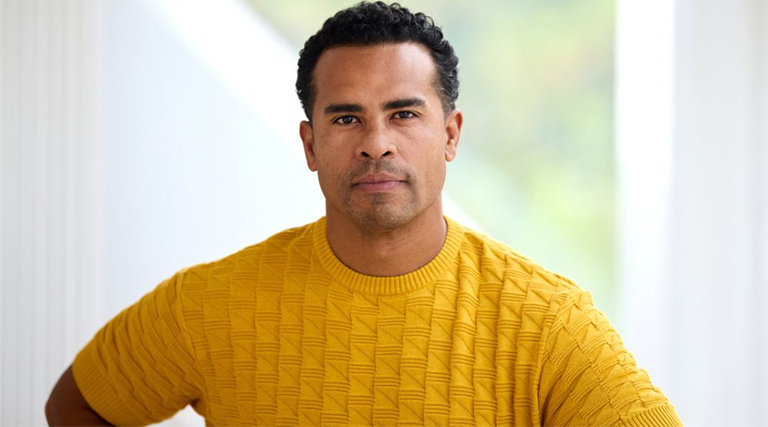
Photograph by Argenis Apolinario
Shaun Leonardo will be in conversation with Dawit L. Petros during the CAA 114th Annual Conference Annual Artist Interviews!
Shaun Leonardo’s multidisciplinary work negotiates societal expectations of manhood, usually through the definitions surrounding black and brown masculinities, along with its notions of achievement, collective identity, and experience of failure. His performance practice is participatory and invested in a process of embodiment.
Leonardo’s fifteen-plus-year career as an artist and arts administrator has centered on community engagement, public programming, and experimental pedagogy. From 2016 to 2024, Leonardo played a pivotal role at Recess, co-directing its evolution as a socially engaged arts organization and launching the Assembly diversion program. Based in Brooklyn, Leonardo received his MFA from the San Francisco Art Institute and is a recipient of support from Creative Capital, Guggenheim Social Practice, Art for Justice, and A Blade of Grass. His work has been shown at the Guggenheim Museum, the High Line, the New Museum, and Four Freedoms Park Conservancy, and has been profiled in The New York Times and on CNN. He is Executive Director of Socrates Sculpture Park in Queens.
The CAA114 Annual Artist Interviews featuring Shaun Leonardo and Joyce Kozloff will be held on Friday, February 20, 4:30–7:00 p.m. CT at the Hilton Chicago. This event will also be livestreamed via YouTube.
Register now for the CAA 114th Annual Conference, February 18–21 in Chicago!
Joyce Kozloff in Conversation with Nancy Princenthal During CAA114 Annual Artist Interviews
posted by CAA — January 09, 2026
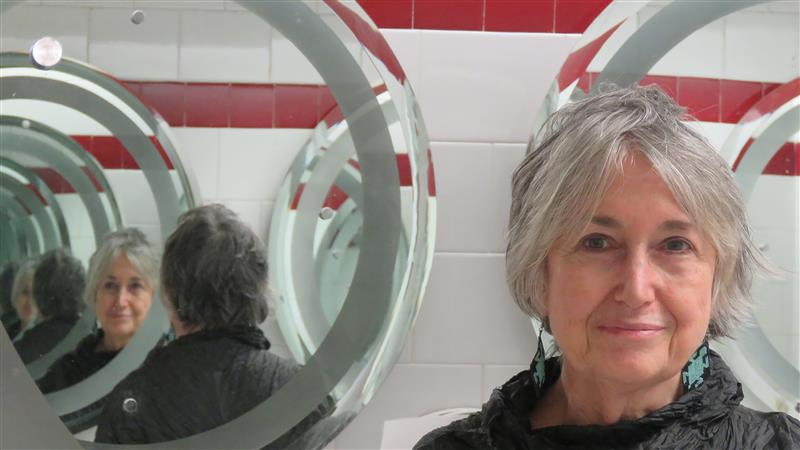
Photograph by Carolyn Yarnell
Joyce Kozloff will be in conversation with Nancy Princenthal during the CAA 114th Annual Conference Annual Artist Interviews!
Joyce Kozloff has been an activist in the feminist art movement on both coasts since 1970 and was a member of the Pattern and Decoration movement in the ’70s. Cartography and mapping have been important foundations of her work since 1990 and are structures through which she explores the range of human knowledge and the imposition of imperial will.After a sustained commitment to public art throughout the 1980s and ’90s, she returned to a studio practice that encompasses painting, sculpture, installations, printmaking, and photography. Two glass mosaic and ceramic tile public works—Parkside Portals (2018) for the MTA Art and Design Program, and Memory and Time (2021) for the General Services Administration (GSA). Her work is included in public collections such as the Brooklyn Museum of Art, Los Angeles County Museum of Art, Metropolitan Museum of Art, Museum of Modern Art, National Gallery of Art, Museum of Contemporary Art Los Angeles, Jewish Museum, Brooklyn Museum and Whitney Museum of American Art. The survey Joyce Kozloff: Contested Territories is on view at the Everson Museum, Syracuse, New York, through April 2026. She has been represented by the DC Moore Gallery in New York since 1995.
The CAA114 Annual Artist Interviews will be held on Friday, February 20, 4:30–7:00 p.m. CT at the Hilton Chicago. This event will also be livestreamed via YouTube.
Register now for the CAA 114th Annual Conference, February 18–21 in Chicago!
Support CAA using Amazon Smile
posted by CAA — June 22, 2021
Did you know that you can make a gift to CAA using Amazon Smile? Amazon donates 0.5% of the price of eligible smile.amazon.com purchases to the organization selected by customers — at no cost to you. Our charity link will automatically direct you to Amazon, where you will be asked to confirm that you would like your Amazon purchases to support CAA.
As a 110-year-old organization, we are proud to serve a global community of artists, designers, students, and scholars through advocacy, intellectual engagement, and a commitment to the diversity of practices and practitioners. During this pivotal moment it is more important than ever that we support our visual arts community. We hope that you will join us in our mission and help us bring our programs and publications to life by using Amazon Smile today.