CAA News Today
The Getty Saves BHA and Will Provide Free Online Access to It
posted by Christopher Howard — April 01, 2010
The J. Paul Getty Trust released a statement this morning that tells us “as of April 1, 2010, the Bibliography of the History of Art (BHA) will be available free of charge on the Getty website.” The move, which comes a day after the important research database was to be shut down permanently, is a welcomed one. While free access to BHA for individuals and institutions is good for everyone especially those “institutions in developing countries and independent scholars worldwide” who were unable to afford a subscription. The Getty, however, has remained silent about further updates to the database, which ceased last year. [UPDATE: the Getty will not be adding new records to the database but hopes another organization will do so.]
From the Getty press release:
Since ending its collaboration with the Institut de l’Information Scientifique et Technique (INIST)–CNRS in December 2007, the Getty has been searching for partners to continue the production and distribution of BHA. This process has been complicated, and with no suitable arrangement immediately available, the Getty decided to act on its commitment to the scholarly community by providing access to BHA directly from its own Web site.
The relaunched BHA includes the International Bibliography of Art (IBA), covering the years 2008 and part of 2009, as well as the Répertoire de la litterature de l’art (RILA), a predecessor of BHA that was maintained by CAA for many years. RILA records from 1975 to 1989 will be online by May 1, 2010.
Getty Closing the Bibliography of the History of Art at the End of March
posted by Christopher Howard — March 25, 2010
CAA learned last week, through the Art History Newsletter, that the Getty Research Institute in Los Angeles is withdrawing the Bibliography of the History of Art (BHA) from distribution on March 31, 2010. With the closing, hundreds of thousands of records and abstracts in the database will soon be unavailable to scholars worldwide—indefinitely.
Subscribers to BHA, which include many academic libraries and research institutions, received notice about the shutdown from the Getty earlier this month. While there are some alternatives—among them Art Index, Avery Index, and ARTbibliographies Modern—the loss of this invaluable resource is immense and will be deeply felt throughout the international art-history community. Indeed, BHA’s “coverage has not been duplicated in any single database available to us,” writes Jill E. Luedke, a librarian and art-subject specialist at Temple University.
Since June CAA has made numerous communiqués by phone and email to the Getty regarding the demise of BHA, receiving only one inconclusive response. From what CAA can gather from other sources, the closure appears to be strictly a budgetary decision. The Getty attempted to find an organization that would purchase the database and software program that they had developed, but found none. CAA was not privy to the negotiations to find a buyer.
As the world’s most comprehensive bibliographic database of publications in art history, BHA covers the visual arts in Europe and America from late antiquity to the present. Copublished with the Institut de l’Information Scientifique et Technique in France, BHA originated in part as the International Repertory of the Literature of Art (RILA), created in 1972 under the auspices of CAA and supported by grants from public endowments and private foundations. The Getty’s bibliography includes RILA records from 1972 to 1989 and those from the Repertory of Art and Archaeology (RAA) from 1973 to 1989, and had been growing ever since.
Michael Rinehart, formerly editor in chief of RILA and BHA for nearly thirty years, wrote in 2009: “It is highly unlikely that any commercial vendor will want to maintain it. It is equally clear that the Getty intends to end BHA with or without a plan for its continuation…. Whatever the original understanding between the CAA and the Getty may have been, it is self-evident that the CAA entrusted RILA to the Getty in the expectation that it would continue.”
Art historians and researchers were first alerted to the possible closure in June 2009, and CAA published a response at that time. The Getty released a statement in the same month, but negotiations with other organizations, as noted above, failed to produce a solution to keep BHA alive.
The Frick Art Reference Library Opens Two New Online Databases
posted by Christopher Howard — February 23, 2010
The Frick Art Reference Library in New York has launched two new online resources that are available to scholars free of charge. The first, called the Archives Directory, is a directory that helps those researching the history of collecting art in the United States. The second, the Montias Database, is a collection of inventories from the Dutch Golden Age.
Inge Reist, director for the Frick’s Center for the History of Collecting in America, says, “Such a consolidated and easily searched online source as the new Archives Directory will prove invaluable to this deepening field of study and will ensure that researchers can locate primary documents such as letters, bills of sale, and other transaction records that are so essential to reliable scholarship. Indeed, users will more readily find their way to all manner of repositories, from those that are well-known to utterly unexpected caches, which in turn may lead to new discoveries and inspire fresh perspectives.”
Archives Directory
The center’s Archives Directory, the first online database of its kind, consolidates a wealth of information about the location and nature of documents and archives available on American collectors. Until now, scholars have had to comb through multiple websites and, if permitted, sift through analogue data held at library, museum, and university archives to construct their own plans for research—a time-consuming and imprecise process. The new directory is, by contrast, accessible around the clock via the institution’s website. Its use will help scholars worldwide as they approach research projects, guiding them beyond existing publications and standard paths to overlooked repositories, including primary source materials.
The Archives Directory guides researchers to more than 5,000 collections held in more than 300 repositories worldwide, which together have bearing on the lives and activities of more than 1,500 American collectors. Information in the Archives Directory was culled from various online and printed materials ranging from federated and individual online library catalogues to Google Books to published literature in the field.
Contributions of additional information for the directory are welcomed by scholars and researchers, so that it will continue to grow and become an increasingly valued resource.
Montias Database of 17th Century Dutch Art Inventories
The complete Montias Database, cosponsored by the Rijksbureau voor Kunsthistorische Documentatie, offers an unprecedented look at ownership of art in Holland during the seventeenth century. It is a trove of searchable information about buyers, sellers, and prices, including comprehensive information on over 50,000 objects (paintings, prints, sculpture, furniture, and so forth) listed in nearly 1,300 Amsterdam city inventories. Approximately half was created in preparation for auctions, almost an equal portion was notarial death inventories for estate purposes, and the remaining documents relate to bankruptcy cases. Although the database, which specifically addresses records from 1597 through 1681, is not a complete record of all inventories made in Amsterdam, it contains a vast amount of information that can elucidate patterns of buying, selling, inventorying, and collecting art.
An eminent economist at Yale University, John Michael Montias began recording details of ownership of works of art from inventories held in the Amsterdam municipal archive, or Geementearchief (now known as the Stadsarchief), in the early 1980s as part of his own work on the prices of Dutch paintings at seventeenth-century auctions.
Donate to Help Save Haitian Libraries and Archives
posted by Christopher Howard — February 08, 2010
The Digital Library of the Caribbean (dLOC), an international collaboration of educational, research, governmental, and nongovernmental institutions that provides access to electronic collections about the Caribbean, is seeking donations and technical assistance for the recovery and protection of Haiti’s libraries and their valuable historical, governmental, and cultural resources.
The Digital Library of the Caribbean has initiated the Protecting Haitian Patrimony Initiative, the goal of which is to help the country’s three largest heritage libraries and the National Archives, all of which were damaged in the January 12 earthquake. While the main structures remain standing, one library must be evacuated and most likely demolished and the others suffered significant damage, leaving their collections extremely vulnerable. As a result, significant resources will be needed to protect the already brittle, rare books and documents, now left in piles and covered with debris.
The damaged institutions have indicated they need gloves, masks, archival boxes, and temporary staff to assist in the clean-up. Later, they will need to replace broken shelving, repair or replace damaged electronic equipment, and provide more advanced restoration for many of the rarest books and documents.
Laura Probst, dean of FIU Libraries and a dLOC executive committee member, said protecting the historical documents is crucial in the earthquake’s aftermath.
“The collections in these archives represent the collective memory of the Haitian people, their culture, and Haiti’s role in the history of the western hemisphere and the world,” Probst said. “With this initiative we seek to preserve these invaluable resources for Haiti’s future, and for our own.”
FIU has a longstanding partnership with Haiti’s libraries and the National Archives through the Digital Library of the Caribbean and is one of the founding partners and administrators of dLOC, along with the University of Florida and the University of the Virgin Islands.
The Digital Library of the Caribbean’s operations are run out of the Latin American and Caribbean Center at FIU. Brooke Wooldridge, coordinator of dLOC at FIU, will be traveling to Haiti this week to assist the libraries and archives in documenting their needs and planning for the next phases of their recovery.
The Protecting Haitian Patrimony Initiative at first will channel resources to four institutions in Port-au-Prince:
- Archives Nationales d’Haïti houses both civil and state records, including births, marriage and death certificates, documentation of social works, civil governance and records of the Office of the President, and most government ministries
- Bibliothèque haïtienne des Pères du Saint-Esprit was founded in 1873 by the Fathers of the Holy Spirit. The library holds resources documenting the history of Haiti, French colonization, slavery, and emancipation, and 20th Century records, as well as newspapers and periodicals
- Bibliothèque haïtienne des Frères de l’Instruction Chrétienne was founded in 1912 by the Christian Brothers. It served as depository-library for Haitian imprints and holds titles not even available in the National Library. It also holds one of the most significant collections of Haitian newspapers
- Bibliothèque National d’Haïti was established in 1940 and also serves as a public library providing resources, study space, and research support. It has a small but significant collection of rare books, manuscripts, and newspapers
For more information or to contribute to the Protecting Haitian Patrimony Initiative, please visit the dLOC website or call dLOC at 305-348-3008.
The text was published earlier today on the website of Florida International University (FIU) and is reprinted here with permission by news.FIU.edu.
Haitian Libraries and Archives Spared from Earthquake Damage
posted by Christopher Howard — February 01, 2010
The following letter comes from Brooke Wooldridge of the Digital Library of the Caribbean (dLOC). A cooperative digital library for resources from and about the Caribbean and circum-Caribbean, dLOC provides access to digitized versions of Caribbean cultural, historical, and research materials currently held in archives, libraries, and private collections.
There has been significant confusion as to the state of the four main patrimonial libraries in Port-au-Prince after the earthquake on January 12, 2010. Based on information that I have received from the Digital Library of the Caribbean partner libraries in Haiti, all four of the following library buildings are standing:
- Archives nationales d’Haïti
- Bibliothèque haïtienne des Pères du Saint-Esprit / San Martial [though the collection will need to be evacuated, as the building cannot be salvaged]
- Bibliothèque haïtienne des Frères de l’Instruction Chrétienne / Saint Louis de Gonzague
- Bibliothèque nationale d’Haïti
Importantly, the library at Saint Louis de Gonzague (FIC) was NOT destroyed. The reporter that stated the library had fallen was incorrect.
According to the director of the National Library, Mme. Francoise Thybulle, the structures must be inspected before the local staff can assess the situation and prepare detailed plans that will certainly ask for international assistance. While the buildings are standing, this does not diminish what will be the very real need for assistance once the local leadership is able to assess the situation. All of the library directors have asked that interested parties work together to help preserve the collections [and] bring these libraries/archives back into service.
Many institutions and individuals have expressed an interest in supporting the Haitian libraries/archives as they begin to rebuild. The outpouring of support and interest for the preservation of Haitian patrimony is unprecedented. Many of you are already in contact with colleagues regarding ways to help. I am trying to serve as a clearinghouse for the Haitian libraries of the different people, institutions or groups that would like to offer support to the libraries. Once I have feedback from the partner libraries in Haiti, I will share a working document of the projects I am aware of and an online survey for interested individuals to complete via www.dloc.com. Feel free to contact me personally at dloc@fiu.edu or preferably via the dLOC Facebook Group if you are already planning a project locally.
The Digital Library of the Caribbean has been working with partners in Haiti since it began in 2004. The National Archives in Haiti was a founding member of dLOC, and in the last few years we have developed strong relationships with both the National Library and the Fathers of the Holy Spirit (San Martial) Library. As more information becomes available from the local leadership, I will share it as widely as possible. I have been hesitant to send a large response until now because of the many conflicting reports. This information is confirmed, and comes from the directors of each library/archive.
As the many researchers that have worked in these four libraries know, their directors are completely dedicated to the preservation of their national patrimonial collections. All four have been fighting to preserve these collections for decades, and I am confident with support from the international community these collections will be preserved and accessible for many years to come.
Opt-Out Deadline for Google Book Settlement Approaching
posted by Christopher Howard — January 20, 2010
Following the submission of the amended Google Book Settlement in November 2009, the deadline for opting out was extended. The new deadline is January 28, 2010 (postmarked or submitted online on or before that date).
Those who had not opted out of the settlement may still do so, and those who had opted out may now opt in, if they so wish. If you wish to maintain your previous status, you need not do anything. (Under a class-action settlement, all class members remain in the class unless they opt out.)
Opt-out forms (to mail in) and instructions for opting out online are available at the settlement website. You may also read the settlement FAQ for more information.
New CAA Member Benefit: Humanities E-Book
posted by Nia Page — December 04, 2009
 Humanities E-Book, a project of the American Council of Learned Societies (ACLS), offers unlimited access to its collection of nearly three thousand cross-searchable, full-text titles across the humanities and related social sciences. Titles, which include fifty-six CAA Monographs on the Fine Arts, have been selected and peer reviewed by ACLS constituent learned societies for their continued importance and value in teaching and researching. The collection, which grows by about five hundred books a year, includes both in- and out-of-print titles published from the 1880s to the present. Humanities E-Book titles also link to publishers’ websites and to online reviews in JSTOR, Project MUSE, and other sites.
Individual Subscriptions
As a special benefit of CAA membership, individual members can acquire a twelve-month, renewable subscription to Humanities E-Book for $35, which helps sustain the resource for the entire scholarly community.
Individual subscriptions are an attractive option for those whose institutions do not already subscribe to Humanities E-Book, or for CAA members who might not be affiliated with a subscribing institution. Please check this list to see if your institution subscribes.
When completing the Humanities E-Book’s online purchase module, choose the College Art Association from the Society Affiliation pull-down menu and enter your CAA member number. Be sure to review the terms of service before subscribing. For inquiries, please write to subscriptions@hebook.org or call 212-697-1505.
Institutional Subscriptions
Humanities E-Book offers a special 10 percent discount on subscriptions to institutional CAA members. Subscriptions range from $450 to $3,125, depending on the size of your institution.
Institutional subscription information, including pricing, is available on the Humanities E-Book website. For a free trial, a subscription for your school, museum, or organization, or further information, please write to info@hebook.org and mention that you are an institutional CAA member.
Google Books Settlement
posted by Christopher Howard — November 09, 2009
Today is the deadline for a revised settlement agreement to be filed in response to a lawsuit by the Authors Guild and the Association of American Publishers, who are protesting the unauthorized copying of in-copyright books by Google.
CAA has prepared a summary article on the Google Library Book Project to better inform you about the issues at stake; included are a brief description of aspects of the settlement and links to articles and editorials from authors and reporters supporting or criticizing the settlement.
CAA’s constituency includes both creators and users of books. The Committee on Intellectual Property has taken up the matter for consideration and is currently considering what position, if any, to recommend.
Should Libraries Toss Their Old Print Journals? A New Report on Digitizing Library Collections
posted by Christopher Howard — October 06, 2009
Many journals are sufficiently preserved digitally and housed in print repositories so that some libraries can responsibly withdraw their own print holdings, according to a new report published by Ithaka S+R. Written by Roger Schonfeld and Ross Housewright, “What to Withdraw: Print Collections Management in the Wake of Digitization” takes a system-wide approach to the needs of libraries and their users collectively, rather than focusing on regions, systems, or consortia.
“Libraries are right to push aggressively into the digital future but should do so with an awareness about risk and tradeoffs,” said Housewright, an analyst at Ithaka S+R, the strategy and research arm of the nonprofit organization ITHAKA, which is also the parent company of JSTOR and Portico.
Looking at reasons for retaining and preserving physical copies of scholarly journals, “What to Withdraw” proposes minimum time periods that require libraries to give access to both print and digital versions. It then offers a minimum number of required print copies to retain. Based on this analysis, the report concludes that certain print journal backfile sets are well enough digitized and contain few enough images that it is unlikely there will be future demand for them by users.
Some print materials, the authors warn, may not yet be ready for broad withdrawal without risk. For these materials, several strategies are recommended to give libraries more flexibility. First, organizations responsible for digitization programs should provide more transparency on the quality of their digitization work and participate in ongoing efforts to upgrade the quality of their scans. In addition, libraries should form deeper partnerships with publishers and other digitizers.
“There is an opportunity before us to make a system-wide impact on print collection management,” said Housewright, “but in order to do so libraries and digitizers need to commit to collaboration at a level unseen today.”
Witt and Conway Libraries at the Courtauld to Remain Open
posted by Christopher Howard — August 27, 2009
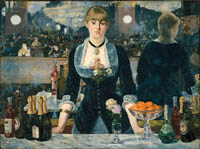 Rumors have been circulating this summer about a possible closure of the Witt Library and the Conway Library at the Courtauld Institute of Art in England, a situation reported on last month by Martin Bailey in the Art Newspaper. The good news is that the two libraries will remain open for scholars and the public—but only after a two-month temporary shuttering beginning early next month. Yesterday CAA received the following missive from the venerable London-based art institution:
The Courtauld Institute of Art is pleased to confirm that the Witt and Conway Libraries will remain open to the public five days a week and [that] the Photographic Survey collections will continue to be accessible by appointment, contrary to concerns recently expressed by some members of the art community.
Like other higher education institutions worldwide, The Courtauld has had to review all its operational activities and services in the light of the current economic climate. This review has led to a decision to restructure the management of our image libraries in order to minimise their net cost to the Institute. To allow time to implement the agreed changes, these libraries will be temporarily closed from 7 September 2009 and will reopen on 2 November 2009. They will then be open to the public from Monday to Friday between the hours of 11am and 4pm (subject to usual Bank Holidays etc).
Requests for photographs, rights and reproduction rights from the Witt and Conway Libraries should continue to be addressed to Courtauld Images: +44 (0)20 7848 2879, images@courtauld.ac.uk or via www.courtauldimages.com.
The Witt Library houses a collection of about 2 million reproductions of Western paintings, drawings, and prints from 1200 AD to the present. The Conway Library has more than 1 million images, including photographs and cuttings of architecture, architectural drawings and publications, sculpture, ivories, seals, metalwork, manuscript illumination, stained glass, wall paintings, panel paintings, and textiles.