CAA News Today
Books Published by CAA Members
posted by CAA — August 15, 2014
Publishing a book is a major milestone for artists and scholars—browse a list of recent titles below.
Books Published by CAA Members appears every two months: in February, April, June, August, October, and December. To learn more about submitting a listing, please follow the instructions on the main Member News page.
August 2014


Ronald R. Bernier. The Unspeakable Art of Bill Viola: A Visual Theology (Eugene, OR: Wipf and Stock Publishers, 2014).

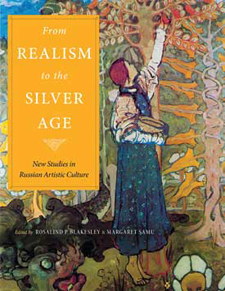
Rosalind P. Blakesley and Margaret Samu, eds. From Realism to the Silver Age: New Studies in Russian Artistic Culture (DeKalb: Northern Illinois University Press, 2014).

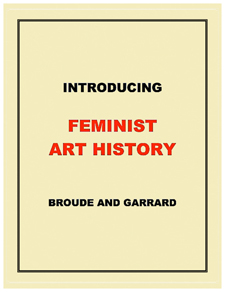
Norma Broude and Mary D. Garrard. Introducing Feminist Art History (Amazon ebook, 2014).

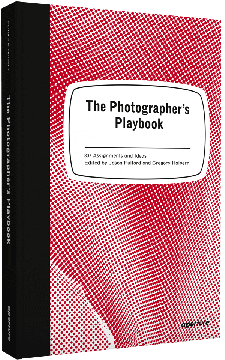
Jason Fulford and Gregory Halpern, eds. The Photographer’s Playbook: 307 Assignments and Ideas (New York: Aperture, 2014).

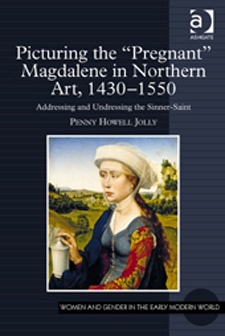
Penny Howell Jolly. Picturing the “Pregnant” Magdalene in Northern Art, 1430–1550: Addressing and Undressing the Sinner-Saint (Burlington, VT: Ashgate, 2014).

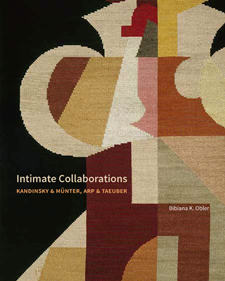
Bibiana K. Obler. Intimate Collaborations: Kandinsky and Münter, Arp and Taeuber (New Haven: Yale University Press, 2014).

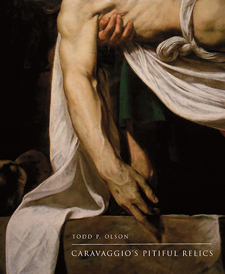
Todd P. Olson. Caravaggio’s Pitiful Relics (New Haven: Yale University Press, 2014).

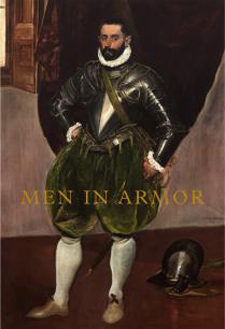
Jeongho Park. Men in Armor: El Greco and Pulzone Face to Face (New York: Frick Collection, 2014).

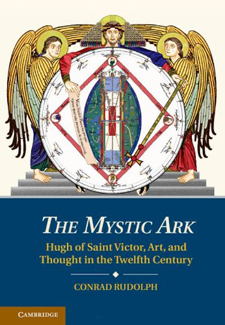
Conrad Rudolph. The Mystic Ark: Hugh of Saint Victor, Art, and Thought in the Twelfth Century (New York: Cambridge University Press, 2014).

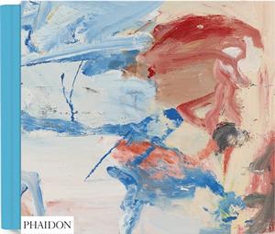
Judith Zilczer. A Way of Living: The Art of Willem de Kooning (New York: Phaidon, 2014).
New Conference Travel Grant for Speakers
posted by Emmanuel Lemakis — August 15, 2014
CAA is pleased to announce a new travel grant for emerging women scholars presenting as speakers at the Annual Conference. Established by Mary D. Edwards with the help of others, the CAA Travel Grant in Memory of Archibald Cason Edwards, Senior, and Sarah Stanley Gordon Edwards will support the costs of roundtrip travel (plane, train, and ground transportation) and accommodation for the CAA Annual Conference and for conference registration fees to women who are emerging scholars at either an advanced stage of pursuing a doctoral degree (ABD) or who have received their PhD within the two years prior to the submission of the application. The applicants must be presenting research papers at an art-history session at the conference, with a strong preference for papers on any topic pertaining to the art of ancient Greece and Rome, medieval Europe from 400 to 1400, or Europe and North America from 1400 to 1950.
Conference session chairs will identify and nominate appropriate candidates and facilitate the submission of the applications to CAA.
Art History Teaching Resources Seeks Lesson Plans
posted by Christopher Howard — August 14, 2014
Do you have a great lesson plan you want to take some time to codify and share? Funded by a Samuel H. Kress Foundation grant for digital resources, Art History Teaching Resources (AHTR), a peer-populated platform for instructors and a collectively authored online repository of art-history teaching content, seeks contributors for specific subject areas in the art-history survey. This is the second call for participation (the first went out in early 2014).
AHTR is particularly interested the following sections in art and architecture for publication in early fall 2014:
- Jewish and Early Christian Art and Architecture
- Byzantine Art and Architecture
- Islamic Art and Architecture
- Chinese Art and Architecture (early/pre-1279)
- Chinese Art and Architecture (after 1279)
- Japanese Art and Architecture (early)
- Japanese Art and Architecture (modern)
- Korean Art (early)
- Korean Art and Architecture (modern)
- Art and Architecture of Africa
- Early Medieval Art in Europe
- Romanesque Art and Architecture
- Gothic Art and Architecture
- Art of Pacific Cultures
- Eighteenth- and Early-Nineteenth-Century Art in Europe and North America
- Eighteenth- and Nineteenth-Century Sculpture
- Twentieth-Century Sculpture
AHTR is also interested in receiving proposals for thematic art-history survey lesson plans. The editors have already received plans that engage with, for example, “Race and Identity” and “Transnationalism and Citizenship.” Please propose a thematic plan germane to the survey-level class.
For each content area, AHTR seeks lecture and lesson plans similar to those developed for its sections on the Americas (pre-1300) and Feminist Art. (Please see a great example here.) Full template guidelines will be given for the sections to be included in each plan; writers will be expected to review and amend their plan (if necessary), once edited by AHTR. These plans, which will be posted to the AHTR website in fall 2014, are supported by $250 writing grants made possible by the Kress award.
AHTR is looking for contributors who:
- Have strong experience teaching the art-history survey and strong interest in developing thoughtful, clear, and detailed lesson plans in particular subject areas
- Are committed to delivering lecture content (plan, PowerPoint, resources, activities) for one to two (a maximum of two) content areas in a timely manner. Each content area will be supported by a $250 Kress writing grant.
- Are able to make a September deadline for submission and an early October deadline for any edits.
- Want to engage with a community of peers in conversations about issues in teaching the art-history survey
AHTR’s intention is to offer monetary support for the often-unrewarded task of developing thoughtful lesson plans, to make this work freely accessible (and thus scalable), and to encourage feedback on them so that the website’s content can constantly evolve in tandem with the innovations and best practices in the field. In this way, AHTR wants to encourage new collaborators to the site—both emerging and experienced instructors in art history—who will enhance and expand teaching content. It also wishes to honor the production of pedagogical content at the university level by offering modest fellowships to support digital means of collaboration among art historians.
Please submit a short, teaching-centered CV and a brief statement of interest that describes which subject area(s) you wish to tackle to teachingarthistorysurvey@gmail.com. These initial texts should be delivered to AHTR in September 2014. Collaboration on content for further subject areas will be solicited throughout 2014.
News from the Art and Academic Worlds
posted by Christopher Howard — August 13, 2014
Each week CAA News publishes summaries of eight articles, published around the web, that CAA members may find interesting and useful in their professional and creative lives.
Museum under Fire for Selling Its Art
If the Delaware Art Museum has a signature painting, surely it is Howard Pyle’s Marooned (1909), which shows a pirate near death, curled up on a sand bar, a tiny figure enveloped by a burning yellow sky. The painting refers to the old custom of punishing insubordinates by shoving them off a ship and onto an island. But these days, you can also view Marooned as a curiously precise description of the museum, which has been ostracized by its peers. (Read more from the New York Times.)
Writing the Book on Reinventing the Book
Over more than five centuries, books have evolved from collections of folded and gathered pages bound between covers to collections of screens connected to a digital cloud. Yet despite the rise in tablet and ebook usage, print persists. Advocates of hard copy continue to make physical books that fill what few bookstores remain. In other words, the state of books today is multifaceted. How can someone possibly make predictions about the future of books? (Read more from the Atlantic.)
Know the Vital Players in Your Career: You
In more than twenty years of working in academe, I have seen innumerable people sabotage their own careers through terrible mistakes. A bad outcome is sometimes due to chance or forces beyond your control, but the single most important factor determining whether you achieve your career goals, including tenure and promotion, is you. (Read more from the Chronicle of Higher Education.)
Giving Up the Good
Normally I’d be designing a syllabus right now. I’d be waiting to receive my finalized teaching schedule and telling interested students that they will learn which sections are mine as soon as I do. I’d be going over annotated texts to refresh my memory on topics for the first few weeks of class discussion. But none of that is happening this year. It’s not happening because I’m not teaching. Spring semester was my final term in the classroom as an adjunct. (Read more from Vitae.)
Tenure at Small Colleges
Advice on how to earn tenure usually focuses on what one would expect: teaching, scholarship, and service. Much of this advice is geared toward faculty who work at research-focused institutions. Generic advice columns about earning tenure and promotion offer some useful tips but often fail to capture the nature of faculty work and expectation so often found at small liberal-arts colleges, whose nature of faculty work is different from that at research-focused institutions. (Read more from Inside Higher Ed.)
Shared Shelf Commons Now Offers More Than 100,000 Free Files
The number of free images and video in Shared Shelf Commons, an open-access library of digital media, has now topped 100,000. The files come from institutions that subscribe to Shared Shelf, Artstor’s web-based service for cataloging and managing digital collections. (Read more from Artstor Blog.)
Socially Engaged Arts Undervalued, Say Practitioners
The majority of socially engaged arts practitioners feel their work is not valued by the sector as a whole and that there is not enough understanding of its benefits, a new survey has shown. The Paul Hamlyn Foundation’s ArtWorks Evaluation Survey of Artists also reveals that artists working in community, participatory, and socially engaged settings rely heavily on informal training, with codes of practice and standards neglected by employers, commissioners, and artists alike. (Read more from Arts Professional.)
Museums See Different Virtues in Virtual Worlds
This is an account about how two New York museums seized this dream—and how one of them clings to it still, while the other has found that the internet’s true value isn’t in being everywhere but in enhancing the here. They are the Metropolitan Museum of Art and the Brooklyn Museum, both ambitious cosmopolitan art institutions but with rather different reputations: the Met an isle in the global archipelago of leading museums, the Brooklyn Museum more rooted in local soil. Yet, for all their differences, they shared a world-conquering dream some years ago. (Read more from the New York Times.)
Committee on Women in the Arts Picks for August 2014
posted by CAA — August 10, 2014
Each month, CAA’s Committee on Women in the Arts selects the best in feminist art and scholarship. The following exhibitions and events should not be missed. Check the archive of CWA Picks at the bottom of the page, as several museum and gallery shows listed in previous months may still be on view or touring.
August 2014
Carolee Schneemann: History Works
Museo de Arte Contemporáneo de Castilla y León
Avenida de los Reyes Leoneses, 24, 24008, León, Spain
July 19–December 7, 2014
Carolee Schneemann is one of the most important artists to have emerged from the experimental avant-garde scene of New York in the early 1960s. Though finally acknowledged as a pioneer of feminist and performance art—an acknowledgement that had been for years unduly marred by her controversial, for many, use of her beautiful nude body—it is fair to say that the breadth and depth of her multiform contributions to the radical advancement of postwar art, including painting, film, performance, and multimedia installation, remains unstudied and unfathomed.
Redressing the uneven visibility of Schneemann’s work throughout her career by illuminating the diversity of its content, politics, and practices, Carolee Schneemann: History Works focuses on the constant engagement of her work with contemporary history while illuminating both the pacifist politics that complement her feminism and the critical ways in which Schneemann’s diverse and intricate engagement of print and TV images of death and crisis from the 1960s to today resists apathetic image consumption by seeking the active participation of the viewer. Mediated actuality offered a counterfoil for the sensate awakening proposed by Schneemann’s use of the body in art, already in 1963, with her kinetic theater group performance Newspaper Event in New York’s Judson Theater. It was her participation in the antiwar movement, however, that triggered her first use of media images (of war and death) in the mid-sixties, something that continues to characterize her collage aesthetic and multimedia practice. In 1965, for instance, Schneemann made a stunning “visual and sonic threnody,” the film-collage Viet Flakes in which appropriated images of the war in Vietnam were zoomed in and out under a collaged soundtrack composed by James Tenney. Two years later, in New York, the film was at the heart of her “kinetic theater” yet multimedia performance Snows (1967)—its scene of death and abandonment abstractly mimed by the performers—presented during Angry Arts Week: Artists against the Vietnam War. Performances of Snows and Night Crawlers, on the fringe of Expo 67 in Montreal, marked a high point in her political experiments in Kinetic Theatre and Expanded Cinema, during which film was extended beyond the screen to include collage and other forms of art.
Carolee Schneemann: History Works retraces the artist’s creations from the early performance Meat Joy to works contesting military interventions in Vietnam and the 1980s conflicts in Lebanon, concluding with recent pieces, several of which are being shown for the first time in Europe, including multimedia collages that variously echo the visual labyrinth of catastrophe in which we are plunged. Among them is the poignant photomontage Terminal Velocity, a monumental photographic montage that stands out as representative of a new form of historical painting, while also breaking another corporal taboo, that of the dead body, as put by Annable Teneze. With this work Schneemann records a real event while infusing a hard note of humanity across five columns of close-ups showing bodies falling from the World Trade Center towers on September 11, 2001. A hard-hitting creation based on a key moment in our current world, Terminal Velocity questions the effectiveness and the distortions of the media coverage of such tragic events, a question raised in such subsequent video installation works as More Wrong Things (2001) or Precarious (2009), in which spectators are submerged in a torrent of projected images and reflections.
Curated by Anabelle Teneze and begun last year at the Rochechouart Museum of Contemporary Art, which in 2012 bought Terminal Velocity, is accompanied by a fully illustrated catalogue with fresh views on the intersection of her art with history, feminism, and the empire of image, called Then and Now. Carolee Schneemann. Oeuvres d’Histoire, edited by Teneze and copublished with Analogues Éditions.
Carol Rama
Nottingham Contemporary
Weekday Cross, Nottingham, NG1 2GB, United Kingdom
July 19–September 28, 2014
Nottingham Contemporary presents a solo exhibition by Carol Rama, curated by Irene Aristizabal. Rama is an Italian self-taught artist born in 1918 in Turin, where she still lives. The expressiveness of Rama’s work means a direct result of the personal tragedies in her life. At age fifteen, Rama began her “vulgar” drawings as a form of healing when her mother was admitted to a psychiatric clinic. These psychosexual images based on her witnessing of female patients wandering the wards half naked were presented in her first exhibition in Turin in 1945. The exhibition was shut down, as her work was considered too radical for the Fascist-dominated Italy she grew up in. She didn’t receive international attention until the end of the 1990s, and her extensive career was recognized with the Golden Lion for Lifetime Achievement at the Venice Biennale in 2003.
Her autobiographical, explicitly female approach mirrors that of other artists of her time, such as Louise Bourgeois. In the 1960s, Rama began to use psychologically charged objects in her work, including doll’s eyes and animal claws, which led to her celebrated works with bicycle tires in the 1970s. Rama mentioned that rubber stimulated her more than all the other materials. She was attracted to the sensual, fleshlike quality of rubber and was interested in its character and temperament that suggest a feeling of unease. But her working with rubber refers once again to personal memories: Rama’s father owned a bicycle factory that failed. He committed suicide when he was declared bankrupt in 1942. The artist states that these works express the sadness she feels at his loss, a sadness that will never pass.
The exhibition features over fifty works and a contextual program that includes presentations of Shut Up, Actually Talk, a radical feminist freak-show by the Italian performance artist Chiara Fumai, and Inside Carol Rama, a selection from a series of ninety photographs taken by Bepi Ghiotti over the last two years in Rama’s legendary studio-home.
Annette Wehrmann: We’re Watching TV Because We Can’t Afford a Revolution
Badischer Kunstverein
Waldstraße 3, 76133, Karlsruhe, Germany
July 11–September 7, 2014
Badischer Kunstverein presents an extensive solo exhibition dedicated to Annette Wehrmann (1961–2010), curated by Ort des Gegen e.V. and Anja Casser. Ort des Gegen e.V. was founded in Hamburg in 2011 to preserve the artistic estate of the late artist. Wehrmann lived and worked in Hamburg. Throughout her diverse practice, she has developed a unique artistic position. Somewhere between sculpture and intervention, Werhmann fused conceptual and performance art methods with the language of the Situationist International, feminism, and science fiction. Her oeuvre, a distinctive mix of anarchic prose, dry humor, and intellectual discourse, reflects the political development, the daily life, and the art scene of the 1990s. Wehrmann had an important position in her generation and what became the art scene of post-Wall Berlin.
Werhmann’s drawings, sculptures, installations, performances, videos, and texts speak to the reader about the life of an artist for whom every observation becomes material for her work. Voicing her unease about the world, Wehrmann underlined an independent creative position that not only inscribed in her art, but also in her life.
Under the title We’re Watching TV Because We Can’t Afford a Revolution, this exhibition brings together a range of the artist’s individual pieces and series of works, including the sculptural works Fußbälle/Kugeln (1991) and her photographic series Blumensprengungen (1991–95), in which the artist literally exploded a number of flowerbeds arranged in urban locations, and UFO architectures. These assemblages of cheap materials, influenced by feminist science-fiction literature, are given a central role in the exhibition. They were described by the artist as a “retreat into oneself” and a “desire for a better, different life.”
Roni Horn: Everything was sleeping as if the universe were a mistake
Fundació Joan Miró
Parc de Montjuïc, 08038, Barcelona, Spain
June 20–September 28, 2014
Fundació Joan Miró and Obra Social “la Caixa” present Everything was sleeping as if the universe were a mistake, a solo exhibition by Roni Horn (b. 1955, New York) conceived by the artist herself. Borrowing the title from Fernando Pessoa’s The Book of Disquiet, the exhibition explores the different media, major themes, formats, and approaches that Horn has used over the past twenty years. Through this huge installation comprised of sculptural works, photographic series, working drawings, and a floor piece, Horn intends to offer an overall experience. The works selected represent a compendium of the elements that underpin the creative process of the American sculptor, installation artist, draughtsman, photographer and writer: people, the landscape, light, words, water, presence, glass, faces, change, forms, series, spaces, the appearance of the self, and time.
The show includes text-oriented sculptural installation from the White Dickinson series; the photographic series You are the Weather, Part 2, which explores the essence of water as well as questions of human identity and appearance; Still Water (The River Thames, for Example) and Dead Owl; as well as a series of self-portraits a.k.a. and Her, Her, Her and Her, a voyeuristic mosaic composed with individual photographs taken in a women’s locker rooms at a 1928 Icelandic indoor swimming-pool complex. Here, Horn uses repetition to examine the relationship between individual and collective identity and to create an endless labyrinth of gazes and disenchanted desire.
The exhibition also includes Horn’s recent work Untitled as the centerpiece of the overall installation, four videos about her work, and a floor piece entitled Rings of Lispector (Água Viva) that combines drawing and literary quotes. Since drawing has been an essential aspect of Horn’s creative practice over the last thirty years, the exhibition includes a room set aside for working drawings.
Feminine Futures: Avant-Garde Female Artists in the Fields of Performance and Dance
Le Consortium
37 rue de Longvic, 21000, Dijon, France
June 21–September 28, 2014
The Consortium Art Center presents the exhibition Feminine Futures, an illuminating survey of radical experimentation with dance and performance by female avant-garde artists from 1870 to 1970—itself a potent and understudied prelude of feminist and performance art. Curated by the artist and curator Andrien Sina and first staged in the context of 2009 Performa in New York, Feminine Futures, in its latest iteration in France, comprises more than six hundred items—an incredible collection of photographs, letters, drawings, manifestos, programs, and first editions that sheds light on the unexplored gendered margins of twentieth-century avant-gardes in which overlooked origins of body art and interdisciplinary vanguard art practices seem to lie. “The history of the early-twentieth-century female avant-gardes, concerned with the body, dance, or performance, was forged independently of dominant artistic movements,” says the curator of the exhibition, as “the female figure, sublimated and idealized through the literary fantasies of Symbolists or hysterical due to the earliest ‘psychopathological’ investigations, gave way to an unequalled degree of expressiveness and freedom.” “The appropriation by women of their own modernity and the invention of multiple hypotheses as regards the Future Woman,” he continues, “open up new perspectives, suggesting a radical transcendence of the fine arts disciplines via actions where the body was seen in itself as a fully fledged work of art.”
Unveiling hidden “minor practices” in the margins of the most well-known artistic movements, or overlooked signs of dissidence lurking into known works of art, including manifestos within manifestos and singular heterotopias within larger isotopias, the exhibition illuminates the “multiple origins of modernity in unexplored areas of ephemeral action” as well as the affinities amidst a great assortment of female artists who “lived their avant-garde experiments as a response to deep forces rooted in the psychology of desire and the reconstruction of a myth of the feminine” that subverted its previous subservience and sought their political empowerment. A great example of the many brought to light in this exhibition is “the manifesto of lust” by Valentine de Saint Poine—the first and only woman to be part of the executive board of the Futurist movement—whose promulgation of “feminine action” barely fit the traditional art categories (poetry, painting, sculpture, and music) of the male protagonists of Futurism. Advocating that “we must turn lust into a work of art” since “the flesh creates as the spirit creates,” Feminine Futures stands for an artistic and political attitude of greater impact than the production of objects, distinguishing itself from the feminism of the times by “introducing an emancipated equivalent in the artistic arena where highly visible strategies of provocation and paradigm shifts are required.”
Artists in the exhibition include: Loïe Fuller (1862–1928), Isadora Duncan (1877–1927), Anna Duncan (Anna Dentzler, 1894–1980), Valentine de Saint-Point (1875–1953), Ruth St. Denis (1878–1968), Gertrude Hoffman (1871–1966), Anna Pavlova (1881–1931), Vera Petrovna Fokina (1886–1958), Ida Rubinstein (1888–1960), Désirée Lubowska, Milada Mladova (b. 1921), Roshanara (Olive Craddock) 1894–1926), Jia Ruskaja (Evgenija Borisenko) (1902–1970), Giannina Censi (1913–1995), Evan Burrows Fontaine (1898–1984), Mary Wigman (1886–1973), Gret Palucca (1902–1993), Grete Wiesenthal (1885–1970), Hedwig Hagemann (Valeska Gert) (1892–1978), Vera Skoronel (1906–1932), Clotilde von Derp (1892–1974), Niddy Impekoven (1904–2002), Gisa Geert (1900–1991), Sent M’Ahesa (Else von Carlberg) 1883–1970), Katherine Cornell (1893–1974), Leni Riefenstahl (1902–2003), Tashamira (Vera Milcinovic) (1904–1995), Tilly Losch (1903–1975), Margaret Morris (1891–1980), Nini Theilade (b. 1915), Yvonne Georgi (1903–1975), Maja Lex (1906–1986), Martha Graham (1894–1991), Doris Humphrey (1895–1958), Hanya Holm (1893–1992), Ruth Page (1899–1991), Myra Kinch (1904–1981), Gertrude Lippincott (1913–1996), and others.
News from the Art and Academic Worlds
posted by Christopher Howard — August 06, 2014
Each week CAA News publishes summaries of eight articles, published around the web, that CAA members may find interesting and useful in their professional and creative lives.
Help Desk: Race and Voice
I am a writer and curator. I’m also a woman of color. How do I tell an editor that I’m entitled to my opinion—even if it brings up issues of race, gender, and identity—without being pegged as the “angry brown woman”? (Read more from Daily Serving.)
How to Avoid Being Published
I enjoyed Maureen Pirog’s recent piece “How to Get Published,” which is filled with common sense and good advice. Back in 2009, I too posted some publishing tips. I wish I could report that things have gotten better since then, but alas, from what I’ve observed with several journals, magazines, and newspapers with which I’m associated, writing in the humanities remains dire. Want to avoid being published? Here’s how. (Read more from Inside Higher Ed.)
Is Deskilling Killing Your Arts Education?
In 1974, when I was a freshman art student at a small liberal-arts college in Wisconsin, I wanted to learn to draw the human figure. One untenured professor took me under his wing and encouraged that process, but the department chair, an alcoholic abstract painter, stumbled into the studio late one evening while I was studying a plaster head that showed the muscles of the face. He slowly looked at me, then at the head. “This is not art!” he screamed, lifting the cast high and smashing it on the cement at his feet. (Read more from the Huffington Post.)
The Copyright Office’s Recent Fee Changes
For the first time since 2009, the US Copyright Office instituted a number of fee changes that took effect on May 1, 2014. For a standard registration, the Copyright Office increased the online application fee from $35 to $55 and raised the paper application fee from $65 to $85. The office stated that these increases will allow it to recover a larger percentage of its costs. (Read more from the Center for Art Law.)
Tate Will Put Women Artists First and Foremost
Women artists come to the fore next year at Tate with shows devoted to Sonia Delaunay, Agnes Martin, Barbara Hepworth, and Marlene Dumas. The first retrospective in the United Kingdom dedicated to the French avant-garde artist Delaunay is due to open in spring 2015 at Tate Modern. Delaunay, who produced several large-scale mural paintings for the 1937 Paris International Exhibition with her husband Robert, is known for her vividly colored textiles emblazoned with striking geometrics. (Read more from the Art Newspaper.)
Why Advertise Research Jobs If You’ve Already Picked Your Winner?
Coming to the end of yet another fixed-term research contract, it was time to start applying for my next one. I was lucky this time: my senior colleagues had just won a large grant, and one of the research assistant jobs was perfect for me. I applied and was offered the position. Great! But it’s not really that great, because the principal investigator had all but offered me the job in advance. The other fifty-plus applicants didn’t really stand a chance. (Read more from the Guardian.)
The Peer-Review Jerk Survival Guide
My academic friends, unless you’re part of a peer-review fraud syndicate, you will almost certainly have to deal with a jerky reader’s report. It might make you cry. It might make you get into a car accident. It might launch into a perplexing and irrelevant tirade about how using the digitized version of a Library of Congress source (rather than, presumably, traveling to the District of Columbia with all of your spare money) is a signifier of “scholarly sloth.” It may make you want to punch through a wall. (Read more from Vitae.)
How to be Supportive of an Artist
My sister is an artist. She’s really talented and I try to help and support her as much as possible by creating a peaceful and quiet environment for her to work in and by letting her know about gallery and museum exhibits or networking opportunities. It seem like whatever I do annoys her. What am I doing wrong? (Read more from KCET.)
Sam Hunter: In Memoriam
posted by CAA — July 30, 2014
David E. Nathan is the author of this obituary.
Sam Hunter, the founding director of the Rose Art Museum, whose keen insights into the art of his day allowed him to build the museum’s acclaimed collection of modern and contemporary art, died on July 27, 2014, in Princeton, New Jersey. He was 91.
Financed by a $50,000 gift from Leon Mnuchin and his wife, Harriet Gevirtz-Mnuchin, Hunter made acquisitions in the early 1960s that established the Rose as a major force in the art world. The works he collected, masterpieces by Jasper Johns, Robert Rauschenberg, Roy Lichtenstein, Andy Warhol, and other leading artists, form the core of the Rose’s beloved collection and continue to set the tone for the museum’s collecting and exhibition practices.
“Sam Hunter played an integral role in the early days of the Rose Art Museum, and his prescient purchases propelled the museum into the consciousness of the art world just a few years after its founding,” said Frederick M. Lawrence, president of Brandeis University. “The way in which he built the early collection, a discrete number of outstanding acquisitions, none for more than $5,000, is one of the iconic stories of the early years of Brandeis University. His impact on the Rose in particular and the university in general continues to this day.”
Hunter came to Brandeis in 1960 as director of the Poses Institute of Fine Arts, and shortly thereafter become the first director of the Rose. Organizers of the 1962 World’s Fair in Seattle approached him about curating an exhibition for the Fine Arts Pavilion. The resulting collection of 114 works from 87 artists, including many by artists whose work he would later purchase for the Rose, was subsequently displayed at Brandeis.
In late 1962, Mnuchin called from New York to announce that he and his wife had inherited $50,000, which they wished to donate to the Rose to fund a contemporary art collection. Hunter and Mnuchin immediately began exploring the galleries of New York, often with Robert Scull, a friend of Mnuchin and a prominent collector of Pop art.
“The guiding principle of the selection was individual quality rather than tendency,” Hunter wrote for the brochure accompanying the collection’s exhibition. “As a matter of policy, the collection focused on younger artists with only a token representation of the older generation…. Abstract Expressionism is the collection’s point of departure, taken at a point of subtle but significant transition.”
Although Hunter and Mnuchin set a limit of $5,000 per painting, they managed to gather early and important works by Claes Oldenburg, Jim Dine, Tom Wesselmann, James Rosenquist, Adolph Gottlieb, Robert Indiana, Ellsworth Kelly, Marisol, Morris Louis, Johns, Rauschenberg, Lichtenstein, Warhol, and many others.
“It is very difficult to imagine a more significant founding director than Sam Hunter has proved to be,” said Christopher Bedford, the Henry and Lois Foster Director of the Rose. “Just as Brandeis established its academic reputation with incredible rapidity, so Sam made sure the same happened to the Rose through the acquisitions he made and the exhibitions he organized. The status we enjoy today is in large part due to his vision in the 1960s.”
Bedford also pointed out that Hunter was a towering figure in both curatorial and academic spheres. “He had one foot in the world of museums and one foot in the world of scholarship, a model for how the Rose thinks of itself today,” he said. “He was as much a director/curator as he was a scholar, and that dual commitment continues to represent the Rose in the work we do today.”
Upon learning of Hunter’s death, Bedford decided to name the Rose’s newly established emerging artists fund in his memory. “The fund lacked a name,” Bedford said, “and today it became very apparent what the name of the fund should be. It seems incongruous to apply this term today, but the Gevirtz-Mnuchin fund was an emerging artists fund in the early 1960s: Roy Lichtenstein, Jasper Johns, and Ellsworth Kelly were the emerging artists of their day. It’s only just that we would perpetuate Hunter’s legacy with a fund that boasts his name.”
A native of Springfield, Massachusetts, Hunter graduated from Williams College in 1943. He served in the United States Navy from 1943 to 1946, rising to the rank of lieutenant junior grade and receiving five battle stars.
Hunter began his professional art career in 1947, when he joined the New York Times as an art critic for a two-year stint. He studied at the University of Florence through the Hubbard Hutchinson Fellowship, earning a certificate of studies in 1951. He spent a year as an editor with art publisher Harry N. Abrams before serving as editor of Arts magazine.
In 1955, Hunter was appointed associate professor of art history at the University of California, Los Angeles, but left in 1956 to become curator of painting and sculpture at the Museum of Modern Art in New York. Two years later, he moved to the Minneapolis Institute of Arts as chief curator and acting director.
After leaving Brandeis in 1965, he was appointed director of the Jewish Museum and lectured as a visiting professor at Cornell University. In 1969, he became professor of art history at Princeton University and curator of modern art at the university’s art museum. He retired from Princeton as professor emeritus in 1991.
Hunter is survived by his wife, Maïa; their son, Harry; two daughters, Emmy and Alexa, from his previous marriage to Edys Merrill; and one grandchild, Isabella. A funeral service was scheduled for July 30 in the Princeton University Chapel.
News from the Art and Academic Worlds
posted by Christopher Howard — July 30, 2014
Each week CAA News publishes summaries of eight articles, published around the web, that CAA members may find interesting and useful in their professional and creative lives.
Postdoctoral Fellowships in the Humanities at Universities and Research Institutes in the US and Germany
The Volkswagen Foundation aims to strengthen transatlantic academic relations, especially in the field of the humanities, via a funding initiative called Postdoctoral Fellowships in the Humanities at Universities and Research Institutes in Germany and the USA. For this project, Volkswagen will work closely with the New York–based Andrew W. Mellon Foundation. (Read more from Volkswagen Stiftung.)
Report for Detroit Creditor Nearly Doubles Value of DIA Collection at $8.5 Billion
A new report analyzing the collection at the Detroit Institute of Arts almost doubles the previous estimates of what the works are worth, putting their value at $8.5 billion. The new fifty-page assessment, a copy of which was obtained by the Detroit News, was prepared in just two weeks by the appraiser Victor Wiener of New York’s Victor Wiener Associates. (Read more from the Detroit News.)
Fame, Fortune, and the Female Artist
I have collected art, and been involved with artists and the art world, for almost fifty years. Through all that time, I have wondered why female artists have less success, fewer exhibitions, and less attention than male artists. I own works by women artists; it is hard for me to see, literally to see, how women and men differ in the quality of their work. Why are women artists less known and less admired? (Read more from the Huffington Post.)
Vernacular Criticism
Yelp does a lot of things, including a number of things that make people hate it. But one thing it does is provide a platform for vernacular art criticism, a different kind of writing about art and the public spaces where it is seen. Vernacular criticism can reject the guidelines set by cultivated artistic tastes, or it can guilelessly speak in ignorance of them, or in its naïve fascination with them can inadvertently expose their falseness. (Read more from the New Inquiry.)
Are MFAs Ruining Art?
This summer has seen another bumper year of MA and MFA students. As ever, the work coming from international art schools is good, bad, and everywhere in between. There is also an increasing professionalization of the artists coming from the academic system. Degree-show presentations can resemble solo booths at art fairs. Often the work presented is ready to slip immediately into the gallery system. The question remains: Is this a good thing? (Read more from Artsy.)
Spotting a Bad Adviser—and How to Pick a Good One
Universities have a lot of names for the professor who works with a graduate student on a thesis or dissertation and later signs off on it. The main titles are “adviser,” “director,” and, more rarely, “sponsor.” Some universities, including my own, call a professor in this position a “mentor.” I like “adviser” because I think that’s the best description of the job when it’s being done well. (Read more from the Chronicle of Higher Education.)
Low Pay, Monotonous Work: Are Artist Assistant Positions Worth the Trouble?
In the course of a normal workday, Sharela Bonfield may order supplies, supervise interns, clean, answer the telephone, arrange meetings, create PowerPoint displays, handle paperwork, administer archives, and do “whatever else needs to be done.” It is difficult to say exactly what Bonfield’s job actually is, because she has so many responsibilities, but her title is clear enough: artist’s assistant. (Read more from Gallerist.)
I Didn’t Get the Job. Can I Ask Why?
If you made it to the campus-visit stage, then yes, in my opinion, you can contact the search-committee chair or department chair and ask for some feedback on your candidacy. But there’s a caveat: you have to stick to general, nondesperate sorts of questions. Questions like: “I would like to ask if you can provide any feedback on my materials or visit that would provide insight as I move forward in my job search.” (Read more from Vitae.)
Recent Deaths in the Arts
posted by CAA — July 25, 2014
In its periodic list of obituaries, CAA recognizes the lives and achievements of the following artists, historians, teachers, curators, dealers, philanthropists, and others whose work has significantly influenced the visual arts. Of special note is a text on a distinguished scholar of nineteenth- and early-twentieth-century Russian art, Grigorii Iurevich Sternin.
- Roger Ackling, a British sculptor who was a contemporary of Richard Long, Hamish Fulton, and other artists who graduated from Saint Martins School of Art in the 1960s, died on June 5, 2014. He was 66 years old
- Jack Agüeros, a writer, activist, and the former director of El Museo del Barrio in New York, died on May 4, 2014. He was 79
- Eppie Archuleta, a New Mexican weaver who worked in fiber and fabric, passed away on April 11, 2014, age 92. In 1985 she received a National Heritage Fellowship from the National Endowment for the Arts, the nation’s highest honor in the folk and traditional arts
- Gordon Bennett, a pioneering Australian artist whose work challenged race, power, history, and social conventions, died on June 3, 2014. He was 58 years old
- Tito Enrique Canepa Jiménez, a Dominican painter who lived and worked in New York after immigrating there in the 1930s, died on February 11, 2014. He was 97
- Lynne Cohen, an award-winning Canadian photographer who had taught at the University of Ottawa from 1974 to 2005, passed away on May 12, 2014. She was 69
- Deborah Deery, an art educator and academic administrator at Moore College of Art and Design, died on August 19, 2013. She was 49 years old
- Joseph Doyle, an artist and teacher based in Houston, Texas, died on July 9, 2014, at age 54
- Lee MacCormick Edwards, a philanthropist as well as a lecturer in art history, a photographer, and an author, passed away on April 19, 2014. She was 76
- John Clovis Fontaine, chairman emeritus for both the Samuel H. Kress Foundation and the National Gallery of Art in Washington, DC, died on September 23, 2013. He was 81 years old
- Edythe Goodridge, a curator and the former director of visual arts for the Canada Council, died on June 4, 2014. She was 77
- Cornelius Gurlitt, the son of a Nazi art dealer who secretly hoarded millions of dollars’ worth of modern art for decades, died on May 6, 2014. He was 81
- Anne Hollander, a celebrated author and a historian of fashion and costume, died on July 6, 2014. She was 83 years old
- Hans Hollein, an Austrian architect and educator who won the Pritzker Prize in 1985, passed away on April 24, 2014. He was 80
- On Kawara, a Conceptual artist and painter whose work addressed the passage of time, died in late June 2014. He was 81 years old
- Maria Lassnig, an Austrian figurative painter whose retrospective is on view at MoMA PS1, died on May 6, 2014, age 94
- Stanley Marsh, an eccentric Texan millionare who commissioned the Cadillac Ranch outside Amarillo, died on June 17, 2014. He was 76
- Cynthia Mills, the executive editor of the Smithsonian Institution’s journal American Art, died on May 1, 2014. She was 67 years old
- Robert Olsen, a Los Angeles–based painter of outdoor urban scenes, died on April 14, 2014. He was 44.
- Jennifer Wynne Reeves, an abstract painter based in New York, passed away on June 22, 2014. She was 51
- Nan Rosenthal, a curator for the National Gallery of Art and the Metropolitan Museum of Art, died on April 27, 2014, at the age of 76
- Jerry Rothman, a Los Angeles–based sculptor who was a member of a ceramics movement called Otis Clay, died on June 5, 2014, at age 80
- Frederic Schwartz, an architect, city planner, and the designer of several memorials for September 11, died on April 28, 2014. He was 63
- Claude Simard, a cofounder and director of Jack Shainman Gallery in New York, died on June 24, 2014, at the age of 57. Simard was also an artist and performer
- Grigorii Iurevich Sternin, a distinguished scholar of nineteenth- and early-twentieth-century Russian art, died on November 23, 2013, age 86. CAA has published a special text on Sternin
- Massimi Vignelli, an Italian-born graphic designer who created the 1970s map for New York’s subway system, died on May 27, 2014. He was 83
- Ultra Violet, an artist, actor, author, and Andy Warhol superstar, passed away on June 14, 2014. She was 78
- Melvin J. Wachowiak Jr., a senior conservator for the Smithsonian Institution’s Museum Conservation Institute, died on May 28, 2014. He was 56
- Khin Maung Yin, an influential modernist Burmese artist who painted colorful portraits, passed away on June 10, 2014, age 76
Read all past obituaries in the arts in CAA News, which include special texts written for CAA. Please send links to published obituaries, or your completed texts, to Christopher Howard, CAA managing editor, for the next list.
News from the Art and Academic Worlds
posted by Christopher Howard — July 23, 2014
Each week CAA News publishes summaries of eight articles, published around the web, that CAA members may find interesting and useful in their professional and creative lives.
Artist Resale Rights Gain Support in US Congress
A bill that would bring droit de suite, also known as artist resale royalty rights, to the United States is gaining momentum in Congress. The bill has gained six cosponsors in the past three weeks, including Representatives Sam Farr of California and Janice Schakowsky of Illinois. (Read more from the Art Newspaper.)
Arts Companies Must Adapt to Changes at Facebook, Report Reveals
For some time now, marketers in the arts and culture sector have been worrying that updates to Facebook have resulted in their messages reaching fewer and fewer people. A new report released by the digital consultancy firm One Further reveals that these fears are justified and that a new approach to Facebook page management may be necessary. However, it’s not all doom and gloom: opportunities still exist, and arts marketers are adapting accordingly. (Read more from the Guardian.)
Revise and Resubmit!
I’m sure you’ve heard the adage “publish or perish.” In order to get tenure—or, as the abysmal job market begets hyperprofessionalization, to be considered for a job at all—a scholar must have a certain amount of articles appear in “peer-reviewed” academic journals. These journals—Obscure Subfield Quarterly, One-Word Pretentious Greek Thing, etc.—usually have a circulation of about three hundred, and those articles upon which careers depend are usually read by exactly three people. (Read more from Slate.)
How Abstract Art Can Change the Way You See Waste and Consumption in America
Abstract artwork is sometimes misinterpreted as being flatly indiscernible, when in fact it’s often simply enchanting and destabilizing, requiring a moment of contemplation from the viewer. This exhibition seeks not only to demystify abstract art but also consumption, a term that, despite its looming unwieldy aura, can be combatted in the comforts of your home, and in the confines of your humble garbage bin. (Read more from Huffington Post.)
How Much Are Curators Really Paid?
Many in the art world were staggered by recent reports that the Italian curator Germano Celant is being paid €750,000 to organize a pavilion for the Milan Expo 2015. Celant’s fee—and the incredulity it provoked—raises questions about how much curators are typically paid for organizing biennials and large-scale international exhibitions. (Read more from the Art Newspaper.)
The Digital Art Historian’s Toolkit
Lists of tools like this one invariably age poorly. For an always-up-to-date, much more comprehensive list of useful digital tools, see the excellent DiRT Directory. However, we felt it might be useful to our participants to have a snapshot of tools that could be useful to art historians specifically. We’ve focused here on free, off-the-shelf tools that don’t require programming knowledge and might be particularly interesting to people who work with a lot of images. (Read more from Beyond the Digital Slide Library.)
Blaming the Victim: Ladder Faculty and the Lack of Adjunct Activism
The adjunct labor movement has necessarily prioritized the working conditions of part-time faculty, many of whom are living below the poverty line. But adjuncts need not be card-carrying union members to benefit from these victories, which have transformed academia’s once-invisible underclass into its most vocal majority. The inequalities in academic employment may still be firmly in place, but thanks to these unionization efforts, contingent faculty are now active participants in the national conversation about the future of higher education. (Read more from Vitae.)
A Banker, a Scholar, and the Invention of Art History: The Story of the Warburg Brothers
Emily J. Levine’s new book details the contradictions and confusions of Jewish life in Hamburg, with ancient religious traditions vying with modern currents of thought, and ancient caution competing with tentative hopes when Jews at last began to breach the barriers of anti-Semitism in German society. Focusing on Aby Warburg’s library and two of its most illustrious users, the philosopher Ernst Cassirer and the art historian Erwin Panofsky, she reveals the ways in which the distinctive qualities of a single place conditioned the development of ideas in a larger sense to create a “Hamburg School” of thought, a school intimately connected with Jewish experience in Imperial and Weimar Germany. (Read more from the New Republic.)