CAA News Today
Act Now: Paul Ryan Calls for Elimination of Funding for NEH
posted by CAA — April 01, 2014
The National Humanities Alliance sent the following email on April 1, 2014.
Act Now: Paul Ryan Calls for Elimination of Funding for NEH
Dear Humanities Advocate,
This morning, Paul Ryan called for the complete elimination of funding for the National Endowment for the Humanities in his FY 2015 budget resolution.
Help defeat the Ryan Proposal today by urging your elected officials to join a bipartisan effort to support NEH. By signing on to the Senate Dear Colleague letter, your Senators can demonstrate support for NEH funding to the appropriations committee members that hold the agency’s future in their hands.
Click here to send our message to your Senators today. They are waiting to hear from you.
If you sent a message last week, thank you. If you haven’t sent one yet, it is critical that you act now. The deadline for Senators to sign on to the letter is Friday, April 4.
Thanks for your help!
Stephen Kidd, Ph.D.
Executive Director
National Humanities Alliance
(202) 296-4994 x149
Lilianne Lugo: 2014 International Travel Grant Recipient
posted by Janet Landay, Program Manager, Fair Use Initiative — April 01, 2014
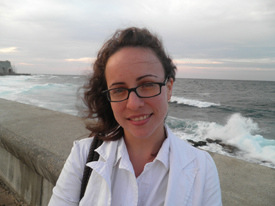
After last month’s Annual Conference, recipients of CAA’s 2014 International Travel Grants were invited to contribute short articles reflecting on their experiences in Chicago. What follows is a personal reminiscence from Lilianne Lugo, an educator, administrator, and playwright based in Havana, Cuba. Lugo studies the relationship between the history of art and the history of theater, as well as the intersections of contemporary art practice and the performing arts. She is professor and vice dean of research and postgraduate studies at the Universidad de las Artes in Havana, Cuba.
Saudade
The persistence of melancholy. The persistence of the friends I have released to oblivion. The persistence of the memories of other cities, other people that I miss. I walk in an unknown city. I can barely breathe, it’s so cold. My best friend wrote me an email. “What are you doing?” he asks. “I miss you….” But when I wrote him back I can only send him a picture of my foot on the snow … it’s my way of embracing the spirit of life, my way of saying that I am seizing and enjoying the opportunities that suddenly emerge in our lives and change it forever. Just a few moments in life can be counted like that, and this is one of them.
First time in the snow. From the plane I can see the frozen ground. Behind I have left the unbearable heat of Havana and the noise of its streets. First time in Chicago. First time in the United States. First time at CAA’s conference. So many impressions, so many new people. I can write only in first person singular. I can’t speak for the others. I can’t talk about what I haven’t seen before.
For a couple of days the Hilton Chicago is invaded by hordes of art historians, artists, professors, and recruiters. It’s a huge event, and the whole city seems to inhale a whirlwind of art. Exhibitions, talks, panels, and informal gatherings that interrupt the rhythm of daily routines and establish a different understanding of reality. In a world of white ground, how to conjure the fire of masterpieces? How can we understand and explain (if that’s possible) from a warm and carpeted hotel the always ungraspable world of art and art history?
For twenty people each year, the College Art Association and the Getty Foundation make it possible to attend this conference. That means twenty people in the world receive a gift to come to the States and share and learn what we know about the art in our countries with colleagues from all over the US. This time the group is composed of people from Egypt, Romania, Bulgaria, Russia, South Africa, Portugal, Poland, Cuba, Argentina, Chile, Brazil, Uganda, Ghana, Cameroon, Estonia, Pakistan, Malaysia, Bangladesh, Nigeria, and Croatia.
Some images of those days come to my mind: the day of the preconference, in which each of us presented a paper about our research, and the discussion afterward about so many different topics. Art Shay’s exhibition My Florence at the Museum of Contemporary Photography at Columbia College Chicago that we, as a group, visited together. In the library of the college we saw the photographs and the artist himself. It was the story of his life, the little moments he shared with his wife and family, and it was so impressive to see him, with the energy and look that only years can bring. Or the exhibition at the DePaul Art Museum, The Sochi Project: An Atlas of War and Tourism in the Caucasus, about the 2014 Winter Olympic Games in Sochi, Russia, and the environment of that particular area that, in the former days of Communism, was the recreational spot for Joseph Stalin. And then we walked with our graduate-student host to see the Lakeview neighborhood nearby. Or the meetings with so many bright and marvelous people….
Then, when the conference ended, another trip was waiting for us, to the Clark Art Institute in Massachusetts. From the plane’s window we could see Manhattan and the Statue of Liberty; at LaGuardia airport we said goodbye to our fellow travel-grant recipient Mahmuda Khnam, who was feeling sick and couldn’t travel to Williamstown. We talked on the drive north and shared our opinions, we talked about everything: Brazilian soap operas, LGBT rights, curatorial practices, communism, incomes, outcomes, food, and snow. Then, a warm welcome at the Clark, a very special place in a beautiful setting where studying takes place in real luxury. Outside it snowed all day long, but inside the Clark was joyful and cozy, as we were received in that sanctuary of knowledge like kings and queens.
Now, in the sun again, I remember with joy the city of Chicago, the museums, the extraordinary collection of the Art Institute, the people of CAA, my fellow grant recipients, and, of course, all that I have learned about not only specific issues related to my research, but also the methodologies and approaches that many colleagues are currently using. I learned, too, about how things work in the professional world of art and art history in the United States.
I began this essay talking about melancholy. It’s the feeling I get when I think about those moments during CAA’s conference. Portuguese had a beautiful word to describe it: saudade. And that would be the best word, because even in Spanish nostalgia or melancolía are not the same. I cherish those moments. While I am thinking about what lies ahead, I am eager to come back and share with my new colleagues the fruits of another year of work.
Image Caption
Lilianne Lugo.
New Issue of Art Journal
posted by Christopher Howard — March 31, 2014
 “Sexing Sculpture: New Approaches to Theorizing the Object” is the forum topic in the latest issue of Art Journal, now in the mail to subscribers. The forum was organized by Jillian Hernandez and Susan Richmond and features essays by Rachel Middleman, Nicholas Hartigan and Joan Kee, and Gordon Hall; artist portfolios by Rachel Lachowicz and Lily Cox-Richard; and a conversation between Jennifer Doyle and David Getsy.
Jeanne Dunning’s “Tom Thumb, the New Oedipus,” this issue’s artist’s project, is the winner of the 2013 Art Journal Award. The jury that made the award wrote that the project “creatively and cleverly melds aspects of narrative storytelling, visual research, and textual analysis to cast new light on the enduring value of psychoanalytic models through a close reading of the folk-tale character Tom Thumb. It does so with humor and clarity, and is at once a pleasure to read and a careful prod to the imagination.”
“Queer Formalisms: Jennifer Doyle and David Getsy in Conversation” is available as free content on Art Journal’s website. Also available in full online is Tina Rivers’s review of Are You Experienced? How Psychedelic Consciousness Transformed Modern Art by Ken Johnson and Psychedelic: Optical and Visionary Art since the 1960s, edited David S. Rubin.
Art Authentication Protection Bill
posted by Linda Downs — March 27, 2014
An important and potentially precedent-setting Bill (S13.04) has been introduced into the New York State Assembly: http://assembly.state.ny.us/leg/?default_fld=&bn=S06794&term=2013&Summary=Y&Actions=Y&Text=Y. This legislation has been introduced to offer protections to art historians, art curators, independent art scholars, conservators, and other qualified experts who submit good faith opinions on the authenticity, attribution, or authorship of works of art from unsubstantiated law suits. This Bill has the support of the New York City Bar Association Art Law Committee and the Center for Art Law in New York.
Your Assemblyman/woman in the New York State Assembly needs to hear directly from you. Please send a letter, email or phone message supporting passage of this Bill by the New York State Assembly: http://assembly.state.ny.us/mem/.
Sincerely,
Anne Collins Goodyear, President
Linda Downs, Executive Director and CEO
Millard Meiss Publication Fund Seeks Two Jury Members
posted by CAA — March 27, 2014
 CAA seeks nominations and self-nominations from two individuals with specializations in medieval, Renaissance, or Baroque art to serve on the jury for the Millard Meiss Publication Fund for a four-year term, July 1, 2014–June 30, 2018. Candidates must be actively publishing scholars with demonstrated seniority and achievement; institutional affiliation is not required.
The Meiss jury awards grants twice a year to support the publication of book-length scholarly manuscripts in the history of art, visual studies, and related subjects that have been accepted by a publisher on their merits but cannot be published in the most desirable form without a subsidy. CAA reimburses jury members for travel and lodging expenses in accordance with its travel policy.
Candidates must be current CAA members and should not be serving on another CAA editorial board or committee. Jury members may not themselves apply for a grant in this program during their term of service. Nominators should ascertain their nominee’s willingness to serve before submitting a name; self-nominations are also welcome. Please send a letter describing your interest in and qualifications for appointment, a CV, and contact information to: Millard Meiss Publication Fund Jury, College Art Association, 50 Broadway, 21st Floor, New York, NY 10004; or send all materials as email attachments to Alex Gershuny, CAA editorial manager. Deadline: May 10, 2014.
News from the Art and Academic Worlds
posted by Christopher Howard — March 26, 2014
Each week CAA News publishes summaries of eight articles, published around the web, that CAA members may find interesting and useful in their professional and creative lives.
Cultural Capital Doesn’t Pay the Rent
Two adjunct professors—Miranda Merklein, who teaches English literature and composition, and Jessica Lawless, professor of gender and cultural studies—discuss career challenges, economic realities, and gender for an Inside Higher Ed column called “Adjuncts Interviewing Adjuncts.” (Read more from Inside Higher Ed.)
Does the Academy Matter?
In mid-February, the New York Times columnist Nicholas Kristof kicked over an ivy-covered hornet’s nest when he complained that too many professors sequester themselves in the ivory tower amid “a culture that glorifies arcane unintelligibility while disdaining impact and audience.” The public, he wrote, would benefit from greater access to the wisdom of academics. “So, professors, don’t cloister yourselves like medieval monks—we need you!” (Read more from Foreign Policy.)
Lobbyists Set to Fight Royalty Bill for Artists
Lawyers for Sotheby’s auction house paid an unusual visit to a few lawmakers on Capitol Hill this month and brought along some high-powered lobbying muscle. They had come to complain about a new bill that even some supporters acknowledge faces a difficult road in this divided Congress: a proposal to give visual artists—or their estates—a cut of the profits when their work is resold at public auction. (Read more from the New York Times.)
Using Computer Vision to Increase the Research Potential of Photo Archives
Collaborating with the Frick Art Reference Library, John Resig used TinEye’s MatchEngine image-similarity service and developed software to analyze images of anonymous Italian art in the library’s photo archive. The result was extremely exciting: the program was able to automatically find similar images that weren’t previously known and confirm existing relationships. (Read more from John Resig.)
$1.6-Million Grant Will Better Prepare History PhDs for Range of Careers
The American Historical Association and four universities will split a $1.6-million grant from the Andrew W. Mellon Foundation aimed at broadening the career paths of history PhDs. The grant comes as graduate students in history and across the humanities face a bleak job market and as graduate programs are under pressure to improve their students’ employment prospects. (Read more from the Chronicle of Higher Education.)
The Devil and the Art Dealer
It was the greatest art theft in history: 650,000 works looted from Europe by the Nazis, many of which were never recovered. But last November the world learned that German authorities had found a trove of 1,280 paintings, drawings, and prints worth more than a billion dollars in the Munich apartment of a haunted white-haired recluse. Amid an international uproar, Alex Shoumatoff follows a century-old trail to reveal the crimes—and obsessions—involved. (Read more from Vanity Fair.)
A Market Boom, but Only for Some
For the exhibitors at the twenty-seventh TEFAF Maastricht this month, a fair with its roots in old masters and antiques, the findings of Clare McAndrew’s annual report on the market as a whole—produced to coincide with the fair—were less encouraging than the headline figures suggest. McAndrew found that the fine-art and antiques market is almost back to the boom levels of 2007, but also that modern and contemporary art accounted for 75 percent of the value of the fine-art market, leaving many of TEFAF’s exhibitors in the minority. (Read more from the Art Newspaper.)
If You Can’t Make It to the Lecture
Janis Loewengart Yerington, an artist from Bolinas, California, became a fan of online museum lectures after seeing the touring Vermeer painting, Girl with a Pearl Earring, at the de Young Museum in San Francisco. “I enjoyed it so much when it was at the de Young, I followed its progress across the country,” she said. (Read more from the New York Times.)
CAA Participates in Roundtables on “Orphan Works and Mass Digitization”
posted by Anne Collins Goodyear — March 26, 2014
On March 10–11, 2014, the United States Copyright Office (USCO) held a series of public roundtables in Washington, DC, exploring the question of “Orphan Works and Mass Digitization.”[1] Collectively, these discussion panels constituted a follow up to a Notice of Inquiry circulated by USCO in the fall of 2012, in response to which CAA filed reply comments in March 2013.[2] Given CAA’s long advocacy of legislation to offer protection to those individuals and institutions using orphan works, and after consulting with CAA members familiar with concerns related to orphan works,[3] I represented the organization in two sessions, one addressing the “Types of Works Subject to Orphan Works Legislation, Including Issues Related Specifically to Photographs” (Session 4) and the other “Types of Users and Uses Subject to Orphan Works Legislation” (Session 5).[4]
“Orphan works” constitute a class of materials for which no copyright owner can be located.[5] They have long posed a thorny challenge for scholars or artists who might seek to reproduce them, but who cannot locate the creator or a source from which to license them for purposes not considered “fair use.” As a publisher of leading journals—Art Bulletin and Art Journal, and caa.reviews—and an advocate for its members who might similarly seek to use orphan works, CAA has consistently argued in favor of orphan works legislation that 1) would significantly limit the liability of a user of an orphan work who had executed a diligent search for the work’s copyright owner, and 2) provide a safe harbor for not-for-profit cultural institutions, engaged in non-commercial activities, that had exercised similar care and that took steps to cease the infringement. At the same time, CAA has spoken to the importance of the attribution of the work and has argued that if a copyright holder comes forward that rights holder be entitled to a reasonable licensing fee if, indeed, the use is not considered “fair” as allowed under the law.
Consistent with positions taken by CAA previously, the organization argued that all copyrighted works, including photographs, should be protected by orphan works legislation. Photographs, which can be notoriously difficult to associate with their makers, have proven particularly tricky as a group of objects, actually being excepted from a directive, intended to facilitate the non-commercial public interest use of orphan works, passed by the European Union.[6] However, not to consider photographs as part of the larger category of orphan works would be extremely limiting from the perspective of CAA given the strong interest of its members in sources of visual information. Categorically excluding photographic and other works of visual art from orphan works eligibility would disadvantage users of images, including artists, scholars, and publishers, who would face continued risks of being sued for copyright infringement despite being unable to determine the identity of the copyright owner at the time of their use. The purpose of orphan works legislation is to mitigate the legal risk of using works that are part of our shared culture. It is because those risks can have chilling implications, adversely affecting creative work by artists and scholars, that CAA has been committed to support orphan works legislation.
Given the diverse range of purposes to which copies of orphan works might be put by its members, CAA has argued that both commercial and non-commercial uses of such material should be protected, given the extraordinary difficulty of teasing apart such interests. Because artists (like scholars) can be both creators and users of copyrighted items, they may seek to make and market work incorporating reproductions of orphan works. In similar fashion, academic or independent scholars or museum professionals make seek to illustrate orphan works in publications made available for sale. While recognizing that a voluntary registry (or registries) of copyrighted works, such as photographs might be useful, CAA does not endorse requiring such registration, nor does it feel that the terms of a “diligent search” for the holders of copyright of orphaned works should be prescribed, arguing instead that the best approach to such research would be better determined on a case-by-case basis.
Although previous legislation, S. 2913 (the Shawn Bentley Act) faltered in the House of Representatives in 2008, and was thus not enacted into law, USCO is now reexamining the potential value of pursuing orphan works legislation anew—both with regard to the occasional or isolated use of orphan works as well as mass digitization. These efforts reflect the influence of new technology and ongoing litigation, such as cases concerning Google Books and the HathiTrust, where mass digitization was found by the US District Court for the Southern District of New York to constitute “fair use.”[7]
The growing reliance of many libraries and archives upon the principle of “fair use” as a justification for digitization has led USCO to consider whether this defense obviates the need for orphan works legislation. CAA has argued that this is not the case, recognizing that some uses of copyrighted material may not constitute “fair use.” Thus CAA continues to appreciate the value of such legislation to clarify the class known as “orphan works” to protect the needs of its membership, even as it advocates for the development of best practices guidelines for the fair use of copyrighted material.
CAA intends to submit comments related to the roundtable by USCO’s filing deadline of April 14th. Should any CAA members wish to offer thoughts related to this topic to be considered in relation to such a filing by CAA, please contact Executive Director Linda Downs (ldowns@collegeart.org) or President Anne Collins Goodyear (AGoodyear@bowdoin.edu) by April 7th.
Endnotes
[1] For more information on this event and other Notices of Inquiry by the US Copyright Office (USCO) on this topic, please see: http://www.copyright.gov/orphan/. Transcripts and video of the roundtables will be posted when they become available on the website of the USCO.
[2] CAA’s submission of these comments is described in CAA’s resources on “Intellectual Property and the Arts” which provides a link to these comments: http://www.collegeart.org/ip/orphanworks.
[3] For their generosity with their time and expertise, I thank Jeffrey P. Cunard, Christine L. Sundt, Judy Metro, Doralynn Pines, Eve Sinaiko, Linda Downs, and Betty Leigh Hutcheson. Chris Sundt and Jeff Cunard generously provided comments on earlier drafts of this posting, for which I am grateful. CAA’s long history of involvement with orphan works is detailed in CAA’s recent submission of comments, prepared by CAA counsel Jeffrey P. Cunard, on Orphan Works and Mass Digitization to USCO, in March 2013; please see: http://www.copyright.gov/orphan/comments/noi_11302012/College-Art-Association.pdf. http://www.collegeart.org/ip/orphanworks.
[4] Due to the strong outpouring of interest in the topic, participation by each organization had to be limited, and CAA prioritized these sessions.
[5] Further discussion of orphan works can be found on CAA’s website under “Intellectual Property and the Arts,” at http://www.collegeart.org/publications/ow.
[6] These challenges and the directive passed by the European Union are discussed in the February 10, 2014 USCO Notice of Inquiry for Orphan Works and Mass Digitization, available at http://www.copyright.gov/orphan/. See specifically the discussion of the topics raised by Session 4: “Types of Works Subject to Orphan Works Legislation, Including Issues Related Specifically to Photographs.”
[7] For more information on these decisions, including links to them, please see: See http://www.publicknowledge.org/files/google%20summary%20judgment%20final.pdf and Andrew Albanese, “Google Scanning is Fair Use Says Judge,” Publishers Weekly, October 11, 2012. http://www.publishersweekly.com/pw/by-topic/digital/copyright/article/54321-in-hathitrust-ruling-judge-says-google-scanning-is-fair-use.html. I thank Chris Sundt for recommending these resources.
CAA Participates in Roundtables on “Orphan Works and Mass Digitization”
posted by Linda Downs — March 26, 2014
On March 10–11, 2014, the United States Copyright Office (USCO) held a series of public roundtables in Washington, DC, exploring the question of “Orphan Works and Mass Digitization.”[1] Collectively, these discussion panels constituted a follow up to a Notice of Inquiry circulated by USCO in the fall of 2012, in response to which CAA filed reply comments in March 2013.[2] Given CAA’s long advocacy of legislation to offer protection to those individuals and institutions using orphan works, and after consulting with CAA members familiar with concerns related to orphan works,[3] I represented the organization in two sessions, one addressing the “Types of Works Subject to Orphan Works Legislation, Including Issues Related Specifically to Photographs” (Session 4) and the other “Types of Users and Uses Subject to Orphan Works Legislation” (Session 5).[4]
“Orphan works” constitute a class of materials for which no copyright owner can be located.[5] They have long posed a thorny challenge for scholars or artists who might seek to reproduce them, but who cannot locate the creator or a source from which to license them for purposes not considered “fair use.” As a publisher of leading journals—Art Bulletin and Art Journal, and caa.reviews—and an advocate for its members who might similarly seek to use orphan works, CAA has consistently argued in favor of orphan works legislation that 1) would significantly limit the liability of a user of an orphan work who had executed a diligent search for the work’s copyright owner, and 2) provide a safe harbor for not-for-profit cultural institutions, engaged in non-commercial activities, that had exercised similar care and that took steps to cease the infringement. At the same time, CAA has spoken to the importance of the attribution of the work and has argued that if a copyright holder comes forward that rights holder be entitled to a reasonable licensing fee if, indeed, the use is not considered “fair” as allowed under the law.
Consistent with positions taken by CAA previously, the organization argued that all copyrighted works, including photographs, should be protected by orphan works legislation. Photographs, which can be notoriously difficult to associate with their makers, have proven particularly tricky as a group of objects, actually being excepted from a directive, intended to facilitate the non-commercial public interest use of orphan works, passed by the European Union.[6] However, not to consider photographs as part of the larger category of orphan works would be extremely limiting from the perspective of CAA given the strong interest of its members in sources of visual information. Categorically excluding photographic and other works of visual art from orphan works eligibility would disadvantage users of images, including artists, scholars, and publishers, who would face continued risks of being sued for copyright infringement despite being unable to determine the identity of the copyright owner at the time of their use. The purpose of orphan works legislation is to mitigate the legal risk of using works that are part of our shared culture. It is because those risks can have chilling implications, adversely affecting creative work by artists and scholars, that CAA has been committed to support orphan works legislation.
Given the diverse range of purposes to which copies of orphan works might be put by its members, CAA has argued that both commercial and non-commercial uses of such material should be protected, given the extraordinary difficulty of teasing apart such interests. Because artists (like scholars) can be both creators and users of copyrighted items, they may seek to make and market work incorporating reproductions of orphan works. In similar fashion, academic or independent scholars or museum professionals make seek to illustrate orphan works in publications made available for sale. While recognizing that a voluntary registry (or registries) of copyrighted works, such as photographs might be useful, CAA does not endorse requiring such registration, nor does it feel that the terms of a “diligent search” for the holders of copyright of orphaned works should be prescribed, arguing instead that the best approach to such research would be better determined on a case-by-case basis.
Although previous legislation, S. 2913 (the Shawn Bentley Act) faltered in the House of Representatives in 2008, and was thus not enacted into law, USCO is now reexamining the potential value of pursuing orphan works legislation anew—both with regard to the occasional or isolated use of orphan works as well as mass digitization. These efforts reflect the influence of new technology and ongoing litigation, such as cases concerning Google Books and the HathiTrust, where mass digitization was found by the US District Court for the Southern District of New York to constitute “fair use.”[7]
The growing reliance of many libraries and archives upon the principle of “fair use” as a justification for digitization has led USCO to consider whether this defense obviates the need for orphan works legislation. CAA has argued that this is not the case, recognizing that some uses of copyrighted material may not constitute “fair use.” Thus CAA continues to appreciate the value of such legislation to clarify the class known as “orphan works” to protect the needs of its membership, even as it advocates for the development of best practices guidelines for the fair use of copyrighted material.
CAA intends to submit comments related to the roundtable by USCO’s filing deadline of April 14th. Should any CAA members wish to offer thoughts related to this topic to be considered in relation to such a filing by CAA, please contact Executive Director Linda Downs (ldowns@collegeart.org) or President Anne Collins Goodyear (AGoodyear@bowdoin.edu) by April 7th.
Endnotes
[1] For more information on this event and other Notices of Inquiry by the US Copyright Office (USCO) on this topic, please see: http://www.copyright.gov/orphan/. Transcripts and video of the roundtables will be posted when they become available on the website of the USCO.
[2] CAA’s submission of these comments is described in CAA’s resources on “Intellectual Property and the Arts” which provides a link to these comments: http://www.collegeart.org/ip/orphanworks.
[3] For their generosity with their time and expertise, I thank Jeffrey P. Cunard, Christine L. Sundt, Judy Metro, Doralynn Pines, Eve Sinaiko, Linda Downs, and Betty Leigh Hutcheson. Chris Sundt and Jeff Cunard generously provided comments on earlier drafts of this posting, for which I am grateful. CAA’s long history of involvement with orphan works is detailed in CAA’s recent submission of comments, prepared by CAA counsel Jeffrey P. Cunard, on Orphan Works and Mass Digitization to USCO, in March 2013; please see: http://www.copyright.gov/orphan/comments/noi_11302012/College-Art-Association.pdf. http://www.collegeart.org/ip/orphanworks.
[4] Due to the strong outpouring of interest in the topic, participation by each organization had to be limited, and CAA prioritized these sessions.
[5] Further discussion of orphan works can be found on CAA’s website under “Intellectual Property and the Arts,” at http://www.collegeart.org/publications/ow.
[6] These challenges and the directive passed by the European Union are discussed in the February 10, 2014 USCO Notice of Inquiry for Orphan Works and Mass Digitization, available at http://www.copyright.gov/orphan/. See specifically the discussion of the topics raised by Session 4: “Types of Works Subject to Orphan Works Legislation, Including Issues Related Specifically to Photographs.”
[7] For more information on these decisions, including links to them, please see: See http://www.publicknowledge.org/files/google%20summary%20judgment%20final.pdf and Andrew Albanese, “Google Scanning is Fair Use Says Judge,” Publishers Weekly, October 11, 2012. http://www.publishersweekly.com/pw/by-topic/digital/copyright/article/54321-in-hathitrust-ruling-judge-says-google-scanning-is-fair-use.html. I thank Chris Sundt for recommending these resources.
Office of Museum Services Funding Letters–Deadlines Extended to Friday, March 28
posted by CAA — March 26, 2014
The American Alliance of Museums sent the following email on March 25, 2014.
Office of Museum Services Funding Letters–Deadlines Extended to Friday, March 28
Important Update: The deadlines for legislators to sign the Tonko/Lance/Slaughter/Grimm and Gillibrand/Blunt Office of Museum Services appropriations letters have been extended until THIS FRIDAY, MARCH 28. We need to redouble our efforts in the next few days to make sure every Representative and Senator hears from the museums they represent, asking them to sign on to these important funding letters.
As we have shared in recent Alliance Advocacy Alerts, these six champions are circulating letters among their colleagues in the House and Senate in support of funding for museums nationwide through the Office of Museum Services (OMS) at the Institute of Museum and Library Services (IMLS).
Current HOUSE Letter Signers: Tonko (NY), Lance (NJ), Slaughter (NY), Grimm (NY), Titus (NV), Yarmuth (KY), Pocan (WI), Sablan (MP), McGovern (MA), Ruppersberger (MD), Levin (MI), Tsongas (MA), Clarke (NY), Danny Davis (IL), Hastings (FL), Schneider (IL), Neal (MA), Lofgren (CA), Blumenauer (OR), Pingree (ME), Michaud (ME), Tierney (MA), Braley (IA), McNerney (CA), Norton (DC), Rangel (NY), Cicilline (RI), Christensen (VI), Langevin (RI), Swalwell (CA), Shea-Porter (NH), McCollum (MN), Holt (NJ), Deutch (FL), Moran (VA), Grijalva (AZ), Wilson (FL), Luján (NM), Bonamici (OR), Gutierrez (IL), Higgins (NY), Lipinski (IL), Matsui (CA), Loretta Sanchez (CA), McKinley (WV), Courtney (CT), Cummings (MD), Carson (IN), McDermott (WA), Beatty (OH), Schakowsky (IL), Doggett (TX), Hinojosa (AZ), Gabbard (HI), Clay (MO), Bishop (NY), Connolly (VA), Nadler (NY), Castor (FL), Ellison (MN), Pascrell (NJ), Johnson (GA), Kuster (NH), Capps (CA), Dingell (MI), Linda Sanchez (CA) and Payne (NJ)
Current SENATE Letter Signers: Gillibrand (NY), Blunt (MO), Hirono (HI), Coons (DE), Leahy (VT), Blumenthal (CT), Stabenow (MI), Schumer (NY), Johnson (SD), King (ME), Cardin (MD), Sanders (VT) and Heinrich (NM)
If any of your legislators are NOT yet on these lists, please contact your Representative and Senators TODAY and ask them to please sign the letter supporting museum funding through the Office of Museum Services. You can use our Legislator Look-Up to identify your Representative and Senators.
If they have already signed on, please say THANK YOU.
You can call the Capitol Switchboard (202-224-3121) and ask to be connected to your legislators’ offices.
You can also thank them on Facebook and Twitter, and find your legislators’ Facebook pages and Twitter handles in their profiles in our online Directory.
Thank you for taking action on this important, and time-sensitive, issue!
Act Now to Support Humanities Funding
posted by CAA — March 25, 2014
The National Humanities Alliance sent the following email on March 25, 2014.
Act Now to Support Humanities Funding
Dear Humanities Advocate,
Last year, the House Budget Committee called for the complete elimination of funding for the National Endowment for the Humanities in its budget resolution. By sending messages to elected officials, advocates like you helped to defeat the proposal and preserve critical funding for the humanities.
Now, you can help ensure a brighter future for federal humanities funding by urging your elected officials to join a bipartisan effort to support NEH. By signing on to House and Senate Dear Colleague letters, your Members of Congress can demonstrate support for NEH funding to the appropriations committee members that hold the agency’s future in their hands.
Click here to send our message to your elected officials today. They are waiting to hear from you.
It is critical that you act now. The deadline for Representatives to sign on to the House letter is Monday, March 31, and the deadline for Senators to sign on to the Senate letter is Friday, April 4.
Best regards,
Stephen Kidd, Ph.D.
Executive Director
National Humanities Alliance
(202) 296-4994 x149