
CAA News Today
Nazar Kozak
posted by CAA — December 03, 2021

Statement
A key reason I am interested in serving on CAA’s Board of Directors is to support CAA’s efforts to expand its international membership and outreach. This is crucial to further develop art history as a truly global, inclusive, and impactful discipline, one that flourishes worldwide and amplifies diverse voices that have been ignored in the past. As a Ukrainian art historian based in Lviv I have direct knowledge of the external and internal obstacles that stand in the way of scholars from so-called “underrepresented countries” who try to become part of the CAA community across the world’s political and economic divides. My own entry into this community was made possible by the CAA-Getty International Program, which selected me together with fourteen other international scholars to attend CAA’s Annual Conference in 2015. Since then, I haven’t missed a conference, presenting papers or organizing sessions at each one. I have further increased my involvement by serving on CAA’s International Committee (since 2019), where I have worked to build connections between American and international scholars. My aim now is to further advance my support for CAA at the level of our organization’s board by initiating a conversation on how to better serve art historians and artists around the world: how to improve their professional communications and networking; how to implement a more flexible membership structure that would allow individuals with lower income to participate in the organization and its events; and how to find and allocate resources to support equity initiatives.
As a board member, I also would like to address the need for integrative projects that would bring together and mutually enrich scholars working on disconnected geographical areas and divergent chronologies from multiple theoretical perspectives. This commitment originates from the trajectory of my own scholarly interests. Initially, I focused exclusively on Byzantine and post- Byzantine art; yet the 2013-14 pro-democratic Maidan revolution in Kyiv, and Russia’s subsequent invasion of Ukraine, motivated me to reinvent myself as a scholar. I began researching the agency of contemporary art in addressing crises, be they social, political, or ecological in origin. Currently, I work in these two fields–medieval and contemporary–simultaneously, exploring how a dialogue of time periods and methods can be beneficial for discovering new ways of understanding art. Because of this dual specialization, I am eager to expand the role of CAA’s annual conferences and publications as platforms for mixing and connecting art histories across cultures and decades with special attention to the reverberations between art of the past and the present.
Finally, I want to contribute to CAA’s efforts of advocacy for social justice and ecology that resonate with my activist experience in Ukraine and my research. I see this as a crucial element of a more general process that leads art history beyond its past as a “coy science,” to borrow Donald Preziosi’s phrase, and shapes it as a discipline of the future, one that takes responsibility for contributing to global thinking and decisions regarding existential issues. With your support, I am committed to help reinforce the organization’s course towards this fundamental renewal of our discipline.
Gregory Gilbert
posted by CAA — December 03, 2021
Statement
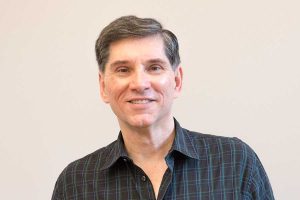
I am currently Professor of Art History and the Director of the Art History and Art Museum Studies programs at Knox College. While my area of scholarship is 20th century American art, I teach the entire Art History major at my institution and have greatly valued the support of CAA as my primary professional sphere for engaging with other art historians. My diverse background encompasses studio art, academic art history and museum curating. I feel this gives me insights into the different professional constituencies making up the membership of CAA and how these fields relate and intersect. If selected for the Board of Directors, I would like to advocate for greater dialogue and cooperative programming within our organization as a means to advance our many shared agendas.
I have spent most of my career teaching at an undergraduate liberal arts college that is devoted to experiential learning and social equity. Many of us are grappling with the nationwide decline in the Humanities and the shrinking academic job market. Those teaching in undergraduate institutions are at the frontlines dealing with such major demographic shifts as larger numbers of first-generation college students and greater racial diversity. Building on the abolitionist history of my college, I am currently part of a faculty initiative in the arts and humanities to diversify and decolonize our curriculum and am working to restructure courses towards greater forms of critical service learning and civic engagement. I also recently created an Art Museum Studies minor in order to provide needed career preparation for our current generation of students. I feel strongly that the future growth and vitality of art history will depend on more innovative and inclusive forms of teaching and pre-professional mentoring at the undergraduate level. This will require more strategic efforts to rethink and reposition the educational role of the visual arts and their ability to inspire students to engage with social and political questions beyond the academy. In running for the Board, I aim to use my experience to promote policies and programming to support the development of alternative, transformative and socially relevant pedagogies in our fields.
My academic and museum careers have provided me with leadership experience to effectively serve on the CAA Board. I did longtime service on the board of my regional civic arts center, and as senior curator at the Figge Art Museum, I was the chief staff liaison to the Board of Trustees. I have also chaired three academic committees at my college and am currently the Chair of Academic Assessment. We are conducting studies on Diversity, Equity and Inclusion, Civic Engagement and Professional Outcomes, all highly relevant and pressing academic issues for our membership. I will also bring a strong fundraising background having worked closely with my Advancement Office to obtain NEH and Mellon Foundation grants as well as donor funding to acquire a new art gallery facility. I look forward to the possibility of helping CAA progress towards future goals and appreciate being considered for this important service.
Alexander Bostic
posted by CAA — December 03, 2021
 Statement
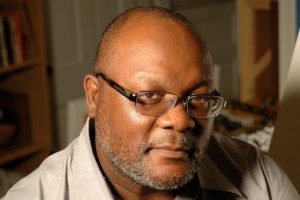
I believe the future direction of the College Arts Association should have more diversity. We should look into new and ever-changing field of art by exploring every available technology. I hope to bring new ways of teaching and educating students to think more globally in this industrial and complex world of ours. We must not only think outside of the box, but we can “be” the box. We should find new pathways for our young artists to follow and to explore limitless ways on how all art is made or produced. We need to look into the profession as well as the business of art and how we can connect how art is made and sold and marketed. I think we should bring the business side of creativity to our students. This must be a part of our agenda, namely, to look at many ways to educate our students on how to get work.