
CAA News Today
Grants, Awards, and Honors
posted by CAA — December 15, 2014
CAA recognizes its members for their professional achievements, be it a grant, fellowship, residency, book prize, honorary degree, or related award.
Grants, Awards, and Honors is published every two months: in February, April, June, August, October, and December. To learn more about submitting a listing, please follow the instructions on the main Member News page.
December 2014

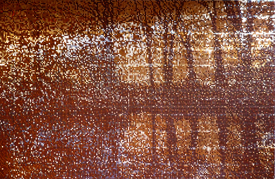 Richard Barlow, Pixelated Bromide, plastic sequins and latex paint, 132 x 204 in. (artwork © Richard Barlow)
Richard Barlow, an artist, musician, and assistant professor of art at Hartwick College in Oneonta, New York, has received the 2014 Jerome Foundation Travel and Study Grant and the 2014 Hartwick College Faculty Development Grant.

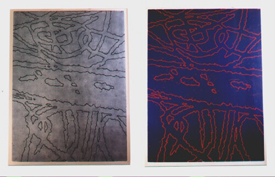 Two podographs by Mark Staff Brandl, 2012 (artwork © Mark Staff Brandl)
Mark Staff Brandl, an artist and art historian based in Trogen, Switzerland, has completed an artist residency in the Italian village of Portico di Romagna, where he made drawings and had a small exhibition.

Abigail DeVille, an artist based in Bronx, New York, has won a 2014 emerging-artist grant of $10,000 from the Rema Hort Mann Foundation, based in New York.

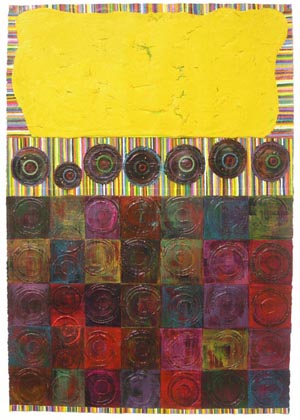 Reni Gower, Pivot.6, 2010, acrylic on paper, mounted on canvas-covered panel, 38 1/2 x 27 in. Collection of Harry L. Davis, Leesburg, VA (artwork © Reni Gower)
Reni Gower, an artist and professor of painting and printmaking at Virginia Commonwealth University in Richmond, has completed an artist residency at the Center for Book and Paper Arts at Columbia College Chicago, where she worked with the center’s team to explore pulp painting, blow-outs, and watermarks.
James Herring, exhibitions manager and designer for the Patricia and Phillip Frost Museum of Science in Miami, Florida, has received a $10,000 exhibition research grant from the Center for Craft, Creativity, and Design, based in Asheville, North Carolina.

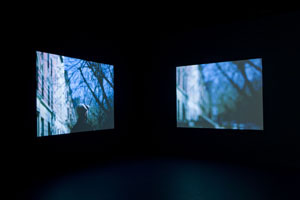 Leslie Hewitt in collaboration with Bradford Young, Untitled (Level), 2010, dual-channel video projection, 35mm film transferred to digital video, 1:00 min. loop. Studio Museum in Harlem, Museum Purchase with funds provided by the Acquisition Committee 10.8.1 (artwork © Leslie Hewitt)
Leslie Hewitt, an artist based in New York and Houston, Texas, has been named a USA Francie Bishop Good and David Horvits Fellow in Visual Arts by United States Artists. The award comes with an unrestricted $50,000 prize.
Faheem Majeed, associate director and faculty in the School of Art and Art History at the University of Illinois in Chicago, and Jeremiah Hulsebos-Spofford, a teacher of sculpture at the Chicago High School for the Arts and in the Contemporary Practices Department of the School of the Art Institute of Chicago, have earned a 2014–15 DCASE Studio Artist Residency Award from their city’s Department of Cultural Affairs and Special Events and the Joyce Foundation.
Norie Sato, an artist based in Seattle, Washington, has been recognized twice this year: the 2014 Public Art Network Leadership Award from Americans for the Arts, awarded in June at that organization’s conference in Nashville, Tennessee; and the 2014 Governor’s Art and Heritage Award for an Independent Artist, conferred by her state’s government at the end of October.
Alex J. Taylor, an Australian art historian of modern American art and visual culture, has been appointed to a three-year position at Tate as the Terra Foundation Research Fellow in American Art by the London–based museum and Chicago’s Terra Foundation for American Art.
Hilary Wilder has accepted a 2014–15 artist’s residency from the Galveston Artist Residency in Texas.
Exhibitions Curated by CAA Members
posted by CAA — December 15, 2014
Exhibitions Curated by CAA Members
Check out details on recent shows organized by CAA members who are also curators.
Exhibitions Curated by CAA Members is published every two months: in February, April, June, August, October, and December. To learn more about submitting a listing, please follow the instructions on the main Member News page.
December 2014
Katerina Lanfranco. PostPartumParty. Rhombus Space, Brooklyn, New York, November 21–December 14, 2014.
Katerina Lanfranco. Funkdafied. Rhombus Space, Brooklyn, New York, October 17–November 9, 2014.
Melody Rod-ari. Home and Away: The Printed Works of Ruth Asawa. Norton Simon Museum, Pasadena, California, September 19, 2014–January 19, 2015.
Jan Wurm. Closely Considered: Diebenkorn in Berkeley. Richmond Art Center. Richmond, California, September 14–November 16, 2014.
Books Published by CAA Members
posted by CAA — December 15, 2014
Publishing a book is a major milestone for artists and scholars—browse a list of recent titles below.
Books Published by CAA Members appears every two months: in February, April, June, August, October, and December. To learn more about submitting a listing, please follow the instructions on the main Member News page.
December 2014

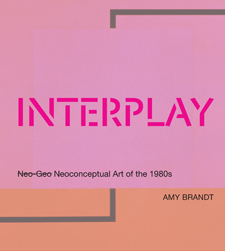
Amy Brandt. Interplay: Neo-Geo Neo-Conceptual Art of the 1980s (Cambridge, MA: MIT Press, 2014).

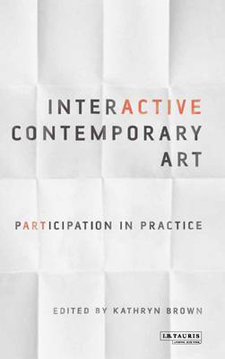
Kathryn Brown, ed. Interactive Contemporary Art: Participation in Practice (London: I. B. Tauris, 2014).

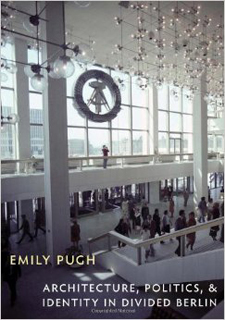
Emily Pugh. Architecture, Politics, and Identity in Divided Berlin (Pittsburgh: University of Pittsburgh Press, 2014).

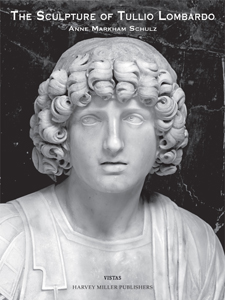
Anne Markham Schulz. The Sculpture of Tullio Lombardo (Turnhout, Belgium: Harvey Miller, 2014).
Committee on Women in the Arts Picks for December 2014
posted by CAA — December 10, 2014
Each month, CAA’s Committee on Women in the Arts selects the best in feminist art and scholarship. The following exhibitions and events should not be missed. Check the archive of CWA Picks at the bottom of the page, as several museum and gallery shows listed in previous months may still be on view or touring.
December 2014
Suzanne Lacy: Gender Agendas
Museo Pecci Milano
Ripa di Porta Ticinese 113, Milan, Italy
November 14, 2014–January 6, 2015
The Milan Pecci Museum is presenting a Suzanne Lacy’s Gender Agendas. This retrospective exhibition launches a whole new line of investigation at the the Centre for Contemporary Art Luigi Pecci that has been dedicated to the pioneering work in the arts developed internationally in the sixties, seventies, and eighties. Born in California in 1945 and based in Los Angeles, Lacy is an influential artist, educator, and writer. She is known as one of the pioneer artists blending Conceptual and Performance art with social commitment in the early seventies in Los Angeles. Her approach to researching and making follows her questioning the relationship of “service” to “activism,” and of both to “art practice.” Her diverse approach to this investigation stretches from explorations of the body and intimate reflections to the production of large and lengthy public demonstrations involving dozens of artists and thousands of spectators.
Gender Agendas presents, for the first time in Europe, a large series of Lacy’s projects that follow a constant of her artistic development: the investigation of the female condition. From a more intimately approach to a strong political and civic one, Lacy explores the power of art as a useful and effective tool for social struggle and for the promotion of progressive ideas, digging in this way into the meanings of the hundreds of anonymous female and working-class performers who would have no access to the communication systems otherwise. Sexual exploitation, violence, media representation of the aging woman, and social issues ranging from racism to the conditions of labor and class may have been provocative and avant-garde in the seventies and eighties, but are still deeply relevant today.
Through the curatorial approach of Lacy’s retrospective exhibition, Fabio Cavallucci and Megan Steinman, propose a readaptation of some of her most important works, including Prostitution Notes (1974); Three Weeks in May (1977); In Mourning and In Rage (1977); The Crystal Quilt (1985–87); and Full Circle (1994); as well as one of her most recent projects, Storying Rape (2012), a discussion among significant personalities in the media, activists, and politicians in an attempt to find a new cultural narrative that describes sexual violence.
Birgit Jurgenssen
Fergus McCaffrey
514 West 26th Street, New York, NY 10001
November 6–December 20 2014
For the second exhibition of Birgit Jurgenssen, Fergus McCaffrey brings together a large group of her photographic works in combination with a number of sculptures in order to underscore the variety and complexity of her work.
Highly experimental, Jurgenssen’s photographic work is exemplified by her Stoff-arbeiten (Fabric Works), which were created from the late 1980s to the early 1990s. The “fabric works” consist of photographic prints mounted on canvases that have been screwed to iron frames made by the artist, giving a highly sculptural character to their combinations. Thin, translucent fabrics such as gauze are stretched over the surface, veiling and slightly obscuring the images. The photographs themselves are created through a range of processes, including photograms, solarization, and multiple exposures. The juxtaposition of hard-welded iron frames and delicate textile emphasizes their materiality and draws a direct relationship to Jürgenssen’s sculptural works.
The exhibition also includes works that Jurgenssen referred to as “painted” photography. These large format photograms were created by manipulating sheets of photo paper in developer and fixing baths and by pouring photo chemicals directly over the paper. The resulting marbled and dripped images were then exposed to light and fixed, after which the surfaces were scratched, creating gestural drawings over the “painted” photographic surfaces.
Born and educated in Vienna, Jürgenssen (1949–2003) died prematurely at the age of 54. Her studio practice encompassed drawing, performance, photography, and sculpture, through which she compellingly combined classically refined draftsmanship, mixed media, and experimental photo techniques. She is best known for her connection to the Austrian feminist movement of the 1970s. Equally important is her engagement with Surrealism and her concern for materials and processes.
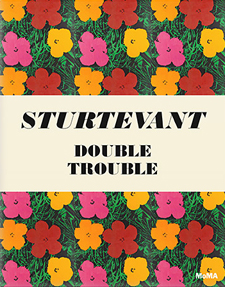
Cover of the catalogue for Sturtevant: Double Trouble
Sturtevant: Double Trouble
Museum of Modern Art
Special Exhibitions Gallery, Third Floor; and Sue and Edgar Wachenheim III Painting and Sculpture Gallery, Gallery 5, Fifth Floor, 11 West 53rd Street, New York, NY 10009
November 9, 2014–February 22, 2015
Elaine Sturtevant (American, 1924–2014) began “repeating” the works of her contemporaries in 1964, using some of the most iconic artworks of her generation as a source and catalyst for the exploration of originality, authorship, and the interior structures of art and image culture. Beginning with her versions of works by Jasper Johns and Andy Warhol, she initially turned the visual logic of Pop art back on itself, probing uncomfortably at the workings of art history in real time. Yet her chameleonlike embrace of other artists’ art has also resulted in her being largely overlooked in the history of postwar American art. As a woman making versions of the work of better-known male artists, she has passed almost unnoticed through the hierarchies of midcentury modernism and postmodernism, at once absent from these histories while nevertheless articulating their structures.
Far more than copies, her versions, for instance, of Johns’s flags, Warhol’s flowers, and Joseph Beuys’s fat chairs are studies in the action of art that expose aspects of its making, circulation, and canonization. Working primarily in video since 2000, the artist remained deeply engaged with the politics of image production and reception, using stock footage from Hollywood films, television, and advertising to point to the exhaustion built into much of postwar cultural production.
This exhibition is the first comprehensive survey in America of Sturtevant’s fifty-year career and the only institutional presentation of her work organized in the United States since her solo show at the Everson Museum of Art in 1973. Rather than taking the form of a traditional retrospective, the exhibition offers a historical overview of her work from a contemporary vantage point, interspersing more recent video pieces among key artworks from all periods of her career.
Michelle Stuart: Silent Movies
Leslie Tonkonow: Art Works and Projects
535 West 22nd Street, Sixth Floor, New York, NY 10011
November 1–December 20, 2014
Michelle Stuart (American, b. 1933) became internationally known in the 1970s for innovative works that synthesize Land art, drawing, and sculpture, as well as her pioneering use of natural materials in sculpture, painting, and drawing. Since 2011 photography has been her primary medium, although present in her work both literally and conceptually since the 1970s. Devising a highly personal and original method of photographic manipulation, Stuart conveys the impression of deeply felt images seen through time and layers of consciousness. It is “a combination of fact and fiction, truth and lies—and lies that tell the truth,” as put by the artist.
The exhibition at Leslie Tonkonow comprises photographs drawn from Stuart’s vast archive of analogue and digital photographs taken for almost half a century. Stuart activates their aesthetic and storytelling potential by arranging them in gridlike groups or occasionally altering them. Each work is composed of between seven and seventy separate images, digitally printed on 8½ x 11 inch sheets of archival paper. Both painterly and cinematic in their rhythmic visual arrangement, the works in this exhibition amount to meditations on the nature of memory.
As dreamlike recollections of her past, these works continue her lifelong artistic engagement with specific locations, while affirming the significance of place as a unique source of memory. “Memories are silent until we either articulate them in words on paper or depict them visually,” as put by the artist herself. Two years ago, in Palimpsests, her first solo show of exclusively photographic works, Stuart expressed thoughts on war, the cosmos, the passing of time, and on form itself. The compositions in Silent Movies, all created since then, present universal themes with deeply personal associations that contain keys to momentous events and evoke times and places in a manner that is both specific and archetypical. With abundant literary, cinematic, and historical references, these works do not merely address memories, but, as put in the press release, the very process of recall itself.
Teaching Evaluation Survey
posted by CAA — November 13, 2014
The following message came from Craig Vasey, chair of the Committee on Teaching, Research, and Publications for the American Association of University Professors (AAUP).
Teaching Evaluation Survey
The Committee on Teaching, Research, and Publications is interested in determining to what degree there is consistency nationally in attitudes toward faculty teaching evaluations, in methods used for it, and in institutional practices surrounding it. We have developed a survey, and urge you to provide us information about your institution and your experience.
The survey can be taken at https://www.surveymonkey.com/s/teaching-evaluation.
Without your input, we cannot effectively bring these issues into the national conversation on the quality and the future of higher education. This is not intended to be a survey only of AAUP members, but of as many faculty in higher education in the USA as we can reach. Please share this with colleagues and encourage them to participate.
Online Book Fair Offers Discounts on Art Books to CAA Members
posted by CAA — November 11, 2014
A new collaboration with Designers & Books will bring special discounts for an array of books and journals on art, architecture, design, and photography to CAA members. This ongoing program, called the Online Book Fair, features new and backlisted books as well as rare and out-of-print titles released by important publishers in the visual arts.
Designer & Books, a website that advocates for books as important sources of creative inspiration, will update the Online Book Fair with new publishers, books, and book dealers every month. The following participants have signed up already and offer various special discounts for their products, new and used, to CAA members:
- AMMO Books: 50 percent
- Applied Research and Design Publishing: 50 percent
- Carnegie Hill Books: 10 percent (rare and out of print)
- DoppelHouse Press: 40 percent
- F. A. Bernett Books: 10 percent (rare and out of print)
- Gestalten: 35 percent
- Goff Books: 50 percent
- Lars Müller Publishers: 35 percent
- Laurence King Publishing: 50 percent
- MIT Press: 40 percent
- Modernism101 (rare and out of print): 10 percent
- Optos Books (rare and out of print)
- ORO Editions: 50 percent
- Paintbox Press: 20 percent
- Prestel Publishing: 35 percent
- Princeton Architectural Press: 50 percent
- Schiffer Publishing: 35 percent
- Strelka Institute: no discount
- Wolfsonian–Florida International University: 40 percent
Payment and checkout occur on the website of each individual publisher, which gives you the chance to browse for additional books and sign up for email newsletters and social-media updates. To receive the special discounts noted above, use this CAA code when checking out: 14BJXAA.
Designers & Books hope you will find the Online Book Fair to be an enjoyable place to browse and discover books and to build your personal library. If publishers or books that you are interested do not appear on the site, you can send an email with your suggestions.
The Online Book Fair will be featured on the Membership Partners page of the CAA website with an updated list of participants and discounts.
Committee on Women in the Arts Picks for November 2014
posted by CAA — November 10, 2014
Each month, CAA’s Committee on Women in the Arts selects the best in feminist art and scholarship. The following exhibitions and events should not be missed. Check the archive of CWA Picks at the bottom of the page, as several museum and gallery shows listed in previous months may still be on view or touring.
November 2014
Ciara Phillips: Turner Prize Nominee
Tate Britain
Millbank, London SW1P 4RG, United Kingdom
September 30, 2014–January 4, 2015
Ciara Phillips has been nominated for the Turner Prize 2014. The nomination was based on her solo exhibition presented at the Showroom, London. Workshop was an installation made up of multiple screen prints on newsprint and large-scale works on cotton set as a two-month temporary print studio within the gallery space over the course of the exhibition. Along this project, Phillips collaborated with invited artists, designers, and local women’s groups to produce new screen prints. Guests contributed to Workshop their diverse knowledge and experiences of working collectively. These collaborations initiated conversations and actions that aren’t contained within specific disciplines of art, community action, design, or activism, leaving the workshop/exhibition structure open for development as the project progresses.
By making prints in these new collaborative groupings, Phillips explores the potential of “making together” as a way of negotiating ideas and generating discussions around experimental and wider uses of print. Her long-term commitment to collaborative production underpins her expansive printing practice that makes use of screen printing, wall drawing, and photography to create context-specific installations.
Phillips (born in Canada, 1976) lives and works in Glasgow. She acknowledges having been inspired by Corita Kent in her collaborative approach to art practice. Corita Kent (a.k.a. Sister Mary Corita, 1918–1986) was a pioneering artist, educator, and activist who reinterpreted the advertising slogans and imagery of 1960s consumer culture.
A piece to be highlighted from the exhibition is New Things to Be Discussed (2014), a circular booth installation including screen prints on paper and audio recording based on her conversations with fellow artists and with Justice for Domestic Workers, a self-organized group of migrant domestic workers who work in private houses in the United Kingdom. Engagements and discussions among J4DW, artists, curators, and curatorial projects have sought to address making domestic work visible in British society and the employment of artistic and aesthetic strategies to this end.
Someday Is Now: The Art of Corita Kent
Artis—Naples, Baker Museum
5833 Pelican Bay Boulevard, Naples, FL 34108
September 27, 2014–January 4, 2015
The Baker Museum presents Someday Is Now: The Art of Corita Kent. Corita Kent (Iowa, 1918–Boston, 1986), also known as Sister Mary Corita, was a pioneering Los Angeles–based artist, designer, educator, and activist. She has experimented in printmaking, producing a groundbreaking body of work that combines faith, activism, and teaching with messages of acceptance and hope. Through vibrant, Pop-inspired prints, Corita posed philosophical questions about racism, war, poverty, and religion through work that has been described as saucy, funny, and yet deeply devotional.
Mixing street signs, scripture, poetry, philosophy, advertising, and pop-song lyrics, Corita developed her own version of Pop art. Exploring printmaking as a collaborative and popular medium to communicate with the world, her bright and bold imagery, along provocative texts drawn from a range of secular and religious sources, were widely disseminated as billboards, book jackets, illustrations, and posters.
As a Sister of the Immaculate Heart of Mary, Corita taught at the Art Department at Immaculate Heart College from 1947 through 1968. She lectured extensively and appeared on television and radio talk shows across the country and on the cover of Newsweek in 1967. As an educator, Corita inspired her students and international artists for many generations (See Ciara Phillips at Turner Prize 2014) to discover new ways of experiencing the world and search for revelations in the everyday. Sister Mary Corita left her order in 1968 and was thereafter known as Corita Kent. She continued to make art, producing prints and carrying out many commissions. In 1985 Kent designed the celebrated Love stamp for the US Postal Service.
Her passionate creative practice made us aware that she walked a bumpy road after the Vatican criticized her work has been infected by “radical feminism.” Corita believed that “women’s liberation is the liberation of the feminine in the man and the masculine in the woman.”
22 Women: A Project by Alfredo Jaar
SKMU Sørlandets Kunstmuseum
Skippergata 24B, Kristiansand, Norway
October 10, 2014–February 15, 2015
SKMU Sørlandets Kunstmuseum presents 22 Women, a project by Alfredo Jaar (b. 1956, Santiago de Chile) that casts light on brave activists women who, despite being active in the world today, remain unknown to the wider public.
Jaar is an international artist, architect, and filmmaker whose work explores art’s possibilities for conveying perceptions and interpretations of real historical events and situations. His uncompromising, innovative, and captivating large installations explore and discuss themes such as war, corruption, social injustice, and imbalances in global power structures. Reacting to specific events in real life, Jaar examines and reflects on the position that art can and should have in a global social debate for sharing opinions in ways that mass media and politics cannot.
Jaar’s 22 Women follows Three Women (2010), a project that cast light on Graça Machel, Ela Bhatt, and Aung San Suu Kyi. The new installation means the first iteration of Jaar’s ongoing project that aims to shine light on the life and work of at least one hundred remarkable women. Here, twenty-two minuscule portraits are illuminated by a multitude of light projectors. Spotlighting on the portraits of 22 Women, Jaar acknowledge their invisibility, while their stories are told in a separate booklet accompanying the exhibition. Amira Hass (Israel/Palestine), Bertha Oliva (Honduras), Camila Vallejo (Chile), Hawa Abdi (Somalia), Jenni Williams (Zimbabwe), Kalpona Akhter (Bangladesh), Lina Ben Mhenni (Tunisia), Lydia Cacho (Mexico), Mahnaz Mohammadi (Iran), Malalai Joya (Afghanistan), Mathilde Muhindo (Democratic Republic of the Congo), Nawal El Saadawi (Egypt), Ni Yulan (China), Olayinka Koso-Thomas (Nigeria/Sierra Leone), Razan Zaitouneh (Syria), Sandra Gomes Melo (Brazil), Susan Burton (United States), Svetlana Gannushkina (Russia), Ta Phong Tan (Vietnam), Tetyana Chornovol (Ukraine), Vandana Shiva (India), and Zainab Alkhawaja (Bahrain) are outstandingly achieved women whose crucial work is underrecognized, suppressed, or ignored. Jaar’s project aims to pay homage to these women who are models of resistance that fight human-rights violations, sexual violence, censorship, ethnic persecution, and social injustice.
Jaar’s 22 Women is following up on a series of exhibitions at SKMU that focus on women, equality, and women rights, looking critically at the museum collection and how it represents women.
Judith Lauand: Brazilian Modernist, 1950s–2000s
Driscoll Babcock Galleries
525 West 25th Street, New York, NY 10001
October 23–December 20, 2014
Judith Lauand:Brazilian Modernist, 1950s–2000s is the first New York solo exhibition of one of the most celebrated—and yet overlooked in North America—Brazilian artists of the postwar era. Lauand developed her formative career in São Paulo, alongside prolific debates and investigations into the critical definitions of the planar surface and abstraction, and is justifiably known as the “first lady of Concretism.” Seeking to illuminate and establish Lauand’s critical significance as a pioneer of modernism and qualifying as a mini survey, this exhibition brings together over thirty works that span the critical periods of Lauand’s career from the 1950s to 2007; it is accompanied a fully illustrated book by the curator of the show, the art historian Aliza Edelman, that investigates the artist’s prolific achievements in postwar abstraction, geometry, and feminism.
As put by Edelman, Lauand’s “modernist geometric abstractions actively unhinge the rational and seemingly impersonal grid of Concretism. Her objective, mathematical, and precise constructions—primary components of Arte Concreta—introduced new geometries aligned with contemporary ideas on space, time, and matter. Lauand was the only female artist invited to join Grupo Ruptura, an artist group initially formed in São Paulo in 1952, and her successful demonstration of postwar Concretism led in the following decades to further experimentations, with figural and popular representation, assemblage, and optical color contrasts. Thus, Lauand successfully negotiated the development of Brazilian avant-garde tendencies after World War II—including the influence and reception of Pop art and New Figuration in the 1960s and 1970s, as well as the political disruption initiated during the military dictatorship—continually buttressing Concretism’s critical ideas while formulating her own meaningful intersections with notions of rupture.”
Works from her early groundbreaking work in the exhibition include Concreto 88, Acervo 186 (1957), a gouache on paper that evokes the photographically inspired architectural façades in Geraldo de Barros’s Fotoformas (Photoforms) and exemplifies the way in which “horizontal bands across shifting chains that link positive and negative space rupture the Concrete grid with rhythmic motion and the perception of subtle contradictions.” Conversely, Sem título (Untitled) (2007) illustrates the diverse ways in which Lauand continues exploring her geometric systems of the 1960s by reworking her principle set of shapes and networks and using color to expand her vision of infinite constructions and her exploration of the endless permutations of structure.
Lauand had her first solo exhibition after being a gallery monitor in the second Bienal de São Paulo in 1953–54. She has participated in significant group shows, including the III Bienal de São Paulo in 1955; the I Exposição Nacional de Arte Concreta (First National Exhibition of Concrete Art) in 1956; and the international retrospective on Concretism, Konkrete Kunst: 50 Jahre Entwicklung (Concrete Art: 50 Years of Development), organized by Max Bill in Zurich in 1960. A recipient of multiple prestigious awards and an exhibitor in numerous editions of the Bienal de São Paulo, as well as the Salão Nacional de Arte Moderna, Lauand was the subject of a major retrospective, Judith Lauand: Experiências (Judith Lauand: Experiences), at the Museu de Arte Moderna de São Paulo in 2011.
Aikaterini Gegisian: Is This Why I Cannot Tell Lies?
Tintype
107 Essex Road, London N1 2SL United Kingdom
November 19–December 13, 2014
Is This Why I Cannot Tell Lies? is the first solo exhibition in London of work by the multimedia Greek Armenian artist Aikaterini Gegisian. Although she is better known for her films, including the recent Pink City (2014), filmed in Yerevan and exploring gendered divisions in the experience of the city, this exhibition brings together new samples of her extensive collage practice along with photographs and a sound installation based on a dream diary and a textbook on how to become a male escort.
Gegisian’s work is largely concerned with challenging received notions of cultural and sexual identity, as manifested in her multifaceted and ongoing investigation of the identity of Ottoman Woman. Formally structured around the idea of movement and the cinematic device of the jump cut, the collages featured in this show are assembled from heterogeneous material, such as Soviet and Western photo albums and magazines, and feature incongruous images, such as female gymnasts and space missions, scientific illustrations of Eisenstein’s theory of relativity, flower patterns, and home interiors. As such, the works reflect upon female sexuality by referencing a set of spaces in which ideological and gender conflicts are played out, from the outer space to the female body, from the natural world to the space of dream. Repossessing photographic representations of female gymnasts that foreground the highly disciplined form of their activity, and juxtaposing them with photographs of space rockets, scientific illustrations, botanical imagery, and pornographic material, Gegisian conjurs the radical potential of the jump cut in order to suggest the possibility of transformation. She negotiates contrasting ideologies that have restricted female imagination to ignite release from conventional narratives and eventually questions how women are positioned—literally and symbolically—in the space of the future by deconstructing and articulating female sexuality.
Represented byKalfayan Galleriesin Greece, Gegisianstudied at the University of Brighton and Chelsea College of Art and Design and holds a PhD from the University of Westminster in London (2014). She is currently visiting research scholar-artist at the University of Pennsylvania in Philadelphia. She has participated in numerous group shows—the most recent include Re-Tracing the Land at NARS Foundation in Brooklyn (2014); Visualising the Ottoman City at Peltz Gallery at Birkbeck College in London (2014); and Sensible Action at Vladikafkaz Fine Arts Museum in North Ossetia, Russia (2013)—and in international residencies in Russia, Armenia, Egypt, and Turkey. Gegesian’s films have been screened in several film festivals around the world, and her work is represented in public collections, such as the National Centre of Contemporary Art (North Ossetia), the State Museum of Contemporary Art (Thessaloniki), and the Macedonian Museum of Contemporary Art, as well as in many private collections in Greece.
Sonia Delaunay: Les Couleurs de l’Abstraction
Musée d’art de la ville de Paris
11 avenue du Président Wilson, 75116 Paris, France
October 17 2014–February 22 2015
Highlighting the agelessness of Sonia Delaunay’s work that, while always of its time, remains fresh and relevant in its formal explorations and quest for a synthesis of the arts even today, this touring survey (curated by Anne Montfort et Cécile Godefroy) is surprisingly the first major retrospective of the artist in Paris since 1967. Bringing together three re-created environments and over four hundred works that include paintings, wall decorations, gouaches, prints, fashion items, and textiles, Les Couleurs de l’Abstraction traces the artist’s evolution since the beginning of the twentieth century to the late 1970s.
As aptly put in the press release, while her husband Robert Delaunay was busy conceptualizing abstraction as a universal language, Sonia was testing it out in painting, posters, garments, bookbinding, and household items, and collaborating with the poet Blaise Cendrars on the artist’s book Prose of the Trans-Siberian and of Little Jehanne of France. Her Spanish and Portuguese years during the First World War saw her first ventures into theater and commercial fashion design in Madrid before her return to Paris in the 1920s. The following decade brought a pared-down abstraction in the International Style that harmonized with the architecture of the time, as in the big mural decorations for the Air Transport Pavilion at the International Exhibition of Art and Technology in Modern Life, on view here for the first time since 1937. Her role as a “go-between” for the pioneers of abstraction and the postwar generation is pointed out through her contributions to the Salons des Réalités Nouvelles, her involvement in various architecture projects, and her exhibitions at the Denise René Gallery in Paris. After the war her painting underwent a profound renewal, culminating in the late 1960s in an intensely poetic form of abstraction. Her formal and technical gifts found expression in monumental paintings, mosaics, carpets, and tapestries, and her late work was marked by the albums of etchings she produced for Editions Artcurial.
It is by exploring her work in the applied arts, her distinctive place in Europe’s avant-garde movements, and her idiosyncratic approach to color (which relates to her childhood in Russia and art study in Germany) that this exhibition promises to effect a rigorous and lasting reassessment of Delaunay’s major and pioneering role as an abstractionist.
Women in Visual Arts 1960–1980: Their Contribution to the Greek Avant-Garde
ISET
9a Valaoritou Street, 106 71 Athens, Greece
October 16, 2014–January 10, 2015
The contemporary Greek art institute ISET presents the exhibition Women in Visual Arts 1960–1980: Their Contribution to the Greek Avant-Garde. Assessing the contributions of female artists in the formation of various avant-garde manifestations in Greece, this exhibition is remarkable for its focus on female artists in a country where gender and feminism have not yet played an important role in the discourse of art.
Curated by Charis Canelopoulou and accompanied by an in-depth catalogue, the exhibition claims the marginalized importance of female artists in various avant-garde experimentations that took place in Greece during the military junta and the tumultuous period that followed it. While castigating the secondary place female artists have played in the historiography of Greek art as “women artists,” it sheds new light on the work of a great assortment of artists whose diverse practices—which range from feminist performance to political Pop, Minimalism to multimedia and conceptual practices—variously contributed to the formation of a multifaceted postwar Greek avant-garde scene and its politics.
The included artists are: Celeste Polycroniadi, Eleni Zerva, Nausica Pastra, Sosso Houtopoulou-Kontaratou, Alex Mylona, Ioanna Spiteris-Veropoulou, Chrysa Romanos, Bia Davou, Niki Kanagini, Aspa Stassinopoulou, Celia Daskopoulou, Rena Papaspyrou, Maria Karavela, Vasso Kyriaki, Opy Zouni, Diohandi, and Leda Papaconstantinou.
A nonprofit civil company, ISET was founded in February 2009 by the senior partners of Nees Morfes Art Gallery, in collaboration with art professionals and consultants (such as artists and art historians). ISET’s main objective is to collect and preserve a comprehensive archive of contemporary Greek art (1945 to the present). It’s archival database was originally based on the archives of the Nees Morfes and Desmos art galleries and is being complemented and enriched continuously with archival material generously donated by public and private institutions, artists, art historians, and individuals.
Affiliated Society News for November 2014
posted by CAA — November 09, 2014
American Society of Appraisers
The Personal Property Committee of the American Society of Appraisers invites you to its annual spring conference, “Current Issues in Determining Authenticity in Visual Art and Objects, the Catalogue Raisonné, Art Scholarship, and Value in the Marketplace,” to be held March 25–28, 2015, at the Yale Club in New York. This scholarly conference will gather highly regarded and renowned experts to discuss timely and relevant topics, including authentication of jade objects, certificates of authenticity, conservation issues, connoisseurship in collecting, authenticity of American paintings, who is an expert, and much more. Field trips to the Princeton University museum and library collections and gallery visits in New York will also be part of conference activities. Accommodations have been reserved at the Yale Club for this event. Early-bird registration pricing will be available. This will be a not-to-miss conference! There is limited space for this event, which is expected to sell out. Stay tuned for additional details.
Art, Literature, and Music in Symbolism and Decadence
Art, Literature, and Music in Symbolism and Decadence (ALMSD) will host the session “Symbolist Art and the Unconscious” at the CAA Annual Conference on Saturday, February 14, 2015, 12:30–2:00 PM. This session will feature papers on art and related disciplines that were influenced by the studies of hysteria and the unconscious conducted by the French neurologist Jean Martin Charcot, Sigmund Freud’s teacher.
ALMSD is organizing a conference on angst in visual arts, literature, and philosophy in Paris, to be held June 4–6, 2015, at Univ. Paris IV. The organization is also accepting the submission of articles on mental illnesses and the Symbolist movement for the first issue of its journal, to be published in fall 2015.
Association of Academic Museums and Galleries
This past summer, the Association of Academic Museums and Galleries (AAMG) and the Kellogg School of Management’s Center for Nonprofit Management held its second Academic Museum Leadership Seminar on the campus of Northwestern University (June 23–27, 2014). Forty-two museum leaders from throughout the United States, Canada, Qatar, and Ireland participated in the leadership-training program. Loyola University Museum of Art and Northwestern’s Block Museum also hosted dinners for seminar fellows during the weeklong program. Funding for the seminar was generously provided by the Institute of Museum and Library Services and the Samuel H. Kress Foundation.
New AAMG board and staff members are: Craig Hadley, DePauw University, board member at large (communications); Katie Kizer, Vanderbilt University, membership coordinator; and Joseph Mella, Vanderbilt University, executive board member
Historians of Islamic Art Association
The Historians of Islamic Art Association (HIAA) has established a permanent fund in memory of Professor Oleg Grabar and in support of the annual award of Grabar Grants and Fellowships. These competitive grants and fellowships, open to all nationalities, are intended to encourage and further the professional development of PhD students and postdoctoral scholars in the history of Islamic art, architecture and archaeology. The next deadline for the Grabar Travel Grant and Post-Doctoral Fellowship is December 15, 2014.
International Association of Art Critics
The International Association of Art Critics (AICA-USA), in collaboration with the Vera List Center for Art and Politics, will present the eighth AICA/USA Distinguished Critic Lecture at the New School featuring Carolyn Christov-Bakargiev, curator of the fourteenth Istanbul Biennale (2015). In addition to her other positions, Christov-Bakargiev has been appointed as a guest scholar at the Getty Research Institute for 2015. Her lecture will be held at the New School, 12th Street Auditorium, 66 West 12th Street, New York, on Thursday, November 20, 2014, 6:30–8:00 PM. Admission is free.
International Sculpture Center
International Sculpture Day, or IS Day, is an annual celebration event held worldwide on April 24, 2015, to further the International Sculpture Center (ISC) mission of advancing the creation and understating of sculpture and its unique, vital contribution to society. IS Day will include a wide range of events, openings, and educational and promotional activities around the world to include, but not limited to: open day at museum/sculpture park; open studios tours; demonstrations and workshops; panels, talks, presentations, and discussions; parties and openings; sculpture exhibits and shows; tours of private and public collections; pop-up shows; exhibitions; and more. Visit www.sculpture.org/isday to learn more about the event and how to participate.
Italian Art Society
The Italian Art Society (IAS) will sponsor a CAA annual meeting session in New York, organized by Christopher Bennett and Elizabeth Mangini entitled “Di politica: Intersections of Italian Art and Politics since WWII” (February 11, 2015, 12:30–2:00 PM). IAS will also cosponsor a related two-day conference entitled “Untying the Knot: The State of Postwar Italian Art History Today” at the Center for Italian Modern Art in New York on February 9–10, 2015. IAS encourages members and prospective members to attend the IAS business meeting on February 11, 7:30–9:00 AM. In March 2015, IAS will sponsor five sessions at the March annual meeting of the Renaissance Society of America in Berlin.
IAS is pleased to provide a research and publication grant (deadline: January 10, 2015). In addition, the society seeks proposals of papers from senior scholars for the sixth annual 2015 IAS/Kress Lecture, scheduled for May 20, 2015, in Naples, Italy, on a Neapolitan topic (deadline: January 4, 2015).
National Council of Arts Administrators
The forty-second annual conference of the National Council of Arts Administrators (NCAA) convened September 23–26, 2014 in Nashville, Tennessee. The organization is indebted to Mel Ziegler and Heather Rippetoe of Vanderbilt University for organizing a provocative, powerful conference. Featured speakers included: Pablo Helguera, artist, writer, and raconteur; Jon Rubin, artist and social practitioner; Steven J. Tepper, a sociologist focused on creativity in education; and Ruby Lerner, founding director of Creative Capital.
The membership elected three new board members: Lynne Allen, Boston University; Elissa Armstrong, Virginia Commonwealth University; and Cathy Pagani, University of Alabama. They join these returning directors: Leslie Bellavance, Alfred University (secretary); Steve Bliss, Savannah College of Art and Design; Cora Lynn Deibler, University of Connecticut; Andrea Eis, Oakland University (treasurer); Amy Hauft, University of Texas at Austin (president); Jim Hopfensperger, Western Michigan University (past president); Lydia Thompson, Texas Tech University; and Mel Ziegler, Vanderbilt University. Special thanks goes to Sergio Soave of Ohio State University for his excellent service; he rotates off the board this year.
Activities at the 2015 CAA Annual Conference in New York include the annual NCAA reception (February 12, 5:00–8:00 PM) and an affiliated-society session, “Hot Problems/Cool Solutions in Arts Leadership,” a fast paced series of presentations on leadership (February 12, 12:30–2:00 PM). NCAA welcomes new and current members as well as all interested parties.
Society for Photographic Education
The fifty-second national conference of the Society for Photographic Education (SPE), titled “Atmospheres: Climate, Equity and Community in Photography,” will take place March 12–15, 2015, in New Orleans, Louisiana. Connect with 1,600 artists, educators, and photographers from around the world for programming that will fuel your creativity—four days of presentations, industry seminars, and critiques to engage you! Explore an exhibits fair featuring the latest equipment, processes, publications, and photography/media schools. Participate in one-on-one portfolio critiques and informal portfolio sharing or attend as a student volunteer for free admission. Other highlights include a print raffle, silent auction, mentoring sessions, film screenings, exhibitions, receptions, a dance party, and more! The guest speakers will be Rebecca Solnit, Chris Jordan, and Hank Willis Thomas. Registration will open on November 3, 2014. Preview the conference schedule and register online at www.spenational.org/conference.
Society of Historians of Eastern European, Eurasian, and Russian Art and Architecture
The Society of Historians of Eastern European, Eurasian, and Russian Art and Architecture (SHERA) looks forward to the ASEEES annual convention November 20–23, 2014, in San Antonio, Texas, where its members will participate on a dozen panels ranging from eighteenth-century prints to twentieth-century art and architecture in Eastern Europe and Russia. SHERA’s business meeting, to be held on Saturday, November 22, at 3:30 PM, is open to both members and nonmembers.
In recent months SHERA’s members have been busy organizing exhibitions, publishing new research, and planning conferences. To see their activities, go to www.shera-art.org and click on News; for members’ recent publications and work in progress, click on Research.
SHERA is delighted to welcome the Cambridge Courtauld Russian Art Centre (CCRAC) as a new institutional member. CCRAC is a joint initiative between the Department of History of Art at the University of Cambridge and the Courtauld Institute of Art in London to provide a forum for the investigation of Russian and Soviet art. It aims to stimulate debate, support collaborative work, and generate and disseminate research on all aspects of the visual arts, architecture, design, and exhibitions in Russia and the Soviet Union.
Visual Resources Association
The Visual Resources Association (VRA) presented the organization’s highest honors at a membership and awards dinner on March 13, 2014, during the VRA’s thirty-second annual conference, held in Milwaukee, Wisconsin. Virginia Mason Green (Macie) Hall of the Center for Educational Resources at Johns Hopkins University received the Distinguished Service Award for her contributions to visual resources and image management. Her service as the VRA representative to the Conference on Fair Use and the National Information Infrastructure at the US Patent and Trademark Office from 1994 to 1999 was only the beginning of her contributions to the field of visual resources.
The Nancy DeLaurier Award for distinguished achievement in the field of visual resources was presented to Ann Baird Whiteside of Harvard University. Whiteside was honored for her leadership in the development and implementation of the Society of Architectural Historians’ SAHARA Project. Funded by the Andrew W. Mellon Foundation, SAHARA was developed by the Society of Architectural Historians in collaboration with ARTstor. It contains over 47,000 images of architecture and landscapes contributed by architects, scholars, photographers, graduate students, preservationists, and others who share an interest in the built environment. Nominator and recipient acceptance remarks are available on the VRA Awards website.
Committee on Diversity Practices highlights for November/December 2014
posted by CAA — November 09, 2014
The CAA Committee on Diversity Practices highlights exhibitions, events, and activities that support the development of global perspectives on art and visual culture and deepen our appreciation of political and cultural heterogeneity as educational and professional values. Current highlights are listed below; browse past highlights through links at the bottom of this page.
November/December 2014
Esterio Segura
Museum of Latin American Art
Long Beach, California
November 22, 2014–February 15, 2015
“MOLAA is proud to present the first solo U.S. museum exhibition of pioneering contemporary artist Esterio Segura. Based in Cuba, Segura creates work that addresses topics of commercialization, migration, censorship and cultural isolation viewed from a contemporary Cuban perspective. Utilizing a variety of media; from drawing and painting to sculpture, photography and installation, he reflects upon contemporary Cuban anxieties. Segura delivers his social critique with humor and satire, at times evoking controversy. Embracing pop culture, Afro-Cuban influences, religious iconography and eroticism, he celebrates the beauty and ingenuity of the island while challenging the absurdity of the barriers that isolate and separate its people.
Esterio Segura studied at the prestigious Instituto Superior de Arte (ISA) of Cuba where he also taught professionally. He has had solo exhibitions in Havana, Berlin, London and New York, and has participated in group exhibitions in Argentina, Canada, Costa Rica, Ecuador, France, London, Mexico and Spain. His works can be found in numerous museum collections including the Museum of Modern Art in New York, Arizona State University Art Museum, Museo Nacional de Bellas Artes in Cuba, Bronx Museum of the Arts in New York, the Latin American Art Museum of the University of Essex, and the Museum of Latin American Art.” (http://www.molaa.org/Art/Exhibitions/upcoming-exhibitions/Esterio-Segura.aspx)
More information: http://www.molaa.org
Prospect.3: New Orleans
Numerous venues
New Orleans, Louisiana
October 25, 2014–January 25, 2015
“In Walker Percy’s 1961 novel The Moviegoer, the protagonist Binx Bolling is consumed by “the search” in the week leading up to his thirtieth birthday. Pointedly, the birthday falls on Ash Wednesday—the day after the most important holiday in New Orleans, Mardi Gras. Though Binx’s attendance at the carnival is peripheral, there’s much to be learned from his vantage point at the margins of the crowd. Bolling, a solitary moviegoer, lives his life on the margin, slowly creeping closer to the center as he embraces “the search.” He begins the book in the isolated suburbs of New Orleans, comfortably away, and apart from other people’s lives, but finds solace in the contested city by its end. The novel, set in a time of heightened social awareness in the first half of the decade’s movement for civil rights in America, delves into the depths of existentialism in a world where people were legally segregated from each other, making it impossible to celebrate the individual. “The peculiar institution” of slavery and immigration during the 18th century created a city that, even in 1961, was a complex social arrangement, one that remains palpable today. The third Prospect biennial (P.3) is invested in and will explore ‘the search’ to find the self and the necessity of the other as part of that quest.
It is New Orleans’ distinct history that makes it an illuminating source of philosophical inquiry for the present. Percy, a student of Soren Kierkegaard and acolyte of Jean-Paul Sartre, was attempting to “explore the dislocation of man in the modern age,” and certainly the physical and psychological violence we do to each other is one of the continuing facets of our species’ ‘dislocation.’ The “search” in Prospect.3 (P.3) also aims to further explore a philosophical inquiry on humanity, an effort to interrogate human feelings and human relationships. Recognizing the position of P.3 as a biennial-type exhibition for the United States—passionately committed to being international in scope and weary of geographic location as something that is increasingly interchangeable in today’s world of contemporary art—Prospect.3 is, in the mode of past Prospect projects, vitally committed to the city of New Orleans. Placed at the foot of the Mississippi River on the Gulf of Mexico, New Orleans’ influx of people has been remarkable in its diversity, and unlike any other American city. As a node for thinking through global issues, New Orleans offers an example that is revelatory, generative and frictional.” (http://www.prospectneworleans.org/exhibition-description/)
Past Forward
Artspace 111
Fort Worth, Texas
October 17–November 29, 2014
“Artspace111 looks forward to exhibiting the first major tour of Emirati artwork—which features over 50 paintings, photographs, sculptures, video installations, and other media by 25 Emirati artists—will showcase the creativity radiating throughout the Emirati art scene and highlight the development and history of the United Arab Emirates (UAE).The overarching theme of the exhibition highlights the balance between the UAE’s rapid development while maintaining its ties to its heritage and past and honoring traditional values. The exhibition features core elements of Emirati life and represents all seven emirates while emphasizing the importance of kinship and home, nature and landscape, as well as technology and innovation to Emirati culture. Artspace111 has partnered with the UAE Embassy to share the UAE’s compelling narrative and rich cultural heritage through this groundbreaking cultural diplomacy art initiative, which will be a powerful tool for finding common ground, building lasting relationships, and fostering respect. Past Forward will provide an opportunity for peer-to-peer exchanges of ideas, information, and experiential learning, as well as a framework for Americans and Emiratis to better understand one another through first-hand insight into life and culture in the UAE through these works of art. The exhibition will travel across the United States over the next 18 months, including stops in Texas, California, and Washington.” (http://www.artspace111.com/past-forward/ )
More information: http://www.artspace111.com
Rising Up: Hale Woodruff’s Murals at Talladega College
National Museum of African American History and Culture
Washington, DC
November 7, 2014–March 1, 2015
“Talladega College in Alabama commissioned prominent African American artist Hale Woodruff to paint a series of murals for its newly built Savery Library in 1938. Woodruff painted six murals portraying significant events in the journey of African Americans from slavery to freedom. On Nov. 7, the Smithsonian’s National Museum of African American History and Culture will present “Rising Up: Hale Woodruff’s Murals at Talladega College,” an exhibition of murals and other significant works by the artist. The exhibition will be on view in the NMAAHC Gallery at the Smithsonian’s National Museum of American History through March 1, 2015.
This will be the first time the murals have been exhibited in the Washington metro area. The murals were removed from Talladega College for a five-year collaborative restoration project organized by the High Museum of Art in Atlanta, which also organized a multicity tour of the works. The murals are six monumental canvases arranged in two cycles of three, portraying heroic efforts of resistance to slavery and moments in the history of Talladega College, which opened in 1867 to serve the educational needs of a new population of freed slaves. The first cycle includes the murals “The Mutiny on the Amistad,” which depicts the uprising on the slave ship La Amistad; “The Trial of the Amistad Captives,” depicting the court proceedings that followed the mutiny; and “The Repatriation of the Freed Captives,” portraying the subsequent freedom and return to Africa of the Amistad captives.
The companion murals “The Underground Railroad,” “The Building of Savery Library” and “Opening Day at Talladega College” show themes of the Underground Railroad, the construction of Savery Library at Talladega College and the early days of the college campus, for which the murals were commissioned, respectively.
“Rising Up: Hale Woodruff’s Murals at Talladega College” is presented by the Smithsonian’s National Museum of African American History and Culture and is organized by the High Museum of Art in collaboration with Talladega College. The exhibition is co-curated by Jacquelyn Serwer, chief curator at NMAAHC, and Rhea Combs, museum curator. A full-color, 155-page catalog, published by the High Museum of Art, will be on sale in the National Museum of American History’s store during the exhibition.” (http://americanhistory.si.edu/exhibitions/rising-up)
More information: http://nmaahc.si.edu
Classical Nudes and the Making of Queer History
Leslie + Lohman Museum of Gay and Lesbian Art
New York, NY
October 17, 2014–January 4, 2015
“Classical Nudes and the Making of Queer History, curated by scholar Jonathan David Katz, investigates the continued centrality of the classical nude over centuries of art making. This exhibition explores how images of the classical past have acted as recurring touchstones in the historical development of same-sex representation, and as such, constitute a sensitive barometer of the shifting constructions of what we today call gay and lesbian or queer culture. The classical past is thus gay culture’s central origin myth, and its representation offers far more information about the culture that appropriates the classical past then it does about that past itself. In tracing this trajectory of the classical nude across history, this show concentrates on four major periods: Antiquity, the Renaissance, the eighteenth and nineteenth centuries, and the modern/contemporary periods.” (https://www.leslielohman.org/exhibitions/current.html)
More information: https://www.leslielohman.org
V. S. Gaitonde: Painting as Process, Painting as Life
Solomon R. Guggenheim Museum
New York, NY
October 24, 2014–February 11, 2015
“An artist of singular stature, modernist painter Vasudeo Santu Gaitonde (1924–2001) was known to fellow artists and intellectuals, as well as to later generations of students and admirers, as a man of uncompromising integrity of spirit and purpose. Born in Nagpur, India in 1924, Gaitonde was briefly affiliated with avant-garde collectives such as the Progressive Artists’ Group and the Bombay Group in the early ’50s. Nonetheless, he remained independent throughout most of his career. This exhibition draws an arc from Gaitonde’s early, figurative, mixed-medium compositions and watercolors inspired by Paul Klee, through his major bodies of signature canvases from the 1960s and ’70s, to his late works from the 1980s and ’90s. Departing from Klee, Gaitonde’s practice began in the late 1950s in a nonrepresentational mode—or, as he preferred to call it, a nonobjective style. This turn towards abstraction is in accordance with the artistic principles first espoused by Vasily Kandinsky, as is embodied by the Guggenheim’s origins as the Museum of Non-Objective Painting, and also dovetails with Gaitonde’s lifelong interest in Zen Buddhism.
Short, stocky, self-critical, and confident, Gaitonde scorned sentimentality in his biography and his artistic practice. As fellow painter Krishen Khanna has stated, “There’s a very strong correlation I see between the way Gaitonde thought, the way he lived, and the way he painted.” Alongside art, he was an avid admirer of Indian and Western poetry, cinema, literature, theater, and classical music. Stressing the importance of the present moment, the completeness and joy of the creative process, and the intimate relationship between painter and painting, “Gai,” as he was popularly known among peers, was an intrepid and influential artist whose career remains unequaled in the history of South Asian modern art. Yet Gaitonde remains sorely understudied in the genealogies of twentieth-century world art.
As current scholarship revisits non-Western traditions of mid-twentieth-century modern art, this seminal retrospective exhibition presents an unparalleled opportunity to explore the context of Indian modern art as it played out in the metropolitan centers of Bombay (now Mumbai) and New Delhi from the late 1940s through the end of the twentieth century. It comprises forty-five major paintings and works on paper drawn from thirty leading public institutions and private collections, forming the most comprehensive overview of Gaitonde’s work to date. Including many pieces that have never been seen by the public, the exhibition reveals Gaitonde’s extraordinary use of color, line, form, and texture, as well as symbolic elements and calligraphy, in works that seem to glow with an inner light.
A transnational set of references and influences provides an art historical context for Gaitonde’s work and defines this exhibition. Gaitonde’s work spans the traditions of nonobjective painting and Zen Buddhism as well as Indian miniatures and East Asian hanging scrolls and ink paintings. When looking at Gaitonde’s oeuvre within the wider related context of international postwar art, one can also draw parallels to artists working within the contemporary School of Paris, as well as movements such as Art Informel, Tachisme, and Abstract Expressionism. Yet Gaitonde’s output continues to be defined by the particular ethos of India, where the artist lived and worked his entire life.
A scholarly catalogue and series of public programs accompanies the exhibition, which is organized by Sandhini Poddar, Adjunct Curator at the Solomon R. Guggenheim Museum, with Amara Antilla, Curatorial Assistant, Solomon R. Guggenheim Museum.” (http://www.guggenheim.org/new-york/exhibitions/on-view/v-s-gaitonde-painting-as-process-painting-as-life)
More information: http://www.guggenheim.org
Sheila J. McNally: In Memoriam
posted by CAA — October 24, 2014
Sheila J. McNally, professor emerita of art history at the University of Minnesota, passed away in Minneapolis on September 24, 2014. She was 81 years old.
McNally graduated with a BA from Vassar College in 1953. Following studies at the University of Kiel, the University of Munich, and the Radcliffe Graduate School of Arts and Sciences, she received her PhD from Harvard University in 1965, writing a dissertation on “The Role of Ornament in Protocorinthian Vase Painting.” After serving as a lecturer and instructor at Ohio State University and Mount Holyoke College, McNally joined the faculty of the University of Minnesota in 1965. Until 1987 she was a member of the Art History Department; between 1987 and 2004 she was affiliated with the Department of Classical and Near Eastern Studies; and then from 2004 until her retirement in 2010 she was again a faculty member in the Department of Art History.
Over the course of her long career McNally was widely recognized as a dynamic educator and accomplished scholar. In addition to numerous publications on Diocletian’s Palace in Split, Croatia—including her 1996 book The Architectural Ornament of Diocletian’s Palace at Split—her work engaged Coptic Egypt and the art and archaeology of monasticism, as well as Greek and Roman sculpture, mosaics, and pottery. She served as a member of the board of directors of the College Art Association and Mid-America Art History Society, and as a member of the advisory board of the Women’s Caucus for Art, the board of governors and other committees of the Archaeological Institute of America, and the Rome Prize jury of the American Academy in Rome.
McNally was a pathbreaking scholar and archaeologist—among the earliest women to make a name for herself in a field long dominated by men—and was an inspiring role model to young women in the field of Classical archaeology. She will be remembered as a passionate individual who lived her life in an utterly unique fashion, and will be missed by all who knew her.
Contributions in her honor can be made to the Sheila McNally Fellowship Fund (care of the Department of Art History), which supports graduate students pursuing the PhD in the art and archaeology of the late antiquity.