CAA News Today
Solo Exhibitions by Artist Members
posted by CAA — October 22, 2014
See when and where CAA members are exhibiting their art, and view images of their work.
Solo Exhibitions by Artist Members is published every two months: in February, April, June, August, October, and December. To learn more about submitting a listing, please follow the instructions on the main Member News page.
October 2014
Mid-Atlantic

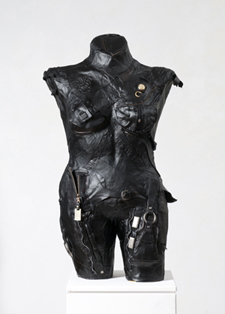 Linda Stein, Defender 696, 2010, leather, metal, and mixed media, 38 x 22 x 14 in. (artwork © Linda Stein)
Linda Stein. HUB Gallery, HUB-Robeson Center, Pennsylvania State University, University Park, Pennsylvania, September 5–November 20, 2014. The Fluidity of Gender: Sculpture by Linda Stein. Sculpture.
Northeast

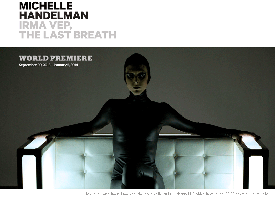 Michelle Handelman, Irma Vep, the last breath, 2013, 4-channel HD video installation, 33:00 min. (artwork © Michelle Handelman; photograph by Laure Leber)
Michelle Handelman. NewFest, Lincoln Center, New York, July 27, 2014. Irma Vep, the Last Breath. Single-channel video.

Michael Rich. Old Spouter Gallery, Nantucket, Massachusetts, August 8–21, 2014. A Season’s Journey, Not Far from Home. Painting.
West
Angela Ellsworth. Lisa Sette Gallery, Scottsdale, Arizona, January 2–February 1, 2014. Volume. Works on paper and cardboard.
Michelle Handelman. Outfest, REDCAT, Los Angeles, California, July 19, 2014. Irma Vep, the Last Breath. Single-channel video.
People in the News
posted by CAA — October 17, 2014
People in the News lists new hires, positions, and promotions in three sections: Academe, Museums and Galleries, and Organizations and Publications.
The section is published every two months: in February, April, June, August, October, and December. To learn more about submitting a listing, please follow the instructions on the main Member News page.
October 2014
Academe
Amy Freund, previously an assistant professor at Texas Christian University in Fort Worth, has become assistant professor and Kleinheinz Family Endowed Chair in Art History in the Meadows School of the Arts at Southern Methodist University in Dallas.
Adriene Jenik, director of the Herberger Institute School for Design and the Arts at Arizona State University in Tempe, has taken a year’s leave, which began on August 1, 2014.
Stephanie Langin-Hooper has left Bowling Green State University in Bowling Green, Ohio, to begin a new position as assistant professor and Karl Kilinski II Endowed Chair of Hellenic Visual Culture in the Department of Art History at Southern Methodist University in Dallas, Texas.
Aleca Le Blanc has left her position as managing editor of the Getty Research Journal at the Getty Research Institute in Los Angeles, California, to become assistant professor of Latin American art in the Department of the History of Art at the University of California, Riverside.
Kathryn Maxwell has been appointed acting director of the Herberger Institute School for Design and the Arts at Arizona State University in Tempe.
Judith Rodenbeck, professor of modern and contemporary art at Sarah Lawrence College in Bronxville, New York, has accepted a position on the faculty of the Department of Media and Cultural Studies at the University of California, Riverside, for the 2014–15 academic year.
Ashley Thompson, formerly senior lecturer in the School of Fine Art at Leeds University in England, has become professor and Hiram W. Woodward Chair in Southeast Asian Art in the University of London’s School of Oriental and African Studies.
Museums and Galleries
Esther Bell, formerly curator of European paintings, drawings, and sculpture at the Cincinnati Art Museum in Ohio, has become the new curator in charge of European paintings at the Fine Arts Museum in San Francisco, California.
Kate Ezra has left her position as Nolen Curator of Education and Academic Affairs at the Yale University Art Gallery in New Haven, Connecticut.
Erika Holmquist-Wall, formerly assistant curator of paintings at the Minneapolis Institute of Arts in Minnestoa, has been named Mary and Barry Bingham Sr. Curator of European and American Painting and Sculpture at the Speed Art Museum in Louisville, Kentucky.
Ted Mann, formerly assistant curator at the Solomon R. Guggenheim Museum in New York, has become a San Francisco–based consulting curator for the museum’s Panza Collection.
Virginia Reynolds, curatorial assistant for the Detroit Institute of Arts in Michigan, has left her position at the museum.
Kailin Weng has left her position at Chinese art project manager at the Smithsonian Institution’s Freer and Sackler Galleries in Washington, DC. She is now a graduate student at Harvard University in Cambridge, Massachusetts.
Organizations and Publications
Roger Thorp, formerly publishing director for Tate Publishing in London, England, has been appointed editorial director for art and children’s books at Thames and Hudson, also in London.
Institutional News
posted by CAA — October 17, 2014
Read about the latest news from institutional members.
Institutional News is published every two months: in February, April, June, August, October, and December. To learn more about submitting a listing, please follow the instructions on the main Member News page.
October 2014
The Sterling and Francine Clark Art Institute in Williamstown, Massachusetts, has been awarded a grant of $118,737 from the Institute of Museum and Library Services, a federal agency, in the Museums in America program. The Clark will use the funds to digitize significant volumes from the Julius S. Held Collection of Rare Books.
The North Carolina Museum of Art in Raleigh has accepted a $1.9 million grant from the State Employees’ Credit Union Foundation to help fund research in art education.
The University of Texas at Dallas has received a $17 million contribution from the arts patron Edith O’Donnell to create the school’s new Edith O’Donnell Institute of Art History, which opened this fall.
Grants, Awards, and Honors
posted by CAA — October 15, 2014
CAA recognizes its members for their professional achievements, be it a grant, fellowship, residency, book prize, honorary degree, or related award.
Grants, Awards, and Honors is published every two months: in February, April, June, August, October, and December. To learn more about submitting a listing, please follow the instructions on the main Member News page.
October 2014
Grimanesa Amorós, an artist based in New York, has been named the 2014 Lebowitz Visiting Artist in Residence for the Mary H. Dana Women Artists Series at the Institute for Women and Art at Rutgers University in Piscataway, New Jersey.
Paul Catanese, associate professor at Columbia College Chicago in Illinois and director of his school’s MFA program for interdisciplinary arts and media, has received a 2014 Efroymson Contemporary Arts Fellowship. The award will support his studio practice and help to expand work on his project visible from space. Catanese will also develop visible from space in early October during a Playa Artists’ Residency in eastern Oregon.
Blane De St. Croix has received a 2014–15 residency in Brooklyn, New York, from the Sharpe-Walentas Studio Award Space Program (formerly known as the Marie Walsh Sharpe Art Foundation).
Caitlin Earley, a graduate student in the Department of Art and Art History at the University of Texas at Austin, has received a 2014–15 junior fellowship in Precolumbian studies from Dumbarton Oaks Research Library and Collection in Washington, DC. The award will support her project, titled “At the Edge of the Maya World: Power, Politics, and Identity in Monuments of the Comitán Valley.”
Danielle Joyner, assistant professor of medieval art history at the University of Notre Dame in Notre Dame, Indiana, has received a 2014–15 fellowship in garden and landscape studies from Dumbarton Oaks Research Library and Collection in Washington, DC. She will work on a project called “Landscapes and Medieval Arts.”
Micheline Nilsen, a faculty member in art history at Indiana University South Bend, has accepted a 2014–15 fellowship in garden and landscape studies from Dumbarton Oaks Research Library and Collection in Washington, DC. Her project is titled “From Turnips to Lawn Chairs: Allotment Gardens in Europe, 1920 to 1975.”
Camille Serchuk, professor of art at Southern Connecticut State University in New Haven, has been awarded a 2014–15 fellowship from the National Humanities Center, based in Research Triangle Park, North Carolina. She will work on her project, “Realm and Representation: Art, Cartography and Visual Culture in France, 1450–1610.”
Exhibitions Curated by CAA Members
posted by CAA — October 15, 2014
Check out details on recent shows organized by CAA members who are also curators.
Exhibitions Curated by CAA Members is published every two months: in February, April, June, August, October, and December. To learn more about submitting a listing, please follow the instructions on the main Member News page.
October 2014
Charlotte Ickes and Iggy Cortez. Itinerant Belongings. Slought Foundation and Charles Addams Fine Arts Hall, University of Pennsylvania, Philadelphia, Pennsylvania, November 1–December 20, 2014 (Slought Foundation); November 1–22, 2014 (Charles Addams Fine Arts Hall).

 Courtney Puckett, May Day’s Eye Flower, 2014, fabric, marker, and thread, 48 x 48 in. (artwork © Courtney Puckett)
Katerina Lanfranco. All Worked Up. Rhombus Space, Brooklyn, New York, September 12–October 5, 2014.
Tirza True Latimer. Harmony Hammond: Becoming/UnBecoming Monochrome. RedLine, Denver, Colorado, August 2–September 28, 2014.

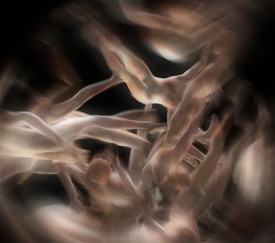 Kurt Hentschläger, detail of HIVE, 2011, 3D-animated audiovisual installation (artwork © Kurt Hentschläger)
Ellen K. Levy. Sleuthing the Mind. Pratt Manhattan Gallery, New York, September 17–November 5, 2014.

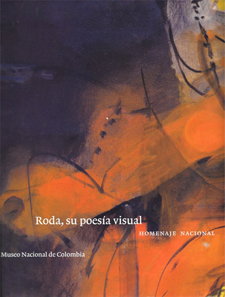 Promotional image for Roda, su poesía visual
María Margarita Malagón-Kurka. Roda, su poesía visual. Museo Nacional de Colombia, Bogotá, Columbia, April 11–August 3, 2014.
Theresa Papanikolas. Art Deco Hawaii. Honolulu Museum of Art, Honolulu, Hawai‘i, July 3, 2014–January 11, 2015.

 Promotional image for Paper Bullets
Catherine Tedford. Paper Bullets: 100 Years of Political Stickers from around the World. Hatch Kingdom Sticker Museum, Berlin, Germany, September 13–October 24, 2014.
Books Published by CAA Members
posted by CAA — October 15, 2014
Publishing a book is a major milestone for artists and scholars—browse a list of recent titles below.
Books Published by CAA Members appears every two months: in February, April, June, August, October, and December. To learn more about submitting a listing, please follow the instructions on the main Member News page.
October 2014

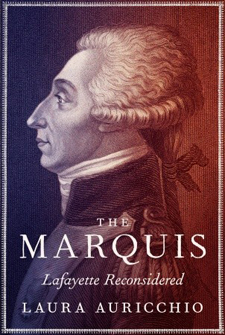
Laura Auricchio. The Marquis: Lafayette Reconsidered (New York: Alfred A. Knopf, 2014).

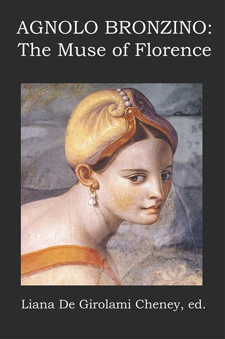
Liana De Girolami Cheney, ed. Agnolo Bronzino: The Muse of Florence (Washington, DC: New Academia Publishing, 2014).

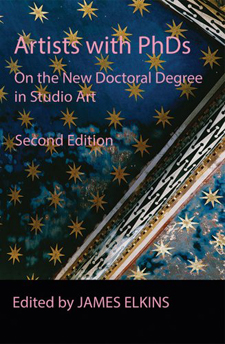
James Elkins, ed. Artists with PhDs: On the New Doctoral Degree in Studio Art, 2nd ed. (Washington, DC: New Academia Publishing, 2014).

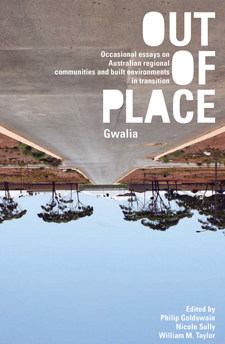
Philip Goldswain, Nicole Sully, and William M. Taylor, eds. Out of Place (Gwalia): Occasional Essays on Australian Regional Communities and Built Environments in Transition (Crawley: University of Western Australia Press, 2014).

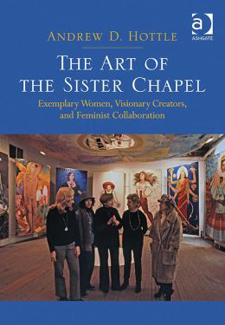
Andrew D. Hottle. The Art of the Sister Chapel: Exemplary Women, Visionary Creators, and Feminist Collaboration (Burlington VT: Ashgate, 2014).

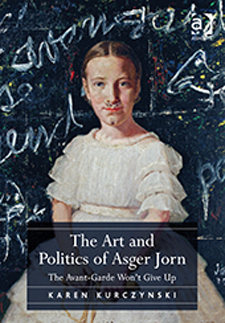
Karen Kurczynski. The Art and Politics of Asger Jorn: The Avant-Garde Won’t Give Up (Burlington VT: Ashgate, 2014).

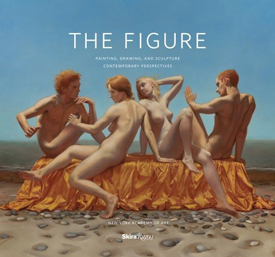
Margaret McCann, ed. The Figure: Painting, Drawing, and Sculpture (New York: Skira Rizzoli, 2014).
Humanities E-Book Releases Round 11: Available to CAA Members
posted by CAA — October 14, 2014
The American Council of Learned Societies Humanities E-Book (HEB) released Round 11 of their online collection this August. These 353 titles bring the total of the volumes in the collection to 4,315. The new round includes additional titles from two of HEB’s original publishing partners, Oxford University Press and Harvard University Press, as well as books from new partners such as University of Toronto Press and Michigan State University Press.
All the titles in Humanities E-Book are available to College Art Association members. The American Council of Learned Societies Humanities E-Book (HEB) makes individual subscriptions available through standing membership in any of the 72 ACLS constituent societies.
The subscription offers unlimited access to 4,315 cross-searchable, full-text titles across the humanities and related social sciences. The titles in HEB have been selected and peer reviewed by ACLS constituent learned societies for their continued value in teaching and researching. The collection comprises both in- and out-of-print titles ranging from the 1880s through the present, and includes many prize-winning works. It also includes special series such as the Records of Civilization: http://www.humanitiesebook.org/the-collection/series_ROC.html and the College Art Association Monographs: http://www.humanitiesebook.org/the-collection/series_CAA.html.
Individual subscriptions are ideal for those whose school might not yet have an institutional subscription to HEB or for individual members of a learned society who might not be affiliated with a subscribing institution. (A full list of subscribing institutions can be found on the HEB website, at http://www.humanitiesebook.org/subscriptions-pricing/subscribing-institutions.html.) Individual subscriptions are USD $40.00 for a twelve-month subscription, and College Art Association members can sign up via the HEB website: http://www.humanitiesebook.org/subscriptions-pricing/individuals.html.
For more information about individual subscriptions, contact subscriptions@hebook.org.
Committee on Women in the Arts Picks for October 2014
posted by CAA — October 10, 2014
Each month, CAA’s Committee on Women in the Arts selects the best in feminist art and scholarship. The following exhibitions and events should not be missed. Check the archive of CWA Picks at the bottom of the page, as several museum and gallery shows listed in previous months may still be on view or touring.
October 2014

Cover of the catalogue for Judith Scott: Bound and Unbound
Judith Scott: Bound and Unbound
Brooklyn Museum
Elizabeth A. Sackler Center for Feminist Art, Fourth Floor, 200 Eastern Parkway, Brooklyn, NY 11238
October 24, 2014–March 29, 2015
Bringing together sculptures and works on paper that span the eighteen years of her career, this much-awaited exhibition is the first survey of Judith Scott’s work that Matthew Higgs has described as “one of the most important bodies of work—‘insider’ or ‘outsider’—produced anywhere and under any circumstances in the past twenty years.”
Judith and her twin sister Joyce were born in Columbus Ohio. Judith was diagnosed with Down syndrome and considered retarded due to learning difficulties caused from undiagnosed deafness. At the age of eight she was tragically separated from her sister and spent the next thirty-five years of her life as ward in Dickensian institutions for the disabled and the discarded. Her art production began after Joyce decided to become Judith’s legal guardian and introduced her to a visionary studio-art program, the Creative Growth Art Center.
Judith Scott developed a unique and idiosyncratic method to produce a body of work of remarkable originality and visual complexity. Often working for weeks or months on individual pieces, she begun by pilfering and assembling together all sorts of objects; she then enveloped and intertwined them with miscellaneous threads, twines, strings, ropes, and fibers, somewhat protecting and concealing their core. As the art historian Lucienne Peiry says, her unconventional textile sculptures “are endowed with an intense power of expression: they resemble giant multicolored cocoons and … are evocative of magical fetishes” holding a special connection to life and death. Moreover, although it does not appear that her work was directed by intention, “these sculptures conceal a secret that their author always took great care to hide…. There is no doubt but that the sculptures themselves play an essential role in embodying the physical presence—that of ‘the other twin’—throughout the feverish act of creation. Judith Scott’s approach thus involved a process that may seem paradoxical because, on one hand, it consisted of dissimulating and concealing, and on the other hand, of growing and shaping…. The emotional and physical reunion with her sister led Judith Scott to recover an identity, and then to develop an intimate experience at a fantasy level where she sublimated the tearing apart of which she was a victim.”
Marlene Dumas: The Image as Burden
Stedelijk Museum
Museumplein 10, Amsterdam, the Netherlands
September 6, 2014–January 4, 2015
Closely examining key themes and motifs that Marlene Dumas has developed throughout her career, Marlene Dumas: The Image as Burden is the first major solo exhibition of her work in the Netherlands in twenty years. It is also the most comprehensive retrospective survey of her work in Europe to date. The title of the exhibition derives from the work The Image as Burden (1993) and refers to the conflict between the painterly gesture and the illusion of the painted image. The exhibition brings together almost two hundred drawings and paintings from private and museum collections throughout the world.
Dumas was born in Cape Town, South Africa, in 1953 and moved to Amsterdam after her studies at the Ateliers ‘63 in Haarlem. Today she is considered one of the most significant and influential painters. While often inspired by images found in newspapers and magazines, she has been renewing the meaning of painting in an era dominated by visual culture. Believing that the endless stream of photographic images that bombards us every day influences how we see each other and the world around us, she redresses this onslaught by focusing on the psychological, social, and political aspects of the image. Her intense, emotionally charged paintings and drawings address existentialist themes and often reference art-historical motifs and current political issues.
In addition to her most important and iconic works, the exhibition presents lesser-known paintings and drawings, including many works never before seen in the Netherlands, and a selection of her most recent paintings. While paying special attention to her early Amsterdam production (1976–82), the Stedelijk presentation features a number of exclusive highlights, such as a gallery devoted to drawings that have come straight from her studio, which have rarely been on public view, and the one-hundred-piece series Models from the collection of the Van Abbemuseum.
Niki de Saint Phalle
Grand Palais Galeries Nationales
Paris, France
September 17–February 2, 2015
Curated by Camille Morineau for the Grand Palais and traveling to the Guggenheim Museum in Bilbao, this is a major retrospective of the work of Niki de Saint Phalle, one of the most popular and innovative artists of the previous century. Mapping the opposing and often conflicting forces of eros and thanatos, creation and destruction, joie de vivre and trauma, feminity and masculinity, that underpin her production and illuminating key aspects of her poetics and multifaceted politics, the exhibition brings together an incredible assortment of her prolific oeuvre in all the media that she worked—paintings, assemblages, sculptures, works on paper, films, theater settings, illustrated books, etc.
Already by the early 1960s de Saint Phalle had an unusually successful international career for a female artist of her time. Propelled by the outrageousness of her shooting events as well as the joie de vivre of her signature Nanas, her fame quickly transcended not only national borders but continents, often providing rare inspiration to other female artists as manifested by her inclusion, by Mona Gorovitz in a 1965 essay in São Paolo that highlighted the achievements of women artists. While honored with major museum shows, retrospectives, including a museum dedicated to her in Japan, both posthumously and while still living, the complexities of de Saint Phalle’s contribution to international postwar avant-garde and their diverse politics, including the feminism underpinning her work, have not yet been fully examined or appreciated. Her recent inclusion in the Museum of Modern Art’s sixties rooms acknowledges finally her place in postwar Neodada and Pop scene; yet the failure of this exhibition to be hosted in an American institution proves the ongoing resistance to embrace de Saint Phalle as a great artist rather than a beautiful woman or just the partner of Jean Tinguely, an exotic outsider, a commercially successful irrelevance, a naïve colorist or essentialist. Illuminating lesser-known bodies of works with feminist effects, such as her series Devouring Mothers, and accompanied with a catalogue that brings together leading scholars of postwar art, de Saint Phalle and feminist art—such as Amelia Jones and Sarah Wilson, in thorough investigation of all periods and aspects of her work, including her life and writings, the exhibition offers a serious reassessment of de Saint Phalle’s work and its importance.
De Saint Phalle was born in France to an upper-class family of aristocratic and Catholic Franco-American origins and raised in New York. Although educated for the “marriage market,” and briefly modeling, she turned decisively to art upon a nervous breakdown while leading an unconventional family life in France. In the early 1960s she left her children to devote herself to art, eventually joining Tinguely to an extraordinary creative partnership that outlived their relationship. In 1961 she was the only female artist accepted in the circle of New Realism in Paris for her shooting paintings, themselves a groundbreaking performative and participatory form of painting by gun, but the politics of her work were also welcomed as example of the Figuration Narrative. Around 1963 she rediscovered herself as a sculptor, channeling the protofeminist underpinnings of her multifaceted rebellion against patriarchal power to a critical investigation of the stereotypical role of the feminine in Western society as well as an empowering and celebratory reenvisioning of it through the grotesque and joyous bodies of her now signature Nanas. Complementing her own critical contemplation on maternity and motherhood, her pioneering film Daddy in 1973 (in collaboration with Peter Whiteread) debunked patriarchal power, daringly addressing and revenging a repressed childhood trauma, her violation by her father, that she would later continue to address in autobiographic writings. In interviews of the early 1960s, de Saint Phalle, however, was always describing one major driving dream of her practice since her first encounter of the work of Gaudí and Facteur Cheval: to make joyous sculpture gardens. Since the 1970s she indeed channeled her energy in making her dream a reality, with a true belief in the life-changing democratic power of joy-giving public art. Her magnum opus, The Tarot Garden (1978–98), is the ultimate proof of the ambition and vision, monumentality and complexities of her architectural sculptural oeuvre, but so are many homes, playgrounds, public fountains, and sculptural complexes around the world that unfold central themes of her mythopoetic imagination and its politics.
Mika Tajima: Total Body Conditioning
Art in General
79 Walker Street, New York, NY 10013
September 13–October 25, 2014
Art in General presents Total Body Conditioning,a new commission by the New York–based artist Mika Tajima. Invoking technologies developed to control and affect the body, the exhibition is presented as three scenes: display, work, and fitness. Each scene in the exhibition outlines bodily experiences in different time and space. Contexts change, while the human body consistently becomes a target of power, where individual practices of freedom are intertwined with modes of domination.
Born in Los Angeles in 1975, Tajima use sculpture, painting, video, music, and performance to investigate how material objects define the action and engagement of the performing subject in a constructed space.
Exhibited works include hot-tub painting, reverse spray enameled in saturated gradient colors. Created specifically for the exhibition, these objects are ergonomically molded to the human form, emphasizing how the body is articulated in relation to an object. Tajima will also present a new group of works from her Furniture Art series. This consist of spray-enameled transparent paintings that are subtitled based on diverse geographic locations that draw on the psychological and geographic associations produced by the affective names of industrial colors and paints.
In addition, the exhibition features Negative Entropy‖, a new series of abstract acoustic-woven textile portraits resulted from recordings at a Toyota car factory in Japan and a server collocation center. The recordings were translated into image files and later interpreted by a weaving designer into a tangible fabric. Many of the works in the exhibition are set to shifting lighting and sound sequences, among them, a sound collaboration between New Humans, a group with which Tajima has collaborated before.
Disobedient Objects
Victoria and Albert Museum
Cromwell Road, London SW7 2RL United Kingdom
July 26, 2014–February 1, 2015
The Victoria and Albert Museum presents Disobedient Objects, a pioneering exhibition that investigates the powerful role of objects in movements for social change. Focusing on the period from the late 1970s until now, a time of constant technological development and political challenges, the exhibition demonstrates how political activism drives toward a collective creativity that challenges standard definitions of art and design. Evidencing arts of rebellion from around the world, the object are mostly produced by “nonprofessional” makers that work collaboratively with limited and accessible resources, resulting in effective responses to complex situations.
Since many of the artifacts were loaned directly from activist groups, the objects exhibited were hardly ever seen in a museum before. This exhibition provides a unique opportunity to observe these Disobedient Objects within a contextual background that includes newspaper cuttings, how-to guides, interviews, and footage of the objects in action, along with the makers’ statement explaining how and why the objects were created.
The exhibition is organized in several sections, including the introduction of the design of activist objects in relation to four ways of effecting social change: direct action, speaking out, making worlds, and solidarity. From a tableau of three puppets used in protests against the first Gulf War by the politically radical United States–based Bread and Puppet Theater, to simple pamphlets, to hand-painted placards by gay-rights activists, to banners used in conjunction with social media—solidarity can be demonstrated by even the smallest objects.
The final part of the exhibition maps out every “visual” protest since 1979. The case studies include an installation of masks and posters by the Guerrilla Girls, the anti–death penalty Tiki-Love Truck by the artist Carrie Reichardt, and a project by the Barbie Liberation Organization, responsible for switching the voice boxes on hundred of toys, including talking GI Joe and Barbie dolls, a project that sparked a widespread discussion about gender stereotypes.
Katie Paterson: Future Library
Oslo, Norway
The Berlin-based artist Katie Paterson launched Future Library, her new public artwork that will unfold over the next one hundred years in the city of Oslo, Norway. From 2014 to 2114, Paterson, along the leading publishers and editors from Future Library Trust, will invite one writer every year to contribute a new text to a growing collection of the as-yet unpublished and unread manuscripts. The Future Library project has received its foundations as a gift from the City of Oslo: a forest in Nordmarka. There, Paterson planted one thousand new trees in May 2014. These trees will be cut down in 2114 in order to provide the paper on which the commissioned texts along a century will be printed as an anthology of books. Currently, Future Library exists as a limited-edition “certificate” print that entitles the holder to a copy of the anthology in 2114, an anthology of stories that will only be read beyond the lifetime of certificate holders, writers, and the artist herself.
Paterson (b. 1981, Glasgow) is known for her conceptually driven works that make use of sophisticated technologies. Her poetic installations evidence her philosophical engagements between people and their natural environment, an engagement that derives from an intensive and sensitive research and collaboration with specialists as diverse as astronomers, geneticists, nanotechnologists, and fireworks.
Paterson has named the prizewinning author, poet, essayist, and literary critic Margaret Atwood as the first writer to contribute to Future Library. Atwood has begun writing the first text that will be handed over at a special event to be held in May 2015. While the forest shows the slow growth of the trees and the library, inch by inch, year by year, Paterson’s work engages with the landscape, as a physical entity and as an idea. As Atwood stated when invited to be part of this endeavor: “This project, at least, believes the human race will still be around in a hundred years!”—a hopeful sense of reality that stands beyond the purely visible.
Survey on CAA Guidelines for Faculty Teaching in New Media
posted by CAA — September 24, 2014
Dear Colleague,
We are writing to ask for your insights regarding practices in new media by taking the following survey: http://bit.ly/CAAsurvey – this should take approximately 20 minutes for you to complete.
The information gathered from this survey will be used to assist the CAA Professional Practices Committee Taskforce on updating and improving the existing CAA Guidelines for Faculty Teaching in New Media, which can be found at http://www.collegeart.org/guidelines/newmedia07. This document is a description of circumstances, standards, and practices within the field. Its purpose is to assist with faculty hiring, promotion and tenure, workload, compensation, funding, and support in new media, and to provide information about faculty working in this area that could be used in making accurate and comprehensive evaluations.
Our aim is to revise these guidelines into order to the better reflect current practices, and to ensure that it is a useful document for all stakeholders. In February 2015 we will be making initial recommendations for revision, based on this survey and interviews with those in the field. Our goal is to have the updated document(s) approved by the CAA Board by May 2016.
If you are interested in being interviewed by our committee members, please contact us at caanewmediataskforce@gmail.com. In addition, we ask that you forward this email to your colleagues, whose input is valuable. In addition to New Media Faculty, we would especially like to involve colleagues with administrative duties overseeing practitioners who work with new media as well as part-time and contingent faculty in this survey.
The survey will end on November 15, 2014.
We thank you for your time, and look forward to your input.
Sincerely,
CAA Professional Practices Committee Taskforce on New Media Guidelines:
Paul Catanese, Columbia College Chicago
Rachel Clarke, California State University, Sacramento
Chris Coleman, University of Denver
Michael Grillo, The University of Maine
Heidi May, Columbus State University
Ellen Mueller, West Virginia Wesleyan College
Joanna Spitzner, Syracuse University
Amy Youngs, The Ohio State University
David Rosand: In Memoriam
posted by CAA — September 19, 2014
Paula Carabell received her PhD from Columbia University in 1994 with a dissertation on the work of Michelangelo and Titian. She has published on Renaissance and contemporary art and currently teaches at Pratt Institute.

David Rosand
It is with great sadness that I write that David Rosand, Meyer Schapiro Professor of Art History Emeritus at Columbia University, died on August 8, 2014, at the age of 75. Known for his work on Titian and Veronese and for his breadth of knowledge in the field, he maintained a long association with Columbia, which he attended as both an undergraduate and a graduate student, subsequently joining the faculty of the Department of Art History and Archaeology in 1964, where he remained until he taught his last class in 2013. Rosand’s many students will remember him as a kind, generous, erudite, and elegant scholar who extended his expertise and help even to those whose areas of research went beyond his own field, the Italian Renaissance.
Rosand was, above all, a passionate and dedicated advocate of the art of Renaissance Venice, An active member of Save Venice, he served on the foundation’s board of directors from 1998 onward and acted as project director from 2003 until his death. So that future generations might also come to know and love Venice, he was instrumental in acquiring the residence of one his own mentors and colleagues, Michelangelo Murano, past director of the Ca’ d’Oro museum, which now serves as the Columbia University Center for Study in Venice at Casa Murano. This seems a fitting legacy for one who, as a graduate student, expressed concern to his teacher, the legendary Rudolf Wittkower, that Venice was sinking—to which Wittkower replied, “Tsk, tsk, it will be there as long as you need it.” And thankfully for all who heard him lecture or who read his work, so it was.
It was, of course, to the art of Titian that he dedicated the largest part of his career. As an undergraduate at Columbia in the 1950s, Rosand, who had been an editor and cartoonist for the school’s humor magazine the Jester, had considered becoming a painter and, as such, would have become part of the Abstract Expressionist movement. This, however, never came to pass despite encouragement and an offer of studio space from his undergraduate mentor. In an oft-repeated story, Rosand recalled that “the prospect of being alone with a canvas so frightened me that I came back and threw myself into art history.” It was, however, the idea of the brushstroke and the painterly gesture that ultimately stayed with him, and the transition from the New York School of painting to the art of the Serenissima proved to be a natural one. As the artist Willem de Kooning had pointed out, “flesh is the reason that oil paint was invented,” and Rosand explored this notion most thoroughly in the work of Titian. Standing with him once at the Titian, Prince of Painters exhibition at the Palazzo Ducale in Venice, I marveled at how intensely he searched the surface of the canvas, how he seemed to perceive nuances of painterly gesture that it appeared only he could see. And indeed it was the interaction of oil paint and canvas, of pen and paper, of chisel and stone, to which Rosand always returned. His injunction to “always start with the object” proved to be sound advice in an age of art-historical scholarship that all too often turned to issues that seemed to eschew the very act of image making.

David Rosand at the Accadenua Gallery in Venice
Rosand was an eloquent writer who instilled in his students an appreciation for the poetic aspects of both word and image. Whether it was about Titian’s sensual poesia created for Philip II or the final Pietà that the artist had intended for his own tomb, Rosand made one aware of the deeper levels of meaning that adhered to the work itself, most notably, the pathos inherent in the art of painting.
It is to that sense of pathos that we return upon his passing. It is not only that we will be deprived of further publications like his many contributions to scholarly journals or such major works as Painting in Cinquecento Venice: Titian, Veronese, Tintoretto (1982), The Meaning of the Mark: Leonardo and Titian (1988), and Myths of Venice: The Figuration of a State (2001), plus important monographs on Titian and Veronese, but to the man himself. To those who knew him, we will miss the way that Rosand seem to glide through the halls of Schermerhorn, how in the classroom his lectures seemed to meander in an evocative circle of images and ideas and then culminate in a burst of wisdom and insight, and, of course, his favorite call to arms, “coraggio,” when we began to question our own work.
Rosand was accorded many honors and earned the Great Teacher Award from the Society of Columbia Graduates in 1997 and the Award for Distinguished Service to the Core Curriculum from the Heyman Center for the Humanities at Columbia in 2000. He received recognition from such organizations as the National Endowment for the Humanities, the John Simon Guggenheim Memorial Foundation, the American Academy in Rome, and the American Academy of Arts and Sciences. In May 2014, Rosand was awarded the degree of doctor of letters, honoris causa, from Columbia to recognize his many contributions to the field of art history and to the life of the university.
David Rosand, who died of cardiac amyloidosis, is survived by his wife Ellen Rosand, professor of music at Yale University; by his sons Jonathan, a neurologist at Massachusetts General Hospital, and Eric, a senior counterterrorism policy official at the US State Department; and by five grandsons. He will be greatly missed by the many whose lives he touched.