CAA News Today
John M. Rosenfield: In Memoriam
posted by CAA — September 18, 2014
Richard Edwards is professor emeritus of the history of Chinese art at the University of Michigan in Ann Arbor.

John M. Rosenfield
My recollections of John M. Rosenfield, one of the preeminent historians and curators of Asian Art who taught for decades at Harvard University, are vivid and convey my sense of loss upon learning of his death, on December 16, 2013, at the age of 89. We shared the same “vibrations” as we passed through the life of our careers, hopefully to our mutual profit but certainly to mine. His book on Chōgen’s wooden portraiture is beside me as I write these words.
Rosenfield was a consistently energetic force in our field from the time we were in graduate school together. Our view of the Far East was nurtured during the 1950s in the musty yet friendly basement environment of Harvard’s Rubell Library, where the books on Asian art were kept, under the guiding hand of Benjamin Rowland.
John had an extraordinary sense of personal relations. We will never forget how closely related he was to this personal approach. He was not just a professional. He was a great man because he was a warm-hearted person, one whom you could always meet on a personal level, a quality seldom found in those too wrapped up in their professional duties and accomplishments.
It goes without saying we shared an interest in the world of art, but in addition his memory is warmly related to activities of our whole family. Along with his intellectual skill, this made him a great man to us. We lived in the same rented house serially, at Teramachi Imadegawa-angaru Junenji-mai in Kyoto, not far from the Imperial Palace grounds, in 1958–59. Later the Rosenfields lived there in 1964, and we took up occupancy again in the summer of 1964 after their departure.
John reached out to my children and family, who remember how welcoming he and his wife Ella were when we stopped over in Los Angeles and stayed with them on our way to the Far East. He was especially helpful to my daughter, Joan, a college sophomore at the time (1968/69), who was apartment hunting in Boston having found a summer job there. She did not meet with immediate success, and as John drove her to various locations he reassured her that the “Perfect Pumpkin is somewhere,” instilling hope that the ideal apartment was just around the corner. If one is willing to share family matters with a friend, it isa clear indication of resilience in dealing with the inevitable problems of living.
His kindness to our family was an emanation of warmth from his own with Ella and his two children, Sarah and Paul Thomas. My lateness in expressing my thoughts in no way diminishes the shock and bereavement felt at having to relinquish such a constant friend and insightful scholar so superior in humanity. Would that he were still working among us.
Committee on Women in the Arts Picks for September 2014
posted by CAA — September 10, 2014
Each month, CAA’s Committee on Women in the Arts selects the best in feminist art and scholarship. The following exhibitions and events should not be missed. Check the archive of CWA Picks at the bottom of the page, as several museum and gallery shows listed in previous months may still be on view or touring.
September 2014

Simone Forti, Crescent Roll in an unknown venue in New York, 1979, gelatin silver print, (photograph © Nathaniel Tileston)
Thinking with the Body: A Retrospective in Motion
Museum der Moderne Salzburg
Mönchsberg 32, 5020 Salzburg, Austria
July 18–November 9, 2014
Museum der Moderne Salzburg presents the first comprehensive retrospective of the significant work of the “movement artist” Simone Forti (b. 1935, Florence). The program for Thinking with the Body: A Retrospective in Motion includes numerous performances, many of them presented in live enactments, as well as an exhibition of the artist’s sculpture, drawing, work with holograms and sound, and video that demonstrates her strikingly broad creative practice.
A choreographer, dancer, artist, and writer, Forti figured prominently in postmodern dance and Minimal art. She has been engaged with kinesthetic awareness and composition, dedicating herself to experimentation and improvisation. Her artistic projects include collaborations with other artists, such as the musicians Charlemagne Palestine and Peter Van Riper. In the early 1960s, together with dancers including Steve Paxton and Yvonne Rainer, Forti introduced movements from everyday life, revolutionizing the idea of dance and performance art. When living near the zoo in Rome in the late 1960s, she began to develop performance pieces based on the movements of animals. Forti also explored working with minimalist objects made of simple materials. In her most recent works, the News Animations, she includes spoken words in her dance, evidencing her ongoing interest in incorporating current events into movement. Through these works, the artist states that physicality and the language relationship to thought are pretty basic to us.
During the duration of the exhibition, students at the Salzburg Experimental Academy of Dance will enact Forti’s famous Dance Constructions (1960–61) and other performance pieces in the galleries and in public spaces.
Annette Messager: Motion/Emotion
Museum of Contemporary Art Australia
140 George Street, The Rocks, Sydney, NSW 2000, Australia
July 24–October 26, 2014
The Museum of Contemporary Art Australia celebrates the work of the internationally renowned French artist Annette Messager with the artist’s first retrospective in Australia. Messager’s diverse practice encompass drawing, artist’s books, photography, sculpture, and installation and is characterized by her modest choice of materials (clothing, stuffed toys, yarn, etc.), images culled from pop culture, a multifaceted toying with language, and the underpinning centrality of the body.
As put by the curator of the show, Rachel Kent, “since her debut in the Paris art scene in 1971–72, Messager has created an eccentric menagerie of creatures” whose often hybrid nature captures the “complexity of life as well as the mythologies, superstitions, and vanities that underpin it—the shadowy ‘other’ within us all. From her earliest works exploring concepts of the feminine, to works of the 1980s that explore hybrid beings or ‘chimeras,’ to later works featuring dismembered soft toys, unraveled woolen sweaters, and hand-stitched limbs and organs, the body remains central, while identity is destabilized.”
Featuring works from the early 1970s to the present, including her large kinetic installations, Annette Messager: Motion/Emotion reflects a crucial duality—motion and emotion—that underpins the artist’s practice and infatuation with what she describes as the fantastic in everyday life, rather than in the imagination. While motion is central to Messager’s recent works—whether employing mechanical elements, complex inflating mechanisms, household objects, or the movement of the spectator—it is by “probing the body from outside and within” that Messager’s work reveals “the keen interest in humanity and fragile, emotional core” that this exhibition seeks to highlight.
Ewa Partum: Installations and Provocations
Limerick City Gallery of Art
Carnegie Building, Pery Square, Limerick, Ireland
July 17–September 14, 2014
Limerick City Gallery of Art presents the first exhibition of Ewa Partum’s work in Ireland, examining notions of gestural and symbolic “public place.” Defining the essence of her work through the tautology of “the act of thought” and the “act of art,” Partum (b. 1945, Grodzisk Mazowiecki) belongs to the first generation of the Polish conceptual avant-garde and is a pioneer of feminist art. Embedded in the mail-art tradition, concrete poetry, and performance, and with a language-oriented conceptual spine, her work, since the mid 1960s, has variously and provocatively touched upon such issues as the notion of public space, the situation of women, female subjectivity, and the Polish political context. She was the first woman artist to encroach upon public space in the nude in Poland, publicly making a value statement about being a female artist, basing her art and its vocabulary on her specific experience as a woman, and connecting her artistic gestures with political statements and a visible presence in the public. Her work includes actions, objects, photography, films that she herself calls “tautological cinema,” visual poetry performances, and mail art.
For a long time the reception of Partum’s work was hampered by East–West division, and following the imposition of martial law in Poland she left her country to live in Berlin (since 1983). Her 2006 retrospective in Gdansk and her inclusion in Wack! Art and the Feminist Revolution (2007–8) have marked her recent international acknowledgment as one of the leading figures of feminist and conceptual avant-garde in Poland and beyond.
Three Person Show: Tamar Ettun, Monika Sziladi, Aimee Burg
Bosi Contemporary
48 Orchard Street, New York, NY 10002
September 17–October 18, 2014
Curated by Naomi Lev, this exhibition explores the distinct role of object-human relationship as manifested in the work of three New York–based artists: Tamar Ettun, Monika Sziladi, and Aimee Burg, all 2010 graduates of the Yale MFA program but of diverse cultural origins and practices.
Incorporating repetitive and meditative tasks using metaphoric objects from everyday life, Burg’s installation revolves around the notion of rituals and the suspension of time. Her recycling of mundane objects of everyday rituals renders them archeological artifacts that preserve ancient ceremonial events. The installation’s dynamic presence plays with the relevance of “time” by bringing the past into a science fiction–like future.
In her recent series of works, Ettun explores the concept of “neuron mirroring.” Originally defined as “mirror neuron,” the term refers to a neuron that fires both when an animal acts and when the animal observes the same action performed by another. Her sculptures, video, and onsite installation are a reflection of a longer process, which traces the correspondence between objects and bodies, as well as sculptures and movement. As she often states, in her works the body becomes sculptural and the objects become performative.
Through a photographic process Sziladi creates unique digital collages that are constructed from scenes she shoots at events, conventions, and meet-ups of various subcultures that communicate through social networks. In her most recent series, Prisoners of Our Own Device, she enhances moments of the complex physical and psychological exchange we develop with objects, garments, architecture, devices, or other people with which we surround ourselves.
Reflections on the Aftermath: Lydda Airport
Bristol Museum and Art Gallery
Queen’s Road, Bristol BS8 1RL, United Kingdom
July 26, 2014–January 4, 2015
The Bristol Museum and Art Gallery, in partnership with Arnolfini, presents Lydda Airport by the Palestinian artist Emily Jacir (b. Bethlehem, 1970), as part of the program “Reflections on the Aftermath: Global to Local.” Through a subtle and delicate narrative set in an airport built in Palestine in 1936 by the British Mandate, Jacir considers politics, place, and history. While this haunting film was shown previously in New York (2009) and at the Sharjah Biennial (2010), its screening in the United Kingdom in the context of a program that reflects on the impact of the First World War around the globe becomes particularly meaningful.
Lydda Airport, an important stop along the empire route for the British government, is shown under construction and deserted except for the figure of Jacir and the main character, Hannibal, one of the largest passenger planes in the world at the time, that disappeared in 1940 over the Gulf of Oman on its way to Sharjah. The film also invokes the story of Amelia Earhart, the pioneering pilot who crossed the Atlantic Ocean on her own in 1932 and disappeared over the Pacific in her journey around the world in 1937.
Jacir—an artist known for her historical narratives through photography, film, installation, social intervention, writing, and sound—wrote, directed, performed, and created the soundtrack for this film. The animation was created using archive footage from the Library of Congress as well as original aerial photographs taken by Geoffrey Grierson. The exhibition also includes the artist’s re-creation of the original proposed model of the airport, a solid representation that contrasts with the fragile narrative of a film that exacerbates the experience of absence and disappearance.
Geta Brătescu / MATRIX 254
Berkeley Art Museum and Pacific Film Archive
University of California, Woo Hon Fai Hall, 2626 Bancroft Way, Berkeley, CA 94720
July 25–September 28, 2014
Organized by Apsara DiQuinzio, MATRIX 254 features the first solo exhibition in an American museum of the Romanian artist Geta Brătescu (b. 1926, Ploesti). Brătescu is a central figure in postwar Romanian art. With a practice that spans a wide range of media, such as illustration, graphic design, drawing, video, textiles, performance, installation, photography, and printmaking, the artist defines herself as a natural drawer. In her own words: “For me, the line is the essence. Drawing is the foundation of my language. I draw with a pencil, I draw with scissors … with anything.”
Having maintained a rigorous and mostly secluded studio practice that continues into the present, Brătescu exhibited regularly in Romania throughout her career. She has chosen to remain in Romania during the Communist times, and she feels it was the right choice. However, due primarily to Communist totalitarian regime (1967–89) and the subsequent political isolation of the country, Brătescu’s work was little known to international audiences until fairly recently.
In this context, MATRIX 254 presents a focused selection of the artists’ key works made between 1974 and 2000, in which the space of Brătescu’s studio assumes an essential position within the artist’s oeuvre. In her early video The Studio (1978), we can see the artist creating inside this intimate room surrounded by her artworks, an environment that captures the playful, experimental, and feminine (as she defines it) approach that characterizes her practice, making also evident her frequent use of role playing and self-portraiture.
Affiliated Society News for September 2014
posted by CAA — September 09, 2014
The American Council for Southern Asian Art (ACSAA) has announced the results of its recent election. Serving for the term September 1, 2014 to August 31, 2018: Deepali Dewan, president; Alka Patel, vice president; John Henry Rice, treasurer; Yael Rice, officer; Melodi Rod-ari, Bulletin editor (reappointed); and Emma Natalya Stein, graduate-student representative (term September 1, 2014–August 31, 2016; via lottery). They will join continuing board members, whose terms run through August 31, 2016: Catherine Becker, secretary; Molly Aitken, officer; Lisa Owen, officer; and Cathleen Cummings, webmaster. Many thanks to the outgoing board members: Stephen Markel, president; Deborah Hutton, treasurer; John Cort, officer; and Rashmi Viswanathan, graduate-student representative.
Arts Council of the African Studies Association
The Arts Council of the African Studies Association (ACASA) held its sixteenth triennial symposium on African art, chaired by Kevin Dumouchelle and Gary van Wyk, at the Brooklyn Museum in New York from March 19 to 22, 2014. This was the largest ACASA gathering to date, with over 450 attendees from four continents. The South African artist and activist Kim Berman delivered a dynamic keynote address. Amidst the success of this year’s symposium, planning is underway for the next triennial, which will take place at the University of Ghana in Legon in August 2017. ACASA is also generating a sustained presence at international scholarly events, including the European Conference on African Studies (ECAS).
Several ACASA board members completed their terms this spring, with special thanks to John Peffer, Steven Nelson, and Kinsey Katchka for their dedicated service. ACASA welcomes four new board members: Silvia Forni, Eric Appau Asante, Boureima Diamitani, and Sidney Kasfir, and an incoming president, Dominique Malaquais.
Congratulations to: Jean Borgatti and Henry Drewal, recipients of the ACASA Leadership Award; the Roy Sieber Dissertation Award winner Amanda Rogers; and Arnold Rubin Book Award winners Allen Roberts (single author) and Marla Berns, Richard Fardon, and Sidney Littlefield Kasfir (multiauthored volume). The honorable mentions are: Peter Probst, Gitti Salami, and Monica Blackmun Visonà.
Community College Professors of Art and Art History
The Community College Professors of Art and Art History (CCPAAH) will host two sessions at conferences next year. “Foundations Flipped? Active Learning in Art History and the Studio” will be the topic of a 2015 session at the CAA Annual Conference in New York. Join CCPAAH for this session and its business meeting, which will be a “Project Exchange” that offers a chance to share best practices and ideas to use in your studio and art-history classes. The second session, “Beyond Good, Bad, and ‘I Like It’: A New Take on Critique,” will be presented at next year’s Foundations in Art: Theory and Education (FATE) conference in Indianapolis, Indiana. The organization seeks additional presenters for the CAA session. Please email the group at ccpaah@gmail.com if you are interested in presenting or if you have questions. You can also like CCPAAH’s Facebook page.
Historians of Islamic Art Association

The Historians of Islamic Art Association (HIAA) is pleased to announce Ashley Dimmig as its most recent Grabar Travel Grant recipient. Dimmig is a doctoral student in the History of Art Department at the University of Michigan in Ann Arbor. Her work focuses on Persian and Turkish early modern and modern visual culture, with an emphasis on textile arts.
Established in memory of Professor Oleg Grabar, the Grabar Travel Grant competition is open to doctoral candidates who have been invited or accepted as participants in a scholarly conference or other professional meeting. These grants are intended to encourage and further the professional development of graduate students in all areas of the history of Islamic art, architecture, and archaeology. For more information on the Grabar Travel Grants and the related Grabar Postdoctoral Fellowships, please visit the above link.
International Association of Art Critics
The International Association of Art Critics (AICA-USA) announced the results of the general membership election for board members at its annual meeting, held at Artists Space Books and Talks in New York on June 11, 2014. Three existing board members—Phong Bui, Christopher French, and Barbara MacAdam—had their terms renewed for three years, and two new board members, Alexandra Anderson and Jane Farver, were elected to serve three-year terms. The board chose its officers at a subsequent meeting: Barbara MacAdam is president; Norman Kleeblatt is vice president for membership; Jill Conner is treasurer; and Josephine Gear is secretary. All officers have two-year terms.
International Sculpture Center
The International Sculpture Center (ISC) returns ten years later to the culturally vibrant city of New Orleans for the twenty-fourth International Sculpture Conference: Sculpture, Culture, and Community, to be held October 1–4, 2014. This conference will feature panel discussions, keynote speakers Alice Aycock and Fairfax Dorn, ARTSlams, optional tours, networking events, and workshops. The event will also explore how sculpture and the arts can rejuvenate communities and economies. Registration is open now and includes admission to all panels, the keynote speakers, the opening reception at the Ogden Museum of Southern Art, a gallery hop at the Art for Arts’ Sake street party, the littleSCULPTURE show, Friday Nights at NOMA, ARTSlams, and networking events, among other activities. Registrants may also sign up for optional tours and workshops, for which additional fees may apply. The conference is hosted in collaboration with the Contemporary Arts Center New Orleans, Creative Alliance of New Orleans, New Orleans Arts District, New Orleans Museum of Art, Ogden Museum of Southern Art, Renaissance New Orleans Arts Hotel, and Sculpture for New Orleans.
National Council of Arts Administrators
The forty-second annual meeting of the National Council of Arts Administrators (NCAA) convenes September 24–26, 2014, in Nashville, Tennessee. The event will be hosted by Vanderbilt University. The world is the new studio. Artists are involved in ever-expanding production involving constituents beyond the art world and marketplace. As educational institutions, how do we respond to this massive shift in artistic attitude? Is there a balance between standard nineteenth- and twentieth-century production and new twenty-first-century practice centered on global and social interconnectedness? This conference investigates art’s expanding field by exploring influences of globalization, art education and integrated practice. Participants will consider their role as educators of creativity, how they influence their institutions, and their effect upon local and world communities. Speakers include: Pablo Helguera, author and director of adult and academic programs in the Education Department of the Museum of Modern Art; Richard Lloyd, author of Neo-Bohemia: Art and Commerce in the Post Industrial City; David Owens, author of Creative People Must Be Stopped! Six Ways We Stop Innovation (without Even Trying); and Steven Tepper, author of Not Here, Not Now, Not That! Protest over Art and Culture in America. Visit http://www.vanderbilt.edu/arts/ncaa/ for more information.
Society for Photographic Education

The Society for Photographic Education (SPE) offers student member scholarships to offset the cost of attending the SPE national conference, taking place March 12–15, 2015, in New Orleans, Louisiana. Each award includes a $550 travel stipend, a conference fee waiver, and a complimentary one-year SPE membership. For more information, visit the SPE website. Application deadline is November 1, 2014, at 11:59 PM EST.
Society of Architectural Historians
The Society of Architectural Historians (SAH) is accepting applications for the 2014 H. Allen Brooks Travelling Fellowship. The prestigious fellowship of $50,000 will allow a recent graduate or emerging scholar to study by travel for one year. The fellowship is not for the purpose of doing research for an advanced degree. Instead, it is intended to allow the recipient to see and experience architecture and landscapes firsthand, to think about his or her profession deeply, and to acquire knowledge useful for his or her future work and contribution to society. The deadline is October 1, 2014. For details and to apply, visit the website.
Save the date for the 2014 SAH Awards Gala: Saturday, November 8, 6:00–9:00 PM at the Fortnightly of Chicago. The gala’s theme is “A Foundation for Preservation,” honoring those individuals who initiated early preservation work in Chicago and continue to support and encourage preservation. The winners and their award categories include: Ben Weese, Fellow of the American Institute of Architects (Preservation Advocacy); Tim Samuelson (Stewardship of the Built Environment); Robert Furhoff (Architectural Conservation); Wilbert Hasbrouck, Fellow of the American Institute of Architects, and Marilyn Hasbrouck (Architectural Media); and Toni Preckwinkle (Conservation of the Natural Environment). The gala benefits SAH’s educational mission and restoration of the Charnley-Persky House.
Society of Historians of Eastern European, Eurasian, and Russian Art and Architecture
The Society of Historians of Eastern European, Eurasian, and Russian Art and Architecture (SHERA) is delighted to welcome the Art History Department of the European University at St. Petersburg as a new institutional member. The department’s special area of interest is the history of cultural contacts between Russia and Europe. SHERA’s officers look forward to working with Dean Ilia Doronchenkov on collaborative projects that will bring together scholars working on areas of mutual interest.
SHERA’s News Blog continues to be a source of information on events and opportunities for scholars working on art and architecture of any period from Eastern Europe and the former Soviet Union. Be sure to keep up with the news by going to SHERA’s website and clicking on News.
Committee on Diversity Practices highlights for September/October 2014
posted by CAA — September 09, 2014
Each month, CAA’s Committee on Diversity Practices highlights a number of exhibitions, events, and activities that support the development of global perspectives on art and visual culture and deepen our appreciation of political and cultural heterogeneity as educational and professional values.
September/October 2014
Whitfield Lovell: Deep River
Telfair Museums, Jepson Center for the Arts
Savannah, Georgia
August 15, 2014‒February 1, 2015
“Artist Whitfield Lovell is internationally renowned for his thought-provoking portraits and signature tableaux. In this exhibition, Lovell utilizes sculpture, video, drawing, sound, and music to create an environment that fully engages our senses and emotions. His art pays tribute to the lives of anonymous African Americans and is universal in its exploration of passage, memory, and the search for freedom.”
National Conference of Artists, New Orleans Chapter 21st Anniversary Exhibition
Southern University
Visual Arts Gallery, Frank Hayden Hall
Baton Rouge, Louisiana
October 9‒November 15, 2014
The art on display will feature pieces by the New Orleans Chapter of the National Conference of Artists. Admission is free.
The National Conference of Artists organizes chapters to preserve, promote, and develop African-American culture and creative forces. The conference was granted charter in 1991.
My Generation: Young Chinese Artists
Museum of Fine Arts
St. Petersburg, Florida
June 7 –September 28, 2014
This is the first U.S. exhibition to focus solely on the new post-Mao generation of Chinese artists, who work in a variety of media and address issues of alienation, self-definition, cynicism, and rebellion. Almost all of the artists are products of the One-Child Policy and have been brought up in a country with a high-powered market economy. These artists have grown up in an international milieu, liberated from stereotypes of an east-west dichotomy. They speak volumes about China, a society that has undergone rapid industrialization and globalization in the past two decades. As such, this exhibition is a window on to this new China with new technologies, exhibition strategies, and reinvention of traditional practices that reflect the impact that rapid development has had on these artists’ lives.
My Generation is curated by Barbara Pollack, and is co-presented in two venues simultaneously through a unique collaboration with the Tampa Museum of Art.
Mel Chin: Confucius
Social Science CLASS Gallery
Savannah State University
Savannah, GA
September 1, 2014 ‒October 31, 2014
For more information about Mel Chin’s work, please see http://www.melchin.org/.
American Philological Association Becomes the Society for Classical Studies
posted by CAA — September 08, 2014
The following message was sent as an attachment to an email from Adam D. Blistein, executive director of the Society for Classical Studies, on Friday, September 5, 2014.
Letter about Our New Name
Dear Colleague:
I am writing to let you know that the American Philological Association, founded in 1869 and the principal learned society for Classics scholars in North America, has changed its name to the Society for Classical Studies (SCS). We have also unveiled the new logo that appears on this letterhead and will soon launch a new web site. These changes culminate a decade-long process of re-examining the role of the Society in the 21st century, with the goal of better promoting and serving a growing interest in Classical antiquity on the part of students and teachers at all levels as well as the general public.
For centuries the cultures of ancient Greece and Rome have inspired creativity, contemplation, scholarship, and teaching both inside and outside of the academy. While we continue to serve our original academic mission, we also want to take advantage of new technologies which make it easier to share the insights and pleasures of studying Classical antiquity with the widest possible audience. A new name is critical to this expanded mission. A philological focus is at the core of much scholarship on Greek and Latin texts, and we will continue to take an active role in projects like the Digital Latin Library that represent excellent philology in the 21st Century. However, we recognize that the term is no longer widely understood and therefore can be a barrier to communication with a broader public. Especially now, when it is so important for us to advocate for the study of Classics and, indeed, of all the humanities, we must strive for clarity in the transmission of our message.
We recently completed a successful capital campaign which raised an unprecedented $3.2 million to provide essential resources for Classics teachers and scholars and to share our appreciation for Classical antiquity as broadly as possible. The name of the Campaign (From Gatekeeper to Gateway: The Campaign for Classics in the 21st Century) reflected this ambition. Donors from both inside and outside of our membership supported this effort because they shared our belief that knowledge of Classics is a valuable component of education, attracts broad interest, and has much to contribute to contemporary society. Our new web site is the next step in responding to this interest. It will add features targeted to a variety of audiences, improve its accessibility to different types of users, and facilitate communications that support the Society’s goal to be the public face of Classics in North America.
It is a special privilege to be guiding the Society as we take this significant step and establish a new level of leadership in Classical Studies. The SCS looks forward to continuing to work with you to encourage the study of Classics and of all humanistic disciplines.
Very truly yours,
Kathryn Gutzwiller
President
Solo Exhibitions by Artist Members
posted by CAA — August 22, 2014
See when and where CAA members are exhibiting their art, and view images of their work.
Solo Exhibitions by Artist Members is published every two months: in February, April, June, August, October, and December. To learn more about submitting a listing, please follow the instructions on the main Member News page.
August 2014
Mid-Atlantic

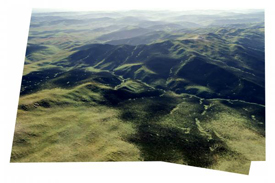 Mark Tribe, 4348–4352, from the Plein Air series, 2014, UV print on Dibond, 55 x 84 in. (artwork © Mark Tribe)
Mark Tribe. Corcoran Gallery of Art, Washington, DC, July 19–September 28, 2014. Mark Tribe: Plein Air. Digital photography.
South

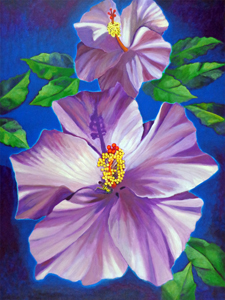 Kyra Belán, Isis and Nephthys, from the American Beuaty series (artwork © Kyra Belán)
Kyra Belán, Art Gallery, Broadway Palm Dinner Theatre, Fort Meyers, Florida, May 27–June 22, 2014. Acrylic and oil painting.
West

 Deborah Cornell, Outbreak: Vector, 2013, archival digital print, 52 x 44 in. (artwork © Deborah Cornell)
Deborah Cornell. Los Angeles Center for Digital Art, Los Angeles, California, July 10–August 30, 2014. In the Space We Left Vacant. Digital prints and video.
Exhibitor and Advertiser Prospectus for the 2015 Annual Conference
posted by CAA — August 18, 2014
 The Exhibitor and Advertiser Prospectus for the 2015 Annual Conference in New York is now available for download. Featuring essential details for participation in the Book and Trade Fair, the booklet also contains options for sponsorship opportunities and advertisements in conference publications and on the conference website.
The Exhibitor and Advertiser Prospectus will help you reach a core audience of artists, art historians, educators, students, and administrators, who will converge in New York for CAA’s 103rd Annual Conference, taking place February 11–14, 2015. With three days of exhibit time, the Book and Trade Fair will be centrally located at the Hilton New York, where all programs sessions and special events take place. CAA offers several options for booths and tables that can help you to connect with conference attendees in person. The priority deadline for Book and Trade Fair applications is Friday, October 31, 2014; the final deadline for all applications and full payments is Monday, December 8, 2014.
In addition, sponsorship packages will allow you to maintain a high profile throughout the conference. Companies, organizations, and publishers may choose one of four visibility packages, sponsor specific areas and events such as the Student and Emerging Professionals Lounge, or work with CAA staff to design a custom package. Advertising possibilities include the Conference Program, distributed to over five thousand registrants in the conference tote bag, and the conference website, seen by thousands more. The Conference Information and Registration booklet is digital-only for the first time and a great opportunity to feature color ads that link directly to your website. Web ads are taken on a rolling basis, but the deadline for inclusion in the Conference Information and Registration booklet is Friday, August 29, 2014. The deadline for sponsorships and advertisements in the Conference Program is Friday, December 5, 2014.
Questions about the 2015 Book and Trade Fair? Please contact Paul Skiff, CAA assistant director for Annual Conference, at 212-392-4412. For sponsorship and advertising queries, speak to Hillary Bliss, CAA development and marketing manager, at 212-392-4436.
People in the News
posted by CAA — August 17, 2014
People in the News lists new hires, positions, and promotions in three sections: Academe, Museums and Galleries, and Organizations and Publications.
The section is published every two months: in February, April, June, August, October, and December. To learn more about submitting a listing, please follow the instructions on the main Member News page.
August 2014
Academe

Wayne “Mick” Charney, associate professor of architecture at Kansas State University in Manhattan, has been designated the 2014–2015 Coffman Chair for University Distinguished Teaching Scholars.
R. Luke DuBois, assistant professor of integrated digital media for New York University’s Polytechnic School of Engineering and director of the Brooklyn Experimental Media Center, has earned tenure at his school.

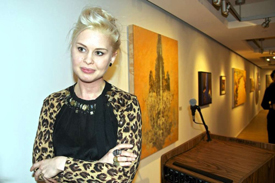 Allison Leigh
Allison Leigh has accepted a 2014–15 postdoctoral fellowship in art history in the Faculty of Humanities and Social Sciences at the Cooper Union for the Advancement of Science and Art in New York.
Michele Matteini, assistant professor of East Asian art, architecture, and visual culture, has been appointed to a joint appointment at New York University’s Institute of Fine Arts and Department of Art History.
Robert A. Maxwell, associate professor at the University of Pennsylvania in Philadelphia, has joined the faculty of the Institute of Fine Arts at New York University.
Lisa M. Strong, previously manager of curatorial affairs at the Corcoran Gallery of Art in Washington, DC, has been appointed director of the MA program in art and museum studies and associate professor of the practice at Georgetown University, also in Washington, DC.
Museums and Galleries

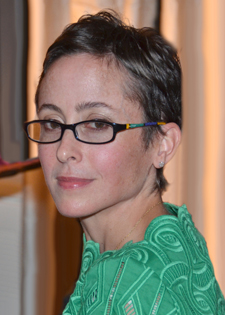 Jill Deupi
Jill Deupi, director and chief curator of University Museums at Fairfield University in Fairfield, Connecticut, has been appointed director of the Lowe Art Museum at the University of Miami in Florida.
Barbara Buhler Lynes, founding curator of the Georgia O’Keeffe Museum in Santa Fe, New Mexico, has become Sunny Kaufman Senior Curator for Nova Southeastern University’s Museum of Art in Fort Lauderdale, Florida.

 Vanja Malloy
Vanja Malloy, formerly Chester Dale Fellow in the Department of Modern and Contemporary Art at the Metropolitan Museum of Art in New York, has been named curator of American art at Amherst College’s Mead Art Museum in Amherst, Massachusetts.
Alia Nour, associate curator for the Dahesh Museum of Art in New York, has been promoted to full curator at her institution.
Mary Reid, director and curator of the School of Art Gallery at the University of Manitoba in Winnipeg, has accepted a position as director and curator of the Woodstock Art Gallery in Woodstock, Ontario.
Organizations and Publications
Laura Beach, formerly deputy editor of The Magazine Antiques, has rejoined Antiques and The Arts Weekly as managing editor.
Rachel Stephens, assistant professor of art in the Department of Art and Art History at the University of Alabama in Tuscaloosa, has been named editor of SECAC Review, a scholarly journal published by the Southeastern College Art Conference.
Institutional News
posted by CAA — August 17, 2014
Read about the latest news from institutional members.
Institutional News is published every two months: in February, April, June, August, October, and December. To learn more about submitting a listing, please follow the instructions on the main Member News page.
August 2014
The Baltimore Museum of Art in Maryland has received a $69,556 grant from the National Historical Publications and Records Commission to build on previous efforts to catalogue the museum’s archive—which includes correspondence with artists, exhibition research, photography, and audio recordings of lectures and events—and to create finding aids for it.

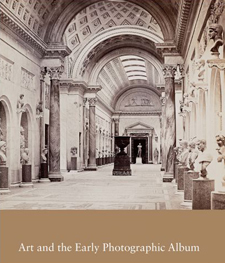
The Center for Advanced Study in the Visual Arts at the National Gallery of Art in Washington, DC, has announced that its publication series Studies in the History of Art is now accessible on JSTOR.
The Fitchburg Art Museum in Fitchburg, Massachusetts, has been awarded a $140,000 grant from the Massachusetts Cultural Facilities Fund, facilitated by the Massachusetts Cultural Council, to update and modernize parts of the museum.
The Frick Collection in New York has announced plans to enhance and renovate its museum and library, which includes the construction of a new addition and the renovation and expansion of existing interior spaces.
The Galleries at Moore College of Art and Design in Philadelphia, Pennsylvania, has received a $240,000 grant from the Pew Center for Arts and Heritage to support an exhibition called Strange Currencies.
The Hood Museum of Art at Dartmouth College in Hanover, New Hampshire, has received a $10 million gift to support the expansion of gallery and teaching spaces, as well as a new entrance.

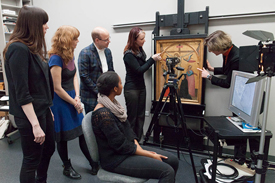 Gathered in the Art Institute of Chicago’s Conservation Examination Room, art-history graduate students Hannah Klemm from the University of Chicago, Ashley Dunn and Grace Deveney (seated) from Northwestern University, and Max Koss (University of Chicago), watch closely as the Art Institute’s assistant paintings conservator Kelly Keegan and Andrew W. Mellon Senior Conservation Scientist Francesca Casadio reveal fascinating learnings from Francescuccio Ghissi’s The Crucifixion (ca. 1370)
Northwestern University in Evanston, Illinois, has received a grant from the Andrew W. Mellon Foundation to enhance the study of art history through a focus on working with objects. The four-year effort, a collaboration among three Chicago-area institutions, is called the Andrew W. Mellon Foundation Chicago Objects Study Initiative.
The Philadelphia Museum of Art in Pennsylvania has received a $300,000 grant from the Pew Center for Arts and Heritage to support the reinstallation of its eight galleries of South Asian art, titled South Asian Art: Experimentation, Interpretation, and Evaluation.


The Smithsonian American Art Museum in Washington, DC, has accepted a $5.4 million gift from David M. Rubenstein for the renovation of its Renwick Gallery. The donation completes the private fundraising goal for the museum’s capital renovation project.
St. Johns University in Jamaica, New York, will soon launch a master of arts degree program in museum administration, housed in the College of Liberal Arts and Sciences, in fall 2014.
The Tyler School of Art at Temple University in Philadelphia, Pennsylvania, has received a $360,000 grant from the Pew Center for Arts and Heritage to support an installation called reFORM by the artist Pepón Osorio.

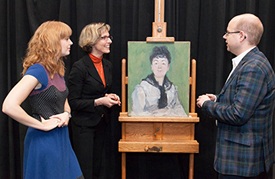 Ashley Dunn, Francesca Casadio, and Max Koss discuss Edouard Manet’s Portrait of a Woman with a Black Fichu (ca. 1878)
The University of Chicago in Illinois has received a grant from the Andrew W. Mellon Foundation to enhance the study of art history through a focus on working with objects. The four-year effort, a collaboration among three Chicago-area institutions, is called the Andrew W. Mellon Foundation Chicago Objects Study Initiative.

The University of South Carolina in Columbia has replaced the Department of Art with the School of Visual Art and Design. In addition, the school received a $32,790 grant from the Windgate Charitable Foundation to support ceramics and small metals.
The University of the Arts in Philadelphia, Pennsylvania, has accepted a $71,880 grant from the Pew Center for Arts and Heritage to help fund an exhibition called Invisible City: Philadelphia and the Vernacular Avant-Garde.
Grants, Awards, and Honors
posted by CAA — August 15, 2014
CAA recognizes its members for their professional achievements, be it a grant, fellowship, residency, book prize, honorary degree, or related award.
Grants, Awards, and Honors is published every two months: in February, April, June, August, October, and December. To learn more about submitting a listing, please follow the instructions on the main Member News page.
August 2014

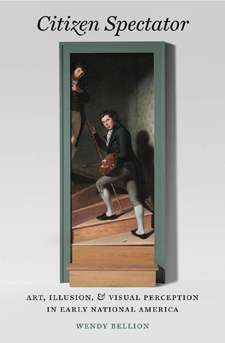
Wendy Bellion, associate professor of American art and material culture at the University of Delaware in Newark, has been awarded the Charles C. Eldredge Prize for Distinguished Scholarship in American Art from the Smithsonian American Art Museum for her book Citizen Spectator: Art, Illusion, and Visual Perception in Early National America (Chapel Hill: University of North Carolina Press; Williamsburg, VA: Omohundro Institute of Early American History and Culture, 2011).
Elizabeth Buhe, a doctoral student in art history at New York University’s Institute of Fine Arts, has received a Student Research Grant from the Mellon Research Initiative to participate in “From ‘Surface’ to ‘Substrate’: The Archaeology, Art History, and Science of Material Transfer,” a conference taking place November 7–8, 2014.
Jennifer Cohen, a PhD candidate in art history at the University of Chicago in Illinois, has earned a William H. Truettner Predoctoral Fellowship from the Smithsonian American Art Museum in Washington, DC. She will work on “Fantastic Boxes: Shop Windows and Surrealist Space in Wartime New York.”
Laura Dickey Corey, a PhD candidate in art history at New York University’s Institute of Fine Arts, has been awarded the Frick Center for the History of Collecting Junior Fellowship for summer/fall 2014.
John Fagg, a lecturer in the school of English, Drama, and American and Canadian Studies at the University of Birmingham in England, has won the 2014 Terra Foundation for American Art International Essay Prize for “Bedpans and Gibson Girls: Clutter and Matter in John Sloan’s Graphic Art,” which will appear in the journal American Art in 2015.
Annika Fine, a doctoral student in art history at New York University’s Institute of Fine Arts, has received a Student Research Grant from the Mellon Research Initiative to give a presentation during “From ‘Surface’ to ‘Substrate’: The Archaeology, Art History, and Science of Material Transfer,” a conference taking place November 7–8, 2014.
Kristen Gaylord, a doctoral student in art history at New York University’s Institute of Fine Arts, has been awarded the Joan R. Challinor Award for distinction in the area of women and Catholicism from the Arthur and Elizabeth Schlesinger Library on the History of Women in America at the Harvard University’s Radcliffe Institute for Advanced Study. Gaylord has also received the Patricia Dunn Lehrman Fellowship from NYU’s Graduate School of Arts and Sciences.
Orit Halpern, assistant professor in history at the New School of Social Research and Eugene Lang College and an affiliate in the graduate program in design studies at Parsons the New School for Design, all in New York, has won a 2014 research grant from the Graham Foundation. She will work on “Rational Utopias,” a project that explores the history and ethnography of “smart” territories and ubiquitous computing.
Nicholas Hartigan, a PhD student in art history at the University of Michigan in Ann Arbor, has been named a Committee on Institutional Cooperation-Smithsonian Predoctoral Fellow by the Smithsonian American Art Museum in Washington, DC. His research project is called “The Changing Function of Public Sculpture.”
Leslie Hewitt, an artist based in New York, has won a 2013 Biennial Award from the Louis Comfort Tiffany Foundation, which comes with a $20,000 grant.
Alicia Imperiale, assistant professor of architectural history, theory, and design at Temple University’s Tyler School of Art in Philadelphia, Pennsylvania, has won a 2014 research grant from the Graham Foundation. Her project is called “An Alternate Organicism in the Journal Zodiac, 1965–1974.”
Katherine Jentleson, a doctoral student in art history at Duke University in Durham, North Carolina, has become a Douglass Foundation Predoctoral Fellow in American Art at the Smithsonian American Art Museum in Washington, DC, for her project, “Gatecrashers: The First Generation of Outsider Artists in America.”
Steve Locke, an artist based in Boston, Massachusetts, has accepted a 2013 Biennial Award from the Louis Comfort Tiffany Foundation. He will receive a $20,000 gift.
Katherine Markoski, an independent scholar based in Alexandria, Virginia, has received a postdoctoral fellowship at the Smithsonian American Art Museum in Washington, DC. Her research examines “The Imagination of Community: Artistic Practice at Black Mountain College”
Rachel Middleman, assistant professor of art history at Utah State University in Logan, has won a postdoctoral fellowship at the Smithsonian American Art Museum in Washington, DC, to research “Radical Eroticism: Women, Art, and the Transformation of Sexual Aesthetics in the 1960s.”
Jennifer Stettler Parsons, a graduate student in art history at the University of Virginia in Charlottesville, has received a Sara Roby Predoctoral Fellowship in 20th-Century American Realism from the Smithsonian American Art Museum in Washington, DC. Her project is titled “John Sloan: Between Philadelphia and New York, 1892–1907.”

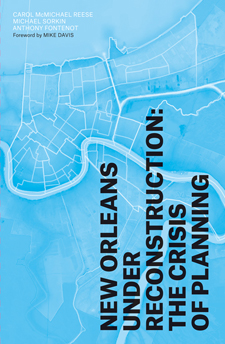
Carol McMichael Reese, Mary Louise Christovich Associate Professor in the School of Architecture at Tulane University in New Orleans, Louisiana, has been awarded a 2014 publication grant (with her two coeditors) from the Graham Foundation for New Orleans under Reconstruction: The Crisis of Planning, the first book to illustrate and analyze architectural, landscape, and planning responses for post-Katrina New Orleans.

 Margaret Samu
Margaret Samu, from the Art History Department at Yeshiva University’s Stern College for Women in New York, has been awarded a Summer Fellowship in Garden and Landscape Studies at Dumbarton Oaks Research Library and Collection in Washington, DC. She will use the fellowship to work on her project “Baroque Sculpture Display in Peter the Great’s Summer Garden.”
Nina Schleif from the Bavarian State Art Museums has become a Terra Foundation Senior Fellow in American Art at the Smithsonian American Art Museum in Washington, DC. She is investigating “Warhol’s Drawings of the Fifties: Sources, Techniques, Meanings.”
Michelle Smiley, an MA student in history of art at Bryn Mawr College in Bryn Mawr, Pennsylvania, has been accepted into the 2014 summer internship program at the National Gallery of Art in Washington, DC.
Juliet Sperling, a graduate student in art history at the University of Pennsylvania in Philadelphia, has accepted a Wyeth Foundation Predoctoral Fellowship from the Smithsonian American Art Museum in Washington, DC. She will research “Animating Flatness: Seeing Moving Images in American Painting and Mass Visual Culture, 1820–95.”
Edit Tóth, who teaches at Juniata College in Huntingdon, Pennsylvania, and Pennsylvania State University in Altoona, has earned a 2014 research grant from the Graham Foundation for her book, Bauhaus Photography and Design: Moholy-Nagy, Breuer, Henri, Yamawaki, and Kepes.
Jesús Vassallo, assistant professor in the School of Architecture at Rice University in Houston, Texas, has accepted a 2014 research grant from the Graham Foundation for his project, “Building with Images.”
Jillian Vaum, a graduate student pursuing a master’s degree in art history at the University of Pennsylvania in Philadelphia, has participated in the 2014 summer internship program at the National Gallery of Art in Washington, DC.
Megan Whitney, an MA student in art history at the University of Tucson in Arizona, has been accepted into the 2014 summer internship program at the National Gallery of Art in Washington, DC.

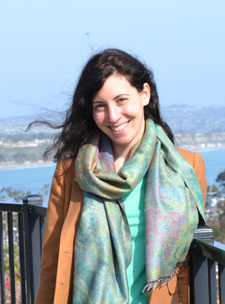 Lara Yeager-Crasselt
Lara Yeager-Crasselt, a lecturer in the Department of Art at the Catholic University of America in Washington, DC, has been awarded a Belgian American Educational Foundation Fellowship for academic year 2014–15. She will carry out postdoctoral work as a research fellow in the Department of Art History at KU Leuven in Belgium.
Molly Zuckerman-Hartung, an artist based in Chicago, Illinois, has received a 2013 Biennial Award from the Louis Comfort Tiffany Foundation. She will receive a $20,000 gift from the foundation.