
CAA News Today
Exhibitions Curated by CAA Members
posted by CAA — August 15, 2014
Check out details on recent shows organized by CAA members who are also curators.
Exhibitions Curated by CAA Members is published every two months: in February, April, June, August, October, and December. To learn more about submitting a listing, please follow the instructions on the main Member News page.
August 2014

Kelly Baum. Lee Bontecou: Drawn Worlds. Princeton University Art Museum, Princeton University, Princeton, New Jersey, June 28–September 21, 2014.
Kelly Baum. Rothko to Richter: Mark-Making in Abstract Painting from the Collection of Preston H. Haskell. Princeton University Art Museum, Princeton University, Princeton, New Jersey, May 24–October 5, 2014.

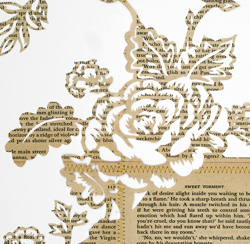 Lauren Scanlon, detail of Sweet Torment (Sorrel II), 2010, hand-cut romance-novel book pages and gold thread on paper, 17½ x 15¼ in. (artwork © Lauren Scanlon)
Reni Gower. Papercuts. Robert L. Ringel Gallery, Patti and Rusty Rueff Galleries, and Fountain Gallery, Purdue University Galleries, Purdue University, Lafayette, Indiana, July 2–August 9, 2014.

Allison Leigh. Jersey Women Artists Now: Contemporary Visions. George Segal Gallery, Montclair State University, Montclair, New Jersey, March 6–April 19, 2014.

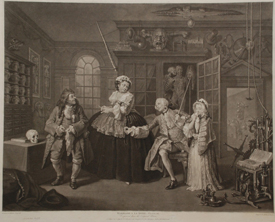 William Hogarth, Viscount with His Paramour Consulting an Empiric (from Marriage à la Mode), ca. 1743–45, engraving on paper, 18½ x 24 in. (artwork in the public domain)
Sarah Lippert. Fantasy, Fiction, and Fact in Popular Illustration: 1750–1900. Flint Institute of Arts. Flint, Michigan, May 3–August 3, 2014.
Cary Liu. Chigusa and the Art of Tea in Japan. Princeton University Art Museum, Princeton University, Princeton, New Jersey, October 11, 2014–February 1, 2015.

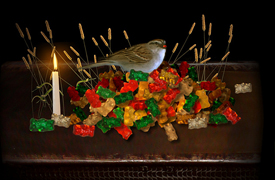 Lisa Crafts, Still Life with Gummi Bears (artwork © Lisa Crafts)
Patricia Miranda. STEAM: Art, Science and Technology. ArtsWestchester, White Plains, New York, May 20–August 15, 2014.

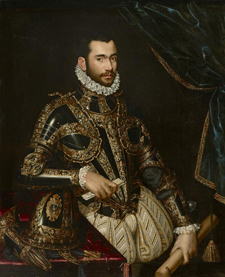 Scipione Pulzone, Jacopo Boncompagni, 1574, oil on canvas, 48 x 39 in. (artwork in the public domain; photograph by Michael Bodycomb)
Jeongho Park. Men in Armor: El Greco and Pulzone Face to Face. Frick Collection, New York, August 5–October 26, 2014.

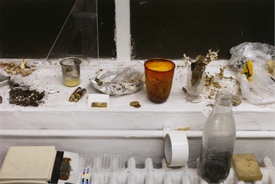 Wolfgang Tillmans, Nachtstilleben (Night Still Life), 2011 (negative)/2013 (print), chromogenic print, image and sheet: 53⅛ × 79¾ in. Philadelphia Museum of Art (artwork © Wolfgang Tillmans)
Nathaniel M. Stein. In Dialogue: Wolfgang Tillmans. Philadelphia Museum of Art, Philadelphia, Pennsylvania, July 1–October 26, 2014.
James Steward. Alexander Calder 1967. Princeton University Art Museum, Princeton University, Princeton, New Jersey, January 15–October 28, 2014.
Books Published by CAA Members
posted by CAA — August 15, 2014
Publishing a book is a major milestone for artists and scholars—browse a list of recent titles below.
Books Published by CAA Members appears every two months: in February, April, June, August, October, and December. To learn more about submitting a listing, please follow the instructions on the main Member News page.
August 2014


Ronald R. Bernier. The Unspeakable Art of Bill Viola: A Visual Theology (Eugene, OR: Wipf and Stock Publishers, 2014).

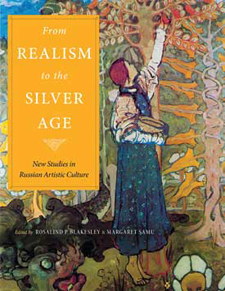
Rosalind P. Blakesley and Margaret Samu, eds. From Realism to the Silver Age: New Studies in Russian Artistic Culture (DeKalb: Northern Illinois University Press, 2014).

Norma Broude and Mary D. Garrard. Introducing Feminist Art History (Amazon ebook, 2014).

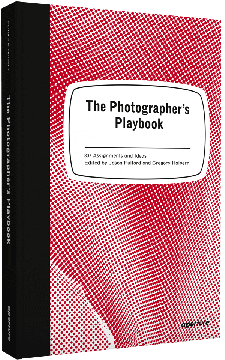
Jason Fulford and Gregory Halpern, eds. The Photographer’s Playbook: 307 Assignments and Ideas (New York: Aperture, 2014).

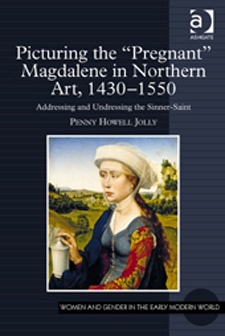
Penny Howell Jolly. Picturing the “Pregnant” Magdalene in Northern Art, 1430–1550: Addressing and Undressing the Sinner-Saint (Burlington, VT: Ashgate, 2014).

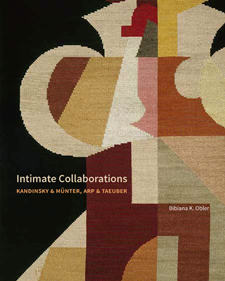
Bibiana K. Obler. Intimate Collaborations: Kandinsky and Münter, Arp and Taeuber (New Haven: Yale University Press, 2014).

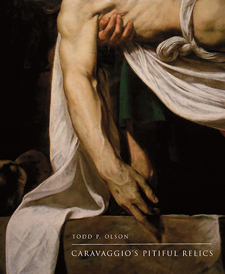
Todd P. Olson. Caravaggio’s Pitiful Relics (New Haven: Yale University Press, 2014).

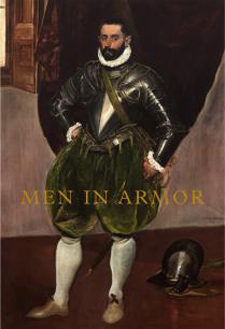
Jeongho Park. Men in Armor: El Greco and Pulzone Face to Face (New York: Frick Collection, 2014).

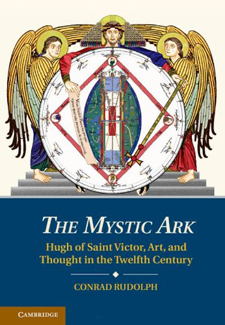
Conrad Rudolph. The Mystic Ark: Hugh of Saint Victor, Art, and Thought in the Twelfth Century (New York: Cambridge University Press, 2014).

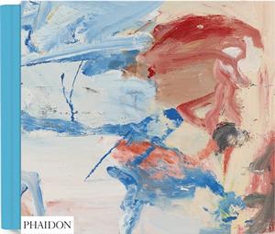
Judith Zilczer. A Way of Living: The Art of Willem de Kooning (New York: Phaidon, 2014).
Committee on Women in the Arts Picks for August 2014
posted by CAA — August 10, 2014
Each month, CAA’s Committee on Women in the Arts selects the best in feminist art and scholarship. The following exhibitions and events should not be missed. Check the archive of CWA Picks at the bottom of the page, as several museum and gallery shows listed in previous months may still be on view or touring.
August 2014
Carolee Schneemann: History Works
Museo de Arte Contemporáneo de Castilla y León
Avenida de los Reyes Leoneses, 24, 24008, León, Spain
July 19–December 7, 2014
Carolee Schneemann is one of the most important artists to have emerged from the experimental avant-garde scene of New York in the early 1960s. Though finally acknowledged as a pioneer of feminist and performance art—an acknowledgement that had been for years unduly marred by her controversial, for many, use of her beautiful nude body—it is fair to say that the breadth and depth of her multiform contributions to the radical advancement of postwar art, including painting, film, performance, and multimedia installation, remains unstudied and unfathomed.
Redressing the uneven visibility of Schneemann’s work throughout her career by illuminating the diversity of its content, politics, and practices, Carolee Schneemann: History Works focuses on the constant engagement of her work with contemporary history while illuminating both the pacifist politics that complement her feminism and the critical ways in which Schneemann’s diverse and intricate engagement of print and TV images of death and crisis from the 1960s to today resists apathetic image consumption by seeking the active participation of the viewer. Mediated actuality offered a counterfoil for the sensate awakening proposed by Schneemann’s use of the body in art, already in 1963, with her kinetic theater group performance Newspaper Event in New York’s Judson Theater. It was her participation in the antiwar movement, however, that triggered her first use of media images (of war and death) in the mid-sixties, something that continues to characterize her collage aesthetic and multimedia practice. In 1965, for instance, Schneemann made a stunning “visual and sonic threnody,” the film-collage Viet Flakes in which appropriated images of the war in Vietnam were zoomed in and out under a collaged soundtrack composed by James Tenney. Two years later, in New York, the film was at the heart of her “kinetic theater” yet multimedia performance Snows (1967)—its scene of death and abandonment abstractly mimed by the performers—presented during Angry Arts Week: Artists against the Vietnam War. Performances of Snows and Night Crawlers, on the fringe of Expo 67 in Montreal, marked a high point in her political experiments in Kinetic Theatre and Expanded Cinema, during which film was extended beyond the screen to include collage and other forms of art.
Carolee Schneemann: History Works retraces the artist’s creations from the early performance Meat Joy to works contesting military interventions in Vietnam and the 1980s conflicts in Lebanon, concluding with recent pieces, several of which are being shown for the first time in Europe, including multimedia collages that variously echo the visual labyrinth of catastrophe in which we are plunged. Among them is the poignant photomontage Terminal Velocity, a monumental photographic montage that stands out as representative of a new form of historical painting, while also breaking another corporal taboo, that of the dead body, as put by Annable Teneze. With this work Schneemann records a real event while infusing a hard note of humanity across five columns of close-ups showing bodies falling from the World Trade Center towers on September 11, 2001. A hard-hitting creation based on a key moment in our current world, Terminal Velocity questions the effectiveness and the distortions of the media coverage of such tragic events, a question raised in such subsequent video installation works as More Wrong Things (2001) or Precarious (2009), in which spectators are submerged in a torrent of projected images and reflections.
Curated by Anabelle Teneze and begun last year at the Rochechouart Museum of Contemporary Art, which in 2012 bought Terminal Velocity, is accompanied by a fully illustrated catalogue with fresh views on the intersection of her art with history, feminism, and the empire of image, called Then and Now. Carolee Schneemann. Oeuvres d’Histoire, edited by Teneze and copublished with Analogues Éditions.
Carol Rama
Nottingham Contemporary
Weekday Cross, Nottingham, NG1 2GB, United Kingdom
July 19–September 28, 2014
Nottingham Contemporary presents a solo exhibition by Carol Rama, curated by Irene Aristizabal. Rama is an Italian self-taught artist born in 1918 in Turin, where she still lives. The expressiveness of Rama’s work means a direct result of the personal tragedies in her life. At age fifteen, Rama began her “vulgar” drawings as a form of healing when her mother was admitted to a psychiatric clinic. These psychosexual images based on her witnessing of female patients wandering the wards half naked were presented in her first exhibition in Turin in 1945. The exhibition was shut down, as her work was considered too radical for the Fascist-dominated Italy she grew up in. She didn’t receive international attention until the end of the 1990s, and her extensive career was recognized with the Golden Lion for Lifetime Achievement at the Venice Biennale in 2003.
Her autobiographical, explicitly female approach mirrors that of other artists of her time, such as Louise Bourgeois. In the 1960s, Rama began to use psychologically charged objects in her work, including doll’s eyes and animal claws, which led to her celebrated works with bicycle tires in the 1970s. Rama mentioned that rubber stimulated her more than all the other materials. She was attracted to the sensual, fleshlike quality of rubber and was interested in its character and temperament that suggest a feeling of unease. But her working with rubber refers once again to personal memories: Rama’s father owned a bicycle factory that failed. He committed suicide when he was declared bankrupt in 1942. The artist states that these works express the sadness she feels at his loss, a sadness that will never pass.
The exhibition features over fifty works and a contextual program that includes presentations of Shut Up, Actually Talk, a radical feminist freak-show by the Italian performance artist Chiara Fumai, and Inside Carol Rama, a selection from a series of ninety photographs taken by Bepi Ghiotti over the last two years in Rama’s legendary studio-home.
Annette Wehrmann: We’re Watching TV Because We Can’t Afford a Revolution
Badischer Kunstverein
Waldstraße 3, 76133, Karlsruhe, Germany
July 11–September 7, 2014
Badischer Kunstverein presents an extensive solo exhibition dedicated to Annette Wehrmann (1961–2010), curated by Ort des Gegen e.V. and Anja Casser. Ort des Gegen e.V. was founded in Hamburg in 2011 to preserve the artistic estate of the late artist. Wehrmann lived and worked in Hamburg. Throughout her diverse practice, she has developed a unique artistic position. Somewhere between sculpture and intervention, Werhmann fused conceptual and performance art methods with the language of the Situationist International, feminism, and science fiction. Her oeuvre, a distinctive mix of anarchic prose, dry humor, and intellectual discourse, reflects the political development, the daily life, and the art scene of the 1990s. Wehrmann had an important position in her generation and what became the art scene of post-Wall Berlin.
Werhmann’s drawings, sculptures, installations, performances, videos, and texts speak to the reader about the life of an artist for whom every observation becomes material for her work. Voicing her unease about the world, Wehrmann underlined an independent creative position that not only inscribed in her art, but also in her life.
Under the title We’re Watching TV Because We Can’t Afford a Revolution, this exhibition brings together a range of the artist’s individual pieces and series of works, including the sculptural works Fußbälle/Kugeln (1991) and her photographic series Blumensprengungen (1991–95), in which the artist literally exploded a number of flowerbeds arranged in urban locations, and UFO architectures. These assemblages of cheap materials, influenced by feminist science-fiction literature, are given a central role in the exhibition. They were described by the artist as a “retreat into oneself” and a “desire for a better, different life.”
Roni Horn: Everything was sleeping as if the universe were a mistake
Fundació Joan Miró
Parc de Montjuïc, 08038, Barcelona, Spain
June 20–September 28, 2014
Fundació Joan Miró and Obra Social “la Caixa” present Everything was sleeping as if the universe were a mistake, a solo exhibition by Roni Horn (b. 1955, New York) conceived by the artist herself. Borrowing the title from Fernando Pessoa’s The Book of Disquiet, the exhibition explores the different media, major themes, formats, and approaches that Horn has used over the past twenty years. Through this huge installation comprised of sculptural works, photographic series, working drawings, and a floor piece, Horn intends to offer an overall experience. The works selected represent a compendium of the elements that underpin the creative process of the American sculptor, installation artist, draughtsman, photographer and writer: people, the landscape, light, words, water, presence, glass, faces, change, forms, series, spaces, the appearance of the self, and time.
The show includes text-oriented sculptural installation from the White Dickinson series; the photographic series You are the Weather, Part 2, which explores the essence of water as well as questions of human identity and appearance; Still Water (The River Thames, for Example) and Dead Owl; as well as a series of self-portraits a.k.a. and Her, Her, Her and Her, a voyeuristic mosaic composed with individual photographs taken in a women’s locker rooms at a 1928 Icelandic indoor swimming-pool complex. Here, Horn uses repetition to examine the relationship between individual and collective identity and to create an endless labyrinth of gazes and disenchanted desire.
The exhibition also includes Horn’s recent work Untitled as the centerpiece of the overall installation, four videos about her work, and a floor piece entitled Rings of Lispector (Água Viva) that combines drawing and literary quotes. Since drawing has been an essential aspect of Horn’s creative practice over the last thirty years, the exhibition includes a room set aside for working drawings.
Feminine Futures: Avant-Garde Female Artists in the Fields of Performance and Dance
Le Consortium
37 rue de Longvic, 21000, Dijon, France
June 21–September 28, 2014
The Consortium Art Center presents the exhibition Feminine Futures, an illuminating survey of radical experimentation with dance and performance by female avant-garde artists from 1870 to 1970—itself a potent and understudied prelude of feminist and performance art. Curated by the artist and curator Andrien Sina and first staged in the context of 2009 Performa in New York, Feminine Futures, in its latest iteration in France, comprises more than six hundred items—an incredible collection of photographs, letters, drawings, manifestos, programs, and first editions that sheds light on the unexplored gendered margins of twentieth-century avant-gardes in which overlooked origins of body art and interdisciplinary vanguard art practices seem to lie. “The history of the early-twentieth-century female avant-gardes, concerned with the body, dance, or performance, was forged independently of dominant artistic movements,” says the curator of the exhibition, as “the female figure, sublimated and idealized through the literary fantasies of Symbolists or hysterical due to the earliest ‘psychopathological’ investigations, gave way to an unequalled degree of expressiveness and freedom.” “The appropriation by women of their own modernity and the invention of multiple hypotheses as regards the Future Woman,” he continues, “open up new perspectives, suggesting a radical transcendence of the fine arts disciplines via actions where the body was seen in itself as a fully fledged work of art.”
Unveiling hidden “minor practices” in the margins of the most well-known artistic movements, or overlooked signs of dissidence lurking into known works of art, including manifestos within manifestos and singular heterotopias within larger isotopias, the exhibition illuminates the “multiple origins of modernity in unexplored areas of ephemeral action” as well as the affinities amidst a great assortment of female artists who “lived their avant-garde experiments as a response to deep forces rooted in the psychology of desire and the reconstruction of a myth of the feminine” that subverted its previous subservience and sought their political empowerment. A great example of the many brought to light in this exhibition is “the manifesto of lust” by Valentine de Saint Poine—the first and only woman to be part of the executive board of the Futurist movement—whose promulgation of “feminine action” barely fit the traditional art categories (poetry, painting, sculpture, and music) of the male protagonists of Futurism. Advocating that “we must turn lust into a work of art” since “the flesh creates as the spirit creates,” Feminine Futures stands for an artistic and political attitude of greater impact than the production of objects, distinguishing itself from the feminism of the times by “introducing an emancipated equivalent in the artistic arena where highly visible strategies of provocation and paradigm shifts are required.”
Artists in the exhibition include: Loïe Fuller (1862–1928), Isadora Duncan (1877–1927), Anna Duncan (Anna Dentzler, 1894–1980), Valentine de Saint-Point (1875–1953), Ruth St. Denis (1878–1968), Gertrude Hoffman (1871–1966), Anna Pavlova (1881–1931), Vera Petrovna Fokina (1886–1958), Ida Rubinstein (1888–1960), Désirée Lubowska, Milada Mladova (b. 1921), Roshanara (Olive Craddock) 1894–1926), Jia Ruskaja (Evgenija Borisenko) (1902–1970), Giannina Censi (1913–1995), Evan Burrows Fontaine (1898–1984), Mary Wigman (1886–1973), Gret Palucca (1902–1993), Grete Wiesenthal (1885–1970), Hedwig Hagemann (Valeska Gert) (1892–1978), Vera Skoronel (1906–1932), Clotilde von Derp (1892–1974), Niddy Impekoven (1904–2002), Gisa Geert (1900–1991), Sent M’Ahesa (Else von Carlberg) 1883–1970), Katherine Cornell (1893–1974), Leni Riefenstahl (1902–2003), Tashamira (Vera Milcinovic) (1904–1995), Tilly Losch (1903–1975), Margaret Morris (1891–1980), Nini Theilade (b. 1915), Yvonne Georgi (1903–1975), Maja Lex (1906–1986), Martha Graham (1894–1991), Doris Humphrey (1895–1958), Hanya Holm (1893–1992), Ruth Page (1899–1991), Myra Kinch (1904–1981), Gertrude Lippincott (1913–1996), and others.
Sam Hunter: In Memoriam
posted by CAA — July 30, 2014
David E. Nathan is the author of this obituary.
Sam Hunter, the founding director of the Rose Art Museum, whose keen insights into the art of his day allowed him to build the museum’s acclaimed collection of modern and contemporary art, died on July 27, 2014, in Princeton, New Jersey. He was 91.
Financed by a $50,000 gift from Leon Mnuchin and his wife, Harriet Gevirtz-Mnuchin, Hunter made acquisitions in the early 1960s that established the Rose as a major force in the art world. The works he collected, masterpieces by Jasper Johns, Robert Rauschenberg, Roy Lichtenstein, Andy Warhol, and other leading artists, form the core of the Rose’s beloved collection and continue to set the tone for the museum’s collecting and exhibition practices.
“Sam Hunter played an integral role in the early days of the Rose Art Museum, and his prescient purchases propelled the museum into the consciousness of the art world just a few years after its founding,” said Frederick M. Lawrence, president of Brandeis University. “The way in which he built the early collection, a discrete number of outstanding acquisitions, none for more than $5,000, is one of the iconic stories of the early years of Brandeis University. His impact on the Rose in particular and the university in general continues to this day.”
Hunter came to Brandeis in 1960 as director of the Poses Institute of Fine Arts, and shortly thereafter become the first director of the Rose. Organizers of the 1962 World’s Fair in Seattle approached him about curating an exhibition for the Fine Arts Pavilion. The resulting collection of 114 works from 87 artists, including many by artists whose work he would later purchase for the Rose, was subsequently displayed at Brandeis.
In late 1962, Mnuchin called from New York to announce that he and his wife had inherited $50,000, which they wished to donate to the Rose to fund a contemporary art collection. Hunter and Mnuchin immediately began exploring the galleries of New York, often with Robert Scull, a friend of Mnuchin and a prominent collector of Pop art.
“The guiding principle of the selection was individual quality rather than tendency,” Hunter wrote for the brochure accompanying the collection’s exhibition. “As a matter of policy, the collection focused on younger artists with only a token representation of the older generation…. Abstract Expressionism is the collection’s point of departure, taken at a point of subtle but significant transition.”
Although Hunter and Mnuchin set a limit of $5,000 per painting, they managed to gather early and important works by Claes Oldenburg, Jim Dine, Tom Wesselmann, James Rosenquist, Adolph Gottlieb, Robert Indiana, Ellsworth Kelly, Marisol, Morris Louis, Johns, Rauschenberg, Lichtenstein, Warhol, and many others.
“It is very difficult to imagine a more significant founding director than Sam Hunter has proved to be,” said Christopher Bedford, the Henry and Lois Foster Director of the Rose. “Just as Brandeis established its academic reputation with incredible rapidity, so Sam made sure the same happened to the Rose through the acquisitions he made and the exhibitions he organized. The status we enjoy today is in large part due to his vision in the 1960s.”
Bedford also pointed out that Hunter was a towering figure in both curatorial and academic spheres. “He had one foot in the world of museums and one foot in the world of scholarship, a model for how the Rose thinks of itself today,” he said. “He was as much a director/curator as he was a scholar, and that dual commitment continues to represent the Rose in the work we do today.”
Upon learning of Hunter’s death, Bedford decided to name the Rose’s newly established emerging artists fund in his memory. “The fund lacked a name,” Bedford said, “and today it became very apparent what the name of the fund should be. It seems incongruous to apply this term today, but the Gevirtz-Mnuchin fund was an emerging artists fund in the early 1960s: Roy Lichtenstein, Jasper Johns, and Ellsworth Kelly were the emerging artists of their day. It’s only just that we would perpetuate Hunter’s legacy with a fund that boasts his name.”
A native of Springfield, Massachusetts, Hunter graduated from Williams College in 1943. He served in the United States Navy from 1943 to 1946, rising to the rank of lieutenant junior grade and receiving five battle stars.
Hunter began his professional art career in 1947, when he joined the New York Times as an art critic for a two-year stint. He studied at the University of Florence through the Hubbard Hutchinson Fellowship, earning a certificate of studies in 1951. He spent a year as an editor with art publisher Harry N. Abrams before serving as editor of Arts magazine.
In 1955, Hunter was appointed associate professor of art history at the University of California, Los Angeles, but left in 1956 to become curator of painting and sculpture at the Museum of Modern Art in New York. Two years later, he moved to the Minneapolis Institute of Arts as chief curator and acting director.
After leaving Brandeis in 1965, he was appointed director of the Jewish Museum and lectured as a visiting professor at Cornell University. In 1969, he became professor of art history at Princeton University and curator of modern art at the university’s art museum. He retired from Princeton as professor emeritus in 1991.
Hunter is survived by his wife, Maïa; their son, Harry; two daughters, Emmy and Alexa, from his previous marriage to Edys Merrill; and one grandchild, Isabella. A funeral service was scheduled for July 30 in the Princeton University Chapel.
Recent Deaths in the Arts
posted by CAA — July 25, 2014
In its periodic list of obituaries, CAA recognizes the lives and achievements of the following artists, historians, teachers, curators, dealers, philanthropists, and others whose work has significantly influenced the visual arts. Of special note is a text on a distinguished scholar of nineteenth- and early-twentieth-century Russian art, Grigorii Iurevich Sternin.
- Roger Ackling, a British sculptor who was a contemporary of Richard Long, Hamish Fulton, and other artists who graduated from Saint Martins School of Art in the 1960s, died on June 5, 2014. He was 66 years old
- Jack Agüeros, a writer, activist, and the former director of El Museo del Barrio in New York, died on May 4, 2014. He was 79
- Eppie Archuleta, a New Mexican weaver who worked in fiber and fabric, passed away on April 11, 2014, age 92. In 1985 she received a National Heritage Fellowship from the National Endowment for the Arts, the nation’s highest honor in the folk and traditional arts
- Gordon Bennett, a pioneering Australian artist whose work challenged race, power, history, and social conventions, died on June 3, 2014. He was 58 years old
- Tito Enrique Canepa Jiménez, a Dominican painter who lived and worked in New York after immigrating there in the 1930s, died on February 11, 2014. He was 97
- Lynne Cohen, an award-winning Canadian photographer who had taught at the University of Ottawa from 1974 to 2005, passed away on May 12, 2014. She was 69
- Deborah Deery, an art educator and academic administrator at Moore College of Art and Design, died on August 19, 2013. She was 49 years old
- Joseph Doyle, an artist and teacher based in Houston, Texas, died on July 9, 2014, at age 54
- Lee MacCormick Edwards, a philanthropist as well as a lecturer in art history, a photographer, and an author, passed away on April 19, 2014. She was 76
- John Clovis Fontaine, chairman emeritus for both the Samuel H. Kress Foundation and the National Gallery of Art in Washington, DC, died on September 23, 2013. He was 81 years old
- Edythe Goodridge, a curator and the former director of visual arts for the Canada Council, died on June 4, 2014. She was 77
- Cornelius Gurlitt, the son of a Nazi art dealer who secretly hoarded millions of dollars’ worth of modern art for decades, died on May 6, 2014. He was 81
- Anne Hollander, a celebrated author and a historian of fashion and costume, died on July 6, 2014. She was 83 years old
- Hans Hollein, an Austrian architect and educator who won the Pritzker Prize in 1985, passed away on April 24, 2014. He was 80
- On Kawara, a Conceptual artist and painter whose work addressed the passage of time, died in late June 2014. He was 81 years old
- Maria Lassnig, an Austrian figurative painter whose retrospective is on view at MoMA PS1, died on May 6, 2014, age 94
- Stanley Marsh, an eccentric Texan millionare who commissioned the Cadillac Ranch outside Amarillo, died on June 17, 2014. He was 76
- Cynthia Mills, the executive editor of the Smithsonian Institution’s journal American Art, died on May 1, 2014. She was 67 years old
- Robert Olsen, a Los Angeles–based painter of outdoor urban scenes, died on April 14, 2014. He was 44.
- Jennifer Wynne Reeves, an abstract painter based in New York, passed away on June 22, 2014. She was 51
- Nan Rosenthal, a curator for the National Gallery of Art and the Metropolitan Museum of Art, died on April 27, 2014, at the age of 76
- Jerry Rothman, a Los Angeles–based sculptor who was a member of a ceramics movement called Otis Clay, died on June 5, 2014, at age 80
- Frederic Schwartz, an architect, city planner, and the designer of several memorials for September 11, died on April 28, 2014. He was 63
- Claude Simard, a cofounder and director of Jack Shainman Gallery in New York, died on June 24, 2014, at the age of 57. Simard was also an artist and performer
- Grigorii Iurevich Sternin, a distinguished scholar of nineteenth- and early-twentieth-century Russian art, died on November 23, 2013, age 86. CAA has published a special text on Sternin
- Massimi Vignelli, an Italian-born graphic designer who created the 1970s map for New York’s subway system, died on May 27, 2014. He was 83
- Ultra Violet, an artist, actor, author, and Andy Warhol superstar, passed away on June 14, 2014. She was 78
- Melvin J. Wachowiak Jr., a senior conservator for the Smithsonian Institution’s Museum Conservation Institute, died on May 28, 2014. He was 56
- Khin Maung Yin, an influential modernist Burmese artist who painted colorful portraits, passed away on June 10, 2014, age 76
Read all past obituaries in the arts in CAA News, which include special texts written for CAA. Please send links to published obituaries, or your completed texts, to Christopher Howard, CAA managing editor, for the next list.
Arts Action Fund Breaking News 7-15-14
posted by CAA — July 15, 2014
The following email from Nina Ozlu Tunceli, executive director of Americans for the Arts, was sent on Tuesday, July 15, 2014.
Arts Action Fund Breaking News 7-15-14
Once again, your advocacy voices made a difference. Last week, thousands of Arts Action Fund members sent letters to their Members of Congress in response to action taken by the House Subcommittee on the Interior. The Subcommittee had proposed an $8 million cut each from the FY 2015 budgets of the National Endowment of the Arts and the National Endowment for the Humanities.
We’re really pleased to report that when this bill came before the Full Appropriations Committee today, the Interior Subcommittee Chairman Ken Calvert (R-CA) announced that he had made some “manager’s amendments” to the bill. He restored the cuts to the two federal cultural agencies and now the bill moves to the House floor with a $146 million recommendation for the NEA and NEH each.
Appropriations Committee Rescinds Proposed Cut to NEH
posted by CAA — July 15, 2014
The following email from Stephen Kidd, executive director of the National Humanities Alliance, was sent on Tuesday, July 15, 2014.
Appropriations Committee Rescinds Proposed Cut to NEH
Dear Humanities Advocate,
Today, the House Appropriations Committee passed an amendment that rescinds the proposed $8 million cut to the National Endowment for the Humanities. Thanks to the many of you who responded to last week’s action alert, the amendment passed with substantial bipartisan support.
This is a very important step in preserving NEH’s capacity. In the coming weeks, we may need to call on you to contact your elected officials again as this funding bill proceeds through Congress and faces additional challenges.
Thanks in advance for your continued support!
Grigorii Iurevich Sternin: In Memoriam
posted by CAA — July 11, 2014
Alison Hilton is Wright Family Professor of Art History and director of the MA program in art and museum studies at Georgetown University in Washington, DC, and Irina Karasik works at the State Russian Museum.
Grigorii Iurevich Sternin, a distinguished scholar of Russian nineteenth and early twentieth century art, chief scientific officer and senior researcher at the Institute of Art History of the Ministry of Culture, corresponding member of the Russian Academy of Sciences, and an honorary member of the Russian Academy of Arts, died in Moscow on November 23, 2013. He was 86.
Sternin was among the most influential art historians of his generation, those who began their academic careers just after World War II, during the Cold War. Born in 1927, Sternin studied art history at Moscow State University, graduating in 1950, and continued his postgraduate work in the Department of Russian Art under the eminent professor A. A. Fedorov-Davydov. After defending his candidate’s dissertation on Russian book illustration of the 1840s in 1953, Sternin worked at one of Moscow’s leading art-history publishing houses, Iskusstvo (Art). He became a member of the Union of Artists of the USSR in 1957.
Sternin’s career is most closely connected with the Institute of Art History of the Ministry of Culture in Moscow, where he worked until the end of his life. He served as research scholar and head of the Sector on Fine Arts and Architecture of the Peoples of the USSR between 1962 and 1975, a difficult period marked by signs of liberalization that were not sustained, when artists, writers, and administrators of arts institutions faced obstacles that are hard to appreciate today. Perhaps as a way of finding a perspective on his own times, Sternin became interested in what made artistic innovation happen in the nineteenth and early twentieth centuries, and this was the subject of his doctoral dissertation. “Artistic Life in Russia at the turn of the 19th and 20th centuries” explored the many elements, some crucial and some tangential, that made up “artistic culture” in a period of complex political and social change. Sternin earned his doctorate in 1973 (in Russia this signifies substantial scholarly achievement beyond the first, candidate’s degree; it is roughly equivalent to full professorship).
Much of Sternin’s research continued to probe the interrelationships among the arts and other aspects of Russian culture. His publications, more than two hundred books and articles, are noted for their breadth of conception and their scrupulous attention to detail; many include chronicles of events with citations from artists’ writings and contemporary periodicals. Among his major works are: Khudozhestvennaia Zhizn’ Rossii na rubezhe XIX – XX vekov (Artistic Life in Russia at the Turn of the 19th and 20th centuries, 1970); Khudozhestvennaia zhizn’ Rossii nachala XX veka (Artistic Life in Russia at the beginning of the 20th century, 1976); Vzaimosviaz’ iskusstv v khudozhestvennom razvitii vtoroi poloviny XIX veka; ideinye printsipy, strukturnye osobennosti (Interconnections of the arts in the artistic evolution of the second half of the 19th century; conceptual principles, structural peculiarities, edited volume, 1982); Russkaia khudozhestvennaia kul’tura vtoroi poloviny XIX – nachala XX veka (Russian Artistic Culture of the second half of the 19th and beginning of the 20th centuries, 1984); Ilia Repin (with Elena Kirillina and others, 1985, 2011); Russkii modern (Russian Art Nouveau, with Elena Borisova, 1988); Khudozestvennaia Zhizn’ Rossii 1900-1910-kh godov (Artistic Life in Russia 1900–1910s, 1991); Khudozhestvennaia Zhizn’ Rossii vtoroi poloviny XIХ veka, 70-80-e gody (Artistic life in Russia in the second half of the 19th century: the 1870s-80s, 1997); Obrazy i liudi Serebrianogo veka (Images and People of the Silver Age, coauthored with L. S. Aleshina, 2002); Khudozhestvennaia Zhizn Rossii 30-40-kh godov 19-ogo veka (Artistic Life in Russia in the 1830s–40s, 2005), Dva veka: Ocherki russkoi khudozhestvennoi kul’tury (Two Centuries: Sketches of Russian Artistic Culture, 2007), Ot Repina do Grigor’eva (From Repin to Grigoriev, 2009). Sternin was an author and editor of the authoritative Istoriia Russkogo Iskusstva (History of Russian Art published by the Academy of Sciences, 1952–1964), specifically volume 10 on the late nineteenth and early twentieth centuries; he was closely involved in the conception, editing, and writing of a new History of Russian Art (22 volumes planned) and was the editor of volume 14 on the first third of the nineteenth century, published in 2011.
The Russian scholarly community recognized Sternin’s contributions. He was named an Honored Artist of Russia in 1994, elected a corresponding member of the Russian Academy of Sciences in 1997, and designated a Laureate of the State Prize of the Russian Federation in 2004. At the memorial service at the Institute of Art History in November 2013, colleagues and former students recalled his constant attention to human relationships, both as part of his approach to art history and in his daily life as a teacher and mentor. Generous in providing books, articles, and advice to his students and even to visiting researchers, he was also an astute critic. He could identify problems of interpretation and actively seek ways of finding solutions, without ever dictating or imposing his views. Sternin’s empathetic responsiveness to colleagues and students will be missed as much as his brilliance as a scholar.
He is survived by his wife, the art historian Liliia Stepanovna Aleshina.
Committee on Women in the Arts Picks for July 2014
posted by CAA — July 10, 2014
Each month, CAA’s Committee on Women in the Arts selects the best in feminist art and scholarship. The following exhibitions and events should not be missed. Check the archive of CWA Picks at the bottom of the page, as several museum and gallery shows listed in previous months may still be on view or touring.
July 2014
Vlasta Delimar: This Is I
Museum of Contemporary Art
Avenija Dubrovnik 17,
10 000, Zagreb, Croatia
May 15–August 24, 2014
The Museum of Contemporary Art in Zagreb presents the first retrospective exhibition of Vlasta Delimar, one of the most significant multimedia and performance Croatian artists to have emerged from the postconceptualist scene in former Yugoslavia and Croatia in the 1970s. Controversial for her nudity—the excessiveness of the female body in a patriarchal society like Croatia rather than the shock of her nakedness in and of itself—Delimar has systematically and consistently used her body since the 1970s, along with artists such as Tomislav Gotovac and Antonio Lauer, as a radical means to extend the limits of visual art and freedom, and to express herself. “The complexity of a personality cannot be expressed without the physical, nor without the spiritual. Giving oneself means that there is no holding back,” says the artist, who denies that her work is underpinned by femaleness or feminist politics, part and parcel with her polemic disassociation from any ideology. Delimar, however, has used her body in performances to examine the status of woman as a social and creative being, often in her multiple roles as housewife, mother, artist, lover, and aging woman, while in performances with other artists, including her ex-partner Zelijko Herman, she has examined the relationship between male and female.
Along with works that span the past thirty-five years of her career, the artist is taking part in the exhibition with two performances: Invitation to Socialize and My Temporary Home. The latter originates from a 1980s series of works called “communications,” in which the artist turned her attention to her audience and its emotions. As a continuation of this practice and presented on a mobile stage, and on a different location each day, Invitation to Socialize has the artist, accompanied by her guests, talking about her art and the development of the artist-audience relationship over the last thirty years. Evoking the diaristic aspect of her work, My Temporary Home is a work in progress, the construction of the artist’s temporary working and living space within the museum for the duration of the exhibition as a personal space exposed and shared with the audience.
Marisol: Sculptures and Works on Paper
Memphis Brooks Museum of Art
1934 Poplar Avenue, Memphis, TN 38104
June 14–September 7, 2014
Memphis Brooks Museum of Art presents a much-awaited survey of the life and work of Marisol, one of the rare female stars of the sixties art scene in New York—the first girl with glamor, as once called by Andy Warhol, whose 1964 exhibition at Stable Gallery drew more than two thousand visitors per day. Best known for her stints of silence, or silent masquerades at the Club with which, as Carolee Schneemann remembers, she castigated the masculinism of the Abstract Expressionist world, and for her obsessive use of casts of her face and other body parts in sculptures that articulate feminist masquerades of femininity, Marisol is indeed one of the most important yet still understudied sculptors to emerge in late 1950s New York as much for the innovativeness of her multimedia assemblage sculptures (that combined painting, drawing, collage, traditional sculpting techniques, and found objects) as for the broad spectrum of her personal and political concerns that underpin her thematography, including its humor.
Born Maria Sol Escobar to Venezuelan parents in Paris, Marisol took her first art lessons in Los Angeles, where she had moved with her father when she was sixteen years old, upon the death of her mother in 1941. In 1949 she moved to Paris to study art at the École des Beaux-Arts. Disappointed by the institution’s conservatism, Marisol moved to New York in 1950 to study painting at the Art Students League, becoming a student of Hans Hoffmann and a member of the Abstract Expressionist and Beat circles before she decidedly turned to sculpture, or better yet its idiosyncratic reinvention that she begun in 1953.
Inspired by Marisol’s mixed-media sculpture The Family, which was commissioned by the Brooks Museum in 1969, and in hopes of reestablishing Marisol as a major figure in postwar American art, the exhibition brings together diverse works that range in date from 1955 to 1998 and elucidate Marisol’s artistic evolution, both in terms of subject matter and materials by including examples of the various media Marisol used (bronze casting, wood carving, assemblage, plaster casts, terracotta, drawing, and printmaking) as well as the many themes and subjects she considered. Among the themes explored in the exhibition and the accompanying catalogue are Marisol’s diverse influences (Neo-Dada, Surrealism, American and Latin American folk art, Precolumbian art, etc.); her relationship to postwar art and cultural movements (Pop, Minimalism, and feminism); her experimentation with materials; her extensive use of portraiture; her politically charged sculptures; and her identity as a female artist who was born in Paris of Venezuelan parents and lived most of her life in New York City.
After Our Bodies Meet: From Resistance to Potentiality
Leslie Lohman Museum of Gay and Lesbian Art
26 Wooster Street, New York, NY 10013
June 5–August 3, 2014
Part of the All Out Arts Fresh Fruit Festival and curated by Alexis Heller, the exhibition After Our Bodies Meet: From Resistance to Potentiality surveys the legacy of feminist art on the diverse ways contemporary transcultural queer artists represent the body to challenge past and present forms of oppression and envision a queer future. Bridging these historic and contemporary endeavors the exhibition honors the pioneers of gender-conscious art and highlights the evolution and plurality of feminist art in light of representations of queer bodies that subvert any binary understanding of gender. Featuring works that unsettle the mythologies and ideals surrounding lesbian and transgender bodies and foreground queer bodies obscured by invisibility by Laura Aguilar, Cathy Cade, Heather Cassils, Tee A. Corinne, Chitra Ganesh, Allyson Mitchell, Zanele Muholi, Catherine Opie, Sophia Wallace, and Chris E. Vargas, After Our Bodies Meet demonstrates how feminist artists have repositioned the political potential of activism into art, allowing critiques of the past to provide space for imagining new queer possibilities, while showcasing a diversity of practices and concerns.
Seeking to document and empower the burgeoning lesbian feminist community, for instance, works by Corinne and Cade emphasize the female body’s capacity for love, agency, and pleasure outside the heterosexual imagination. The South African artist and “visual activist” Muholi also preserves marginalized histories, bringing attention to underrepresented populations of black lesbian and transgender individuals, as well as the targeted violence that threatens their existence. For her ongoing series Faces and Phases, Muholi’s photographic portraits archive the diversity and resilience of her black queer community in South Africa and abroad, while Isilumo siyaluma (2006–11), a series of kaleidoscopic digital collages of menstrual blood stains, memorializes the rape and murder of black lesbians in South Africa. Cassils’s performance Becoming an Image (2012) also evokes the brutalization of queer bodies, as the artist’s mixed-martial-arts blows are imprinted onto a 1,500-pound block of clay. Wallace’s ongoing mixed-media project CLITERACY exposes the irony of society’s obsession with and ignorance of female sexuality. Inspired by Indian comic books, Hindu mythology, and American science fiction, Ganesh makes digital collages that draw from disparate materials and cultural sources to offer alternate narratives of female sexuality and power.
Teresa Margolles: La búsqueda
Migros Museum für Gegenwartskunst
Limmatstrasse 270, CH-8005, Zürich, Switzerland
May 24–August 17, 2014
The Migros Museum of Zurich presents La Busqueda, a display of work by the Mexican artist Teresa Margolles. This exhibition is the first institutional solo exhibition in Switzerland by the 2012 Prince Claus Laureate. Dealing with themes such as social exclusion, violence, and death, Margolles (b. 1963, Culiacán) addresses Ciudad Juárez as a place of crime. The artist examines the extreme violence in this northern Mexican border city where a mysterious series of female homicides has been ongoing since the early 1990s. Through a minimalist approach, Margolles’s works focus on how traces of these brutal crimes shape people’s everyday lives.
Since the early 1990s, Margolles has worked in the forensic medicine department of an autopsy facility in Mexico City, to which anonymous victims of violent crime are brought on a daily basis. By translating such vestiges into an exhibition space, the artist develops interplay between charged architectural fragments and displaced sounds within a grim realism. The mostly sculptural exhibition, curated by Rafael Gygax, includes two powerful installations/interventions—La busqueda (The Search) from 2014 and Mesa y dos bancos (Table and Two Benches) from 2013—that bring into this exhibition space sound, materials, and tragic remains from the Mexican border of Ciudad Juarez. Through her works, Margolles investigate how current events affect individual lives, evidencing the impermanence of things, humans and their relationships, while also suggests the urgency to develop new paths toward a concrete form of solidarity.
Chicago in L.A.: Judy Chicago’s Early Work, 1963–74
Brooklyn Museum
Elizabeth A. Sackler Center for Feminist Art, Herstory Gallery, 200 Eastern Parkway, Brooklyn, NY 11238-6052
April 4–September 28, 2014
Surrounding Judy Chicago’s iconic installation The Dinner Party at the Elizabeth A. Sackler Center for Feminist Art is the exhibition Chicago in L.A.: Judy Chicago’s Early Work, 1963–74, a comprehensive survey of the artist’s innovative explorations of painting, sculpture, and environmental performance that make up a less-familiar but highly significant body of early works.
When living in Los Angeles, Chicago was a participant in Finish Fetish. The growing industrialization of the West Coast influenced many artists to produce objects that were completely handcrafted and yet, with bright colors and high-gloss form of Minimalism, seemed to be machine-made. Chicago in L.A. includes approximately sixty paintings and sculptures made with sprayed acrylic lacquer, objects, drawings, prints, photographs, videos, and documentation of performances that span from 1963 to 1974, affirming the artist’s importance as a pioneer in the Californian art scene.
A series called The Rejection Quintet may serve as a meaningful introduction to The Dinner Party. In this series, Chicago exposes explicit vulvar drawings along an emotional handwritten journal of rejection and self-acceptance. Encouraged by her friend, the feminist art critic Lucy R. Lippard, Chicago dealt with her continuing frustration with trying to address female experience while seeking recognition and respect from male colleagues. Most significantly, The Rejection Quintet, within the rich and complex oeuvre of Chicago, invites viewers to reexamine The Dinner Party as a work that emerged from decades of artistic experimentation, not only technically and aesthetically, but also within the making and raising of a feminist community.
A Voice of One’s Own: On Women’s Fight for Suffrage and Human Recognition
Malmö Konstmuseum
Malmöhusvägen 6, 201 24, Malmö, Sweden
June 6–September 7, 2014
This summer, Malmö Konstmuseum and Moderna Museet Malmö have collaborated to present A Voice of One’s Own: On Women’s Fight for Suffrage and Human Recognition, a celebration of women’ fight and achievements for suffrage and a gender-equal society that was central to the women’s own manifestation at the Baltic Exhibition in Malmö a hundred years ago. In the summer of 1914, visitors came to see an art-and-industry fair that portrayed an upbeat view of future and progress. The fair also featured the Swedish Women’s Exhibition, where discussions were held not only about the situation of Swedish women, but also with the participation of several national women’s organizations. The term “feminist” came into use in Europe in the 1890s, as the women’s movement became more organized through discussion and debate clubs. Women artists’ work was exhibited, and women authors’ books were available in the library. Then, women’ voting was an urgent issue. Society was on the threshold of radical change and the Nordic countries were among the first to implement votes for women.
The exhibition includes the participation of Petra Bauer, Catti Brandelius, Kajsa Dahlberg, Nathalie Djurberg and Hans Berg, Roxy Farhat in collaboration with Shaza Albatal, and Grand Domestic Revolution Library/Casco. Some artists have looked back in history at the reform process that promoted women’s political, economic, and social rights since the local event in 1914, while others have focused in examining current issues relating the insertion for women in today’s society. Organized by Marika Reterswärd, Cecilia Widenheim, and Joa Ljungber, A Voice of One’s Own evidences current feminist discussions and is permeated by methods and strategies of organization that women communities have developed for a century toward a claim for their share of the public sphere.
Affiliated Society News for July 2014
posted by CAA — July 09, 2014
Association of Art Editors
Sponsored by the Association of Art Editors (AAE), the session “Did You Read That? Art Editing on the Web,” to be held at CAA’s 2015 Annual Conference in New York, will explore the current state of art editing on the web. Panelists will discuss the varying levels of work and practices involved in editing texts for publication online, from the mechanical and technical aspects (research, fact checking, making corrections after publishing) to larger conceptual and ethical matters (changing attitudes toward quality). Writers and editors today have access to a wide range of resources—from Google searches and Wikipedia to JSTOR and Oxford Art Online—that were unavailable (and even unimaginable) twenty or thirty years ago. How has the advent of such resources affected the editorial process?
This session, whose format will be a roundtable conversation, with the chair serving as an active interviewer rather than a passive moderator, will focus on specific examples and case studies rather than on generalizations and abstractions. Speakers, who may include authors, critics, editors, or publishers, will address personal and academic websites, online versions of printed publications, born-digital journals, and blogs; they may also consider the training of younger writers, critics, historians, and editors.
The chair seeks four participants for the session. Speakers are not required to present a paper prepared in advance, although a brief presentation of five to ten minutes can be accommodated. Please send a letter of interest, a CV, and your area(s) of professional interest and expertise to Christopher Howard. Deadline: July 31, 2014.
Community College Professors of Art and Art History
The Community College Professors of Art and Art History (CCPAAH) will host two sessions at conferences next year. “Foundations Flipped? Active Learning in Art History and the Studio” will be the topic of the 2015 session at the CAA Annual Conference in New York. Join CCPAAH for this session and its business meeting, which will be a “Project Exchange” that offers a chance to share best practices and ideas to use in your studio and art-history classes. “Beyond Good, Bad, and ‘I Like It’: A New Take on Critique” will be presented at next year’s Foundations in Art: Theory and Education (FATE) conference. For more details and to submit proposals, please see CCPAAH’s Facebook page. To become more involved in the organization, or if you have questions, please email ccpaah@gmail.com.
Historians of Islamic Art Association
The Historians of Islamic Art Association (HIAA) will hold its fourth biennial symposium at the Aga Khan Museum in Toronto, Ontario, from October 16 to 18, 2014. The HIAA conference, a forum to present and discuss papers on various aspects of Islamic art history, is open to all regardless of nationality or academic affiliation. The overarching symposium theme will be “Forms of Knowledge and Cultures of Learning in Islamic Art.”
International Association of Word and Image Studies

The 2014 conference of the International Association of Word and Image Studies / Association Internationale pour l’Etude des Rapports entre Texte et Image (IAWIS/AIERTI) will be hosted for the first time by the Scottish Word and Image Group, fronted by the University of Dundee’s English program in the School of Humanities, as well as the school’s Museum Services. The conference, whose theme is “Riddles of Form: Exploration and Discovery in Word and Image,” will examine representation of science and technology in text, poetry, art, popular culture, film, print and digital media, and more. Dundee has a particular history and reputation for both science and art and is thus an ideal venue for the theme. The conference will specifically invoke Dundee’s scientific and cultural history through the foundational work of D’Arcy Thompson and Patrick Geddes, both polymathic visual thinkers with international reputations. It will also showcase the city’s history of polar exploration and technological innovation. The conference’s approach to “science,” however, is in no sense limited to the Anglophone tradition—defining the discipline in the narrow sense of the natural sciences—but will restore and celebrate the full range of science’s original humanistic associations. Keynote lecturers will include Martin Kemp (University of Oxford) and Murdo McDonald (University of Dundee). For further details and a provisional program, please visit the website.
International Sculpture Center

The International Sculpture Center (ISC) has recently launched re:sculpt, the rebranded and expanded ISC Blog. Thirteen new writers from Europe, Canada, and the United States will continue to bring fresh and timely sculpture news to readers every month. New categories—such as Public Art, Art & Action, and Environmental Art—will broaden coverage of art and sculpture around the world. For two years, posts on ISC Blog have sparked conversations with readers from all corners of the world. The new authors are excited to join the team and bring their vibrant arts communities to you!
National Art Education Association
The National Art Education Association (NAEA) offers practical curriculum resources and texts for your classes, including Exploration in Virtual Worlds: New Digital Multi-Media Literacy Investigations for Art Educators; Including Difference: A Communitarian Approach to Art Education in the Least Restrictive Environment; Practice Theory: Seeing the Power of Art Teacher Researchers; and Purposes, Principles, and Standards for School Art Programs. Visit the NAEA’s online bookstore to learn more about these titles.
The National Core Arts Standards are intended to be voluntary standards for adoption or adaption by states or districts. They consist of resources in relation to five artistic disciplines: Dance, Media Arts, Music, Theatre, and Visual Arts. The 2014 standards are web-based and include a series of supporting documents such as the Conceptual Framework for Arts Standards and Research by the College Board.
New Media Caucus
Artist Organized Art has published a conversation in which Pat Badani and Joshua Selman discuss proceedings from New Media Caucus (NMC) participation at the 2014 CAA Annual Conference as it applies to Media-N Journal, the NMC’s scholarly publication. The discussion relates to NMC panels and activities at the Hilton Chicago, as well as special NMC offsite events and exhibitions concurrent with the conference. Selman is president of Artist Organized Art, and Badani is NMC’s executive board officer and editor-in-chief of Media-N Journal.
Public Art Dialogue

The winter 2014 issue of the Public Art Dialogue Newsletter is now online and contains an interview with Public Art Dialogue (PAD) award recipient, Jack Becker, by Natasha Khandekar, as well as Marisa Lerer’s article “Staying In and Out of the Loop: Chicago’s Public Art.”
Volume four of PAD’s journal Public Art Dialogue, a special issue on murals, has been guest edited by Sarah Schrank and Sally Webster. It features the following articles: Kathryn E. O’Rourke, “Science and Sex in Diego Rivera’s Health Ministry Murals”; Monica Jovanovich-Kelley, “The Apotheosis of Power: Corporate Mural Commissions in Los Angeles during the 1930s”; Andrew Wasserman, “Beyond the Wall: Redefining City Walls’ ‘Gateway to Soho’”; Carolyn Loeb, “West Berlin Walls: Public Art and the Right to the City”; Rachel Heidenry, “The Murals of El Salvador: Reconstruction, Historical Memory, and Whitewashing”; Lu Pan, “Writing at the End of History: Reflections on Two Cases of Graffiti in Hong King”; Sierra Rooney, “What We Made: Conversations on Art and Social Cooperation”; and Patricia C. Phillips, “Ambient Commons: Attention in the Age of Embodied Information.”
Society for Photographic Education

Society for Photographic Education (SPE) seeks curators, professors, gallerists, art historians, and scholars to review student and/or professional member portfolios at SPE’s fifty-second national conference, taking place March 12–15, 2015, in New Orleans, Louisiana. Portfolio reviewers receive discounted admission to the four-day event in exchange for their participation. For more information on the conference offerings, visit the SPE website. To express interest in serving as a portfolio reviewer, please send a message to info@spenational.org.
Society of Architectural Historians
The Society of Architectural Historians (SAH) elected board officers during the organization’s recent annual conference, which took place April 9–13, 2014, in Austin, Texas. Ken Breisch, assistant professor in the University of Southern California’s School of Architecture, is SAH president. Ken Oshima, associate professor in the Department of Architecture at the University of Washington, is first vice president. Sandy Isenstadt, associate professor and director of graduate studies in the Art History Department at the University of Delaware, has become second vice president. The new secretary is Gail Fenske, a professor in the School of Architecture, Art, and Historic Preservation at Roger Williams University. Jan M. Grayson will serve as treasurer.
SAH has also appointed board members to serve 2014–17 terms: Christopher D. Armstrong, assistant professor and director of architectural studies, History of Art and Architecture, University of Pittsburgh; Luis M. Castañeda, assistant professor, Syracuse University; R. Scott Gill, PhD student, University of Texas at Austin; Greg Hise, professor of history, University of Nevada; and Cynthia Weese of Weese, Langley, Weese Architects.
Randall Mason, chair of the graduate program in historic preservation at the University of Pennsylvania, has agreed to chair the SAH Heritage Conservation Committee. Patricia Morton, associate professor and chair of the Department of the History of Art at the University of California, Riverside, is editor designate of JSAH.
Society of Historians of Eastern European, Eurasian, and Russian Art and Architecture
The Society of Historians of Eastern European, Eurasian, and Russian Art and Architecture (SHERA) invites proposals for its session, titled “Infiltrating the Pedagogical Canon,” for CAA’s 2015 Annual Conference in New York. As researcher-educators in specialized fields, how do we effectively incorporate the content of our scholarly work into our everyday teaching? In many art-history departments, opportunities to teach upper-division courses focused on our research are rare. This session invites papers on incorporating culturally specific art into standard art-history curricula, practical examples of curricular innovations involving global and transnational perspectives, and case studies of noncanonical objects or contexts that encourage discussions of both local and global perspectives. Submissions may deal with any chronological period. Submit abstracts of 500 words or less with a CV of 1–2 pages via email to Marie Gasper-Hulvat of Kent State University in Stark by July 14, 2014.
SHERA’s board now offers sponsored memberships for up to twenty students and unaffiliated scholars (such as retirees) from Eastern Europe, Eurasia, and Russia. Sponsored memberships were established thanks to a generous initiative from a SHERA member that has been matched by funds from SHERA. To join at this level, go to the organization’s website, click “Join SHERA,” and scroll down to the line that says Sponsored Member.