CAA News Today
Affiliated Society News for May 2013
posted by CAA — May 09, 2013
American Institute for Conservation
The American Institute for Conservation of Historic and Artistic Works (AIC) is hosting its 2013 annual meeting in Indianapolis, Indiana, from May 29 to June 1, 2013. Its theme, “The Contemporary in Conservation,” will focus on contemporary approaches to conservation—not only the conservation of contemporary art—and include perspectives from both within and outside the field. In addition to the treatment of contemporary art, the conference will consider digitization, environmental sustainability, and the effects of architectural design on the preservation of objects as well as current trends in exhibition design and the new challenges they present for preservation, including greater physical access, longer display times, and more touring exhibitions. Learn more about the upcoming AIC meeting at www.conservation-us.org/meetings and join the organization for the lively discussions that will take place.
Art Libraries Society of North America
The Art Libraries Society of North America (ARLIS/NA) and the Visual Resources Association Foundation (VRAF) will once again sponsor the Summer Educational Institute for Visual Resources and Image Management (SEI), to be held June 18–21, 2013, at the University of Michigan in Ann Arbor. This collaborative professional training program, now in its tenth year, addresses the evolving requirements of image-management professionals. Expert instructors will cover intellectual-property rights, offer a hands-on digital-imaging workshop, and describe best practices and tools for metadata and cataloging. A “think-camp” discussion session will identify topic preferences from registrants, such as the future of the profession, uses of social and new media, visual literacy, and the digital humanities. More than four hundred people serving in a range of professional roles have benefited from past SEIs, including art historians, visual-resources curators, university librarians, archivists, and museum professionals responsible for image rights and reproductions. For more information, please contact the SEI cochairs: Betha Whitlow or Amy Trendler.
Historians of German and Central European Art and Architecture
During CAA’s 2013 Annual Conference in New York, the Historians of German and Central European Art and Architecture (HGCEA) hosted a two-part panel, “Central Europe’s Others in Art and Visual Culture,” chaired by Brett Van Hoesen and Elizabeth Otto, and an Emerging Scholars panel, led by Keith Holz. HGCEA also organized a dinner party at the Scandinavia House, which was attended by about sixty members of the society. The gathering celebrated the achievements of two retiring colleagues, Françoise Foster-Hahn and Reinhold Heller. Former HGCEA president Steven Mansbach delivered a eulogy on Foster-Hahn, and present board member Jay Clark did the same for Heller. The current HGCEA president, Marsha Morton, presented the prize for the winner of HGCEA’s first essay contest to Pepper Stetler and bestowed honorary mention to Amy Hamlin and Elizabeth Brisman. The contest was an initiative for the encouragement and recognition of young scholars. Sixteen essays published during 2011 and 2012 were submitted. A new appeal will be issued for essays published in 2012.
Historians of Netherlandish Art
The Historians of Netherlandish Art (HNA) has published the winter 2013 issue of the open-access, refereed electronic journal, the Journal of Historians of Netherlandish Art. Contents include articles by Sally Whitman Coleman, Matthijs Ilsink and Monica Marchesi, and Elizabeth Sutton, as well as translations of part one and two of D. C. Meijer Jr.’s “The Amsterdam Civic Guard Portraits within and outside the New Rijksmuseum.”
HNA solicits session and workshop proposals for the organization’s quadrennial conference, to be held in Boston, Massachusetts, June 5–7, 2014. For the first time, this event will take place together and in cooperation with the conference of the American Association for Netherlandic Studies. HNA welcomes proposals for sessions that represent new directions in the study of Netherlandish art between 1350 and 1750. Proposals may focus on individual disciplines within this chronological spectrum or feature interdisciplinary approaches and collaborative endeavors. Sessions will be two hours long with a maximum of four papers each. HNA also invites proposals for workshops designed to allow for group discussion of focused topics. Workshop proposals should define the matter to be addressed and describe how discussion will be generated. Prospective session and workshop proposals should be sent via email by May 15, 2013, to Paul Crenshaw, chair of the program committee.
International Sculpture Center
The International Sculpture Center (ISC) will hold the 2013 International Sculpture Symposium in Miami, Florida, from December 1 to 4, 2013. The program is cosponsored by Florida International University and the Patricia and Phillip Frost Art Museum and will comprise daytime and evening programming, including keynote addresses, panel discussions, and an iron pour led by the international sculptor Coral Lambert, joined by Iron Maidens and other selected artists. The symposium marks the first ISC program held in the city of Miami, spans four days, and precedes Art Basel Miami Beach, which takes place December 5–8. Artists and enthusiasts from around the world will have the opportunity to participate in a week of dynamic cultural events. Please visit www.sculpture.org/miami2013 for more details and to join the Miami event mailing list to receive updates as they become available. Discounted early-bird registration for ISC members opens on June 1. Questions should be directed to events@sculpture.org or 609-689-1051, ext. 302.
Italian Art Society
The Italian Art Society (IAS) has announced its new officers and committee members: Cathleen A. Fleck, president; Sheryl E. Reiss, executive vice president; and Nicola Camerlenghi, vice president for programming. The Awards Committee now includes Janis Elliott (chair), Jill Pederson, and Eve Straussman-Pflanzer. Joining the Nominating Committee are Brian Curran (chair) and Janna Israel. The Program Committee welcomes Dorothy Glass and Rebekah Perry, and the Graduate Student and Emerging Scholars Committee greets its new members, Sarah Wilkins and Ashley Elston. IAS thanks those whose terms have ended for their service.
IAS will sponsor four sessions at the International Congress for Medieval Art in Kalamazoo, Michigan; see the IAS website for the titles and the names of the speakers. IAS seeks proposals for papers for its two 2014 CAA Annual Conference sessions: “Periodization Anxiety in Italian Art: Renaissance, Baroque, or Early Modern?” (chairs: Frances Gage and Eva Struhal); and “‘Futuro Anteriore’: Cultural Self-Appropriation as Catalyst in the Art of Italy”(chairs Alison Perchuk and Irina D. Costache). Please visit the IAS website for the CAA session descriptions and submission instructions. Deadline: May 6, 2013.
The speaker of the fourth annual Italian Art Society–Kress Foundation Lecture Series in Italy is Sarah Blake McHam of Rutgers University, who will present “Laocoön, or Pliny Vindicated” at the Fondazione Marco Besso in Rome on Tuesday, May 28, 2013, at 6:00 PM.
Mid-America College Art Association

The board of the Mid-America College Art Association (MACAA) will hold a retreat May 24–25, 2013, in San Antonio, Texas, in preparation for its 2014 conference, which will be hosted by the University of Texas at San Antonio (UTSA). The conference chair is Scott Sherer, and the UTSA institution coordinator is Gregory Elliot. The conference contact is Laura Crist, who can be reached at macaa2014@utsa.edu or 210-458-4391. Conference details will be posted on the MACAA and conference websites, as planning develops.
National Council of Arts Administrators
From September 25 to 28, 2013, Virginia Commonwealth University in Richmond will host the forty-first annual conference of the National Council of Arts Administrators (NCAA), which will focus on reexamining the value of uncertainty and doubt in the arts. The gathering will also spotlight current trends in arts administration; offer forums, speakers, and workshops; and create opportunities to network within a diverse community of higher-education arts professionals. You can expect top-notch speakers, timely and forward-looking sessions, an engaging administrator’s workshop, and much more. NCAA enthusiastically welcomes new members and any interested parties to its events. Learn more about the 2013 conference.
New Media Caucus
The New Media Caucus (NMC) has announced the results of the elections for president, treasurer, and board members. The new president is Vagner Whitehead, associate professor at Oakland University. His term as president-elect begins immediately and runs until the 2014 CAA Annual Conference in Chicago, when he will become president at the 2014 annual business meeting. Reelected as treasurer is Jim Jeffers, visiting lecturer at College of the Holy Cross, who has been actively involved in NMC leadership since the organization’s founding ten years ago. He has served as treasurer for the past two years, a critical position as NMC pursues 501(c)(3) status. Joining the board are Victoria Bradbury, a researcher at the Curatorial Resource for Upstart Media Bliss, University of Sutherland; Mina Cheon, interdisciplinary professor, Maryland Institute College of Art; Carlos Rosas, associate professor, Pennsylvania State University; and Jessica Westbrook, assistant professor, School of the Art Institute of Chicago. View a listing of the entire NMC board of directors and officers and the constitution and bylaws, which describes the terms and election processes.
Public Art Dialogue

At the 2013 CAA Annual Conference in New York, Public Art Dialogue (PAD) sponsored Sally Webster’s session, “Reconsidering Mural Painting: New Methodologies,” which featured five papers: “In the Making: Mural Painting and the Look of Reform in Theodore Roosevelt’s America” by Annelise K. Madsen; “Picturing Jewish History in 1920s Hollywood: The Murals in the Wilshire Boulevard Temple” from MacKenzie Stevens; “‘No Vain Glory’: Cartography and Murals in the American War Cemeteries in France” by Kate C. Lemay; “Looking Beyond ‘The Wall’: Reconstructing City Walls’ Gateway to Soho” from Andrew Wasserman; and “The Renewed ‘Spirit of Hyde Park’: A Case Study in Mural Restoration” by Emily Scibilia. Sarah Schrank was the discussant. A roundtable chaired by Norie Sato on “Time, Transience, Duration” featured presentations by Penny Balkin Bach, Renee Piechocki, and Marisa Lerer.
Penny Balkin Bach of the Association for Public Art (aPA), based in Philadelphia, Pennsylvania, received PAD’s annual lifetime achievement award. Bach has been in the field since the early 1970s, and under her leadership aPA (formerly called the Fairmount Park Art Association, whose staff she joined in 1980) has sponsored numerous groundbreaking installations and special projects. Open Air, which premiered in October 2012, was a spectacular interactive light installation by Rafael Lozano-Hemmer along the Benjamin Franklin Parkway. Bach’s tireless and innovative work has transformed the field of public art.
Society for Photographic Education

The Society for Photographic Education (SPE) seeks proposals for “Collaborative Exchanges: Photography in Dialogue,” its fifty-first national conference, to be held March 6–9, 2014, in Baltimore, Maryland. SPE is accepting proposals for the 2014 conference through June 1, 2013. Topics, which are not required to be theme based, may include but are not limited to: image making, history, contemporary theory and criticism, new technologies, effects of media and culture, educational issues, and funding. Membership in SPE is required to submit, and all proposals are peer reviewed. Descriptions for the five presentation formats follow:
- Graduate Student: short presentation of your own artistic work and a brief introduction to your graduate program
- Imagemaker: presentation on your own artistic work (photography, film, video, performance, installation, multidisciplinary approaches)
- Lecture: presentation on historical topic, theory, or another artist’s work
- Panel: a group led by a moderator to discuss a chosen topic
- Teach: presentations, workshops, or demos that address educational issues, including teaching resources and strategies; curricula to serve diverse artists and changing student populations; seeking promotion and tenure; avoiding burnout, and professional exchange
Visit the website for information on how to join SPE and for full proposal guidelines.
Society for the Study of Early Modern Women
The Society for the Study of Early Modern Women (SSEMW) has announced the names, fields, and affiliations of its officers and committee members for 2013: the new president is Jane Couchman, French and women’s studies, York University; the new vice president is Megan Matchinske, comparative literature and English, University of North Carolina, Chapel Hill; a past president is Allyson Poska, history, Mary Washington University; a second past president is Pamela Benson, English, Rhode Island College; the new treasurer is Deborah Uman, English, St. John Fisher College; the new secretary is Abby Zanger, French, independent scholar; and the new web and listserv coordinator is Karen Nelson, Center for Literary and Comparative Studies, English, University of Maryland, College Park.
The Executive Committee now comprises: Eve Straussman-Pflanzer, art, Art Institute of Chicago; Shannon Miller, English, Temple University; Michelle Dowd, English, University of North Carolina, Greensboro; Meredith Ray, Italian and women’s studies, University of Delaware; Renee Baernstein, history, Miami University; Sheila Cavanaugh, English, Emory University; and Lauren Shook, English, University of North Carolina, Greensboro.
The Awards Committee will consist of: Marina Leslie, English, Northeastern University (chair for 2013); Heidi Brayman Hackel, English, University of California, Riverside; Wendy Heller, music, Princeton University; Mary Nyquist, women and gender, University of Toronto; Eleanor Hubbard, history, Princeton University; Bronwen Wilson, art history, University of British Columbia; Leah Chang, French, George Washington University; Sheila ffolliott, art history, George Mason University (emerita); and Sarah Ross, English, Massey University.
For additional information, including members of the Nominating Committee, please see About SSEMW section on http://ssemw.org.
Society of Architectural Historians
The Andrew W. Mellon Foundation has awarded a one-year grant of $51,330 to the Society of Architectural Historians (SAH) to administer the SAH/Mellon Author Awards. The award is a temporary measure to provide financial relief to early-career scholars who are publishing monographs on architectural history and the history of the built environment and responsible for paying for rights and permissions for images in their publications. Through this grant SAH will provide awards to emerging scholars (those with PhDs earned during the past six years) to help defray the high costs of image licensing and reproduction for monographs on the history of the built environment. Awards will be made once in 2013 for print (hardcover, softcover) and digital publications (ebook, DVD). Awardees will be selected on the basis of the quality and demonstrated financial need for their project. SAH anticipates awarding approximately ten SAH/Mellon Author Awards in 2013. Deadline: June 1, 2013.
Society of Historians of East European, Eurasian, and Russian Art and Architecture
In response to increasing interest in the field, the Society of Historians of East European, Eurasian, and Russian Art and Architecture (SHERA) is extending its activities with renewed vigor under new leadership. After voting in January 2013, Margaret Samu was elected president, and Natasha Kurchanova was chosen vice president and will serve as president-elect. Yelena Kalinsky has become secretary-treasurer, and Inge Wierda will be the society’s webmaster. Joining them on the board of directors are Kathleen Duff, Eva Forgacs, Mark Svede, Danilo Udovicki, and Alla Vronskaya.
SHERA sponsors sessions and holds regular meetings at both CAA and the Association for Slavic, East European, and Eurasian Studies, maintains an active listserv and Facebook page, and is currently creating a new website. New members are welcome; please direct your inquiries to SHERA.artarchitecture@gmail.com for more information.
Society of North American Goldsmiths
The Society of North American Goldsmiths (SNAG) will hold its forty-second annual conference from May 15 to 18, 2013, in Toronto, Ontario, at the downtown historic Fairmont Royal York Hotel. Titled “Meta-Mosaic,” the event will celebrate the multiple industries within jewelry and metalsmithing in the twenty-first century. Toronto is a mosaic of peoples and cultures as well as the center of Canada’s jewelry industry. This conference will examine a fluid identity within art, craft, and design and inspire attendees to embrace a collective mosaic. Join SNAG for presentations and panels featuring industry luminaries from across the globe, rapid-fire presentations by international designers and artists, over twenty exhibition, the third annual member Trunk Show Sale, social events, and so much more! Online registration has closed, but you can still register onsite beginning at 3:00 PM on May 15.
Visual Resources Association
The Art Libraries Society of North America (ARLIS/NA) and the Visual Resources Association Foundation (VRAF) will once again sponsor the Summer Educational Institute for Visual Resources and Image Management (SEI), to be held June 18–21, 2013, at the University of Michigan in Ann Arbor. This collaborative professional training program, now in its tenth year, addresses the evolving requirements of image-management professionals. Expert instructors will cover intellectual-property rights, offer a hands-on digital-imaging workshop, and describe best practices and tools for metadata and cataloging. A “think-camp” discussion session will identify topic preferences from registrants, such as the future of the profession, uses of social and new media, visual literacy, and the digital humanities. More than four hundred people serving in a range of professional roles have benefited from past SEIs, including art historians, visual-resources curators, university librarians, archivists, and museum professionals responsible for image rights and reproductions. For more information, please contact the SEI cochairs: Betha Whitlow or Amy Trendler.
Solo Exhibitions by Artist Members
posted by CAA — April 22, 2013
See when and where CAA members are exhibiting their art, and view images of their work.
Solo Exhibitions by Artist Members is published every two months: in February, April, June, August, October, and December. To learn more about submitting a listing, please follow the instructions on the main Member News page.
April 2013
Abroad

Grimanesa Amorós. Litvak Gallery, Tel Aviv, Israel, February 14–May 23, 2013. Light between the Islands. Installation.

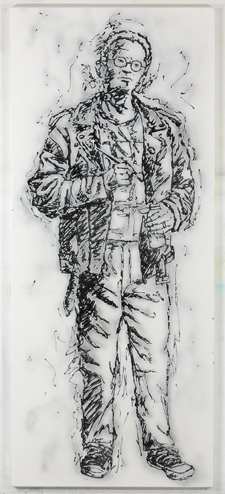 Mark Staff Brandl, Self-Portrait, 2013, oil on canvas, 75 x 32 in. (artwork © Mark Staff Brandl)
Mark Staff Brandl. Jedlitschka Gallery, Zürich, Switzerland, February 28–April 18, 2013. My Metaphor(m): a Painting-Installation. Painting and installation based on his PhD dissertation.
Mid-Atlantic

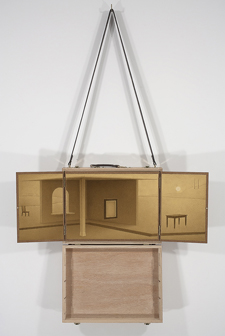 Jeffrey Abt, Wandering Gallery project (workspace), 2013, oil on panel and mixed media, 49 x 29 x 3½ in. (open) (artwork © Jeffrey Abt)
Jeffrey Abt. King Street Gallery, Morris and Gwendolyn Cafritz Foundation Arts Center, Montgomery College, Takoma Park, Maryland, February 8–March 14, 2013. Jeffrey Abt: Observations/Contemplations. Paintings and mixed media.
Ander Mikalson. Temple Contemporary, Temple University, Philadelphia, Pennsylvania, January 30–February 12, 2013. A Score for a Dinosaur. Performance.
Northeast
Ander Mikalson. Institute for Contemporary Art, Maine College of Art, Portland, Maine, January 23–April 7, 2013. A Score for Two Dinosaurs. Performance.
Joseph S. Lewis III. The Phatory, New York, February 2–March 31, 2013. Security Blanket. Dye sublimation prints on polyester quilts.

 Thomas Matsuda, Purification, 2011, rubbing of charred wood from the burning of Purification sculptures at Morton Arboretum in Lisle, Illinois, on handmade paper with flower petals, 24 x 30 in. (artwork © Thomas Matsuda)
Thomas Matsuda. East Wing Gallery, Raymond M. LaFontaine Fine Arts Center, Mount Wachusett Community College, Gardner, Massachusetts, February 18–March 15, 2013. Purification. Sculpture and work on paper.
South
Kathryn Kelley. Art League Houston, Houston, Texas, January 18–March 8, 2013. The Uncontrollable Nature of Grief and Forgiveness (or lack of). Installation.
Sharon Louden. Holly Johnson Gallery, Dallas, Texas, April 6–June 22, 2013. Simple Strokes. Animation, painting, drawing, and sculpture.
West

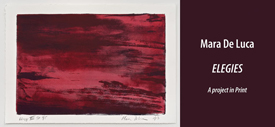 Invitation card for Elegies: A Project in Print (artwork © Mara De Luca)
Mara De Luca. Irvine Fine Arts Center, Irvine, California, March 9–April 20, 2013. Elegies: A Project in Print. Intaglio and silkscreen printmaking.
Mara De Luca. Luis De Jesus Gallery, Los Angeles, California, February 23–March 30, 2013. Cruise Collection 2013: New Paintings by Mara De Luca. Painting.
Micol Hebron. Jancar Gallery, Los Angeles, California, March 9–April 13, 2013. Reverse Engineering. Video, performance, and wall works.

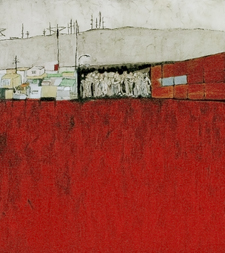 Kim Shifflet, Trapped at the Border, 2010, oil on canvas, 42 x 48 in. (artwork © Kim Shifflet)
Kim Shifflett. Branigan Cultural Center Museum, Las Cruces, New Mexico, April 5–27, 2013. Borderland. Painting.
Molly Springfield. Steven Wolf Fine Arts, San Francisco, California, January 26–March 9, 2013. The Marginalia Archive. Drawing and installation.
Claire Zitzow. White Box, University of Oregon, Portland, Oregon, February 7–March 23, 2013. Remains to Be Seen. Inkjet, silk-screened, and embossed prints, video, light boxes, and installation.
Resale Royalty Agenda
posted by CAA — April 19, 2013
Anne Collins Goodyear, president of the CAA Board of Directors and associate curator of prints and drawings at the National Portrait Gallery, Smithsonian Institution, will represent CAA at the United States Copyright Office public roundtable on resale royalties for artists, to be held on April 23, 2013, in Washington, DC. Please download and review the agenda for the roundtable.
Act Now – Ask Your Senators to Support the IMLS Office of Museum Services!
posted by CAA — April 18, 2013
The American Alliance of Museums (AAM) sent the following email on April 17, 2013.
Act Now – Ask Your Senators to Support the IMLS Office of Museum Services!
Again this year, museum champion Senator Kirsten Gillibrand is circulating a letter urging the Senate Appropriations Committee to provide robust funding in FY14 for the Office of Museum Services (OMS) at the Institute of Museum and Library Services (IMLS).
The deadline to sign on to this letter is Wednesday, April 24, 2013.
Ask your Senators to sign the OMS appropriations letter today!
House OMS Letter Sets New Record; Keep Momentum Going in the Senate!
The House version of this year’s OMS appropriations letter has already closed and, while we’re still tabulating the final list of signers, we do know that a new record of at least 95 Representatives signed the letter.
“This year’s record-setting effort in the House of Representatives is a testament to the hard work of museum advocates nationwide,” said Alliance President Ford W. Bell. “But we can’t afford to lose any momentum, so I hope everyone will take one minute to contact their Senators today.”
The Office of Museum Services received $30.8 million in the FY12 appropriations cycle, but was cut to $29.2 million in FY13 as a result of across-the-board cuts known as “sequestration.” While President Obama has proposed increasing its budget in FY14, the Office of Museum Services’ funding will ultimately be decided by Congress, so it is imperative that legislators hear from their constituents.
Thank you for taking action on this important issue!
Please visit www.aam-us.org/advocacy to learn more about Alliance advocacy for museums.
People in the News
posted by CAA — April 17, 2013
People in the News lists new hires, positions, and promotions in three sections: Academe, Museums and Galleries, and Organizations and Publications.
The section is published every two months: in February, April, June, August, October, and December. To learn more about submitting a listing, please follow the instructions on the main Member News page.
April 2013
Academe
Harris Fogel, an artist and associate professor at University of the Arts in Philadelphia, Pennsylvania, has been appointed director of the photography program in the school’s College of Art, Media, and Design.
Museums and Galleries
Matthew Affron, associate professor of art history at the University of Virginia in Charlottesville and director of special curatorial projects for the school’s Fralin Museum of Art, has joined the Philadelphia Museum of Art in Pennsylvania as the new Muriel and Philip Berman Curator of Modern Art. Affron will begin his new duties on September 1, 2013.

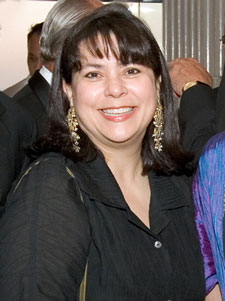 Margarita Aguilar
Margarita Aguilar, director of El Museo del Barrio in New York since 2011, has resigned from her position. She was also a curator at the museum from 1998 to 2006.

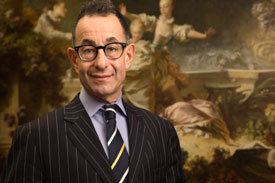 Colin Bailey (photograph by Michael Bodycomb)
Colin B. Bailey, deputy director and chief curator of the Frick Collection in New York, has been named director of the Fine Arts Museums of San Francisco in California.

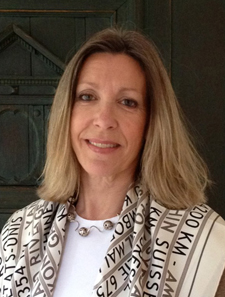 Antonia Boström
Antonia Boström, senior curator of sculpture and decorative arts at the J. Paul Getty Museum in Los Angeles, California, has been appointed director of curatorial affairs at the Nelson-Atkins Museum of Art in Kansas City, Missouri.
Stephen Gleissner, chief curator of the Wichita Art Museum in Wichita, Kansas, has resigned from his position.

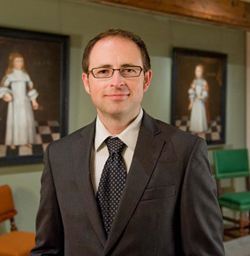 Cody Hartley
Cody Hartley, formerly director of gifts of arts at the Museum of Fine Arts, Boston, in Massachusetts, has become the next director of curatorial affairs for the Georgia O’Keeffe Museum in Santa Fe, New Mexico.

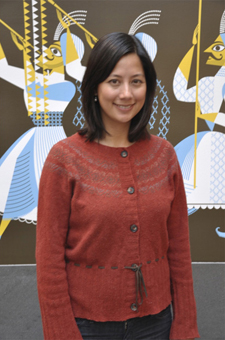 Risha K. Lee
Risha K. Lee, formerly a postdoctoral fellow at the National University of Singapore’s Institute for Southeast Asian Studies, has been named Jane Emison Assistant Curator of Indian and Southeast Asian Art at the Minneapolis Institute of Arts in Minnesota.
Kate Nesin, formerly a Mellon fellow at the Toledo Museum of Art in Toledo, Ohio, has joined the Art Institute of Chicago in Illinois as its new associate curator of contemporary art.

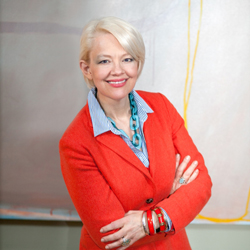 Kim Sajet (photograph by Wendy Concannon)
Kim Sajet, formerly president and chief executive of the Historical Society of Pennsylvania in Philadelphia, has become the new director of the Smithsonian Institution’s National Portrait Gallery in Washington, DC.
Organizations and Publications
Walter Robinson, formerly editor of Artnet magazine, has been hired as a bimonthly columnist for Artspace.com.
Institutional News
posted by CAA — April 17, 2013
Read about the latest news from institutional members.
Institutional News is published every two months: in February, April, June, August, October, and December. To learn more about submitting a listing, please follow the instructions on the main Member News page.
April 2013

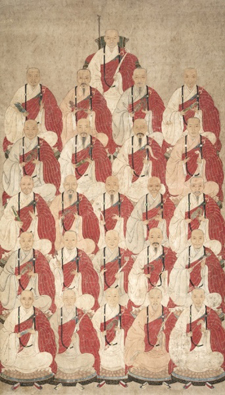 China, Qing dynasty (1644–1912), Portrait of Buddhist Monks of Obaku Sect, 1600s, hanging scroll (framed), ink and color on paper, 67½ x 39¼ in. (artwork in the public domain)
Case Western Reserve University in Cleveland, Ohio, and the Cleveland Museum of Art have received two grants totaling $250,000 from the Andrew W. Mellon Foundation to support the launch of the redesigned joint doctoral program in art history. The highly selective, object-oriented program features first-hand study of the museum’s comprehensive collections under the guidance of Case Western Reserve faculty and museum staff members. The university and the museum will administer the grant jointly.


The Getty Research Institute in Los Angeles, California, has published approximately 250,000 art-sale records from more than 2,000 German auction catalogues dating from 1930 to 1945 to its free art-historical research resources. The records are part of the Getty Provenance Index database.
The Honolulu Museum of Art in Hawai‘i has secured $540,000 in grants to support exhibitions and educational programs. The Stupski Family Fund has provided the largest gift: a $300,000 award over three years to support the new Honolulu Museum of Art School Sunday. Other funding sources are: the family and friends of Charles Higa ($100,000); the Arthur and Mae Orvis Foundation ($20,000); an anonymous foundation ($50,000); the National Endowment for the Arts ($20,000), and the Freeman Family Foundation ($50,000).
The Kansas City Art Institute in Missouri has consolidated its academic advising and career services operations into a single office, becoming one of the first colleges of art and design in the United States to do so.

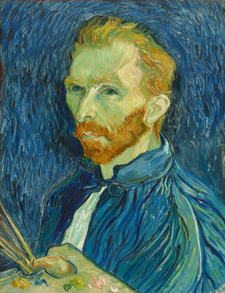 Vincent van Gogh, Self-Portrait, 1889, oil on canvas, 22½ x 17¼ in. (artwork in the public domain)
The National Gallery of Art in Washington, DC, has announced plans to construct a 12,260 square foot exhibition space to display modern art from the permanent collection. Construction for the new building, to be placed within the footprint of the East Building on the National Mall, will begin in January 2014.
Ask Congress to Defeat Proposals to Eliminate NEH Funding
posted by CAA — April 16, 2013
The National Humanities Alliance (NHA) sent the following email on April 15, 2013.
Ask Congress to Defeat Proposals to Eliminate NEH Funding
Dear Humanities Advocate,
There are multiple proposals to eliminate funding to the National Endowment for the Humanities circulating on Capitol Hill as appropriations hearings begin in the House of Representatives this week.
You can help defeat these proposals and ensure a brighter future for federal humanities funding by urging your elected officials to join a bipartisan effort to preserve the NEH. By signing on to House and Senate Dear Colleague letters, your Members of Congress can demonstrate critical support for NEH funding to the appropriations committee members that hold the agency’s future in their hands.
Click here to send a message to your elected officials today. They are waiting to hear from you.
It is critical that you act now. The deadline for Representatives to sign on to the House letter is Wednesday, and the deadline for Senators to sign on to the Senate letter is Friday.
Stephen Kidd, Ph.D.
Executive Director
National Humanities Alliance
Grants, Awards, and Honors
posted by CAA — April 15, 2013
CAA recognizes its members for their professional achievements, be it a grant, fellowship, residency, book prize, honorary degree, or related award.
Grants, Awards, and Honors is published every two months: in February, April, June, August, October, and December. To learn more about submitting a listing, please follow the instructions on the main Member News page.
April 2013
Nicole Awai, an artist who lives and works in New York, has been awarded a 2012 grant from the Art Matters Foundation to support travel to La Brea Pitch Lake in Trinidad.
Conrad Bakker, an artist based in Urbana, Illinois, has received a $25,000 grant from the Joan Mitchell Foundation through its 2012 Painters and Sculptors Grant Program.

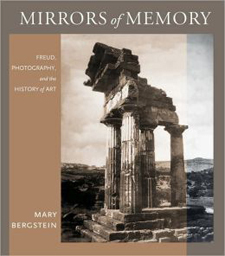
Mary Bergstein, professor of history of art and visual culture at the Rhode Island School of Design in Providence, has received the 2012 Courage to Dream Book Prize from the American Psychoanalytic Association for her book Mirrors of Memory: Freud, Photography, and the History of Art (Ithaca, NY: Cornell University Press, 2010). The prize is awarded to the book that best promotes the integration of the academic and clinical worlds of psychoanalysis.
Michele Brody, an artist based in New York, has received a commission to create a site-specific outdoor installation for the 2013 Cheng Long Wetlands International Environmental Art Project in Taiwan.
Mara De Luca, an artist from Los Angeles, California, was awarded a residency at the Irvine Fine Arts Center in Irvine, California, where she created a series of prints, using intaglio and silkscreen processes, related to her current work in painting.
Jeffrey Gibson, an artist based in Hudson, New York, has received a $25,000 grant from the Joan Mitchell Foundation through its 2012 Painters and Sculptors Grant Program.
Harris Fogel, associate professor and director of the photography program in the College of Art, Media, and Design at University of the Arts in Philadelphia, Pennsylvania, received support from the US embassy to visit Łódź, Poland, where he was a visiting expert, lecturer, and portfolio reviewer for the 2012 Fotofestiwal, an international festival of photography.

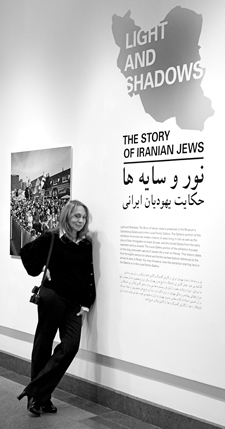 Shelley Gazin
Shelley Gazin has received support from numerous organizations for her contribution to the exhibition Light and Shadows: The Story of Iranian Jews, held in 2012–13 at the Fowler Museum on the campus of the University of California, Los Angeles (UCLA). Gazin accepted a California Documentary Project Grant from the California Council for the Humanities; subsidies from the National Endowment for the Humanities and the Righteous Persons Foundation; and a research fellowship from the Memorial Foundation for Jewish Culture. Additional funding came from the Center for Cultural Innovation, the Center for Iranian Creativity, the Durfee Foundation, and the Dortort Center for Creativity in the Arts at UCLA Hillel, in collaboration with the Iranian Jewish Women’s Organization of Southern California.
Kate Gilmore, an artist working in performance and video, has accepted a 2012 grant from the Art Matters Foundation to support ongoing work.
Janet Goldner was awarded a Fulbright Senior Specialist Grant for travel to Harare, Zimbabwe, to conduct a workshop and develop a collaborative project with young Zimbabwean artists. She also delivered several lectures and talks during her time there (October–November 2012).

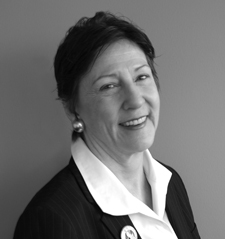 June Hargrove
June Hargrove, a professor of nineteenth-century art in the Department of Art and Archaeology at the University of Maryland in College Park, has been awarded a Chevalier de l’Ordre des Arts et Lettres from the French government for scholarship that has contributed to knowledge about French art and culture.
Micol Hebron, an artist who lives and works in Los Angeles, California, was an artist in residence on Chloë Flores’s Facebook page for December 2012. Hebron ran four ongoing projects during the month.
Natalie Jeremijenko, an artist and engineer based in New York, has accepted a 2013 Project Grant from Creative Capital in the Emerging Fields category.
Vishal Jugdeo has accepted a 2012 grant from the Art Matters Foundation to support a video project in Kolkata, India, involving the port of departure, globalization, and tolerance of marginal sexualities.
Tony Labat, an artist who works in performance, video, sculpture, and installation, has been selected as one of ten recipients of the Artadia Awards 2013 San Francisco. Awards are bestowed upon visual artists in all media and at any stage of their career who live and work in the five-county Bay area.

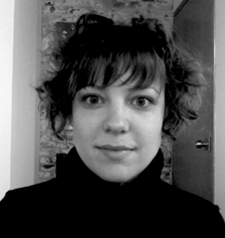 June Hargrove
Ander Mikalson, an artist based in Sunnyside, New York, has received a 2012 grant from the Art Matters Foundation to support ongoing work.
Vesna Pavlović, assistant professor of art at Vanderbilt University in Nashville, Tennessee, has accepted a 2012 grant from the Art Matters Foundation to support ongoing work.
Lisi Raskin, an artist based in Brooklyn, New York, has been named a recipient of Creative Time’s 2012–13 Global Residency Program, which offers opportunities for artists to address important social issues through immersion in communities around the world. Raskin will travel to Vietnam and Afghanistan.
Gregory Sale, an artist based in Phoenix, Arizona, has accepted a 2013 Project Grant from Creative Capital in the Emerging Fields category.
Will Wilson has received a 2012 grant from the Art Matters Foundation to support Towards a Critical Indigenous Photographic Exchange, a project inviting indigenous artists, arts professionals, and tribal governance to engage in the performative ritual that is the studio portrait.
Exhibitions Curated by CAA Members
posted by CAA — April 15, 2013
Check out details on recent shows organized by CAA members who are also curators.
Exhibitions Curated by CAA Members is published every two months: in February, April, June, August, October, and December. To learn more about submitting a listing, please follow the instructions on the main Member News page.
April 2013

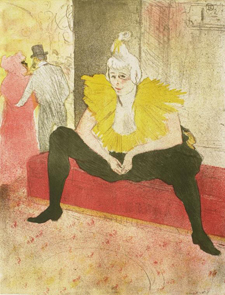 Henri de Toulouse-Lautrec, The Seated Clowness (Miss Cha-U-Kao), from Elles, 1896, lithograph printed in green-black, black-brown, yellow, red, and blue on cream wove paper, 20 11/16 x 15 13/16 in. Sterling and Francine Clark Art Institute, Williamstown, Massachusetts, 1962.108 (artwork in the public domain)
Colin B. Bailey, Susan Grace Galassi, and Jay A. Clarke. The Impressionist Line from Degas to Toulouse-Lautrec: Drawings and Prints from the Clark. Frick Collection, New York, March 12–June 16, 2013.

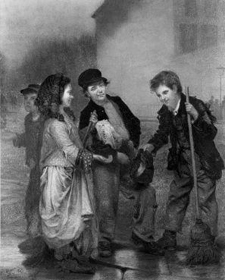
Rachel Epp Buller. Occupy Art: Protest and Empathy for the Worker. Wichita Art Museum, Wichita, Kansas, December 8, 2012–March 17, 2013.

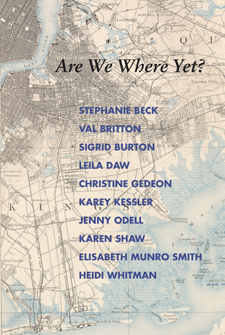 Invitation card for Are We Where Yet?
Leila Daw and Elisabeth Munro Smith. Are We Where Yet? A.I.R. Gallery, Brooklyn, New York, February 7–March 3, 2013.
Leena-Maija Rossi and Kari Soinio. Bodies, Borders, Crossings. Preus Museum, Kulturparken Karljohansvern, Horten, Norway, January 26–June 26, 2013.
Gail Stavitsky and Laurette E. McCarthy. The New Spirit: American Art in the Armory Show, 1913. Montclair Art Museum, Montclair, New Jersey, February 17–June 16, 2013.
Books Published by CAA Members
posted by CAA — April 15, 2013
Publishing a book is a major milestone for artists and scholars—browse a list of recent titles below.
Books Published by CAA Members appears every two months: in February, April, June, August, October, and December. To learn more about submitting a listing, please follow the instructions on the main Member News page.
April 2013

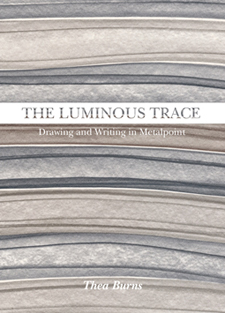
Thea Burns. The Luminous Trace: Drawing and Writing in Metalpoint (London: Archetype Publications, 2012).

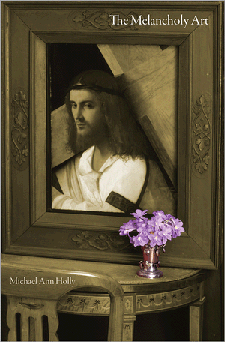
Michael Ann Holly. The Melancholy Art (Princeton, NJ: Princeton University Press, 2013).

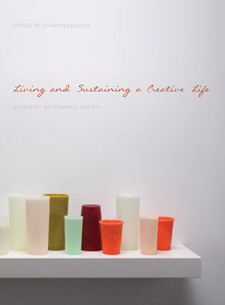
Sharon Louden, ed. Living and Sustaining a Creative Life: Essays by 40 Working Artists (Bristol, UK: Intellect Books, 2013).

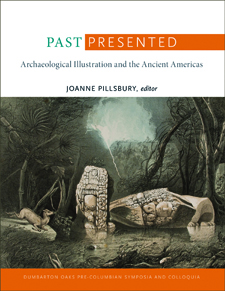
Joanne Pillsbury, ed. Past Presented: Archaeological Illustration and the Ancient Americas (Washington, DC: Dumbarton Oaks Research Library and Collection, 2012).

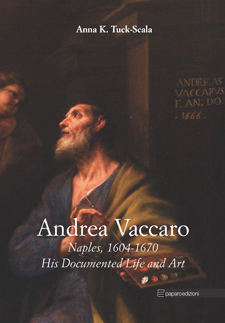
Anna K. Tuck-Scala. Andrea Vaccaro (Naples, 1604–1670): His Documented Life and Art (Naples, Italy: Paparo Edizioni, 2012).