CAA News Today
Apply Now for Spring 2026 Publication Grants + Grantees Announced!
posted by CAA — January 12, 2026
CAA is now accepting applications for the Millard Meiss Publication Fund and the Wyeth Foundation for American Art Publication Grant. These grants support book-length scholarly manuscripts in the history of art, visual studies, and related subjects that have been accepted by a publisher on their merits but cannot be published in the most desirable form without a subsidy.
The Millard Meiss Publication Fund supports the publication of books on any period or area of art history and visual studies.
The Wyeth Foundation for American Art Publication Grant supports the publication of books on the art of the United States, Canada, and Mexico.
Application instructions and criteria can be found here.
Deadline: March 31
Millard Meiss Publication Fund Fall 2025 Grantees
Miriam Chusid, Envisioning the Afterlife: Image, Text, and Ritual in Premodern Japan, University of Washington Press
Wyeth Foundation for American Art Fall 2025 Grantees
Elise Armani and Katy Siegel, What Was America? Art and Culture at the Bicentennial, Yale University Press
Congratulations to our grantees!
Art History Travel Fund: Apply Now + Congrats to Fall 2025 Grantees!
posted by CAA — January 12, 2026
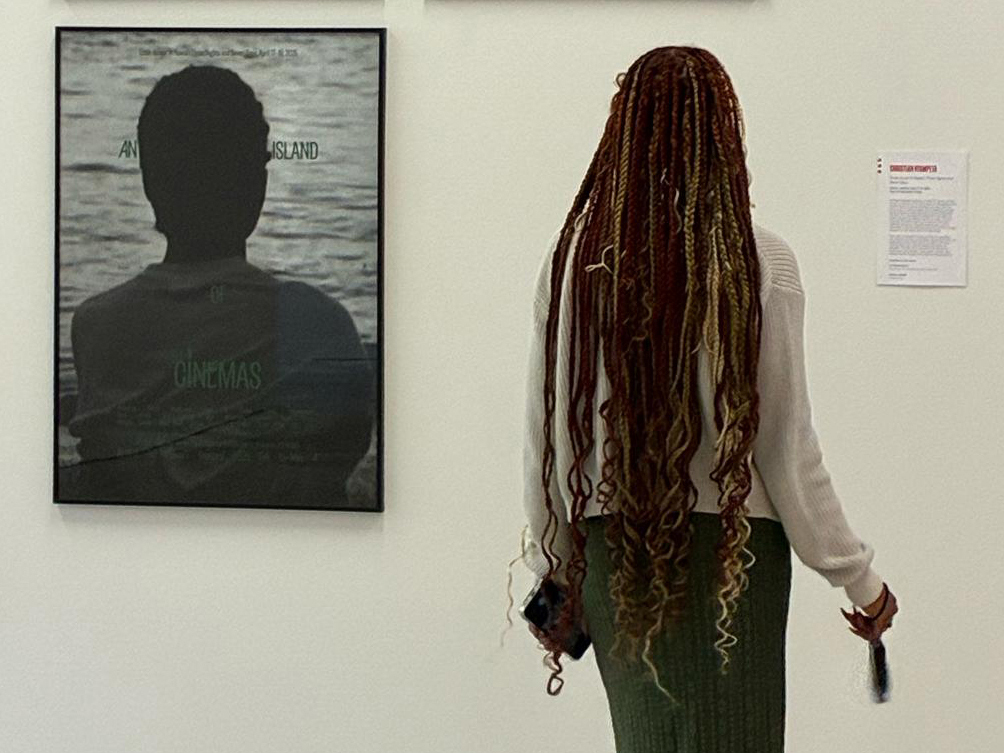
Student from 2024 grant recipient Bernida Webb-Binder’s course on Pacific Art at the Hawai’i Triennial in Honolulu.
CAA is now accepting applications for the Art History Fund for Travel to Special Exhibitions. Twice yearly this fund awards up to $10,000 to eligible undergraduate and graduate art history classes to cover travel, accommodations, and admission fees for students and instructors to attend museum exhibitions. Visit our website to learn more about application requirements and apply now for travel to Fall 2026 exhibitions!
Deadline: April 15
Congratulations to the Art History Travel Fund Fall 2025 Grantees!
In Fall 2025, CAA awarded grants via the Art History Fund for Travel to Special Exhibitions to Oklahoma State University, The University of Iowa, The University of Texas at Austin, and Rutgers University!
Oklahoma State University
Instructor: Jennifer Borland
Course: The Medieval Body
Exhibition: Spectrum of Desire: Love, Sex, and Gender in the Middle Ages
Location: The Met Cloisters, New York City
Rutgers University
Instructor: Alex Seggerman
Course: Egyptian Art: Ancient, Islamic, and Modern
Exhibition: Living Units
Location: Gezira Art Center, Cairo
The University of Texas at Austin
Instructor: Rikki Byrd
Course: Black Curatorial Thought
Exhibition: In Minor Keys: 61st Annual Venice Biennale
Location: Venice, Italy
University of Iowa
Instructor: Erin Hein
Course: Leonardo, Michelangelo, Raphael: The Rise of the Artist in the Italian Renaissance
Exhibition: Raphael: Sublime Poetry
Location: The Metropolitan Museum of Art, New York City
Joyce Kozloff in Conversation with Nancy Princenthal During CAA114 Annual Artist Interviews
posted by CAA — January 09, 2026
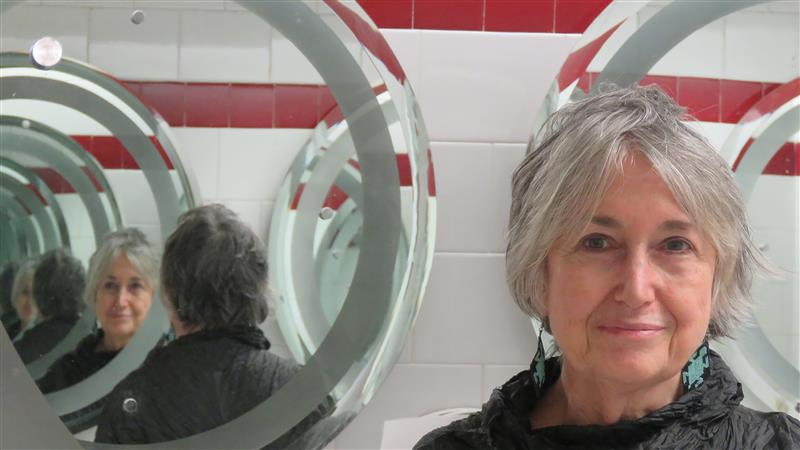
Photograph by Carolyn Yarnell
Joyce Kozloff will be in conversation with Nancy Princenthal during the CAA 114th Annual Conference Annual Artist Interviews!
Joyce Kozloff has been an activist in the feminist art movement on both coasts since 1970 and was a member of the Pattern and Decoration movement in the ’70s. Cartography and mapping have been important foundations of her work since 1990 and are structures through which she explores the range of human knowledge and the imposition of imperial will.After a sustained commitment to public art throughout the 1980s and ’90s, she returned to a studio practice that encompasses painting, sculpture, installations, printmaking, and photography. Two glass mosaic and ceramic tile public works—Parkside Portals (2018) for the MTA Art and Design Program, and Memory and Time (2021) for the General Services Administration (GSA). Her work is included in public collections such as the Brooklyn Museum of Art, Los Angeles County Museum of Art, Metropolitan Museum of Art, Museum of Modern Art, National Gallery of Art, Museum of Contemporary Art Los Angeles, Jewish Museum, Brooklyn Museum and Whitney Museum of American Art. The survey Joyce Kozloff: Contested Territories is on view at the Everson Museum, Syracuse, New York, through April 2026. She has been represented by the DC Moore Gallery in New York since 1995.
The CAA114 Annual Artist Interviews will be held on Friday, February 20, 4:30–7:00 p.m. CT at the Hilton Chicago. This event will also be livestreamed via YouTube.
Register now for the CAA 114th Annual Conference, February 18–21 in Chicago!
CWA Picks: Winter 2025–26
posted by CAA — December 23, 2025
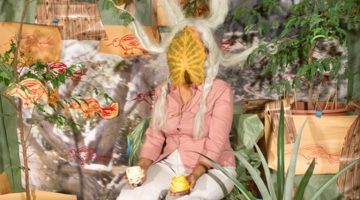
Visually arresting, thought-provoking, innovative art nourishes our souls. The exhibitions listed here offer the opportunity to immerse ourselves in the unique visions of important women and femme-identifying artists who challenge norms, call for change, encourage community, uplift underrepresented subjects, and ignite our aesthetic sensibilities.
UNITED STATES
Amy Usdin: After All
Through February 22
Minneapolis Institute of Art, MN
From abstract landscapes woven onto ragged fishing and horse-fly nets to digitally woven sculptures that evoke the endless tread of feet on airport floors, Minnesota-based artist Amy Usdin speaks to loss, longing, and the dissonance of nostalgia. After All urges viewers to strengthen our fragile ties to one another and to the earth.
Ang manok na hindi nakikita, hindi rin nakakain: The chicken you don’t see, you cannot eat
Through January 11
Minnesota Center for Book Arts, Minneapolis
In this interactive sculptural installation, Filipinx American artist Maeve Leslie interrogates the paradox of our cultural dependence on immigrant labor and the systemic erasure of those who provide it. As suggested by the exhibition’s title, a Filipino proverb that roughly equates to “out of sight, out of mind,” Leslie seeks to provoke conversations that lead to greater empathy and understanding.
Artemisia Gentileschi: Naples to Beirut
Through May 31
Columbus Museum of Art, OH
This exhibition centers on two large-scale narrative scenes painted in Naples in the later 1630s by Artemisia Gentileschi (1593–ca. 1654): the museum’s own Bathsheba, and the recently rediscovered Omphale and Hercules, in which the mythological Lydian princess subjugates the Greek hero as her domestic servant. Long considered lost, the latter work resurfaced in Beirut, Lebanon, in 2020 after a devastating explosion and underwent a lengthy conservation at the Getty Museum before going on public view this year.
Ayoung Kim: Delivery Dancer Codex
Through March 16
MoMA PS1, Queens, NY
Korean artist Ayoung Kim (b. 1979) presents the US debut of her three-part Delivery Dancer video installation, which examines the evolving relationships between data, human beings, and the environment. Using generative AI, videogame engines, and live-action footage, Kim centers the labor of fictional female delivery drivers En Storm and Ernst Mo (anagrams of “monster”), challenging capitalist pressures to meet increasing global market demands through self-optimization.
Eliza Au: Squaring the Circle
Through March 1
Crow Museum of Asian Art, Dallas
In this new site-specific installation by Eliza Au (b. 1982), ceramic tiles, blocks, and screens draw from the geometry of lines and circles. Au’s abstract ornamental patterns pay homage to many types of sacred architecture, from Buddhist caves to grottos to Islamic houses of worship. At the same time, the artist’s application of Rhino CAD 3D and other technologies to the ancient medium of clay illuminates the potential of architectural ornament to ignite our imaginations in new ways.
Edmonia Lewis: Said in Stone
February 14–June 7
Peabody Essex Museum, Salem, MA
The marble statues of Black and Mississauga Ojibwe sculptor Edmonia Lewis (ca. 1844–1907) are stylistically classicizing—the artist spent much of her career in Rome—but relate frequently to Lewis’s experience as a person of color: Her subjects include an allegory of liberation from slavery, portraits of social reformers, and the regal figure of a dying Cleopatra. This first retrospective of the acclaimed yet underrecognized artist also features works by later-generation artists she influenced.
Enough Already
Through February 15
MOCA/CT (Museum of Contemporary Art, Connecticut), Westport
Featuring eighty works by modern and contemporary women artists from the private collection of Sara M. and Michelle Vance Waddell, Enough Already reflects the collectors’ interests in LGBTQ+ communities and in feminist social issues like reproductive rights. The exhibition presents works by, among others, Louise Bourgeois, Deborah Butterfield, Barbara Kruger, Ana Mendieta, Catherine Opie, Cindy Sherman, Kiki Smith, and Carrie Mae Weems as well as several emerging artists.
Gabrielle Goliath: Personal Accounts
Through March 16
MoMA PS1, Queens, NY
This acclaimed video series (2024–) by South African artist Gabrielle Goliath (b. 1983), shown here in its US premiere, responds to the impact of patriarchal violence in a range of global contexts. Collaborating with survivors to document their stories, the artist exclusively presents the moments in between the words: breaths, sighs, cries, humming, even laughter. Goliath’s sonic cycles trouble false binaries of the “voiced” and “voiceless,” revealing the enormity of what can be conveyed by perceived silence.
Georgia O’Keeffe: Architecture
Through January 3, 2027
Detroit Institute of Arts, MI
This groundbreaking exhibition argues that the architectural paintings of Georgia O’Keeffe (1887–1986) bear as much visual potency and personal meaning as her better-known landscapes and flower images. In the roughly three dozen paintings shown here, O’Keeffe applies her signature volumetric yet reductive style to a wide range of built environments, from rural farms to Manhattan skyscrapers to the adobe homes of New Mexico.
An Indigenous Art: Huipiles from Mia’s Collection
February 14–August 2
Minneapolis Institute of Art (Mia), MN
Composed of two or three handwoven rectangular panels stitched together into a blouse or tunic, the huipil has been worn by Indigenous women throughout Mesoamerica for more than five hundred years and remains popular today among descendants of the Maya in Guatemala’s highland regions. The examples in An Indigenous Art, drawn from a significant textile donation to the museum, showcase the colorful embroidered and appliquèd motifs by which wearers identified their village affiliation and social standing.
Jana Marie Cariddi: Amygdala
Through January 19
Savannah College of Art and Design (SCAD) Museum of Art, GA
Taking its name from the brain’s processing center for memory and emotion, this debut museum exhibition of SCAD alumna Jana Marie Cariddi includes new examples of the artist’s signature colorful sculptural paintings, which unsettle viewers by their uncanny resonances with pop-cultural touchstones. Cariddi’s graphite drawings likewise privilege feeling over logic, their abstract pseudoscientific ecosystems coalescing into an alphabet of idiosyncratic petroglyphs.
Jenny Saville: The Anatomy of Painting
Through January 18
Modern Art Museum of Fort Worth, TX
Rendered in thickly layered brushstrokes, the bodies and heads of Jenny Saville (b. 1970), one of the world’s foremost contemporary figure painters, challenge conventional ideals of female beauty. This first major museum exhibition in the US of Saville’s work traces her practice to date, from the monumental nudes that first garnered the artist acclaim in 1992 to a recent series of portraits interrogating the intersections of the physical and the virtual in our image-saturated age.
Joyce Pensato
Through March 15
Institute of Contemporary Art, Miami, FL
Her most comprehensive museum survey yet, Joyce Pensato examines five decades of recurring characters in the work of the New York–based artist (1941–2019), from her Batman drawings of 1976–81 and vividly colored gestural oil abstractions of the 1980s to her early enamel paintings of the 1990s and charcoals, pastels, and paintings of the 2000s. Pensato’s treatments of iconic cartoon and live-action figures reflect on the history of American popular culture and on the transformations of technology.
METAMORPHOSIS! Butterflies and Botanicals by Maria Sibylla Merian
Through January 3
Philbrook Museum of Art, Tulsa, OK
The exquisitely drawn and hand-colored illustrations of artist-scientist Maria Sibylla Merian (German, 1647–1717) revolutionized entomology in two ways: by documenting live insects at every stage of development, and by including the plants consumed at each stage. METAMORPHOSIS! presents a selection of prints from a privately owned 1718 Dutch edition of Merian’s The Marvelous Transformation of Caterpillars and Their Strange Diet of Flowers (Der Raupen wunderbare Verwandlung und sonderbare Blumennahrung).
New Work: Sheila Hicks
Through August 9
San Francisco Museum of Art (SFMOMA), CA
For nearly seven decades, Sheila Hicks (b. 1934) has redefined the expressive possibilities of fiber as a sculptural form. Hicks’s first solo exhibition at SFMOMA features recent works in natural and synthetic materials on a range of scales inspired by objects, textures, and patterns in places that hold personal significance for the artist, from the cobblestones of her courtyard in Paris to the rugged landscape and towering lighthouses of the island of Ouessant, France.
Petah Coyne: How Much A Heart Can Hold
Through March 14
Lowe Art Museum, University of Miami, FL
These large-scale sculptures by Petah Coyne (b. 1953) forge dialogues with an array of women authors and female literary figures. Using her signature wide range of unorthodox materials, from human hair and wax flowers to steel wire spun from the body of an Airstream trailer, Coyne hauntingly invokes the experiences of, among others, Zelda Fitzgerald, a fragment of whose poetry provides the exhibition’s title; the grieving Joan Didion in My Year of Magical Thinking; and the objectified young women of Yasunari Kawabata’s House of Sleeping Beauties.
Radius: Helen Frankenthaler Prints in Context
Through February 15
Sidney and Lois Eskenazi Museum of Art, Bloomington, IN
While best known as an Abstract Expressionist painter, Helen Frankenthaler (1928–2011) also produced a large body of inventive prints over five decades, imbuing a wide range of print types with unusual energy and immediacy. Radius places select works side-by-side with prints from the museum’s collection by other Ab Ex artists, including Lee Krasner, Robert Motherwell, and Jackson Pollock
Ruth Orkin: Women on the Move
Through March 29
National Museum of Women in the Arts, Washington, DC
Women project confidence in these postwar photographs by the American Ruth Orkin (1921–1985). Some subjects are Hollywood celebrities or Broadway actresses, others live on an Israeli kibbutz or walk Italian streets as tourists, while still others populate American classrooms, homes, parks, or cities. By capturing their lively facial expressions and dynamic poses, Orkin vividly conveys the women’s sense of agency.
Sheida Soleimani: What a Revolutionary Must Know–2020s
Through January 25
Contemporary Arts Center, Cincinnati, OH
This exhibition comprises the full Ghostwriter series by Iranian American artist Sheida Soleimani (b. 1990): tableaux executed in photography, sculpture, and video that piece together the remarkable escape from Iran’s totalitarian regime by Soleimani’s parents in the 1980s. Employing a surreal, metaphorically resonant, collagic visual language, the artist frames this deeply personal story as a larger meditation on political trauma, resistance, diaspora, identity, and memory.
The View From Here honors the fortieth anniversary of Deborah Bright’s influential essay “Of Mother Nature and Marlboro Men,” which argued that male American landscape photographers constructed and reinforced contemporary cultural ideals under the guise of pure aesthetics. The women photographers in this exhibition represent a wide range of approaches to the same landscape while lending themselves to an acknowledgement of cultural situatedness, from Imogen Cunningham and Laura Gilpin to Suzanne Camp Crosby and Stephanie Dinkins.
Uman: After all the things…
Through May 10
The Aldrich Contemporary Art Museum, Ridgefield, CT
Somalia-born artist Uman (b. 1980) expresses feelings through color in a hybrid abstract-metaphorical mode that is intuitive, multilayered, adaptable, and free. Influenced by memories of her homeland and by her diasporic experiences in Kenya, Denmark, New York, and beyond, Uman’s practice is “its own activism, just painting my life, existing, living.” The new and recent works in After all the things. . ., her first institutional solo exhibition, include paintings, works on paper, and a sculpture.
Una Kirkpatrick
Through February 21
Houston Center for Contemporary Craft, TX
Having studied disparate subjects at two institutions in the city where this exhibition appears, biochemistry at the University of Houston and ceramics at the Glassell Studio School, Una Kirkpatrick (b. 1952) found clay to be the perfect medium for articulating “the elegance [of] biological design.” Kirkpatrick’s sculptures echo the rhythmic grouping, layering, and spiraling of organic forms within diverse ecosystems.
Vaginal Davis: Magnificent Product
Through March 2
MoMA PS1, Queens, NY
Spanning five decades of Vaginal Davis’s practice as a performer, visual artist, author, filmmaker, musician, educator, self-proclaimed “Blacktress,” and countercultural icon, Magnificent Product spotlights Davis’s role as an underground trailblazer in culture and queer politics. Organized thematically, the exhibition features major installations, video, paintings, zines, audio works, sculptures, and extensive archival materials as well as cross-disciplinary collaborations.
Women Artists in Ascendance
Through July 2
The Jule Museum, Auburn University, AL
Featuring works from the university art collection alongside loans from the Whitney Museum of American Art, Women Artists in Ascendance celebrates twelve women artists who were goliaths of modern American art, including Joan Brown, Dorothy Dehner, Helen Frankenthaler, Grace Hartigan, and Lee Krasner.
MEXICO
Chantal Peñalosa Fong: Loom Tales / Cuentos de presagio
Through January 4
Museo de Arte de Zapopan (MAZ), Jalisco
In this multimedia exhibition, Chantal Peñalosa Fong (b. 1987) examines the phenomenon of Chinese immigration to northern Mexico, drawing on her ancestors’ traumatic personal histories as well as on official versions of the narrative and on current xenophobic discourse. Landscapes and floral elements evoke the uncanny qualities of a liminal place shot through with memory and forgetting.
Hablando se entiende la gente: interviniendo el archivo Pinto mi Raya a partir del texto, la imagen y la palabra (“People Understand One Another Through Talking: Intervening in the Pinto mi Raya Archive Using Text, Image, and Words”)
Through February 14Celda Contemporánea, University of the Cloister of Sor Juana, Mexico City
This exhibition brings together works created by the prolific feminist artist, writer, and activist Mónica Mayer (b. 1954) over the past three years. These works emerged from Mayer’s reactivation of her vast archive, a territory of aesthetic, pedagogical, and political experimentation. Operating in this field where power, affection, memory, silences, and possibilities are intertwined, Mayer’s works collectively activate the intersections of intimate personal memories with political and artistic histories.
Lilia Carillo. Todo es sugerente (Everything Is Suggestive)
Through February 8
Museo del Palacio de Bellas Artes, Mexico City
Lilia Carrillo (1930–1974) was a prolific painter whose contributions were central to the development of non-figurative painting in Mexico. Todo es sugerente features more than a hundred works produced over twenty-six years of Carrillo’s short life, not only paintings in oil and acrylic but also drawings, collages, and lithographs. Documentary materials additionally highlight Carillo’s collaborations in set design, costume design, illustration, and curation as well as her activism and participation in major cultural movements.
Marina Vargas: Revelaciones (Revelations)
Through January 18
Museo de Arte Contemporáneo, Querétaro
This exhibition centers on the feminist investigation by Spanish artist Marina Vargas (b. 1980) into the visibilities of women in visual culture, particularly in the history of the sacred and the spiritual. With the figure of Mary Magdalene as a starting point, Vargas employs sculpture, silver-ink printmaking, photography, and other media to explore how women have been relegated to the background in art and religion, presenting new works that reveal what has been concealed by patriarchal silences.
CANADA
Allison Katz: Inner Momentum
Through April 26
Art Gallery of Ontario, Toronto
The paintings of UK-based artist Allison Katz (b. 1980) merge realism with the fantastical, incorporating wordplay as well as literary, historical, and autobiographical references. Anchoring this exhibition of new and recent works is the emblematic Truth (2023), in which Katz’s grandmother regards an Alberto Giacometti sculpture given substance by modeling paste; the tableau embodies the artist’s, and viewer’s, complex relationship to the history of modern art.
Charlotte Zhang: Tireslashers
Through March 8
The Polygon Gallery, Vancouver
For Los Angeles–based artist Charlotte Zhang (b. 1999), the figures of petty criminals who haunt materials as old as Elizabethan-era moralizing pamphlets simultaneously threaten upright society’s notions of property/propriety and personify fantasies of individualism and heroic citizenship. Tireslashers presents Zhang’s readymade sculpture series Bloodsport/Playground Rules (2023–) of interventions to public benches and her image-dyed fabric collage series Rogue Pamphlets (2025–).
Diasporic Worldings: Gabriela Aceves Sepúlveda
Through February 16
Urban Screen, Libby Leshgold Gallery, Emily Carr University, Vancouver
This 2025 experimental video by Guadalajara-born, Vancouver-based artist Gabriela Aceves Sepúlveda (b. 1973) explores the experiences of people who belong to a forced or voluntary diaspora as they form relationships with land, place, territories, and ecosystems. Inspired in part by Mexican writer Cristina Rivera Garza’s use of frottage drawing to recover an embodied connection to place, Diasporic Worldings features actions performed on camera and images involving different approaches to map-making.
Emily Carr: Navigating an Impenetrable Landscape
Through January 20–February 24
Art Gallery of Ontario (AGO), Toronto
Experiencing a painting by Emily Carr (1871–1945) can be like looking at a dense forest: the environment seems inviting yet impenetrable. This exhibition uses the metaphor of physical closeness to or distance from nature to probe Carr’s thinking about the forests she painted. It also examines the white Canadian artist’s representation of Indigenous villages and totem poles in relation to the forest, given the tendency in Carr’s era (as often still today) to conflate Indigenous cultures with nature.
Issokawo’taan (Faye HeavyShield)
Through February 22
Art Gallery of Ontario (AGO), Toronto
Kanai (Blood) Nation artist Faye HeavyShield (b. 1953; in Blackfoot, Issokawo’taan), recipient of the AGO’s 2021 Gershon Iskowitz Prize, has for more than three decades created powerful installations and sculptures characterized in many cases by repeating spirals, circles, grids, or lines. This exhibition presents several works by the Alberta-based artist, including a restaging of her acclaimed 1995–96 Venus as Torpedo, in which an arm draped in clothing items extends across the museum floor.
Jesse Mockrin: Echo
Through March 6
Art Gallery of Ontario (AGO), Toronto
In her first solo museum exhibition, American artist Jesse Mockrin (b. 1981) radically reenvisions familiar art-historical subjects—Bathsheba, Solomon, and Daphne among them—through her own contemporary feminist lens. Urgent and subversive, Mockrin’s closely cropped compositions reveal the unsettling, uncanny dramas buried in traditional depictions of these figures. Echo features new large-scale paintings and works on paper installed alongside paintings, drawings, and sculptures from the AGO’s European collection.
Nan Goldin: Stendhal Syndrome
Through April 12
Art Gallery of Vancouver
The moving-image works of Nan Goldin (b. 1953), originally created as slideshows on carousels set to music, invite visceral responses. Evoking the metaphor of the Stendhal Syndrome—dizziness, confusion, or even hallucinations triggered by exposure to intense beauty—Goldin’s 2024 work of this title, presented here in single-channel video format, juxtaposes the artist’s photographs of famous classical, Renaissance, and Baroque mythological works with recreations by queer and otherwise nonconforming bodies.
SOUTH AMERICA
Margarita Paksa: Ideas correspondientes (Corresponding Ideas) 1964–1984
Through February 16
Museo de Arte de Buenos Aires (MALBA), Argentina
A key figure in Argentine and Latin American art, Margarita Paksa (Buenos Aires, 1932–2020) embodied the transformation art underwent in the 1960s in response to a globalized world. Corresponding Ideas, 1964–1984 reviews two decades of this prolific artist’s work, bringing together more than sixty graphic and object-based works and installations as well as documentary materials relating to her projects.
Suspensión (Suspension)
Through March 8
Museo de Arte Contemporáneo de Buenos Aires (MACBA), Argentina
In the practice of São Paolo–based artist Carla Chaim (b. 1983), which moves between performance and drawing, the body becomes measure, tool, and limit—a sensitive surface that interrupts the logic of control and productivity. The artist’s first solo exhibition in Buenos Aires brings together a selection of representative recent works where the trace is a breath and movement, a form of thought.
Ahora (Now): Claudia Vásquez Gómez
Through January 25
Museo de Arte Contemporáneo (MAC), Parque Forestal, Santiago, Chile
Characterized by extensive logistical efforts, limited duration, and rigorous design, the actions and interventions of Santiago-based Claudia Vásquez Gómez (b.1981)—some solo, others collaborative—in natural and urban landscapes recall North American land art of the 1960s onward. The projects represented in Ahora highlight diverse geographical regions of Chile, from deserts to forests to the mountainous valleys of Elqui, as well as the frozen terrain of Antarctica.
¿Qué saben las cotorras de especies exóticas? (What Do Parakeets Know of Exotic Species?): Valentina Soto
Through March 29
Museo de Arte Contemporáneo (MAC) Quinta Normal, Santiago, Chile
Valentina Soto (b. 1988), a Chilean artist, tells stories about nature by asking unconventional questions, using a wide variety of materials to replicate, test, and transform observed phenomena. This exhibition treats the history of the monk parakeet, which is considered invasive in Chile. Sculptures and audiovisual recordings serve as a speculative ethnography concerning what the term “exotic species” might mean to the parakeet.
Ritos Corpóreos (Corporeal Rites): Gabriela Carmona Slier, Isidora Kauak Aguad, and Fernanda Núñez Camus
Through March 29
Museo de Arte Contemporáneo (MAC) Quinta Normal, Santiago, Chile
Corporeal Rites brings together the multidisciplinary practices of Chilean artists Gabriela Carmona (b. 1980), Isidora Kauak (b. 1995), and Fernanda Núñez (b. 1989), who update ancestral traditions and challenge social and patriarchal orders as they explore the ritual power of objects and the body. Their works constitute a spiritual practice and a source of knowledge, becoming a locus of invocation, memory, and community.
EUROPE & UK
Dove le liane s’intrecciano (Where the Vines Intertwine): Binta Diaw
Through March 8
Parco Arte Vivente, Turin, Italy
This project by Senegalese Italian artist Binta Diaw (b. 1995) investigates Afro-descendant diasporic memory, ecological survival, and female resistance. Key works include Dïà s p o r a (2021), in which plants grow amid a weblike structure of braided hair, evoking the practice by enslaved women on plantations of concealing seeds from their homeland and escape maps in their hair, turning their bodies into storehouses of memory and resources for survival.
Emilija Škarnulytė
ThroughApril 12
Tate St. Ives, Cornwall, UK
In her films and immersive installations, Emilija Škarnulytė (b. 1987) assumes half-human, half-fish form to explore submarine tunnels, hydroelectric plants, and other hidden elements of infrastructure associated with mechanical and societal power. For Škarnulytė “future archaeologist” character, these built environments are relics of a lost human culture, parts of new mythologies for our currently endangered planet.
Larissa Sansour: These Moments Will Disappear Too
Through February 15
Kuntshal Charlottenborg, Copenhagen
Past, present, and imagined futures come together in the meticulously crafted video works and installations of London-based Palestinian Danish artist Larissa Sansour (b. 1973). These Moments Will Disappear Too takes the history of Palestine as its point of departure while offering a space to reflect on broader themes of national identity, shared human experience, collective memory, and potential environmental catastrophe.
Maruja Mallo: Máscara y compás (Mask and Compass)
Through March 16
Museo Reina Sofia, Madrid
This retrospective brings greater visibility to the work of Maruja Mallo (1902–1995), a leading figure of modern art in Spain and a member of the avant-garde Generation of ’27. Máscara y compás traces the artist’s practice from the Surrealist compositions of her early years to the fantastical geometric configurations of her final works. Whether her settings are the working-class neighborhoods of Madrid or the remote countryside, Mallo invests the relationship of humans to nature with cosmic significance.
ASIA
Almagul Menlibayeva: I Understand Everything
Through May
Almaty Museum of Arts, Almaty, Kazakhstan
This inaugural exhibition of the Almaty Museum of Arts showcases works from the late 1980s to the present by Almagul Menlibayeva (b. 1969), one of the most prominent voices in Central Asian contemporary art. Across painting, printmaking, photography, video, performance, textiles, and multimedia installations, Menlibayeva addresses the complex cultural, historical, and sociopolitical history of Kazakhstan, weaving in Indigenous mythologies and confronting such issues as women and identity, ecology, energy, and neocolonialism.
Anti-Action: Artist-Women’s Challenges and Responses in Postwar Japan
Through February 8
National Museum of Modern Art, Tokyo
Art criticism of the 1950s and 1960s in Japan rarely addressed women’s contributions to the action painting movement. This exhibition adopts the gender studies perspective of Nakajima Izumi’s 2019 book Anti-action: Post-war Japanese Art and Women Artists, focusing on Yayoi Kusama, Hideko Fukushima, and less well known women artists working in this era.
Ayesha Sultana: Fragility and Resilience
Through January 5
Jaipur Centre for Art, India, in collaboration with the Ishara Art Foundation
Against the backdrop of social, ecological, and personal upheavals, Fragility and Resilience brings together works by Bangladesh-born, US-based artist Ayesha Sultana (b. 1984): hand-blown glass sculptures, oil paintings, watercolors on Japanese silk tissue, works on clay-coated paper, and photographs that explore the delicate balance between our planet’s vulnerability and its strength.
MIDDLE EAST & NORTH AFRICA
Ghadeer Saeed: Undefined
Through January 1
Dar Al-Anda Gallery, Amman, Jordan
Ghadeer Saeed (b. 1981, Libya), a Palestinian diasporic artist living in Amman, digitally and physically interweaves photographs—many of them her own—to create predominantly monochromatic collages punctuated by vivid bursts of color. By focusing on iconic “Oriental” and global subjects, Ghadeer explores human disorientation in an era when technology overwhelms our humanity and themes of war and chaos intersect with questions of identity.
AFRICA
Cauleen Smith: Afflict the Comfortable, Comfort the Afflicted
Through October 4
Zeitz Museum of Contemporary Art Africa (MOCAA), Cape Town
In this first major presentation on the African continent of African American artist Cauleen Smith (b. 1967), films and videos interact with drawings, sculpted objects, colorful textile banners, and sound to offer visitors a layered sensory experience. Smith meditates here on myriad ongoing interests, including Black experimental cinema, Afrocentric aesthetics, Black feminism, non-Western cosmologies, the emancipatory uses of the utopic, and what the artist calls “the everyday possibilities of the imagination.”
I’m Not Governed By My Flesh
Through January 17
Affinity Art Gallery, Lagos
In the quiet rumble of pigment pressed into rough canvas, Johannesburg-based artist Lulama Wolf (b. 1993) elevates her subjects—women crowned with horns, sometimes drawing the gaze of a horned cow—to the threshold between heaven and earth. Animated by ritual, myth, and ancestral memory, Wolf’s figures are delicate and restful yet full of power.
Rachel Marsil: Ce que la mer murmure (What the Sea Whispers)
Through January 17
Galerie Cécile Fakhoury at Hotel Sokhamon, Dakar, Senegal
Senegalese French painter and sculptor Rachel Marsil (b. 1995) draws on the history of the exhibition venue, originally built as a maternity hospital and spiritual site, and on the Afrofuturist mythology of 1990s Detroit-based electronic music duo Drexciya to evoke an underwater world inhabited by the children of pregnant Black women thrown overboard during the transatlantic slave trade.
OCEANIA
Yasmin Smith: Elemental Life
Through June 8
Museum of Contemporary Art Australia (MCA), Sydney
Relying on field research, community collaboration, and technical experimentation, ceramic artist Yasmin Smith (b. 1984) formulates unique glazes whose chemical signatures echo the environments from which she draws the plants and minerals she burns to create them. Elemental Life presents the major wall-based installation Seine River Basin (2019), commissioned by the Centre Pompidou in Paris and acquired for the MCA Collection in 2020, alongside new and recent works investigating waterways in relation to deep geological time.
CAA 2026 Board of Directors Election: Vote Now!
posted by CAA — December 11, 2025
As a CAA member, voting is the best way to shape the future of your professional association. Thank you for taking the time to vote!
The CAA Board of Directors is comprised of professionals in the visual arts who are elected annually by the membership to serve four-year terms or (for emerging professionals) two-year terms. The Board is charged with the long-term financial stability and strategic direction of CAA in partnership with the Executive Director; it is also the Association’s governing body. The Board sets policy regarding all aspects of CAA activities, including publishing, the Annual Conference, awards and fellowships, advocacy, and committee procedures. For more information, please read the CAA by-laws section on Nominations, Elections, and Appointments.
MEET THE CANDIDATES
The 2025–26 Nominating Committee has selected the following candidates for election to the CAA Board of Directors. Click the names of the candidates below to read their personal statements and CVs before casting your vote.
BOARD OF DIRECTOR CANDIDATES (FOUR-YEAR TERM, 2026–30)
Researcher and Director, Museum Studies
Rosas Museum (Narcao, Italy)
Professor of Painting
Auburn University (Auburn, AL)
Assistant Professor of Photography, Parsons School of Design
The New School (New York, NY)
Dean, School of Art and Design
Fashion Institute of Technology (New York, NY)

Assistant Dean, Curriculum and Learning, Parsons School of Design
The New School (New York, NY)
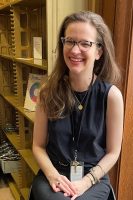
Librarian, Miriam and Ira D. Wallach Division of Art, Prints and Photographs
New York Public Library (New York, NY)
EMERGING PROFESSIONAL BOARD OF DIRECTOR CANDIDATES (TWO-YEAR TERM, 2026–28)

Director of Learning & Engagement
Everson Museum of Art (Syracuse, NY)
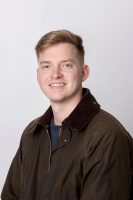
PhD Candidate in Art History
The Pennsylvania State University (University Park, PA)
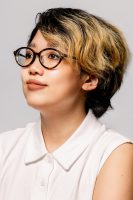
Part-Time Design Faculty, Parsons School of Design
The New School (New York, NY)
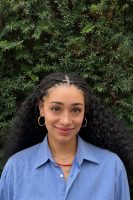
PhD Candidate in Art History and Visual Culture
Duke University (Durham, NC)
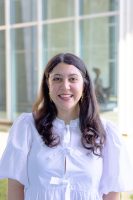
Marketing and Communications Coordinator
Modern Art Museum of Fort Worth (Fort Worth, TX)
CAA members must cast their votes online. The deadline for voting is 5:00 p.m. CT on Thursday, February 19, 2026.
Elected individuals will be announced at the CAA Annual Business Meeting on Friday, February 20, 1:00–2:00 p.m. CT.
Questions? Contact info@collegeart.org with the subject line “Board of Directors Election.”
Notice of the CAA 114th Annual Business Meeting
posted by CAA — December 10, 2025
CAA Annual Business Meeting
Friday, February 20, 2026
1 p.m. CT
The 114th Annual Business Meeting of the members of the College Art Association will be called to order at 1 p.m. CT on Friday, February 20, 2026, at the Hilton Chicago. Access to this meeting is included in paid registration and no-cost registration. Once registered, please log into the online conference schedule to view more details about this meeting. CAA President, Dr. Denise Baxter, will preside.
AGENDA
- Welcome + Call to Order – Denise Baxter, CAA President
- Executive Director Report – Meme Omogbai, CAA Executive Director + CEO
- Approval of 113th Annual Business Meeting Minutes [ACTION ITEM]
- Old/New Business
- Board Member Election Results – Denise Baxter, CAA President
- Adjourn
BOARD VOTING
The Board of Directors slate has been announced as of December 11, 2025, along with an online voting form. Please submit your voting form for the 2026 election no later than 5 p.m. CT on Thursday, February 19th, 2026.
Next Meeting – 2027
The 115th Annual Business Meeting of the College Art Association will be held on February 5, 2027, at the New York Hilton Midtown.
CAA113 Annual Business Meeting Minutes
posted by CAA — December 10, 2025
CAA113 Annual Business Meeting
February 14, 2025 | 12:00 p.m. ET
New York Hilton Midtown
- Welcome + Call to Order – Denise Baxter, CAA Board President
- Denise Baxter called the meeting to order at 12:05 p.m. ET.
- The agenda was introduced, with emphasis on brevity to allow time for a special guest presentation on the state of the field following the Annual Business Meeting.
- Executive Director Report – Meme Omogbai, CAA Executive Director + CEO
- Financial Report
- CAA’s annual audit was conducted by the firm EisnerAmper for the fiscal year ending June 30, 2024.
- Net assets increased by over $80,000 compared to the prior year.
- Operating revenue was $3.4 million, and expenses were approximately the same amount.
- An unrealized investment loss was due to market conditions.
- CAA continues to operate within budget and maintains fiscal prudence.
- Audit reports are publicly available via Guidestar and NYS Charities Bureau.
- Membership Update
- CAA Individual members totaled approximately 4000 in the year ending June 30, 2024, and 268 Institutional members.
- There were 437 institutional journal subscribers.
- CAA’s co-publisher of our field-leading journals The Art Bulletin and Art Journal remains Routledge, Taylor & Francis.
- Strategic Repositioning Progress
- We have continued implementation of the strategic plan to modernize and future-proof CAA.
- CAA is prioritizing investment in technological infrastructure to support global presence and responsiveness.
- We have expanded our hybrid offerings and piloted professional development webinars.
- CAA received the Candid Platinum Seal of Transparency, a designation which supports CAA’s ongoing fundraising efforts and affirms organizational accountability.
- Conference Update
- The CAA113 attendance target was 2500 and this was exceeded by 1000 with just over 3500 attendees.
- Staff, especially the very small conference team, was recognized for exceptional effort in achieving this milestone.
- All staff members present were asked to stand to be acknowledged.
- Financial Report
- Approval of 112th Annual Business Meeting Minutes [ACTION ITEM]
- Jennifer Rissler moved to approve minutes from the CAA 112th Annual Business meeting; Greg Gilbert seconded the motion.
- The minutes were approved unanimously by those present.
- Old/New Business
- Laura Anderson Barbata (noted for forging a climate crisis partnership), Wanda Raimundi-Ortiz (noted for service on the Annual Conference Committee), Kelly Walters (noted for tote bag design), and Roland Betancourt (noted for contributions to discipline-specific initiatives) were thanked for their service and contributions as Board members and encouraged after they rotate off the Board in May to remain engaged with CAA.
- Past CAA President James Hopfensperger honored Morgan T. Payne for nearly 50 years of continuous membership and engaged participation at CAA, especially attendance at Annual Business Meetings. His contributions have also included committee service, authorship of standards and guidelines for the field, and advocacy.
- Board Election Results – Denise Baxter, CAA Board President
- The 2025 Board of Directors slate was announced on December 11, 2024, along with an online voting form. Voting closed on Thursday, February 13, 2025, at 5:00 p.m. ET.
- The following individuals will join the Board of Directors in May 2025 (4-year term): Jelena Bogdanović, Jennifer Field, Leslie D. Joynes, Carolyn Jean Martin, and Emily Pugh.
- Congratulations to Aaron Samuel Mulenga who will also join the Board as a CAA Emerging Professional Director (2-year term).
- All who were not elected were encouraged to run again next year. Some of the most productive Board members in CAA history ran several times before they were elected, including some past CAA presidents.
- The CAA Nominating Committee was thanked for their contributions to this election cycle.
- Adjourn
- The CAA 114th Annual Conference will be held February 18–21, 2026 at the Hilton Chicago. The date of the Annual Business Meeting will be February 20, 2026.
- The CAA 113th Annual Business Meeting adjourned at 12:24 p.m. ET.
Announcing the CAA-Getty International Program 2026 Participants!
posted by CAA — November 20, 2025
The CAA-Getty International Program will welcome ten new scholars and four program alumni to the CAA 114th Annual Conference! CAA114 will mark the fifteenth year of this invaluable program, which brings a cohort of art historians, museum curators, visual arts professionals, and select program alumni from around the globe to the CAA Annual Conference each year. Grantees participate in a preconference colloquium and alumni session, examining pressing topics in the field, ranging from historiography, interdisciplinary/transnational methodology, and the decolonization of our arts institutions. Read “A Global Vision: The CAA-Getty International Program” to learn more, and register now for CAA114!
2026 CAA-GETTY PARTICIPANTS
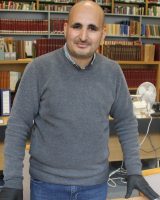 |
Hesham A. Abdel Kader is an Egyptian archaeologist and Roman archaeology specialist at the Egypt’s Ministry of Tourism and Antiquities. He recently earned his PhD from Ain Shams University with a dissertation titled “Public Baths and Water Management in Hermopolis Magna during the Roman Period.” His fieldwork experience spans over a decade and includes key roles in excavations at Hermopolis, Amarna, Tuna el-Gebel, and Deir el-Barsha, in collaboration with national and international missions. He is also a co-founder of the Egyptian Heritage Network and is actively engaged in public outreach and training initiatives in Middle Egypt. His work has been recognized with awards such as the Prof. Dr. Zahi Hawass Prize for Best Archaeologist (2023), and he has published extensively on Roman-era urbanism and infrastructure. He is passionate about integrating the field of archaeology with community heritage awareness and international collaboration. |
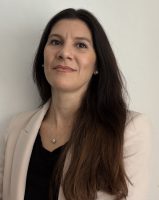 |
Ornela Barisone holds a PhD in humanities and arts and currently works as a Research Assistant at the National Scientific and Technical Research Council of Argentina (CONICET), based at the Centro de Investigaciones en Arte y Patrimonio (CIAP, EAyP, UNSAM-CONICET). As part of this position, she is developing a research project on transnational networks, artistic participation, and mid-twentieth-century avant-gardes in Argentina, Brazil, and France (1949–69). She is also a professor and researcher at the Universidad Autónoma de Entre Ríos (Argentina), where she serves as adjunct professor in History of Art and Associate Professor in Comparative Literatures. She directs the institutional research project “Avant-garde Archives and Magazines as Transnational Platforms,” focused on Edgardo Antonio Vigo and Latin American–European exchanges in the 1960s. Barisone has been awarded, among others, fellowships from CONICET, a UNL–CEAL–UAM–Banco Santander mobility scholarship, a Fulbright Visiting Scholar grant (UCLA), and a postdoctoral research fellowship at EHESS–Paris. She is the author of Experimentos poéticos opacos. Biopsias malditas: del invencionismo argentino a la poesía visual (1944–1969) (Ed. Corregidor, 2017). |
 |
Tuuda Haitula is a heritage professional and curator from Namibia, who is the curator of the Oranjemund Shipwreck under the National Museum of Namibia. His work centers on postcolonial restitution, ethical museum practices, and capacity-building in African museums. Tuuda has contributed to grant management, heritage assessments, and national exhibition development. He is passionate about using museums as tools for healing, knowledge recovery, and social transformation |
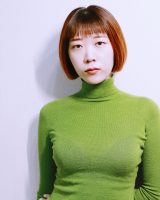 |
Mu He is a contemporary expressionist artist and cross-cultural art researcher. She holds both bachelor’s and master’s degrees in painting from the Rome Academy of Fine Arts, Italy, and is currently pursuing her PhD at the De Institute of Creative Arts and Design, UCSI University, Malaysia. Her doctoral research, “East–West Fusion: A Comparative Study of Gustav Klimt and Pang Xunqin’s Decorative Language in 20th-Century Figure Painting,” examines the transcultural negotiation of decorative vocabularies in modern painting, with a particular focus on the dialogue between Eastern and Western traditions. From 2018 to 2023, she served as a lecturer in oil painting at Hebei Minzu Normal University, China. In 2024, she received the Ernst Mach Grant to conduct research at the University of Applied Arts Vienna. Dedicated to bridging theory and practice and fostering intercultural dialogue, her works have been exhibited in China, Italy, and Malaysia. She continues to publish scholarly articles and is currently preparing a monograph on the comparative study of decorative language in East–West fusion painting. |
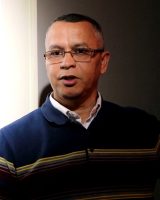 |
Omar ID Tnaine is a scholar and curator based in Agadir, Morocco, dedicated to preserving and promoting cultural heritage. As a curator at prominent Moroccan museums, he designs educational programs and exhibitions that connect diverse audiences with the richness of national and global heritage. Omar has contributed to significant research programs, including the 2025 Open Restitution Africa (ORA) Cohort, where he conducts case studies on North African restitution, focusing on Morocco, to document and share data on cultural heritage repatriation. He also participated in the Museum Lab, refining innovative museum practices, and the SAWA Museum Studies Program, enhancing his expertise in cultural heritage management. These experiences strengthen his commitment to cross-cultural dialogue and education. |
 |
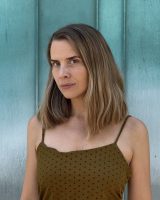
Eve Loh-Kazuhara is an art historian specializing in Japanese art, focusing on the history and historiography of nihonga (Japanese-style painting) from the postwar to contemporary period. Her scholarship also explores the transnational narratives and connections of nihonga across Asia. Eve’s current book manuscript is on post-war Japanese painting through the examination of nihonga artist, Tanaka Isson’s landscapes of Amami Ōshima, an island in Southern Japan. She is the 2025–26 Robert and Lisa Sainsbury Fellow at the Sainsbury Institute for the study of Japanese Arts and Cultures in East Anglia, England. Previously, Eve taught at the National University of Singapore and the University of the Arts, Singapore, and has worked in museum interpretation. |
 |
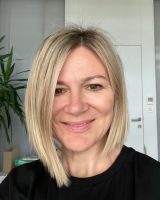
Éva Lovra is an associate professor in the Department of Civil Engineering at the University of Debrecen. She is an urban planner and civil engineer, her work is distinguished by its interdisciplinary focus on the protection of built heritage. Her scholarship examines architectural and urban history, with a specialization in urban morphology and the art history of the urban. She is the author of five monographs and has presented her research at numerous international venues, including New York University. Her contributions to the field were recognized with a Fulbright Visiting Professorship at the University of Pittsburgh in 2023. In addition to her academic roles, she is a curator of architectural exhibitions, with a forthcoming on the art and architecture of 1930s Miskolc. She is an active member of leading professional and academic bodies, including the Hungarian National Committee of ICOMOS and the Hungarian Academy of Sciences. |
 |
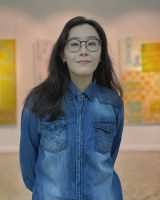
Martina Munivrana is a curator and art historian based at the Museum of Contemporary Art, Zagreb (MSU), where she currently serves as head of collections. Her curatorial and research focus centers on contemporary women artists, feminist and postcolonial theory, identity construction, and new media. She is particularly dedicated to increasing the visibility of women artists and developing new interpretations of their practices within institutional and exhibition contexts. She holds an MA in art history and philosophy and completed her PhD in 2023 at the University of Zagreb with a dissertation on the work of artist Breda Beban. At MSU, she has curated numerous research-based projects that challenge established narratives and highlight overlooked or marginalized artistic voices, with a strong emphasis on collaboration and inter-institutional exchange. Munivrana has participated in international conferences and programs, including the Getty Foundation’s Museum Studies Summer Institute (NYU), and has served on national expert councils focused on contemporary and innovative artistic practices. |
 |
Irmuun Unubaatar (Yiri Muen) is a Mongolian artist and PhD candidate in art studies at the National University of Mongolia, specializing in fourteenth-century portraits of Yuan dynasty (1271–1368) emperors and empresses. Her research integrates the study of historical painting techniques with contemporary artistic practice, reflecting her dual role as scholar and practitioner. She has presented her work at international conferences in the United States, Austria, Italy, and Estonia, including the European Conference of Mongolian Studies (Venice, 2024) and the Second International Mongolian Studies Symposium (Vienna, 2024). As an artist, Irmuun focuses on Mongolian traditional scripts and cultural symbols, reinterpreted through modern visual language. She has held solo exhibitions at the Zanabazar Museum of Fine Arts (2023), the National Art Gallery of Mongolia (2016), and participated in international exhibitions such as the Krakow Centrum Sztuki Solvay Biennale in Poland (2025). |
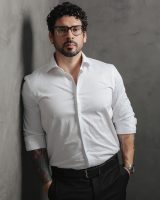 |
Rodolfo Ward de Oliveira is a Brazilian transdisciplinary artist, cultural producer, and researcher with a PhD in visual arts from the University of Brasília (UnB), including a funded research residency at UCLA’s Department of World Arts and Cultures/Dance (2022–23). He is currently a postdoctoral researcher at the Federal University of Amazonas (UFAM), focusing on the Tukano people and their epistemologies. Ward is the founder of HORI and CerrAmazon, hybrid platforms exploring decolonial aesthetics, anthropophagic theory, and cultural innovation. His practice bridges Indigenous art—especially among the Xerente and Tukano peoples—with immersive media, digital humanities, and social theory. From a Latin American perspective, he challenges binary oppositions and connects academic, artistic, and ancestral knowledge to forge a visionary cartography of Brazilian identity through ritual, resistance, and intercultural pedagogy. |
ALUMNI PARTICIPANTS
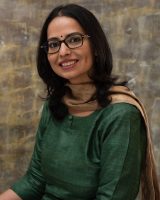 |
Savita Kumari is associate professor and head in the Department of History of Art, Indian Institute of Heritage. With over fifteen years of academic and curatorial experience, she specializes in South and Southeast Asian art. Prior to joining the Institute, she worked with renowned cultural institutions such as the National Gallery of Modern Art and the Indira Gandhi National Centre for the Arts. She has curated significant exhibitions and coordinated numerous national and international seminars, workshops, and collaborative initiatives. Deeply committed to outreach, Dr. Kumari leads art history enrichment programs for educators and students in rural areas. She has been involved in several prominent research and heritage documentation projects of national and international importance. She is a regular speaker at leading institutions in India and abroad. Her scholarly work includes books, articles, and exhibition catalogs, and she has received multiple prestigious fellowships and international travel grants. |
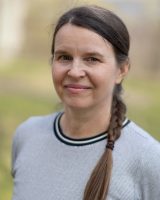 |
Pavlína Morganová is an art historian and curator, based in Prague, Czech Republic. She currently works as a director of the VVP AVU Research Center at the Academy of Fine Arts in Prague. She specializes on the Central and Eastern European art history, performance art and exhibition histories, lectures on Czech Art after 1945. She has participated in several international conferences and takes active part in the representative bodies of Czech art education and research. She recently conducted research concentrated on the medium of exhibition and she is the co-author of the book Exhibition as a Medium. Czech Art 1957−1999 (2020). She is also the author of the books A Walk Through Prague: Actions, Performances, Happenings 1949−1989 (2017) and Czech Action Art / Happenings, Actions, Events, Land Art, Body Art and Performance Art Behind the Iron Curtain (2015). She is a 2019 CAA-Getty International Program alumna. |
 |
Tatiana Muñoz-Brenes is an art historian, curator, museologist, and activist. She holds a BS in psychology and a BA in art history from the University of Costa Rica, and an MA in museum studies from New York University, where she was a Fulbright scholar. Her work critically examines the intersections of gender, sexuality, class struggle, race, coloniality, and institutional power within the fields of art and museums. Grounded in feminist and queer theory, her research exposes the systemic oppression of marginalized subjects within canonical art history and museum practices. She has curated exhibitions and conducted research in Latin America and the United States that closely examines the unequal dynamics between center and periphery. Her practice seeks to challenge white, male-dominated epistemologies and to promote more caring, affective, and community-based approaches to cultural production and display. |
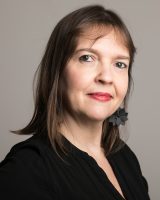 |
Viviana Usubiaga is a researcher at the Research Center in Art and Heritage (CIAP), Universidad Nacional de San Martín (UNSAM) and the National Scientific and Technical Research Council (CONICET), Argentina. She is currently director of the master’s program in Latin American art history at the School of Interdisciplinary Advanced Social Studies, UNSAM, where she is also a professor of contemporary art. She is assistant lecturer in modern and contemporary art at the University of Buenos Aires. From 2019 to 2023, she served as director of the National Division of Heritage Management at the Ministry of Culture of Argentina, and she has worked as a curator and editor. She holds a PhD in art theory and history from the Universidad de Buenos Aires. Her publications explore how art contributes to shaping systems of value and how culture and museums participate in the social construction of historical memory during the post-dictatorship period in South America. She is a 2019 CAA-Getty International Program alumna. |
This program is made possible with support from Getty through its Connecting Art Histories initiative.

Announcing the 2026 Morey Book Award and Barr Awards Shortlists
posted by CAA — November 13, 2025
Finalists for the Charles Rufus Morey Book Award and the Alfred H. Barr Jr. Awards have been selected. The winners, alongside recipients of other Awards for Distinction, will be presented on Wednesday, February 18, during Convocation at the CAA 114th Annual Conference in Chicago. Congratulations to all of the finalists!
Charles Rufus Morey Book Award Shortlist
Named in honor of one of the founding members of CAA and first teachers of art history in the United States, the Charles Rufus Morey Book Award was established in 1953 to recognize an especially distinguished English-language book in the history of art.
Time Machines: Telegraphic Images in Nineteenth-Century France by Richard Taws (MIT Press, 2025)
The Empire’s New Cloth: Cross-Cultural Textiles at the Qing Court by Mei Mei Rado (Yale University Press, 2025)
Relics of War: The History of a Photograph by Jennifer Raab (Princeton University Press, 2024)
The Monument of Tomorrow: Creative Conservation and the Spanish War by Miguel Caballero (Penn State University Press, 2025)
The Agency of Access: Contemporary Disability Art & Institutional Critique by Amanda Cachia (Temple University Press, 2024)
Alfred H. Barr Jr. Award Shortlist
Named for the founding director of the Museum of Modern Art and a scholar of early-twentieth-century painting, the Alfred H. Barr Jr. Award is presented to the author or authors of an especially distinguished catalogue in the history of art, published in English by a museum, library, or collection.
Elizabeth Catlett: A Black Revolutionary Artist and All That It Implies, edited by Dalila Scruggs (National Gallery of Art and The Brooklyn Museum/The University of Chicago Press, 2024)
Little Beasts: Art, Wonder, and the Natural World, edited by Alexandra Libby, Brooks Rich, and Stacey Sell The (National Gallery of Art/ Princeton University Press, 2025)
Ruth Asawa: Retrospective, edited by Janet Bishop and Cara Manes (San Francisco Museum of Modern Art/Yale University Press, 2025)
Sonia Delaunay: Living Art, edited by Waleria Dorogova and Laura Microulis (Bard Graduate Center/Yale University Press, 2024)
The Shape of Power: Stories of Race and American Sculpture, edited by Karen Lemmey, Tobias Wofford, and Grace Yasumura (Smithsonian American Art Museum/Princeton University Press, 2024)
Alfred H. Barr Jr. Award for Smaller Museums, Libraries, Collections, and Exhibitions Shortlist
Established in 2009, the Alfred H. Barr Jr. Award for Smaller Museums, Libraries, Collections, and Exhibitions is presented to the author(s) of catalogues produced by an institution with an operating budget of less than $10 million.
Art and Artifact: Murals from the Minneapolis Uprising, edited by Leesa Kelly and Howard Oransky (Katherine E. Nash Gallery in association with Memorialize the Movement, Minneapolis/The University of Minnesota Press, 2024)
Constructed Geographies: Paulo Mendes da Rocha, edited by Jean-Louis Cohen and Vanessa Grossman (Casa da Arquitectura–Portuguese Centre for Architecture/Yale University Press, 2024)
Crossing Over: Art and Science at Caltech, 1920–2020, edited by Peter Sachs Collopy and Claudia Bohn-Spector (Caltech Library/Getty Publications, 2024)
Teddy Sandoval and the Butch Gardens School of Art, edited by C. Ondine Chavoya and David Evans Frantz (Inventory Press/Williams College Museum of Art/Vincent Price Art Museum/Independent Curators International, 2024)
Eddie Chambers Named CAA114 Distinguished Scholar
posted by CAA — November 13, 2025
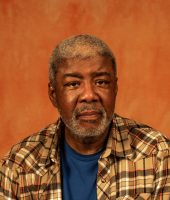
Photograph by Hakeem Adewumi
The Distinguished Scholar Session at the 114th CAA Annual Conference will recognize the career of Eddie Chambers, including his professional experience as an artist and curator, and celebrate his ongoing legacy of critical engagement, mentorship, and advocacy for Black British and African diaspora artists within the global field of art history.
Chambers is Goldabelle McComb Finn Distinguished Professor in Art History at the School of the Art Institute of Chicago. Previously, he held the David Bruton, Jr. Centennial Professorship in Art History at the University of Texas at Austin, and was a Visiting Professor at Emory University, Atlanta. In addition to his notable academic career, he has been professionally involved in the visual arts for four decades as an artist, art critic, and curator. He earned his PhD at Goldsmiths College University of London.
His broad areas of scholarship are the art and art history of the African diaspora. Chambers has written several books, including Run Through the Jungle: Selected Writings by Eddie Chambers (Institute of International Visual Arts, 1999); Things Done Change: The Cultural Politics of Recent Black Artists in Britain (Rodopi Editions, 2012); Black Artists in British Art: A History Since the 1950s (I. B. Tauris, 2014); Roots & Culture: Cultural Politics in the Making of Black Britain (I. B. Tauris, 2017); World is Africa: Writings on Diaspora Art (Bloomsbury, 2021). His other writing has been published widely in Nka: Journal of Contemporary African Art, Latin American and Latinx Visual Culture, Small Axe: A Caribbean Journal of Criticism, Panorama, and elsewhere.
Chambers has worked with many artists over the course of several decades, including Eugene Palmer, Cybil Charlier, Frank Bowling, Denzil Forrester, Barbara Walker, and Alberta Whittle.
Following two terms as a field editor for caa.reviews, he was Editor-in-Chief of CAA’s Art Journal until July 2024. Chambers is the editor of the just-published Routledge Companion to African Diaspora Art History.
Chambers’s career and his impact on the field will be celebrated with presentations and a dialogue with scholars and colleagues:
Session Panelists:
Cherise Smith, University of Texas at Austin
John Tyson, University of Massachusetts, Boston
Katherine Gregory, Wake Forest University
Richard Hylton, Tyler School, Temple University and Reviews Editor, Art Journal
Register now for the CAA 114th Annual Conference, February 18–21, 2026 in Chicago!
The CAA114 Distinguished Scholar Session will be held on Thursday, February 19, 4:30–6:30 p.m. CT at the Hilton Chicago. This event will also be livestreamed via YouTube.