CAA News Today
David Rifkind and Carmenita Higginbotham
posted by CAA — April 22, 2019
The weekly CAA Conversations Podcast continues the vibrant discussions initiated at our Annual Conference. Listen in each week as educators explore arts and pedagogy, tackling everything from the day-to-day grind to the big, universal questions of the field.
CAA podcasts are on iTunes. Click here to subscribe.
This week, David Rifkind and Carmenita Higginbotham discuss ethical approaches to managing contingent faculty.
Dr. David Rifkind is Associate Professor of Architecture and Interim Chair of Landscape Architecture + Environmental and Urban Design at Florida International University.
Dr. Carmenita Higginbotham is Associate Professor and Chair of the McIntire Department of Art at the University of Virginia.
Serve on the Millard Meiss Publication Fund Jury
posted by CAA — April 19, 2019
CAA invites nominations and self-nominations for individuals to serve on our Millard Meiss Publication Fund jury for four years (2019–23). Terms begin July 2019.
JURY VACANCIES FOR SPRING 2019
- Millard Meiss Publication Fund: two members
Duties and Qualifications
The Millard Meiss Publication Fund jury awards subsidies to support the publication of book-length scholarly manuscripts in the history of art and related subjects. Members review manuscripts and grant applications twice a year and meet in New York in the spring and fall to select the awardees. CAA reimburses jury members for travel and lodging expenses in accordance with its travel policy. Members volunteer their services to CAA without compensation. Candidates must be actively publishing scholars with demonstrated seniority and achievement; institutional affiliation is not required.
Candidates must possess expertise appropriate to the jury’s work and be current CAA members. They should not hold a position on a CAA committee or editorial board beyond May 31, 2019. CAA’s president and vice president for committees appoint jury members for service.
HOW TO APPLY
Nominations and self-nominations should include a brief statement (no more than 150 words) outlining the individual’s qualifications and experience and a CV (an abbreviated CV no more than two pages may be submitted). Please send all materials by email to Cali Buckley, CAA grants and special programs manager; submissions must be sent as Microsoft Word or Adobe PDF attachments. For questions about jury service and responsibilities, contact Tiffany Dugan, CAA director of programs and publications.
Deadline: May 13, 2019
David Modler and Sam Peck
posted by CAA — April 15, 2019
The weekly CAA Conversations Podcast continues the vibrant discussions initiated at our Annual Conference. Listen in each week as educators explore arts and pedagogy, tackling everything from the day-to-day grind to the big, universal questions of the field.
CAA podcasts are on iTunes. Click here to subscribe.
This week, David Modler and Sam Peck discuss art education and collaboration.
David R. Modler is an associate professor of Art Education in the Department of Contemporary Art at Shepherd University in Shepherdstown, West Virginia.
Sam Peck currently works and studies at the University of Minnesota as a PhD student, resident artist, art educator, and researcher.
Affiliated Society News for April 2019
posted by CAA — April 11, 2019
Affiliated Society News shares the new and exciting things CAA’s affiliated organizations are working on including activities, awards, publications, conferences, and exhibitions.
WELCOME TO NEW AFFILIATED SOCIETIES
We are delighted to welcome the following organizations to CAA:
- Digital Art History Society
- William Morris Society in the United States
- International Council of Fine Arts Deans
- Association of Scholars of Christianity in the History of Art
- Association of Greek Art Historians
- Society for the History of Collecting
Interested in becoming an Affiliated Society? Learn more here.
Historians of German, Scandinavian, and Central European Art and Architecture (HGSCEA)
HGSCEA was well represented at CAA by members who presented papers and chaired sessions, and whose latest publications could be found in the book exhibition. Of particular note was our sponsored session, “Women Artists in Germany, Scandinavia, and Central Europe, 1880-1950,” chaired by Kerry Greaves. Her introductory remarks and concluding comments framed four excellent papers by Emil Leth Meilvang on Rita Kernn-Larsen, Nora Butkovich on women in the Young Yiddish Group in Poland, Lauren Hanson on Mary Bauermeister, and Lynette Roth on Anneliese Hager. On the conference’s last day, Paul Stirton offered members a special tour of the exhibition “Jan Tschichold and the New Typography,” which he curated at Bard Graduate Center.
Over sixty members, many in metallic attire for the Bauhaus centenary, attended the annual dinner. In the course of the convivial evening, the results of the 2018 Emerging Scholars Prize were announced. Anne Reimers (University of the Creative Arts Rochester, UK) received an honorable mention for “Inscribing Temporality, Containing Fashion: Otto Dix’s Portrait of the Dancer Anita Berber Contextualized,” in Art History. The winner was Greg Bryda (Barnard College), who was awarded the prize for “The Exuding Wood of the Cross at Isenheim,” in The Art Bulletin. In addition, we celebrated the achievements of Maria Makela on the occasion of her retirement. Adrian Sudhalter spoke to the impact of Maria’s scholarship, and Ricki Washton-Long reflected on her important contributions to HGSCEA.
At the business meeting, the Board amended the bylaws to ensure that in the future the Board includes representatives from all three areas that constitute HGSCEA. It also deliberated on the pool of submissions for the guaranteed session at the 2020 conference, accepting the proposal of Hyewon Yoon and Jordan Troeller, “A Foreign Eye: Photography, Women, and Global Encounters in the Twentieth Century.”
For pictures of the session, dinner, and curator’s tour, go to: http://hgscea.org/
National Council of Arts Administrators
- NCAA welcomes three new board members, Jonathan Fohrman, MiraCosta College, CA, Sarah Meyer, California Poly Pomona, and Michael Wille, Illinois State University to the NCAA Board of Directors.
The current list of board members include:
Lynne Allen, Boston University
President
Elissa Armstrong, Virginia Commonwealth University
Past President
Peter Chametzky, University of South Carolina
Secretary
Cathy Pagani, The University of Alabama
Treasurer
Andrea Eis, Oakland University
Past Treasurer
Colin Blakely, University of Arizona
Jeni Mokren, SUNY New Paltz
A.Blake Pearce, Valdosta State University
Joe Poshek, Irvine Valley College
Michael Fels, Elon University
Jade Jewett, California State University, Fulteron
David LaPalonbara, Ohio University
- The next NCAA conference will be hosted by Kate Bonansingakn, University of Cincinnati, Matt Albritton, Northern Kentucky University and Paige Williams, Art Academy of Cincinnati. We hope to see everyone in Cincinnati September 17-22,2019! Check it out on our website.
- It is with great pleasure that we open our NEW website which offers news of the upcoming conference, current open positions, and access to other resources. Please check it out https://www.ncaaarts.org
Association for Latin American Art
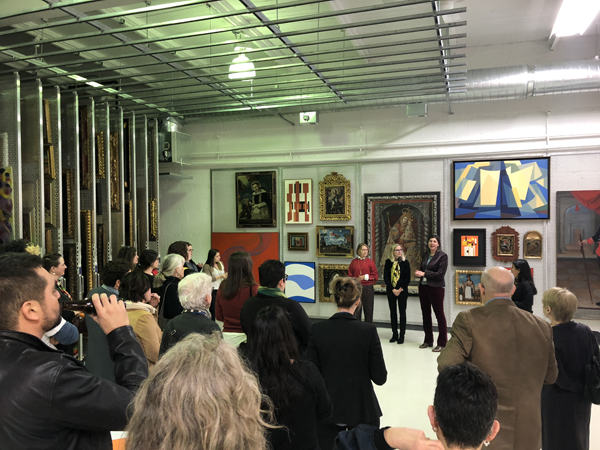
ALAA Reception at Orange Door Chicago (Marilynn and Carl Thoma Gallery). Pictured left to right: Marilynn Thoma, Erin Fowler (Director of Strategic Initiative, Thoma Art Foundation), Delia Cosentino (Triennial Chair)
The Association for Latin American Art hosted its 5th Triennial Conference “The World Turned Upside Down: Arts of Oppression and Resistance in the American Hemisphere” from March 7-9, 2019 at the Art Institute of Chicago and DePaul University. In addition to a wonderful selection of panels, the conference included tours of the Smart Museum’s holding of Latin American art at the University of Chicago and the exhibition Super/Natural: Textiles of the Andes at the Art Institute of Chicago, a keynote lecture “Social Disequilibria: of Bodies and Borders” by Dr. Adriana Zavala, Tufts University, at the National Museum of Mexican Art, and a reception at the Orange Door Chicago (Marilyn and Carl Thoma Gallery). https://associationlatinamericanart.org/triennial/
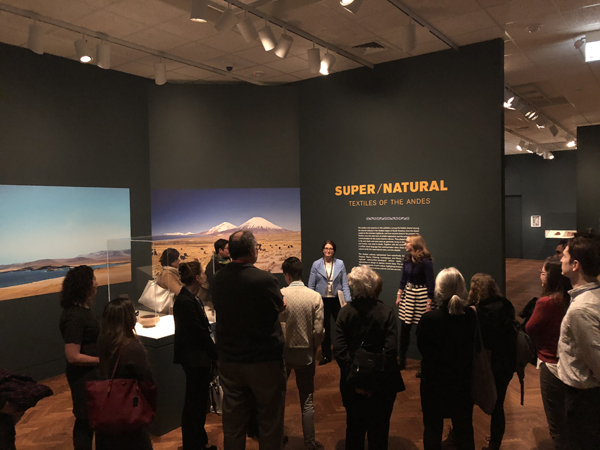
Art Institute of Chicago’s Elizabeth Pope & Erica Warren Tour of Super/Natural: Textiles of the Andes
Appraisers Association of America
15th Annual Award Luncheon honoring cultural anthropologist, author and museum director Johnnetta Betsch Cole, Ph.D., and visual artist Mickalene Thomas, whose work of African American women examine, extend, and subvert concepts of female identity and beauty.Dr. Cole and Ms. Thomas will be presented with the 2019 Award for Excellence in the Arts on Wednesday, April 17, 2019 at the New York Athletic Club.
For tickets and sponsorship opportunities please click here. Or by calling 212-889-5404 x11.
ASSOCIATION FOR TEXTUAL SCHOLARSHIP IN ART HISTORY (ATSAH)
Announcement Award
Prof. Damiano Acciarino, Univerisità Ca’ Foscari Venezia and University of Toronto, who holds A Marie Curie Global Fellowship (2017-2020) was the first recipient of ATSAH award for his innovative and scholarly research on Renaissance antiquarianism published in Lettere sulle Grotteche (Rome: Aracne, 2018).
Professional Recognition
Liana De Girolami Cheney, President of ATSAH, received the Albert Nelson Marquis Lifetime Achievement Award
William Levin contributes a second award to SECAC for scholarly Research in the History of Art Since 1750. The previous award was for Research in the History of Art Before 1750.
Member’s publications
Sara Nair James. “Wit and Humor in Ugolino di Prete Ilario’s Life of the Virgin at Orvieto,” Source: Notes in the History of Art vol 36, no.3-4 (Spring/Summer 2017), 159-67.
Davide Lacagnina, “Spreading Visual Culture: revues, images et archives pour l’art contemporain,” In H.V. E. Stead, ed L’Europe des revues II (1860-1930). Réseaux et circulations des modèles (PARIS: PUPS-Presses de l’université Paris-Sorbonne, 2018), pp. 829-852.
Émilie Passignat, “‘Manière’, ‘maniéré’, ‘maniériste’: transferts et enjeux théoriques autour d’un terme clé du vocabulaire artistique”, in M.-C. Heck, M. Freyssinet, S. Trouvé (eds.), Lexicographie artis- tique: formes, usages et enjeux dans l’Europe moderne, Montpellier, 2018, pp. 363-376.
Liana De Girolami Cheney, “Il Tesoretto of Cosimo I de’ Medici: An Esoteric Heaven,” in Lilian Zirpolo, ed. Esoteric Traditions and Their Impact on Art (Ramsey, NJ: Zephyrus Scholarly Publications LLC, 2019) (ISBN number: 978-0-997-2446-2-5)
Liana De Girolami Cheney, “Edward Burne-Jones’s The Mirror of Venus: Physical and Intangible Female Beauty,” Journal of Literature and Art Studies, Vol. 19, No. 1 (January 2019):1-28.
IN MEMORIAM (April 29, 2019)
Sarah Jordan Lippert (1975-2019), Associate Professor of Art History at the University of Michigan-Flint, Director of the Society for Paragone Studies, Editor-in-Chief of its journal Paragone: Past and Present passed away on April 24, 2019. She was the author of numerous books and articles including the newly published The Paragone in Nineteenth-Century Art (Routledge 2019), along with Going Back to the Beginning of Things: The Ancient Origins of the Arts of France (Taylor and Francis, UK 2018), and The Temporality of Imitation in the Works of Moreau and Gérome (Tauris, UK, 2017): https://umflint.academia.edu/SarahLippert/Books
Sarah was long-time supporter and member of ATSAH, SECAC and CAA.
The SECAC 2019 session in Chattanooga, she was to chair at the upcoming conference, The Art of Depicting Paragoni of Life, will go forward in honor of her memory as well as special session at CAA in 2020
We are grateful to have known and loved this young, energetic, and accomplished scholar. ATSAH plans to establish an academic fund in her honor. Details will follow.
American Institute for Conservation
We are proud to announce that we have launched a new name, look, and message for AIC and FAIC! The American Institute for Conservation of Historic and Artistic Works is now simply the American Institute for Conservation. The foundation is now the Foundation for Advancement in Conservation. The acronyms are the same, but our message is more direct: we preserve and protect cultural heritage. We’re reinforcing this message with a new online presence: www.culturalheritage.org. AIC President Margaret Holben Ellis explains the necessity of our new identity in this video. We welcome you to explore our new online presence and let us know what you think. You can provide feedback via email to info@culturalheritage.org.
Throughout this process, we considered how we could make our field more welcoming and engaging to all practitioners in the arts, humanities, and allied professions. We would like to invite everyone to learn more about conservation and support the essential work performed by conservators and preservation professionals. Friends of Conservation receive exclusive insights into conservation while sustaining programs that promote the preservation of cultural heritage through their gift to FAIC. Learn about the benefits of being a Friend and how you can help support the work of conservators here: www.culturalheritage.org/friends.
Women’s Caucus for Art
Call for Panel Proposals at CAA
Women’s Caucus for Art invites submissions for a panel to be held at the CAA conference in Chicago. WCA hosts a conference concurrent with CAA, with some panels happening on site at CAA, and our 2020 theme is Intersectionality. Sessions are 90 minutes and may take the form of panels or roundtable discussions. We welcome submissions of topics for an open call as well as submissions with panel participants already identified.
To apply, please send panel title, 250-word abstract, and short CV to WCA President Margo Hobbs, at margohobbs@muhlenberg.edu
Proposals are due April 21, 2019. Selections will be made by the WCA Executive Board and the Conference Committee. Applicants will be notified of decisions by April 28, 2019.
Digital Art History Society
The new Digital Art History Society (DAHS), launched on January 1, 2019, inspired by “Art History in Digital Dimensions,” hosted in October 2016 by the Department of Art History and Archaeology and the Maryland Institute for Technology in the Humanities (MITH), University of Maryland, College Park, with support from the Getty Foundation and the Samuel H. Kress Foundation (see: http://dah-dimensions.org/).
The Digital Art History Society (DAHS) supports art historical scholarship incorporating and benefitting from digital strategies and technologies. Its website (https://digitalarthistorysociety.org) and listserv promote communication about resources and opportunities for its members. Membership in 2019 is free; dues will subsequently increase to $25.00 to defray administrative costs.
DAHS presented “Constructing Criticality in Digital Art History,” at CAA’s 2019 meeting (https://caa.confex.com/caa/2019/meetingapp.cgi/Session/2249.) Its 2020 session will examine new scholarship enabled by digital techniques and strategies. DAHS looks forward to collaborating with other CAA Affiliates.
Founding Board: President, Anne Collins Goodyear; Vice President for Programming: Pamela Fletcher; Vice Presidents for Outreach: Deena Engel and Charles R. Johnson; Vice Presidents for Membership: Meredith Gill and Paul Jaskot; Vice Presidents for Communications: Jennifer Henel and Ellen Prokop; Treasurer: Anne Helmreich.
Upcoming events (free,but online registration is required. Please visit frick.org/programs/library to register. Meet at 1 East 70th Street, NYC):
Lecture: “Artist Archives Initiative: New Research Models for Contemporary Artists,” Thursday, May 2, 4:00 p.m. to 6:00 p.m. The Frick Collection and Frick Art Reference Library, New York. Deena Engel, Clinical Professor, Computer Science, NYU, and Glenn Wharton, Clinical Professor, Museum Studies, NYU.
Workshop: “The Lenox Library Picture Gallery: A Digital Recreation,” Wednesday, June 5, 4:00 p.m. to 6:00 p.m. The Frick Collection and Frick Art Reference Library, New York. Sally Webster, Professor Emerita, Lehman College and the Graduate Center, CUNY, and David Schwittek.
Midwest Art History Society
The Midwest Art History Society (MAHS) recently concluded its annual conference in Cincinnati where participants were warmly welcomed by local institutions — especially the Cincinnati Museum of Art (CAM) and the Taft Museum of Art which both hosted scholarly sessions. The keynote lecture was delivered by S. Hollis Clayson, Bergen Evans Professor in the Humanities at Northwestern University, in association with CAM’s exhibition Paris 1900: City of Entertainment featuring works drawn from the collections of the City of Paris museums. At the annual business meeting, Erica Warren, Art Institute of Chicago, was elected the organization’s treasurer. Plans are well underway for the 2020 annual conference which will be held in Houston, March 19-21. The call for papers will be posted on the MAHS website in the fall and hotel rooms can already be reserved at the Magnolia Hotel Houston. For more information, please visit the website at www.mahsonline.org.
SECAC
SECAC 2019, Chattanooga, TN, October 16-19: The 75th annual SECAC Conference will take place in Chattanooga, Tennessee, October 16-19. The conference will include more than 130 sessions exploring topics of scholarly importance and timely cultural issues impacting the fields of art history, art education, graphic design, and studio art. SECAC 2019 will examine the place of the institution amongst current political turmoil, explore studio and art historical research related to parenthood, develop strategies for supporting each other, and unpack how designers engage with their communities, amongst dozens of other topics. The Chattanoogan will serve as the conference hotel and hub, located in the heart of downtown and steps away from many cafes, restaurants, and attractions. Beyond conference sessions, opportunities to come together and experience the city will include a keynote address by Sharon Louden, visual artist and Artistic Director of Chautauqua Institution’s Visual Arts Program, at the Hunter Museum of American Art and the SECAC Juried Members and Artist Fellowship exhibitions, juried by visual artist and curator Amelia Briggs and presented with Stove Works, a new residency program and exhibition space located in Chattanooga. See https://secacart.org/page/Chattanooga for more information.
Levin Awards for Research in Art History: Inspired by the friendships, professional advancement, and opportunities for exchange of scholarly research that SECAC supports, William R. Levin has made a second major gift to SECAC. Beginning in 2019, SECAC will award two $5,000 research grants in art history each year. The original Levin Award (2014) will be designated for Research in the History of Art Before 1750 and the new Levin Award will be for Research in the History of Art Since 1750.
SECAC at CAA: Below the Mason-Dixon Line: Artists and Historians Considering the South, organized by Rachel Stephens of the University of Alabama, featured five presentations: Naomi Slipp’s paper, “Between Two Worlds: Portrait of William McIntosh, Southern Slave Owner and Lower Creek Chief;” Jeremiah Ariaz on photographs from his volume, The Louisiana Trail Riding Clubs; Catherine Wilkins and Jared Ragland on Ragland’s wet-plate collodion project, “Where You Come From is Gone;” artist Kristin Casaletto on the impact of living in the South on her work; and Nell Gottlieb on her ongoing project on returning to her Southern roots, “Nostos Algos.”
In memoriam: SECAC mourns the passing of Past-President Charles (Randy) Mack. Mack joined SECAC in 1970 and played an active role in the organization for 35 years, serving twice as president (1975-76, 2003-05), as vice-president (2000-03), and as board member from 1984-90. He also co-edited the SECAC Review (1973-75) and chaired the Annual Conference (1976). In 1993, he received SECAC’s Award for Outstanding Exhibition and Catalogue of Historical Materials; in 1998, he was the recipient of the Annual Award for Scholarly Research and Publication; and in 2004, he received SECAC’s highest honor, the Award of Distinction.
Society of Historians of Eastern European, Eurasian, and Russian Art and Architecture (SHERA)
The board of the Society of Historians of Eastern European, Eurasian, and Russian Art and Architecture (SHERA) is pleased to announce the inauguration of the SHERA Graduate Student / Independent Scholar Research Grant. The grant of $500 will be awarded to one member for research and/or study toward the completion of a thesis, dissertation, or publication. The grant is intended to be used toward the cost of research travel or accommodations, the acquisition of image rights for publication, language study, and other related activities. For the 2019 competition, applications are limited to graduate students and scholars who do not hold a full-time position at an academic institution. Applicants must be SHERA members in good standing and must have membership in the organization for at least two consecutive years. For more information, see the notice here.
The conference “Eclecticism at the Edges: Medieval Art and Architecture at the Crossroads of the Latin, Greek, and Slavic Cultural Spheres c.1300–c.1550,” of which SHERA was a sponsor, was held at Princeton University on April 5 and 6. The symposium, organized by Dr. Alice Isabella Sullivan, Ph.D. (University of Michigan) and Dr. Maria Alessia Rossi, Ph.D. (The Index of Medieval Art, Princeton University), is the first such initiative to explore, discuss, and focus on the art, architecture, and visual culture of regions of the Balkans and the Carpathians (c.1300-c.1550). The conference sought to raise issues of cultural contact, transmission, and appropriation of western medieval, byzantine, and Slavic artistic and cultural traditions in eastern European centers and consider how this heritage was deployed to shape notions of identity and visual rhetoric in these regions from the fourteenth through the sixteenth centuries. Dr. Jelena Erdeljan of the University of Belgrade delivered the keynote address.
ACASA
- In Memoriam: Marshall Ward Mount (1927-2018). Tribute by Perrin Lathrop can be found here: https://www.acasaonline.org/in-memoriam-marshall-ward-mount-1927-2018/
Donations may be made in Marshall Ward Mount’s memory to the African Wildlife Fund.
- In Memoriam: Christopher Damon Roy (1947-2019). Tribute by Cory Gundlach can be found here: https://www.acasaonline.org/tribute-to-professor-christopher-damon-roy-1947-2019/
To contribute to the Christopher D. Roy Memorial Fund, go to //www.givetoiowa.org/2019la98. This fund will give UI art history students the opportunity to gain valuable intern experience at the Stanley Museum of Art.
- In Memoriam: Bisi Silva (1962-2019). Tribute by Dr. Peju Layiwola can be found here: https://www.acasaonline.org/in-memoriam-bisi-silva-1962-2019/
- Congratulations to ACASA board member Shadreck Chirikure (Professor, Department of Archaeology at the University of Cape Town) who received a British Academy Professorship in the School of Archaeology at Oxford and will be joining the School in 2019. Dr Chirikure will be researching archaeometry and precolonial African urban social formations. Shadreck Chirikure’s Archaeological Materials Laboratory is Africa’s only facility dedicated to the study of pyrotechnology practiced by farming communities of the last 2000 years of the sub-Saharan past. The announcement can be found here: https://www.arch.ox.ac.uk/article/british-academy-global-professorship-awarded-dr-shadreck-chirikure
- Congratulations to ACASA member Ugochukwu-Smooth C. Nzewi on his appointment as the first Steven and Lisa Tananbaum Curator in the Department of Painting and Sculpture at the Museum of Modern Art. He was also recently elected to the College Art Association Board of Directors. The MOMA announcement can be found here: https://www.culturetype.com/2019/03/07/ugochukwu-smooth-c-nzewi-appointed-curator-in-painting-and-sculpture-department-at-museum-of-modern-art/
- Congratulations to ACASA member Huey Copeland (Assoc. Professor, Northwestern University) on recently being awarded the 2019 David C. Driskell Prize by the High Museum of Art in Atlanta. He will be honored on April 26 at a celebratory dinner at the museum. The announcement can be found here: https://www.culturetype.com/2019/02/04/high-museum-of-art-awards-2019-david-c-driskell-prize-to-scholar-huey-copeland/
News from the Art and Academic Worlds
posted by CAA — April 10, 2019
Want articles like these in your inbox? Sign up: collegeart.org/newsletter
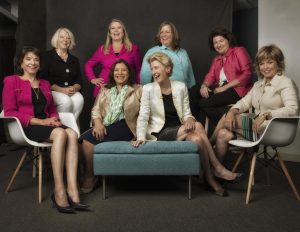
The congressional leaders who are spearheading the charge for a Smithsonian Women’s History Museum. Courtesy American Museum of Women’s History Congressional Commission, via artnet News.
Will the United States Finally Get a National Women’s History Museum? Congress Just Introduced Two Bipartisan Bills to Build One
Susan Collins and Diane Feinstein have teamed up on the Senate bill, while Carolyn Maloney has introduced companion legislation in the House. (artnet News)
The Implicit Punishment of Daring to Go to College When Poor
Only nine percent of people from the lowest income quartile receive a bachelor’s degree by the age of 24, compared to 77 percent for the top income quartile. (New York Times)
Will Artificial Intelligence Make the College Classroom More Accessible?
New tools designed to help institutions meet accessibility requirements could possibly personalize learning for all students. (Education Dive)
Audience Engagement Is Not Community Engagement
An important distinction on two widely used terms. (Americans for the Arts)
Art Institute Postpones Major Native American Pottery Exhibit over Cultural Insensitivity Concerns
The postponement occurs against a backdrop of museums’ increasing sensitivity to the cultures they present. (Chicago Tribune)
This Is How You Kill a Profession
“College faculty were not defeated after great struggle, after a battle with a winner and a loser. College has simply been redefined, over and over, in ways that make faculty irrelevant.” (Chronicle of Higher Ed)
Welcome to CAA’s New Affiliated Societies
posted by CAA — April 08, 2019
Active since the 1970s, CAA Affiliated Societies program promotes learned societies focused on particular areas of art history, art making, or design.
We are delighted to welcome the following organizations as new affiliated societies of CAA:
- Digital Art History Society
- William Morris Society in the United States
- International Council of Fine Arts Deans
- Association of Scholars of Christianity in the History of Art
- Association of Greek Art Historians
- Society for the History of Collecting
A complete list of current members appears here.
LEARN MORE
Digital Art History Society (DAHS)
Founded: 2019
Membership: 340+
Annual Dues: none for 2019, $25 thereafter
The Digital Art History Society (DAHS) fosters and supports the practice and publication of art historical scholarship incorporating and benefiting from digital strategies and technologies by providing a forum for presenting and advancing digital art history, examining problems confronting the field, and identifying scholarly needs and opportunities to its members.

William Morris Society in the United States (WMS)
Founded: 1971
Membership: 199
Annual dues: $50 regular members; $30 students; $65 libraries
The William Morris Society in the United States seeks to further appreciation of Morris as a designer, craftsman, medievalist, preservationist, printer, socialist, poet, and author. We also encourage interest in Morris’s friends, associates, and contemporaries in Britain and America who were connected with the Pre-Raphaelites, Victorian art and literature, and the Arts and Crafts movement.

International Council of Fine Arts Deans (ICFAD)
Founded: 1964
Membership: 363
Annual dues: $450 for institutional membership
Founded on a shared passion and advocacy for the arts and a commitment to excellence in leadership, the International Council of Fine Arts Deans (ICFAD) is a multinational alliance of executive arts administrators representing institutions of higher education.
The Association of Scholars of Christianity in the History of Art (ASCHA)
Founded: 2010
Membership: 40
Annual Dues: currently none
The Association of Scholars of Christianity in the History of Art (ASCHA) is dedicated to the facilitation and promotion of scholarship that examines the historical and contemporary relationship between Christianity and the visual arts.
Association of Greek Art Historians (EEIT)
Founded: 2001
Membership: 179
Annual dues: 50 Euros
EEIT advances the study of art and the discipline of art history in Greece.
The Society for the History of Collecting (SocHistCol)
Founded: 2015
Membership: 180
Annual Dues: $25.00 (£18.00) regular membership; $15.00 student membership (£10.00) institutional membership $60.00 (£40.00)
The Society is an international not-for-profit organisation, bringing together scholars from diverse disciplines, as well as collectors, museum curators, and those of the general audience who are passionately interested in the study of collecting in all its ramifications, including the relationships between collecting and the art market.
Maggie Guggenheimer and Ellen Oh
posted by CAA — April 08, 2019
The weekly CAA Conversations Podcast continues the vibrant discussions initiated at our Annual Conference. Listen in each week as educators explore arts and pedagogy, tackling everything from the day-to-day grind to the big, universal questions of the field.
CAA podcasts are on iTunes. Click here to subscribe.
This week, Maggie Guggenheimer and Ellen Oh discuss how arts professionals contribute as contingent faculty.
Maggie Guggenheimer is Director of External Relations for Virginia Humanities (University of Virginia).
Ellen Oh is Director of Programs in the Office of the Vice President for the Arts at Stanford University.
New in caa.reviews
posted by CAA — April 05, 2019
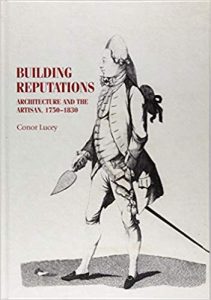
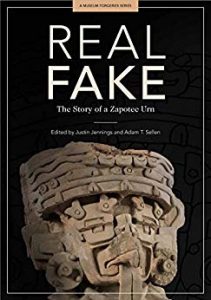 Nancy Kellar discusses Real Fake: The Story of a Zapotec Urn, edited by Justin Jennings and Adam T. Sellen. Read the full review at caa.reviews.
Carl Lounsbury writes about Building Reputations: Architecture and the Artisan, 1750–1830 by Conor Lucey. Read the full review at caa.reviews.
Member Spotlight: Nazar Kozak
posted by CAA — April 04, 2019
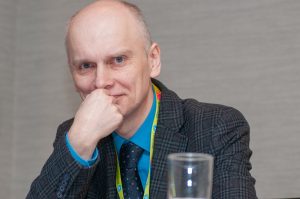
Nazar Kozak at the 2019 CAA Annual Conference. Photo: Ben Fractenberg
Up next in our Member Spotlight series, we are highlighting the work of Nazar Kozak, senior research scholar in the Department of Art History in the Ethnology Institute at the National Academy of Sciences of Ukraine, and an alumnus of the CAA-Getty International Program. Joelle Te Paske, CAA’s media and content manager, corresponded recently with Professor Kozak to learn more about his experiences at the Annual Conference, his current research, and his tips for scholars looking to extend their work internationally.
Joelle Te Paske: Hi Professor. Thanks for taking the time for our interview. So to begin, where are you from originally? What is the focus of your research?
Nazar Kozak: I am from Lviv, Ukraine, and I work in two fields simultaneously: medieval and contemporary art. The first one emerged from my interest in the cultural heritage of the region in which I live. My ongoing research in this field is focused on the sixteenth-century iconographic migrations of the Akathistos cycle across the post-Byzantine world from Venetian Cyprus in the South to the Tsardom of Muscovy in the North. Through this, I aim to discover artistic connections within this politically segmented realm that are not readily visible through archival data and thus to problematize nationalist narratives that have dominated Eastern European scholarship in the past. My second specialization emerged in recent years when issues of social justice and war came into the forefront in my country. I was driven to document and re-think artistic responses to the turmoil of events and through this to make my art history relevant to the times I am living through socially and politically. Currently, I am working on an article that explores how border art resists a global biopolitical divide.
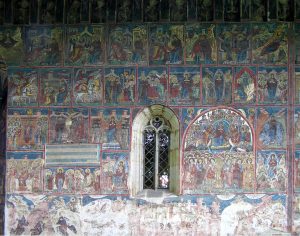
Akathistos cycle on the south facade of the Dormition Church in Humor, 1535. Photo: Nazar Kozak
JTP: What is your favorite thing about being a CAA member? Do you have a favorite memory?
NK: My favorite part of being a member is attending the Annual Conference. I remember the reaction of the audience to my talk at the Global Conversation session in 2017 when I shared my personal crisis in finding a motivation to continue writing art historical research when war broke out in my country and how I eventually found that motivation. The room was crowded and I remember the anxiety that I had before the session and the confidence I felt when I spoke and also during several moving conversations I had with attendees afterwards. That talk was published on the CAA website.
JTP: What is the most exciting part of your work currently?
NK: Currently and always the most exciting moment is when I realize that my work on a scholarly project is done; that is, when I can confirm my intellectual hypothesis and substantiate it with evidence that I genuinely believe to be true for now. This feeling, of course, does not last forever.
JTP: What would you say are some of the challenges?
NK: The major challenge is to find a sustainable answer for the Why question: Why am I writing a particular paper or monograph? And not just a random answer to tell others, but an answer I can tell myself and stick with, at least until I finish writing. The access to material and writing itself is a challenge, of course, but I think when you know your stake in it you can handle all the rest.
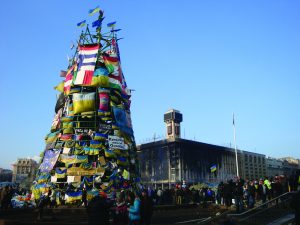
A view of Independence Square in Kyiv after violent clashes with the police during the Maidan Revolution, January 21, 2014. Photo: Borys Harasymiv
JTP: What is a favorite study you’ve worked on over the years? Any recommendations for our readers?
NK: Right now it is my article on art interventions during the Ukrainian Maidan revolution published in Art Journal in 2017.
I would recommend Decolonizing Nature: Contemporary Art and the Politics of Ecology by T.J. Demos, because it is a great piece of engaging scholarship and because art and ecology is a crucial issue that is relevant to us all.
For those who are interested in online resources on Byzantine art I would recommend The Digital Research Archive for Byzantium (DIFAB) and North of Byzantium.
JTP: What is your experience with Humanities Commons and the CAA-Getty program?
NK: I have used Humanities Commons several times as a platform for online discussions which have worked well as a supplement for in-person exchanges. Among other online platforms that I use is Academia.edu though I see its commercialization as controversial. The CAA-Getty International Program is the major vehicle that facilitates scholars from countries where art history has fewer resources than in West Europe or North America to bring their voice and to build their professional networks on the global scale. I participated in that program three times: first as a scholar and twice as an alumnus. This year I was selected to collaborate with the program’s director Janet Landay and the current CAA International Committee chair Pearlie Rose Baluyut to design and moderate the preconference colloquium on international topics in art history and I was honored to have that opportunity not only for my benefit but to contribute to the program as well. I might add that because of my work with the CAA-Getty program I have recently joined CAA’s International Committee, where I look forward to continuing to work on recruiting and interacting with international scholars.
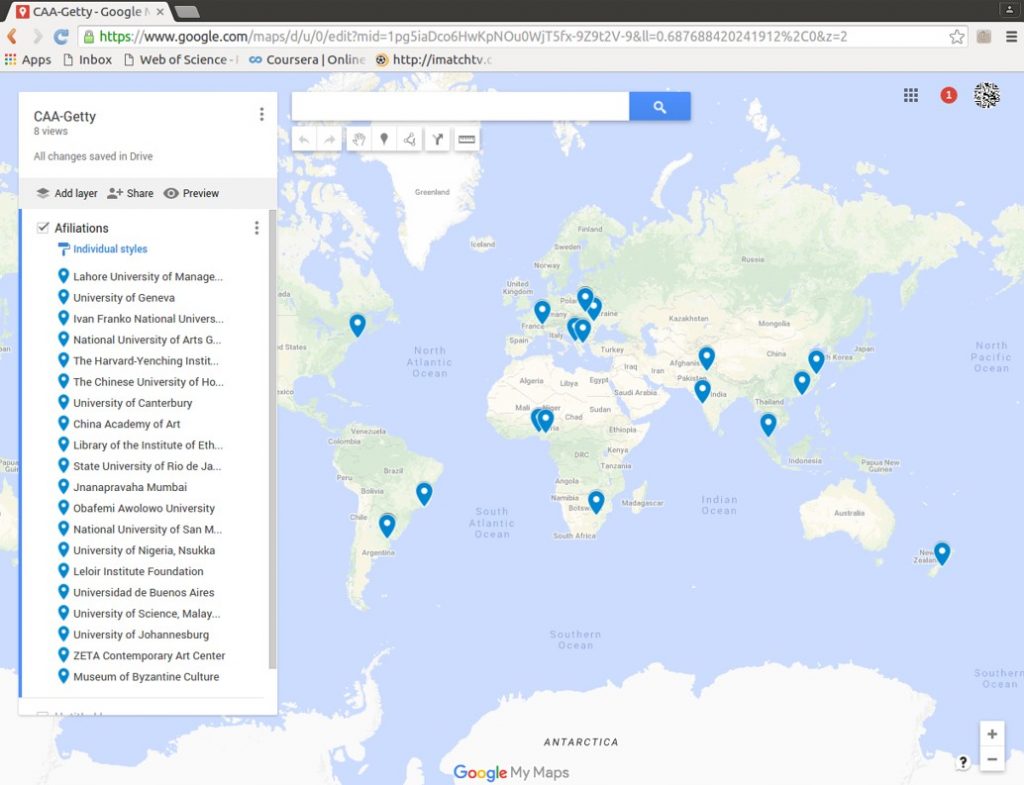
Map of home institutions of 2019 CAA-Getty International Program participants. Learn more.
Nazar Kozak is a senior research scholar in the Department of Art History in the Ethnology Institute at the National Academy of Sciences of Ukraine. Previously he also taught at the Medieval and Byzantine Studies Department at the Ivan Franko National University of Lviv. After receiving his PhD from the Lviv Academy of Arts in 2000, he spent a year in Greece under the auspices of the State Scholarships Foundation (IKY). Kozak is a recipient of research and publication grants from the American Council of Learned Societies (ACLS) and an alumnus of the CAA-Getty International Program. In 2016-2017, he was a visiting Fulbright Scholar in The Ukrainian Museum in New York. Kozak is the author of a monograph on image and authority in Kyivan Rus’ and articles dealing with Byzantine and post-Byzantine wall-paintings preserved in Ukraine. His ongoing research is focused on the sixteenth-century iconographic migrations of the Akathistos cycle across the post-Byzantine world. More recently, Kozak has also begun to work on topics in contemporary art. His article on the art interventions during the Ukrainian Maidan published in the Spring 2017 issue of the Art Journal received an honorable mention as a finalist for that year’s Art Journal Award.
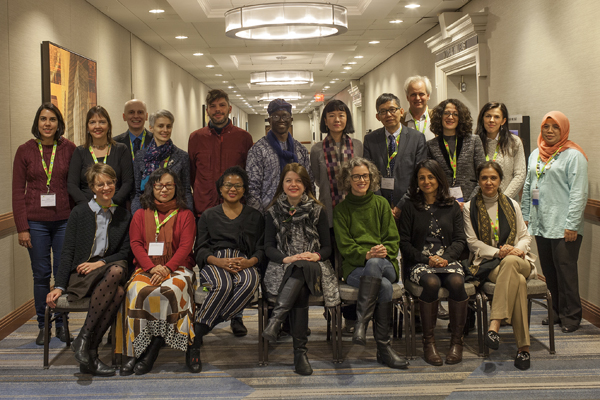
Nazar Kozak (third from top left) and fellow 2019 CAA-Getty International Program participants.
News from the Art and Academic Worlds
posted by CAA — April 03, 2019
Want articles like these in your inbox? Sign up: collegeart.org/newsletter
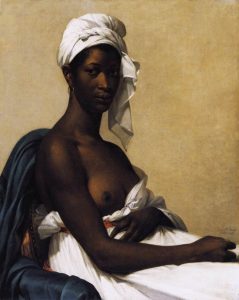
Marie-Guillemine Benoist’s “Portrait of a Negress” (1800) has been retitled “Portrait of Madeleine” for a new exhibition at the Musée d’Orsay. Image: Wikimedia Commons
Musée d’Orsay Puts Focus on Overlooked and Anonymous Black Models in French Masterpieces
The exhibition temporarily retitles works featuring historically anonymous Black models to honor their sitters. (Hyperallergic)
Adjunct Professors at Miami Dade College, America’s Largest Undergrad College, Are Unionizing
The new bargaining unit will include as many as 2,800 workers. (Miami New Times)
Poland’s Right-Wing Government Accused of Hijacking Prize-Winning Museum
One of Poland’s most prominent museums has strongly opposed an attempt by the country’s culture ministry to change its structure. (The Art Newspaper)
Though More Women Are on College Campuses, Climbing the Professor Ladder Remains a Challenge
A look at the numbers from Women in the Academy, a longitudinal study conducted from 2003 to 2012. (Brookings)
This Library Takes an Indigenous Approach to Categorizing Books
Xwi7xwa library in British Columbia is decolonizing the way information is sorted, cataloged, and shared. (Yes Magazine)
To Survive, Small Colleges Are Rethinking the Liberal Arts
As higher ed consolidates, these institutions are restructuring curriculum, campuses, and even tuition. (Education Dive)