CAA News Today
News from the Art and Academic Worlds
posted by CAA — September 25, 2019
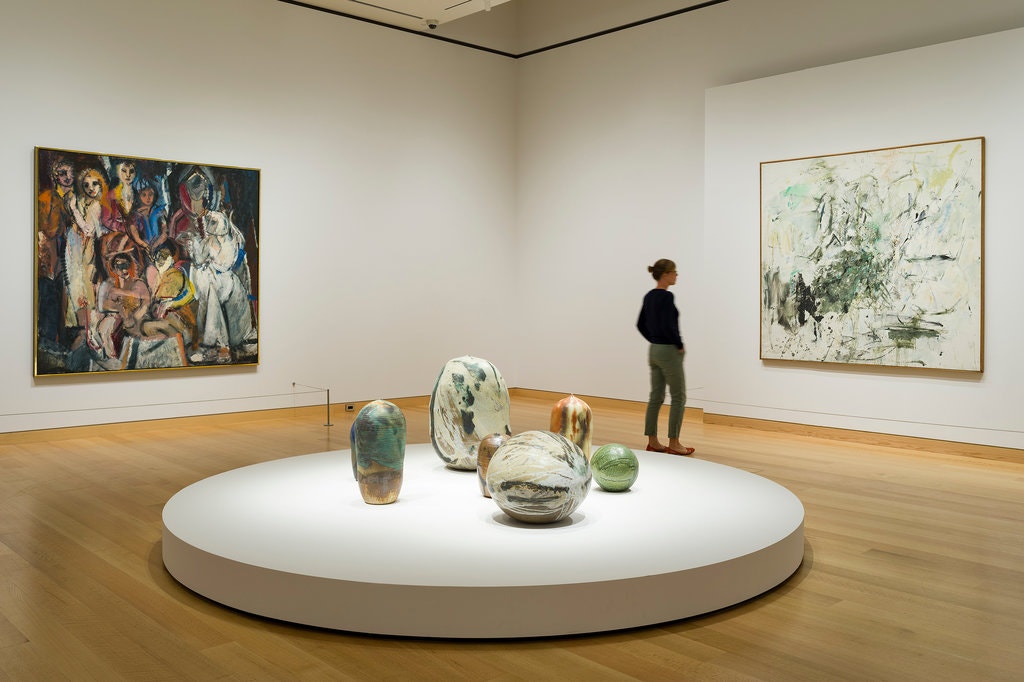
Installation view of Women Take the Floor at the MFA Boston, an effort to dedicate more space to women’s artworks. Only 4 percent of the art acquired by the museum between 2008 to 2018 was by women—3,788 of 90,215 works. Image: Museum of Fine Arts, Boston, via New York Times
Female Artists Made Little Progress in Museums Since 2008, Survey Finds
New data shows that in the last ten years, only 11% of all work acquired by top US museums was by women. (New York Times)
The Getty Trust Will Spend $100 Million to Protect Archaeological Sites Around the World From Climate Change and Sectarian Violence
The organization’s ambitious new initiative includes conservation efforts, scholarship programs, publications, and exhibitions. (artnet News)
‘It’s About Time!’ Betye Saar’s Long Climb to the Summit
The artist’s solo exhibition at MoMA will debut with the reopening of the newly expanded museum on October 21. (New York Times)
How Much Does an Adjunct Actually Make?
“What if everyone just told their students how much they got paid?” According to a 2015 study, one in five part-time faculty members live below the federal poverty line. (Hyperallergic)
Want articles like these in your inbox? Sign up:
Rita McDonald and Christina Teneglia
posted by CAA — September 23, 2019
The weekly CAA Conversations Podcast continues the vibrant discussions initiated at our Annual Conference. Listen in each week as educators explore arts and pedagogy, tackling everything from the day-to-day grind to the big, universal questions of the field.
CAA podcasts are on iTunes. Click here to subscribe.
This week, Rita McDonald and Christina Teneglia discuss “Teaching Failure.”
Rita MacDonald is a New York-based artist who makes very large temporary wall drawings and very small pencil drawings on paper. She holds a BFA in Printmaking from Rhode Island School of Design and an MFA from School of Visual Arts.
Christina Tenaglia holds a BA from Vassar College and an MFA from Yale University School of Art. She is currently a Visiting Assistant Professor at Vassar College in Poughkeepsie, New York, teaching sculpture, drawing and printmaking. She lives and works in the Hudson Valley.
New in caa.reviews
posted by CAA — September 20, 2019
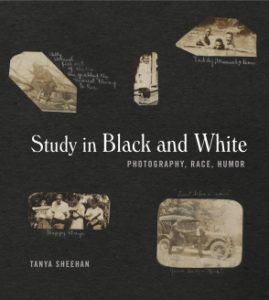
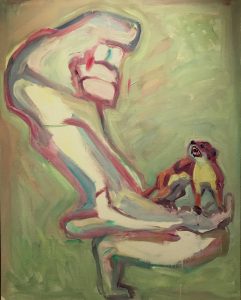
 Rebecca Giordano reviews Study in Black and White: Photography, Race, Humor by Tanya Sheehan. Read the full review at caa.reviews.
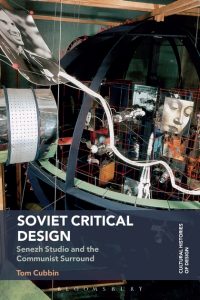
Yelena McLane discusses Tom Cubbin’s Soviet Critical Design: Senezh Studio and the Communist Surround. Read the full review at caa.reviews.
Mirela Tanta writes about the exhibition Maria Lassnig: Woman Power at the Palazzo Pitti, Florence. Read the full review at caa.reviews.
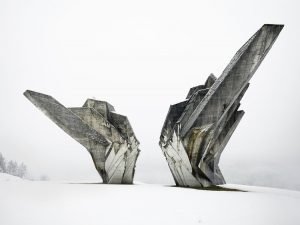
Jessy Bell considers the exhibition and catalog Toward a Concrete Utopia: Architecture in Yugoslavia 1948–1980, edited by Martino Stierli and Vladimir Kulić. Read the full review at caa.reviews.
Member Spotlight: Arnold J. Kemp
posted by CAA — September 18, 2019
We are delighted to welcome Arnold J. Kemp, in conversation with Huey Copeland, as one of our Distinguished Artist Interviews at the 2020 CAA Annual Conference. Learn more.
Up next in our Member Spotlight series, we are highlighting the work of Arnold J. Kemp, professor of Painting and Drawing and Dean of Graduate Studies at the School of the Art Institute of Chicago (SAIC). Joelle Te Paske, CAA’s media and content manager, corresponded recently with Professor Kemp to learn more about his work. Read the interview below:
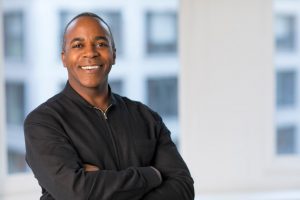
Arnold J. Kemp. Photo: Todd Rosenberg for the School of the Art Institute of Chicago
Where are you from originally?
I am from the 6 square miles of a Boston neighborhood called Dorchester. The back of my high school, which was located in the Fenway, faced the Isabella Stewart Gardener Museum and was just a few blocks away from the Museum of Fine Arts. I took classes at the MFA through an after school program supported by the Boston Public School system, and I was lucky to be asked to take classes at the School of the Museum of Fine Arts, Boston during the summers of my sophomore and junior years of high school.
During my senior year in high school I went to New York City to visit my older sister, and while she was at work I spent the day at the Metropolitan Museum of Art. I was entranced with the African and Oceanic collections there and I learned all that could. This was a transformative experience that has much to do with the way I have surrounded myself in an immersive life in the arts, culture, and literature.
What pathways led you to the work you do now?
After graduating high school I took part an internship working for the Smithsonian’s National Air and Space Museum. I learned a lot there about how museums functioned. Then, in college at Tufts University, I worked for the Boston Center for the Arts while my roommates and I ran a small organization that showed our peers—other young artists and writers—and invited guests such as Tim Rollins, Emett Gowin, and Marie Howe. I was aware that not far away, the Dark Room Collective—which included Ellen Gallagher, Kevin Young, Tisa Bryant, Thomas Sayers Ellis, and Sharan Strange—was doing similar things. In fact, Ellen Gallagher and I worked together on the night shift at the Museum School’s library.
In 1991, when the art world was still struggling to distill the pain and loss of the AIDS epidemic, I moved to San Francisco and marched with ACT UP. Around that time I also started working at the not-for-profit experimental space called New Langton Arts, and I participated in the later days of conferences organized by the National Association of Artist’s Organizations (NAAO).
At Langton I met role models such as Renny Pritikin, Judy Moran, Jon Winet, Holly Block, Ann Philbin, and James Elaine who believed in spaces started by artists to support artists. I also met many great artists and writers who were central to the literary movement called New Narrative and places such as Small Press Traffic, The Lab and The Luggage Store gallery. Kevin Killian, Dodie Bellamy, Kathy Acker, Bob Glück, Barret Watten, Leslie Scalpino, Quincy Troupe, Harryette Mullen had a big influence on me. These people are important to me because they encouraged me to be an artist, a poet, and a curator. They showed me how to curate and showed me values of good organizations that supported communities struggling for relevance.
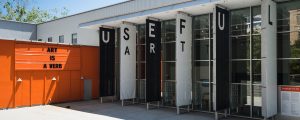
Courtesy Yerba Buena Center for the Arts.
At that time I had no idea that I would end up teaching. I was supporting myself by working for arts non-profits. I kept doing more and more in this arena and eventually became an assistant curator and then associate curator at Yerba Buena Center for the Arts (YBCA). I worked there for ten years and curated solo and group exhibitions and worked with artists such as David Hammons, Patty Chang, Carrie Mae Weems, Fred Wilson, Ellen Gallagher, Laylah Ali, Bruce Conner, John Baldessari, Michael Joo, and so many others. I even met Bill T. Jones, Meredith Monk, Philip Glass, and Conlon Nancarrow while working at YBCA. I worked there from its start in 1993 until 2003 when I left to attend graduate school at Stanford.
Teaching came somewhat naturally while I was pursuing an MFA at Stanford. After grad school and after struggling for a few years as a New York artist, an opportunity arose for me to direct the MFA in Visual Studies Department and to teach at the Pacific Northwest College of Art in Portland, Oregon. Prior to teaching in Portland I had an exhibition there and curated and organized a public program around my exhibition as part of Portland Institute for Contemporary Art’s TBA Festival. So much seemed possible in Portland, and I developed a true art family there.
The desire to experience working with larger schools and more diverse populations led me to positions as Chair of the Department of Painting and Printmaking at Virginia Commonwealth University (VCU) and also to my current position as Dean of Graduate Studies at the School of the Art Institute of Chicago (SAIC).
What are you working on currently?
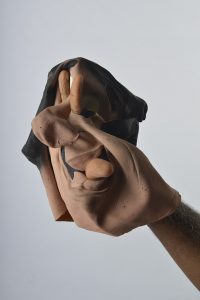
Arnold J. Kemp, Untitled, 2018, archival pigment print, 61 x 41 inches. Courtesy the artist.
I am always busy in the studio. I just completed delivering 23 works to the set of a remake of a Hollywood film that is currently being shot in Chicago. It turns out the producer of Jordan Peele’s films has been looking at my work for a long time, and I am glad that this opportunity has come my way.
I am also preparing for a solo show opening at the Los Angeles-based nonprofit JOAN in September 2020, followed by a solo show at Fourteen30 Contemporary, my gallery in Portland. For both these shows I will exhibit paintings and sculptures. Perhaps there will be a performance of one of my plays that have been staged in art galleries and artists’ spaces such as Biquini Wax EPS in Mexico City.
I also just joined the board of Threewalls, a Chicago-based nonprofit with an itinerant exhibition program that supports and encourages art practices that respond to lived experience, encouraging connections beyond art. As part of Threewalls’ board I will be involved again in expanding the discourse around the presentation and exhibition of contemporary art—from Threewalls, to the fourth wall, to breaking down walls. This is where itinerancy comes into play as the presentation model for Threewalls.
Having lived and practiced as an artist, writer, curator and educator in Boston, San Francisco, New York, Portland, Chicago and Richmond, I have had a life that is productively itinerant!
How would you say poetry weaves itself through your work?
For many years theses were separate activities, but in 2012 I began writing theatrical works with spoken lines that are meant to be performed in galleries by non-actors chosen from the community in which the piece is performed. Often the pieces concern that community so I might sometimes have a local artist or curator play themselves. This happened most recently at the venue in Mexico I mentioned, Biquini Wax EPS, in a farce that I wrote based on my experiences in the art and academic worlds. The piece was translated into Spanish and performed by local artists, writers, curators, and activists. I think of the pieces as time based-sculpture. The performance was just one part of a big show titled “When the Sick Rule the World” after Dodie Bellamy’s essay of the same name.
What is a favorite exhibition you’ve worked on over the years?
When I was at Pacific Northwest College of Art I curated a two-person show of B. Wurtz and Xylor Jane. There was a catalog and public program, and it was great to bring my San Francisco, New York, and Portland communities together. Xylor Jane is painter I have known from way back in my San Francisco days. Her work is formally beautiful and inspired by numbers, the Fibonacci sequence and the color sequences of ROYGBIV. She accomplishes a lot in visually intense abstractions that are based on logical forms. B. Wurtz is older than Xylor and is more of a conceptualist, having gone to school at CalArts in its heyday. Some of his classmates were Mike Kelly and Tony Oursler. He took classes with [Michael] Asher. The show was rigorous and unexpected—it did a lot to get students to think out of the box.
Do you have a favorite artist or exhibition in general?
I am not sure, at this point, if I have favorite artists anymore, but I recall The Museum as Muse which was curated by Kynaston McShine for MoMA as being a terrifically aesthetic, intellectual, and poetic exhibition that sought to give voice to the complicated relationship between museums and artists in light of history and institutional critique. I am fortunate enough to have seen it and to also have the terrific catalog. I feel that McShine as an art world personage needs to be studied and written about. He was important not just for being the curator of Primary Structures and Information but also for being of black Caribbean descent (he was born in Trinidad) and for being a one-time the lover of Frank O’Hara. Paradoxically, his work at MoMA also caused the Guerrilla Girls to organize and fight for greater inclusion of women and people of color in New York museums. No one has dealt with McShine’s legacy or his biography in the way they should. McShine was complicated and private, and so brilliant and influential.
When did you first become a CAA member?
I joined CAA in 2013 because as a department chair at VCU’s School of the Arts I wanted to stay in touch with artists, historians, and theorists from around the country. There are certain people who I aim to see at every conference just so that we can catch up and talk about the field and find ways to organize and help each other. In some ways the CAA reminds me of NAAO conferences that I used to attend in the 1990s.
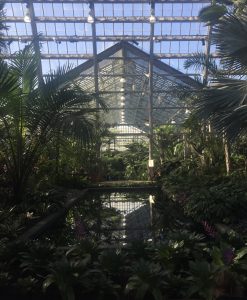
Garfield Park Conservatory. Photo: Joelle Te Paske
What should people make sure not to miss while they’re in Chicago for the 2020 conference?
In Chicago there is no such thing as bad weather, only bad clothing, so I suggest bringing a warm coat! Also, go to Garfield Park Conservatory—one of the largest and most stunning botanical conservatories in the nation with thousands of plant species from around the world throughout eight indoor display gardens.
What is your must-read book at the moment?
I would have to say Housing Shaped by Labour: The Architecture of Scarcity in Informal Settlements by Ana Rosa Chagas Cavalcanti.
How do you balance your artistic and professional roles?
Surround yourself with the things and people that you love. That is the only way I have been able to find balance. I find balance because it is a necessity and loving what I do makes it worth the time and effort.
ARNOLD J. KEMP BIOGRAPHY
Arnold J. Kemp is an interdisciplinary artist living in Chicago. The recurrent theme in his drawings, photographs, sculptures and writing is the permeability of the border between self and the materials of one’s reality. Kemp’s works are in the collections of the Metropolitan Museum of Art, The Studio Museum in Harlem, The Berkeley Art Museum and Pacific Film Archive, The Portland Art Museum, The Schneider Museum of Art, and the Tacoma Art Museum. He has received awards from the John Simon Guggenheim Memorial Foundation, the Joan Mitchell Foundation, The Pollock-Krasner Foundation, and Portland Institute for Contemporary Art. His work has been exhibited recently in Chicago, Mexico City, New York, San Francisco and Portland. His work was also shown in Tag: Proposals On Queer Play and the Ways Forward at the ICA Philadelphia. Kemp was a founding curator at Yerba Buena Center for the Arts from 1993-2003 and is currently the Dean of Graduate Studies at the School of the Art Institute of Chicago.
News from the Art and Academic Worlds
posted by CAA — September 18, 2019
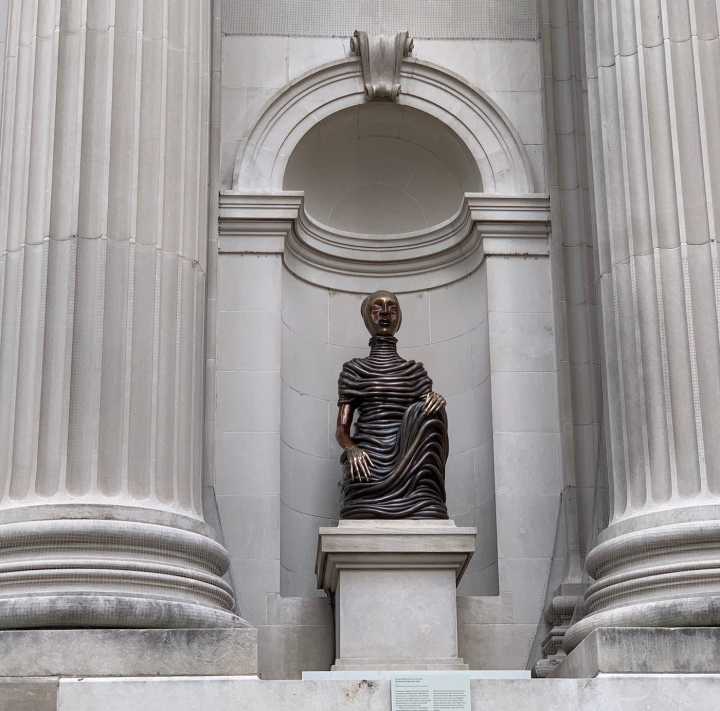
Wangechi Mutu’s The Seated III (2019) in its niche at the Met. Photo: Zachary Small via Hyperallergic
Wangechi Mutu Adorns the Met Museum’s Façade With Images of African Queendom
For the first time in 117 years, the empty niches on the museum’s exterior are occupied. (Hyperallergic)
Minneapolis Team Is Changing Museums from the Inside Out
A project at Minneapolis Institute of Art has spread nationwide—and beyond—as museums confront their colonial past. (Star Tribune)
Congress Promised Student Borrowers A Break. Education Department Rejected 99% Of Them
A new report shows revised efforts to forgive public servants’ student loan debt are still remarkably unforgiving. (NPR)
We’re Getting These Murals All Wrong
Robin D.G. Kelley takes an in-depth look at the Victor Arnautoff mural controversy in San Francisco. Let us know what you think in our online survey. (The Nation)
Want articles like these in your inbox? Sign up:
RAAMP Coffee Gathering: Curatorial Work as Academic Labor
posted by CAA — September 17, 2019
RAAMP (Resources for Academic Art Museum Professionals) Coffee Gatherings are monthly virtual chats aimed at giving participants an opportunity to informally discuss a topic that relates to their work as academic art museum professionals.
Coffee Gathering: Curatorial Work as Academic Labor
On Tuesday, September 24 at 3:00 PM (EST) RAAMP will be speaking with Meredith Lynn and Claire L. Kovacs.
To RSVP to this coffee gathering, please email Cali Buckley at cbuckley@collegeart.org
Meredith Lynn is an artist, curator, and educator based in Tallahassee, Florida. In her art practice she frequently explores the historical, political, and social issues surrounding land management and ownership. Her curatorial specialty is contemporary art, with a particular focus in interactive and new media art. Her work has been supported by the National Endowment for the Arts, the Indiana Arts Commission, the Minnesota State Arts Board, Northern Lights, and the Florida Department of Cultural Affairs and most recently shown at the Morris Graves Museum of Art in Arcata, California and the Wiregrass Museum in Dothan, Alabama. She is curator of the Museum of Fine Arts at Florida State University where she also teaches in the Department of Art.
Claire L. Kovacs is the Curator of Collections and Exhibitions at Binghamton University. She obtained her PhD from the University of Iowa and her master’s and bachelor’s degrees from Case Western Reserve University – all in art history. She has curated exhibitions at the Figge Art Museum, Coe College, Krasl Art Center, DePaul University, and at Augustana College, where she was (until recently) the Director of the Augustana Teaching Museum of Art. Her strategies for curatorial work and programming emphasize the ways that academic museums explore contemporary issues, foster interdisciplinary inquiry, create space for a multiplicity of voices and perspectives, and function as a site of dynamic community engagement. She underscores intersectional equity, diversity, accessibility and inclusion in her curatorial work. Her research practice grapples with ways that art historical research can support ‘The Common Good’ (to borrow a phrase from the NEH), using curatorial practice and writing as a mechanism by which to amplify under-told stories.
Submit to RAAMP
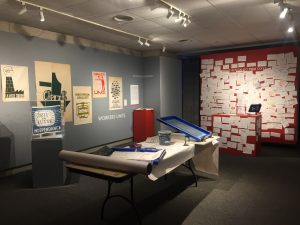
RAAMP (Resources for Academic Art Museum Professionals) aims to strengthen the educational mission of academic art museums by providing a publicly accessible repository of resources, online forums, and relevant news and information. Visit RAAMP to discover the newest resources and contribute.
RAAMP is a project of CAA with support from The Andrew W. Mellon Foundation.
Submit a Proposal for Idea Exchange at CAA 2020
posted by CAA — September 16, 2019
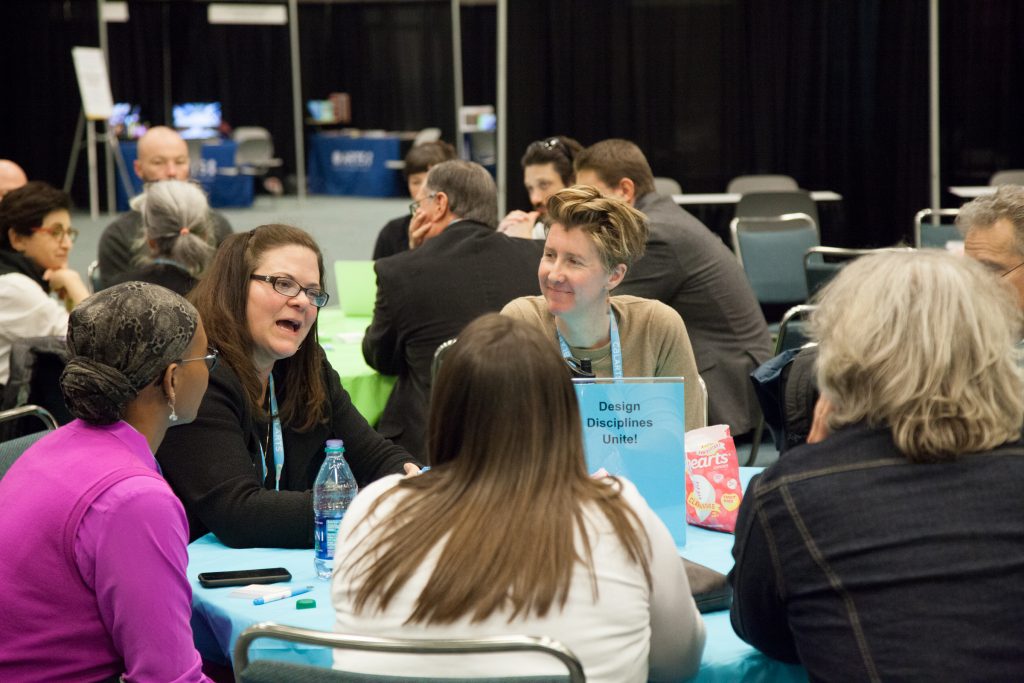
Idea Exchange at the 2018 CAA Annual Conference. Photo: Rafael Cardenas
We launched Idea Exchange at the 2018 Annual Conference in Los Angeles in response to members who expressed an interest in holding informal roundtable discussions on topics ranging from fellowship applications and gallery representation to student engagement in the classroom and preserving women artists’ legacies. See a list of previous discussion topics here.
We’re offering Idea Exchange again in 2020 and we’re looking for CAA members to serve as discussion leaders.
Propose a topic that you would like to discuss with your colleagues for a sixty-minute roundtable at the conference. It can relate to professional development, teaching, or current events, such as the debate surrounding Confederate monuments or the #MeToo movement in the arts. Be creative. The conversations are meant to be lively and engaging. Please submit your Idea Exchange proposals by November 1, 2019.
In order to submit an Idea Exchange topic, you will need to have your member ID and password ready. If you do not have an individual ID number and password or you do not know it, please contact member services by email at membership@collegeart.org or by phone at 212-691-1051, ext. 1.
Idea Exchange will be held in the Hilton Chicago, Lower Level, Salon B, during the following times:
Wednesday, February 12: 10:30 AM; 12:30 PM; 2:00 PM; 4:00 PM
Thursday, February 13: 10:30 AM; 12:30 PM; 2:00 PM; 4:00 PM
Friday, February 14: 10:30 AM; 12:30 PM; 2:00 PM; 4:00 PM
Saturday, February 15: 10:30 AM; 12:30 PM
For more information on Idea Exchange, contact Mira Friedlaender, manager of the Annual Conference, at mfriedlaender@collegeart.org or by phone at (212) 392-4405.
Lyz Wendland and Ann E. Lawton
posted by CAA — September 16, 2019
The weekly CAA Conversations Podcast continues the vibrant discussions initiated at our Annual Conference. Listen in each week as educators explore arts and pedagogy, tackling everything from the day-to-day grind to the big, universal questions of the field.
CAA podcasts are on iTunes. Click here to subscribe.
This week, Lyz Wendland and Ann E. Lawton discuss work-life balance.
Lyz Wendland is an assistant professor of Art at Augsburg University in Minneapolis, Minnesota. Her mixed-media work explores the relationship between architecture and nature.
Ann E. Lawton is a mixed media artist, registered art therapist, and an art educator at the University of Wisconsin-River Falls.
New in caa.reviews
posted by CAA — September 13, 2019
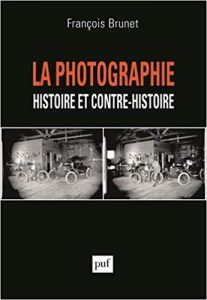
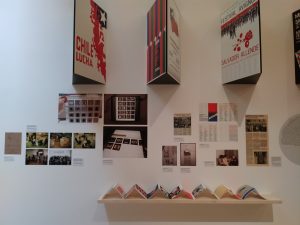
Didier Aubert commemorates the life and work of François Brunet, and reviews Brunet’s book La photographie: Histoire et contre-histoire. Read the full review at caa.reviews.
Matthew Bent discusses the exhibition Past Disquiet: Artists, International Solidarity and Museums in Exile, curated by Kristine Khouri and Rasha Salti. Read the full review at caa.reviews.
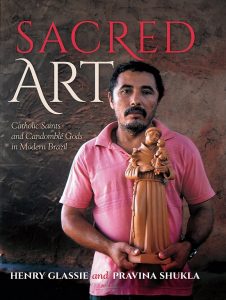
Kimberly Cleveland considers Henry Glassie and Pravina Shukla’s Sacred Art: Catholic Saints and Candomblé Gods in Modern Brazil. Read the full review at caa.reviews.
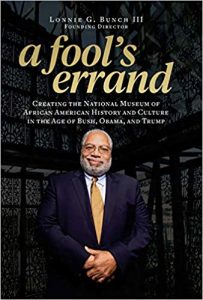
Deborah Ziska writes about Lonnie G. Bunch III’s forthcoming book, A Fool’s Errand: Creating the National Museum of African American History and Culture in the Age of Bush, Obama, and Trump. Read the full review at caa.reviews.
CAA Internship Program
posted by CAA — September 12, 2019
Starting in September 2018, CAA introduced a new internship program in its New York office for undergraduate and graduate students and recent graduates. Specifically, the program is designed for those who wish to gain experience and develop skills in the following areas:
- Events and Conference Programming
- Publications and Digital Publications
- Marketing & Communications
- Membership Development
Each intern will be assigned a discrete, clearly defined project (or projects) to be completed during the internship period.
The number of hours will depend on the preference of the CAA department, but will generally expected to work 20-30 hours per week in CAA’s New York office sometime between the hours of 9:00 AM to 6:00 PM, Monday to Friday. All internships require a commitment of eight consecutive weeks. Interns are expected to be commit three days per week
Eligibility
- Candidates must have successfully completed their junior year at an undergraduate college in any field of study.
- Candidates must have secure housing in the New York area which will allow them to complete the entire internship period.
- Candidates should have had some office experience and should be generally familiar with Microsoft Office, especially Word and Excel. Familiarity with Microsoft Office 365 preferable.
Internship sessions
- Fall 2019 – 8 weeks (September 15 through December 15)
- Spring 2020 – 8 weeks (January 15 through May 15)
- Summer 2020 – 8 weeks (June 1 through August 15)
There will be two interns per session.
Compensation
Each intern will receive a stipend of $500 per month paid bimonthly along with CAA’s regular payroll. Interns will be viewed as independent contractors and no deductions will be made, however a 1099 will be issued and interns are expected to pay all taxes as required under law.
Course credit
CAA will make every effort to assist successful candidates to obtain college credit, if applicable. Please coordinate with your institution’s administrator for semester credit. CAA can provide letters of confirmation and/or complete necessary forms.
To apply
Please submit a cover letter indicating your departmental interests (please rank two preferred departments), and CV to Daniel Tsai, CAA Programs and Publications Administrator: dtsai@collegeart.org. Please also list two professional references and the means to contact them via telephone or email. No phone calls please.
Applications will be accepted until positions are filled.
Events and Conference Programming Internship Tasks:
Assists with Annual Conference Special Events/Special Projects
- pre-conference workshops
- Key Conversation Panels
- events for students and emerging professionals
- Museum visits and tours
Assists with the research and facilitation of the Network Hall programming.
Assists with the research and development and implementation of workshops and programs throughout the year.
Publications and Digital Publications Internship Tasks:
- Assisting with checking layouts and copyediting
- Proofreading the reviewsadmin site to ensure uniformity of titles, format
- Checking all the links on Art Journal Opensite to make sure they work
Marketing & Communications Internship Tasks:
- Editing and proofreading
- Visual design and layout assistance
- Social media
- Assembling press files
- Website review and content review
- Assembling press hits files
- Assembling digital metrics files
- General communications and strategy research
Membership Development Internship Tasks:
- Database cleanup
- Assist with membership growth strategy
- Renewal address file clean up
- Membership card file address clean up, folding cards, post office delivery
- Updating IP addresses indiv/org claims for missing issues
- Returned publications for indiv/orgs
- Adding/updating primary contacts for organizations
- Possible outreach to lapsed organizational members
The CAA is an equal opportunity employer and considers all candidates for employment regardless of race, color, sex, age, national origin, creed, disability, marital status, sexual orientation, gender expression, or political affiliation.