
CAA News Today
Troubling Study on US Higher Education
posted by Christopher Howard — December 03, 2008
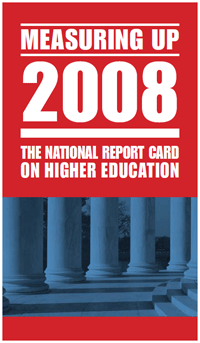 States are making little or no progress in providing affordable college opportunities or improving college completion rates for their residents, says a report released today by the National Center for Public Policy and Higher Education. The findings come as states face massive budget shortfalls that threaten higher-education funding, and the United States continues to lag behind other advanced nations on measures of higher-education performance.
Drawing on nearly two decades of data, the report, Measuring Up 2008, finds that while states have made modest gains in preparing students for college, more students are failing to graduate from high school. While college-enrollment rates for young adults are improving, enrollment rates are declining for older adults. The report also notes that the burden of paying for college is now higher for students in every state, and low college-completion rates have barely improved. Additionally, disparities persist in college access and success by income, race and ethnicity, and state.
According to the study, major gaps include:
- Affordability. The burden of paying for college has increased for all families but has increased substantially more for low- and middle-income families. Nationally, families in the lowest-income group (bottom 20 percent of the population) pay 55 percent of their income to attend public four-year colleges and universities (after accounting for all student financial aid)—a jump from 39 percent in 2000. Families in the middle-income group (middle 20 percent of the population) pay 25 percent of their income (up from 18 percent in 2000), and those in the top income group (top 20 percent of the population) pay 9 percent of their income (up from 7 percent in 2000). (See page 8 of Measuring Up 2008.)
- Additionally, college is more affordable in some states than others. At community colleges, the proportion of family income needed to pay for college expenses, after financial aid, has increased from 18 percent to 25 percent in Florida, and from 20 percent to 25 percent in Washington State. At public four-year institutions, the percentage of income needed to pay costs, after aid, has increased from 17 percent to 20 percent in Minnesota, from 19 percent to 34 percent in New Jersey, and from 29 percent to 41 percent in Pennsylvania. (See page 15.)
- High school completion. In Illinois, 95 percent of white young adults have a high school credential, compared with 82 percent of blacks. In Texas, 93 percent of white young adults have a high school credential, compared with 74 percent of Hispanics. (See page 14.)
- College attendance. In Connecticut and New York, 50 percent of white young adults are enrolled in college, compared with 34 percent of blacks. In California, 45 percent of whites are enrolled, compared with 27 percent of Hispanics. In Arizona, 40 percent of whites are enrolled, compared with 18 percent of Native Americans. (See page 14.)
- College graduation. In Delaware, 73 percent of white students complete a bachelor’s degree within six years of enrolling in college, compared with 41 percent of black students. In New York, 63 percent of whites do so, compared with 43 percent of Hispanics. In New Mexico, 47 percent of whites graduate within six years, compared with 25 percent of Native Americans. (See page 16.)
As a result of these inequities, US higher-education performance has been declining compared to other nations in recent years.
- In college completion, which has never been a strength of American higher education, the US falls in the middle of the pack: fifteenth among twenty-nine countries compared
- The US adult population ages thirty-five and older still ranks among the world leaders (second only to their peers in Canada) in the percentage who have college degrees, reflecting the educational progress of earlier times
- Among twenty-five- to thirty-four-year-olds, however, the US has slipped to tenth in the percentage having college degrees. This relative erosion of our national “educational capital” reflects the lack of significant improvement in the rates of college participation and completion in the US in recent years, compared with other countries
Measuring Up 2008 is the fifth in a series of biennial report cards issued by the National Center, based in San Jose, California. Like the earlier reports, this edition measures the performance of the nation and of each state in providing education and training beyond high school. Each state receives an A-to-F grade in each of five performance areas.
In addition to the national report card, detailed individual report cards are available for each of the fifty states. Upon release of Measuring Up 2008, the national and state report cards will be posted on the National Center’s website.
The National Center for Public Policy and Higher Education promotes public policies that enhance Americans’ opportunities to pursue and achieve a quality higher education. Established in 1998 by a consortium of national foundations, the center is an independent, nonprofit, nonpartisan organization. It is not associated with any institution of higher education, with any political party, or with any government agency. The National Center is solely responsible for Measuring Up 2008.
NEA Releases Report on Women Artists
posted by Christopher Howard — December 02, 2008
The National Endowment for the Arts (NEA) has released a new study in its Research Note series that shows women are making gains in traditionally male artist occupations, but still earn less than male artists. Women Artists: 1990–2005 takes a closer look at female artist employment trends that were previously mentioned in the NEA report Artists in the Workforce: 1990–2005, published in May 2008.
Totaling almost 919,000 artists in 2005, women represented 46 percent of the artist labor force, comparable to their percentage of all civilian workers. The note reveals significant patterns in pay disparity, demographic, and educational trends, and women’s advancement in various art fields over the past fifteen years. This note draws on data from the US Census Bureau’s 2003–5 American Community Surveys, along with the 1990 and 2000 population censuses.
Among the key findings:
Female artists earn less than male artists. Women artists who work full-year, full-time earn $0.75 for every dollar made by men artists. Women workers in general earn $0.77 for every dollar earned by men.
- Women’s pay disparity increases with age. In 2003–5, women artists aged 18 to 24 earned $0.95 for every $1 made by young men artists. This ratio fell to $0.67 for 45-to-54-year-olds. Similar pay gaps by age are found in the overall labor market
- Pay gaps vary by occupation. Men and women had closer earnings parity in lower-paying performing arts occupations (such as musicians and dancers), where women earned an average of $0.92 for every dollar earned by men. The gap tended to be larger in nonperforming art occupations (such as designers and art directors), where women earned 72 percent of what men earn
- Pay gaps vary by state. The pay disparity was smaller in ten states, such as New York and Arizona, where women made 80 percent or more of what men made. Women made less than 75 percent of what men made in twenty-seven states, including Virginia, Michigan, and North Dakota
Women make up just under half of all artists nationwide (46 percent), yet they are underrepresented in many artist professions. In 2003–5, nearly eight out of ten announcers and architects were men.
Women have achieved a greater presence in some artist occupations. By 2003–5, women made up 43 percent of all photographers and 22 percent of all architects—representing gains of 11 and 7 percent, respectively, since 1990.
Women artists are as likely to be married as female workers in general, but they are less likely to have children. In 2003–5, more than half of all women artists and all women workers were married. Yet only 29 percent of women artists had children under 18, almost six percentage points lower than for women workers in general.
Female artists cluster in low-population states. Women made up more than 55 percent of the artist labor force in Iowa, Alaska, New Hampshire, and Mississippi in 2003–5. They represent well below half of all artists in New York (45.8 percent) and in California (42.6 percent).
NEA Releases Report on Women Artists
posted by Christopher Howard — December 02, 2008
The National Endowment for the Arts (NEA) has released a new study in its Research Note series that shows women are making gains in traditionally male artist occupations, but still earn less than male artists. Women Artists: 1990–2005 takes a closer look at female artist employment trends that were previously mentioned in the NEA report Artists in the Workforce: 1990–2005, published in May 2008.
Totaling almost 919,000 artists in 2005, women represented 46 percent of the artist labor force, comparable to their percentage of all civilian workers. The note reveals significant patterns in pay disparity, demographic, and educational trends, and women’s advancement in various art fields over the past fifteen years. This note draws on data from the US Census Bureau’s 2003–5 American Community Surveys, along with the 1990 and 2000 population censuses.
Among the key findings:
Female artists earn less than male artists. Women artists who work full-year, full-time earn $0.75 for every dollar made by men artists. Women workers in general earn $0.77 for every dollar earned by men.
- Women’s pay disparity increases with age. In 2003–5, women artists aged 18 to 24 earned $0.95 for every $1 made by young men artists. This ratio fell to $0.67 for 45-to-54-year-olds. Similar pay gaps by age are found in the overall labor market
- Pay gaps vary by occupation. Men and women had closer earnings parity in lower-paying performing arts occupations (such as musicians and dancers), where women earned an average of $0.92 for every dollar earned by men. The gap tended to be larger in nonperforming art occupations (such as designers and art directors), where women earned 72 percent of what men earn
- Pay gaps vary by state. The pay disparity was smaller in ten states, such as New York and Arizona, where women made 80 percent or more of what men made. Women made less than 75 percent of what men made in twenty-seven states, including Virginia, Michigan, and North Dakota
Women make up just under half of all artists nationwide (46 percent), yet they are underrepresented in many artist professions. In 2003–5, nearly eight out of ten announcers and architects were men.
Women have achieved a greater presence in some artist occupations. By 2003–5, women made up 43 percent of all photographers and 22 percent of all architects—representing gains of 11 and 7 percent, respectively, since 1990.
Women artists are as likely to be married as female workers in general, but they are less likely to have children. In 2003–5, more than half of all women artists and all women workers were married. Yet only 29 percent of women artists had children under 18, almost six percentage points lower than for women workers in general.
Female artists cluster in low-population states. Women made up more than 55 percent of the artist labor force in Iowa, Alaska, New Hampshire, and Mississippi in 2003–5. They represent well below half of all artists in New York (45.8 percent) and in California (42.6 percent).
MFA Standards Updated
posted by Christopher Howard — November 13, 2008
Last month, the CAA Board of Directors approved revisions to the MFA Standards, one of the organization’s many Standards and Guidelines for visual-art professionals. The revised document, prepared by a subcommittee of the Professional Practices Committee (PPC), is now published to the CAA website.
During summer and fall 2008, Jean Miller, chair of the PPC-MFA Standards Review Committee, and Charles Wright, a PPC member who is also leading a discussion about the doctorate in studio art, worked on a draft of a revised MFA Standards. Last revised and approved in 1991, the document was submitted to the board by Maxine Payne, PPC chair.
The PPC-MFA Committee contacted art and design colleagues across the nation throughout the revision process to gather ideas for changes. The response was very good, with certain themes or points reoccurring. Many of those queried thought that the idea of the MFA as the terminal degree in art and design needed to be reinforced. Others found the language in the 1991 standards to be dated, so it was rewritten throughout to reflect present-day issues and concerns.
Contemporary and evolving studio practices, interpretation of ideas, and the role of art and design in innovation were all thought to be important concepts. Information about technology and experimental media, collaborative works, and interdisciplinary applications of art and design were also considered to be critical to current art practices for students in MFA programs.
Some respondents advocated for robust and comprehensive educational curricula that include critical studies, art history, and visual culture. The inclusion of statements about diversity and how curriculum must support non-Western and Western cultures was important to all.
The PPC thanks everyone who helped in the revision, in particular, Carmon Colangelo, Patricia Olynyk, Nora Sturges, Judith Thorpe, and Jim Hopfensperger.
MFA Standards Updated
posted by Christopher Howard — November 13, 2008
Last month, the CAA Board of Directors approved revisions to the MFA Standards, one of the organization’s many Standards and Guidelines for visual-art professionals. The revised document, prepared by a subcommittee of the Professional Practices Committee (PPC), is now published to the CAA website.
During summer and fall 2008, Jean Miller, chair of the PPC-MFA Standards Review Committee, and Charles Wright, a PPC member who is also leading a discussion about the doctorate in studio art, worked on a draft of a revised MFA Standards. Last revised and approved in 1991, the document was submitted to the board by Maxine Payne, PPC chair.
The PPC-MFA Committee contacted art and design colleagues across the nation throughout the revision process to gather ideas for changes. The response was very good, with certain themes or points reoccurring. Many of those queried thought that the idea of the MFA as the terminal degree in art and design needed to be reinforced. Others found the language in the 1991 standards to be dated, so it was rewritten throughout to reflect present-day issues and concerns.
Contemporary and evolving studio practices, interpretation of ideas, and the role of art and design in innovation were all thought to be important concepts. Information about technology and experimental media, collaborative works, and interdisciplinary applications of art and design were also considered to be critical to current art practices for students in MFA programs.
Some respondents advocated for robust and comprehensive educational curricula that include critical studies, art history, and visual culture. The inclusion of statements about diversity and how curriculum must support non-Western and Western cultures was important to all.
The PPC thanks everyone who helped in the revision, in particular, Carmon Colangelo, Patricia Olynyk, Nora Sturges, Judith Thorpe, and Jim Hopfensperger.
Bruce Cole to Leave the NEH
posted by Christopher Howard — November 12, 2008

The National Endowment for the Humanities has announced that Chairman Bruce Cole will leave the endowment to join the American Revolution Center as its president and chief executive officer, effective January 2009.
Appointed NEH chairman by President George W. Bush, Cole was confirmed by the Senate in 2001 and reconfirmed in 2005 for a second term. Cole is the longest serving chairman in NEH history. During his tenure, the NEH launched innovative humanities programs, including We the People and Picturing America. Under his leadership, the NEH led the application of digital technology to the humanities through its Office of Digital Humanities. The office established innovative new grant programs and formed ground-breaking partnerships with the Department of Energy and the National Science Foundation. Cole has also worked to broaden the international reach of NEH.
Bruce Cole to Leave the NEH
posted by Christopher Howard — November 12, 2008
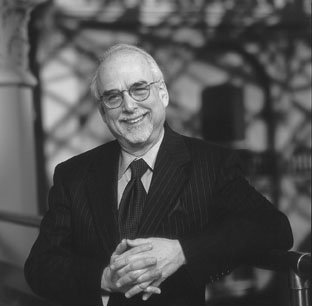
The National Endowment for the Humanities has announced that Chairman Bruce Cole will leave the endowment to join the American Revolution Center as its president and chief executive officer, effective January 2009.
Appointed NEH chairman by President George W. Bush, Cole was confirmed by the Senate in 2001 and reconfirmed in 2005 for a second term. Cole is the longest serving chairman in NEH history. During his tenure, the NEH launched innovative humanities programs, including We the People and Picturing America. Under his leadership, the NEH led the application of digital technology to the humanities through its Office of Digital Humanities. The office established innovative new grant programs and formed ground-breaking partnerships with the Department of Energy and the National Science Foundation. Cole has also worked to broaden the international reach of NEH.
Americans for the Arts Merges with Business Committee for the Arts
posted by Christopher Howard — October 31, 2008
Two nonprofit arts-advocacy groups, Americans for the Arts and Business Committee for the Arts (BCA), announced yesterday that they will merge their operations, creating the largest-ever advocacy group for the arts in the private sector. The partnership will further enable the organization to generate increased private-sector support for the arts and arts education by engaging and educating business leaders nationwide on the economic impact and value of the arts in business and community settings.
Americans for the Arts has issued a press release on the merger and also published two lists of frequently asked questions for its members and the general public.
Americans for the Arts Merges with Business Committee for the Arts
posted by Christopher Howard — October 31, 2008
Two nonprofit arts-advocacy groups, Americans for the Arts and Business Committee for the Arts (BCA), announced yesterday that they will merge their operations, creating the largest-ever advocacy group for the arts in the private sector. The partnership will further enable the organization to generate increased private-sector support for the arts and arts education by engaging and educating business leaders nationwide on the economic impact and value of the arts in business and community settings.
Americans for the Arts has issued a press release on the merger and also published two lists of frequently asked questions for its members and the general public.
Orphan-Works Legislation Dies in the House
posted by Christopher Howard — October 10, 2008
After a flurry of Congressional activity last week and the passing of the Shawn Bentley Orphan Works Act in the Senate, Gigi Sohn of Public Knowledge (PK) notes, orphan-works legislation has died in the House of Representatives. She writes:
The negotiations went on for hours and hours on [October 2–3], but in the end, PK, working with the user community (libraries, documentary filmmakers, educational institutions and the College Art Association) could not agree with on language with the House staff…. Time had run out.
Though several matters remained unresolved, which Sohn discusses, she was proud of the progress made so far and is pleased that the issues surrounding the documentation of a good-faith search have been narrowed so that future legislative efforts may be more fruitful.