CAA News Today
Call for Applications: CAA-Getty International Program 2026
posted by CAA — March 12, 2025
CAA will begin accepting applications for the CAA-Getty International Program on March 15! Thanks to generous support from Getty, the program—now in its fifteenth year—enables scholars from around the world to travel to Chicago to participate in the CAA 114th Annual Conference, February 18–21, 2026. The program features a preconference colloquium on international issues in art history, followed by a week of sessions, workshops, events, museum visits, and professional development opportunities.
To date, the program has gathered 179 scholars from sixty-one countries, and continues to have significant global impact on the field. These annual convenings have yielded collaboration, community, and lasting connections while also serving to diversify CAA membership, increase international presence at CAA conferences, and foster greater cross-cultural discourse around international art scholarship and practice.
We also invite alumni of the program to apply to return and support first-time participants, take part in program events, and present new scholarship at the Annual Conference in our dedicated CAA-Getty International Program Alumni Session.
The individuals selected for the 2026 program will receive a one-year CAA membership, have their conference registration fee, travel expenses, and accommodation costs covered, and will receive per diems for meals and incidentals.
International art historians, curators, and other visual arts professionals are encouraged to apply!
Visit our CAA-Getty page for eligibility and application requirements. All interested Getty applicants, whether new scholars or alumni, will need to submit a general conference application (individual presentation proposal) and indicate their interest in participating in the CAA-Getty International Program.
Deadline: April 25
This program is made possible with support from Getty.

CAA113 Annual Artist Interviews Announced!
posted by CAA — December 06, 2024
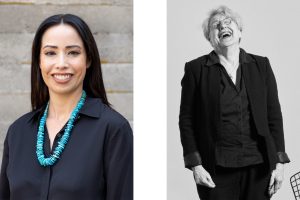
Wendy Red Star (photograph by John D. and Catherine T. MacArthur Foundation) and Martha Rosler (photograph by Tina Barney)
CAA is thrilled to share that artists Wendy Red Star and Martha Rosler will be the featured guests of the CAA 113th Annual Conference Annual Artist Interviews! Red Star will be interviewed by Josh T Franco, head of collecting, Archives of American Art, and Charlotte Ickes, curator of time-based media art and special projects, National Portrait Gallery. Columbia University professor of art history and archaeology Julia Bryan-Wilson will speak with Rosler. This session is supported in part by the Joan Mitchell Foundation in conjunction with Joan Mitchell’s centennial celebration.
Wendy Red Star
Wendy Red Star is an Apsáalooke artist based in Portland, OR, whose multidisciplinary practice explores intersections of Apsáalooke history and colonial narratives through conceptual art and pop culture. Raised in Apsáalooke traditions, she uses her work to reframe historical narratives and amplify Apsáalooke perspectives.
Red Star’s work has been exhibited at major institutions, including the Metropolitan Museum of Art, the Broad, Fondation Cartier, and the Seattle Art Museum. Her monumental sculpture, The Soil You See . . ., debuted on the National Mall in Washington, DC, in 2023, and was later acquired by Tippet Rise Art Center.
Her work is in over eighty public collections, including the Museum of Modern Art, the Whitney Museum of American Art, and the British Museum. A 2024 MacArthur Fellow, Red Star’s artist’s books include Delegation (2022) and Bíilukaa (2023). She holds an MFA from UCLA and has lectured internationally, including at Yale University and the Banff Centre.
Martha Rosler
Martha Rosler’s work centers on the public sphere and everyday life, particularly with respect to women. Recurring themes include food in its many roles and guises, urbanism and spaces of transit, and war and national security. She has initiated a number of events in the US and Europe that bridge diverse publics, including garage sales, pop-up libraries, and a long-standing collaborative project that explores homelessness, housing, and the built environment. Through her varied artistic practice, writing, and activism, she challenges the mechanisms of power and their normalization within imagery, narrative, and discourse.
She has received numerous honors, including the Anonymous Was a Woman Award, the College Art Association Distinguished Feminist Award, the Women’s Caucus for Art Lifetime Achievement Award, the Oskar Kokoschka Prize, the Spectrum International Prize in Photography, the Guggenheim Museum Lifetime Achievement Award, the Asher B. Durand Award, the Lichtwark Prize, and four doctorates Honoris Causa.
Rosler lives in Greenpoint, Brooklyn, whose decades of gentrification have often figured in her work.
The CAA113 Annual Artist Interviews will be held on Friday, February 14, 4:30–7:00 p.m. ET at the New York Hilton Midtown. This event will also be livestreamed via YouTube.
Register now for the CAA 113th Annual Conference, February 12–15, 2025 in New York City!
CAA113 Badge Benefits: Access Local NYC Museums During the Conference!
posted by CAA — November 29, 2024
CAA has partnered with several New York City museums to offer Annual Conference attendees complimentary admission and other benefits. During the week of CAA113, attendees can enjoy access to the Cloisters, El Museo del Barrio, the Guggenheim, the Hispanic Society Museum, the Metropolitan Museum of Art, MoMA, the Museum of Arts and Design, and the Whitney Museum of American Art.
Explore museum benefits for conference attendees and current exhibitions on view to make the most of your time in New York! Register now to enjoy these benefits.
Complimentary admission for conference attendees February 13–15. Show your conference badge at the admissions desk to gain entry.
Ten percent discount February 13–16 at the museum shop. Admission is pay what you wish.
On view:
Flow States – LA TRIENAL 2024
(Though the full exhibition closes in early February, select galleries will remain open through March 16)
Complimentary admission for conference attendees February 12–15. Show your conference badge at the admissions desk to gain entry.
On view:
Harmony and Dissonance: Orphism in Paris, 1910–1930
Piet Mondrian: Ever further
By Way Of: Material and Motion in the Guggenheim Collection
THE HISPANIC SOCIETY MUSEUM & LIBRARY
Ten percent discount February 13–16 at the gift shop. Admission is free to the public.
On view:
A Room of Her Own: The Estrado and the Hispanic World
The Colorful World of Pancho Fierro, Afro-Peruvian Painter
THE METROPOLITAN MUSEUM OF ART
Complimentary admission for conference attendees February 13–15. Show your conference badge at the admissions desk to gain entry.
On view:
Flight into Egypt: Black Artists and Ancient Egypt, 1876–Now
Materialized Space: The Architecture of Paul Rudolph
The Great Hall Commission: Tong Yang-Tze, Dialogue
The Genesis Facade Commission: Lee Bul, Long Tail Halo
Complimentary admission for conference attendees February 12–15. Show your conference badge at the admissions desk to gain entry.
On view:
Lillie P. Bliss and the Birth of the Modern
Pirouette: Turning Points in Design
Complimentary admission for conference attendees February 13–15. Show your conference badge at the admissions desk to gain entry.
On view:
Ceremonies Out of the Air: Ralph Lemon
Complimentary admission for conference attendees February 12–16. Show your conference badge at the admissions desk to gain entry.
On view:
Barbie®: A Cultural Icon
Craft Front & Center: Conversation Pieces
OUT of the Jewelry Box
Anne Wilson: The MAD Drawing Room and Errant Behaviors
WHITNEY MUSEUM OF AMERICAN ART
Complimentary admission for conference attendees February 12–15.
***Tickets must be booked in advance here. Use code CAA2025 for complimentary general admission.
On view:
Christine Sun Kim: All Day, All Night
Shifting Landscapes
Jeanne-Moutoussamy-Ashe and the Last Gullah Islands
Notice of the CAA 113th Annual Business Meeting
posted by CAA — November 26, 2024
CAA Annual Business Meeting
Friday, February 14, 2025
12:00 p.m. ET
The 113th Annual Business Meeting of the members of the College Art Association will be called to order at 12:00 p.m. ET on Friday, February 14, 2025, at the New York Hilton Midtown. Access to this meeting is included in paid and no-cost registration. Once registered, please log into the online conference schedule to view more details about this meeting. CAA President, Dr. Denise Baxter will preside.
AGENDA
- Welcome + Call to Order – Denise Baxter, CAA Board President
- Executive Director Report – Meme Omogbai, CAA Executive Director + CEO
- Approval of 112th Annual Business Meeting Minutes [ACTION ITEM]
- Old/New Business
- Board Election Results – Denise Baxter, CAA Board President
- Adjourn
SPECIAL DISCUSSION
Immediately following the CAA 113th Annual Business Meeting, Robert B. Townsend, Director of Humanities, Arts, and Culture Programs and Codirector of Humanities Indicators at the American Academy of Arts and Sciences, will lead a discussion on the state of the field based on the Mellon Foundation-funded Arts and Humanities national survey of department chairs in each discipline.
BOARD VOTING
The 2025 Board of Directors slate will be announced in December 2024 along with an online voting form. Please submit your voting form for the 2025 election no later than 5:00 p.m. ET on Thursday, February 13, 2025.
NEXT MEETING–2026
The 114th Annual Business Meeting of the College Art Association will be held in February 2026 at the Hilton Chicago during the CAA Annual Conference; precise date and time to be announced.
Jack Flam Named CAA113 Distinguished Scholar
posted by CAA — November 21, 2024
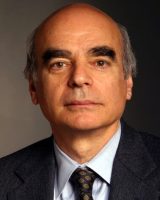
The Distinguished Scholar Session at the CAA 113th Annual Conference will honor the career of Dr. Jack Flam, explore the broad range of Dr. Flam’s scholarly interests, and celebrate his ongoing legacy of support and amplification of innovative voices in the field.
Dr. Flam is Distinguished Professor Emeritus of Art and Art History at Brooklyn College and the Graduate Center, City University of New York, where he taught from 1975–2010. Dr. Flam was also President of the Dedalus Foundation from 2002–24.
His career in education took hold at Rutgers University and the University of Florida, and he subsequently taught a wide range of courses at CUNY, where he was mentor to many students, both undergraduate and graduate, in studio art as well as art history. In addition to serving as a dissertation and thesis advisor, he continues to steadfastly support the professional lives of his former students.
Dr. Flam is the author of several books, articles, and exhibition catalogs on various aspects of nineteenth- and twentieth-century art, and on African art. He is a leading authority on Henri Matisse, and his influential book Matisse on Art has been in print since its publication in 1973. His Matisse: The Man and His Art, 1869–1918 received CAA’s Charles Rufus Morey Award in 1988. Dr. Flam’s other books include Motherwell (1991); Richard Diebenkorn: Ocean Park (1992); Matisse: The Dance (1993); Western Artists/African Art (1994); Matisse and Picasso: The Story of Their Rivalry and Friendship (2003); Manet: Un bar aux Folies-Bergère ou l’abysse du mirror (2005). He has written extensively on postwar American art, especially on Robert Motherwell. He is coauthor of Robert Motherwell Paintings and Collages: A Catalogue Raisonné, 1941–1991 (2012) and of Robert Motherwell: 100 Years (2015).
He is the series editor of the Documents of Twentieth-Century Art (currently published by the University of California Press) and in addition to Matisse on Art, has edited two volumes for it: Robert Smithson: The Collected Writings (1996) and Primitivism and Twentieth-Century Art (2003). He has served on a number of juries, committees, and boards focused on supporting artists and art historians, including the advisory board of Source: Notes in the History of Art and the board of directors of the United States section of the International Association of Art Critics. Dr. Flam was also the art critic of the Wall Street Journal from 1984–92.
He has been the recipient of several awards and honors, including fellowships from the John Simon Guggenheim Memorial Foundation and the National Endowment for the Humanities. He won the Art World Manufacturers Hanover Prize for Distinguished Newspaper Criticism in 1987.
His articles and reviews have appeared widely, including in African Arts, American Heritage, Apollo, The Art Bulletin, Artforum, Art in America, Art International, Art Journal, ARTnews, Connaissance des Arts, Arts Magazine, Connoisseur, Journal of African Studies, Journal de la Société des Africanistes, Leonardo, New York Review of Books, Storia dell’Arte, The Sciences, Source, and the Times Literary Supplement.
Dr. Flam’s career and his impact on the field will be celebrated with presentations and a dialogue with scholars and colleagues:
Session Chair:
Lisa Farrington, John Jay College of Criminal Justice, City University of New York
Session Participants:
Deborah Cullen-Morales, Mellon Foundation
Jennifer Farrell, Metropolitan Museum of Art
Julie Reiss, Columbia University
Linda Serrone Rolon, Artist
John Yau, Rutgers University
Register now for the CAA 113th Annual Conference, February 12–15, 2025, in New York City!
The CAA113 Distinguished Scholar Session will be held on Thursday, February 13, 4:30–6:30 p.m. ET at the New York Hilton Midtown. This event will also be livestreamed via YouTube.
Announcing the 2025 Morey Book Award and Barr Awards Shortlists
posted by CAA — November 18, 2024
Finalists for the Charles Rufus Morey Book Award and the Alfred H. Barr Jr. Awards have been announced. The winners, alongside recipients of other Awards for Distinction, will be named in January 2025 and presented on Wednesday, February 12, during Convocation at the CAA 113th Annual Conference, in New York City. Congratulations to all of the finalists!
Charles Rufus Morey Book Award Shortlist
Named in honor of one of the founding members of CAA and first teachers of art history in the United States, the Charles Rufus Morey Book Award was established in 1953 to recognize an especially distinguished English-language book in the history of art.
Camera Geologica: An Elemental History of Photography by Siobhan Angus (Duke University Press, 2024)
Grief Made Marble: Funerary Sculpture in Classical Athens by Seth Estrin (Yale University Press, 2023)
Not Native American Art: Fakes, Replicas, and Invented Traditions by Janet Catherine Berlo (University of Washington Press, 2023)
Pearls for the Crown: Art, Nature, and Race in the Age of Spanish Expansion by Mónica Domínguez Torres (Penn State University Press, 2024)
Risk Work: Making Art and Guerrilla Tactics in Punitive America, 1967–1987 by Faye Raquel Gleisser (University of Chicago Press, 2024)
Alfred H. Barr Jr. Award Shortlist
Named for the founding director of the Museum of Modern Art and a scholar of early-twentieth-century painting, the Alfred H. Barr Jr. Award is presented to the author or authors of an especially distinguished catalogue in the history of art, published in English by a museum, library, or collection.
Brilliant Exiles: American Women in Paris, 1900–1939, edited by Robyn Asleson (The National Portrait Gallery, Smithsonian Institution/Yale University Press, 2024)
Camille Claudel, edited by Emerson Bowyer and Anne-Lise Desmas (J. Paul Getty Museum/The Art Institute of Chicago, 2023)
The Harlem Renaissance and Transatlantic Modernism, edited by Denise Murrell (The Metropolitan Museum of Art, 2024)
Mark Rothko: Paintings on Paper by Adam Greenhalgh (Yale University Press, 2023)
Woven Histories: Textiles and Modern Abstraction, edited by Lynne Cooke (The University of Chicago Press, 2023)
Alfred H. Barr Jr. Award for Smaller Museums, Libraries, Collections, and Exhibitions Shortlist
Established in 2009, the Alfred H. Barr Jr. Award for Smaller Museums, Libraries, Collections, and Exhibitions is presented to the author(s) of catalogues produced by an institution with an operating budget of less than $10 million.
A Model Workshop: Margaret Lowengrund and The Contemporaries, edited by Lauren Rosenblum and Christina Weyl (Print Center New York/Hirmer, 2023)
Never Broken: Visualizing Lenape Histories, edited by Joe Baker and Laura Igoe (James A. Michener Art Museum/University of Pennsylvania Press, 2024)
Younes Rahmoun: Here, Now, edited by Emma Chubb, Omar Berrada, Alexandra Keller, Fatima-Zahra Lakrissa, et al. (Smith College Museum of Art/Zamân Books & Curating/Kunsthalle Mulhouse/Kulte Editions, 2024)
Mariët Westermann, Director and CEO of the Solomon R. Guggenheim Museum and Foundation, to deliver CAA113 Convocation Keynote Address
posted by CAA — November 13, 2024
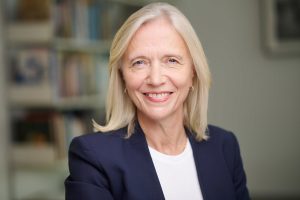
We are delighted to announce that Dr. Mariët Westermann, Director and CEO of the Solomon R. Guggenheim Museum and Foundation, will deliver the Convocation keynote address at the CAA 113th Annual Conference!
As Director and CEO of the Solomon R. Guggenheim Museum and Foundation, Dr. Westermann directs the Guggenheim’s flagship in New York and oversees the Guggenheim sites in Venice, Bilbao, and Abu Dhabi. Previously, Dr. Westermann was founding Provost at NYU Abu Dhabi, and later Vice Chancellor and Chief Executive. She has also served as Executive Vice President of the Mellon Foundation and Director of NYU’s Institute of Fine Arts.
A historian of art of the Netherlands, Dr. Westermann has authored numerous books, articles, and exhibition essays on Dutch art and artists, museums, and the state and future of higher education. On behalf of the Mellon Foundation, Dr. Westermann commissioned and published (with Roger Schonfeld and Liam Sweeney) two critical research studies on staff diversity in the museum sector.
Dr. Westermann was the lead curator and catalogue author of the exhibition Art and Home: Dutch Interiors in the Age of Rembrandt, shown at the Denver Art Museum and The Newark Museum (1997–2001). She served as curatorial consultant, researcher, and essayist for the National Gallery’s presentation of Jan Steen: Painter and Storyteller (1994–96), in partnership with the Rijksmuseum, Amsterdam.
In 2020, Dr. Westermann co-convened Reframing Museums, a major international conference on the future of museums, organized with NYU Abu Dhabi and Louvre Abu Dhabi. In 2010, on behalf of the NYU Abu Dhabi Institute, she co-hosted Art Museums Here and Now, a conference with Philippe de Montebello on what it means to build art museums in countries that have not had them or reinvent traditional art museums to stay connected to their changing societies.
Dr. Westermann is a trustee of ALIPH and the Rijksmuseum and chairs the IIE Scholar Rescue Fund.
Join us for the CAA 113th Annual Conference, February 12–15, at the New York Hilton Midtown! Convocation will be held on February 12, 6:00–7:30 p.m. ET and will also be livestreamed via YouTube. Register now!
Register for CAA113 New York City Gallery Tours!
posted by CAA — October 21, 2024
Join art critic, writer, and expert gallery guide Merrily Kerr for walking tours of select Chelsea and Tribeca galleries during the CAA 113th Annual Conference in February 2025. Registrants can visit six or seven of the season’s most notable shows on one of four different tours.
Space is limited, so register now using the links below! The cost to register for each tour is $40.00.
Walking Tour Schedule
- Chelsea: Wednesday, February 12, 12:30–3:00 p.m. ET
- Chelsea: Thursday, February 13, 12:30–3:00 p.m. ET
- Tribeca: Friday, February 14, 12:30–3:00 p.m. ET
- Chelsea: Saturday, February 15, 2:00–4:30 p.m. ET
Additional Information
Registrants will meet at their designated tour start time at the main entrance of the New York Hilton Midtown lobby.
In addition to the $40.00 registration fee, registrants should be prepared to spend an additional $5.80 on round-trip transportation via subway from the hotel to the galleries. Registrants can tap a contactless credit or debit card or a smartphone to pay for travel at the subway turnstile.
Tours will take place regardless of weather conditions.
Please contact Merrily Kerr directly with questions.
Call for Submissions: CAA113 SAC Photography Exhibition
posted by CAA — August 04, 2024
The CAA Services to Artists Committee (SAC) is now accepting submissions for Vantage Point, a photography exhibition during the CAA 113th Annual Conference.
At the most basic level, a photograph is a moment captured from a specific vantage point–a representation, not simply re-presenting ‘the real’ but, especially in contemporary culture, creating our sense of reality. As Susan Sontag writes, “Photographed images do not seem to be statements about the world so much as pieces of it, miniatures of reality.” Vantage Point seeks to highlight artists who push the boundaries of what an image is, who confront anticipated vantage points and in turn challenge viewers to consider the complexities of perception and representation. Both emerging and established artists working in any photo-based or screen-based medium—including digital, film, video, or alternative photo processing—are welcome to apply.
Application Requirements
Please combine into one pdf:
- Artist statement (200 words maximum)
- Biography (150 words maximum)
- CV
- Website (if applicable)
- Corresponding image list (image number, title, medium, dimension, date)
- Handling, framing, and hanging descriptions
- Technology/equipment requirements
- Accessibility requirements
Portfolio of 10–15 images:
- Each image must be sized to 1 MB
- Title format: 01_Last name_Title_Medium_Dimensions_Date
Please Note: Entry is free, but all accepted artists must join CAA as an individual member to show their work. If a submission is selected, artists are responsible for arranging timely delivery and pickup of artwork in NYC at their own expense. All work must be ready to be hung and framing of the work needs to be agreed upon in conversation with the curator.
Submit now via e-mail to SAC!
Deadline: November 15
AC2024 Edwards Memorial Support Grant Recipients Announced
posted by CAA — January 12, 2024
The CAA Edwards Memorial Support Grants, in memory of Archibald Cason Edwards Sr. and Sarah Stanley Gordon Edwards and made possible by Mary D. Edwards, support women who are emerging scholars and have received their PhD within the past two years or who are nearing the end of a doctoral program. Congratulations to the Annual Conference 2024 recipients, Daniella Berman and Phillippa Pitts!

Daniella Berman, Independent Scholar
Presentation: Revolution as Natural Disaster: Re-Framing 1789
Session: Disaster! Trouble in Eighteenth-Century Art
Presentation Abstract:
In Auguste Desperret’s lithograph, a volcano erupts the word LIBERTÉ. Lava cascades down, threatening to encircle successive cityscapes (representing countries at risk, identified by their flags) and sending figures – many in military uniform – running in the midground. In the foreground, the ruins of a castle bear the date 1789, surrounded by stone fragments inscribed with abandoned values including diving rights and feudalism. The sky is peppered with boulders bearing the words julliet, in reference to the July 1830 revolution.
Produced in 1833 for the satirical publication La Caricature, Desperret’s print Troisième eruption du volcan de 1789, reframes the impacts of the French Revolution as a natural disaster. In so doing, it draws on tropes prevalent in eighteenth-century dialogues inspired by Voltaire among others, that positioned the Revolution as a rupture, oftentimes violent, akin to natural phenomena. However, Desperret’s print calls into question how these natural disaster metaphors for the French Revolution and the St. Dominque revolt were utilized and transformed as the event was repeatedly reframed in the years following 1789 and well into the nineteenth century. What was the function of such analogies, and how were they visualized? This paper will explore the manifestations of Revolution as natural disaster across the material culture of the long eighteenth century, tracing the shifting dialogues that positioned the Revolution as a rupture or cyclical, as progress or failure, as upheaval or disruption, while considering the legacies of this rhetoric in the historiography of the Revolution and related visual material.
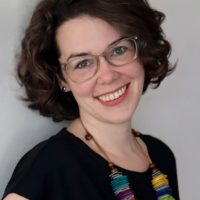
Phillippa Pitts, Boston University
Presentation: Fever Trees & Pharmacopeic Dreams: The Medical Manifest Destiny within Frederic Edwin Church’s Heart of the Andes
Session: U.S. Imperialism, Extraction, and Ecocritical Art Histories
Presentation Abstract:
Although often overlooked, the pursuit of health was central to the nineteenth-century ideas of empire that shaped both U.S. Americans’ imagined sphere of influence and the period’s enthusiasm for grand landscape painting. As the source of lifesaving cinchona, quinine, and diverse Peruvian elixirs, the Andes loomed particularly large in the antebellum imagination. Plays, panoramas, popular scientific texts, and patent medicine ads all cultivated popular interest in this supposed Edenic garden of health and abundance under perpetual threat of spectacular destruction by earthquakes and volcanoes. Taking Frederic Edwin Church’s The Heart of the Andes as its central case study, this paper recreates the conditions of vision in the antebellum city to reveal the underexamined pharmacopeic narratives within the painting and its dramatic performance. In doing so, it highlights how such displays of biodiverse abundance concealed the actual violence of botanical extraction. Indigenous and African laborers were, as one period observer noted, “made human sacrifices to furnish health to the white foreigners,” dying of disease as they carried the lifesaving treatments that would safeguard European and U.S. American imperial forces across the Global South. Today’s scholarly emphasis on the genocidal colonial excavation of Andean gold and silver has similarly elided the cultural, ecological, and human cost of extracting vegetable resources. Pairing insights from ecocriticism and critical disability studies, this paper argues for the importance of recognizing this medical Manifest Destiny, as well as artists’ role in naturalizing such discourse.